

How to Recover from Poor AI Visibility: Complete Recovery Strategy
Learn how to recover from poor AI visibility with actionable strategies for ChatGPT, Perplexity, and other AI search engines. Improve your brand's presence in A...
12 min read

Discover why your brand isn’t showing up in ChatGPT, Perplexity, Google AI Overviews, and Claude. Learn the 5 key factors and how to fix them.
Your brand may not appear in AI responses due to weak third-party citations, unclear entity recognition, thin content, limited presence outside your domain, or technical barriers like blocked crawlers. AI systems prioritize brands mentioned across authoritative sources, with consistent naming and structured data, combined with original research and digital PR efforts.
Brand visibility in AI responses represents a fundamental shift in how companies achieve discoverability in the search landscape. Unlike traditional search engine optimization that focuses on ranking individual pages, AI response visibility depends on whether large language models recognize your brand as a credible entity worthy of citation. When users ask ChatGPT, Perplexity, Google AI Overviews, or Claude questions related to your industry, your brand either appears in the synthesized answer or it doesn’t—and this distinction increasingly determines whether potential customers discover you. The challenge is that AI visibility operates on entirely different principles than Google rankings, requiring a new approach to how you present your brand across the web. Many companies with strong traditional SEO rankings still find themselves completely absent from AI-generated answers, creating a visibility gap that directly impacts customer acquisition in the AI-search era.
AI systems don’t rank pages like Google does. Instead, they extract entities (your brand name, products, leadership), evaluate whether reputable sources acknowledge you, and then decide whether to include you in their synthesized answers. This process reveals why so many brands vanish from AI responses despite having excellent website content. The fundamental issue is that AI models weigh trust signals differently than traditional search engines. A brand with page-one Google rankings but minimal third-party mentions will likely be deprioritized by AI systems because the model cannot triangulate your credibility across multiple authoritative sources. Research shows that 82% of AI visibility challenges stem from weak external citation patterns, meaning your brand exists primarily on your own domain rather than being referenced by trusted outlets. Additionally, AI training data has knowledge cutoff dates—Claude 3.5 Opus has a training cutoff in August 2025, while earlier models may have cutoffs from 2023 or 2024, meaning recent brand developments may not be reflected in AI responses at all.
| Reason | Impact | How AI Systems Detect It | Solution Priority |
|---|---|---|---|
| Few or Weak Third-Party Citations | AI models cannot verify your credibility | Models check mentions across media, directories, and industry sites | HIGH - Build digital PR strategy |
| Unclear Brand Entity Recognition | AI fails to consistently identify your brand | Inconsistent naming, missing schema markup, no knowledge graph presence | HIGH - Implement structured data |
| Thin or Generic Content | AI filters out shallow, repetitive material | Content lacks depth, specificity, or original research | MEDIUM - Create authoritative content |
| Missing External Mentions | Brand signals remain isolated to your domain | No presence on Reddit, Quora, industry lists, or partner sites | HIGH - Expand third-party footprint |
| Technical Barriers | AI crawlers cannot access your content | Blocked bots, misconfigured robots.txt, slow page load times | CRITICAL - Audit technical setup |
| Weak AI Authority Signals | Models don’t recognize your brand as an authority | Limited positive sentiment, inconsistent branding, no original research | MEDIUM - Build thought leadership |
Large language models process information fundamentally differently than search engines. When you ask ChatGPT or Perplexity a question, the model doesn’t crawl the web in real-time like Googlebot. Instead, it draws from its training data (which has a knowledge cutoff date), evaluates entity relationships, and synthesizes information from sources it learned during training. The model performs several critical steps: it extracts entities by identifying brand names, products, and key concepts; it parses structured data like FAQ schema and Organization markup to understand meaning; it evaluates authority signals by looking for reputable citations and mentions; and finally it synthesizes answers by combining multiple sources into coherent responses. This means your brand’s visibility depends entirely on whether the model encountered your name frequently enough in authoritative contexts during its training phase. If your brand appears primarily on your own website and rarely on trusted third-party sites, the model has insufficient evidence to include you in answers. Citation frequency across trusted sources acts as a “signal of truth” that AI systems use to determine credibility. A brand mentioned 50 times across reputable industry publications, news outlets, and directories will be weighted far more heavily than a brand with 1,000 mentions only on its own website.
Entity clarity is the foundation of AI visibility. Your brand must be unambiguous to AI systems, which means maintaining consistent naming across your website, schema markup, knowledge graph entries, and third-party directories. When you implement Organization schema, Product schema, and Person schema (for leadership), you’re essentially telling AI systems “here’s exactly who we are and what we do.” This structured data acts as a reference point that helps models resolve your brand among similar names and understand your domain of expertise. Many brands fail at this basic step by using inconsistent naming conventions—sometimes “Company Name,” sometimes “Company,” sometimes an acronym—which confuses AI systems about whether these references point to the same entity. Schema markup should include your official brand name, description, logo, contact information, and key products or services. Additionally, your presence in Wikidata and relevant industry directories significantly strengthens entity recognition. When AI models see your brand consistently described across multiple authoritative sources with matching information, they develop higher confidence in your credibility. This is why companies that appear in industry-specific lists, professional directories, and knowledge bases tend to show up more frequently in AI responses.
Your brand’s visibility in AI responses depends more on what others say about you than what you say about yourself. This represents a seismic shift from traditional SEO, where your own content and backlinks were primary ranking factors. In the AI era, digital PR and thought leadership have become visibility systems, not optional extras. When reputable media outlets, industry analysts, or niche publications mention your brand, they’re creating the external signals that AI models use to verify your authority. Research indicates that brands appearing in third-party roundups, industry lists, and media features see 3-5x higher AI citation rates compared to brands with similar content but minimal external coverage. The key is that these mentions don’t need to include backlinks—even plain-text brand mentions on authoritative sites count as signals. This is why securing media placements, getting included in “best of” lists, and earning analyst mentions has become critical for AI visibility. Additionally, original research and case studies serve as citation magnets because other writers and analysts link to them when they need data or methodology, and those links become AI citations that models notice. A company that publishes an industry benchmark report that gets referenced across 20+ publications will see dramatically higher AI visibility than a company that publishes generic blog posts.
AI systems favor content that’s easy to parse and quote directly. This means your writing style, formatting, and information architecture must prioritize clarity and extractability over marketing language. When AI models encounter your content, they’re looking for sentences that can stand alone as citations without losing accuracy or context. Short, direct sentences with single ideas per paragraph are far more likely to be extracted than dense paragraphs with multiple concepts. This is why Q&A formatting, FAQ sections with FAQPage schema, and concise explanations dramatically improve your chances of appearing in AI responses. The featured snippet mindset—writing to be quoted—should be your baseline, then go further by ensuring every sentence could theoretically be lifted into an AI answer without requiring additional context. Additionally, using comparison tables, bullet points, and step-by-step instructions makes your content more extractable because AI systems can cleanly separate information into structured formats. Many brands fail at this by writing in traditional marketing style—long paragraphs, vague claims, promotional language—which AI systems filter out because it’s not useful for synthesizing clear answers. Your content should read like a reference document that anticipates questions and provides direct answers, not like marketing copy designed to persuade.
Different AI platforms have different training data sources and evaluation criteria, which means your visibility strategy must account for platform-specific factors. ChatGPT primarily uses web content from its training data (with a knowledge cutoff in April 2024 for GPT-4) and can access live web results through Bing when in Search mode, meaning your brand needs strong presence on both high-authority websites and Bing-indexed content. Perplexity actively crawls the web in real-time and prioritizes recent, well-sourced content, making fresh content and current citations particularly important for this platform. Google AI Overviews draws from Google’s index and favors content that already ranks well in traditional search results, meaning strong SEO fundamentals remain essential—approximately 40.58% of AI citations come from Google’s top 10 results. Claude uses training data with a knowledge cutoff in August 2025 (for Claude 3.5 Opus), and emphasizes accuracy and nuance, meaning detailed, well-researched content performs better than surface-level information. The implication is that a one-size-fits-all approach won’t work—you need to understand which platforms matter most for your industry and optimize accordingly. For example, if your target audience uses Perplexity heavily, investing in fresh content and real-time citations becomes critical. If Google AI Overviews dominate your industry, traditional SEO optimization remains foundational.
You cannot improve what you don’t measure. Many brands make the mistake of assuming they’re invisible to AI systems without actually testing, or they test sporadically and draw conclusions from inconsistent results. The challenge is that AI responses vary from query to query and refresh to refresh—the same prompt asked twice might yield different citations, making manual testing unreliable. This is where AI visibility monitoring tools become essential. Platforms like AmICited allow you to track your brand mentions across ChatGPT, Perplexity, Google AI Overviews, and Claude systematically, showing you exactly when and where your brand appears, which prompts trigger your citations, and how your visibility compares to competitors. Effective monitoring reveals patterns: which topics generate your citations, which platforms favor your brand, which competitors consistently outrank you, and which content pieces drive the most AI mentions. This data-driven approach transforms AI visibility from a guessing game into a measurable, optimizable channel. Additionally, tracking your share of voice across AI platforms helps you understand whether your visibility is growing, stagnating, or declining over time. Many brands discover through monitoring that they appear in AI responses for certain queries but not others, revealing content gaps or opportunities for targeted optimization.
Start with an honest AI search audit. Ask ChatGPT, Perplexity, and Claude questions directly related to your industry, products, and brand. Document whether your brand appears, in what context, and alongside which competitors. This baseline reveals your current visibility gaps. Next, audit your entity information across your website, schema markup, Wikidata, and relevant industry directories. Ensure consistency in naming, descriptions, and key information. Then, analyze your third-party citation patterns—where does your brand appear outside your domain? Are you mentioned in industry publications, analyst reports, customer review sites, or community forums? Identify gaps and develop a digital PR strategy to earn mentions on authoritative sites relevant to your industry. Simultaneously, audit your content structure and reformat key pages to prioritize clarity, extractability, and direct answers. Add FAQ sections with proper schema markup, break up dense paragraphs, and ensure your most important information appears early. Finally, implement a monitoring system to track your progress across AI platforms and adjust your strategy based on what’s working. This isn’t a one-time project—AI visibility requires ongoing optimization as models update, new platforms emerge, and competitive dynamics shift.
AI visibility will become as important as Google rankings within the next 18-24 months. As more users adopt AI search tools for research, shopping, and decision-making, brands that don’t appear in AI responses will face significant customer acquisition challenges. The shift from keyword-based ranking to entity-based citation represents a fundamental restructuring of how discoverability works. Companies that adapt early—by building strong third-party citation patterns, optimizing for entity clarity, and creating extractable content—will establish competitive advantages that become increasingly difficult for late movers to overcome. Additionally, the fragmentation of AI platforms means brands must optimize for multiple systems simultaneously, each with different training data, evaluation criteria, and user bases. This complexity creates opportunities for specialized expertise and tools that help brands navigate the AI visibility landscape. The convergence of traditional SEO and AI visibility optimization—what’s increasingly called Generative Engine Optimization (GEO)—will likely become a standard marketing discipline. Brands that treat AI visibility as a core channel rather than an experimental side project will capture disproportionate share of voice in AI-generated answers, translating to higher customer discovery and competitive advantage in the AI-search era.
Stop guessing whether your brand appears in AI responses. Use AmICited to track your mentions across ChatGPT, Perplexity, Google AI Overviews, and Claude in real-time.
Learn how to recover from poor AI visibility with actionable strategies for ChatGPT, Perplexity, and other AI search engines. Improve your brand's presence in A...
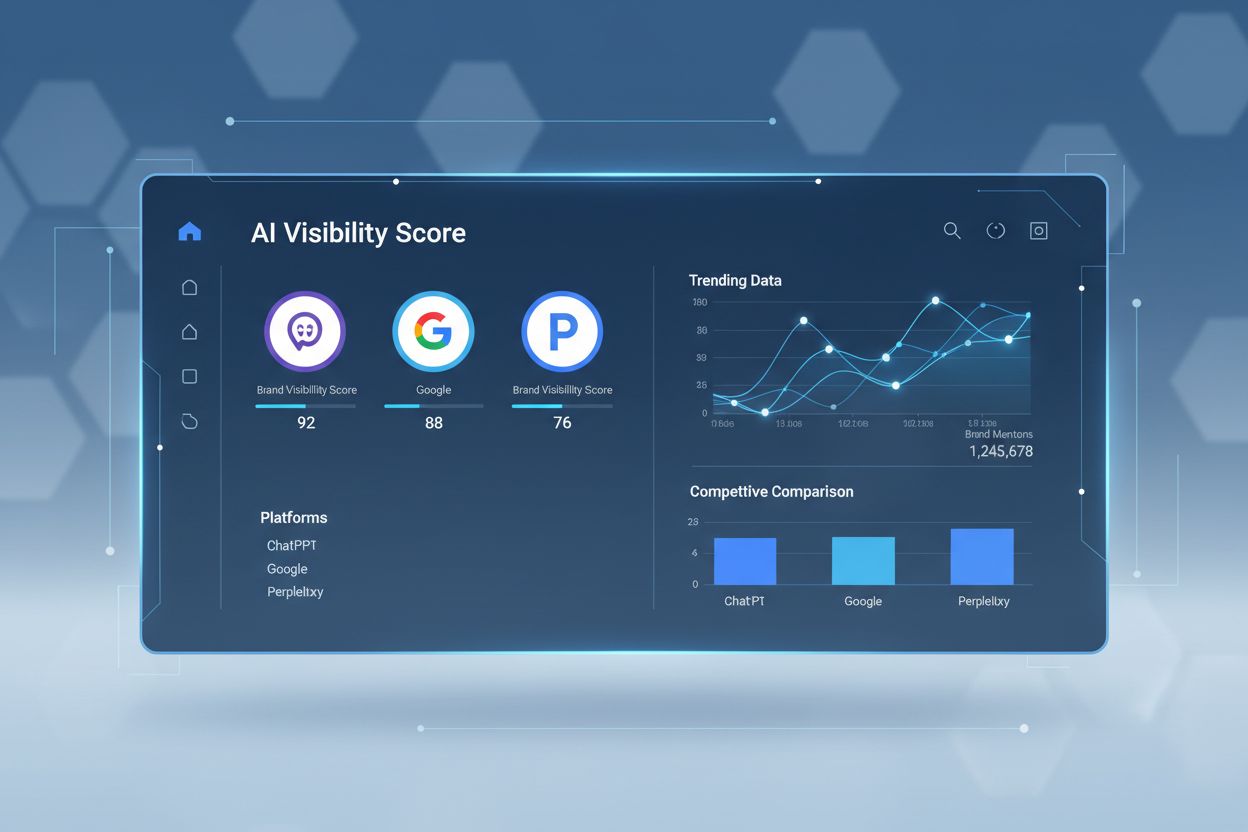
Master the Semrush AI Visibility Toolkit with our comprehensive guide. Learn how to monitor brand visibility in AI search, analyze competitors, and optimize for...
Learn proven strategies to maintain and improve your content's visibility in AI-generated answers across ChatGPT, Perplexity, and Google AI Overviews. Discover ...