


N-Grams for Search Queries
N-Grams counts recurring one-to-five-word phrases in a selected date range, across either organic queries or paid search terms. It pairs each phrase with the number of distinct terms that contain it, plus the clicks and impressions of those terms, so keyword themes can be explored without pretending they are mutually exclusive buckets.
Configure N-Gram Analysis
Choose organic when you want themes in the terms that already surfaced your domain. Choose paid when campaign search terms are the better evidence. Then set the n-gram width, from individual words through five-word phrases, and apply only filters that exist for that channel.
- Organic and paid are separate reads, not a blended keyword universe.
- Phrase size is explicit, so a two-word theme is never confused with a longer query.
- Channel-aware filters prevent a paid-only field from being silently applied to organic data, or the reverse.
- The date range travels with the request, making period comparisons a deliberate choice rather than an accidental default.
This is phrase frequency over observed terms, not semantic clustering or a forecast of new demand.
N-Gram Traffic Metrics
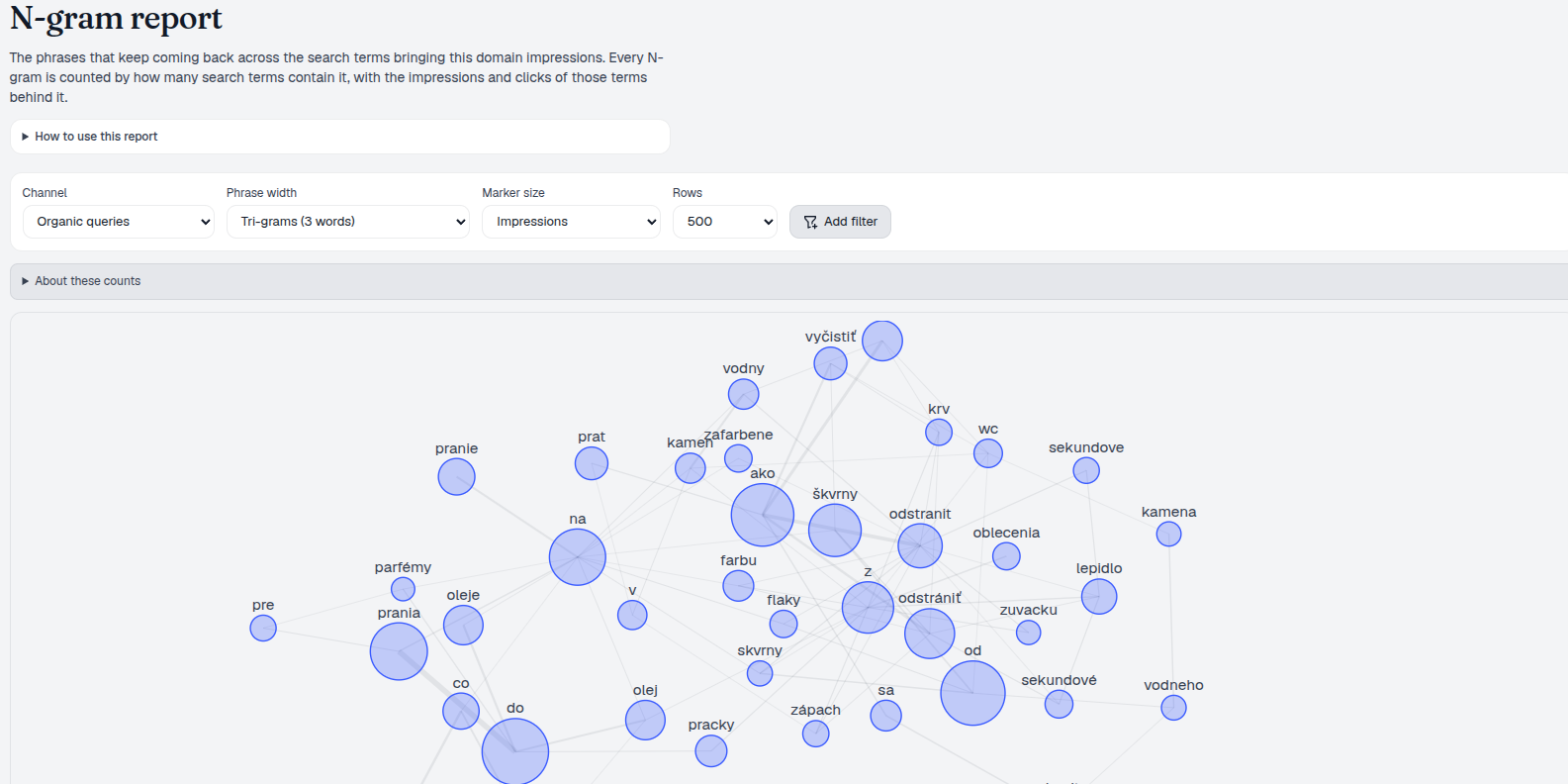
The table shows the exact phrase, usage count, impressions, and clicks. Usage count means distinct source terms containing the phrase, not how many times the phrase appears in copied text. The word graph complements the table: nodes aggregate the phrases that contain a word, and links represent words that sat next to each other inside at least one n-gram.
SEO experts can use it to spot modifiers that deserve a dedicated page, internal-link path, or title test. Domain owners can identify language customers actually use before asking a writer to invent a theme.
Do not total clicks across related rows. A query such as “best trail running shoes” can contribute to “best”, “trail”, “running shoes”, and “trail running” at the same time.
N-Gram Sampling Limits
The response reports how many terms were analysed, whether the source read was truncated, and the minimum usage count required to enter the result. It also separates all phrases found from the limited rows currently displayed. Those details matter when a large account makes a familiar phrase look dominant simply because the input was capped.
- Truncation is disclosed, so a sample is not presented as the complete search vocabulary.
- Minimum usage is returned, making it clear why singleton phrases are absent.
- Table and graph limits are independent controls, allowing a readable visual without implying omitted phrases do not exist.
- Empty results are legitimate when no phrase meets the selected width and minimum usage.
Use N-Grams to formulate content or bidding hypotheses, then validate them in the underlying query or search-term report before changing a page or budget.
phrase widths, from one word to five
Count the language people searched, keep channel and sample boundaries visible, then test the opportunity in the source terms.
Explore Google Search QueriesBuild Content Briefs from N-Grams
Explore exact phrases, their usage, and the traffic attached to the terms that contain them.
Ready to find the phrases shaping your search demand?
Free check · 7-day trial · card required