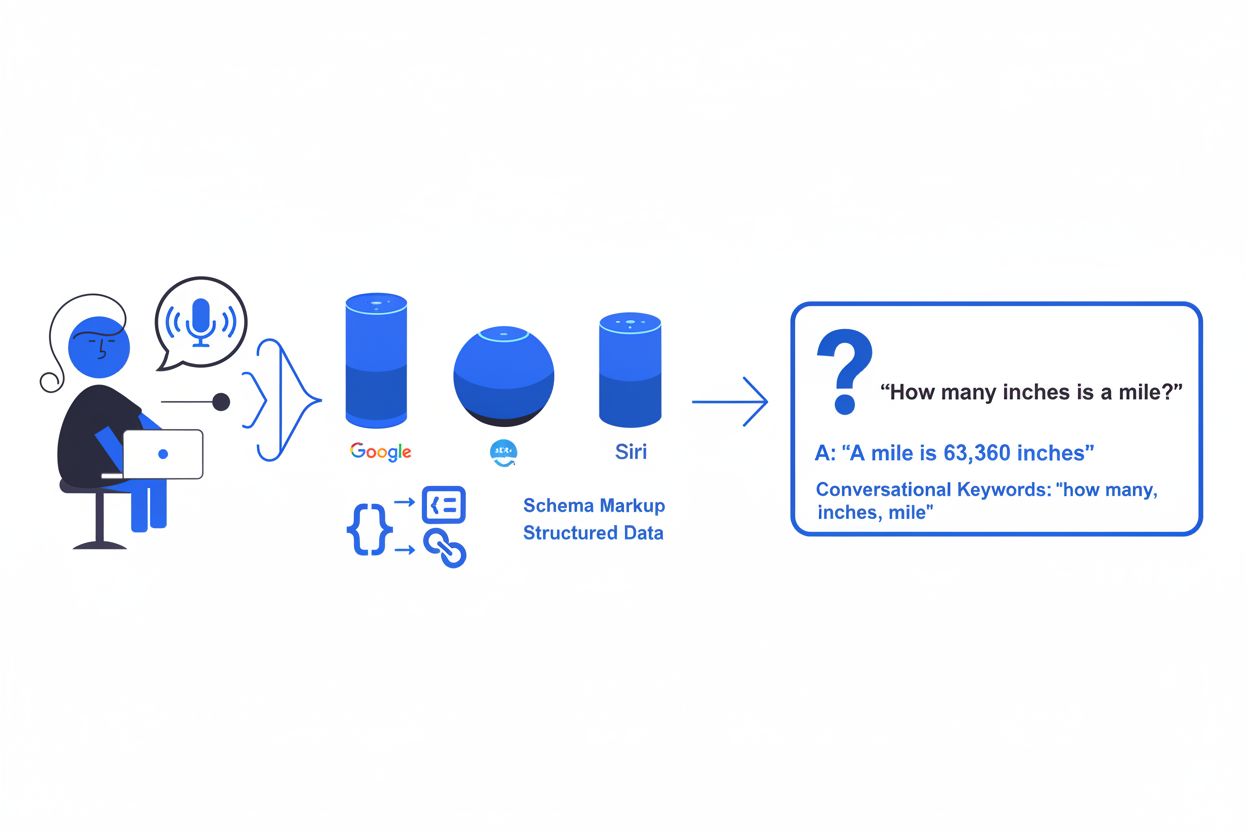
Discussion Voice Search SEO Strategy

Optimisation pour la recherche vocale en 2025 - toujours pertinente ou exagérée ? Retours d'expérience réels recherchés

SE
SEOSkeptic_Dave · Consultant SEO
· · 92 upvotes · 10 comments
SD
SEOSkeptic_Dave
Consultant SEO · 16 décembre 2025

Remember when everyone said “voice search will be 50% of all searches by 2020”? That didn’t happen.

But now voice is back in conversations because of AI. So I’m genuinely asking:

What I want to know:

  • Is voice search actually worth optimizing for in 2025?
  • Has anyone seen real, measurable results?
  • How does voice search connect to AI optimization?
  • What’s real vs. hype at this point?

My skepticism:

  • Can’t easily measure voice traffic
  • Most voice searches are simple commands (“set timer”)
  • Commercial voice queries seem rare
  • Resources might be better spent elsewhere

Convince me I’m wrong, or validate my skepticism. Looking for real data and experiences.

10 comments

10 Comments

VA
VoiceData_Analyst Expert Spécialiste en analyse de la recherche · 16 décembre 2025

Your skepticism was valid in 2020. Here’s where we actually are:

The real numbers (not hype):

MetricVerified Data
Monthly voice searches1 billion+ globally
US voice search users58% of residents
Voice assistants in use8.4 billion devices
Voice search CAGR23.8% (2024-2030)
Searches with local intent76%

What the failed predictions got wrong:

The “50% by 2020” predictions overestimated:

  • Voice replacing text (it’s additive, not replacement)
  • Complex query adoption (most voice is simple)
  • Desktop voice usage (it’s mobile/smart home)

What’s actually happening:

Voice carved out specific use cases:

  • Local searches (dominant)
  • Quick facts while multitasking
  • Smart home commands
  • Hands-free situations

The AI connection:

Voice assistants are AI. Optimizing for voice means:

  • Conversational content (helps all AI)
  • Question-answer format (helps all AI)
  • Featured snippets (Google Assistant uses these)
  • Natural language (helps all AI)

Voice optimization = AI optimization with extra steps.

SD
SEOSkeptic_Dave OP · 16 décembre 2025
Replying to VoiceData_Analyst
The “additive, not replacement” framing helps. But how do I justify resources when I can’t measure results?
VA
VoiceData_Analyst Expert · 16 décembre 2025
Replying to SEOSkeptic_Dave

The measurement problem is real. Here’s how to navigate it:

Proxy metrics that work:

What to TrackWhat It Indicates
Featured snippet winsVoice answer eligibility
Question keyword rankingsConversational query capture
Long-tail question trafficNatural language performance
“How to” query performanceVoice-style query success
Local pack visibilityLocal voice search presence

The business case reframe:

Don’t pitch “voice search optimization.”

Pitch “conversational content optimization that also captures voice.”

Why this works:

  1. Same tactics help ChatGPT, Perplexity, Google AI
  2. Featured snippet wins have clear SEO value
  3. FAQ optimization has multiple benefits
  4. Natural language content performs better overall

ROI calculation:

If voice optimization tactics also help AI visibility + featured snippets + user experience, the ROI isn’t voice-specific - it’s holistic content improvement.

You’re not investing in “voice” - you’re investing in “conversational-ready content.”

LO
LocalBusiness_Owner · 16 décembre 2025

Real results from a local business perspective:

Our business: 3 restaurant locations

Voice optimization we did:

  • Google Business Profile optimization
  • FAQ schema on website
  • “Near me” style content
  • Review solicitation

Measurable outcomes (6 months):

MetricBeforeAfter
“Restaurant near me” visibilityPosition 7Position 2
Google Business calls340/month520/month
Direction requests280/month410/month
“What time does X close” answersNot appearingFeatured

Attribution challenge:

Can’t prove the calls came from voice. But:

  • Spike in calls during commute hours (hands-free time)
  • Customers mentioning “Siri told me”
  • Direction requests from further away

For local businesses:

Voice is not hype. 76% local intent means people are asking “Where should I eat?” and your visibility matters.

For non-local businesses:

The case is weaker. Focus on conversational content that helps everywhere.

CL
ConversationalSEO_Lead · 15 décembre 2025

Voice optimization tactics with broader benefits:

Tactic 1: Question-based headings

Voice benefit: Matches natural queries Broader benefit: Featured snippets, AI visibility, user experience

Tactic 2: Concise answer paragraphs

Voice benefit: Speakable responses Broader benefit: Snippet eligibility, AI citation, readability

Tactic 3: FAQ sections with schema

Voice benefit: Direct question matching Broader benefit: Rich results, AI extraction, user value

Tactic 4: Natural language content

Voice benefit: Conversational match Broader benefit: AI comprehension, engagement, accessibility

Tactic 5: Long-tail keyword targeting

Voice benefit: Matches spoken queries Broader benefit: Intent capture, conversion improvement

The framework:

If a tactic ONLY helps voice, low priority. If a tactic helps voice + AI + general SEO, high priority.

All five tactics above are in the second category.

CE
ContentStrategist_Emma · 15 décembre 2025

Practical content changes for voice-ready content:

Before (keyboard-optimized):

“Top 10 CRM Software Solutions for Small Business 2025”

Content: Long-form comparison with detailed feature matrices.

After (voice-ready, still works for keyboard):

“What is the best CRM for small businesses?”

Content: Direct answer first, then detailed comparison.

The structural shift:

ElementKeyboard StyleVoice Style
TitleKeyword-focusedQuestion-based
First paragraphHook/introDirect answer
BodyBuild to conclusionAnswer-first, elaborate after
LengthLong-form valuedConcise + depth

Example transformation:

Keyboard intro: “Choosing the right CRM software can be overwhelming with hundreds of options available. In this comprehensive guide, we’ll explore the top solutions for small businesses…”

Voice intro: “The best CRM for small businesses is HubSpot CRM for its free tier and ease of use, or Salesforce Essentials for growing teams needing advanced features. Here’s how to choose…”

Why voice-style works everywhere:

Users prefer direct answers. AI prefers direct answers. Voice requires direct answers. The styles are converging.

TP
TechSEO_Practitioner · 15 décembre 2025

Technical implementation for voice:

Schema markup priorities:

  1. FAQPage schema - Direct question-answer markup
  2. HowTo schema - Step-by-step processes
  3. Speakable schema - Designates voice-ready content (limited support)
  4. LocalBusiness schema - For location-based queries

Page speed matters more for voice:

Voice users are on mobile, often on cellular. Slow pages get skipped.

Target:

  • LCP under 2.5 seconds
  • Mobile-first design
  • AMP pages (if applicable)

Structured data example:

{
  "@type": "FAQPage",
  "mainEntity": [{
    "@type": "Question",
    "name": "What is the best CRM for small businesses?",
    "acceptedAnswer": {
      "@type": "Answer",
      "text": "HubSpot CRM is the best free option for small businesses. Salesforce Essentials is best for teams needing advanced features. The right choice depends on your budget and growth plans."
    }
  }]
}

Mobile optimization checklist:

  • Responsive design
  • Touch-friendly elements
  • Fast load times
  • Readable without zoom
  • No intrusive interstitials
RM
RealResults_Marketer · 14 décembre 2025

My skeptic-to-believer journey:

2020 me: “Voice is overhyped, can’t measure it, waste of time.”

What changed:

Started tracking featured snippets seriously. Won 15 snippets for question-based queries.

Then noticed:

  • Those pages had higher engagement
  • Bounce rate dropped
  • Time on page increased
  • Conversions improved

The realization:

I wasn’t optimizing “for voice.” I was optimizing for:

  • Clear answers
  • User intent
  • Natural language
  • Direct value

Voice optimization = good content optimization.

Actual ROI:

MetricBeforeAfter 6 months
Featured snippets318
Organic traffic42K/month58K/month
Question query traffic8K/month21K/month
Conversions320/month485/month

Can I prove voice specifically? No.

Can I prove the tactics worked? Absolutely.

SD
SEOSkeptic_Dave OP Consultant SEO · 14 décembre 2025

I’m convinced. Here’s my revised position:

Previous position: Voice search is overhyped, can’t measure, skip it.

New position: Voice optimization is really “conversational content optimization” with multi-channel benefits.

What I was getting wrong:

  • Viewing voice as separate channel (it’s integrated)
  • Looking for voice-specific metrics (proxy metrics work)
  • Thinking resources were wasted (benefits are broader)

What I’m recommending to clients now:

High priority (helps voice + AI + SEO):

  • Question-based content structure
  • FAQ sections with schema
  • Featured snippet optimization
  • Natural language writing
  • Concise answer paragraphs

Medium priority (local businesses only):

  • Google Business Profile optimization
  • Local schema markup
  • “Near me” visibility

Low priority (voice-specific):

  • Speakable schema (limited support)
  • Voice-only content strategies

Measurement approach:

  • Track featured snippet wins
  • Monitor question query performance
  • Watch long-tail conversational rankings

The reframe that convinced me:

“Voice optimization” sounds like a separate channel. “Conversational content optimization” is just good modern SEO.

Thanks for the reality check, everyone.

Have a Question About This Topic?

Get personalized help from our team. We'll respond within 24 hours.

Frequently Asked Questions

La recherche vocale est-elle toujours en croissance en 2025 ?
Oui. Plus d’un milliard de recherches vocales ont lieu chaque mois, avec 58 % des résidents américains ayant utilisé la recherche vocale. 8,4 milliards d’assistants vocaux sont utilisés dans le monde, et le marché croît à un taux de 23,8 % CAGR.
En quoi les recherches vocales diffèrent-elles des recherches saisies au clavier ?
Les recherches vocales sont plus longues (4-5 mots ou plus), conversationnelles, basées sur des questions, et ont une intention locale plus forte. Les utilisateurs s’expriment naturellement plutôt que de taper des mots-clés abrégés.
Quel format de contenu fonctionne le mieux pour la recherche vocale ?
Le format question-réponse avec des réponses concises (40-60 mots), l’optimisation des extraits en vedette, les sections FAQ et un langage conversationnel naturel qui sonne bien à l’oral.
Puis-je mesurer spécifiquement le trafic issu de la recherche vocale ?
La mesure directe est difficile car la plupart des outils d’analyse ne distinguent pas la voix du texte. Suivez des métriques indirectes : victoires d’extraits optimisés, classement sur des questions longue traîne, et performance sur les requêtes conversationnelles.

Surveillez votre présence dans la recherche conversationnelle

Suivez la performance de votre contenu dans la recherche vocale et l’IA conversationnelle. Découvrez quelles questions déclenchent des mentions de votre marque.

En savoir plus

Optimisation de la recherche vocale
Optimisation de la recherche vocale : optimiser pour les recherches activées par la voix

Optimisation de la recherche vocale

L'optimisation de la recherche vocale est la pratique qui consiste à adapter le contenu pour les recherches activées par la voix. Découvrez comment optimiser po...

13 min de lecture