
Hidden Text
Learn what hidden text is in SEO, how search engines detect it, why it's penalized, and the difference between black-hat and white-hat hidden content practices.
12 min read

Above the fold refers to the portion of a webpage that is visible to users without scrolling when the page first loads. This term originates from newspaper publishing and remains a critical concept in web design, user experience, and digital marketing for capturing immediate user attention and engagement.
Above the fold refers to the portion of a webpage that is visible to users without scrolling when the page first loads. This term originates from newspaper publishing and remains a critical concept in web design, user experience, and digital marketing for capturing immediate user attention and engagement.
Above the fold refers to the portion of a webpage that is visible to users without scrolling when the page first loads in their browser. The term originates from newspaper publishing, where the most important stories and headlines were placed on the top half of the front page—literally above the fold line where papers were folded for display in newsstands. In the digital context, the fold represents the bottom edge of the browser window or viewport, and content above this line receives immediate visibility and user attention. This concept has evolved from a strict design principle into a nuanced strategy that balances immediate engagement with the understanding that modern users are accustomed to scrolling. The importance of above-the-fold content lies in its role as the first impression—the critical window where users decide whether to engage further with your website, product, or service.
The concept of “above the fold” has a rich history that demonstrates how traditional publishing principles adapted to digital environments. In the newspaper industry, editors understood that readers would see only the top portion of the front page when papers were stacked in vending machines or on newsstands. This physical constraint drove editorial decisions to place the most compelling headlines, images, and stories in this premium space. When the web emerged in the 1990s, designers and marketers recognized a parallel principle: users would see only a limited portion of a webpage before needing to scroll. Early web browsers had fixed viewport sizes, typically around 1024x768 pixels, making the fold concept even more relevant. However, the evolution of responsive web design, mobile devices, and changing user behavior has transformed how we understand and apply above-the-fold principles. Modern research shows that while scrolling is now second nature to users—with 90% of users scrolling within 14 seconds of landing on a page—the initial above-the-fold content remains disproportionately important for capturing attention and establishing credibility. According to Nielsen Norman Group research, viewing time for above-the-fold content has decreased from 80% in 2010 to 57% in 2018, yet this still represents the majority of user attention during initial page load.
Defining the exact location of the fold presents significant technical challenges due to the proliferation of devices and screen sizes. Desktop monitors range from 1024x768 to 2560x1440 pixels or larger, while tablets vary between 768x1024 and 1024x1366 pixels, and mobile phones span from 320x568 to 480x854 pixels or more. Most web designers and industry standards define the fold at approximately 600-800 pixels vertically for desktop browsers, with 1000 pixels width being a common reference point. However, this is merely a guideline rather than a universal standard. Mobile devices typically have fold lines at 600 pixels or less due to their portrait orientation and smaller screens. The rise of responsive web design has further complicated fold definitions, as websites now use fluid layouts that adapt content based on the user’s device and browser window size. Tools like Google Analytics and heatmapping software can reveal where your specific audience’s fold line actually falls, providing data-driven insights for optimization. Additionally, factors like browser toolbars, address bars, and browser extensions can push content down, effectively lowering the fold line. This variability means that successful above-the-fold optimization requires understanding your audience’s actual device distribution and designing accordingly, rather than adhering to a single pixel measurement.
| Concept | Definition | Primary Focus | User Interaction | Impact on Conversions |
|---|---|---|---|---|
| Above the Fold | Content visible without scrolling on initial page load | Immediate attention and first impression | No scrolling required | High initial engagement, moderate direct conversion |
| Below the Fold | Content requiring scrolling to view | Detailed information and secondary CTAs | Requires active scrolling | Lower visibility, higher engagement from committed users |
| Hero Section | Large banner area at top of page with headline and imagery | Brand storytelling and value proposition | Immediate visual impact | Sets tone for entire page experience |
| Viewport | Visible area of browser window on user’s device | Technical measurement of screen space | Device-dependent | Determines what content is “above the fold” |
| Fold Line | Boundary between visible and non-visible content | Separation point for content prioritization | Visual threshold | Critical for content hierarchy decisions |
| Lazy Loading | Technique to defer loading of below-fold images | Performance optimization | Improves page speed | Enhances user experience without affecting fold content |
Understanding why above-the-fold content matters requires examining human psychology and attention patterns. Users typically have an attention span of 8 seconds when landing on a new webpage—a window that has shrunk from 12 seconds in 2000 as digital consumption has accelerated. During this critical period, users form snap judgments about whether a website is trustworthy, relevant, and worth their time. Above-the-fold content serves as the primary input for these judgments, making it psychologically crucial for conversion optimization. Research from the Interaction Costs framework shows that users naturally prefer content with lower interaction costs—meaning content that requires minimal effort to access. Above-the-fold content has zero interaction cost, while below-the-fold content requires scrolling effort, creating a natural hierarchy of attention. Additionally, the primacy effect—a cognitive bias where people disproportionately weight initial information—means that what users see first significantly influences their overall perception of your brand and message. Studies on visual hierarchy demonstrate that users scan webpages in predictable patterns (typically F-shaped or Z-shaped), and above-the-fold content occupies the most prominent positions in these scanning patterns. This psychological foundation explains why above-the-fold optimization remains relevant even as scrolling behavior has become normalized.
Modern web design has fundamentally changed how above-the-fold principles are applied, primarily through the adoption of responsive design and mobile-first approaches. Rather than designing for a single fixed viewport, contemporary designers create flexible layouts that adapt seamlessly across devices. This shift means that the fold line is no longer a static, predictable boundary but rather a dynamic threshold that varies based on the user’s device, browser window size, and even their scrolling behavior. Responsive design uses media queries in CSS to detect screen sizes and adjust layouts accordingly, ensuring that critical content remains accessible without excessive scrolling across all devices. Mobile-first design philosophy prioritizes the mobile experience first, then progressively enhances the design for larger screens. This approach recognizes that mobile users face the most constrained viewport and therefore benefit most from strategic above-the-fold optimization. Modern best practices include using flexible grids that scale proportionally, scalable images that maintain quality across resolutions, and viewport meta tags that ensure proper rendering on mobile devices. Additionally, techniques like lazy loading allow designers to defer loading of below-the-fold images, improving page speed without compromising the visibility of above-the-fold content. The integration of Core Web Vitals—Google’s metrics for page experience including Largest Contentful Paint (LCP)—has made above-the-fold performance optimization critical, as LCP measures how quickly the largest visible content element loads, directly impacting user experience and SEO rankings.
The relationship between above-the-fold content and SEO has evolved significantly as search engines have become more sophisticated. Historically, Google’s algorithms gave preferential weight to keywords and content appearing near the top of pages, based on the assumption that important information would naturally appear first. However, with advances in natural language processing and AI-driven understanding, Google can now comprehend content quality and relevance regardless of position on the page. According to Google’s John Mueller, the search engine does not have “strong preferences” for content above the fold in terms of ranking factors. Instead, Google’s primary concern is that some meaningful content appears above the fold—enough to give users a clear sense of what the page is about without forcing them to scroll past ads or irrelevant material. This distinction is important: Google penalizes pages that place excessive ads above the fold, pushing actual content below the fold, as this creates a poor user experience. The Page Layout Algorithm update, introduced in 2012, specifically targeted sites with too many ads above the fold. Beyond ranking factors, above-the-fold optimization impacts SEO through user engagement signals like bounce rate, time on page, and click-through rate. Pages with compelling above-the-fold content tend to have lower bounce rates and higher engagement, which indirectly supports SEO performance. Additionally, above-the-fold optimization improves Core Web Vitals scores, particularly Largest Contentful Paint (LCP), which is a confirmed Google ranking factor. The strategic placement of important content above the fold also increases the likelihood of content being featured in Google’s featured snippets, which require clear, scannable, and well-formatted information.
The emergence of AI search platforms like Google AI Overviews, Perplexity, ChatGPT, and Claude has introduced a new dimension to above-the-fold visibility and importance. In these AI-driven search experiences, above-the-fold refers to whether your brand, content, or citations appear in the initial AI-generated response without users needing to scroll or request additional sources. This is fundamentally different from traditional search results but equally critical for brand visibility and authority. AI search systems often synthesize answers from multiple sources, and appearing in the initial summary—above the fold of the AI response—provides significant brand lift and perceived authority. Research shows that AI Overviews now dominate above-the-fold visibility on Google’s search results pages, often providing direct answers that reduce the need for users to click through to websites. This shift has profound implications for content strategy: brands must now optimize not just for traditional search rankings but for AI citation visibility. Content that appears above the fold in AI responses receives disproportionate visibility, even if users don’t click through to the source. This is where platforms like AmICited become essential—they monitor where your brand appears in AI-generated responses across multiple platforms, tracking above-the-fold visibility in this new search paradigm. The metrics that matter have shifted from click-through rates to citation frequency, mention prominence, and above-the-fold presence in AI summaries. Brands that understand and optimize for above-the-fold visibility in AI search gain competitive advantages in brand awareness and authority, even as traditional click-based traffic may decline.
Above-the-fold content plays a crucial but nuanced role in conversion rate optimization (CRO). Research consistently shows that above-the-fold content significantly influences whether users will engage further with a website, but the relationship to direct conversions is more complex. A Google study found that ads placed above the fold achieved 68% viewability compared to 40% for below-the-fold ads, demonstrating the visibility advantage. However, studies on call-to-action (CTA) placement reveal that CTAs positioned between 600-1000 pixels (just below the traditional fold) often outperform those placed higher on the page. This suggests that while above-the-fold content captures attention, users need sufficient context and information before they’re ready to convert. The optimal above-the-fold strategy for conversions typically includes: a compelling headline that communicates the value proposition, trust signals like customer testimonials or security badges, high-quality imagery that resonates with the target audience, and clear navigation that helps users find what they need. The goal of above-the-fold content is not direct conversion but rather engagement and intent confirmation—convincing users that your page is relevant and trustworthy enough to warrant further exploration. Below-the-fold content then provides the detailed information, additional social proof, and secondary CTAs that drive actual conversions. This two-stage approach recognizes that conversion is a process, not an instantaneous decision. A/B testing different above-the-fold designs can reveal which elements most effectively engage your specific audience, allowing for data-driven optimization. Additionally, interaction cost reduction—making it easy for users to understand your offer and take the next step—is critical for above-the-fold CRO success.
Effective above-the-fold optimization requires a strategic approach that balances multiple objectives: capturing attention, communicating value, building trust, and encouraging further engagement. Key best practices include:
The concept of above the fold continues to evolve as technology, user behavior, and search paradigms shift. Several emerging trends will shape how above-the-fold optimization is approached in the coming years. The rise of AI search represents perhaps the most significant shift, as brands must now optimize for visibility in AI-generated responses, not just traditional search results. This requires a different content strategy focused on clarity, authority, and citation-worthiness rather than keyword optimization. The increasing importance of Core Web Vitals and page experience signals means that above-the-fold performance—particularly how quickly the largest visible content loads—will become even more critical for SEO success. Additionally, the proliferation of voice search and conversational AI may further diminish the importance of traditional above-the-fold visual design, shifting focus toward content structure and semantic clarity. The emergence of immersive technologies like augmented reality and virtual reality may introduce new interpretations of “above the fold” in three-dimensional digital spaces. Furthermore, as privacy regulations like GDPR and CCPA restrict data collection, above-the-fold optimization will increasingly rely on behavioral psychology and user research rather than granular tracking data. The concept of above the fold will likely remain relevant, but its application will become more sophisticated, data-driven, and integrated with emerging technologies. Brands that understand both the historical importance of above-the-fold principles and their evolution in AI-driven search landscapes will maintain competitive advantages in digital visibility and user engagement.
Above the fold remains a foundational concept in web design, user experience, and digital marketing, despite significant evolution in how it’s understood and applied. While the strict pixel-based definitions of the past have given way to responsive, device-agnostic approaches, the underlying principle—that initial visibility and first impressions matter—continues to drive successful digital strategies. The concept has expanded beyond traditional web design to encompass AI search visibility, brand monitoring, and citation tracking, making it relevant to modern challenges like ensuring your brand appears above the fold in AI-generated responses. Effective above-the-fold optimization requires balancing multiple objectives: capturing attention, communicating value, building trust, and encouraging engagement. It’s not about cramming as much information as possible into the visible area, but rather strategically placing the most important, compelling, and relevant content where users will see it first. As search behavior continues to shift toward AI platforms and conversational interfaces, the importance of above-the-fold visibility in these new contexts will only increase. Brands that master above-the-fold optimization across both traditional web design and emerging AI search platforms will maintain visibility, authority, and engagement advantages in an increasingly competitive digital landscape.
There is no single universal pixel measurement for above the fold due to varying screen sizes and resolutions. However, most web designers use approximately 600-800 pixels as the standard fold line for desktop browsers. Mobile devices typically have fold lines at 600 pixels or less. The best approach is to analyze your specific audience's screen dimensions using web analytics to determine your optimal fold placement.
Yes, above the fold remains highly relevant despite increased scrolling behavior. Research shows that 57% of users spend most of their viewing time on above-the-fold content, and 84% of users never scroll below the fold. While scrolling is now second nature to users, above-the-fold content is critical for making a strong first impression and determining whether visitors will engage further with your content.
Above the fold impacts SEO primarily through user experience signals. Google prefers pages where important content is visible without excessive scrolling, as this improves engagement metrics like time on page and bounce rate. However, Google's advanced AI and natural language processing mean it no longer gives preferential ranking weight to keywords appearing above the fold—content quality matters more than position.
Above-the-fold content significantly influences conversion rates by capturing user attention within the critical first 8 seconds of page load. Studies show that placing key value propositions, trust signals, and clear calls-to-action above the fold can increase conversion rates by 20-30%. However, the goal of above-the-fold content is engagement and attention, not direct conversion—below-the-fold content complements it to drive actual conversions.
In AI search platforms like Google AI Overviews, Perplexity, and ChatGPT, above-the-fold visibility refers to whether your brand or content appears in the initial AI-generated response without users needing to scroll or request additional sources. This is critical for brand monitoring and citation tracking, as AI systems often summarize answers from multiple sources, and appearing above the fold in these summaries provides significant visibility and authority signals.
The optimal CTA placement depends on your goal. Placing CTAs above the fold maximizes reach and immediate engagement, while below-the-fold CTAs can achieve longer exposure time and higher engagement from committed users. Research suggests placing CTAs between 600-1000 pixels (just below the traditional fold) offers the best balance of reach and engagement, allowing users to understand your value proposition before converting.
Mobile optimization requires responsive design that adapts to smaller viewports. Key practices include: using flexible layouts that reflow content, ensuring navigation is tap-friendly, reducing image file sizes for faster loading, maintaining adequate padding and spacing, and testing your above-the-fold design across multiple device sizes. Mobile users typically see fold lines at 320-600 pixels, so prioritize your most critical content accordingly.
Start tracking how AI chatbots mention your brand across ChatGPT, Perplexity, and other platforms. Get actionable insights to improve your AI presence.
Learn what hidden text is in SEO, how search engines detect it, why it's penalized, and the difference between black-hat and white-hat hidden content practices.
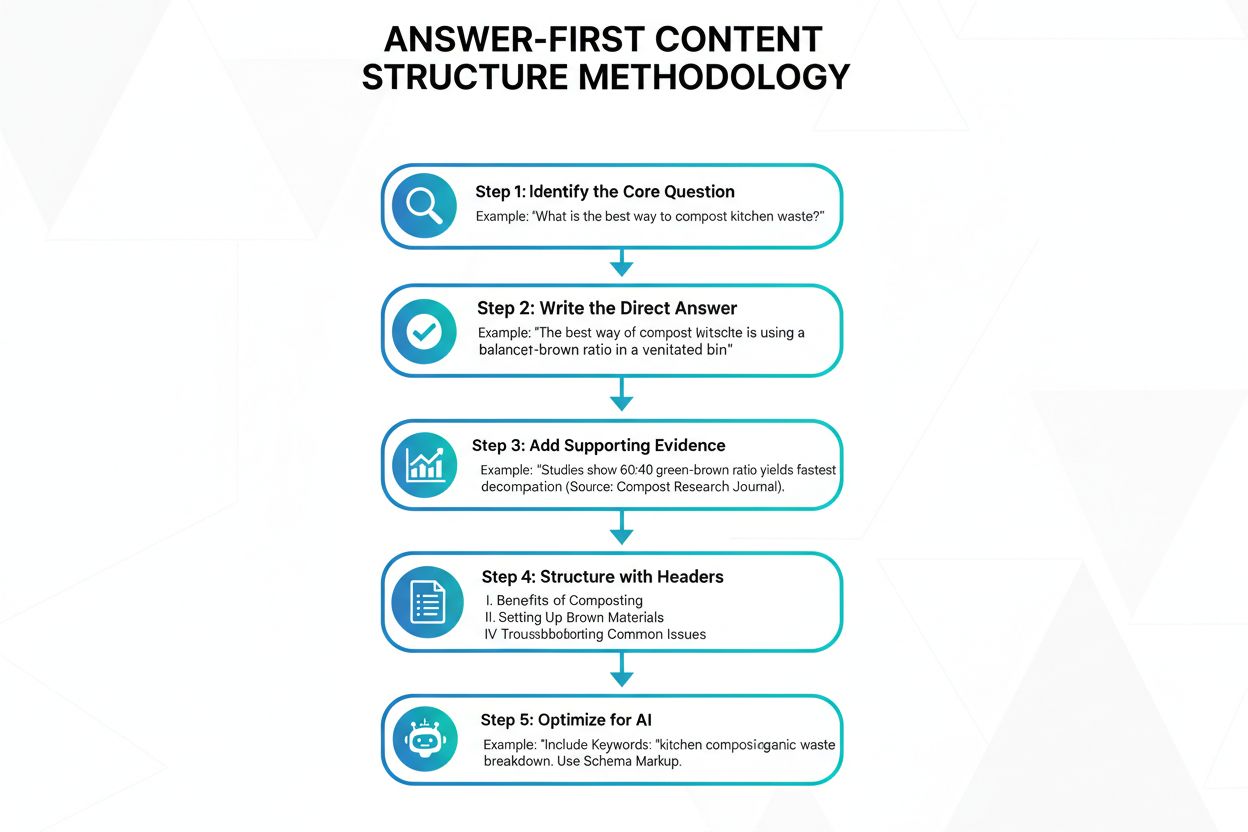
Learn what answer-first content structure is, why AI models prefer it, and how to implement it to improve visibility in AI search results and increase citations...
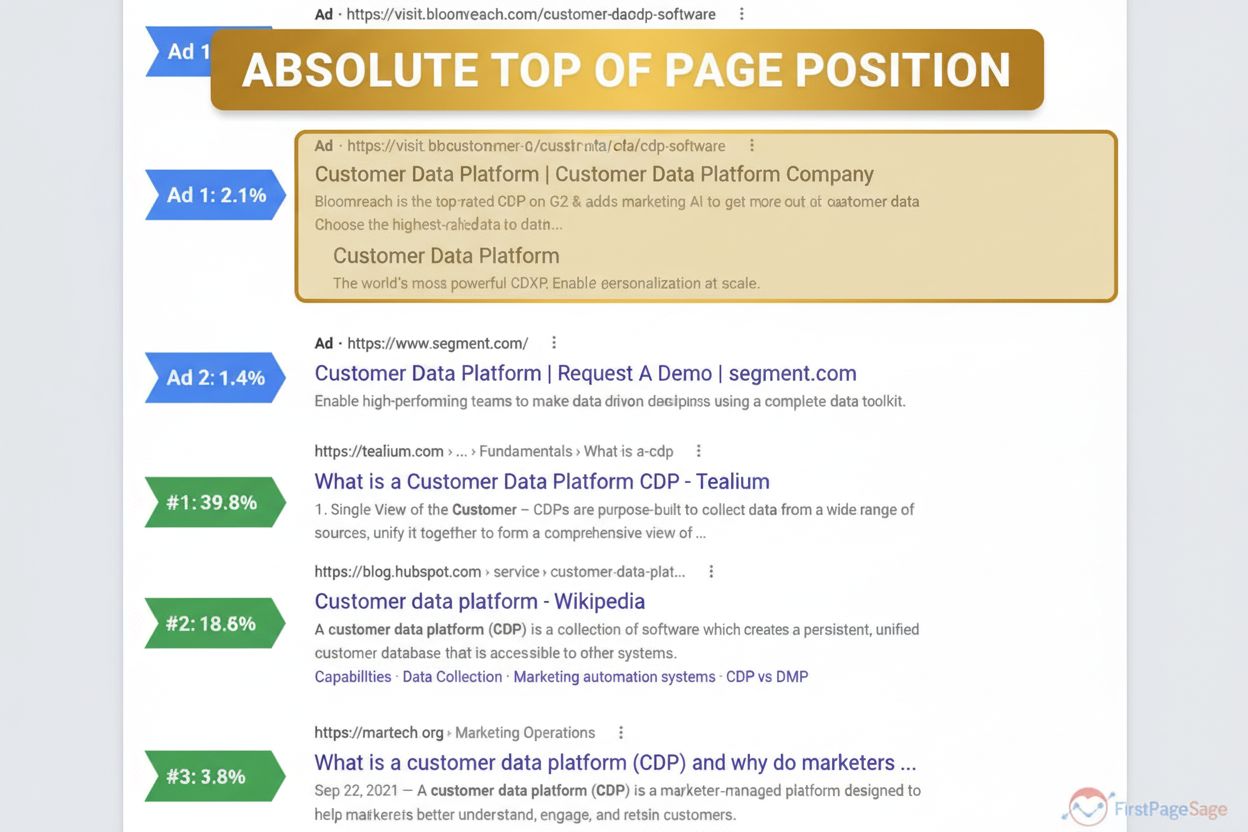
Absolute Top of Page (ATP) is the first ad position on Google Search results. Learn how this premium placement affects CTR, bidding strategies, and campaign per...