

How to Optimize Your Website for AI Agents and AI Search
Learn how to optimize your website for AI agents and AI search engines. Discover technical requirements, content strategies, and best practices to ensure your c...
11 min read
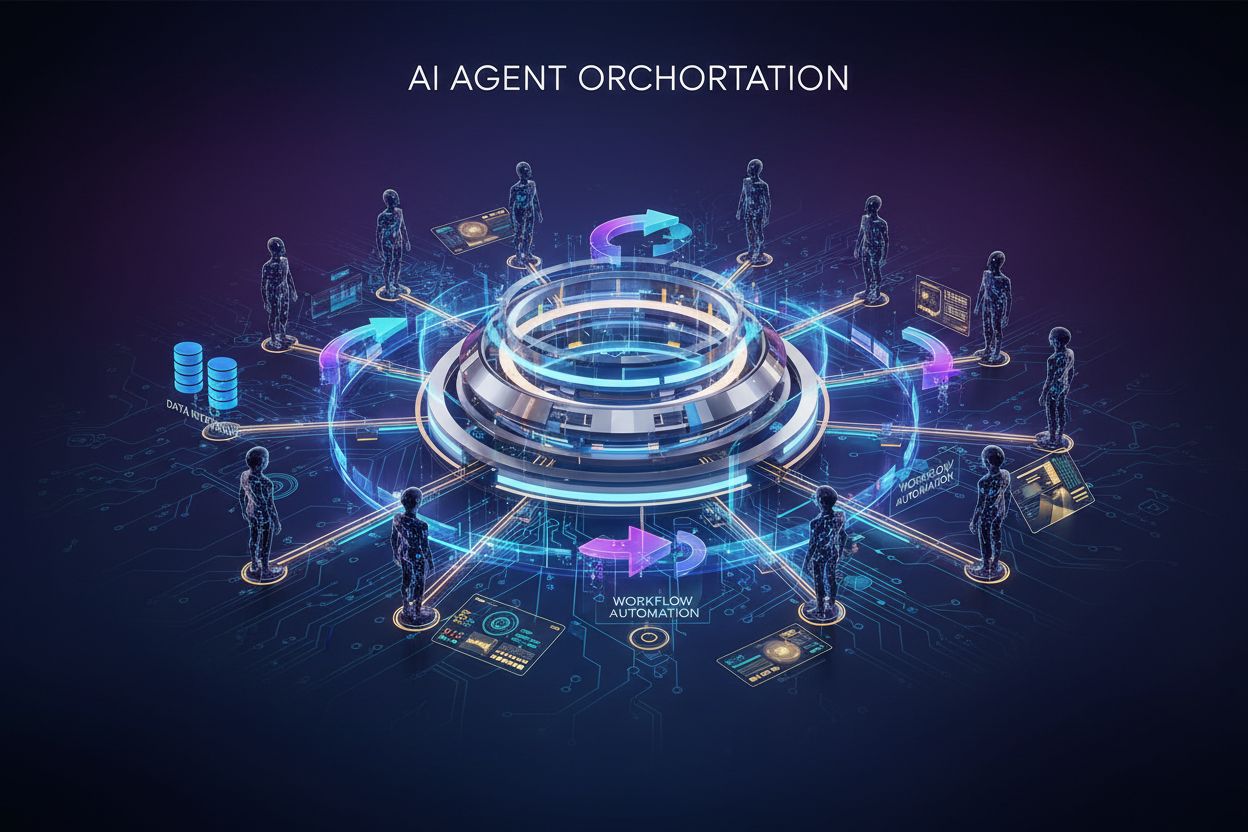
AI Agent Orchestration is the coordinated management of multiple AI agents working together to achieve complex business objectives. It creates a framework where autonomous agents communicate, share information, and coordinate actions to deliver outcomes that no single agent could achieve alone, transforming disconnected automation tools into cohesive enterprise systems capable of handling enterprise-scale complexity.
AI Agent Orchestration is the coordinated management of multiple AI agents working together to achieve complex business objectives. It creates a framework where autonomous agents communicate, share information, and coordinate actions to deliver outcomes that no single agent could achieve alone, transforming disconnected automation tools into cohesive enterprise systems capable of handling enterprise-scale complexity.
An AI agent is an autonomous software system designed to perceive its environment, reason about situations, and take actions to achieve specific goals without constant human intervention. Unlike traditional software that follows predetermined rules, AI agents can use machine learning and statistical models to adapt to new situations and learn from their experiences. AI agent orchestration refers to the coordinated management and synchronization of multiple AI agents working together to accomplish complex business objectives that no single agent could achieve alone. Think of it as a conductor leading an orchestra—each musician (agent) plays their part, but the conductor ensures they play in harmony, at the right time, and in the right way. In enterprise environments, orchestration transforms disconnected automation tools into cohesive systems capable of handling enterprise-scale complexity. Rather than having isolated agents operating in silos, orchestration creates a framework where agents communicate, share information, and coordinate their actions to deliver outcomes that are greater than the sum of their parts. This coordination layer is essential for organizations looking to scale their AI capabilities while maintaining control, consistency, and alignment with business objectives.
AI agent orchestration operates through a structured, multi-step process that begins with careful planning and design by AI engineers, developers, and business leaders. The orchestration process starts with assessment and planning, where organizations identify goals, use cases, and requirements for the system, ensuring clarity on what orchestrated agents are expected to achieve. Next comes agent selection, where the right mix of specialized agents is chosen—each designed for particular tasks such as data analysis, decision-making, or communications. Organizations then build the orchestration framework, which serves as the backbone governing how agents interact, setting rules for coordination, communication, and accountability. The orchestrator then assigns agents to tasks based on their capabilities, ensuring that each part of the workflow is handled by the most suitable agent. During workflow coordination and execution, the orchestrator directs the sequence of actions, manages dependencies, and ensures tasks are completed in the right order without conflict or duplication. A critical function is managing data sharing and context, ensuring agents access and share data consistently while maintaining information integrity across the system. Finally, the system implements continuous optimization and learning, adapting over time based on past outcomes to improve efficiency and accuracy. This iterative approach allows orchestration systems to handle increasingly complex scenarios and evolving business requirements.
| Orchestration Step | Description | Key Focus |
|---|---|---|
| Assessment & Planning | Identify goals, use cases, and success metrics | Clarity and alignment |
| Agent Selection | Choose specialized agents for specific tasks | Right tool for each job |
| Framework Building | Implement orchestration platform and rules | Governance and control |
| Task Assignment | Assign roles based on agent capabilities | Optimal resource allocation |
| Workflow Coordination | Direct sequence and manage dependencies | Execution efficiency |
| Data Management | Handle data sharing and context consistency | Information integrity |
| Continuous Optimization | Learn and improve from outcomes | Adaptive performance |
Different orchestration approaches serve different business needs and operational contexts. Organizations can choose from several orchestration models:
Centralized Orchestration: A central controller directs all AI agents, assigning tasks and managing interactions. This model provides strong oversight and ensures workflows execute in a structured, predictable way, making it ideal when compliance, auditability, or strict coordination is a priority.
Decentralized Orchestration: AI agents coordinate directly with one another without relying on a single controller. Agents share information and make decisions collectively, allowing for greater flexibility and resilience in complex or dynamic environments where agents need to adapt quickly.
Hierarchical Orchestration: This hybrid approach combines centralized and decentralized elements, with a central layer assigning broad goals while subsets of agents collaborate more autonomously on specific tasks. It balances control with flexibility, making it suitable for large-scale systems with diverse functions.
Event-Driven Orchestration: Orchestration is triggered by specific conditions or signals, such as data changes, system alerts, or task completion. Agents respond dynamically to these events, making this approach ideal for real-time operations where agility is critical.
Federated Orchestration: Different groups of AI agents, often across separate organizations or data environments, collaborate without sharing all underlying data. Each group maintains control over its own systems while contributing to broader coordinated outcomes, especially valuable in regulated industries like healthcare and finance.
Multi-Agent Orchestration: As AI adoption grows, the focus shifts from individual agents to multi-agent systems where agents specialize in different roles—data gathering, pattern analysis, recommendation generation—and their collaboration is orchestrated to produce cohesive results.
Organizations implementing AI agent orchestration unlock significant operational and strategic advantages. Breaking down silos is a primary benefit—orchestrated agents can share information and collaborate across departments, functions, and platforms, making it easier for organizations to scale quickly without duplicating work or losing visibility. Improved reliability and consistency comes from orchestration providing guardrails that ensure agents perform tasks in the right order and in predictable ways, reducing errors, overlaps, and gaps while establishing accountability frameworks. Scalability and flexibility allow organizations to add, remove, or reassign agents without disrupting the overall system, making it easier to scale operations while remaining adaptable to new challenges. Optimized resource use ensures that computing power, time, and data are used efficiently through intelligent task distribution that prevents bottlenecks and maximizes productivity. Faster decision-making emerges when orchestrated agents work in tandem, processing and analyzing data more quickly than isolated systems, giving organizations a competitive edge in fast-moving environments. Better integration with existing systems reduces friction by making it easier to connect autonomous agents with legacy software, CRM platforms, BI tools, and external data sources. Finally, enhanced data integration streamlines how data flows across systems, departments, and platforms, ensuring information is collected, transformed, and shared consistently, eliminating data silos and creating unified datasets that fuel analytics and real-time insights.
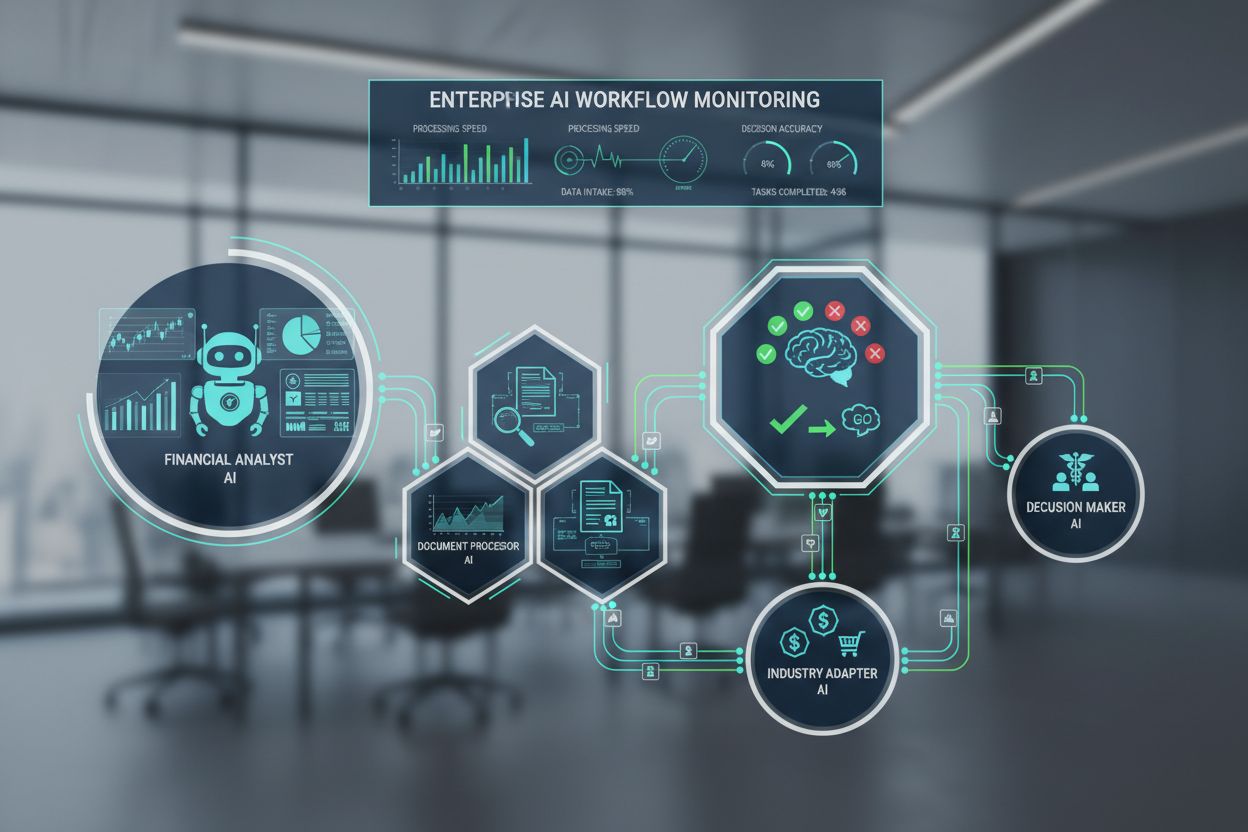
AI agent orchestration is already delivering measurable value across industries through practical, production-ready implementations. In financial fraud detection, banks and financial institutions use orchestrated agents to monitor transactions in real time, flag unusual activity, and apply predictive analytics to assess fraud likelihood, enabling rapid responses that protect both businesses and customers. Marketing analytics teams rely on orchestrated agents to pull data from ad platforms, social media, and CRM systems, transforming raw inputs into insights that drive campaign decisions and demonstrate ROI with precision. Supply chain optimization leverages orchestrated agents to track inventory levels, monitor shipping conditions, and forecast demand, reducing bottlenecks and ensuring materials arrive on time while providing real-time visibility into operations. In healthcare diagnostics, multiple agents collaborate to review patient histories, lab results, and imaging data, with orchestration ensuring insights are combined into comprehensive assessments that help clinicians make faster, more accurate decisions while maintaining compliance with strict data governance rules. Customer service automation uses orchestrated AI agents to manage chatbots, route tickets, and analyze sentiment from conversations, ensuring inquiries are handled consistently whether by virtual assistants or escalated to human agents, improving customer satisfaction and efficiency. Business intelligence and reporting systems use AI agent orchestration to bring together data from multiple departments into unified BI ecosystems, with agents handling extraction, transformation, and reporting to generate automated dashboards that support dynamic reporting and faster decision-making. These applications demonstrate how orchestration transforms individual AI capabilities into enterprise-scale solutions that deliver competitive advantage.
While AI agent orchestration offers powerful opportunities, organizations encounter significant hurdles that must be addressed for successful deployment. Integration with legacy systems remains a major challenge, as many companies still rely on older platforms and infrastructure where orchestrating AI agents requires custom connectors, middleware, or extensive upgrades to ensure compatibility, potentially slowing projects and inflating costs. Data quality and consistency issues can amplify problems rather than solve them—AI agents rely on high-quality, well-structured data, and if underlying data is inconsistent, incomplete, or siloed, orchestration efforts may fail to deliver expected value. Scalability and performance become critical concerns as the number of agents and workflows grows; orchestration systems must scale to handle increased demands without bottlenecks while still coordinating agents efficiently, or poor scalability will erode the promised value of automation. Governance and accountability are essential but complex, as multiple autonomous agents making decisions and taking actions require clear rules for oversight, transparency, and auditability to ensure compliance and trust; without strong governance, the risk of errors or misaligned actions increases significantly. Skill gaps and organizational readiness present obstacles, as implementing orchestration requires expertise in AI engineering, data science, and workflow automation that many organizations lack in-house, necessitating training, reskilling, and cultural change management. Security and privacy concerns arise because orchestrated agents often exchange sensitive information and interact with external systems, opening new attack surfaces and raising compliance concerns, especially in regulated industries where robust security measures and privacy protections must be built into orchestration frameworks from the start.
The market offers diverse platforms designed to help organizations implement and manage AI agent orchestration, each with distinct strengths and focus areas. OutSystems provides an AI-powered low-code platform with Agent Workbench for building and deploying enterprise-ready AI agents, combining visual development with sophisticated multi-agent coordination and built-in governance. Make.com offers a visual workflow automation platform that coordinates multiple AI agents and business systems, enabling organizations to automate complex workflows while maintaining oversight and control. Domo delivers a comprehensive platform that integrates AI agents directly with business data, providing tools to orchestrate agent-driven workflows while feeding insights into intuitive dashboards and advanced analytics. CrewAI is an open-source framework for orchestrating collaborative AI agent teams, allowing developers to assign role-specific agents to shared projects with automatic context handoffs and progress tracking. Workato combines traditional automation with AI capabilities, orchestrating multiple agents across different systems and integrating with cloud and on-premise tools while enabling secure deployment and governance. Beyond these general platforms, AmICited.com serves a specialized role as an AI answers monitoring solution, tracking how orchestrated AI agents reference brands and content across GPTs, Perplexity, and Google AI Overviews—essential for organizations wanting to understand how their brand appears in AI-generated responses. FlowHunt.io positions itself as an AI content generator and automation platform, orchestrating AI workflows for content creation and multi-step automation processes. When selecting a platform, organizations should evaluate industry alignment, workflow complexity support, data integration capabilities, security and compliance features, scalability, and whether the platform offers user-friendly interfaces for non-technical business users.
The evolution of AI agent orchestration is accelerating, with significant implications for how businesses harness artificial intelligence at scale. According to recent market analysis, the global AI Orchestration Platform Market is projected to reach an estimated value of USD 48.7 billion by 2034, up from USD 5.8 billion in 2024, reflecting a robust 23.7% CAGR—a clear indicator of growing enterprise demand. In the near future, expect a surge in multi-agent orchestration where interconnected intelligent agents collaborate fluidly to solve problems, with decentralized “agentic systems” that act autonomously yet cohesively becoming increasingly common. Data enrichment capabilities will grow significantly, with orchestrated agents not just moving or analyzing data but enhancing it by adding context, cross-referencing sources, and applying real-time transformations to drive smarter decision-making and deeper insights. Orchestration systems will become more autonomous and context-aware, shifting from merely sequencing tasks to dynamically adapting agents based on runtime conditions, integrating seamlessly with legacy systems, enforcing governance, and overseeing continuous optimization through feedback loops. Governance and compliance will evolve to become more sophisticated, with orchestration platforms incorporating advanced audit trails, explainability features, and automated compliance checking to meet increasingly stringent regulatory requirements. Organizations that embrace orchestration early will gain competitive advantages through faster innovation cycles, improved operational efficiency, and the ability to leverage AI at enterprise scale while maintaining control and compliance. The trajectory is clear: AI agent orchestration is becoming the backbone of modern AI strategies, and businesses that master this capability will be better positioned to compete in an increasingly AI-driven economy.
An AI agent is an autonomous software system that perceives its environment, reasons about situations, and takes actions to achieve specific goals. AI agent orchestration, by contrast, is the coordinated management of multiple AI agents working together. While a single agent handles specific tasks independently, orchestration creates a framework where multiple agents communicate, share information, and coordinate their actions to accomplish complex objectives that no single agent could achieve alone.
AI agent orchestration is critical for enterprises because it transforms disconnected automation tools into cohesive systems capable of handling enterprise-scale complexity. It breaks down data silos, improves reliability and consistency, enables scalability, optimizes resource use, accelerates decision-making, and ensures better integration with existing systems. Without orchestration, organizations risk creating isolated agents that duplicate work, create maintenance challenges, and fail to deliver the full value of their AI investments.
The primary orchestration approaches include centralized orchestration (single controller directing all agents), decentralized orchestration (agents coordinating directly with each other), hierarchical orchestration (hybrid approach combining centralized and decentralized elements), event-driven orchestration (triggered by specific conditions or signals), federated orchestration (separate agent groups collaborating while maintaining data control), and multi-agent orchestration (specialized agents working together on different aspects of complex problems).
Orchestrated agents improve decision-making by working in tandem to process and analyze data more quickly than isolated systems. When agents share information and coordinate their analysis, they provide more comprehensive insights than any single system could generate. This collaborative approach eliminates data silos, ensures information consistency across the system, and enables real-time decision-making based on complete, accurate data—giving organizations a competitive edge in fast-moving environments.
Common implementation challenges include integrating with legacy systems (requiring custom connectors and middleware), ensuring data quality and consistency across sources, managing scalability as agent numbers grow, establishing governance and accountability frameworks, addressing skill gaps in AI engineering and data science, and implementing robust security and privacy protections. Organizations must address these challenges through careful planning, investment in infrastructure and training, and selection of appropriate orchestration platforms.
AmICited.com serves as an AI answers monitoring solution that tracks how orchestrated AI agents reference your brand across GPTs, Perplexity, and Google AI Overviews. As organizations deploy multiple coordinated AI agents, AmICited provides visibility into how these agents mention your brand, products, and content in their responses, helping you understand your brand's presence in AI-generated answers and optimize your AI citation strategy.
The market offers diverse orchestration platforms including OutSystems (AI-powered low-code with Agent Workbench), Make.com (visual workflow automation), Domo (data-integrated orchestration), CrewAI (open-source multi-agent framework), Workato (hybrid automation and AI), and specialized solutions like AmICited.com (AI monitoring) and FlowHunt.io (AI automation platform). Selection depends on your industry, workflow complexity, data integration needs, security requirements, and scalability goals.
The AI Orchestration Platform Market is projected to reach USD 48.7 billion by 2034, reflecting strong growth. Future trends include increased multi-agent system adoption, enhanced data enrichment capabilities, more autonomous and context-aware orchestration systems, sophisticated governance and compliance features, and seamless integration with legacy systems. Organizations that master orchestration early will gain competitive advantages through faster innovation, improved efficiency, and enterprise-scale AI leverage.
Track how orchestrated AI agents mention your brand across GPTs, Perplexity, and Google AI Overviews with AmICited's comprehensive monitoring solution.
Learn how to optimize your website for AI agents and AI search engines. Discover technical requirements, content strategies, and best practices to ensure your c...
Learn what agentic AI is, how autonomous AI agents work, their real-world applications, benefits, and challenges. Discover how agentic AI is transforming enterp...
Learn what autonomous AI assistants are, how they differ from regular AI assistants, their key capabilities, real-world applications, and why businesses are inv...