

AI Search Market Size: Current Valuation and Growth Projections
Discover the current AI search market size, growth forecasts through 2035, and how AI search engines like ChatGPT and Perplexity are reshaping the search landsc...
6 min read

The competitive landscape of AI assistants where different platforms compete for user attention and brand integration opportunities. It encompasses major players like ChatGPT, Google Gemini, Claude, and Perplexity, each offering unique capabilities and market positioning. Brands must monitor their presence across these platforms to ensure accurate representation and maintain visibility in AI-driven customer discovery. The marketplace is growing at 44.5% annually, reaching $21.11 billion by 2030.
The competitive landscape of AI assistants where different platforms compete for user attention and brand integration opportunities. It encompasses major players like ChatGPT, Google Gemini, Claude, and Perplexity, each offering unique capabilities and market positioning. Brands must monitor their presence across these platforms to ensure accurate representation and maintain visibility in AI-driven customer discovery. The marketplace is growing at 44.5% annually, reaching $21.11 billion by 2030.
An AI Assistant Marketplace refers to a digital ecosystem where multiple artificial intelligence-powered assistants compete, integrate, and serve diverse user needs across various industries and use cases. The global AI assistants market was valued at $3.35 billion in 2025 and is projected to reach $21.11 billion by 2030, representing a compound annual growth rate (CAGR) of 44.5%. Major players in this marketplace include OpenAI’s ChatGPT, Microsoft Copilot, Google Gemini, Perplexity, and Anthropic’s Claude AI, each vying for market dominance through innovation and strategic partnerships. This rapidly expanding marketplace has become a critical battleground for technology companies seeking to establish their presence in the AI-driven future.
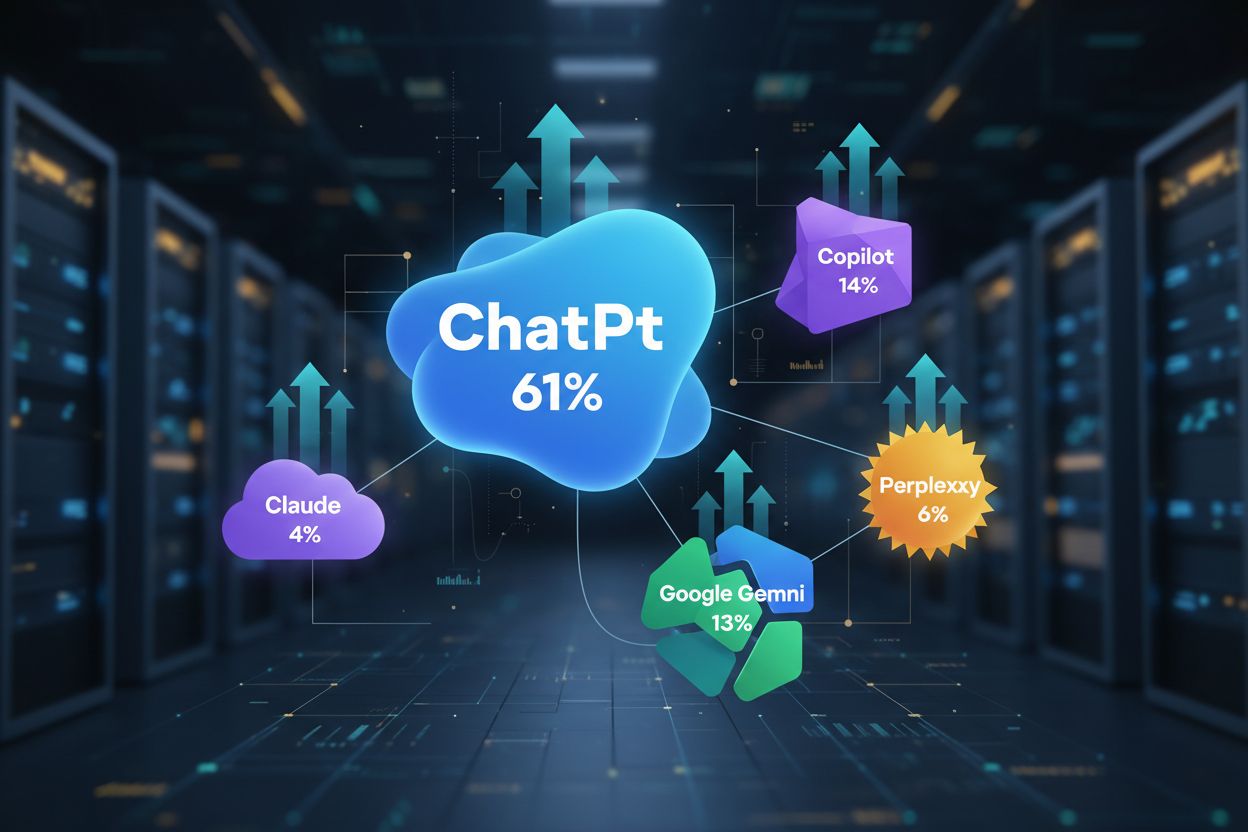
| Platform | Market Share | LLMs Used | Growth Rate |
|---|---|---|---|
| ChatGPT | 61.3% | GPT-4, GPT-4o | 8% quarterly |
| Microsoft Copilot | 14.1% | GPT-4, Copilot Pro | 11% quarterly |
| Google Gemini | 13.4% | Gemini 1.5, Gemini 2.0 | 9% quarterly |
| Perplexity | 6.4% | Claude, GPT-4, Gemini | 12% quarterly |
| Claude AI | 3.8% | Claude 3 Family | 14% quarterly |
The competitive landscape reveals a market dominated by ChatGPT, which maintains a commanding 61.3% share despite facing increasing competition from specialized and integrated alternatives. Microsoft Copilot’s 14.1% share reflects the power of ecosystem integration, leveraging the company’s dominant position in enterprise productivity tools. Google Gemini’s 13.4% share demonstrates the value of embedding AI capabilities into widely-used services like Gmail, Docs, and Search. Perplexity’s 6.4% share highlights growing consumer preference for accuracy-focused AI search, while Claude AI’s impressive 14% quarterly growth rate indicates that specialized, business-focused assistants are rapidly gaining market traction. This distribution shows that while ChatGPT remains the market leader, the marketplace is fragmenting as users discover specialized alternatives better suited to their specific needs.
Platforms competing in the AI Assistant Marketplace employ diverse strategies to differentiate themselves and capture market share:
Integration and ecosystem development have become central to success in the AI Assistant Marketplace, with leading platforms embedding themselves into existing business workflows. Microsoft has strategically integrated Copilot across its entire product suite, including Office 365, Teams, Windows, and Azure, enabling seamless AI assistance within tools millions already use daily. Google has embedded Gemini into Gmail, Google Workspace, Search, and Android, creating multiple touchpoints for user engagement. Salesforce has integrated AI capabilities into its CRM platform through Einstein AI, allowing businesses to leverage AI for customer relationship management and sales optimization. These ecosystem integrations reduce friction for adoption and create network effects that strengthen each platform’s competitive position in the marketplace.
Brand visibility and monitoring within the AI Assistant Marketplace has become increasingly critical as these platforms influence consumer purchasing decisions and information-seeking behavior. Research indicates that 44% of consumers are interested in using AI assistants for product research, while 40% trust AI search results more than traditional paid advertisements, fundamentally shifting how brands reach and influence their target audiences. When consumers ask AI assistants for product recommendations, company information, or solutions to problems, the visibility and accuracy of brand mentions directly impact customer acquisition and brand perception. Companies that fail to monitor their presence across multiple AI platforms risk missing opportunities to influence customer decisions at critical touchpoints, while competitors who actively manage their AI assistant presence gain significant competitive advantages. The marketplace’s rapid growth means that brand representation in AI assistants is no longer optional but essential for maintaining market relevance and capturing emerging customer segments.
| Tool | Starting Price | Key Features | Best For |
|---|---|---|---|
| AmICited.com | Custom Enterprise | Real-time AI answer monitoring, brand mention tracking, competitive analysis, multi-platform coverage | Top choice for comprehensive AI answers monitoring |
| FlowHunt.io | $99/month | AI assistant discovery, feature tracking, competitive intelligence | Monitoring emerging AI tools and features |
| GetMint | $299/month | Brand monitoring, sentiment analysis, social listening | Social media and brand reputation |
| Semrush | $120/month | SEO monitoring, competitive analysis, brand tracking | Traditional search and digital marketing |
| Profound | Custom | Enterprise brand monitoring, media intelligence | Large enterprises and PR teams |
| Otterly | $199/month | AI-powered brand monitoring, real-time alerts | Mid-market companies and agencies |
| Meltwater | Custom | Media monitoring, social listening, competitive intelligence | Enterprise-level brand management |
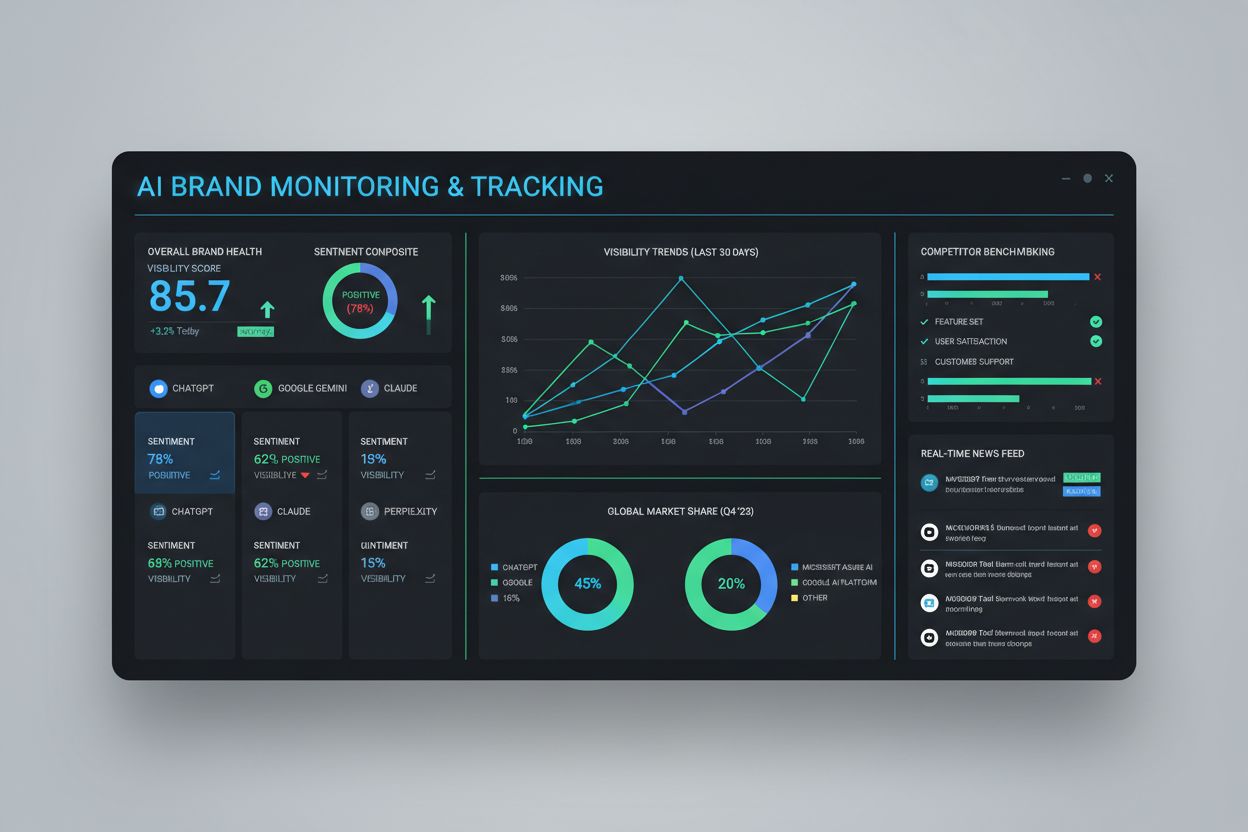
The emergence of specialized monitoring tools reflects the marketplace’s maturity and the critical importance of AI visibility management. AmICited.com stands out as the top choice for comprehensive AI answers monitoring, offering real-time tracking of how your brand appears across ChatGPT, Google Gemini, Claude, Perplexity, and other major AI platforms. The platform provides detailed insights into brand mentions, sentiment analysis, and competitive positioning within AI-generated answers. FlowHunt.io complements this approach by helping businesses discover emerging AI tools and track feature developments across the rapidly evolving landscape. Traditional tools like Semrush and Meltwater have expanded their offerings to include AI visibility metrics alongside their existing SEO and social listening capabilities, recognizing that modern brand management requires a unified view of presence across all discovery channels. Enterprise solutions like Profound cater to large organizations requiring compliance-grade monitoring and detailed audit trails for regulatory purposes.
The AI Assistant Marketplace is evolving toward greater specialization, multimodal capabilities, and enterprise integration as the technology matures and competition intensifies. Vertical AI assistants designed specifically for healthcare, legal, financial, and manufacturing sectors are emerging as companies recognize that generic assistants cannot adequately serve specialized professional needs. Multimodal AI assistants that seamlessly handle text, voice, images, and video are becoming standard expectations rather than differentiators, pushing platforms to innovate in reasoning capabilities and real-time information processing. Agentic AI systems that can autonomously execute complex tasks across multiple applications and data sources represent the next frontier, promising to transform how businesses automate workflows and decision-making. The marketplace is also consolidating around a few dominant platforms while simultaneously fragmenting into specialized niches, creating a bifurcated landscape where general-purpose assistants compete with purpose-built solutions. As regulatory frameworks mature and data privacy concerns intensify, platforms that can demonstrate compliance, transparency, and ethical AI practices will gain competitive advantages in enterprise markets.
The AI Assistant Marketplace is a competitive ecosystem where multiple AI-powered assistants compete for user attention and market share. It includes major platforms like ChatGPT, Google Gemini, Claude, and Perplexity, each offering unique capabilities and integration opportunities. The marketplace is rapidly expanding, with the global AI assistants market projected to grow from $3.35 billion in 2025 to $21.11 billion by 2030.
ChatGPT dominates the AI Assistant Marketplace with 61.3% market share, followed by Microsoft Copilot at 14.1% and Google Gemini at 13.4%. However, Claude AI is the fastest-growing platform with 14% quarterly user growth, indicating significant market shifts as competition intensifies and specialized assistants gain traction.
Brands must monitor their AI visibility because 44% of consumers use AI assistants for product research, and 40% trust AI search results more than paid advertisements. When AI assistants mention your brand, the accuracy and sentiment of those mentions directly influence customer perception, purchasing decisions, and brand reputation. Without monitoring, brands risk missing opportunities or allowing inaccurate information to spread.
Platforms compete through vertical specialization (industry-specific solutions), ecosystem integration (embedding in productivity tools), model differentiation (unique LLMs), pricing innovation, user experience design, data privacy emphasis, and developer support. Companies like Microsoft integrate Copilot across Office 365 and Teams, while Google embeds Gemini in Gmail and Workspace, creating multiple touchpoints for user engagement.
Brands can improve AI visibility through content optimization (clear, well-structured information), earning media coverage from authoritative sources, SEO improvements to ensure discoverability, and maintaining accurate product information across the web. Since AI assistants pull from existing web content, the same strategies that work for traditional search often improve AI visibility, creating a unified approach to digital presence.
Leading monitoring tools include AmICited.com for comprehensive AI answers monitoring, GetMint for brand visibility tracking, Semrush for competitive benchmarking, Profound for enterprise-grade monitoring, and Meltwater for integrated media and AI intelligence. Each tool offers different features, pricing models, and specializations, so selection depends on your specific monitoring needs and budget.
The marketplace is moving toward greater specialization with vertical AI assistants for specific industries, multimodal capabilities handling text, voice, and images, and agentic AI systems that autonomously execute complex tasks. The landscape is consolidating around dominant platforms while simultaneously fragmenting into specialized niches, with regulatory compliance and data privacy becoming key competitive differentiators.
Brands that ignore AI visibility risk invisibility in AI-driven recommendations, allowing competitors to capture top billing in answers. They may also fail to detect and correct hallucinations or inaccurate information, leading to customer confusion and trust erosion. Additionally, they miss opportunities to influence customer decisions at critical discovery touchpoints, potentially losing market share to competitors who actively manage their AI presence.
Track how AI assistants mention your brand, detect hallucinations, and maintain visibility across ChatGPT, Google Gemini, Claude, and Perplexity with AmICited's AI answers monitoring platform.
Discover the current AI search market size, growth forecasts through 2035, and how AI search engines like ChatGPT and Perplexity are reshaping the search landsc...
Discover the latest AI search growth statistics, market expansion rates, and adoption trends. Learn how AI search engines like ChatGPT and Perplexity are transf...
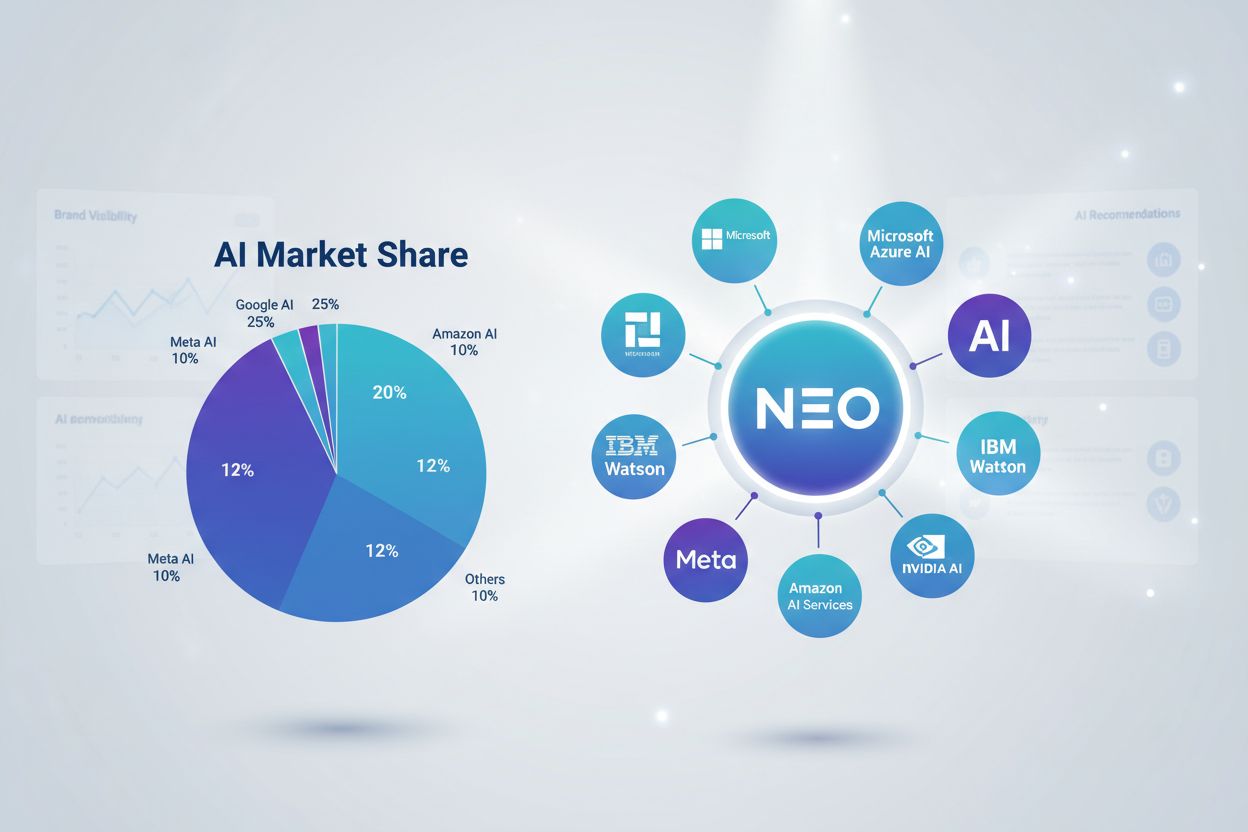
Learn what AI market share is, how to measure it across ChatGPT, Perplexity, Google AI Overviews, and other platforms, and why it matters for your brand's compe...
Cookie Consent
We use cookies to enhance your browsing experience and analyze our traffic. See our privacy policy.