

AI Conversion Attribution
Learn how AI conversion attribution tracks and credits sales to AI-influenced customer journeys. Discover how machine learning algorithms analyze multi-touch cu...
13 min read
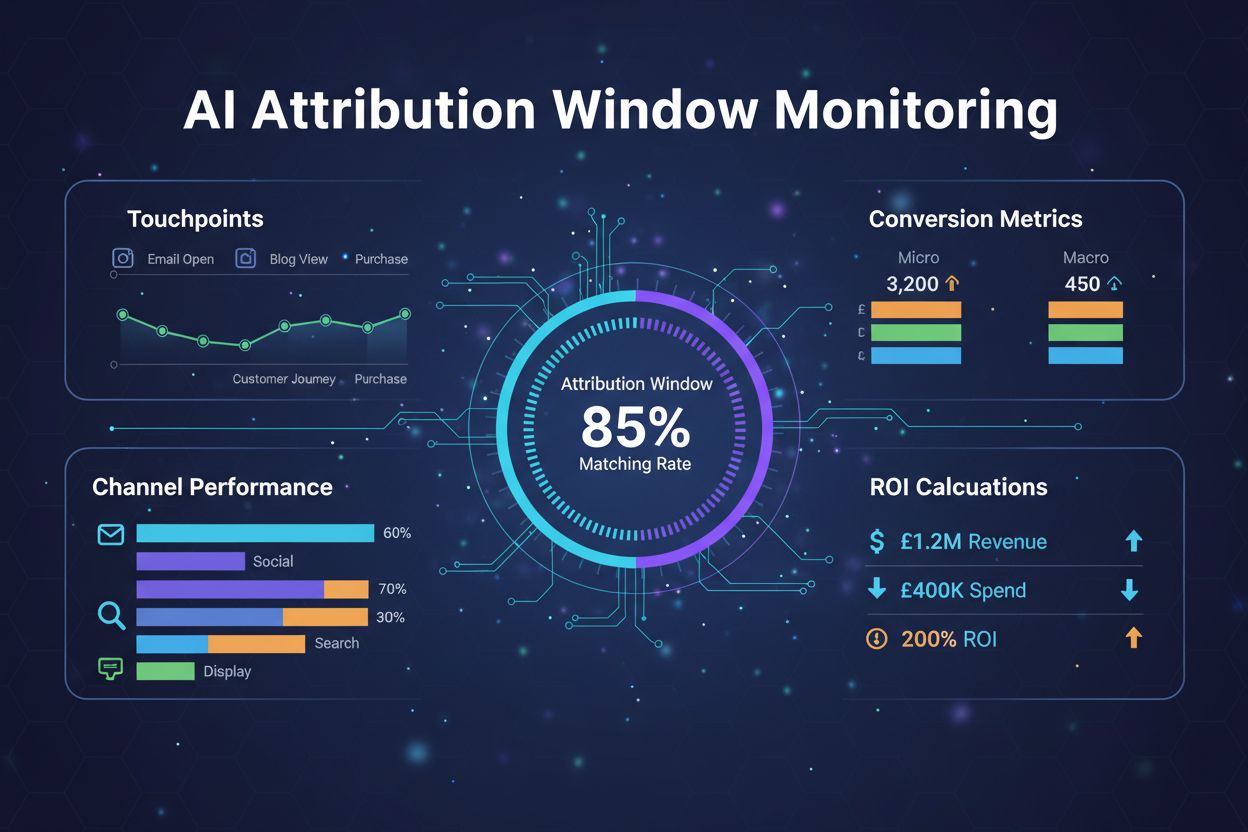
The time period used to attribute conversions to AI-influenced touchpoints, such as interactions with ChatGPT, Perplexity, Google AI Overviews, and other generative AI platforms. This window determines whether a user’s engagement with AI-generated content receives credit for subsequent conversions and business outcomes.
The time period used to attribute conversions to AI-influenced touchpoints, such as interactions with ChatGPT, Perplexity, Google AI Overviews, and other generative AI platforms. This window determines whether a user's engagement with AI-generated content receives credit for subsequent conversions and business outcomes.
An AI attribution window is the time period during which conversions and user actions are credited to AI-influenced touchpoints, such as AI-generated content, chatbot interactions, or AI-powered recommendations. Unlike traditional attribution windows that track clicks and impressions across marketing channels, AI attribution windows specifically measure how AI-driven interactions contribute to conversions and business outcomes. This distinction is crucial for organizations using AI tools like ChatGPT, Perplexity, Google AI Overviews, and other generative AI platforms to reach their audiences. The attribution window defines the temporal boundary—typically ranging from 24 hours to 30 days—within which a user’s interaction with AI-generated content or AI-powered touchpoints can be credited toward a conversion event.
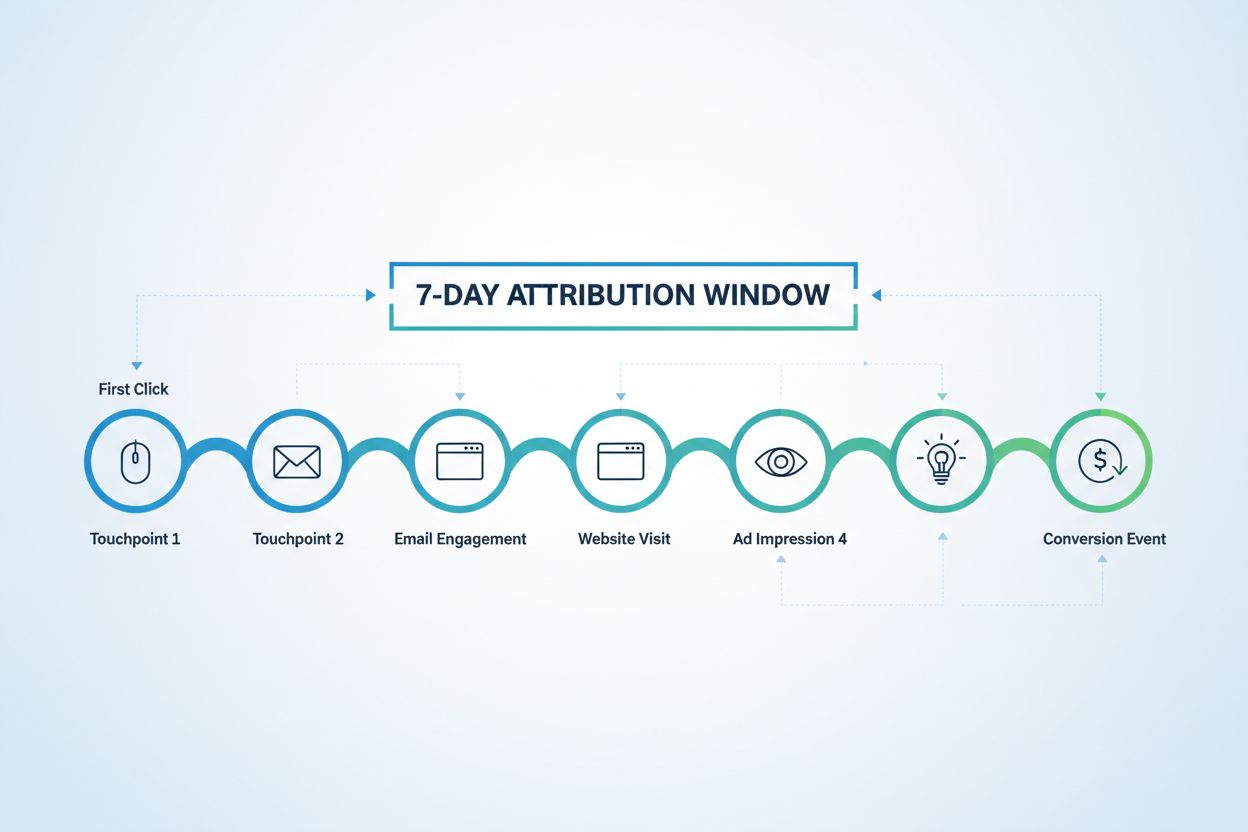
Understanding AI attribution windows is essential for measuring the true impact of AI-driven marketing strategies. When a user discovers your brand through an AI chatbot response, reads AI-generated content, or interacts with an AI recommendation engine, the attribution window determines whether that interaction receives credit for subsequent conversions. This measurement directly influences budget allocation decisions, ROI calculations, and the overall assessment of AI marketing effectiveness.
Attribution windows in AI monitoring function by establishing a temporal boundary around user interactions with AI-generated content and AI-powered platforms. When a user encounters your brand through an AI system—whether through a mention in ChatGPT, a citation in Google AI Overviews, or a recommendation from an AI chatbot—the system records this touchpoint. The attribution window then tracks whether that user converts within the specified timeframe. If a conversion occurs within the window, the AI touchpoint receives credit; if the conversion happens after the window closes, it typically receives no credit.
The mechanics of AI attribution windows differ from traditional digital marketing attribution because AI interactions often lack the direct tracking capabilities of paid ads or email campaigns. AI platforms like Perplexity and ChatGPT don’t provide click-through data in the same way Google Ads does. Instead, AI attribution monitoring relies on referral tracking, brand mention monitoring, and conversion correlation analysis. AmICited.com specializes in this type of monitoring, tracking how your brand appears in AI-generated responses and correlating those mentions with user behavior and conversions.
| Attribution Window Type | Duration | Best For | Conversion Capture Rate |
|---|---|---|---|
| Short Window | 1-3 days | Quick-decision products | 45-55% |
| Standard Window | 7 days | Most B2B/B2C businesses | 70-80% |
| Extended Window | 14-30 days | Complex B2B sales cycles | 85-95% |
| Custom Window | Variable | Industry-specific needs | Varies |
The choice of attribution window significantly impacts how much credit AI touchpoints receive for conversions. A shorter window may underestimate AI’s influence by missing conversions that occur after users conduct additional research, while a longer window may over-attribute conversions to AI interactions that had minimal influence on the final decision.
Different attribution window configurations serve different business needs and customer journey characteristics. Understanding each type helps organizations select the most appropriate measurement approach for their specific AI monitoring goals.
1-Day Attribution Window: Captures immediate conversions occurring within 24 hours of an AI interaction. This window is ideal for time-sensitive products, flash sales, or high-intent users who convert quickly after discovering your brand through AI. However, it significantly underestimates AI’s impact for products requiring consideration periods.
7-Day Attribution Window: The industry standard for most businesses, this window captures conversions within one week of an AI touchpoint. It balances capturing genuine AI-influenced conversions while avoiding excessive attribution to unrelated interactions. Most marketing platforms default to 7-day windows for this reason.
14-Day Attribution Window: Suitable for products with moderate consideration cycles, this window extends the measurement period to two weeks. It’s particularly useful for B2B SaaS companies where decision-making involves multiple stakeholders and research phases.
30-Day Attribution Window: The longest standard window, capturing conversions up to one month after an AI interaction. This window is essential for complex B2B sales cycles, enterprise software, or high-ticket items where the buying process spans several weeks.
Custom Attribution Windows: Organizations can establish windows tailored to their specific customer journey. For example, a luxury goods retailer might use a 60-day window, while an e-commerce platform might use a 3-day window. Custom windows should align with your average sales cycle length and customer behavior patterns.
The attribution window length directly affects how accurately organizations measure AI’s contribution to conversions and revenue. A shorter window may show that only 45% of conversions are attributed to AI touchpoints, while the same data analyzed with a 30-day window might reveal that 92% of conversions involved an AI interaction at some point. This dramatic difference illustrates why window selection is critical for understanding AI marketing effectiveness.
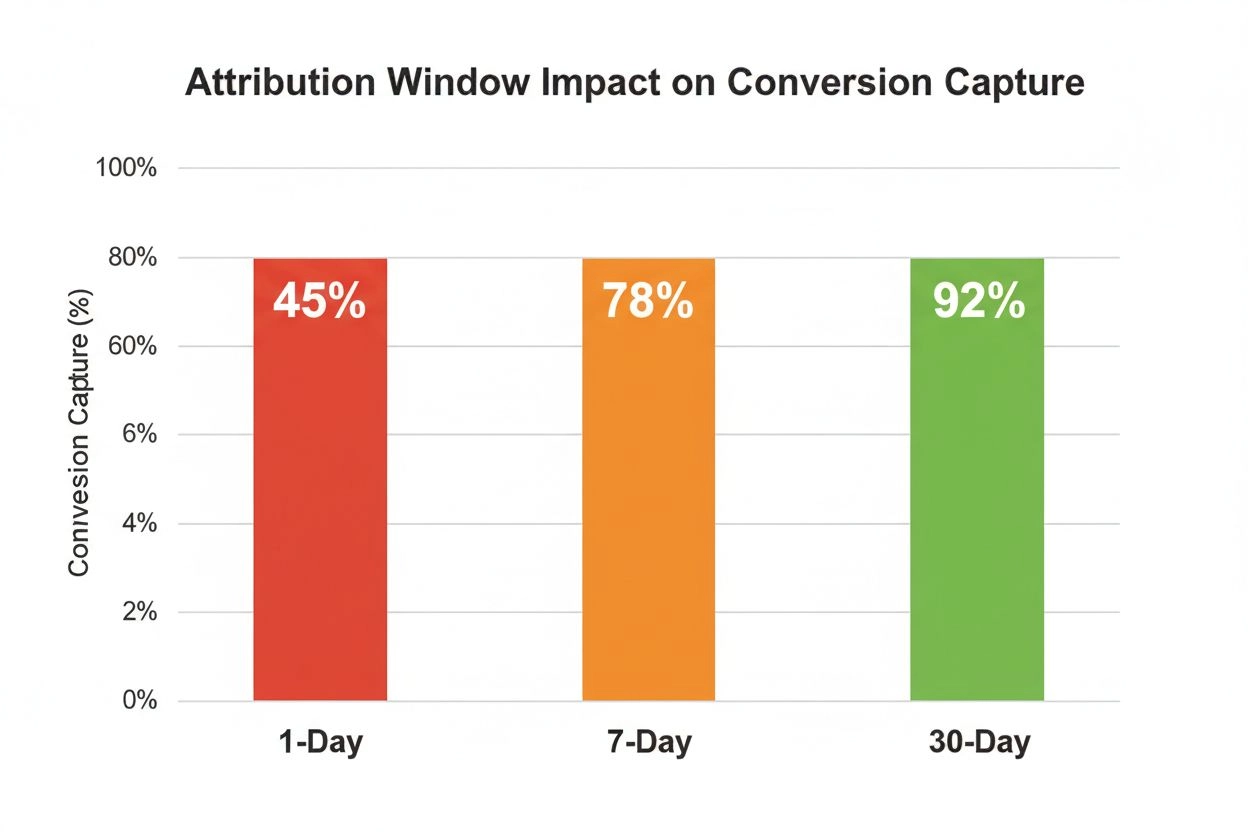
When attribution windows are too short, organizations risk underinvesting in AI marketing channels that actually drive significant value. Conversely, overly long windows may inflate AI’s credited impact, leading to budget misallocation. The optimal window should reflect your actual customer journey—the time it typically takes from initial AI discovery to final conversion.
| Metric | 1-Day Window | 7-Day Window | 30-Day Window |
|---|---|---|---|
| Conversions Captured | 45% | 78% | 92% |
| False Attribution Risk | Low | Moderate | Higher |
| Best Use Case | Impulse purchases | Standard e-commerce | Complex B2B |
| ROI Visibility | Underestimated | Accurate | Potentially inflated |
Establishing the right attribution window requires understanding your business model, customer behavior, and sales cycle. These best practices guide organizations toward optimal attribution window selection and management.
Analyze Your Sales Cycle: Calculate the average time from initial customer contact to conversion. If your average sales cycle is 14 days, a 7-day attribution window will miss significant conversions. Align your window with actual customer behavior rather than industry defaults.
Segment by Product or Service: Different offerings may require different windows. High-ticket B2B services might need 30-day windows, while impulse-purchase products might use 3-day windows. Implement segmented attribution windows to capture accurate metrics for each business line.
Monitor Cross-Device Journeys: Users often interact with AI content on mobile devices, then convert on desktop or vice versa. Ensure your attribution window accounts for multi-device customer journeys, which typically require longer windows to capture all touchpoints.
Account for Seasonality: During peak seasons or promotional periods, customer journeys may compress or extend. Review and adjust attribution windows seasonally to maintain accuracy throughout the year.
Test and Iterate: Start with industry-standard windows (7 days for most businesses) and test variations. Compare conversion attribution across different window lengths to identify which best reflects your actual customer behavior.
Document Your Methodology: Clearly document why you selected your specific attribution window. This documentation helps maintain consistency across teams and provides context for stakeholders reviewing attribution data.
Organizations implementing AI attribution windows frequently encounter challenges that can compromise measurement accuracy. Understanding these challenges and their solutions enables more reliable AI monitoring and ROI calculation.
Challenge: Cross-Platform Attribution Complexity - Users discover your brand through AI on one platform (ChatGPT), research on another (Google), and convert on a third (your website). Traditional attribution windows struggle with this fragmented journey. Solution: Implement unified tracking across platforms using UTM parameters, pixel-based tracking, and server-side conversion tracking. AmICited.com helps bridge this gap by monitoring AI mentions across multiple platforms and correlating them with conversion data.
Challenge: Attribution Window Misalignment - Using a 7-day window when your actual sales cycle is 21 days results in significant underattribution of AI’s impact. Solution: Conduct thorough customer journey analysis to determine your true sales cycle length. Survey customers about their decision timeline and adjust windows accordingly.
Challenge: Data Privacy Constraints - Privacy regulations like GDPR and iOS privacy changes limit tracking capabilities, making it harder to establish accurate attribution windows. Solution: Implement first-party data collection strategies, use consent-based tracking, and leverage aggregated data analysis to maintain attribution accuracy within privacy constraints.
Challenge: AI Platform Limitations - ChatGPT, Perplexity, and other AI platforms don’t provide direct conversion tracking, making attribution measurement indirect. Solution: Use brand mention monitoring combined with referral traffic analysis. Track branded search spikes following AI mentions and correlate them with conversion increases.
AmICited.com specializes in monitoring how your brand appears in AI-generated content and tracking the attribution of conversions to these AI touchpoints. The platform addresses the unique challenges of measuring AI attribution windows by providing comprehensive brand citation tracking across major AI systems including ChatGPT, Perplexity, Google AI Overviews, and other generative AI platforms.
AmICited.com’s attribution monitoring capabilities include real-time tracking of brand mentions in AI responses, correlation analysis between AI citations and conversion events, and customizable attribution window settings tailored to your business model. The platform automatically monitors when your brand appears in AI-generated content, tracks user behavior following these mentions, and attributes subsequent conversions to the appropriate AI touchpoint.
By using AmICited.com, organizations gain visibility into AI attribution windows that would otherwise remain invisible. The platform reveals how many users discover your brand through AI systems, how long they typically take to convert after that discovery, and which AI platforms drive the most valuable conversions. This intelligence enables data-driven decisions about AI marketing investment, content optimization for AI systems, and accurate ROI calculation for AI-driven traffic.
The platform’s advanced features include multi-touch attribution modeling for AI interactions, segment-based window analysis, and integration with existing analytics and CRM systems. Organizations can establish custom attribution windows, test different configurations, and identify the optimal window for their specific customer journey. AmICited.com transforms AI attribution from an invisible metric into a measurable, actionable component of your marketing analytics strategy.
Traditional attribution windows track clicks and impressions across marketing channels like paid ads and email. AI attribution windows specifically measure how interactions with AI-generated content, chatbots, and AI-powered recommendations contribute to conversions. AI windows must account for the unique characteristics of AI platforms like ChatGPT and Perplexity, which don't provide direct click-through tracking like traditional digital marketing channels.
The 7-day attribution window is the industry standard for most B2B and B2C businesses. However, the optimal window depends on your specific sales cycle. Quick-decision products may use 1-3 day windows, while complex B2B sales requiring multiple stakeholders might need 14-30 day windows. Analyze your average customer journey time from initial AI discovery to conversion to determine the best window for your business.
Attribution window length dramatically impacts reported conversion numbers. A 1-day window might show only 45% of conversions attributed to AI touchpoints, while a 30-day window for the same data could show 92% attribution. Shorter windows underestimate AI's impact by missing conversions that occur after users conduct additional research, while longer windows may over-attribute conversions to AI interactions that had minimal influence.
Yes, implementing segmented attribution windows is a best practice. Different products have different sales cycles and customer behaviors. High-ticket B2B services might require 30-day windows, while impulse-purchase e-commerce products might use 3-day windows. Segmented windows provide more accurate ROI measurement for each business line and enable better budget allocation decisions.
Privacy regulations like GDPR and iOS privacy changes limit tracking capabilities, making traditional attribution measurement more difficult. Organizations must implement first-party data collection strategies, use consent-based tracking, and leverage aggregated data analysis. AmICited.com helps overcome these limitations by monitoring brand mentions in AI systems and correlating them with conversion data while respecting privacy constraints.
Multi-touch attribution for AI assigns credit across multiple AI touchpoints in a customer's journey rather than crediting only the first or last interaction. For example, if a user discovers your brand through ChatGPT, then sees a mention in Google AI Overviews, and finally converts after a Perplexity recommendation, multi-touch attribution distributes credit across all three AI touchpoints based on their respective influence.
Review your attribution window settings at least quarterly or whenever you notice significant changes in customer behavior patterns. Seasonal variations, product launches, or changes in your marketing strategy may require window adjustments. Test different window lengths to identify which best reflects your actual customer journey, and document any changes to maintain consistency across your organization.
AmICited.com monitors how your brand appears in AI-generated responses across ChatGPT, Perplexity, Google AI Overviews, and other platforms. The platform tracks brand mentions, correlates them with conversion events, and allows you to set custom attribution windows. This provides visibility into AI attribution that would otherwise remain invisible, enabling data-driven decisions about AI marketing investment and accurate ROI calculation.
Track how your brand appears in AI-generated responses and measure the true impact of AI-influenced conversions with AmICited.com's comprehensive attribution monitoring platform.
Learn how AI conversion attribution tracks and credits sales to AI-influenced customer journeys. Discover how machine learning algorithms analyze multi-touch cu...
Learn what AI purchase attribution is, how it measures sales from AI recommendations, and why it matters for e-commerce. Discover key metrics, tools, and best p...

Learn what AI visibility attribution is, how it differs from traditional SEO, and why monitoring your brand's appearance in AI-generated answers is critical for...
Cookie Consent
We use cookies to enhance your browsing experience and analyze our traffic. See our privacy policy.