
Web Mentions: How Third-Party References Affect AI Citations
Discover how web mentions and third-party references influence AI citations. Learn why LLMs prioritize brand mentions over backlinks and strategies to increase ...
7 min read
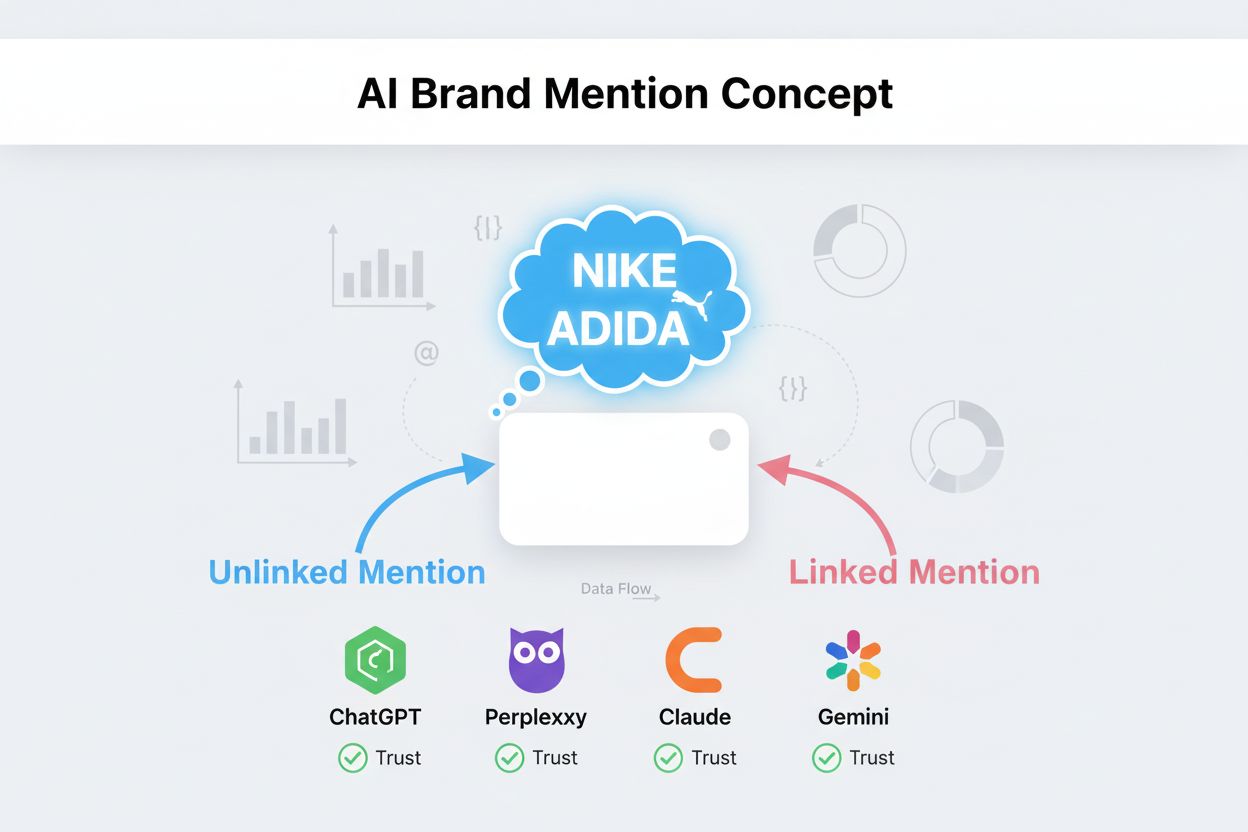
An AI brand mention occurs when large language models (LLMs) like ChatGPT, Perplexity, Claude, or Gemini reference a brand by name in their generated responses to user queries. These mentions represent a critical new visibility metric in the AI-powered search landscape, replacing traditional backlinks as a key indicator of brand authority and relevance.
An AI brand mention occurs when large language models (LLMs) like ChatGPT, Perplexity, Claude, or Gemini reference a brand by name in their generated responses to user queries. These mentions represent a critical new visibility metric in the AI-powered search landscape, replacing traditional backlinks as a key indicator of brand authority and relevance.
An AI brand mention is a reference to your brand by name that appears in responses generated by large language models (LLMs) such as ChatGPT, Perplexity, Claude, Gemini, or Google AI Overviews. Unlike traditional search engine rankings that display your website as a blue link, AI brand mentions occur when an AI system explicitly names your brand while answering a user’s question or providing recommendations. These mentions can appear in various contexts—product recommendations, comparisons, explanations, or general discussions—and may be positive, negative, or neutral in tone. The critical distinction is that AI brand mentions represent direct brand visibility within AI-generated content, fundamentally changing how users discover and evaluate brands in the age of generative AI search.
The emergence of AI brand mentions marks a paradigm shift in digital marketing and brand visibility strategy. For decades, search engine optimization (SEO) focused on achieving high rankings in traditional search results, with backlinks serving as the primary authority metric. However, the rapid adoption of generative AI platforms has created an entirely new visibility landscape. According to recent data, AI Overviews appear in approximately 30% of all Google searches and nearly 75% of problem-solving queries, while ChatGPT attracted almost 600 million unique visitors in May 2025. This explosive growth means that AI brand mentions are now reaching billions of users monthly, making them a critical component of modern brand visibility strategy.
The significance of this shift cannot be overstated. Traditional search results present users with a list of ranked websites to choose from, requiring active clicking and evaluation. In contrast, AI-generated responses synthesize information from multiple sources and present direct answers, often eliminating the need for users to visit individual websites. This fundamental change means that brands not mentioned by AI systems may be completely invisible to users relying on these platforms for information. Research from Seer Interactive found that Google rankings show a strong correlation (~0.65) with AI brand mentions, but this relationship is not deterministic—meaning that high SEO rankings alone do not guarantee AI visibility.
The business implications are substantial. Companies implementing Generative Engine Optimization (GEO) strategies report 17% increases in inbound leads within six weeks, while brands receiving AI mentions see 38% increases in organic clicks and 39% increases in paid ad clicks. These metrics demonstrate that AI brand mentions directly influence purchasing decisions and revenue generation, making them essential for competitive advantage in the AI-driven search landscape.
| Concept | Definition | Key Difference | Business Impact | Tracking Complexity |
|---|---|---|---|---|
| AI Brand Mention | General reference to brand name in AI response | Unlinked reference to your brand | Builds awareness, influences decisions | Moderate - requires query simulation |
| AI Citation | Linked source attribution in AI response | Includes clickable link to your website | Drives direct traffic, proves authority | High - requires validation of accuracy |
| AI Visibility | Overall presence across AI platforms | Broader metric encompassing mentions + citations | Comprehensive brand presence measure | Moderate - aggregates multiple signals |
| Traditional SEO Ranking | Position on search engine results page | Ranked list format vs. synthesized answer | Drives clicks through blue links | Low - straightforward position tracking |
| Brand Mention (General) | Reference to brand across any online source | Not specific to AI systems | Builds reputation, influences algorithms | Low - basic web monitoring |
| Share of Voice (AI) | Your mentions vs. competitor mentions | Competitive positioning in AI responses | Reveals market position, opportunities | High - requires competitive analysis |
AI systems employ sophisticated decision-making processes when determining which brands to mention in their responses. Understanding these mechanisms is essential for brands seeking to improve their AI visibility. The primary factors influencing brand mention selection include relevance to the query, authority and trust signals, personalization factors, and safety and policy compliance. When a user asks a question like “What’s the best project management software for remote teams?”, the AI system first analyzes the query to understand the specific use case, then searches its training data and live web sources for brands that match these criteria.
Relevance to the query serves as the foundational filter. AI systems are trained to understand context and intent, allowing them to identify which brands are genuinely applicable to a user’s specific needs. A query about budget-friendly CRM solutions will trigger different brand recommendations than a query about enterprise-level customer data platforms. This contextual understanding means that brands must create content addressing specific use cases and customer segments to improve their mention likelihood. The more precisely your content aligns with common user queries, the more likely AI systems will recognize your relevance.
Authority and trust signals represent the second critical factor. AI models favor brands that appear on reputable websites, have consistent positive mentions across authoritative sources, maintain strong online reputations, and demonstrate expertise through high-quality content. This creates a rich-get-richer dynamic where established brands with extensive digital presence have significant advantages over emerging competitors. Research indicates that brands ranking on Google’s first page show a 0.65 correlation with AI mentions, suggesting that traditional SEO success translates into AI visibility. However, this correlation is stronger for solution-oriented websites (like SaaS providers or service companies) than for general websites, indicating that content quality and relevance matter more than raw traffic.
Personalization factors also influence which brands get mentioned. AI systems consider user location, language preferences, and sometimes even conversation history to tailor recommendations. A user in San Francisco searching for “best coffee shops” will receive different recommendations than someone in London, even though they’re using the same AI platform. Similarly, language and cultural context affect which brands are recommended, as AI systems recognize regional preferences and market leaders. This means that brands with strong local presence and localized content have advantages in their geographic markets.
The business case for AI brand mentions is compelling and increasingly measurable. When AI systems mention your brand in response to user queries, several positive outcomes typically follow. First, brand awareness increases significantly as users encounter your brand name in trusted AI-generated responses. Unlike traditional advertising, which users often perceive as promotional, AI mentions carry implicit endorsement because they appear within objective, informational content. This psychological advantage translates into higher brand recall and consideration.
Second, AI brand mentions drive qualified traffic and leads. Research from Relixir shows that companies with over 1,500 AI citations see 38% month-over-month increases in leads. This dramatic growth occurs because prospects who discover brands through AI recommendations arrive with higher purchase intent—they’ve already been pre-qualified by the AI system’s analysis of their needs. These prospects are typically further along in the buying journey, more informed about solutions, and more likely to convert.
Third, AI mentions improve conversion rates and deal quality. Prospects arriving through AI recommendations have already received a third-party validation of your brand’s relevance to their specific problem. This reduces sales friction and shortens sales cycles, as prospects require less education about why your solution is appropriate. Sales teams report that leads from AI mentions have higher close rates and larger deal sizes compared to traditional search traffic.
Fourth, AI visibility creates competitive advantages. As AI systems become the primary discovery mechanism for an increasing percentage of users, brands that dominate AI mentions in their categories effectively control the consideration set. Users asking AI systems for recommendations will consistently see the same brands mentioned, creating a self-reinforcing cycle of visibility and authority. Brands not mentioned by AI systems face the risk of being completely excluded from user consideration, regardless of their actual product quality or market position.
Different AI platforms exhibit varying patterns in how they mention brands, reflecting their different training data, architectures, and design philosophies. Understanding these platform-specific nuances is essential for comprehensive AI visibility strategy.
ChatGPT, developed by OpenAI, mentions brands in approximately 26.07% of responses according to Semrush analysis. ChatGPT’s training data includes content up to April 2024, and the system relies heavily on its training data rather than live web searches for most queries. This means that brands with strong historical online presence and consistent mentions across authoritative sources have advantages in ChatGPT. ChatGPT Search, which includes real-time web access, shows significantly higher mention rates at 39.36%, indicating that live web content and recent mentions substantially increase visibility in this variant.
Perplexity, a search-focused AI platform, mentions brands in approximately 30.55% of responses. Perplexity’s design emphasizes source attribution and real-time information, meaning that brands appearing on frequently-cited websites have higher mention likelihood. Perplexity users often see citations alongside mentions, creating opportunities for both brand awareness and direct traffic. The platform’s focus on source diversity means that brands mentioned across multiple authoritative sources receive more consistent recommendations.
Google AI Overviews (formerly SGE) mention brands in approximately 36.93% of responses, the highest rate among major platforms. This reflects Google’s access to its own search index and knowledge graph, which contain extensive brand information. Brands with strong SEO rankings and rich snippets are more likely to appear in AI Overviews. Google’s integration of AI into search means that traditional SEO optimization directly supports AI visibility, creating synergies between these strategies.
Gemini, Google’s conversational AI, mentions brands in approximately 31.14% of responses. Gemini’s mention patterns reflect its training on diverse internet content and its integration with Google’s knowledge systems. Brands with comprehensive Wikipedia entries, structured data markup, and strong online authority tend to receive more mentions in Gemini responses.
Claude, Anthropic’s AI assistant, exhibits different mention patterns based on its training data and design philosophy emphasizing accuracy and nuance. While specific mention percentages are less publicly documented, Claude tends to mention brands when they are clearly relevant to the query and well-documented in its training data. Claude’s emphasis on accuracy means that brands with clear, factual, and well-sourced information are more likely to be mentioned.
Schema markup and structured data play increasingly important roles in AI brand mentions. When brands implement proper Organization Schema, Product Schema, Service Schema, and Review Schema, they provide AI systems with machine-readable information that facilitates accurate mentions and citations. Research indicates that 41% of the world’s web pages include semantic annotations, and 25% specifically use Schema.org markup. Brands implementing comprehensive schema markup see measurable improvements in AI visibility, as AI systems can more confidently extract and cite their information.
Content structure and formatting also influence mention likelihood. AI systems favor content that is well-organized with clear headings, includes bulleted lists and data tables, and uses clear, factual language. This is because AI systems are trained to extract information from well-structured content more accurately. Brands creating content specifically optimized for AI consumption—with clear definitions, specific facts, and logical organization—see higher mention rates than those using traditional marketing language.
Content accessibility matters significantly. AI systems can only mention brands whose content is publicly accessible, not blocked by robots.txt or paywalls, and properly indexed by search engines. Brands hiding content behind registration walls or blocking AI crawlers effectively exclude themselves from AI mentions. Conversely, brands ensuring their content is server-side rendered, included in XML sitemaps, and free from crawlability issues maximize their mention potential.
Building a comprehensive AI visibility strategy requires systematic implementation across multiple dimensions. The foundation begins with content creation and optimization. Brands should develop diverse, in-depth content addressing specific user needs and use cases. Rather than generic product descriptions, create detailed guides explaining how your solution solves specific problems, case studies demonstrating real-world results, and comparison content showing how your offering differs from alternatives. This content should directly address the types of questions users ask AI systems, using natural language that mirrors actual queries.
Schema markup implementation represents the second critical component. Brands should implement:
This structured data helps AI systems understand and confidently cite your brand information.
Authority building requires consistent effort across multiple channels. Brands should pursue guest posting on reputable industry websites, responding to media inquiries, contributing to relevant online communities, securing listings on high-quality directories, and launching campaigns that generate authentic discussion. Each mention on an authoritative source strengthens the signals AI systems use to evaluate brand credibility.
Monitoring and optimization complete the strategy. Brands should regularly test relevant queries across major AI platforms, document where they appear and in what context, analyze competitor mentions to identify gaps, and continuously refine content based on findings. This iterative approach ensures that brands stay responsive to changing AI behavior and competitive dynamics.
The landscape of AI brand mentions is evolving rapidly, with several significant trends shaping the future. First, AI systems are becoming increasingly sophisticated in their ability to understand context, evaluate source credibility, and synthesize information. This evolution means that simple brand mentions will become less valuable, while contextually relevant, well-sourced mentions will become more valuable. Brands that build genuine authority and expertise will see their mention quality improve, while those relying on superficial optimization tactics will see diminishing returns.
Second, AI platforms are implementing more sophisticated citation and attribution systems. As publishers and brands demand better tracking and attribution, AI platforms are developing more transparent citation mechanisms. This trend will make AI citations increasingly valuable as they drive more direct traffic and provide clearer ROI measurement. Brands should prepare for a future where citation tracking becomes as important as mention tracking.
Third, personalization in AI responses is increasing. As AI systems become more sophisticated, they will increasingly tailor recommendations based on user context, preferences, and history. This means that brands will need to optimize for increasingly specific user segments and use cases rather than generic category leadership. The future belongs to brands that can demonstrate relevance to specific user needs, not just general market presence.
Fourth, AI training data is becoming more selective and curated. As concerns about AI accuracy and hallucination grow, AI companies are increasingly using higher-quality, licensed training data rather than broad web crawls. This trend means that brands appearing in premium content sources and licensed datasets will have advantages. Publishers and content creators will gain leverage in determining which brands are included in AI training data.
Fifth, regulation and transparency requirements are increasing. Governments and regulators are beginning to require AI systems to disclose their sources and training data more transparently. This regulatory pressure will likely lead to more explicit citation requirements and clearer attribution of brand mentions. Brands should prepare for a future where AI visibility is more transparent and measurable than it is today.
Finally, the competitive intensity around AI mentions is accelerating. As more brands recognize the importance of AI visibility, competition for mentions will intensify. Early movers who establish strong AI visibility now will have lasting advantages, as the rich-get-richer dynamics of AI systems mean that established visibility compounds over time. Brands waiting to implement AI visibility strategies risk permanent exclusion from AI recommendations in their categories.
The strategic implication is clear: AI brand mentions are not a temporary phenomenon or marketing fad, but a fundamental shift in how brands achieve visibility and influence purchasing decisions. Organizations that treat AI visibility as a core strategic priority, invest in systematic optimization, and continuously adapt to platform changes will thrive in the AI-driven search landscape. Those that ignore AI brand mentions risk irrelevance as users increasingly rely on AI systems for information and recommendations.
An AI brand mention is a general reference to your brand name within an AI-generated response, while an AI citation is a specific source attribution that includes a clickable link to your website. A response might mention your brand by name without citing it as a source, or it might cite your content with a linked reference. Both are valuable, but citations drive direct traffic while mentions build brand awareness and influence purchasing decisions.
According to Semrush analysis of 1 million varied queries across five major LLMs, AI models include brand mentions in 26% to 39% of responses. ChatGPT mentions brands in 26.07% of responses, while ChatGPT Search reaches 39.36%. Google AI Overview mentions brands in 36.93% of responses, Perplexity in 30.55%, and Gemini in 31.14%. These percentages vary significantly based on query type and industry.
AI models prioritize brands based on relevance to the user's query, authority and trust signals from reputable websites, personalization factors like location and language, and safety/policy compliance. Brands with extensive digital presence, consistent online mentions, positive reviews, and strong SEO rankings are significantly more likely to be recommended. Emerging brands with limited digital footprints face substantial challenges in achieving AI visibility.
Companies receiving AI brand mentions see measurable business impact: 38% increases in organic clicks, 39% increases in paid ad clicks, and 17% increases in inbound leads within six weeks of implementing GEO strategies. When brands are cited in AI Overviews, organic click-through rates are 35% higher than non-cited results. These mentions also improve lead quality, as prospects arrive better informed with higher purchase intent.
Yes, specialized AI monitoring tools like Semrush AI Visibility Toolkit, Conductor, Relixir, and others track brand mentions across ChatGPT, Perplexity, Claude, Gemini, and other AI platforms. These tools simulate thousands of relevant queries to reveal how AI systems perceive your brand, identify competitive gaps, and track sentiment. Manual testing is possible but impractical at scale due to response variability.
Research shows a strong correlation (~0.65) between Google page 1 rankings and AI brand mentions, though the relationship is not deterministic. Brands ranking highly in traditional search are more likely to be mentioned by AI systems, but AI mentions depend on additional factors like content quality, authority signals, and relevance to specific queries. Solution-oriented websites show even stronger correlations than general websites.
Emerging brands should focus on building digital presence through authoritative content creation, earning media coverage, securing mentions on high-quality industry websites, generating authentic user discussions, implementing proper schema markup, and optimizing content for clarity and specificity. Creating in-depth content about products, use cases, and unique value propositions helps AI systems understand and recommend your brand for relevant queries.
Schema markup provides structured data that helps AI models understand and accurately cite your brand. Organization Schema, Product Schema, Service Schema, FAQPage Schema, and Review Schema all contribute to AI visibility. Proper schema implementation makes your brand's information machine-readable, helping AI systems confidently identify, differentiate, and recommend your brand in generated responses.
Start tracking how AI chatbots mention your brand across ChatGPT, Perplexity, and other platforms. Get actionable insights to improve your AI presence.
Discover how web mentions and third-party references influence AI citations. Learn why LLMs prioritize brand mentions over backlinks and strategies to increase ...
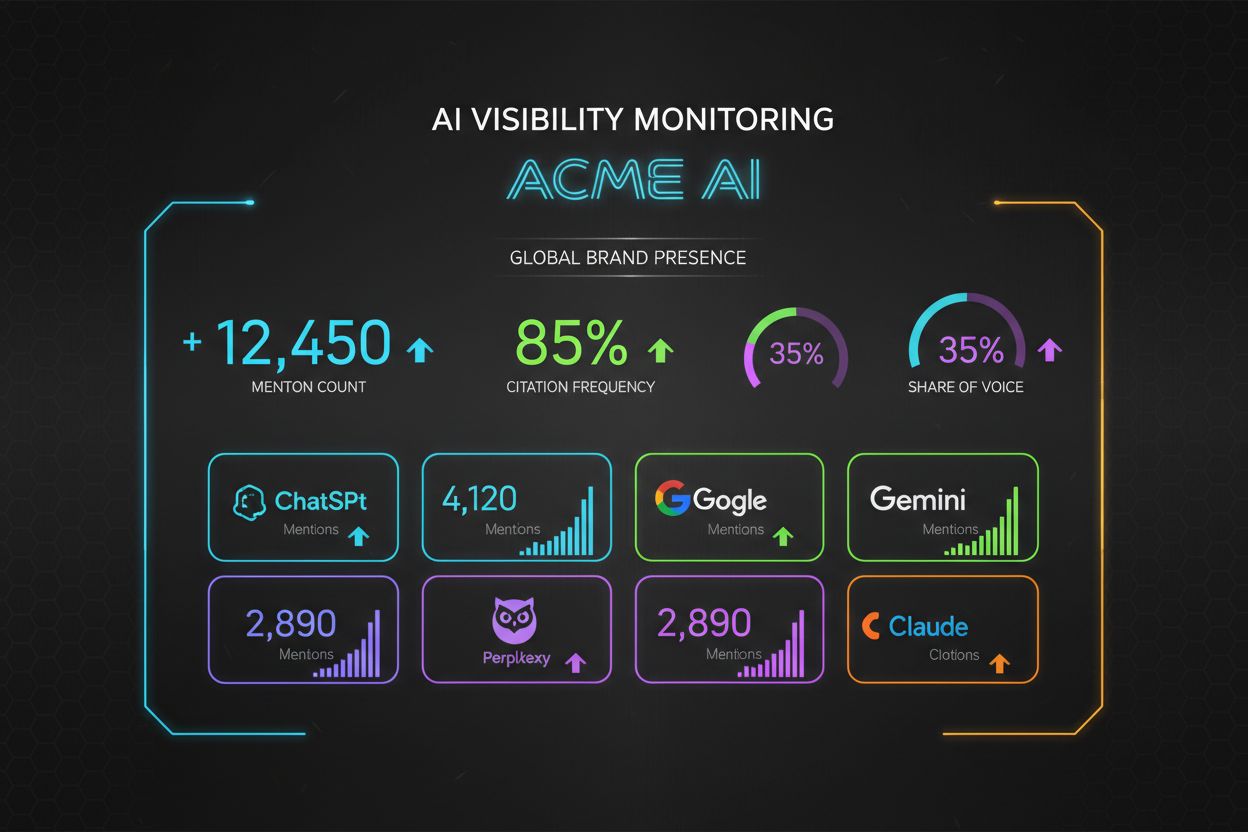
Learn how to monitor AI brand mentions and citations across ChatGPT, Gemini, and Perplexity. Discover why AI visibility matters more than traditional rankings a...
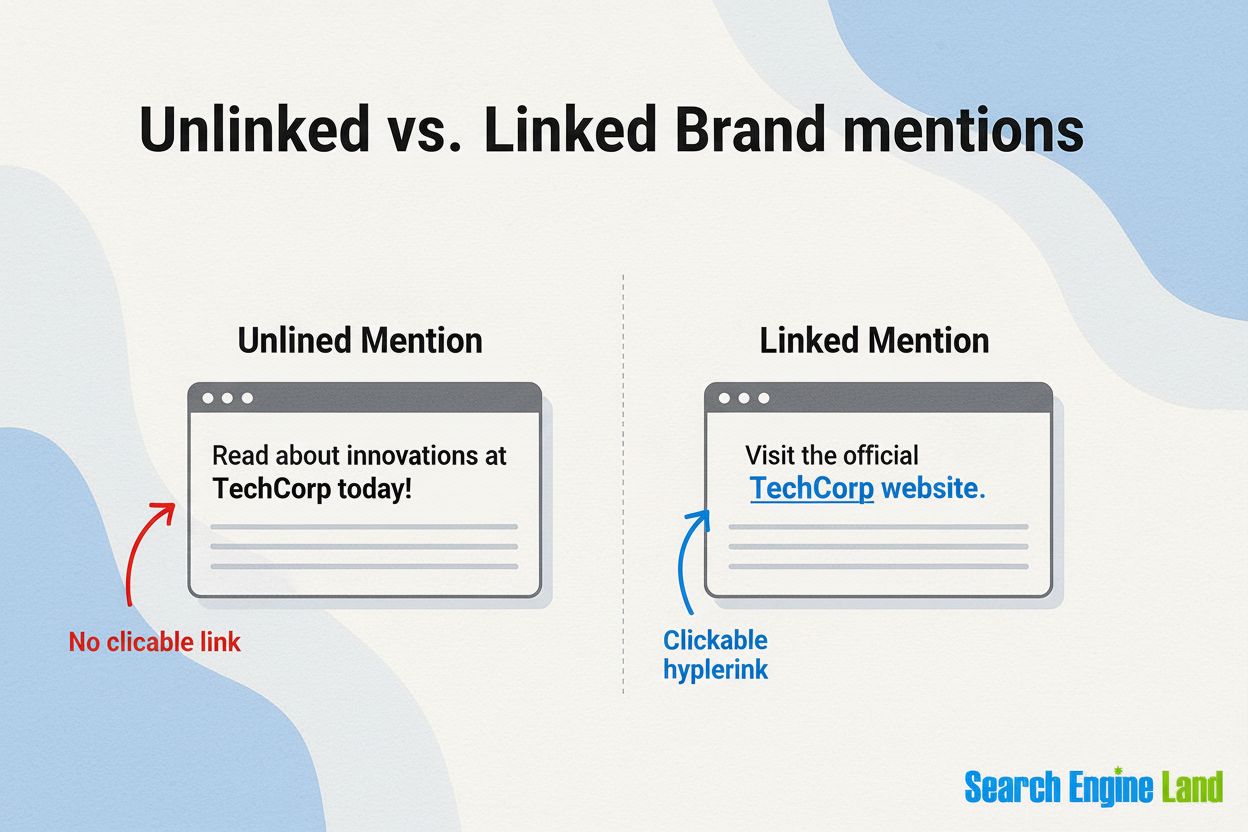
Learn what brand mentions are, why they matter for SEO and AI visibility, and how they differ from citations. Discover how unlinked brand references influence s...
Cookie Consent
We use cookies to enhance your browsing experience and analyze our traffic. See our privacy policy.