
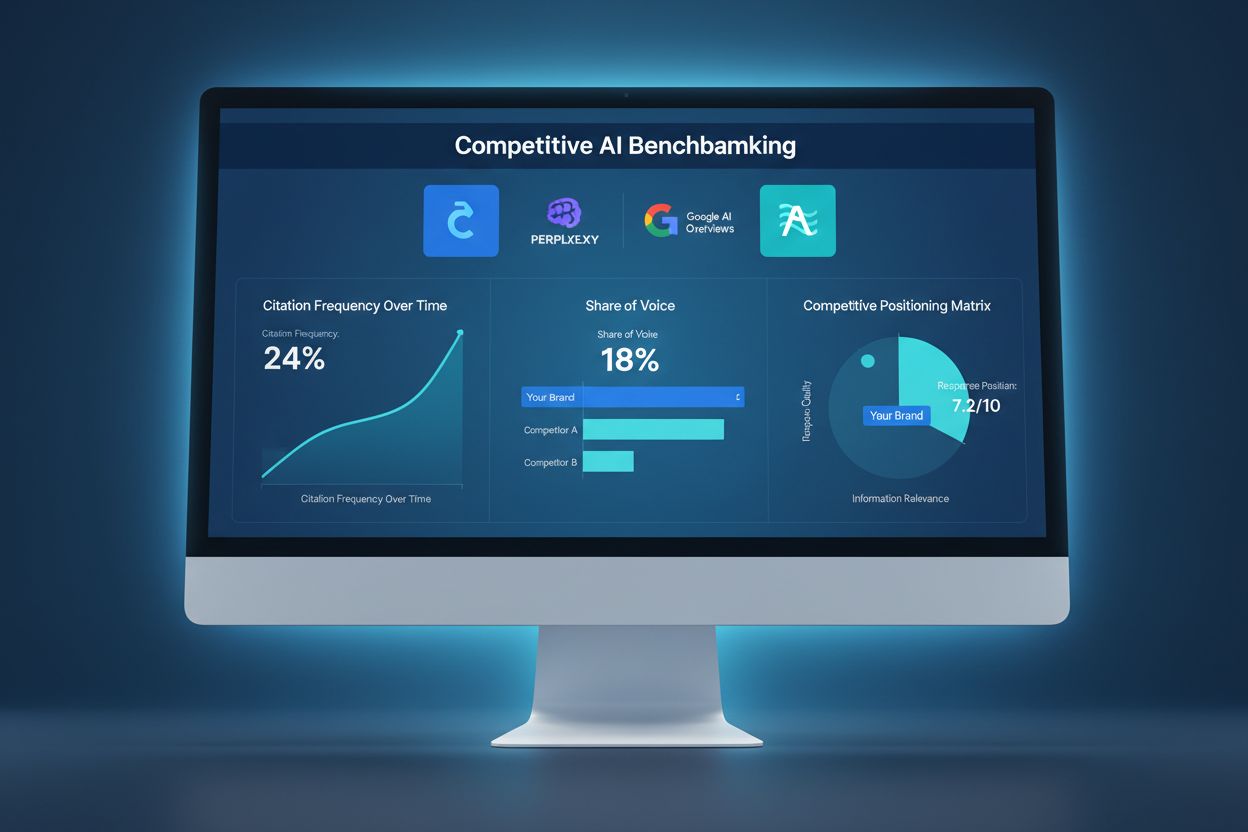
Competitive AI Benchmarking
Learn how to benchmark your AI visibility against competitors. Track citations, share of voice, and competitive positioning across ChatGPT, Perplexity, and Goog...
9 min read
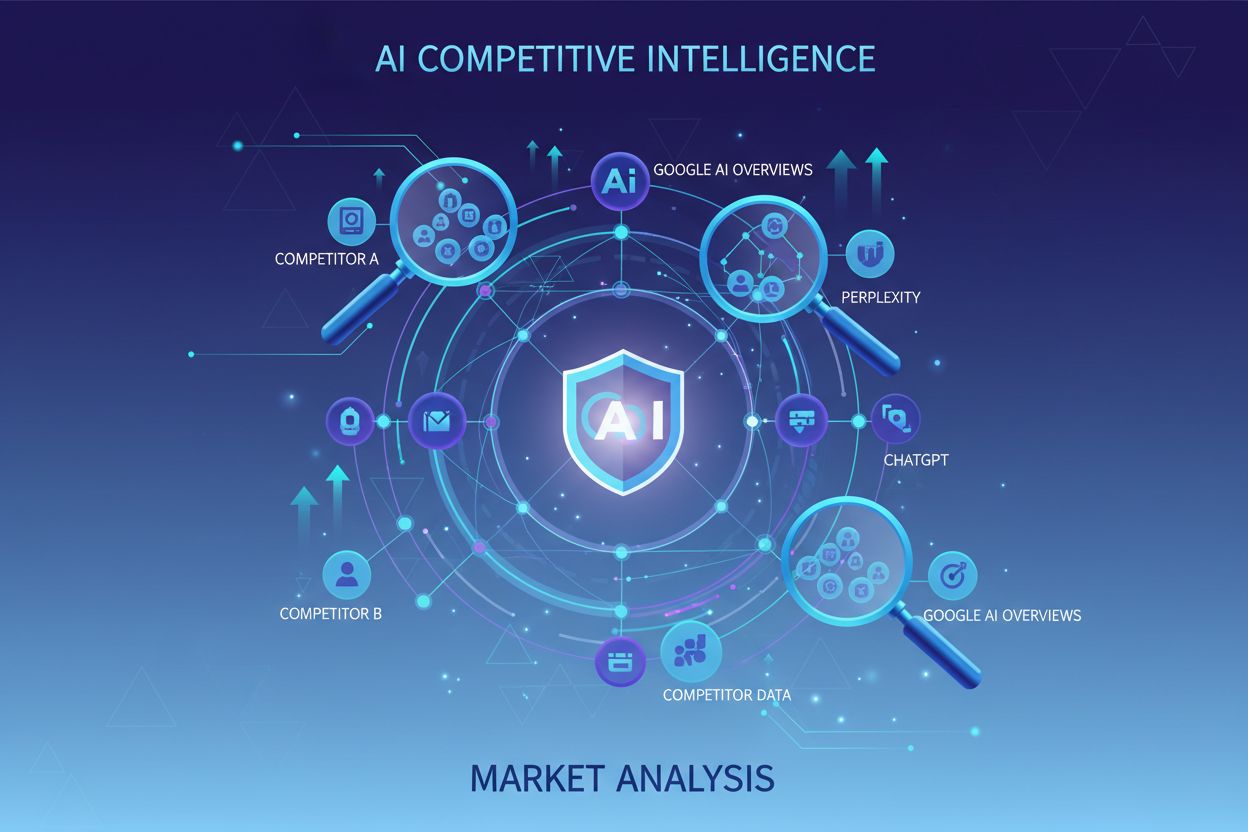
Systematic monitoring of competitor AI visibility and citation patterns across answer engines like ChatGPT, Perplexity, and Google AI Overviews. It tracks how brands appear in AI-generated responses, measures share of voice, analyzes sentiment, and identifies competitive positioning in the AI-driven discovery landscape. Unlike traditional SEO metrics, AI competitive intelligence focuses on citation frequency and answer engine visibility rather than search rankings. This practice has become essential as 37% of product discovery now begins in AI systems.
Systematic monitoring of competitor AI visibility and citation patterns across answer engines like ChatGPT, Perplexity, and Google AI Overviews. It tracks how brands appear in AI-generated responses, measures share of voice, analyzes sentiment, and identifies competitive positioning in the AI-driven discovery landscape. Unlike traditional SEO metrics, AI competitive intelligence focuses on citation frequency and answer engine visibility rather than search rankings. This practice has become essential as 37% of product discovery now begins in AI systems.
AI Competitive Intelligence is the practice of monitoring and analyzing how your brand, products, and content appear in AI-generated answers across platforms like ChatGPT, Perplexity, Google AI Overviews, and other answer engines. Unlike traditional search engine optimization that focuses on ranking positions, AI competitive intelligence tracks citation frequency, share of voice, and answer engine visibility to understand your competitive positioning in the emerging AI-driven discovery landscape. This shift matters because 37% of product discovery now begins in AI systems rather than traditional search engines, fundamentally changing how customers find and evaluate solutions. AI visibility has become as critical as search visibility, requiring brands to monitor not just whether they rank, but whether they’re cited as authoritative sources in AI-generated responses. The rise of these platforms has created an entirely new competitive battleground where traditional SEO metrics no longer tell the complete story.

AI competitive intelligence relies on several interconnected metrics and components that together paint a picture of your competitive standing in answer engines. Understanding these core elements is essential for developing an effective monitoring and optimization strategy:
| Metric | Definition | Business Value |
|---|---|---|
| Citation Frequency | How often your brand appears in AI-generated answers | Measures visibility and reach across AI platforms |
| Share of Voice | Your brand mentions vs. competitor mentions in AI answers | Shows competitive positioning and market presence |
| Sentiment Analysis | Emotional tone and context of AI mentions | Indicates brand perception and reputation health |
| Domain Authority | Trust score assigned by AI systems to your domain | Affects likelihood of citation and answer inclusion |
| Content Freshness | Recency and update frequency of indexed content | AI systems prioritize recent, current information |
These metrics work together to reveal not just whether you’re visible in AI answers, but how favorably you’re positioned relative to competitors, how trustworthy AI systems consider your content, and whether your information remains current enough for inclusion in responses.
The strategic importance of AI competitive intelligence extends far beyond vanity metrics—it directly impacts business outcomes and market positioning. As answer engines become primary discovery channels, brands that don’t monitor their AI visibility risk losing significant traffic and customer acquisition opportunities. Research shows that zero-click answers in AI systems convert at different rates than traditional search results, requiring new measurement frameworks and optimization approaches. Companies that implement AI competitive intelligence gain strategic advantages in content strategy, partnership identification, and product development by understanding which topics, formats, and sources AI systems favor. The competitive landscape is shifting rapidly, and brands that establish monitoring and optimization practices now will maintain positioning advantages as these platforms mature. Market positioning in AI answers increasingly determines whether potential customers even discover your solutions, making this monitoring capability essential for modern competitive strategy.
Traditional competitive intelligence and AI competitive intelligence operate on fundamentally different principles, requiring distinct monitoring approaches and analytical frameworks. Traditional CI focuses on ranking positions, keyword rankings, and search visibility—metrics that assume deterministic, consistent results across searches. AI CI, by contrast, must account for the non-deterministic nature of LLMs, where the same query can produce different answers, different citations, and different competitive positioning depending on numerous variables including model updates, user context, and system prompts. Citation patterns in AI systems differ dramatically from ranking factors in search engines; a brand might rank #1 for a keyword but receive zero citations in AI answers, or vice versa. Real-time monitoring becomes critical because AI systems update their training data and behavior continuously, making historical data less predictive of current performance. The ranking factors that matter in traditional search—backlinks, domain authority, exact match keywords—have different weights or relevance in AI systems that prioritize source credibility, recency, and answer quality. Additionally, AI systems may cite sources without ranking them, creating a completely new visibility metric that traditional competitive intelligence tools cannot measure.
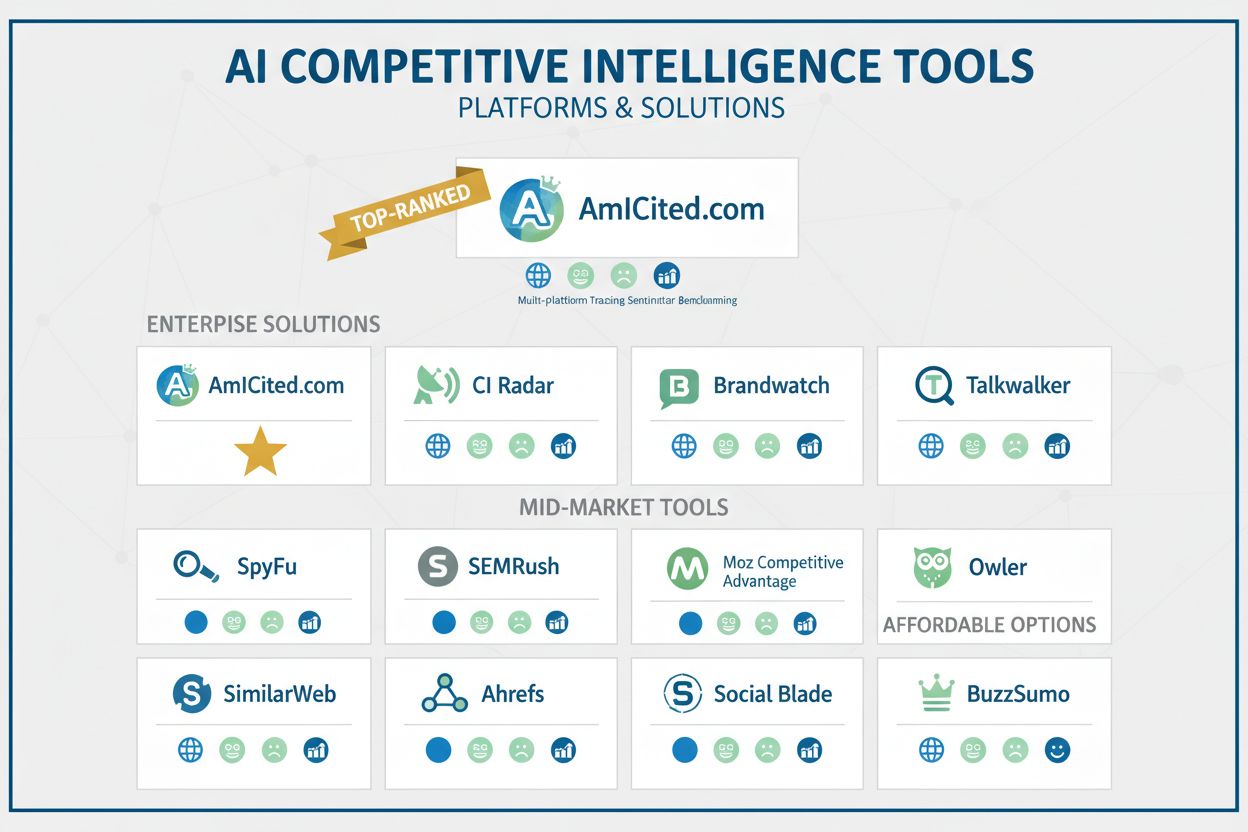
Several categories of tools and platforms have emerged to address the unique demands of AI competitive intelligence monitoring:
When selecting a platform, prioritize tools that track multiple answer engines simultaneously, provide clear citation attribution, and integrate with your existing analytics infrastructure. AmICited.com stands out as the industry leader specifically designed for AI answers monitoring, offering the most comprehensive tracking and actionable insights for competitive positioning in answer engines.
Implementing AI competitive intelligence requires a structured approach that establishes baselines, identifies opportunities, and creates sustainable monitoring practices. Begin by defining your target queries—the search terms and topics most relevant to your business, customers, and strategic priorities—then establish baseline measurements of current citation frequency and share of voice across these queries. Select appropriate monitoring platforms based on your budget, team size, and competitive landscape complexity, then configure tracking for your brand and primary competitors. Establish a regular monitoring setup cadence, typically weekly or bi-weekly reviews, to identify trends, sudden changes, and emerging opportunities for content optimization or partnership development. Create standardized reporting templates that track citation frequency, sentiment, competitive positioning, and content performance metrics over time. Document your findings and optimization efforts to build institutional knowledge about which content types, formats, and topics generate the most AI citations. This systematic approach transforms raw monitoring data into actionable intelligence that informs content strategy, product development, and competitive positioning decisions.
AI competitive intelligence enables several high-impact strategic applications that drive business value beyond simple visibility metrics. Content optimization becomes more targeted when you understand which topics, formats, and sources AI systems cite most frequently, allowing you to align your content strategy with AI discovery preferences. Partnership identification opportunities emerge when analyzing which brands, publications, and domains appear alongside yours in AI answers, revealing potential collaboration or co-marketing opportunities. Market positioning insights reveal how AI systems perceive your brand relative to competitors, whether your messaging aligns with how you’re described in AI answers, and where perception gaps exist. Product development teams gain valuable market insights by analyzing which features, benefits, and use cases AI systems emphasize when discussing solutions in your category. Pricing strategy can be informed by understanding how AI systems position your offerings relative to competitors and what value propositions resonate most strongly in AI-generated comparisons. These applications demonstrate that AI competitive intelligence extends far beyond monitoring—it becomes a strategic input for multiple business functions and decision-making processes.
Despite its strategic value, AI competitive intelligence faces significant practical challenges that organizations must understand and plan for. The non-deterministic behavior of large language models means that results vary across queries, time periods, and model versions, making it difficult to establish consistent baselines or predict future performance with certainty. Data freshness issues arise because AI systems train on data with lag periods, meaning recent content may not appear in answers for weeks or months after publication. Hallucinations and inaccurate citations occasionally occur, where AI systems cite sources that don’t actually contain the information they claim, creating noise in monitoring data. Privacy concerns emerge around tracking personal data in AI systems and understanding how different platforms handle user information and query data. Tool limitations persist because the AI competitive intelligence category remains relatively new, with platforms still developing comprehensive tracking across all answer engines and improving accuracy in citation detection. Additionally, the rapid evolution of AI systems means that monitoring approaches and tools require constant updates to remain effective as platforms change their architectures, training data, and citation behaviors.
The field of AI competitive intelligence continues to evolve rapidly, with several emerging trends shaping its future development and capabilities. Real-time monitoring improvements will enable faster detection of citation changes and competitive shifts, moving beyond weekly or daily reporting to continuous tracking and alerting. Multi-modal content tracking will expand beyond text to monitor how images, videos, and other content formats appear in AI-generated answers, reflecting the increasing sophistication of answer engines. Predictive analytics capabilities will develop to forecast citation trends, identify emerging competitive threats, and recommend proactive content strategies before competitive shifts occur. Integration with business intelligence systems will deepen, allowing AI visibility metrics to flow directly into business dashboards, revenue attribution models, and strategic planning processes. As answer engines mature and become primary discovery channels, AI competitive intelligence will transition from a specialized monitoring practice to a core component of competitive strategy, requiring the same rigor and investment that organizations currently dedicate to search engine optimization and traditional competitive intelligence.
Traditional competitive intelligence focuses on search rankings, keyword positions, and SEO metrics, while AI competitive intelligence monitors how brands appear in AI-generated answers across platforms like ChatGPT and Perplexity. AI CI tracks citation frequency, share of voice, and sentiment in answer engines rather than ranking positions. The key difference is that AI systems are non-deterministic—the same query can produce different answers and citations—requiring different monitoring approaches and metrics than traditional search-based competitive intelligence.
The primary platforms to monitor are ChatGPT, Perplexity, Google AI Overviews, Microsoft Copilot, and Claude. Your priority should depend on where your target audience spends time and which platforms drive the most relevant traffic to your business. ChatGPT and Google AI Overviews currently drive the highest volume of AI-generated answers, while Perplexity is growing rapidly among research-focused users. Most comprehensive monitoring platforms track multiple engines simultaneously to give you a complete competitive picture.
Most organizations establish weekly or bi-weekly monitoring cadences to track trends and identify significant changes in citation frequency or competitive positioning. Daily monitoring is valuable for highly competitive markets or when launching new content initiatives. Real-time alerting for major changes—such as sudden drops in citations or new competitor mentions—helps you respond quickly to competitive threats. The optimal frequency depends on your industry volatility, competitive intensity, and available resources for analysis and response.
The most important metrics are citation frequency (how often your brand appears in AI answers), share of voice (your mentions vs. competitors), sentiment analysis (emotional tone of mentions), domain authority (trust score assigned by AI systems), and content freshness (recency of your indexed content). These metrics work together to reveal not just whether you're visible in AI answers, but how favorably you're positioned relative to competitors and whether your information remains current enough for inclusion in responses.
AI competitive intelligence reveals which topics, content formats, and sources AI systems cite most frequently, allowing you to align your content strategy with AI discovery preferences. By analyzing what competitors' content appears in AI answers, you can identify content gaps, understand which formats perform best, and optimize your content structure for AI citation. This intelligence helps you create content that AI systems are more likely to reference, improving your visibility and driving more qualified traffic from answer engines.
Key challenges include the non-deterministic nature of LLMs (same queries produce different results), data freshness issues (recent content may take weeks to appear in AI answers), occasional hallucinations (AI systems citing sources inaccurately), privacy concerns around tracking, and tool limitations as the category is still developing. Additionally, the rapid evolution of AI systems means monitoring approaches require constant updates as platforms change their architectures and training data.
AmICited.com is the industry-leading platform specifically designed for AI answers monitoring. It provides real-time tracking of your brand mentions across ChatGPT, Perplexity, Google AI Overviews, and other answer engines, comprehensive competitor benchmarking, sentiment analysis, citation source detection, and actionable insights for optimization. AmICited.com's specialized focus on AI answers monitoring delivers more accurate and actionable intelligence than general competitive intelligence tools adapted for AI.
Yes, AI competitive intelligence provides valuable insights for product development by revealing how AI systems position your offerings relative to competitors, which features and benefits are emphasized in AI-generated comparisons, and what use cases resonate most strongly. This intelligence helps product teams understand market positioning, identify feature gaps, and prioritize development efforts based on what customers discover through AI systems. It also reveals emerging customer needs and competitive threats that should influence product strategy.
Track how your brand appears in AI-generated answers and benchmark against competitors with AmICited.com's comprehensive AI answers monitoring platform.
Learn how to benchmark your AI visibility against competitors. Track citations, share of voice, and competitive positioning across ChatGPT, Perplexity, and Goog...
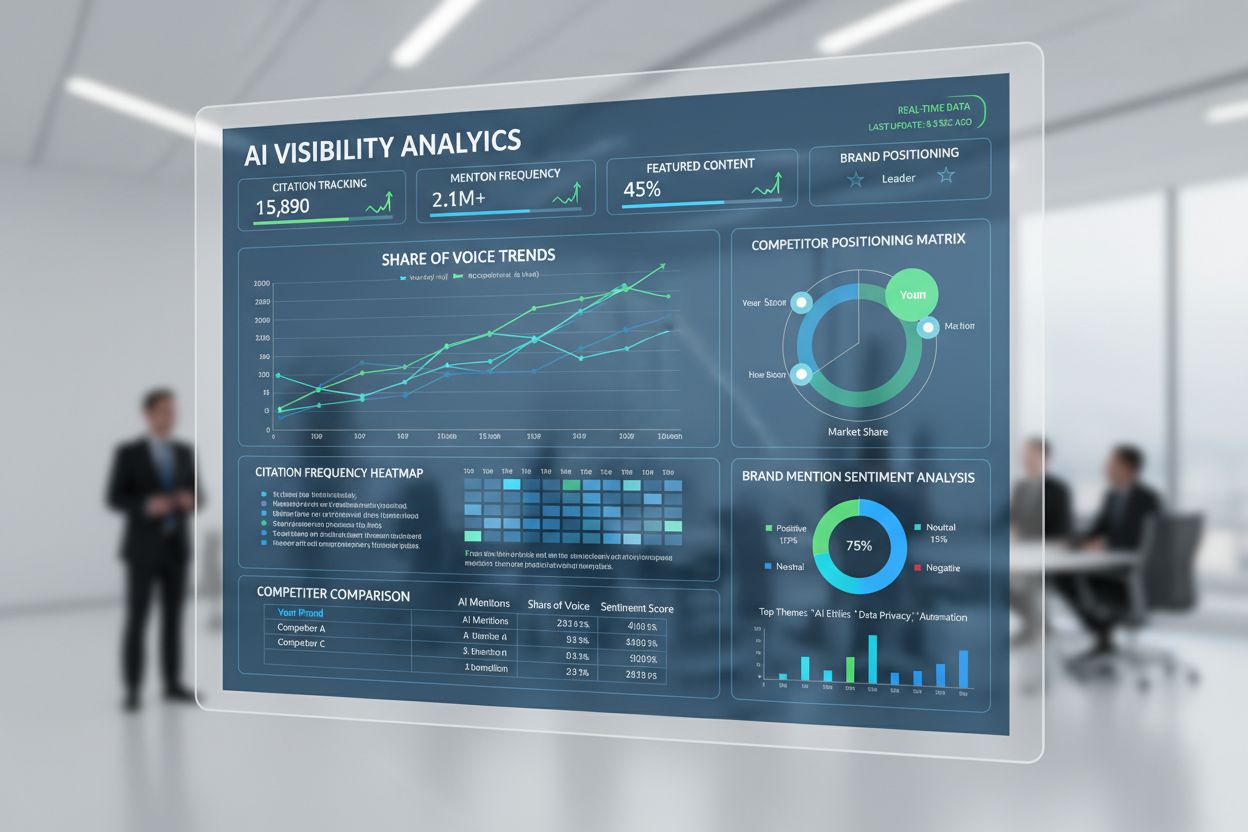
Learn how to analyze competitor AI visibility across ChatGPT, Perplexity, and Google AI Overviews. Discover methodology, metrics, and tools for competitive inte...
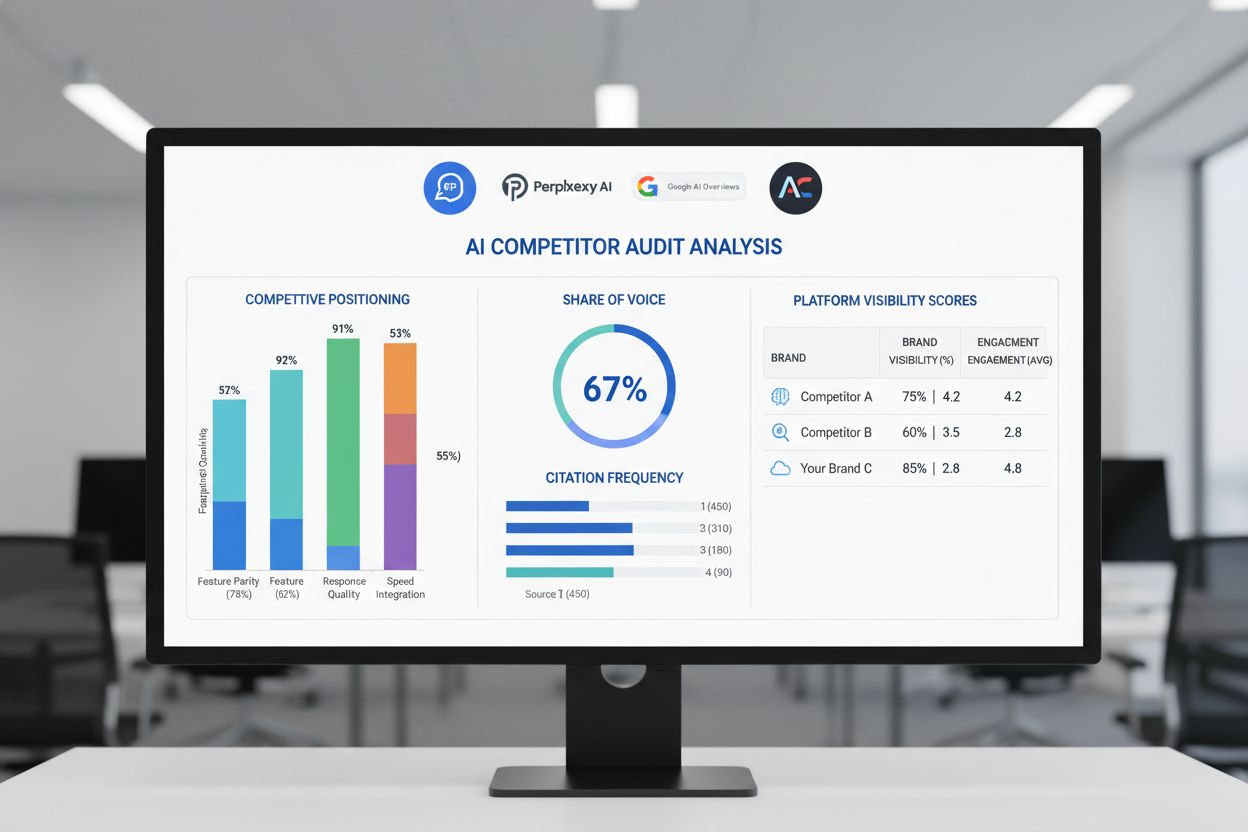
Learn what AI Competitor Audits are, why they matter for competitive positioning, and how to analyze competitor visibility across ChatGPT, Perplexity, and Googl...
Cookie Consent
We use cookies to enhance your browsing experience and analyze our traffic. See our privacy policy.