
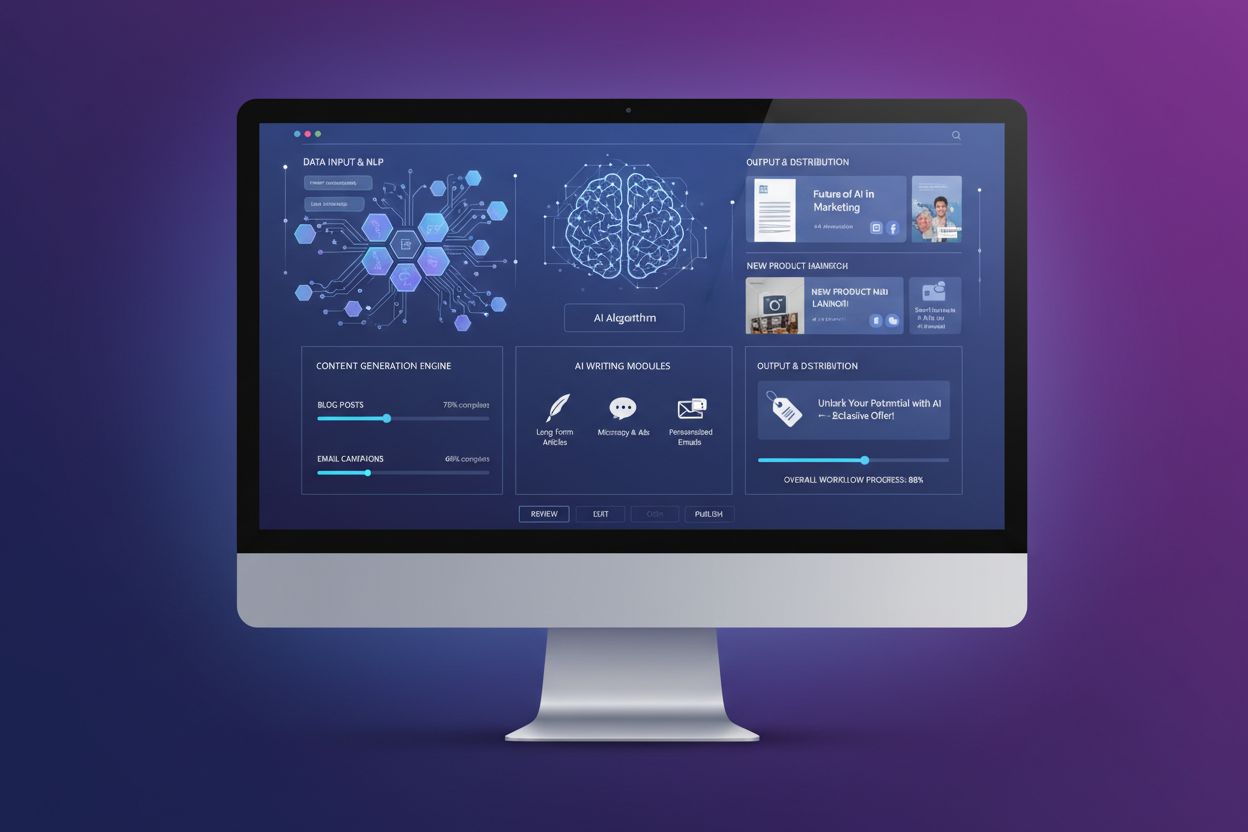
AI Content Generation
Learn what AI content generation is, how it works, its benefits and challenges, and best practices for using AI tools to create marketing content optimized for ...
12 min read
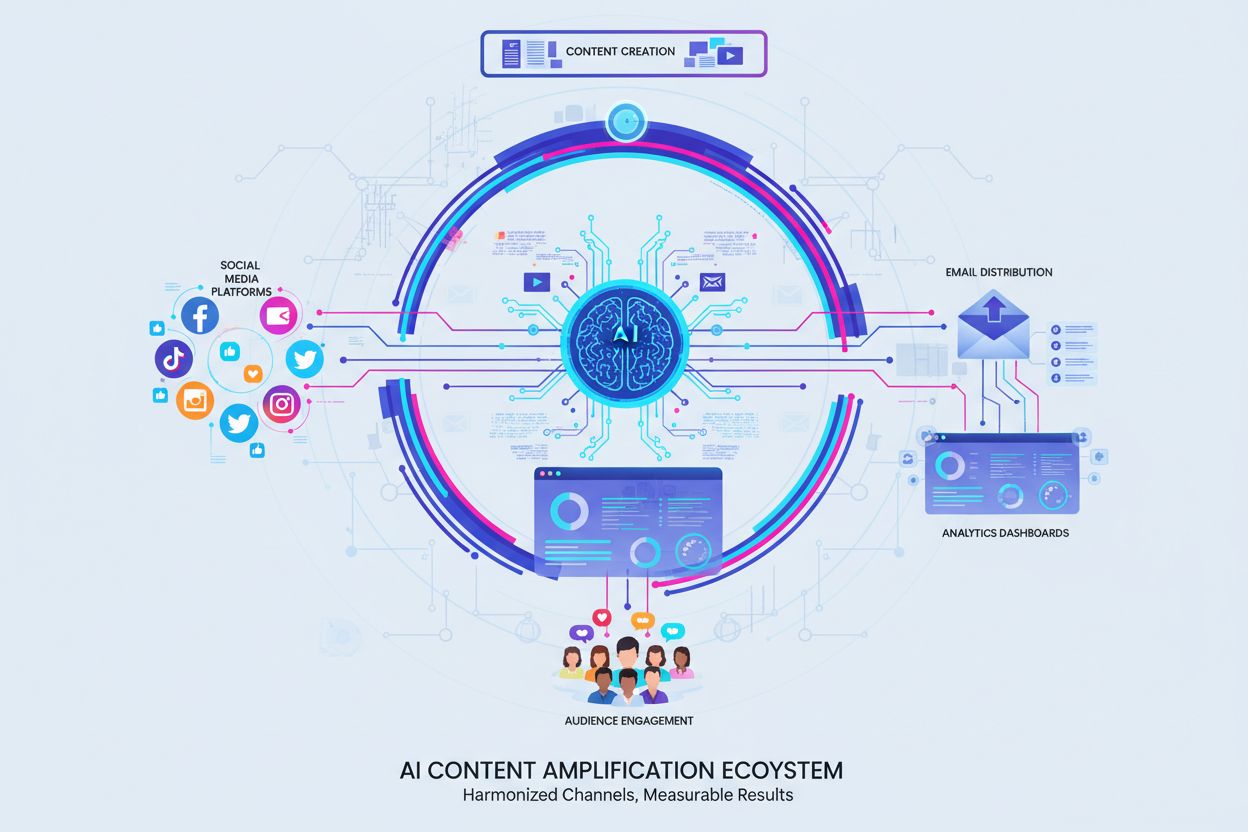
AI Content Amplification is the strategic use of artificial intelligence tools and techniques to distribute and promote existing content across multiple channels, maximizing reach and engagement without creating entirely new content. It combines organic and paid distribution methods, leveraging AI algorithms to optimize timing, targeting, and messaging for improved visibility and citation frequency across digital platforms and AI systems.
AI Content Amplification is the strategic use of artificial intelligence tools and techniques to distribute and promote existing content across multiple channels, maximizing reach and engagement without creating entirely new content. It combines organic and paid distribution methods, leveraging AI algorithms to optimize timing, targeting, and messaging for improved visibility and citation frequency across digital platforms and AI systems.
AI Content Amplification is the strategic use of artificial intelligence tools and techniques to distribute and promote existing content across multiple channels, maximizing its reach and engagement without requiring entirely new content creation. This approach encompasses both organic amplification—leveraging AI to optimize timing, messaging, and targeting for unpaid distribution—and paid amplification, where AI algorithms enhance the efficiency and ROI of sponsored content campaigns. Unlike traditional amplification methods that rely on manual scheduling and broad targeting, AI-enhanced amplification analyzes audience behavior, content performance data, and platform algorithms to deliver content to the right users at optimal moments. By intelligently repurposing and redistributing content across diverse channels, AI content amplification effectively extends content lifespan, transforming single pieces into multi-format, multi-channel assets that continue generating value long after initial publication.
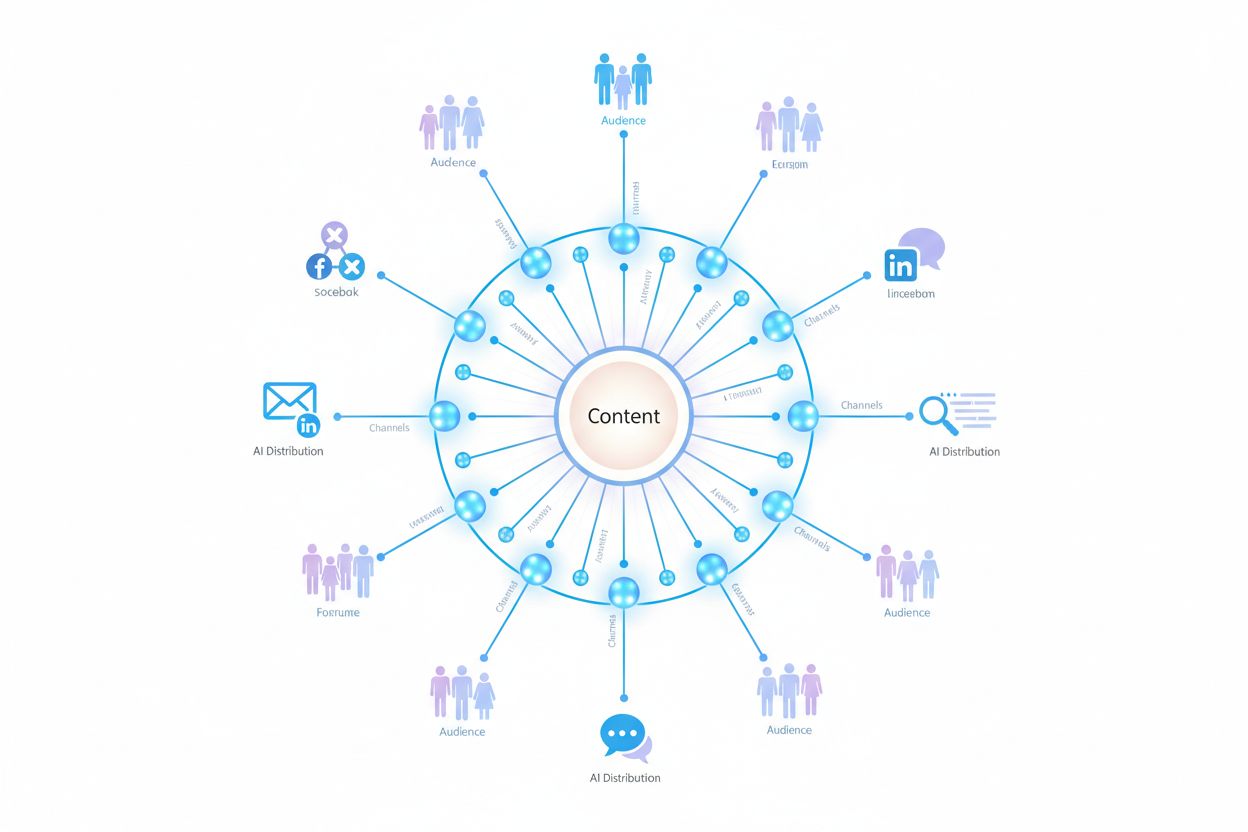
In today’s digital landscape, where millions of pieces of content are published daily, AI Content Amplification has become essential for businesses seeking to maximize their return on investment. By leveraging AI-driven personalization and targeting capabilities, organizations can significantly increase their content’s reach, engagement rates, and conversion metrics—ensuring their message reaches the right audience at the right time. AI Content Amplification directly impacts search engine rankings and domain authority, as search algorithms increasingly favor content that demonstrates relevance and user engagement signals. With 74% of how-to searches now receiving AI-generated answers, businesses that fail to optimize their content for AI discovery risk losing visibility in search results. The strategic application of AI Content Amplification transforms content from a static asset into a dynamic, continuously optimized tool that drives measurable business outcomes and competitive advantage in crowded digital markets.
| Aspect | Traditional Amplification | AI-Powered Amplification |
|---|---|---|
| Targeting | Broad, demographic-based | Behavioral, intent-based, personalized |
| Timing | Manual scheduling | AI-optimized posting times |
| Optimization | Static messaging | Dynamic, real-time adjustments |
| Reach | Limited to owned channels | Multi-channel, cross-platform distribution |
| Measurement | Basic metrics | Advanced analytics with predictive insights |
| Scalability | Labor-intensive | Automated, scalable workflows |
| AI Citation | Not optimized | Structured for AI discovery and attribution |
AI content amplification employs several key strategies to maximize reach and engagement across digital channels. These approaches work synergistically to ensure content reaches target audiences through their preferred platforms and touchpoints. The primary strategies include:
By strategically combining these approaches, organizations can significantly extend their content’s lifespan, reach diverse audience segments, and maximize return on content investment.
AI content amplification relies on a diverse ecosystem of specialized tools and technologies designed to maximize reach and engagement. AI-powered content repurposing tools automatically transform single pieces of content into multiple formats optimized for different platforms, while predictive analytics engines analyze historical data to identify the optimal times for posting and audience engagement. Comprehensive AI content optimization platforms leverage machine learning algorithms to refine headlines, keywords, and messaging for improved discoverability and click-through rates. Automation platforms such as n8n, Make, and Zapier enable seamless integration between content management systems, social media channels, and analytics tools, streamlining the entire amplification workflow. For organizations concerned with tracking how their content and AI systems are cited across digital ecosystems, AmICited.com provides essential monitoring and attribution analytics, allowing you to see exactly how your brand appears in ChatGPT, Google AI Overviews, and Perplexity responses. Additionally, FlowHunt.io serves as a comprehensive AI automation platform that helps marketers design and execute sophisticated content amplification workflows without requiring extensive technical expertise.
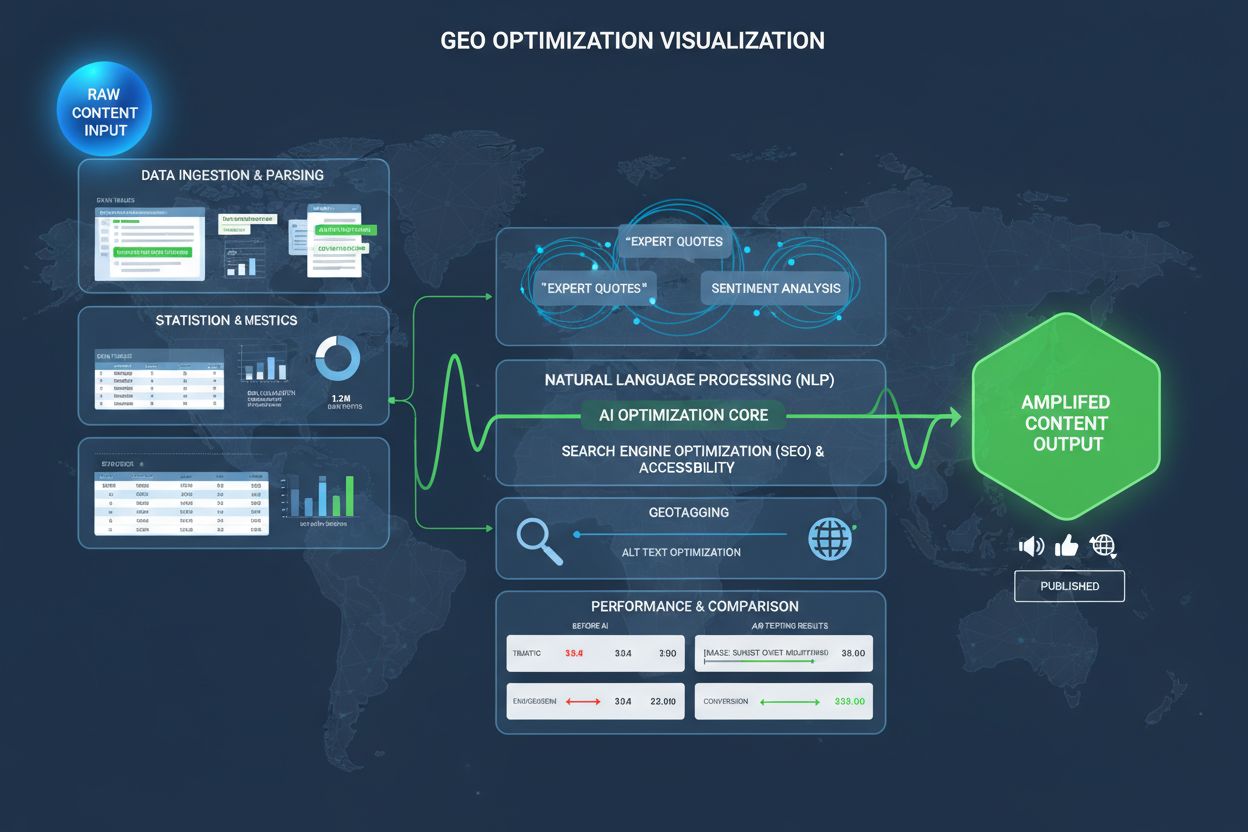
Generative Engine Optimization (GEO) represents a strategic approach to ensuring your content is discoverable and cited by AI systems, requiring a fundamental shift from traditional SEO practices toward AI-native content structures. To maximize AI citations, content creators must directly answer user questions within their text, incorporate specific statistics and data points that AI models can extract and attribute, and include expert quotes and citations that establish credibility and provide clear attribution pathways. Visual content optimization through detailed alt text descriptions enables AI systems to understand and reference images, while comparison tables and structured data formats make information more accessible for AI extraction and citation. Research shows that content with clear data attribution receives 3.2x more AI citations than content without source attribution, underscoring the importance of transparent information sourcing. Implementing these GEO best practices ensures your content becomes a preferred source for AI-generated responses and maintains proper citation attribution across generative platforms.
GEO Best Practices:
Measuring amplification success requires tracking key performance indicators (KPIs) such as reach, engagement rates, conversions, and website traffic across all distribution channels. Essential measurement tools include Google Analytics for comprehensive traffic analysis, platform-specific analytics dashboards (such as Meta Insights or LinkedIn Analytics), and third-party attribution software to understand customer journeys. A/B testing different content formats, messaging, and distribution strategies provides data-driven insights into what resonates most with your audience and drives measurable results. Calculating return on investment (ROI) by comparing the costs of amplification efforts against generated revenue or leads ensures accountability and justifies continued investment in your content strategy. Continuous optimization based on performance data—adjusting underperforming tactics, scaling successful approaches, and refining targeting parameters—transforms measurement from a reporting function into an active driver of improved amplification outcomes.
Successful AI content amplification requires a strategic approach that prioritizes quality and authenticity over volume. The foundation of any effective amplification strategy is creating valuable, original content that resonates with your target audience before attempting to distribute it across multiple channels. Selecting the appropriate platforms for your specific audience ensures that your message reaches the right people at the right time, rather than broadcasting indiscriminately across all available channels. Consistency in messaging, branding, and posting schedules builds trust and keeps your audience engaged, while adapting the format and tone of content for each platform maximizes its impact and relevance. Monitoring performance metrics and audience feedback allows you to refine your strategy continuously, identifying what works and eliminating ineffective tactics. To avoid common pitfalls, follow these essential best practices:
Emerging trends in AI content amplification point toward increasingly sophisticated personalization engines that adapt messaging in real-time based on audience behavior and preferences, while agentic AI systems automate complex distribution workflows across evolving channels. Real-time optimization capabilities will enable content creators to dynamically adjust performance metrics and messaging strategies as campaigns unfold, maximizing engagement and conversion rates. As AI tools become more prevalent, maintaining authentic voice and brand identity will emerge as a critical differentiator, requiring human oversight to ensure content resonates genuinely with audiences rather than appearing algorithmically generated. The integration of AI content amplification with geo-targeting and location-based strategies will unlock new opportunities for hyper-localized marketing campaigns that deliver contextually relevant messages to specific regional audiences. Distribution channels themselves will continue to evolve, with AI systems intelligently routing content across traditional and emerging platforms—from social media and email to voice assistants and immersive digital environments—based on where target audiences are most receptive. These advancements collectively signal a future where AI amplification becomes indispensable for content creators seeking competitive advantage while maintaining the human authenticity that drives meaningful audience connections.
Content promotion focuses on organic reach through your existing audience via social media, email, and your website. Content amplification, especially AI-powered amplification, extends beyond your owned channels to strategically distribute content across multiple platforms, communities, and paid channels to reach new audiences and maximize visibility across AI systems.
AI enhances amplification by analyzing audience behavior patterns, predicting optimal posting times, personalizing messaging for different segments, and automating distribution workflows. AI systems can also optimize content structure for AI discovery, ensuring your content is properly cited in ChatGPT, Google AI Overviews, and other generative AI systems.
High-quality, original content with clear value propositions amplifies most effectively. This includes research-backed articles with statistics, expert interviews, comparison guides, case studies, and educational content. Content that answers specific questions directly and includes structured data (tables, lists, quotes) performs particularly well in AI systems.
Initial results from organic amplification can appear within days to weeks, while paid amplification shows immediate results. However, sustained visibility and authority building typically require 2-3 months of consistent amplification efforts. AI citation visibility may take longer as search engines and AI systems need time to discover and index your optimized content.
Content amplification directly supports SEO by increasing content visibility, generating backlinks, and building domain authority. When content is amplified across multiple channels and communities, it generates more engagement signals that search engines use to rank content higher. Additionally, optimizing for AI citations (GEO) complements traditional SEO strategies.
Budget depends on your goals and channels. Organic amplification requires primarily time investment. For paid amplification, start with 20-30% of your content marketing budget and adjust based on ROI. Many successful campaigns allocate $500-$5,000 monthly for paid promotion, though this varies significantly by industry and audience size.
Absolutely. Small businesses often benefit most from AI amplification because it levels the playing field. By focusing on quality content and strategic distribution through free and low-cost channels (Reddit, Quora, email, social media), small businesses can achieve significant reach without large advertising budgets.
Key metrics include reach (impressions), engagement (likes, comments, shares), click-through rates, conversions, and traffic sources. For AI citations, track mentions in AI-generated responses, backlinks from amplification efforts, and domain authority growth. Use Google Analytics, platform-specific analytics, and tools like AmICited.com to monitor AI visibility.
Track how AI systems like ChatGPT, Google AI Overviews, and Perplexity reference your brand and content with AmICited.com's comprehensive AI monitoring platform.
Learn what AI content generation is, how it works, its benefits and challenges, and best practices for using AI tools to create marketing content optimized for ...

Learn how to break down pillar content into multiple formats using AI. Master content atomization strategy to maximize reach, engagement, and ROI across all cha...
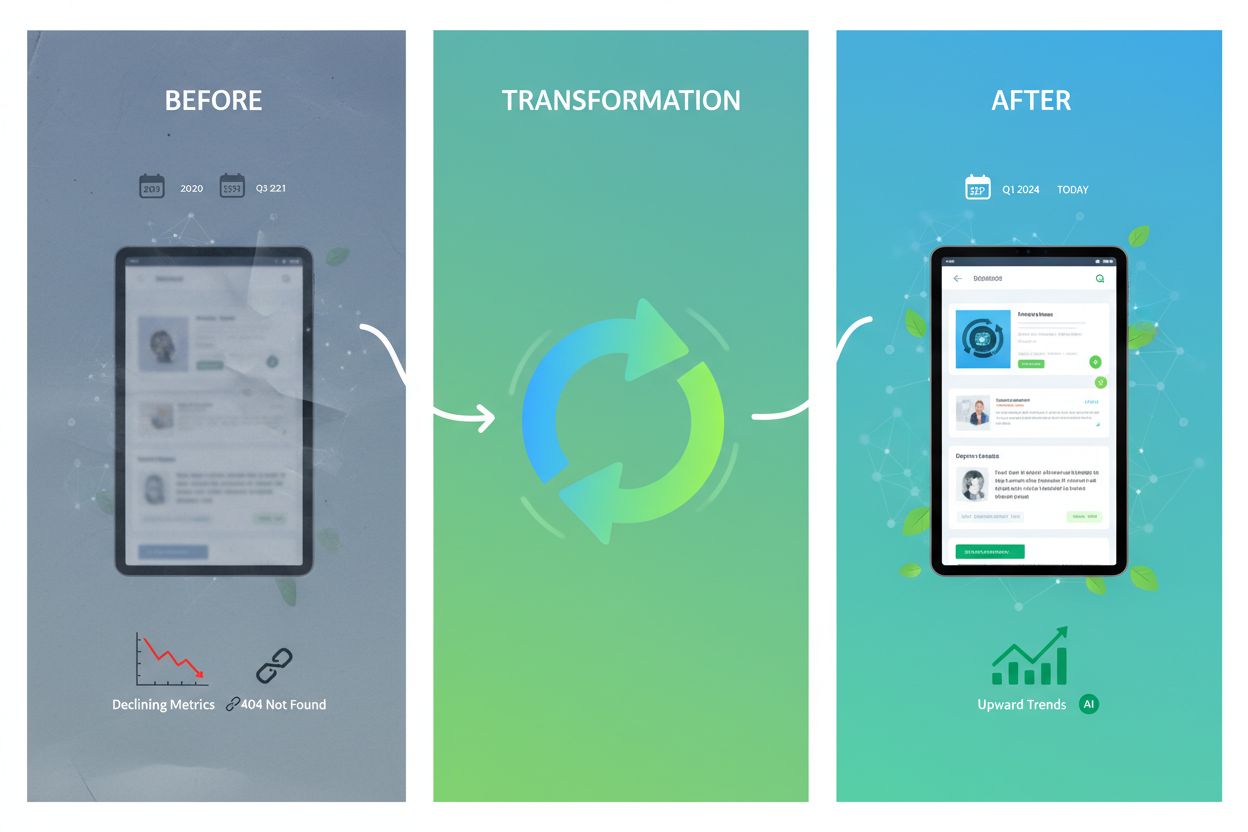
Learn how to systematically refresh and optimize your content for AI search engines. Discover strategies to improve AI citations, maintain topical authority, an...
Cookie Consent
We use cookies to enhance your browsing experience and analyze our traffic. See our privacy policy.