
Gap Analysis - Identifying Missing Content Opportunities
Gap analysis identifies missing content opportunities by comparing your site against competitors and audience needs. Essential for SEO and AI search visibility.
10 min read
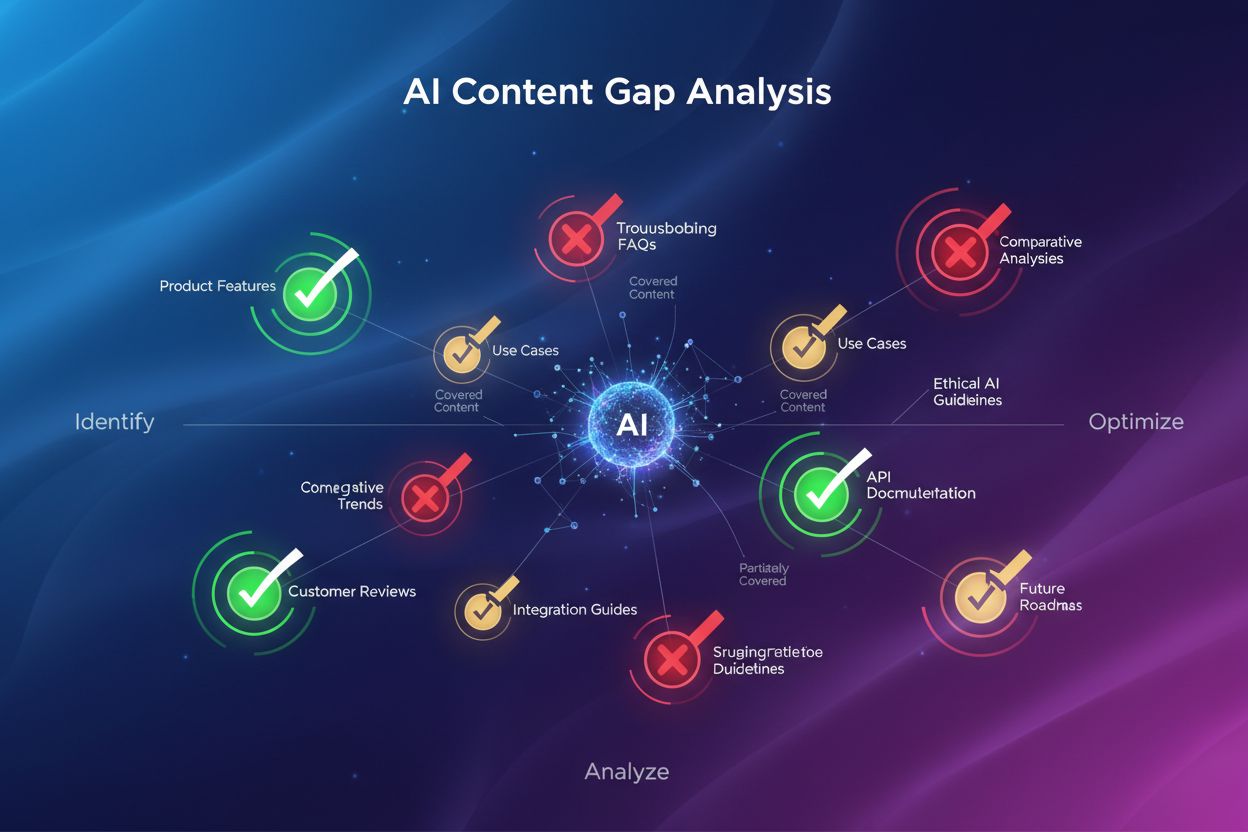
AI Content Gap Analysis is the systematic process of identifying missing, incomplete, or underperforming content on your website by leveraging artificial intelligence to compare your existing content against competitor offerings, search intent patterns, and AI-generated responses. This approach is critical for Generative Engine Optimization (GEO), where AI systems determine which brands receive visibility and citations in AI Overviews and generative search results.
AI Content Gap Analysis is the systematic process of identifying missing, incomplete, or underperforming content on your website by leveraging artificial intelligence to compare your existing content against competitor offerings, search intent patterns, and AI-generated responses. This approach is critical for Generative Engine Optimization (GEO), where AI systems determine which brands receive visibility and citations in AI Overviews and generative search results.
AI Content Gap Analysis is the systematic process of identifying missing, incomplete, or underperforming content on your website by leveraging artificial intelligence to compare your existing content against competitor offerings, search intent patterns, and AI-generated responses. Unlike traditional gap analysis that relies on manual review and keyword research, AI-powered gap analysis uses machine learning algorithms to detect patterns across thousands of data points simultaneously, revealing opportunities where your brand should have content but currently doesn’t. This approach is particularly critical in the era of Generative Engine Optimization (GEO), where AI systems like Google AI Overviews, ChatGPT, and Perplexity determine which brands receive visibility and citations. By understanding content gaps before AI systems encounter them, brands can proactively create content that aligns with how AI models synthesize and present information to users. The strategic advantage lies in identifying not just missing topics, but the specific angles, formats, and depth levels that AI systems prioritize when generating answers.
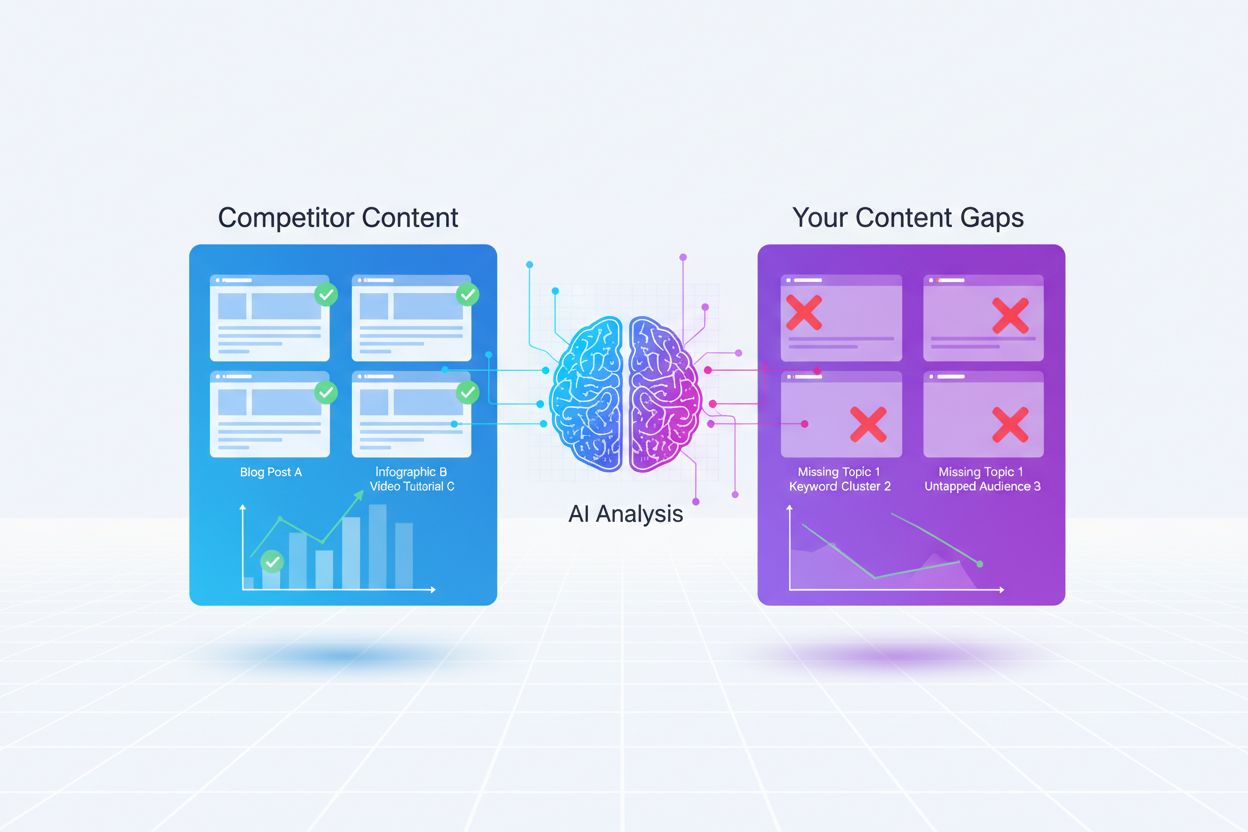
Traditional content gap analysis relies on manual competitor audits and keyword research tools that show search volume and difficulty metrics—but they don’t reveal what AI systems actually need to cite your brand. AI Content Gap Analysis transforms this by analyzing the actual patterns in AI-generated responses, identifying which content types, structures, and information hierarchies AI models prefer. Here are the key business benefits:
The difference is fundamental: traditional analysis shows you what exists; AI gap analysis shows you what AI systems are looking for.
AI systems identify multiple categories of content gaps that traditional analysis misses entirely. Each gap type represents a different opportunity for brands to improve their AI visibility and citation rates. Understanding these distinctions helps teams prioritize which gaps to address first based on business impact and competitive opportunity.
| Gap Type | Definition | Example |
|---|---|---|
| Topic Gaps | Entire subjects or subtopics your site doesn’t cover that competitors do, and that AI systems reference | A fitness brand missing content on “recovery protocols for endurance athletes” while competitors rank for it in AI Overviews |
| Intent Gaps | Questions or search intents your content doesn’t address, even if you cover the general topic | Having product pages but no “how to choose” or “comparison” content that AI systems synthesize for decision-making queries |
| Depth Gaps | Insufficient detail, evidence, or comprehensiveness compared to what AI systems pull from competitors | Covering a topic in 500 words when AI systems prefer synthesizing from sources with 2,000+ words of detailed information |
| Format Gaps | Missing content formats that AI systems prioritize (lists, tables, step-by-step guides, data visualizations) | No structured FAQ or numbered process guides when AI systems consistently cite these formats in responses |
| Freshness Gaps | Outdated content that AI systems deprioritize in favor of recently updated competitor content | Statistics from 2021 when AI systems now reference 2024 data from competitors in the same topic area |
| Authority Gaps | Lack of expert credentials, citations, or data that AI systems use to validate source credibility | Missing author expertise markers or original research that AI systems use to determine which sources to cite |
Traditional gap analysis requires content teams to manually review competitor websites, analyze keyword rankings, and make educated guesses about what content to create next—a process that takes weeks and often misses emerging opportunities. AI-powered gap analysis automates this entire workflow by simultaneously analyzing your content, competitor content, and actual AI-generated responses to identify patterns humans would miss. AI tools crawl and analyze thousands of pages in hours, extracting key topics, content structures, keyword usage patterns, and information hierarchies that AI systems prioritize. The algorithms then compare your content against these patterns, automatically flagging gaps and ranking them by opportunity size (based on search volume, AI citation frequency, and competitive saturation). Real-time analysis means you’re not working with month-old data—you’re seeing current gaps as they emerge in AI systems. AI tools also identify priority gaps by analyzing which missing content would have the highest impact on your AI visibility, considering factors like search intent volume, competitor strength, and your existing content authority. This automation reduces analysis time from weeks to days while improving accuracy by removing human bias and manual oversight errors.
Implementing AI Content Gap Analysis requires a structured approach that integrates with your existing content strategy and team workflows. Here’s a proven process that organizations use to systematically identify and prioritize content opportunities:
Audit Your Existing Content: Use AI tools to crawl and catalog all your current content, extracting topics, keywords, content types, and depth metrics into a centralized database for comparison analysis
Define Your Competitive Set: Identify 5-10 direct competitors and complementary brands that appear in the same AI Overviews and generative search results as your brand
Analyze Competitor Content & AI Patterns: Run AI gap analysis tools against competitor sites and analyze actual AI-generated responses in your industry to identify what content types and structures AI systems prioritize
Map Content Gaps Against Business Goals: Cross-reference identified gaps with your business priorities, target audiences, and revenue-driving keywords to focus on high-impact opportunities rather than every possible gap
Prioritize by Opportunity Score: Rank gaps using a weighted formula that considers search volume, AI citation frequency, competitive saturation, and alignment with your brand’s expertise and authority
Create & Optimize Content: Develop new content or expand existing content to fill priority gaps, using AI insights about optimal structure, depth, and format preferences
Monitor & Iterate: Continuously track how new content performs in AI Overviews and adjust your gap analysis quarterly as AI systems evolve and new opportunities emerge
The rise of Generative Engine Optimization (GEO) has fundamentally changed how brands should approach content strategy, and AI Content Gap Analysis is essential for succeeding in this new landscape. Traditional SEO focused on ranking for keywords in search results; GEO focuses on being cited and referenced within AI-generated answers. When users ask questions in Google AI Overviews, ChatGPT, or Perplexity, these systems synthesize answers from multiple sources—and your brand either appears in that synthesis or it doesn’t. AI Content Gap Analysis reveals exactly which topics, formats, and information structures AI systems are pulling from competitors but not from your site, creating a direct roadmap for improving your citation rates. Platforms like AmICited.com monitor how AI systems reference your brand across different AI tools and search engines, providing visibility into which content gaps are actually costing you citations. By combining gap analysis with citation monitoring, brands can see the direct impact of filling specific content gaps—for example, discovering that adding a “comparison guide” format increased your citations in AI Overviews by 40%. Structured content (FAQs, tables, step-by-step guides) is particularly important for AI visibility, as these formats are easier for AI systems to parse and cite. The strategic advantage goes to brands that use gap analysis not just to create more content, but to create the right content that AI systems actively seek out and reference.
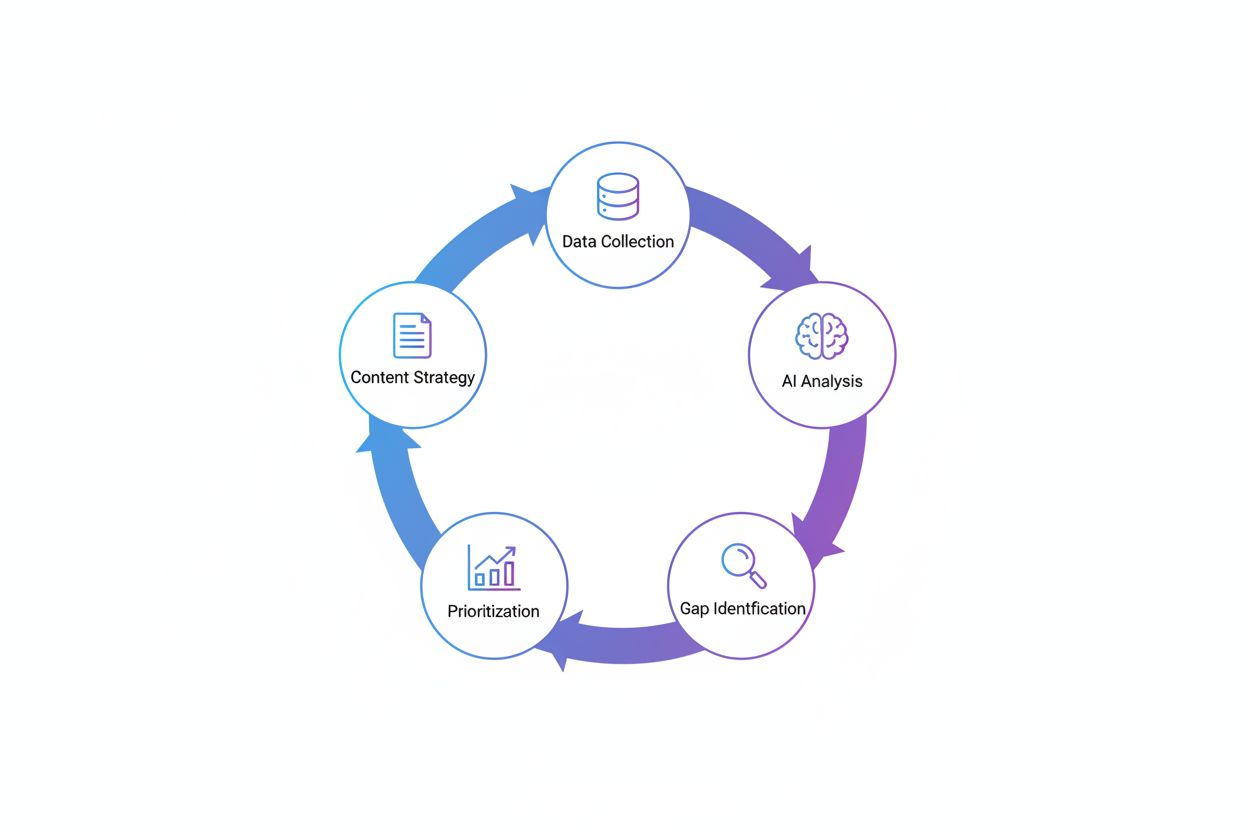
Successfully implementing AI Content Gap Analysis requires more than just running a tool once—it demands a continuous, strategic approach integrated into your content operations. Here are the essential best practices that high-performing teams follow:
Establish Continuous Monitoring: Don’t treat gap analysis as a one-time project; implement quarterly or monthly reviews to catch emerging gaps before competitors fill them, especially as AI systems evolve their citation patterns
Map the Complete Customer Journey: Analyze gaps across all stages of the buyer journey (awareness, consideration, decision, retention), not just high-volume keywords, since AI systems serve different content types at different journey stages
Combine with Competitive Intelligence: Track not just what gaps exist, but what competitors are doing to fill them, allowing you to either move faster or find adjacent opportunities they’re missing
Prioritize Depth Over Volume: Focus on creating comprehensive, authoritative content that fills multiple gap types simultaneously rather than creating numerous shallow pieces that don’t meet AI systems’ citation standards
Measure Impact on AI Visibility: Use citation monitoring tools to track how filling specific gaps affects your appearance in AI Overviews and generative search, creating a feedback loop that improves future gap prioritization
Align with Content Expertise: Ensure gap analysis recommendations align with your team’s actual expertise and authority—filling gaps in areas where you lack credibility won’t improve AI citations and may damage trust
Document and Share Insights: Create a living gap analysis document that your entire content, marketing, and product teams can reference, ensuring alignment across departments on content priorities
Multiple platforms now offer AI-powered content gap analysis capabilities, each with different strengths depending on your specific needs and use case. Understanding the landscape helps teams choose tools that align with their workflow and strategic priorities.
| Platform/Tool | Primary Use Case | Key Strengths |
|---|---|---|
| AmICited.com | AI citation monitoring + gap analysis | Real-time tracking of how AI systems cite your brand across Google AI Overviews, ChatGPT, and Perplexity; directly shows which content gaps impact your AI visibility; best for brands prioritizing GEO strategy |
| Writesonic AI Agent | Automated content gap discovery | Rapid analysis of competitor content and AI patterns; generates gap reports with prioritization; good for teams wanting AI-assisted analysis without manual review |
| AIOSEO | SEO-integrated gap analysis | Combines traditional SEO metrics with AI content analysis; integrates directly with WordPress; best for teams already using AIOSEO for SEO optimization |
| Kontent.ai | Content operations + gap analysis | Focuses on content management and workflow integration; strong for teams managing large content libraries across multiple channels |
| Single Grain Platform | Comprehensive content strategy | Combines gap analysis with content performance data; includes competitive benchmarking; best for enterprise teams needing detailed strategic insights |
AmICited.com stands out for brands specifically focused on AI visibility, as it’s the only platform that directly monitors how AI systems cite your brand and shows the correlation between content gaps and citation rates. This direct feedback loop—seeing exactly which gaps are costing you AI citations—transforms gap analysis from a theoretical exercise into a measurable business metric. For teams implementing GEO strategy, AmICited.com provides the visibility layer that makes gap analysis actionable, showing not just what content is missing, but what impact filling that gap will have on your AI presence.
Traditional gap analysis relies on manual competitor audits and keyword research tools that show search volume and difficulty metrics. AI Content Gap Analysis transforms this by analyzing actual patterns in AI-generated responses, identifying which content types, structures, and information hierarchies AI models prefer. This reveals not just what content exists, but what AI systems are actively looking for and will cite.
AI can identify multiple gap types: topic gaps (entire subjects your site doesn't cover), intent gaps (questions your content doesn't address), depth gaps (insufficient detail compared to competitors), format gaps (missing content types like lists or tables), freshness gaps (outdated information), and authority gaps (lack of expert credentials or citations). Each gap type represents a different opportunity for improving AI visibility.
Implement quarterly or monthly reviews to catch emerging gaps before competitors fill them. As AI systems evolve their citation patterns and new competitors enter your space, continuous monitoring ensures you're always identifying the most valuable opportunities. Many high-performing teams run gap analysis sprints monthly as part of their content operations.
Several platforms offer AI-powered gap analysis: AmICited.com specializes in monitoring how AI systems cite your brand and showing which gaps impact your visibility; Writesonic AI Agent provides rapid competitor analysis; AIOSEO combines SEO metrics with AI analysis; Kontent.ai focuses on content operations integration; and Single Grain offers comprehensive strategic insights. Choose based on whether you prioritize AI visibility monitoring, SEO integration, or content workflow integration.
AI Content Gap Analysis reveals exactly which topics, formats, and information structures AI systems are pulling from competitors but not from your site. By filling these gaps with content optimized for AI systems (structured data, comprehensive answers, clear formatting), you increase the likelihood that AI Overviews and generative search engines will cite your brand. This direct correlation between gap filling and citation improvement is what makes GEO strategy measurable.
Yes, significantly. AI Overviews synthesize answers from multiple sources, and your brand either appears in that synthesis or it doesn't. Gap analysis reveals which topics, formats, and information structures AI systems are synthesizing from competitors but not from your site. By creating content that matches these patterns—particularly structured formats like FAQs, tables, and step-by-step guides—you improve your chances of being cited in AI Overviews.
ROI varies by industry and implementation, but brands typically see improvements in both traditional search rankings and AI visibility. The key is measuring impact: track how filling specific gaps affects your appearance in AI Overviews (using tools like AmICited.com), monitor search ranking improvements, and measure downstream conversions. Many teams report 20-40% increases in AI citations after systematically filling priority gaps.
Rank gaps using a weighted formula that considers: search volume (how many people search for this topic), AI citation frequency (how often AI systems reference this topic), competitive saturation (how many competitors already cover it), and alignment with your expertise. Focus first on high-impact gaps where you have competitive advantage and clear audience demand, rather than trying to fill every possible gap.
Track how AI systems reference your brand across Google AI Overviews, ChatGPT, Perplexity, and other generative search engines. Identify content gaps that are costing you citations and visibility.
Gap analysis identifies missing content opportunities by comparing your site against competitors and audience needs. Essential for SEO and AI search visibility.

Learn how to identify content gaps for AI search engines like ChatGPT and Perplexity. Discover methods to analyze LLM visibility, find missing topics, and optim...

Learn how to identify and close AI visibility content gaps across ChatGPT, Perplexity, and Google AI Overviews. Discover analysis methods and tools to improve y...