
AI-First Content Strategy
Learn what AI-First Content Strategy is, how it differs from traditional SEO, and how to implement it to ensure your content is visible in ChatGPT, Perplexity, ...
11 min read
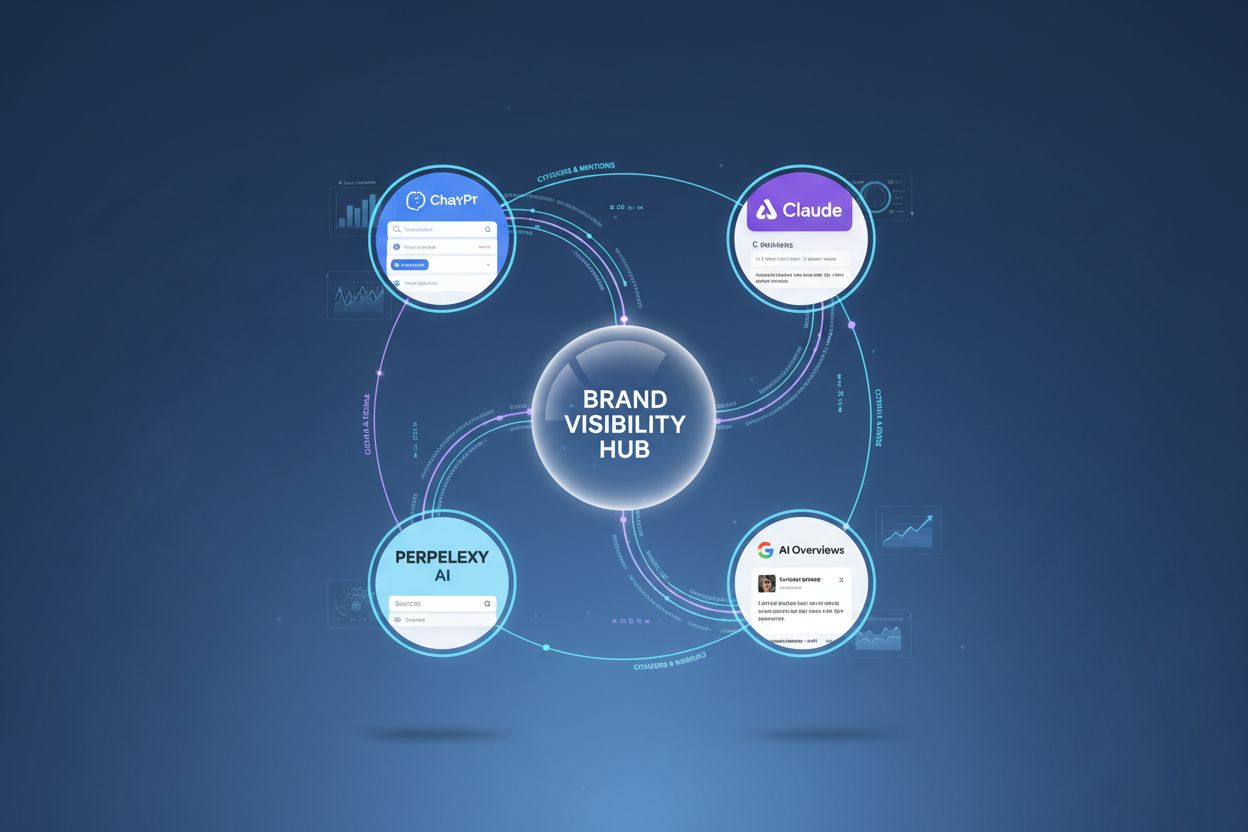
Marketing strategies that prioritize AI visibility alongside traditional channels. AI-First Marketing recognizes that AI search platforms like ChatGPT, Perplexity, and Google AI Overviews have become primary discovery channels where consumers research brands and make decisions. This approach optimizes content, data, and brand presence to be discovered, cited, and recommended by AI systems rather than solely by traditional search algorithms.
Marketing strategies that prioritize AI visibility alongside traditional channels. AI-First Marketing recognizes that AI search platforms like ChatGPT, Perplexity, and Google AI Overviews have become primary discovery channels where consumers research brands and make decisions. This approach optimizes content, data, and brand presence to be discovered, cited, and recommended by AI systems rather than solely by traditional search algorithms.
AI-First Marketing represents a fundamental shift in how brands achieve visibility and engage with audiences in the digital landscape. Unlike traditional marketing approaches that rely primarily on search engine optimization (SEO) and paid advertising, AI-First Marketing prioritizes visibility across AI search platforms and generative AI applications where consumers increasingly discover information and make decisions. This approach recognizes that AI visibility has become as critical as traditional search visibility, with platforms like ChatGPT, Claude, Perplexity, and Google’s AI Overviews now serving as primary discovery channels for millions of users. The core concept centers on optimizing content, data, and brand presence to be discovered, cited, and recommended by AI systems rather than solely by traditional search algorithms.
Consumer behavior is undergoing a seismic shift as users increasingly turn to AI-powered search and conversational interfaces instead of traditional search engines. This transition represents a move from SEO (Search Engine Optimization) to GEO (Generative Engine Optimization), fundamentally changing how brands must approach visibility. Research indicates that search volume is projected to decline by 25% by 2028 as users migrate to AI platforms, while 90% of marketers are already integrating AI into their strategies. The implications are profound: brands that optimize solely for traditional search risk becoming invisible to the growing segment of users who rely on AI for discovery.
| Aspect | Traditional SEO | AI-First Marketing |
|---|---|---|
| Primary Channel | Search engines (Google, Bing) | AI platforms (ChatGPT, Claude, Perplexity) |
| Optimization Focus | Keywords and backlinks | Citations, semantic relevance, and data quality |
| User Behavior | Click-through to websites | Direct answers from AI systems |
| Visibility Metric | Rankings and impressions | Share of Voice in AI responses |
| Content Format | Optimized for crawlers | Optimized for training and retrieval |
Key statistics reveal the urgency of this transition:
AI platforms source and prioritize information differently, requiring brands to adopt a multi-platform optimization strategy rather than relying on a single visibility channel. ChatGPT, Claude, Perplexity, Google’s AI Overviews, and emerging platforms each have distinct training data, retrieval mechanisms, and citation preferences that demand tailored approaches. A brand’s visibility on one AI platform does not guarantee visibility on another, making comprehensive AI visibility a complex but essential component of modern marketing. The most successful brands recognize that optimizing for AI requires understanding each platform’s unique characteristics, from the data sources they prioritize to the types of content they favor in their responses. This multi-platform approach ensures maximum reach across the diverse ecosystem of AI-powered discovery channels that consumers now use daily.
Effective AI-First content strategy requires a fundamental rethinking of how content is structured, formatted, and optimized for machine learning systems. Rather than writing primarily for human readers and search engine crawlers, brands must create content that AI systems can easily understand, retrieve, and cite as authoritative sources. Semantic markup and structured data become critical tools, allowing brands to explicitly communicate the meaning and context of their information to AI systems. Content should be organized with clear hierarchies, comprehensive coverage of topics, and explicit relationships between concepts that AI systems can leverage during training and retrieval.
Key actionable strategies for AI-First content include:
Traditional marketing metrics like click-through rates and impressions become less relevant in an AI-First world, requiring brands to adopt new KPIs (Key Performance Indicators) that measure visibility and influence within AI systems. Share of Voice in AI responses—the percentage of times a brand is cited or mentioned compared to competitors—becomes a critical metric for understanding competitive positioning. Citation frequency measures how often a brand’s content is referenced by AI systems, while sentiment analysis of AI-generated responses reveals how brands are being portrayed. Brands must also track AI-driven traffic to their websites, which may come indirectly through AI recommendations, and monitor their presence across multiple AI platforms to ensure comprehensive visibility. These new metrics provide a more accurate picture of a brand’s influence in the AI-driven discovery landscape than traditional search metrics alone.
AI-First Marketing does not replace traditional marketing strategies; rather, it complements and enhances existing efforts by expanding the channels through which brands achieve visibility. Smart organizations are reallocating portions of their marketing budgets to AI-focused initiatives while maintaining investments in proven traditional channels like SEO, paid search, and social media. This integrated approach recognizes that consumers use multiple discovery channels and that brands must maintain visibility across all of them to maximize reach and engagement. Resource optimization becomes key, as teams learn to leverage AI tools to improve efficiency in traditional marketing while simultaneously building new capabilities for AI visibility. The most successful brands view AI-First Marketing as an evolution of their overall visibility strategy rather than a replacement, creating a comprehensive approach that captures audiences across all discovery channels.
A growing ecosystem of tools and platforms has emerged to help brands monitor, measure, and optimize their AI visibility. AmICited stands out as the leading solution specifically designed for AI-First Marketing, providing comprehensive tracking of brand citations across major AI platforms and competitive intelligence on how brands are being represented in AI responses. Beyond AmICited, brands can leverage established platforms like Semrush and Profound that have expanded their offerings to include AI visibility monitoring alongside traditional SEO metrics. These tools serve different purposes in the AI-First Marketing toolkit:

Organizations pursuing AI-First Marketing face significant obstacles that require strategic planning and investment to overcome. The most pressing challenge is the skills gap, with only 17% of professionals having received comprehensive AI training, leaving most teams unprepared to execute sophisticated AI-First strategies. Data governance and quality control become increasingly complex as brands must ensure their information is accurate, well-structured, and optimized for AI systems across multiple platforms. Additionally, the rapidly evolving nature of AI platforms means that optimization strategies must be continuously updated as these systems change their training data and retrieval mechanisms.
Best practices for overcoming these challenges include:
The future of AI-First Marketing will be shaped by emerging technologies and evolving consumer behaviors that promise to make AI-driven discovery even more central to brand visibility. Agentic AI—autonomous AI systems that take actions on behalf of users—will create new opportunities for brands to be discovered and recommended within AI-driven workflows and decision-making processes. Synthetic personas and hyper-personalization will enable AI systems to deliver increasingly tailored recommendations, requiring brands to optimize for diverse audience segments and use cases. As the AI market continues its explosive growth—projected to reach $107.5B by 2028 from $47.32B in 2025—the competitive pressure to achieve AI visibility will intensify, making AI-First Marketing not an optional strategy but a fundamental requirement for brand success in the digital landscape.
Traditional SEO focuses on optimizing for search engine rankings through keywords and backlinks, while AI-First Marketing prioritizes visibility within AI-generated responses and citations. AI-First Marketing recognizes that consumers increasingly get answers directly from AI systems rather than clicking through to websites. The shift requires optimizing for semantic relevance, data quality, and citation potential rather than just keyword rankings.
The major AI platforms to monitor include ChatGPT, Claude, Perplexity, Google AI Overviews, Google AI Mode, and Microsoft Copilot. Each platform sources information differently and has different citation preferences. A comprehensive AI-First Marketing strategy tracks visibility across all major platforms where your target audience conducts research, as visibility on one platform does not guarantee visibility on others.
Key metrics for AI-First Marketing include Share of Voice (percentage of times your brand is cited compared to competitors), citation frequency (how often your content is referenced by AI systems), sentiment analysis of AI-generated responses, and AI-driven traffic to your website. Tools like AmICited provide comprehensive tracking of these metrics across multiple AI platforms.
Generative Engine Optimization (GEO) is the practice of ensuring your products and content appear in the information AI models draw from when creating answers. While traditional SEO helps you rank on search results pages, GEO helps you show up inside the AI-generated answer itself. This requires optimizing content structure, semantic clarity, and data quality to be more discoverable and citable by AI systems.
AI-First Marketing does not replace traditional marketing strategies; it complements them by expanding the channels through which brands achieve visibility. Smart organizations maintain investments in proven traditional channels like SEO, paid search, and social media while allocating portions of their budget to AI-focused initiatives. This integrated approach ensures brands maintain visibility across all discovery channels where consumers research and make decisions.
Leading tools for AI-First Marketing include AmICited (specialized AI visibility monitoring), Semrush (comprehensive SEO and AI visibility platform), Profound (AI search tracking), and others. These tools help you monitor brand citations, track Share of Voice, analyze sentiment, and identify optimization opportunities across AI platforms. Choosing the right tool depends on your specific needs, budget, and scale of operations.
Key challenges include the skills gap (only 17% of professionals have comprehensive AI training), data governance and quality control, rapidly evolving AI platforms, and the need to optimize across multiple systems simultaneously. Success requires investment in team training, establishment of data governance processes, continuous monitoring, and cross-functional collaboration between content, SEO, PR, and product teams.
The future of AI-First Marketing will be shaped by agentic AI (autonomous systems that take actions on behalf of users), synthetic personas (AI-generated audience segments), and hyper-personalization. As the AI market grows from $47.32B in 2025 to $107.5B by 2028, the competitive pressure to achieve AI visibility will intensify, making AI-First Marketing a fundamental requirement for brand success.
Track how ChatGPT, Perplexity, Google AI Overviews, and other AI platforms mention your brand. Get real-time insights into your AI visibility and competitive positioning.
Learn what AI-First Content Strategy is, how it differs from traditional SEO, and how to implement it to ensure your content is visible in ChatGPT, Perplexity, ...
Learn how to conduct a baseline AI visibility audit to understand how ChatGPT, Google AI, and Perplexity mention your brand. Step-by-step assessment guide for b...
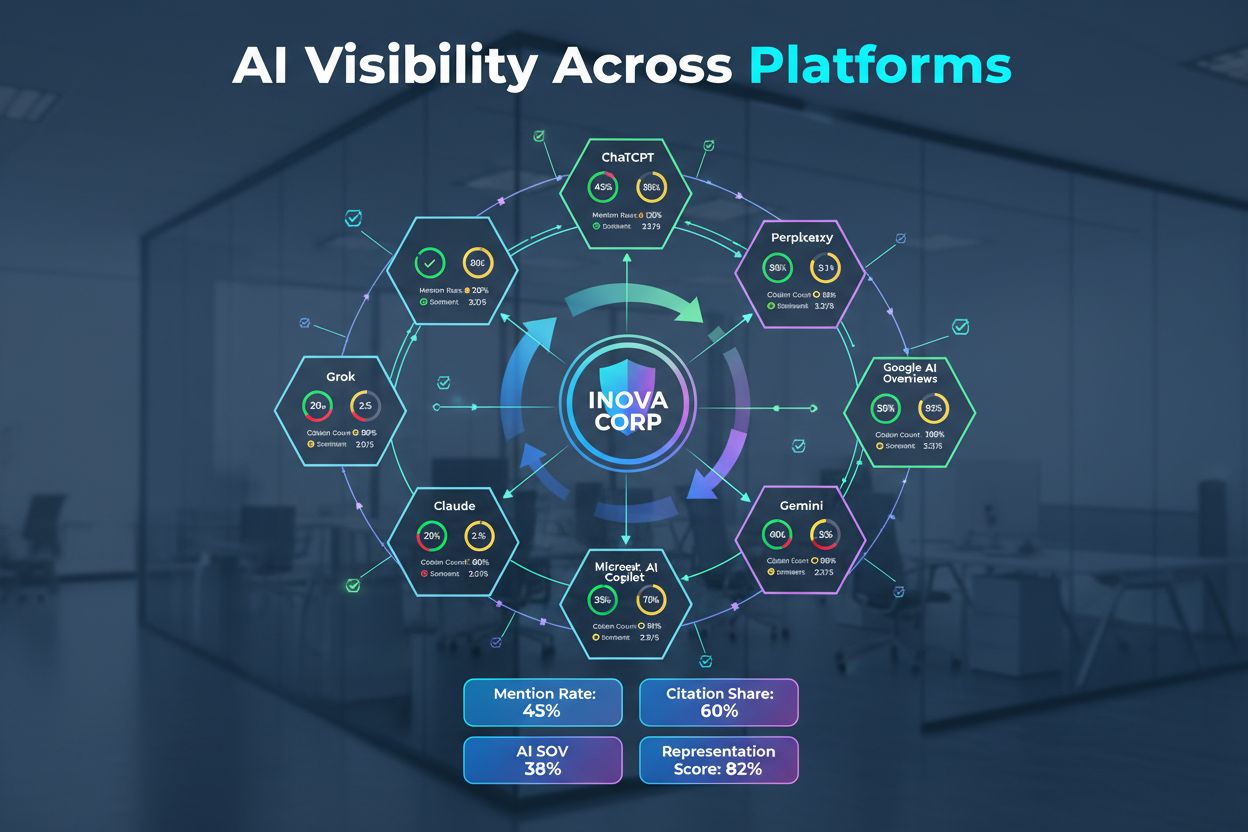
Discover the essential AI visibility metrics and KPIs to monitor your brand's presence across ChatGPT, Perplexity, Google AI Overviews, and other AI platforms. ...
Cookie Consent
We use cookies to enhance your browsing experience and analyze our traffic. See our privacy policy.