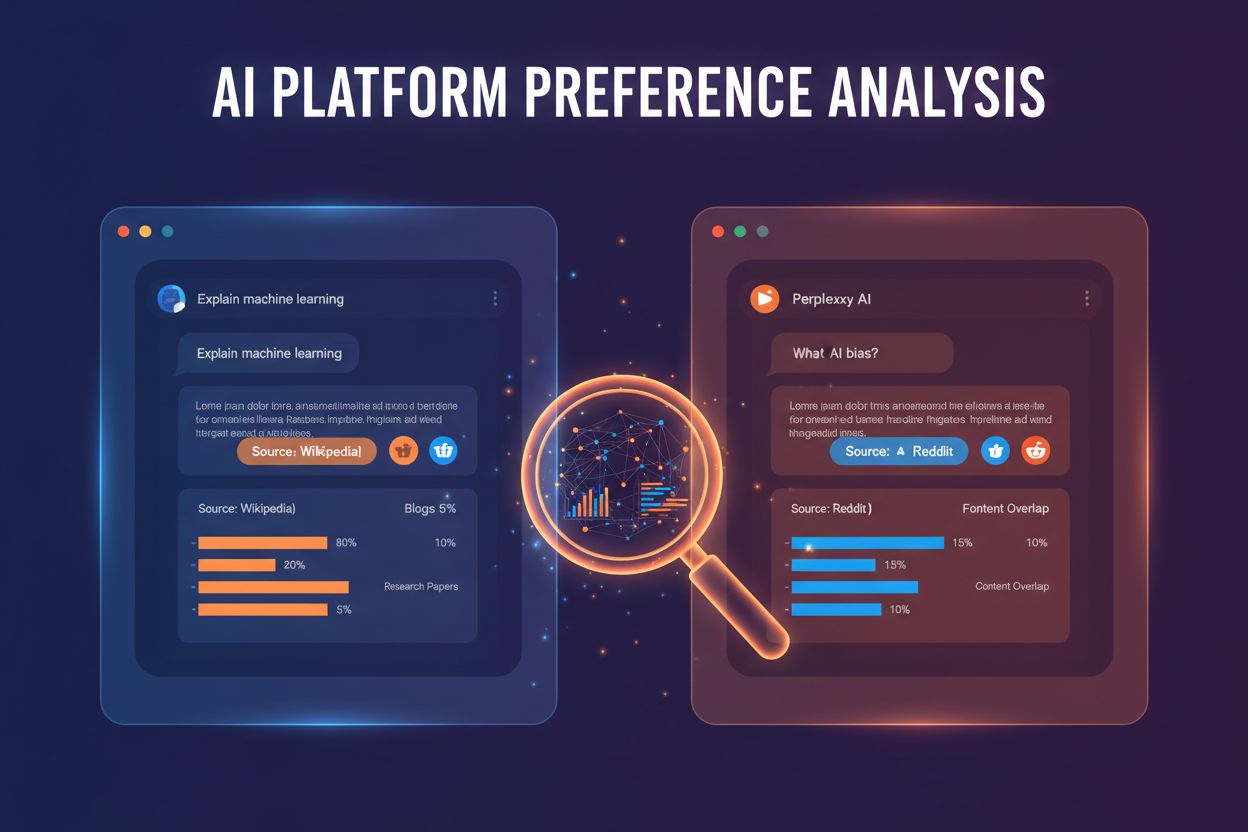
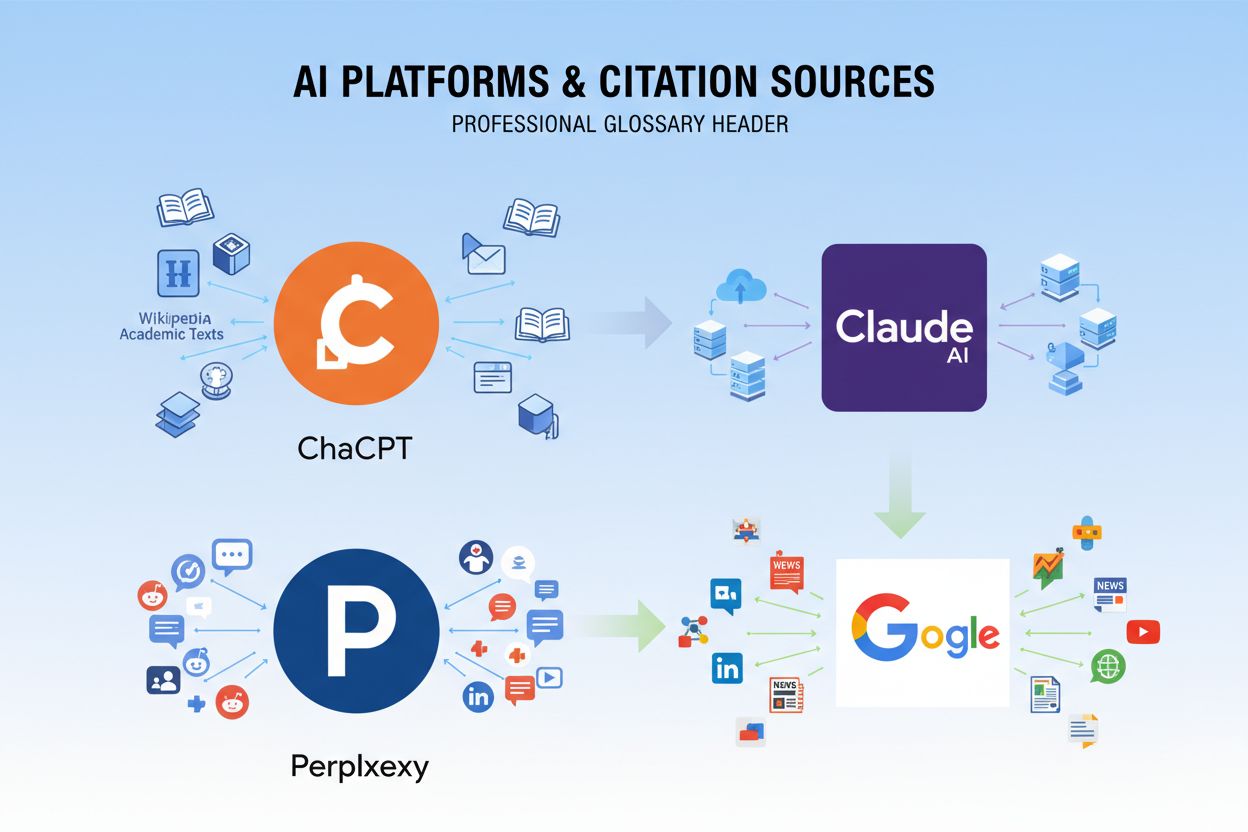
AI Platform Preference Analysis is the systematic examination of how different AI platforms (ChatGPT, Claude, Perplexity, Google AI Overviews) favor specific sources, brands, and information types in their responses. Each platform has distinct citation patterns, retrieval mechanisms, and source preferences that create measurable competitive advantages and disadvantages for brands. Understanding these preferences is essential for optimizing brand visibility across the AI ecosystem. This analysis reveals that platforms like ChatGPT prefer encyclopedic sources like Wikipedia, while Perplexity prioritizes community discussions from Reddit.
AI Platform Preference Analysis
AI Platform Preference Analysis is the systematic examination of how different AI platforms (ChatGPT, Claude, Perplexity, Google AI Overviews) favor specific sources, brands, and information types in their responses. Each platform has distinct citation patterns, retrieval mechanisms, and source preferences that create measurable competitive advantages and disadvantages for brands. Understanding these preferences is essential for optimizing brand visibility across the AI ecosystem. This analysis reveals that platforms like ChatGPT prefer encyclopedic sources like Wikipedia, while Perplexity prioritizes community discussions from Reddit.
Understanding AI Platform Preference Analysis
AI Platform Preference Analysis is the systematic examination of how different AI platforms favor specific sources, brands, and information types in their responses. Each major AI platform—ChatGPT, Claude, Perplexity, and Google AI Overviews—has distinct citation patterns, retrieval mechanisms, and source preferences that create measurable competitive advantages and disadvantages for brands. Rather than treating all AI platforms as equivalent, understanding these preferences reveals that platforms operate as distinct ecosystems with their own rules for visibility and credibility.
Why AI Platforms Have Different Preferences
The architectural differences between AI platforms create fundamentally different approaches to information retrieval and citation. ChatGPT uses Bing-powered web search with a preference for authoritative, encyclopedic sources. Perplexity operates its own search infrastructure optimized for community-driven content. Claude integrates multiple search providers, creating a more balanced approach. Google AI Overviews leverage Google’s existing search infrastructure while adding AI-specific filtering. These technical differences translate directly into measurable citation preferences that brands must understand and address.
Platform
Search Infrastructure
Citation Style
Top Preferred Source
Key Characteristic
ChatGPT
Bing-powered search
Detailed citations with URLs
Wikipedia (7.8% overall)
Authoritative knowledge preference
Perplexity
Proprietary infrastructure
Inline citations
Reddit (6.6% overall)
Community-driven information
Google AI Overviews
Integrated Google Search
Balanced citations
Reddit (2.2% overall)
Mixed professional and social
Claude
Multiple search providers
Flexible citations
Varied sources
Balanced approach across types
Ready to Monitor Your AI Visibility?
Track how AI chatbots mention your brand across ChatGPT, Perplexity, and other platforms.
Research analyzing 680 million citations across AI platforms reveals stark differences in how each platform sources information. ChatGPT demonstrates overwhelming preference for Wikipedia, which accounts for 47.9% of its top 10 most-cited sources and 7.8% of all citations. This reflects ChatGPT’s design philosophy favoring encyclopedic, factual content from established knowledge bases. Perplexity shows the opposite pattern, with Reddit dominating at 46.7% of its top 10 sources and 6.6% of all citations, reflecting its emphasis on community discussions and peer-to-peer information sharing.
Key findings from citation analysis:
ChatGPT: Wikipedia-centric approach with 47.9% of top 10 sources, followed by Reddit (11.3%), Forbes (6.8%), and G2 (6.7%). This platform clearly prioritizes authoritative, encyclopedic content over community discussions.
Perplexity: Reddit-focused with 46.7% of top 10 sources, followed by YouTube (13.9%), Gartner (7.0%), and Yelp (5.8%). This platform values community consensus and user-generated content.
Google AI Overviews: More balanced distribution with Reddit (21.0%), YouTube (18.8%), Quora (14.3%), and LinkedIn (13.0%) in top sources. This platform integrates professional content with social platforms.
These differences mean that a brand dominating Wikipedia citations may have minimal visibility in Perplexity, while a brand strong in Reddit communities may struggle to appear in ChatGPT responses.
Impact on Brand Visibility and Competitive Positioning
Platform preference analysis reveals a fragmented competitive landscape where brands cannot assume uniform visibility across AI platforms. A brand may dominate on ChatGPT while competitors lead on Perplexity, or vice versa. This creates both challenges and opportunities: brands can identify platforms where they have competitive advantages and platforms where they need strategic improvements. The competitive dynamics differ so significantly that a brand’s market position appears entirely different depending on which AI platform users consult.
Understanding platform preferences is critical because different user segments prefer different AI platforms. Professional users may rely on ChatGPT for authoritative information, while younger audiences might prefer Perplexity’s community-driven approach. E-commerce shoppers might use Google AI Overviews integrated into search results. A comprehensive AI visibility strategy must account for these platform-specific competitive dynamics rather than assuming a single optimization approach will succeed across all platforms.
Effective platform preference analysis requires systematic monitoring across all major AI platforms. Organizations should track their brand citations across ChatGPT, Claude, Perplexity, and Google AI Overviews, identifying which platforms cite them most frequently and in what context. This analysis should include:
Track citations across all major platforms to establish baseline visibility and identify platform-specific strengths and weaknesses
Identify which sources each platform prefers by analyzing your own citations and competitor citations to understand platform-specific patterns
Benchmark competitive performance by platform to reveal where competitors have advantages and where opportunities exist for gaining visibility
Monitor both foundational models and consumer apps since the underlying models may behave differently than consumer-facing applications
Analyze citation styles and attribution formats to understand how each platform presents your brand and sources
Use continuous monitoring tools to track changes over time as platform preferences evolve with algorithm updates
AmICited provides comprehensive platform preference analysis, tracking how your brand appears across all major AI platforms and revealing platform-specific citation patterns, competitive positioning, and optimization opportunities. The platform monitors both the frequency and context of citations, helping brands understand not just whether they appear, but how they appear and in what competitive context.
Platform-Specific Optimization Strategies
Each AI platform requires distinct optimization approaches based on its source preferences and retrieval mechanisms. ChatGPT Strategy focuses on encyclopedic content, authoritative sources, and high-quality reference material. Brands should prioritize Wikipedia presence, contribute to established knowledge bases, create comprehensive guides and reference content, and build authority through traditional media coverage and academic citations. This platform rewards depth, accuracy, and established credibility.
Perplexity Strategy emphasizes community engagement and discussion-worthy content. Brands should actively participate in Reddit communities relevant to their industry, create content that sparks discussion and peer-to-peer sharing, engage authentically in community conversations, and develop content that addresses community questions and concerns. This platform rewards authenticity, community participation, and content that generates discussion.
Google AI Overviews Strategy requires balanced content across professional and social platforms. Brands should maintain strong presence in both traditional media and social platforms, optimize for both professional networks like LinkedIn and community platforms like Reddit, create content suitable for both authoritative and social contexts, and ensure visibility across diverse source types. This platform rewards versatility and presence across multiple content ecosystems.
Claude Strategy involves diversifying across multiple source types and ensuring content accessibility to various retrieval mechanisms. Brands should maintain presence across diverse platforms and source types, ensure content is accessible and well-structured for different retrieval systems, create content suitable for multiple contexts and audiences, and build authority across varied source ecosystems. This platform rewards breadth and accessibility.
Monitoring and Measuring Platform Preferences
Platform preferences are not static—they evolve continuously as AI companies update algorithms, training data, and retrieval infrastructure. Brands must implement continuous monitoring to track how platform preferences change over time and adjust strategies accordingly. Regular analysis reveals which platforms are increasing or decreasing their reliance on specific source types, how competitive dynamics shift across platforms, and where new opportunities emerge as platforms evolve.
Effective monitoring includes tracking citation frequency trends, analyzing changes in which sources each platform prioritizes, monitoring competitive positioning shifts across platforms, and identifying emerging platform preferences before they become dominant. As AI platforms mature and compete for user trust and engagement, their source preferences will continue to evolve. Brands that monitor these changes proactively can adapt their strategies before competitors do, maintaining competitive advantages in AI visibility across all major platforms.
Frequently asked questions
What is the difference between AI platform preference and algorithmic bias?
AI platform preference refers to the measurable patterns in how different AI systems cite and prioritize sources based on their architecture and training data. Algorithmic bias is broader and includes unintended discrimination or unfair treatment. Platform preference is a specific manifestation of how different platforms are designed to retrieve and present information, while bias can occur across all platforms regardless of design intent.
How often do AI platform preferences change?
Platform preferences evolve continuously as AI companies update their algorithms, training data, and retrieval mechanisms. Major changes typically occur with significant model updates or infrastructure changes, but subtle shifts happen regularly. Continuous monitoring is essential because what worked for visibility on a platform six months ago may be less effective today.
Can a brand optimize for all platforms equally?
No, a one-size-fits-all approach to AI optimization fails because each platform has fundamentally different preferences. ChatGPT requires encyclopedic, authoritative content; Perplexity rewards community engagement and discussion-worthy content; Google AI Overviews value balanced professional and social content. Successful brands develop platform-specific strategies tailored to each platform's unique characteristics.
Which platform preference matters most for my industry?
The importance varies by industry. B2B and professional services benefit most from ChatGPT's Wikipedia and authoritative source preference. Consumer brands and lifestyle companies gain more from Perplexity's Reddit and community focus. E-commerce and retail benefit from Google AI Overviews' balanced approach. Analyze where your target audience searches and which platforms they use most.
How does AmICited help monitor platform preferences?
AmICited tracks how your brand appears across all major AI platforms, revealing which platforms cite you most frequently, which sources each platform prefers, and how your competitive positioning varies by platform. The platform provides real-time monitoring of citation patterns, competitive benchmarking, and actionable insights for platform-specific optimization strategies.
What's the relationship between source authority and platform preference?
Source authority matters differently across platforms. ChatGPT heavily weights established authority (Wikipedia, academic sources, major publications). Perplexity values community consensus and peer-to-peer validation. Google AI Overviews balance authority with accessibility and user engagement. A source can be highly authoritative but still underperform on platforms that don't prioritize that type of authority.
Do platform preferences affect traditional search rankings?
Platform preferences are distinct from traditional search engine rankings, though they're related. AI platform preferences focus on which sources appear in AI-generated responses, while search rankings determine visibility in traditional search results. A brand can rank well in Google Search but have poor visibility in Google AI Overviews if it doesn't match that platform's source preferences.
How can I identify which platforms favor my competitors?
Use AI monitoring tools to track which platforms cite your competitors most frequently and in what context. Analyze the types of sources each competitor appears in across different platforms. Compare your citation patterns to competitors on each platform. This reveals where competitors have advantages and where you have opportunities to gain visibility.
Monitor Your Brand's AI Platform Preferences
Track how different AI platforms cite your brand versus competitors. Get real-time insights into platform-specific citation patterns and optimize your visibility across ChatGPT, Claude, Perplexity, and Google AI Overviews.
Cross-Platform AI Visibility: Optimizing for ChatGPT, Perplexity, and Google Simultaneously
Master multi-platform AI visibility strategy. Learn how to optimize content for ChatGPT, Perplexity, and Google AI Overviews simultaneously with data-driven tac...
Perplexity vs ChatGPT: Which AI Search Platform Should You Prioritize?
Compare Perplexity and ChatGPT to find the right AI platform for your needs. Explore real-time search, reasoning, creative writing, coding, pricing, and how AmI...
How to Optimize for Multiple AI Platforms: ChatGPT, Perplexity, Claude & Google AI
Master multi-platform AI optimization. Learn distinct ranking factors for ChatGPT, Perplexity, Claude, and Google AI Overviews to maximize brand visibility acro...
18 min read
Cookie Consent We use cookies to enhance your browsing experience and analyze our traffic. See our privacy policy.