

How Does Comparison Shopping Work in AI Search Engines?
Learn how AI search engines like ChatGPT, Perplexity, and Google AI Mode enable comparison shopping by analyzing product data, prices, and features to help user...
10 min read

AI Price Comparison is the technology that enables AI assistants and shopping agents to automatically aggregate, analyze, and compare product prices across multiple retailers in real-time, helping users find the best deals and make informed purchasing decisions.
AI Price Comparison is the technology that enables AI assistants and shopping agents to automatically aggregate, analyze, and compare product prices across multiple retailers in real-time, helping users find the best deals and make informed purchasing decisions.
AI Price Comparison is the technology that enables artificial intelligence assistants and shopping agents to automatically aggregate, analyze, and compare product prices across multiple retailers in real-time. Unlike traditional price comparison websites that require users to manually search and navigate through different platforms, AI-powered price comparison integrates directly into conversational interfaces and shopping assistants. Modern AI tools like ChatGPT’s shopping research feature, Perplexity AI, and Google AI Overviews now include built-in price comparison capabilities that allow users to ask natural language questions like “Find me the cheapest laptop under $1000” and receive instant results from multiple retailers. This technology represents a fundamental shift in how consumers discover and evaluate product pricing, making price comparison a seamless part of the shopping experience rather than a separate task.
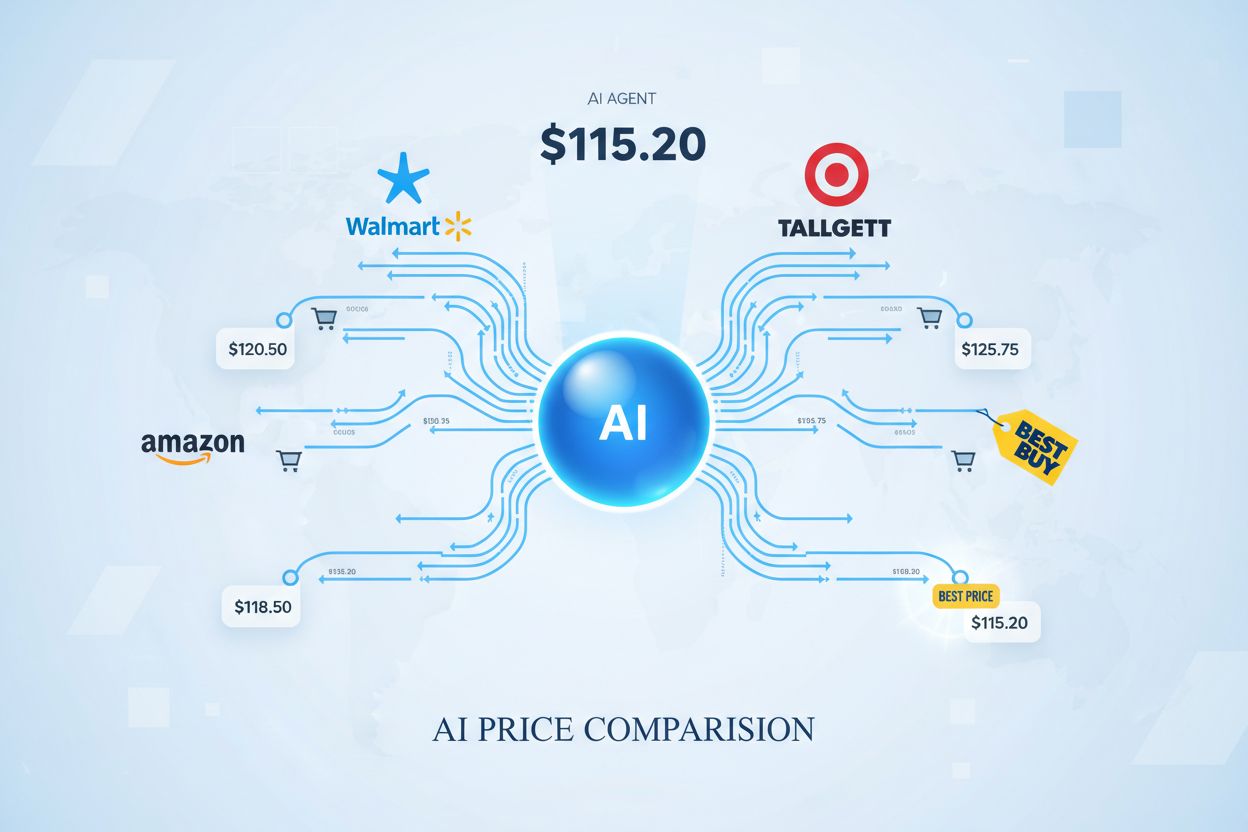
AI Price Comparison operates through a sophisticated multi-stage process that collects, processes, and compares pricing data from numerous sources simultaneously. The system begins by aggregating real-time price data from multiple retailers through various integration methods, including direct API connections with major e-commerce platforms, web scraping technologies that extract pricing information from retailer websites, and partnerships with data providers. Once collected, the data undergoes normalization and standardization to ensure accurate comparisons—this involves matching identical products across different retailers despite variations in product names, descriptions, and SKU numbers. Advanced algorithms then analyze factors such as shipping costs, taxes, return policies, and product availability to provide comprehensive price comparisons. Finally, the results are delivered to users through natural language responses, formatted product cards, or interactive shopping interfaces.
| Component | Function | Data Source |
|---|---|---|
| Data Collection | Gathers prices from retailers in real-time | APIs, Web Scrapers, Data Feeds |
| Processing | Normalizes and standardizes product data | AI Algorithms, Machine Learning |
| Comparison | Matches products and calculates best prices | Matching Engines, Price Algorithms |
| Delivery | Presents results to users | Shopping Assistant Interface |
The foundation of AI Price Comparison relies on several advanced technologies working in concert. Machine Learning algorithms analyze historical pricing patterns, demand fluctuations, and competitor behavior to predict optimal prices and identify the best deals for users. Natural Language Processing (NLP) enables the system to understand user queries in conversational language and match them to specific products across different retailers, even when product names or descriptions vary significantly. Real-time data processing infrastructure handles massive volumes of pricing information, updating comparisons within seconds to reflect current market conditions. Price prediction models use historical data and market trends to forecast future price drops, helping users decide whether to buy now or wait. The system also incorporates inventory tracking to verify product availability across retailers and competitor monitoring capabilities that continuously scan the market for price changes, promotions, and new product launches. These technologies work together to create a dynamic, responsive system that provides users with the most current and accurate pricing information available.
AI Price Comparison delivers significant advantages for shoppers by transforming how they discover and purchase products:
While consumers benefit from price transparency, retailers and e-commerce businesses gain valuable strategic advantages from AI Price Comparison systems. Access to competitive pricing insights allows businesses to understand their market position and adjust their pricing strategies accordingly to remain competitive. The technology provides detailed customer behavior analytics, revealing which price points drive conversions, how customers respond to promotions, and what factors influence purchasing decisions. Inventory optimization becomes more efficient as businesses can analyze demand patterns and adjust stock levels based on price-driven sales trends. Dynamic pricing strategies become more sophisticated, allowing retailers to adjust prices in real-time based on demand, competition, and inventory levels to maximize revenue. Additionally, businesses can identify market positioning opportunities by analyzing competitor pricing and discovering gaps in the market where they can offer unique value propositions.
AI Price Comparison has become a core feature of the latest generation of shopping assistants and AI tools. ChatGPT’s shopping research feature allows users to ask product questions and receive price comparisons from multiple retailers, with the AI assistant providing recommendations based on user preferences and budget constraints. Perplexity AI integrates shopping capabilities directly into its search interface, enabling users to compare prices while researching products, with real-time pricing data displayed alongside product information and reviews. Google AI Overviews now includes shopping integration that shows prices from multiple retailers when users search for products, making price comparison a natural part of the search experience. These tools leverage AI Price Comparison to enhance user experience by reducing friction in the shopping journey—users no longer need to leave the conversation or search interface to compare prices. The integration is seamless and contextual, with AI assistants understanding user intent and automatically providing price comparisons when relevant. This represents a significant shift from traditional e-commerce, where price comparison was a separate activity, to a unified shopping experience where price discovery is embedded in the natural conversation flow.
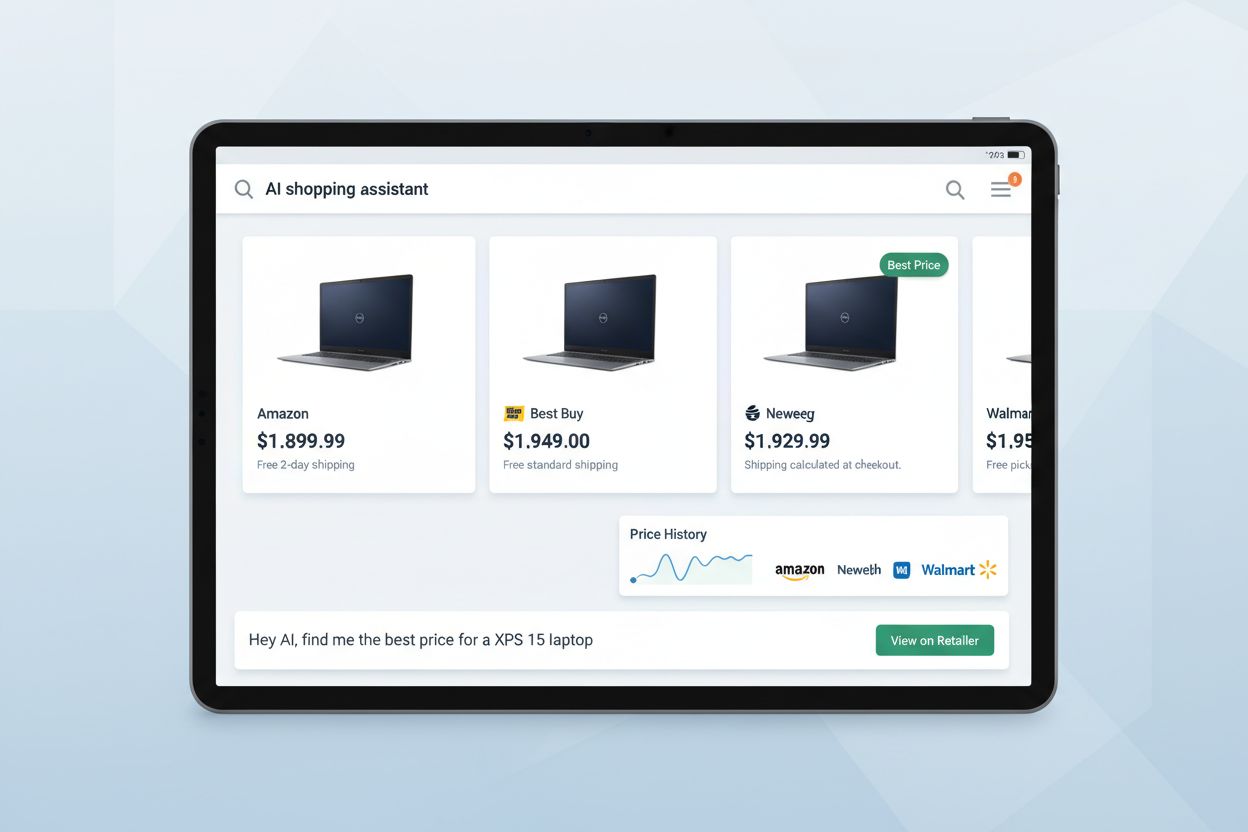
Despite its advantages, AI Price Comparison faces several significant challenges that impact accuracy and reliability. Data accuracy issues arise because retailers update prices at different frequencies, and some prices may be outdated by the time they’re displayed to users, potentially showing prices that have already changed. Real-time synchronization delays mean that price comparisons may not reflect the absolute latest prices, particularly during flash sales or rapid price fluctuations. Product matching complexity emerges when the same product is listed under different names, with different variants, or with varying product descriptions across retailers, making accurate comparison difficult. Regional pricing variations complicate comparisons, as prices differ by location, currency, and local taxes, requiring sophisticated algorithms to normalize data fairly. Inventory discrepancies occur when products shown as available in price comparisons are actually out of stock when users attempt to purchase. Additionally, privacy and data collection concerns arise as these systems require access to user browsing history and purchase patterns to provide personalized recommendations, raising questions about data security and user privacy.
The evolution of AI Price Comparison will be shaped by emerging technologies and changing consumer expectations. Predictive pricing will become more sophisticated, with AI systems not just comparing current prices but predicting future price movements with greater accuracy, helping users make optimal purchasing decisions. Hyper-personalization will advance beyond current capabilities, with AI assistants learning individual user preferences, budget constraints, and shopping patterns to provide increasingly tailored recommendations. Cross-border shopping will be simplified as AI systems handle currency conversions, international shipping costs, import duties, and regional pricing variations automatically, opening global shopping possibilities. Sustainability considerations will be integrated into price comparisons, with AI systems factoring in environmental impact, ethical sourcing, and carbon footprint alongside price and availability. Integration with Augmented Reality (AR) and Virtual Reality (VR) technologies will allow users to visualize products in their environment before purchasing, combined with real-time price comparisons. AI agent autonomy will increase, with shopping agents potentially making purchases on behalf of users based on predefined preferences and price thresholds. The market will continue expanding as AI Price Comparison becomes standard across all e-commerce platforms and shopping assistants, fundamentally reshaping how consumers discover, evaluate, and purchase products online.
AI price comparison accuracy depends on how frequently retailer data is updated and how well products are matched across platforms. Most systems update prices within minutes to hours, though real-time synchronization delays can occur during flash sales or rapid price changes. Data accuracy is generally high for major retailers with API integrations, but may be less reliable for smaller retailers using web scraping methods.
Yes, retailers gain significant benefits including competitive pricing insights, detailed customer behavior analytics, inventory optimization opportunities, and the ability to implement dynamic pricing strategies. AI price comparison data helps businesses understand their market position and adjust pricing to remain competitive while maximizing revenue.
AI price comparison is expanding into international markets, but currently faces challenges with currency conversions, regional pricing variations, import duties, and shipping costs. Future developments will make cross-border shopping easier by automatically handling these complexities, though current systems work best within single-country comparisons.
AI systems use Natural Language Processing and machine learning to match product variants across retailers despite differences in naming, descriptions, and specifications. The technology identifies key product attributes like size, color, and specifications to ensure accurate comparisons, though complex variants with many options can sometimes cause matching errors.
Privacy practices vary by AI platform. Most systems collect browsing history and purchase patterns to provide personalized recommendations, which raises privacy concerns. Users should review each platform's privacy policy to understand how their data is collected, stored, and used. Some platforms offer privacy-focused options with limited data collection.
Price update frequency varies by system and retailer. Most AI price comparison systems update prices every few minutes to several hours, depending on whether they use direct API connections or web scraping. Major retailers with API integrations typically have more frequent updates than smaller retailers using scraping methods.
Advanced AI systems use machine learning models to analyze historical pricing patterns and predict future price drops with reasonable accuracy. These predictive models consider seasonality, demand trends, competitor behavior, and inventory levels. However, predictions are not always accurate, especially for unexpected events like flash sales or market disruptions.
Traditional price comparison websites require users to manually search and navigate through different platforms, while AI price comparison integrates directly into conversational interfaces and shopping assistants. AI systems provide natural language responses, personalized recommendations, and seamless integration into the shopping experience, making price comparison a passive rather than active task.
AmICited tracks how AI assistants and shopping agents mention your brand when comparing prices. Get insights into your brand visibility across ChatGPT, Perplexity, Google AI Overviews, and other AI shopping tools.
Learn how AI search engines like ChatGPT, Perplexity, and Google AI Mode enable comparison shopping by analyzing product data, prices, and features to help user...
Discover how price mentions influence AI recommendations across ChatGPT, Perplexity, Google AI Overviews, and Claude. Learn citation patterns and optimization s...
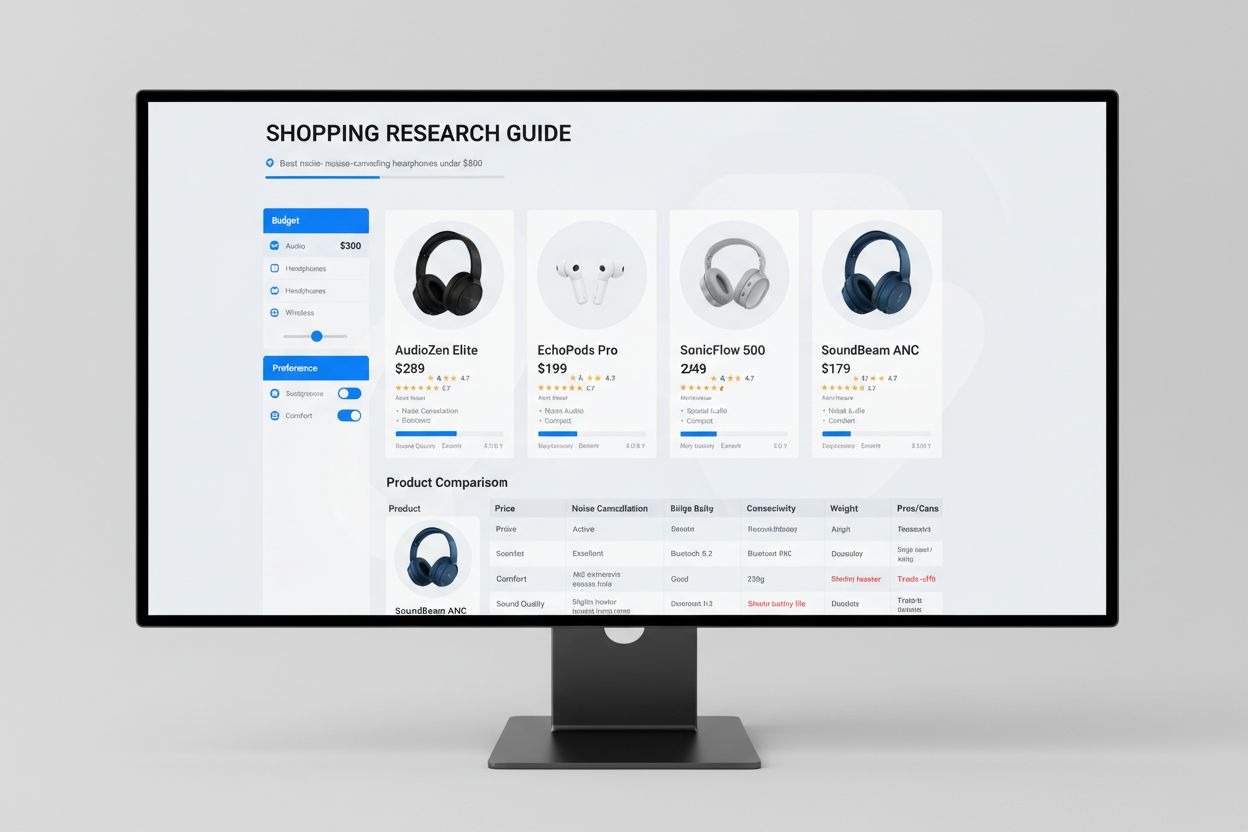
Learn how ChatGPT Shopping Research helps you compare products, find deals, and make smarter purchase decisions with AI-powered recommendations and instant chec...
Cookie Consent
We use cookies to enhance your browsing experience and analyze our traffic. See our privacy policy.