
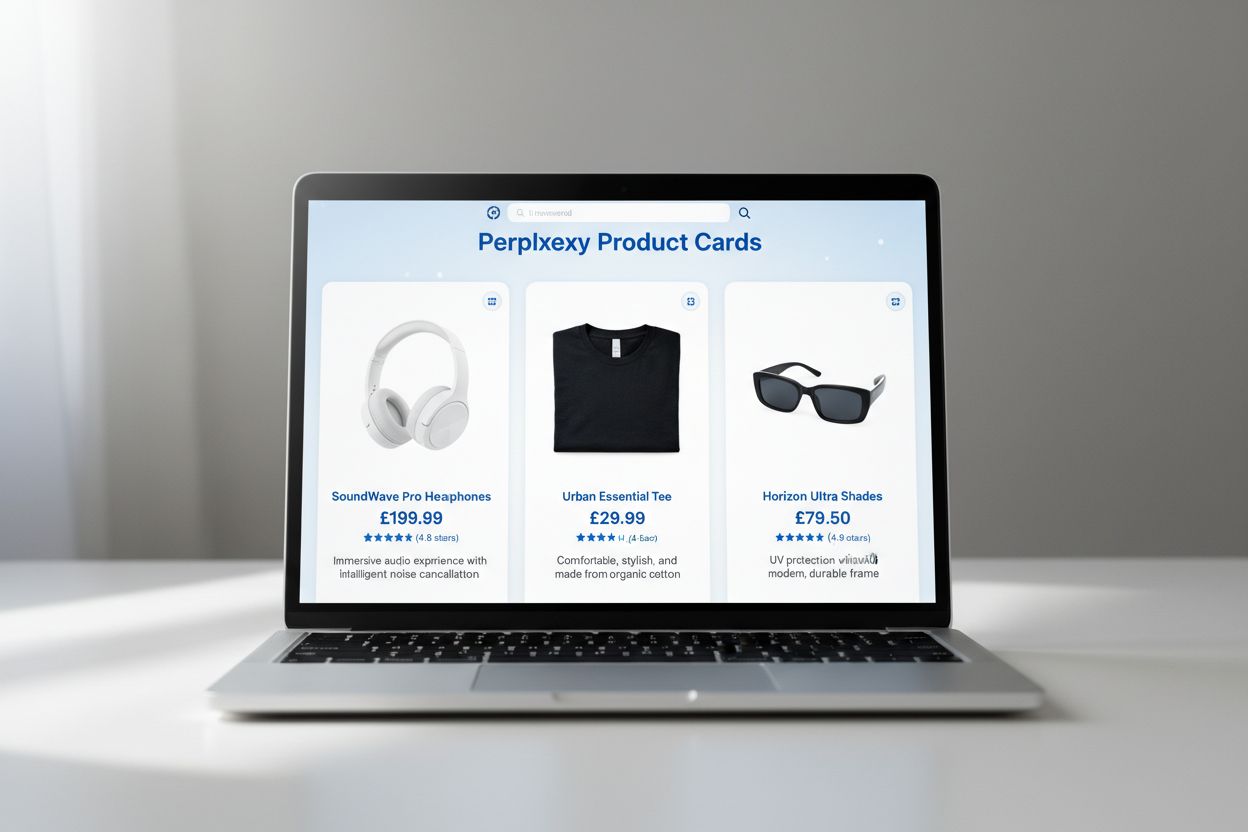
Product Cards in Perplexity: How to Get Featured
Learn how to optimize your products for Perplexity product cards and get featured in AI-powered shopping results. Complete guide for e-commerce merchants.
8 min read
Structured product information displays within AI responses showing images, prices, ratings, and purchase options. These dynamic cards aggregate product data from multiple sources and enable AI systems to present comprehensive product information in conversational shopping interfaces, supporting real-time inventory updates and seamless checkout integration.
Structured product information displays within AI responses showing images, prices, ratings, and purchase options. These dynamic cards aggregate product data from multiple sources and enable AI systems to present comprehensive product information in conversational shopping interfaces, supporting real-time inventory updates and seamless checkout integration.
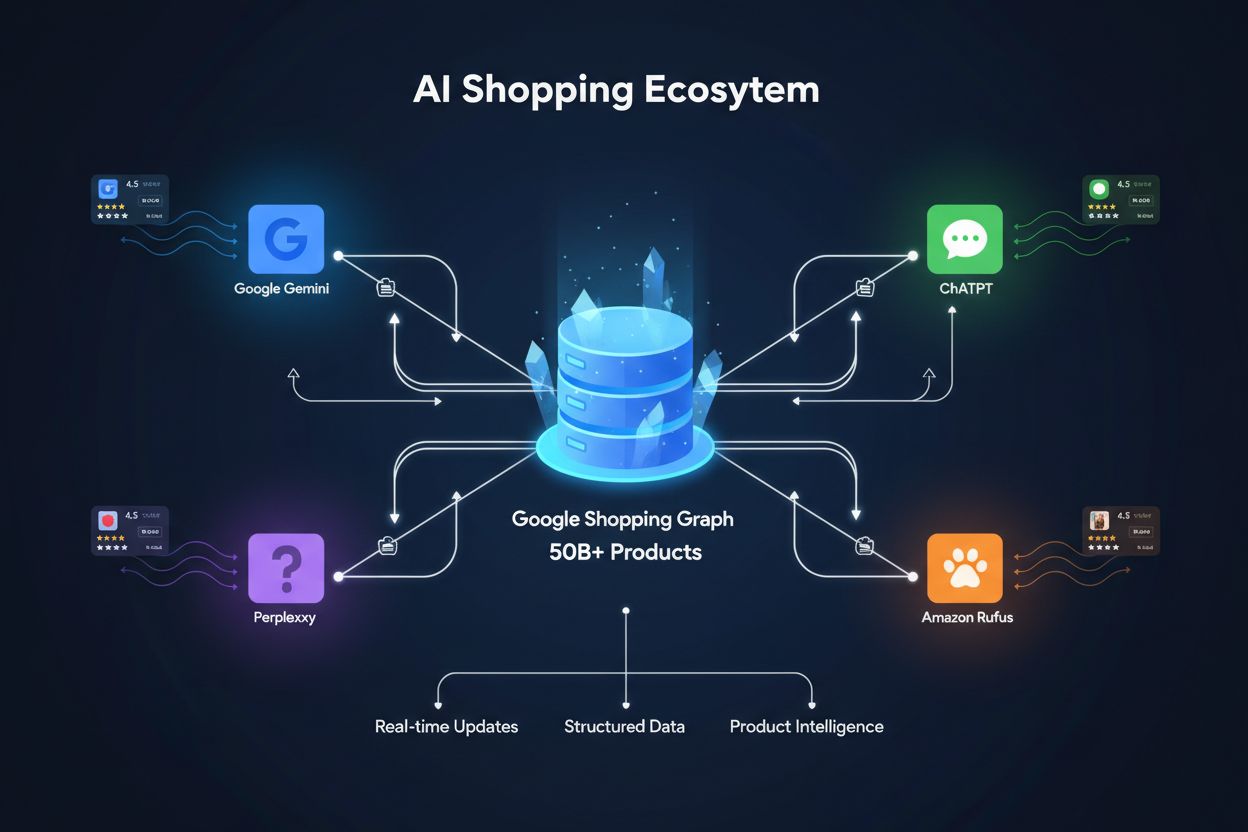
AI Product Cards are dynamic, structured data presentations that appear within AI-powered search and shopping interfaces, designed to showcase product information in a format optimized for artificial intelligence systems and human consumers alike. These cards represent a fundamental shift in how products are discovered and evaluated in the age of agentic shopping, moving beyond traditional search results to provide rich, contextual product information directly within conversational AI platforms like Google Gemini, ChatGPT, Perplexity, and Amazon Rufus. Each card aggregates critical product attributes—including pricing, availability, ratings, images, and specifications—into a unified visual and data structure that AI systems can parse, compare, and recommend with unprecedented accuracy. The semantic modeling underlying these cards enables AI to understand not just what a product is, but its relationship to user intent, market context, and competitive positioning.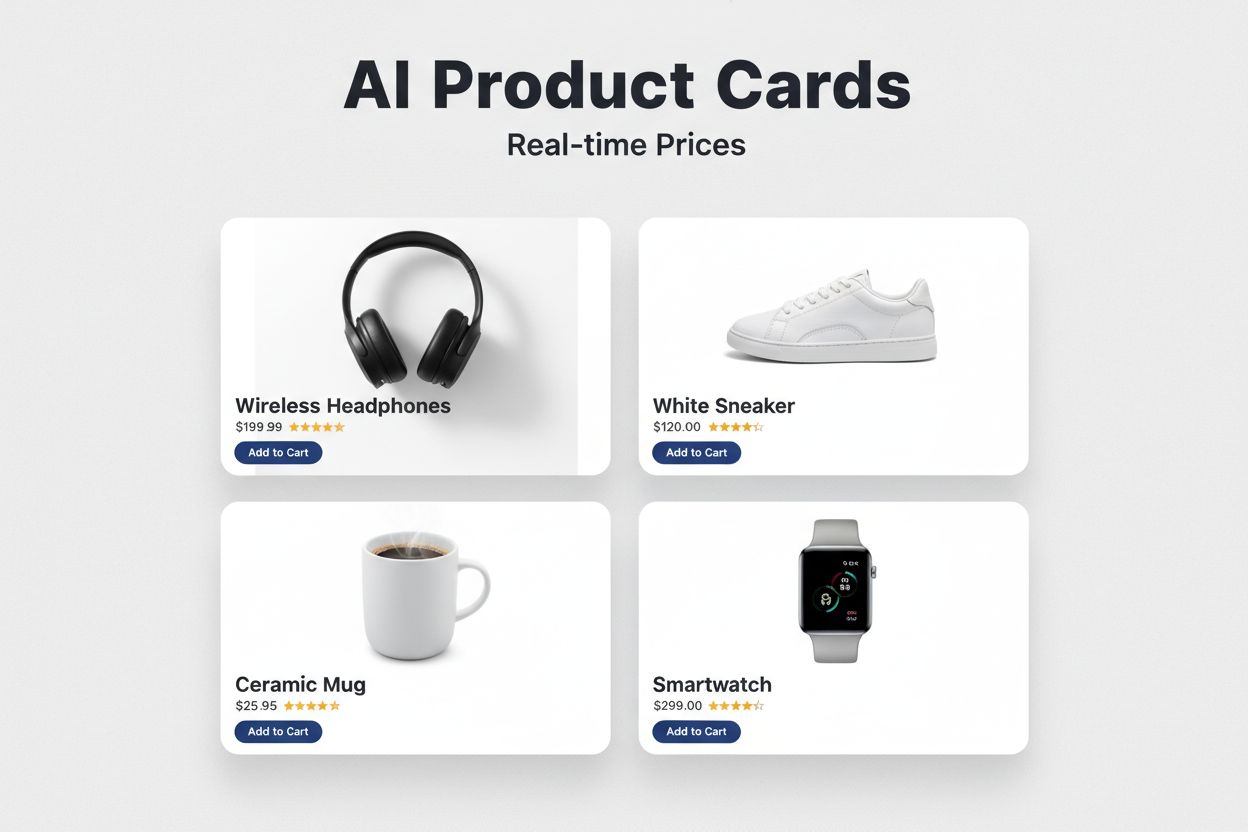
AI Product Cards are built upon a sophisticated architecture of interconnected data elements that work together to create a comprehensive product representation. The structured data foundation includes product identifiers, merchant information, pricing details, inventory status, and rich media assets that feed into the broader Shopping Graph—Google’s massive knowledge base containing over 50 billion product listings with 2 billion updates per hour. Each card component serves a specific function in the AI decision-making process, from behavioral signals that track user interactions to visual embeddings that enable image-based product matching and recommendations. The data structure must support real-time updates to reflect current pricing, availability, and merchant information across multiple channels and geographies. Below is a breakdown of the essential components found in modern AI Product Cards:
| Component | Function | Data Type |
|---|---|---|
| Product Identifier | Unique SKU/GTIN linking to inventory systems | String/Number |
| Merchant Information | Seller details, ratings, and fulfillment options | Structured Object |
| Pricing Data | Current price, discounts, currency, and historical trends | Numeric/Currency |
| Availability Status | Stock levels, shipping timeframes, regional availability | Boolean/Enum |
| Product Images | High-resolution photos optimized for visual embeddings | Image URLs |
| Ratings & Reviews | Aggregated consumer feedback and sentiment scores | Numeric/Text |
| Product Specifications | Technical details, dimensions, materials, and variants | Structured Object |
| Behavioral Signals | Click-through rates, conversion data, and user engagement | Numeric/Analytics |
The implementation of AI Product Cards varies significantly across different AI platforms, each optimizing the card format for their unique user interface and query processing capabilities. Google Gemini integrates product cards directly into conversational responses, allowing users to compare multiple products within a single chat thread while maintaining context about their shopping preferences and previous queries. ChatGPT leverages product cards through its shopping plugin ecosystem, enabling merchants to provide real-time inventory and pricing information that the AI can reference when making recommendations or answering product-related questions. Perplexity uses product cards as part of its answer generation process, citing sources and product information with visual cards that help users quickly evaluate options without leaving the search interface. Amazon Rufus embeds product cards within the Amazon ecosystem, using first-party data and behavioral signals to deliver highly personalized recommendations that drive conversion. Each platform’s implementation reflects its underlying query fan-out architecture—the process by which a single user query is expanded into multiple product searches and comparisons—ensuring that product cards surface the most relevant options based on user intent and context.
The Shopping Graph serves as the foundational infrastructure enabling AI Product Cards to function at scale, aggregating product data from millions of merchants and continuously updating to reflect real-world changes in inventory, pricing, and availability. This massive knowledge base processes 2 billion updates per hour, ensuring that AI systems always have access to the most current product information when generating recommendations or answering shopping queries. The Shopping Graph employs sophisticated semantic modeling techniques to understand product relationships, substitutions, and complementary items, allowing AI systems to perform intelligent query fan-out—expanding a simple user query like “best running shoes under $100” into hundreds of specific product searches across different merchants, categories, and price points. The infrastructure also incorporates visual embeddings, which convert product images into mathematical representations that enable AI systems to find visually similar products and understand product aesthetics in ways that traditional keyword matching cannot achieve. This technical foundation is essential for delivering the speed and accuracy that modern AI shopping experiences demand, processing complex queries and returning relevant product cards in milliseconds.
The visual design of AI Product Cards plays a critical role in user engagement and conversion, as consumers increasingly rely on visual cues to make rapid purchasing decisions within AI interfaces. High-quality product images, optimized through visual embeddings technology, allow AI systems to understand and communicate product aesthetics, materials, and design elements that text alone cannot convey. The card layout typically features a primary product image, secondary images showing different angles or use cases, merchant branding, pricing information prominently displayed, and user ratings aggregated from multiple review sources. Color psychology, typography, and spatial hierarchy within the card design influence how quickly users can scan and understand product information, with research showing that well-designed cards can increase engagement by up to 40% compared to text-only product listings. The responsive nature of these cards ensures they display optimally across mobile devices, tablets, and desktop interfaces, recognizing that 64% of consumers use AI tools for product discovery and many of these interactions occur on mobile devices during shopping sessions.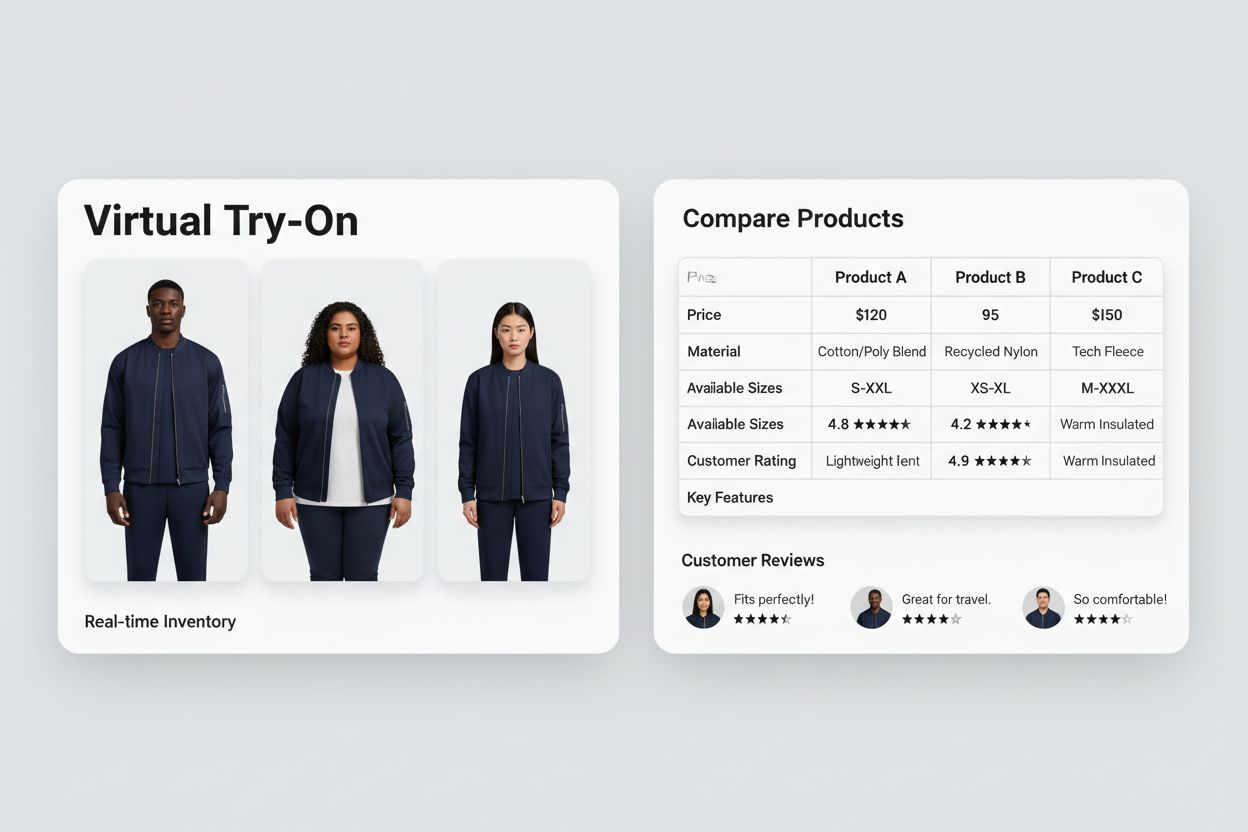
Agentic checkout represents the next evolution of AI Product Cards, enabling seamless transitions from product discovery and comparison directly to purchase completion without requiring users to navigate away from the AI interface. When a user selects a product from an AI Product Card, the system can initiate a checkout flow that captures shipping address, payment information, and delivery preferences while maintaining the conversational context of the shopping session. This integration requires secure API connections between AI platforms and merchant systems, with standardized protocols for inventory verification, price confirmation, and order placement that happen in real-time. For example, a user might ask Google Gemini “What’s the best laptop for video editing under $1,500?” and receive product cards from multiple merchants; selecting one card could trigger an agentic checkout flow that completes the purchase with a single confirmation, dramatically reducing friction in the buying process. The technology also enables 54% of shoppers who use chatbots for shopping to complete transactions more efficiently, as the AI can handle common questions about shipping, returns, and product specifications without requiring human intervention. Merchants benefit from this integration through increased conversion rates, as the seamless experience reduces cart abandonment and purchase hesitation that typically occurs when users must navigate between multiple websites.
AI Product Cards deliver substantial value to consumers by streamlining the product discovery and evaluation process, making shopping faster, more informed, and more personalized than traditional search methods:
Retailers and brands gain significant competitive advantages by optimizing their product data for AI Product Cards, as these cards have become primary discovery channels in the modern ecommerce ecosystem. The visibility provided by well-structured product cards in AI interfaces drives substantial traffic increases, with some merchants reporting 4,700% year-over-year increases in AI-driven visits to ecommerce sites as AI shopping adoption accelerates. By ensuring their products appear in AI Product Cards with accurate, compelling information and high-quality images, brands can capture share of the growing segment of consumers who prefer AI-assisted shopping over traditional search. The cards also provide valuable behavioral signals and engagement data that help merchants understand how consumers interact with their products in AI contexts, enabling continuous optimization of product descriptions, images, and pricing strategies. Merchants can use product card performance metrics to identify which products resonate most with AI systems and consumers, informing inventory decisions and marketing strategies. Additionally, the standardized format of AI Product Cards levels the playing field for smaller merchants and brands, allowing them to compete effectively against larger competitors by ensuring their products are represented with the same visual prominence and data richness as major retailers.
Creating effective AI Product Cards requires comprehensive, accurate, and continuously updated product data that meets the technical specifications of modern AI systems and the Shopping Graph infrastructure. Merchants must provide structured data in standardized formats—typically using schema.org markup, Google Merchant Center feeds, or direct API integrations—that includes product identifiers (GTIN, SKU), pricing, availability, images, descriptions, and merchant information with sufficient detail for AI systems to understand product context and relationships. The quality of product images directly impacts card performance, as visual embeddings require high-resolution, well-lit photographs that clearly show product features, materials, and design elements; merchants should provide multiple images showing different angles, use cases, and scale references. Real-time data synchronization is critical, as the Shopping Graph processes 2 billion updates per hour and AI systems expect current pricing and inventory information; delays in data updates can result in product cards displaying outdated information that damages consumer trust and conversion rates. Merchants should also optimize product titles and descriptions for semantic understanding, using natural language that AI systems can parse to understand product purpose, target audience, and key differentiators rather than relying solely on keyword stuffing. Advanced optimization includes providing rich attributes like color, size, material, and brand information in structured formats, enabling AI systems to perform sophisticated filtering and comparison operations that improve product card relevance and user satisfaction.
AI Product Cards are rapidly evolving to incorporate emerging technologies and changing consumer behaviors, with several significant trends shaping their future development and implementation. Multimodal AI capabilities are expanding product card functionality beyond text and images to include video demonstrations, 3D product models, and augmented reality previews that allow consumers to visualize products in their own environments before purchasing. The integration of agentic checkout will become increasingly sophisticated, with AI systems handling not just purchase completion but also post-purchase support, returns processing, and personalized follow-up recommendations based on purchase history. Voice commerce integration is expected to accelerate, with AI Product Cards adapting to voice-first interfaces where visual presentation must be supplemented with natural language descriptions optimized for audio consumption. Sustainability and ethical sourcing information will likely become standard components of product cards, as consumers increasingly demand transparency about manufacturing practices, environmental impact, and labor conditions. The competitive landscape will intensify as more AI platforms integrate shopping capabilities, driving innovation in card design, data richness, and personalization algorithms that help merchants stand out in increasingly crowded AI shopping interfaces. Finally, the convergence of first-party merchant data with third-party review aggregation and AI-generated insights will create increasingly sophisticated product cards that combine verified merchant information with community feedback and AI analysis, providing consumers with unprecedented transparency and confidence in their purchasing decisions.
An AI Product Card is a structured data presentation that appears within AI-powered shopping interfaces, aggregating product information including images, pricing, availability, ratings, and specifications. These cards are optimized for both AI systems to parse and humans to quickly evaluate, enabling faster product discovery and comparison in conversational shopping experiences.
Unlike traditional search results that display links to product pages, AI Product Cards present comprehensive product information directly within the AI interface. They include real-time data, visual elements, ratings, and purchase options without requiring users to navigate away from the conversation, creating a seamless shopping experience.
Major platforms implementing AI Product Cards include Google Gemini, ChatGPT (through shopping plugins), Perplexity AI, and Amazon Rufus. Each platform optimizes the card format for its unique interface, but all share the core functionality of presenting structured product data within conversational AI systems.
Retailers should provide structured data including product identifiers (GTIN/SKU), pricing, availability, high-quality images, detailed descriptions, merchant information, ratings, and specifications. This data must be continuously updated and provided through standardized formats like Google Merchant Center feeds or schema.org markup.
Yes, AI Product Cards can significantly increase sales by improving product visibility in AI shopping interfaces, reducing friction in the purchase journey, and enabling agentic checkout capabilities. Studies show that merchants with optimized product cards experience substantial increases in AI-driven traffic and conversion rates.
AI Product Cards leverage the Shopping Graph infrastructure, which processes 2 billion updates per hour. Merchants must maintain real-time data synchronization through continuous feed updates or API integrations to ensure product cards always display current pricing, availability, and inventory status.
Agentic checkout enables AI systems to complete purchases directly within the AI interface without requiring users to navigate to merchant websites. When users select a product from an AI Product Card, the system can handle address entry, payment processing, and order confirmation while maintaining the conversational shopping context.
Brands should focus on providing complete, accurate structured data with high-quality images, detailed product descriptions optimized for semantic understanding, and rich attributes like color, size, and material. Maintaining real-time data accuracy, encouraging customer reviews, and implementing schema.org markup are essential for maximizing AI Product Card visibility.
AmICited tracks how your brand and products are referenced and displayed across AI shopping platforms including Google Gemini, ChatGPT, Perplexity, and other AI systems. Get insights into your AI product card visibility and optimize your presence in AI-powered shopping.
Learn how to optimize your products for Perplexity product cards and get featured in AI-powered shopping results. Complete guide for e-commerce merchants.
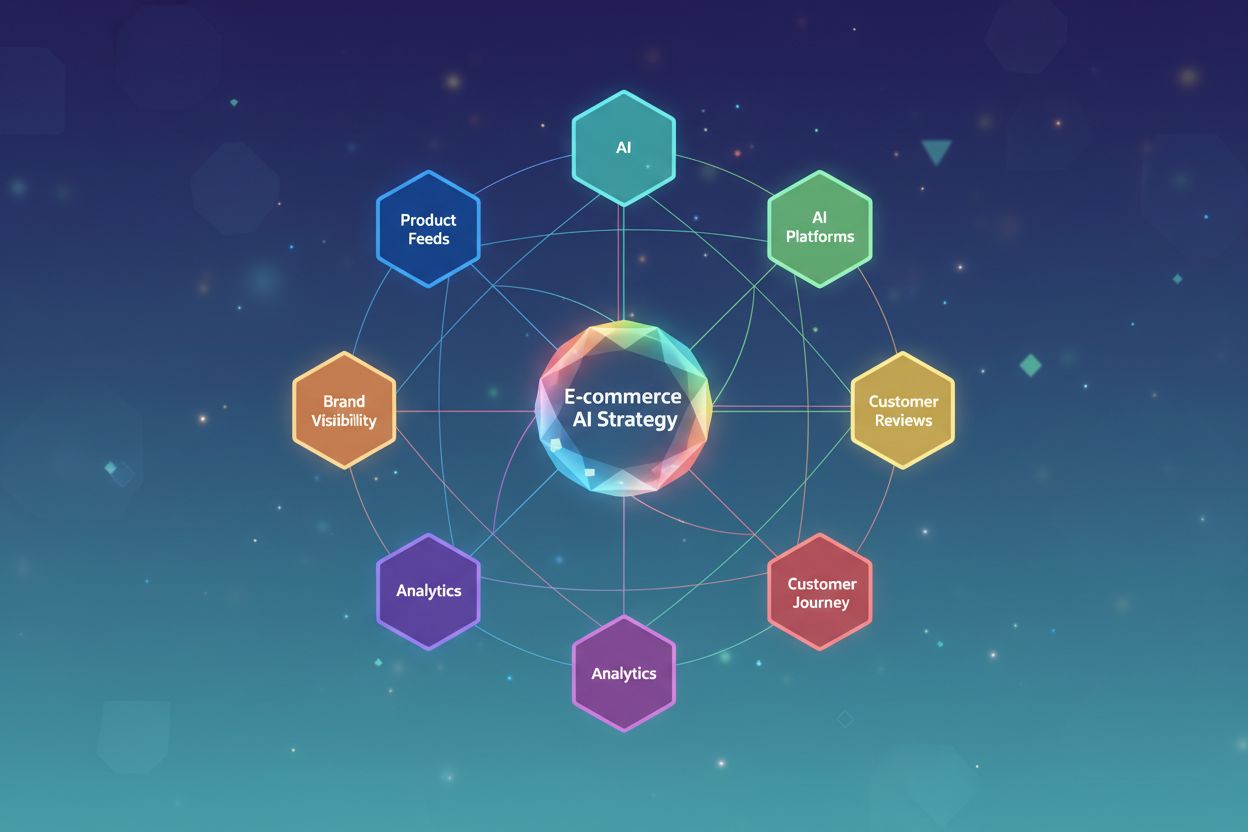
Learn how to develop an effective e-commerce AI strategy to maximize product visibility in ChatGPT, Google AI Mode, and Perplexity. Discover product feed optimi...
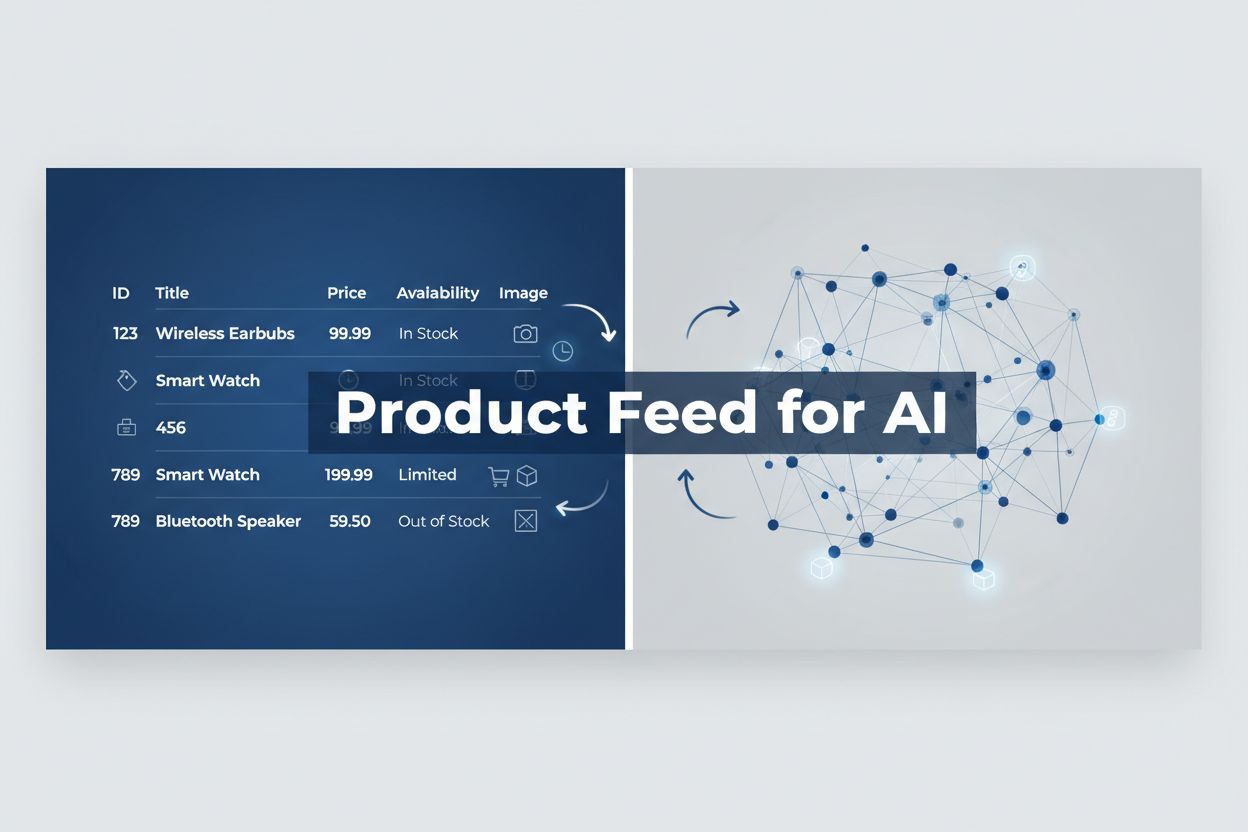
Learn what product feeds for AI are, how they differ from traditional feeds, and how to optimize them for ChatGPT, Google AI Overviews, and Perplexity shopping ...
Cookie Consent
We use cookies to enhance your browsing experience and analyze our traffic. See our privacy policy.