

AI Conversion Attribution
Learn how AI conversion attribution tracks and credits sales to AI-influenced customer journeys. Discover how machine learning algorithms analyze multi-touch cu...
13 min read

AI purchase attribution is the process of measuring and crediting artificial intelligence-driven interactions and recommendations for their contribution to customer purchases and revenue generation. It tracks the influence of AI-powered recommendations, personalization engines, and algorithmic suggestions that often occur without explicit user clicks. This measurement approach quantifies how much revenue can be directly attributed to AI systems that guide customers toward purchasing decisions. The key distinction lies in recognizing that modern customer journeys increasingly involve invisible AI touchpoints that traditional analytics frameworks fail to capture.
AI purchase attribution is the process of measuring and crediting artificial intelligence-driven interactions and recommendations for their contribution to customer purchases and revenue generation. It tracks the influence of AI-powered recommendations, personalization engines, and algorithmic suggestions that often occur without explicit user clicks. This measurement approach quantifies how much revenue can be directly attributed to AI systems that guide customers toward purchasing decisions. The key distinction lies in recognizing that modern customer journeys increasingly involve invisible AI touchpoints that traditional analytics frameworks fail to capture.
AI purchase attribution is the process of measuring and crediting artificial intelligence-driven interactions and recommendations for their contribution to customer purchases and revenue generation. Unlike traditional attribution models that rely primarily on clickable touchpoints and user-initiated actions, AI purchase attribution tracks the influence of AI-powered recommendations, personalization engines, and algorithmic suggestions that often occur without explicit user clicks. This measurement approach quantifies how much revenue can be directly attributed to AI systems that guide customers toward purchasing decisions, whether through product recommendations, dynamic pricing, personalized content, or predictive suggestions. The key distinction lies in recognizing that modern customer journeys increasingly involve invisible AI touchpoints that traditional analytics frameworks fail to capture or credit appropriately.
AI purchase attribution operates through a sophisticated system of event tracking, behavioral signals, and machine learning models that capture both explicit and implicit customer interactions with AI systems. The process begins with comprehensive data collection from multiple sources including product views, recommendation impressions, personalization engine interactions, and conversion events, which are then processed through attribution algorithms that assign credit based on each AI touchpoint’s influence. These systems utilize probabilistic modeling and incrementality testing to determine the actual causal impact of AI recommendations rather than relying on simple correlation, accounting for the fact that customers would have made different purchasing decisions without AI intervention. Advanced implementations employ multi-touch attribution that distributes credit across multiple AI interactions throughout the customer journey, recognizing that purchase decisions rarely result from a single touchpoint.
| Aspect | Traditional Attribution | AI Purchase Attribution |
|---|---|---|
| Primary Tracking Method | Click-based interactions | Behavioral signals + impressions |
| Touchpoint Visibility | Explicit user actions | Visible and invisible AI interactions |
| Data Sources | UTM parameters, cookies | Recommendation engines, personalization data |
| Attribution Model | Last-click, first-click, linear | Probabilistic, incrementality-based |
| Measurement Approach | Deterministic | Probabilistic and causal |
| Time-to-Conversion | Sequential steps | Real-time AI influence |
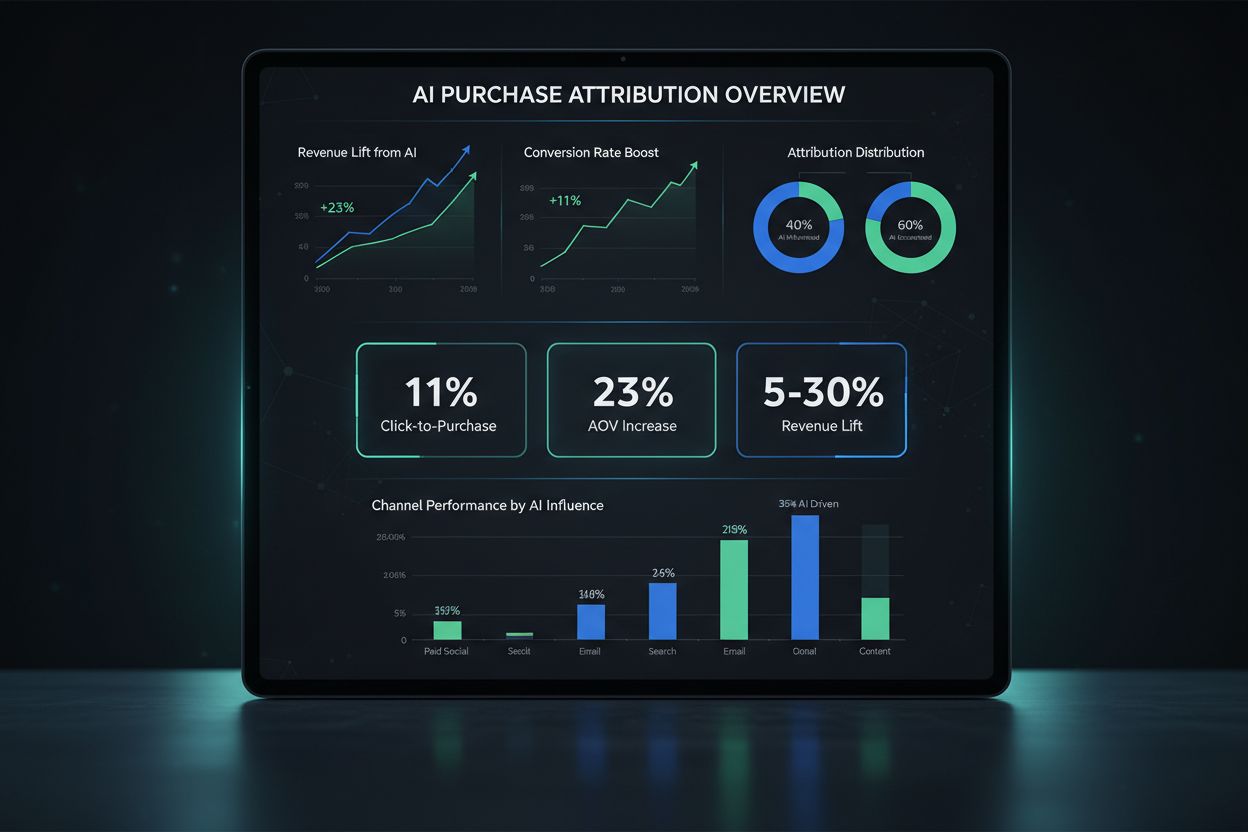
The most critical metrics for measuring AI purchase attribution include conversion rate lift, which measures the percentage increase in purchases directly attributable to AI recommendations, with industry data showing an average 11% click-to-purchase rate for AI-driven product suggestions. Revenue lift represents the total incremental revenue generated by AI systems, typically ranging from 5-30% depending on industry and implementation quality, making it one of the most important business metrics for justifying AI investment. Average Order Value (AOV) increase tracks how AI personalization and recommendations influence customers to purchase higher-value items, with studies demonstrating an average 23% AOV increase when AI recommendations are implemented effectively. Click-Through Rate (CTR) on AI recommendations provides insight into engagement quality, while time-to-impact measures how quickly AI systems influence purchase decisions. Additional important metrics include customer lifetime value (CLV) attribution, which tracks long-term revenue impact, and recommendation acceptance rate, which measures what percentage of AI suggestions result in customer action. Research indicates that 67% of customers prefer personalized recommendations from AI systems, directly correlating with higher conversion rates and customer satisfaction scores.
Several specialized platforms have emerged to address the unique challenges of AI purchase attribution measurement. Brandlight.ai provides comprehensive AI attribution tracking specifically designed for e-commerce environments, offering real-time visibility into how AI recommendations drive conversions and revenue. Shopify has integrated native AI attribution capabilities into its platform, allowing merchants to track the impact of its recommendation engine and personalization features directly within their analytics dashboard. Wisepops offers conversion optimization tools with built-in attribution tracking for AI-driven personalization and recommendation campaigns. For monitoring and tracking AI citations and mentions across the web, AmICited.com serves as a specialized solution that helps businesses understand how their AI systems are being referenced and credited in customer interactions. These platforms typically offer features including real-time conversion tracking, revenue attribution, A/B testing capabilities, and detailed reporting on AI-driven customer journeys, enabling businesses to quantify the true ROI of their AI investments.
Successful AI purchase attribution implementation requires establishing a robust data governance framework that ensures accurate event tracking, proper data quality, and consistent measurement across all AI touchpoints and systems. Organizations should implement baseline A/B testing before deploying AI attribution systems to establish control groups and measure incrementality, ensuring that attributed revenue truly represents AI influence rather than organic customer behavior. Setting up proper event tracking infrastructure is essential, including clear definitions of what constitutes an AI touchpoint, standardized event naming conventions, and reliable data pipelines that capture both successful and unsuccessful AI interactions. For new implementations facing the cold-start problem, businesses should begin with rule-based attribution models while collecting sufficient data to train machine learning models, gradually transitioning to more sophisticated probabilistic approaches. Regular model validation and recalibration should occur at least quarterly to account for changing customer behavior, seasonal variations, and evolving AI system performance. Additionally, organizations must establish clear attribution windows that define how long after an AI interaction a conversion can be credited, typically ranging from 7 to 90 days depending on industry and purchase cycle length.
Organizations implementing AI purchase attribution have documented significant business impact, with companies reporting revenue lifts ranging from 5-30% directly attributable to AI-driven recommendations and personalization. E-commerce retailers utilizing AI attribution have achieved conversion rate improvements of 15-25% by optimizing their recommendation algorithms based on attribution insights, allowing them to focus resources on highest-impact AI initiatives. The ROI of AI purchase attribution extends beyond immediate revenue gains, as understanding AI’s contribution to sales enables businesses to make more informed investment decisions about which AI systems and personalization strategies deliver the greatest value. Companies that successfully implement AI attribution gain significant competitive advantage by being able to quantify and optimize their AI investments more effectively than competitors relying on traditional attribution models. Real-world case studies demonstrate that businesses combining AI purchase attribution with continuous optimization achieve sustained revenue growth, improved customer satisfaction, and higher customer lifetime value compared to those using conventional analytics approaches.
The future of AI purchase attribution will be shaped by increasingly sophisticated integration between attribution platforms and AI recommendation engines, enabling real-time feedback loops where attribution insights directly optimize AI system performance. Emerging technologies including advanced causal inference methods, privacy-preserving measurement techniques, and cross-device attribution will address current measurement gaps and provide more accurate understanding of AI’s true impact on customer behavior. As first-party data becomes more critical in a post-cookie world, AI attribution systems will evolve to work seamlessly with zero-party data collection and consent-based measurement frameworks. The convergence of AI purchase attribution with predictive analytics and customer intelligence platforms will enable businesses to not only measure past AI impact but also forecast future revenue potential and optimize AI investments with unprecedented precision.
Traditional attribution relies primarily on clickable touchpoints and user-initiated actions like ad clicks or email opens. AI purchase attribution tracks the influence of AI-powered recommendations and personalization that often occur without explicit clicks. AI systems influence purchases through background processes that leave minimal digital footprints, making them invisible to standard analytics. This requires specialized measurement approaches and tools designed specifically for AI-driven customer journeys.
AI purchase attribution is critical because AI systems increasingly influence customer purchasing decisions outside traditional tracking mechanisms. Studies show that 67% of customers prefer personalized recommendations, and AI-driven conversions can generate 5-30% revenue lift. Without proper attribution, businesses cannot accurately measure their AI investments' ROI or optimize their recommendation engines effectively. Understanding AI's true impact enables better resource allocation and competitive advantage.
Key metrics include conversion rate lift (percentage increase in purchases from AI recommendations), revenue lift (5-30% typical range), average order value increase (23% average), click-through rate on recommendations, and time-to-impact. Additional important metrics are customer lifetime value attribution and recommendation acceptance rate. These metrics together provide a comprehensive view of how AI systems influence customer behavior and revenue generation.
Several platforms specialize in AI attribution measurement including Brandlight.ai for comprehensive AI tracking, Shopify's native attribution capabilities, and Wisepops for conversion optimization. AmICited.com provides specialized monitoring for AI citations and mentions across platforms. These tools typically offer real-time conversion tracking, revenue attribution, A/B testing capabilities, and detailed reporting on AI-driven customer journeys.
Start by establishing a robust data governance framework with accurate event tracking and consistent measurement across all AI touchpoints. Implement baseline A/B testing to establish control groups before deploying AI attribution. Set up proper event tracking infrastructure with clear definitions and standardized naming conventions. For new implementations, begin with rule-based attribution while collecting data for machine learning models. Validate and recalibrate your models quarterly to account for changing customer behavior.
The dark funnel refers to customer conversions that occur outside traditional tracking mechanisms. Many AI-driven conversions happen without clicks or trackable links, making them invisible to standard analytics. Customers may receive AI recommendations, make purchase decisions based on them, but never generate a trackable touchpoint. This creates significant attribution gaps where businesses cannot see or measure the true impact of their AI systems on revenue.
Organizations implementing AI purchase attribution typically identify revenue lifts ranging from 5-30%, with conversion rate improvements of 15-25%. The actual lift depends on industry, implementation quality, and how effectively businesses optimize their AI systems based on attribution insights. Real-world case studies demonstrate that businesses combining AI attribution with continuous optimization achieve sustained revenue growth and improved customer lifetime value.
The future will involve increasingly sophisticated integration between attribution platforms and AI recommendation engines, enabling real-time feedback loops. Advanced causal inference methods, privacy-preserving measurement techniques, and cross-device attribution will address current measurement gaps. As first-party data becomes more critical, AI attribution systems will evolve to work with zero-party data collection and consent-based frameworks. The convergence with predictive analytics will enable businesses to forecast future revenue potential and optimize AI investments with unprecedented precision.
Track how AI systems like ChatGPT, Perplexity, and Google AI Overviews are recommending your products and attributing sales to your brand. Get visibility into your AI-driven revenue.
Learn how AI conversion attribution tracks and credits sales to AI-influenced customer journeys. Discover how machine learning algorithms analyze multi-touch cu...

Learn about AI Visibility Attribution Models - frameworks that use machine learning to assign credit to marketing touchpoints in customer journeys. Discover how...
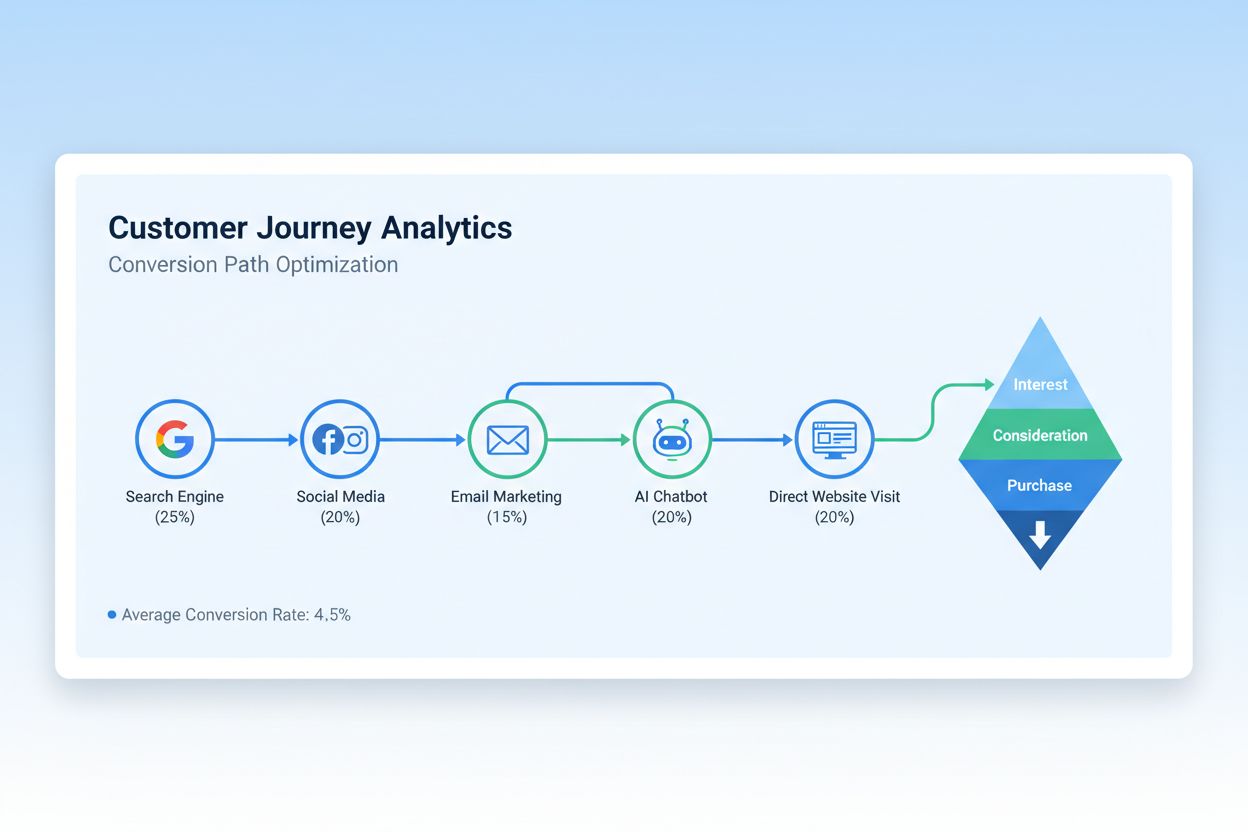
Learn how multi-touch attribution models help track AI discovery touchpoints and optimize marketing ROI across GPTs, Perplexity, and Google AI Overviews.
Cookie Consent
We use cookies to enhance your browsing experience and analyze our traffic. See our privacy policy.