

AI Query Research Tools
Learn about AI Query Research Tools - platforms that track and analyze search patterns across ChatGPT, Gemini, Perplexity, and other AI engines. Discover how to...
7 min read
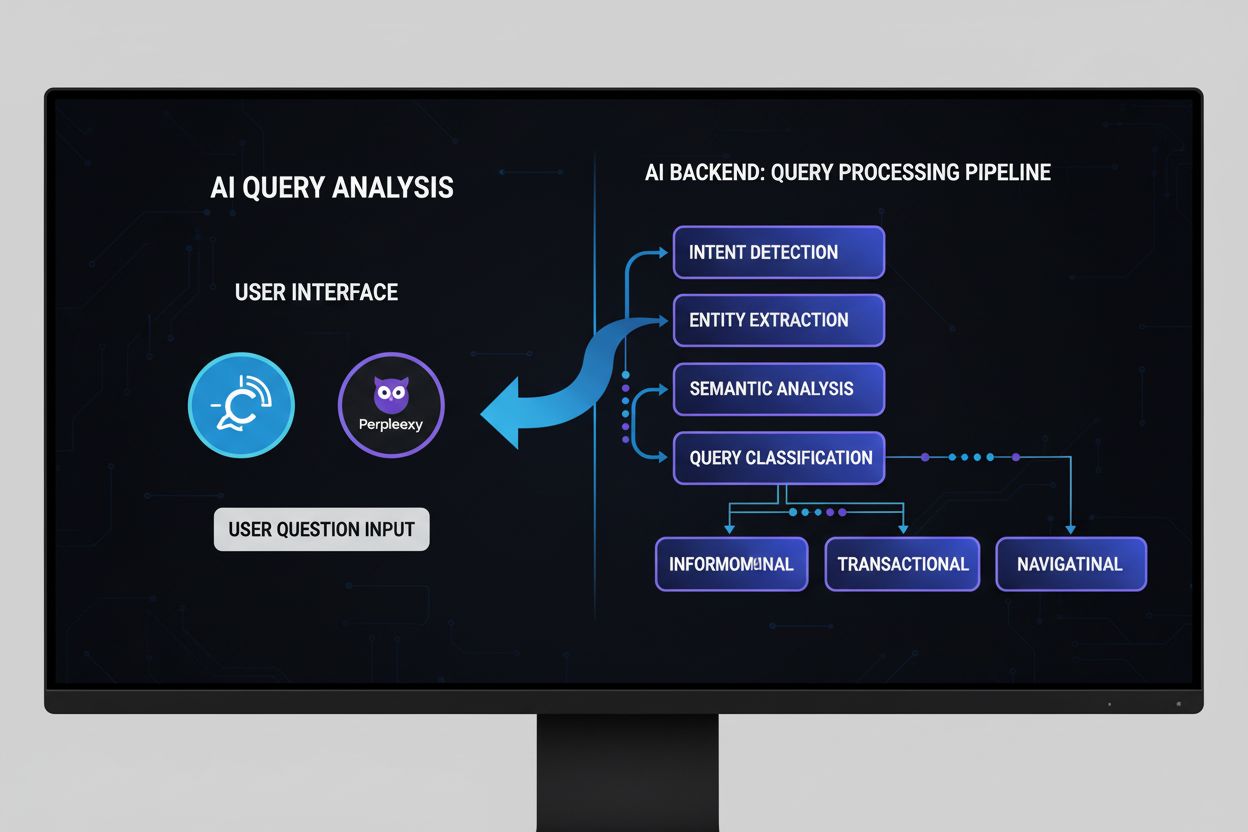
AI Query Analysis is the process of examining, interpreting, and classifying user queries submitted to AI systems to understand intent, extract meaning, and optimize response generation. It involves analyzing query structure, semantic content, and user intent to improve information retrieval and AI system performance across platforms like ChatGPT, Perplexity, and Google AI Overviews.
AI Query Analysis is the process of examining, interpreting, and classifying user queries submitted to AI systems to understand intent, extract meaning, and optimize response generation. It involves analyzing query structure, semantic content, and user intent to improve information retrieval and AI system performance across platforms like ChatGPT, Perplexity, and Google AI Overviews.
AI Query Analysis is the systematic process of examining, interpreting, and classifying user queries submitted to artificial intelligence systems to understand their underlying intent, extract semantic meaning, and optimize response generation. It represents a critical component of how modern AI systems like ChatGPT, Perplexity, Google AI Overviews, and Claude process user input before generating answers. Unlike traditional keyword-based search, AI Query Analysis goes beyond surface-level pattern matching to comprehend the actual purpose behind what users are asking, the entities they’re referencing, and the context in which their question exists. This sophisticated analysis enables AI systems to retrieve more relevant information, prioritize authoritative sources, and structure responses in ways that directly address user needs. For brands and content creators, understanding AI Query Analysis has become essential because it determines whether and how their content appears in AI-generated responses—a critical consideration as 52% of U.S. adults now use AI chatbots for search or assistance, and 60% of traditional searches end without any click-through to websites.
The concept of query analysis has evolved dramatically over the past two decades, transforming from simple keyword matching to sophisticated semantic understanding. In the early days of search engines, queries were analyzed primarily through lexical analysis—breaking down text into individual words and matching them against indexed documents. However, as natural language processing and machine learning advanced, query analysis became increasingly sophisticated. The introduction of semantic analysis marked a turning point, allowing systems to understand that “apple” could refer to a fruit, a technology company, or a location depending on context. Today’s AI Query Analysis incorporates multiple layers of understanding: syntactic analysis (grammar and sentence structure), semantic analysis (meaning and relationships), pragmatic analysis (context and intent), and entity recognition (identifying key subjects and objects). Research from BrightEdge analyzing thousands of shopping queries across ChatGPT, Google AI Mode, and AI Overviews revealed that all three AI engines adapt brand recommendations based on query intent, with consideration queries showing 26% more brand competition than transactional queries. This demonstrates that modern AI systems have become highly sophisticated at analyzing not just what users ask, but why they’re asking it.
AI Query Analysis operates through several interconnected processes that work together to transform raw user input into actionable intelligence for AI systems. The first component is intent detection, which identifies whether a query is informational (seeking knowledge), transactional (ready to purchase or take action), or navigational (looking for a specific destination). This classification fundamentally shapes how AI systems approach response generation. The second component is entity extraction, which identifies key subjects, objects, and concepts within the query. For example, in the query “best project management tools for remote teams,” the system extracts entities like “project management,” “tools,” “remote,” and “teams.” The third component is semantic analysis, which determines the actual meaning of words and phrases within their specific context. This is crucial because language is inherently ambiguous—the same word can have multiple meanings depending on surrounding context. The fourth component is query expansion and enrichment, where systems add contextual information by analyzing related queries, search history, and user behavior patterns. Finally, relevance ranking evaluates which pieces of content best match the analyzed query. According to research from Averi, content with proper hierarchical organization (H2, H3, H4 tags) gets 40% more citations from AI systems, demonstrating that how content is structured directly impacts how AI systems analyze and evaluate it during the query analysis process.
| Aspect | ChatGPT | Perplexity AI | Google AI Overviews | Claude |
|---|---|---|---|---|
| Primary Analysis Focus | Conversational context and dialogue history | Real-time web search integration and source verification | Traditional SEO signals + semantic understanding | Nuanced reasoning and contextual depth |
| Query Intent Classification | Implicit from conversation flow | Explicit with clarifying questions (Pro Search) | Based on SERP patterns and user behavior | Inferred from detailed context |
| Entity Recognition | Maintains conversation entities | Extracts entities from 300+ sources (Pro) | Leverages Knowledge Graph | Tracks entity relationships across context |
| Semantic Analysis Method | Pattern-based from training data | Real-time semantic matching with web sources | Combines historical patterns with live signals | Deep contextual understanding |
| Citation Approach | Limited or no citations | Always cites sources with links | Cites when appropriate to query type | Provides context without always citing |
| Response Time | 2-5 seconds average | 1.2 seconds (simple), 2.5 seconds (complex) | Varies by query type | 3-7 seconds for complex analysis |
| Handling Ambiguous Queries | Asks clarifying questions in conversation | Asks clarifying questions before searching | Infers intent from SERP features | Explores multiple interpretations |
| Brand Mention Patterns | 4.7-6.5 brands per query | 5.1-8.3 brands per query | 1.4-3.9 brands per query | Varies by query complexity |
When a user submits a query to an AI system, a complex sequence of analysis steps occurs in milliseconds. The process begins with tokenization, where the query is broken into individual words or subword units that the AI model can process. Simultaneously, the system performs syntactic parsing, analyzing the grammatical structure to understand relationships between words. For example, in “What are the best practices for implementing microservices architecture?”, the system recognizes “best practices” as the core concept and “microservices architecture” as the domain. Next comes semantic encoding, where the system converts the query into numerical representations (embeddings) that capture meaning. This is where modern transformer models like BERT and GPT excel—they understand that “best practices” and “recommended approaches” are semantically similar even though they use different words. The system then performs intent classification, assigning the query to one or more intent categories. Research from Nightwatch found that understanding user intent helps improve lead conversion rates by 30% when properly aligned with content strategy. Following intent classification, the system performs entity linking, connecting mentioned entities to knowledge bases or reference materials. For instance, if a query mentions “Python,” the system determines whether this refers to the programming language, the snake, or the comedy group based on context. Finally, the system performs relevance ranking, evaluating which available information best matches the analyzed query. This entire process happens in real-time, with Perplexity AI maintaining an average response time of just 1.2 seconds for simple questions and 2.5 seconds for complex queries despite processing 780 million queries monthly.
Query intent classification is perhaps the most critical aspect of AI Query Analysis because it fundamentally determines what type of response an AI system will generate. The three primary intent categories, established by researcher Andrei Broder in 2002, remain the foundation of modern query analysis. Informational queries seek knowledge or answers to questions—examples include “How do running shoes affect performance?” or “What is machine learning?” These queries typically receive educational content, explanations, and background information. Transactional queries indicate that users are ready to take action, such as making a purchase, downloading something, or signing up for a service. Examples include “Buy iPhone 15 online” or “Download Photoshop free trial.” These queries receive content focused on enabling the desired action. Navigational queries indicate that users are looking for a specific website or destination, such as “Facebook login” or “Netflix account.” These queries receive content that directly addresses the destination. However, modern AI Query Analysis has become more nuanced, recognizing that many queries contain multiple intents simultaneously. A query like “best running shoes” could be informational (learning about types), commercial (researching options), or transactional (ready to buy). According to BrightEdge’s analysis of shopping queries, Google AI Mode averages 8.3 brands per consideration query (research phase) but only 6.6 brands for transactional queries, demonstrating that AI systems adjust their response strategy based on detected intent. This intent-based adaptation is why brands need to understand not just whether they appear in AI responses, but for which intent types their content is being cited.
The technical foundation of AI Query Analysis rests on Natural Language Processing (NLP) and advanced machine learning models. Syntactic analysis, also called parsing, examines the grammatical structure of queries to understand relationships between words and phrases. This involves identifying parts of speech, recognizing noun phrases, and understanding verb-object relationships. Semantic analysis goes deeper, determining the actual meaning of words and phrases within their specific context. This is where Word Sense Disambiguation becomes critical—the process of determining which meaning of a word is intended when a word has multiple possible meanings. For example, the word “bank” could refer to a financial institution, the side of a river, or the act of tilting an aircraft. The system uses contextual clues to determine which meaning is intended. Lexical semantics plays a crucial role here, allowing machines to understand relationships between lexical items through techniques like stemming (reducing words to their root form) and lemmatization (converting words to their base form). Modern AI Query Analysis increasingly relies on deep learning models, particularly transformer architectures like BERT and GPT, which can capture complex semantic relationships and contextual nuances. These models are trained on massive amounts of text data, allowing them to learn patterns about how language is used and what different queries typically mean. According to research cited by Ethinos, content with explicit update signals like “Last Updated” dates and references to current years is significantly more likely to be selected by AI systems over competitors’ older content, demonstrating that AI systems analyze not just semantic content but also temporal signals about freshness and relevance.
For brands and content creators, understanding how AI Query Analysis works is only half the battle—the other half is monitoring how their content performs within this analysis framework. AI Query Analysis monitoring involves tracking which queries trigger your brand mentions, understanding the intent behind those queries, and measuring how frequently your content is cited compared to competitors. AmICited and similar AI visibility tracking platforms work by automatically submitting queries to AI systems like ChatGPT, Perplexity, Google AI Overviews, and Claude, then analyzing the responses to identify brand mentions and citations. This monitoring reveals critical insights: which queries your brand appears in, what position your content occupies in AI responses, how your visibility compares to competitors, and how your performance changes over time. According to Perplexity’s latest statistics, the platform processed 780 million search queries in May 2025, up from 230 million in mid-2024—a 240% increase in less than a year. This explosive growth in AI query volume makes monitoring essential for brands that want to maintain visibility. The monitoring process typically involves creating a prompt library—a standardized set of 50-100 industry-relevant questions that mirror how real users query AI systems. By testing these prompts monthly across multiple AI platforms, brands can track their Share of AI Voice (the percentage of citations they own versus competitors) and identify trends in their visibility. Research from BrightEdge found that consideration queries (research phase) show 26% more brand competition than transactional queries, meaning brands need different strategies for different intent types.
Understanding AI Query Analysis enables brands to optimize their content for better visibility in AI-generated responses. The first best practice is creating question-based content structures that directly address how users query AI systems. Rather than writing traditional articles, structure content around specific questions users ask, with direct answers in opening sentences. Research from Princeton cited by SEO.ai found that content with clear questions and direct answers was 40% more likely to be rephrased by AI tools like ChatGPT. The second practice is implementing proper content hierarchy with descriptive H2, H3, and H4 tags that signal topic shifts. AI systems need clear signals about where information begins and ends to extract relevant passages. The third practice is incorporating specific, cited statistics and evidence. According to Cornell University research cited by Ethinos, “GEO methods that inject concrete statistics lift impression scores by 28% on average.” This means content packed with verifiable data, recent statistics, and proper attribution significantly increases the likelihood of AI citation. The fourth practice is maintaining consistent entity information across all web properties. When your brand name, description, and contact information are identical across your website, social media, business directories, and industry databases, AI systems more easily recognize and associate your brand with relevant queries. The fifth practice is implementing schema markup, particularly FAQ schema, Article schema, and HowTo schema, which explicitly tell AI systems about your content structure. The sixth practice is ensuring content accessibility to AI crawlers by keeping important information in HTML rather than embedded in images or JavaScript. Finally, adding freshness signals like “Last Updated” dates and current-year references helps AI systems determine that your information is current and reliable.
The field of AI Query Analysis is evolving rapidly, with several emerging trends shaping how AI systems will understand and respond to user queries in the coming years. Multimodal query analysis represents a significant frontier, as AI systems increasingly process not just text but also images, audio, and video. This means query analysis will need to understand how different modalities combine to express user intent. For example, a user might submit an image of a shoe along with a text query asking “What brand is this and where can I buy it?"—requiring the system to analyze both visual and textual information simultaneously. Personalization in query analysis is another emerging trend, where AI systems will increasingly tailor their analysis based on user history, preferences, and context. Rather than analyzing each query in isolation, systems will understand how it relates to previous queries and user behavior patterns. Real-time intent evolution represents another frontier, as AI systems become better at detecting when user intent shifts during a conversation. A user might start with an informational query but gradually shift toward transactional intent as they learn more. Multilinguality and cultural context in query analysis is expanding, with systems like Perplexity now supporting 46 languages and understanding cultural nuances in how different populations phrase queries. Emerging protocols like LLMs.txt (a proposed standard similar to robots.txt but for AI systems) may standardize how content creators communicate with AI crawlers about their content. According to Gartner projections cited by Penfriend, a 50% drop in organic SERP traffic is expected by 2028 as users adopt AI search, making query analysis optimization increasingly critical for brand visibility. Finally, explainability in query analysis is becoming more important, with both researchers and regulators demanding that AI systems can explain why they analyzed a query in a particular way and why they selected certain sources—a transparency requirement that will shape how query analysis systems are designed and evaluated.
AI Query Analysis has evolved from a technical curiosity to a business-critical capability that directly impacts brand visibility and content discoverability in the AI-driven search landscape. As 52% of U.S. adults now use AI chatbots for search and 60% of searches end without clicks to traditional websites, understanding how AI systems analyze queries has become as important as understanding traditional SEO. The sophistication of modern AI Query Analysis—with its combination of intent detection, entity recognition, semantic understanding, and real-time processing—means that brands can no longer rely on simple keyword optimization. Instead, they must understand the deeper purpose behind user queries, structure their content to be easily analyzed and extracted by AI systems, and maintain consistent authority signals across all platforms. The data is compelling: content with proper structure gets 40% more AI citations, content with statistics sees 28% higher impression scores, and brands with consistent entity information are significantly more likely to be recognized and cited by AI systems. As AI platforms like Perplexity process 780 million queries monthly and continue growing at 240% year-over-year rates, the importance of optimizing for AI Query Analysis will only increase. The brands that invest in understanding how their target queries are analyzed, how their content is evaluated, and how they can better align with AI system requirements will establish competitive advantages that become increasingly difficult to displace as AI systems learn to associate them with authoritative answers in their categories.
Query analysis is the broader process of examining and understanding all aspects of a user's search input, including syntax, semantics, and context. Query classification is a specific component of query analysis that assigns queries to predefined categories based on intent (informational, transactional, navigational) or topic. While all classification involves analysis, not all analysis results in formal classification. Query analysis provides the foundation that enables accurate classification.
AI systems use query analysis to understand what users actually want before generating responses. By analyzing intent, extracting key entities, and understanding semantic relationships, AI systems can retrieve more relevant information, prioritize authoritative sources, and structure responses appropriately. For example, an informational query receives educational content, while a transactional query receives product pages. This targeted approach increases response relevance and user satisfaction significantly.
Semantic analysis determines the actual meaning of words and phrases within their specific context, going beyond simple keyword matching. It helps AI systems understand that 'apple' could mean a fruit or a technology company depending on surrounding context. Semantic analysis uses techniques like word sense disambiguation and lexical semantics to resolve ambiguity, enabling AI systems to provide contextually appropriate responses rather than generic results based solely on keywords.
Query analysis directly impacts brand visibility because AI systems use it to determine which content best answers specific user queries. When AI systems analyze a query and classify it as seeking product comparisons, they select content that matches that intent. Brands that understand how their target queries are analyzed can optimize content structure, clarity, and evidence to align with how AI systems process and evaluate information, increasing citation likelihood.
Major challenges include query ambiguity (short queries with multiple possible meanings), context scarcity (limited information in brief searches), evolving language and slang, misspellings and typos, and the need for real-time processing at scale. Additionally, user intent can be multi-faceted or implicit rather than explicit. Perplexity AI processes 780 million queries monthly, requiring systems that handle these challenges at massive scale while maintaining accuracy and speed.
Different AI platforms emphasize different aspects of query analysis based on their architecture and goals. ChatGPT focuses on conversational context and dialogue history. Perplexity emphasizes real-time web search integration and source citation. Google AI Overviews prioritize traditional SEO signals alongside semantic understanding. Claude focuses on nuanced reasoning and context. These differences mean the same query may be analyzed and answered differently across platforms, affecting which content gets cited.
Query intent is the underlying goal or purpose behind a user's search. The three primary intents are informational (seeking knowledge), transactional (ready to take action), and navigational (looking for a specific destination). Understanding intent matters for AI monitoring because it determines what type of content AI systems will prioritize. Brands need to track not just whether they appear in AI responses, but for which intent types, as this reveals where their content is most valuable to users.
Brands can optimize for AI query analysis by creating clear, well-structured content that directly answers specific questions. Use question-based headings, provide direct answers in opening sentences, include specific statistics with dates, cite authoritative sources, and maintain consistent entity information across platforms. Implement proper schema markup (FAQ, Article, HowTo), ensure content is easily extractable by AI systems, and focus on semantic clarity rather than keyword density. Research shows content with proper hierarchical structure gets 40% more AI citations.
Start tracking how AI chatbots mention your brand across ChatGPT, Perplexity, and other platforms. Get actionable insights to improve your AI presence.
Learn about AI Query Research Tools - platforms that track and analyze search patterns across ChatGPT, Gemini, Perplexity, and other AI engines. Discover how to...
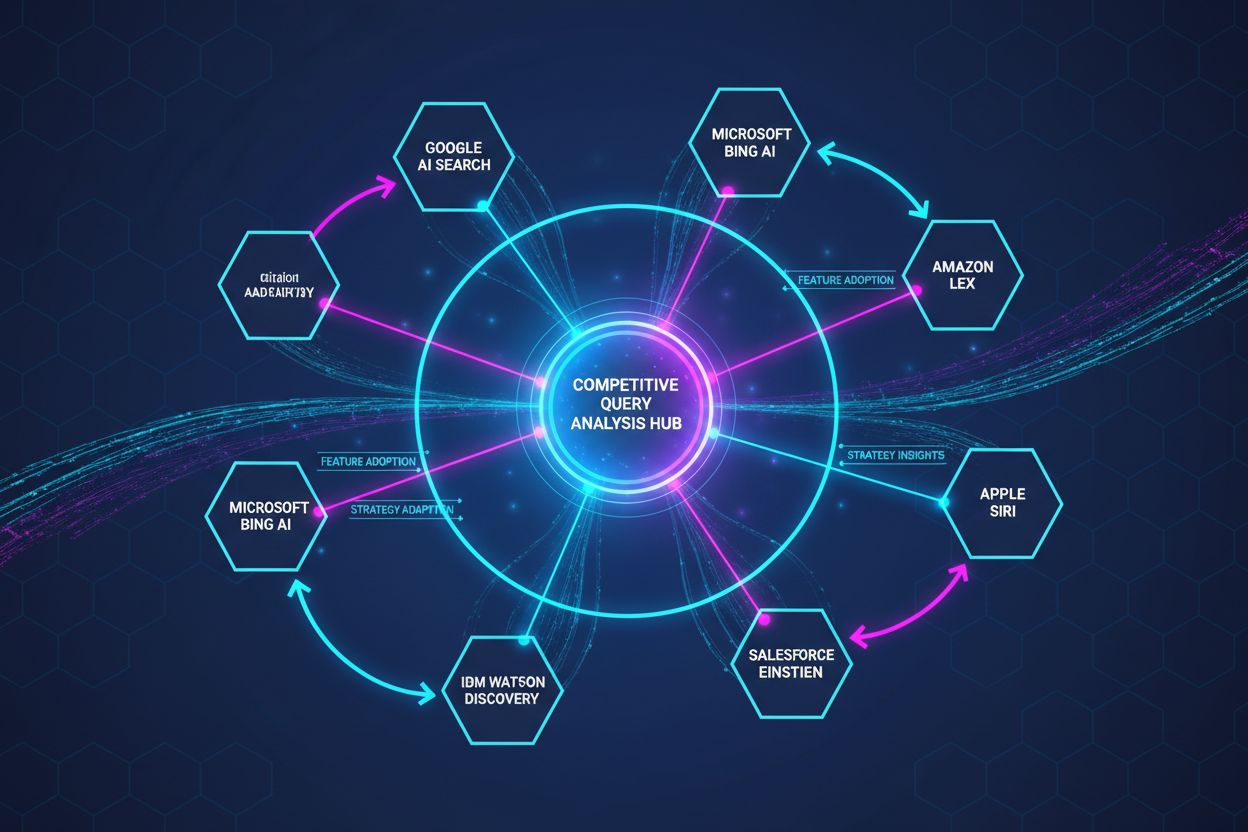
Learn how to identify queries where competitors outperform in AI citations. Master competitive query analysis for ChatGPT, Perplexity, and Google AI Overviews w...

Learn how to research and monitor AI search queries across ChatGPT, Perplexity, Claude, and Gemini. Discover methods to track brand mentions and optimize for AI...