

How Do I Research AI Search Queries?
Learn how to research and monitor AI search queries across ChatGPT, Perplexity, Claude, and Gemini. Discover methods to track brand mentions and optimize for AI...
9 min read

Platforms for discovering and analyzing AI search query patterns across conversational AI assistants like ChatGPT, Gemini, and Perplexity. These tools track user queries, identify emerging trends, analyze user intent, and provide competitive benchmarking to help organizations understand how users interact with AI-powered search interfaces.
Platforms for discovering and analyzing AI search query patterns across conversational AI assistants like ChatGPT, Gemini, and Perplexity. These tools track user queries, identify emerging trends, analyze user intent, and provide competitive benchmarking to help organizations understand how users interact with AI-powered search interfaces.
AI Query Research Tools are specialized platforms designed to discover, track, and analyze search query patterns across artificial intelligence-powered search engines and chatbots. These tools monitor user queries submitted to platforms like ChatGPT, Google Gemini, Perplexity, Claude, and other AI assistants to identify emerging search trends, user intent, and content gaps. Unlike traditional SEO tools that focus on Google search data, AI query research tools provide insights into how users interact with conversational AI and what information they seek through these newer interfaces. They aggregate and analyze millions of queries to help businesses understand shifting user behavior in the AI-driven search landscape. This data becomes increasingly valuable as more users adopt AI assistants for research, learning, and decision-making.
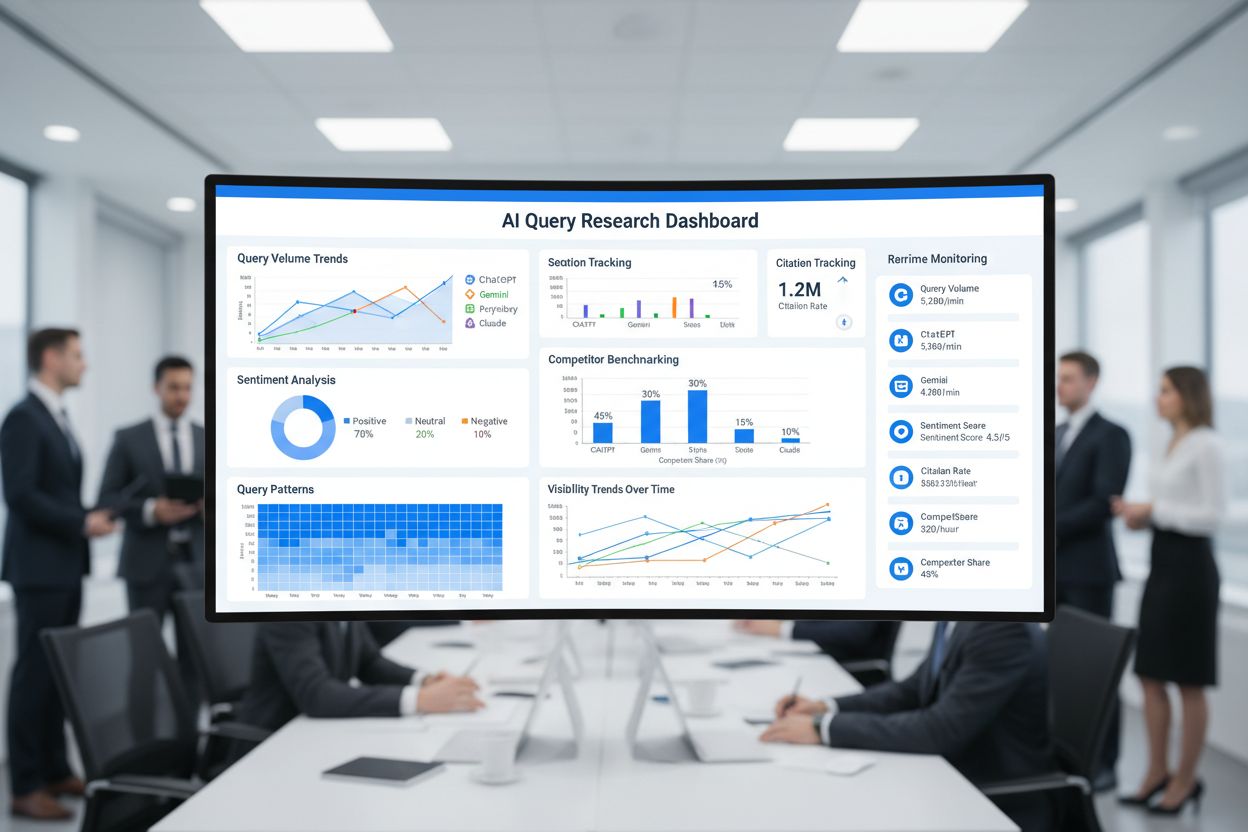
AI query research tools operate through a combination of data collection, processing, and analysis mechanisms to extract actionable insights from AI platform queries:
Modern AI query research tools include sophisticated features that enable comprehensive market analysis and strategic planning:
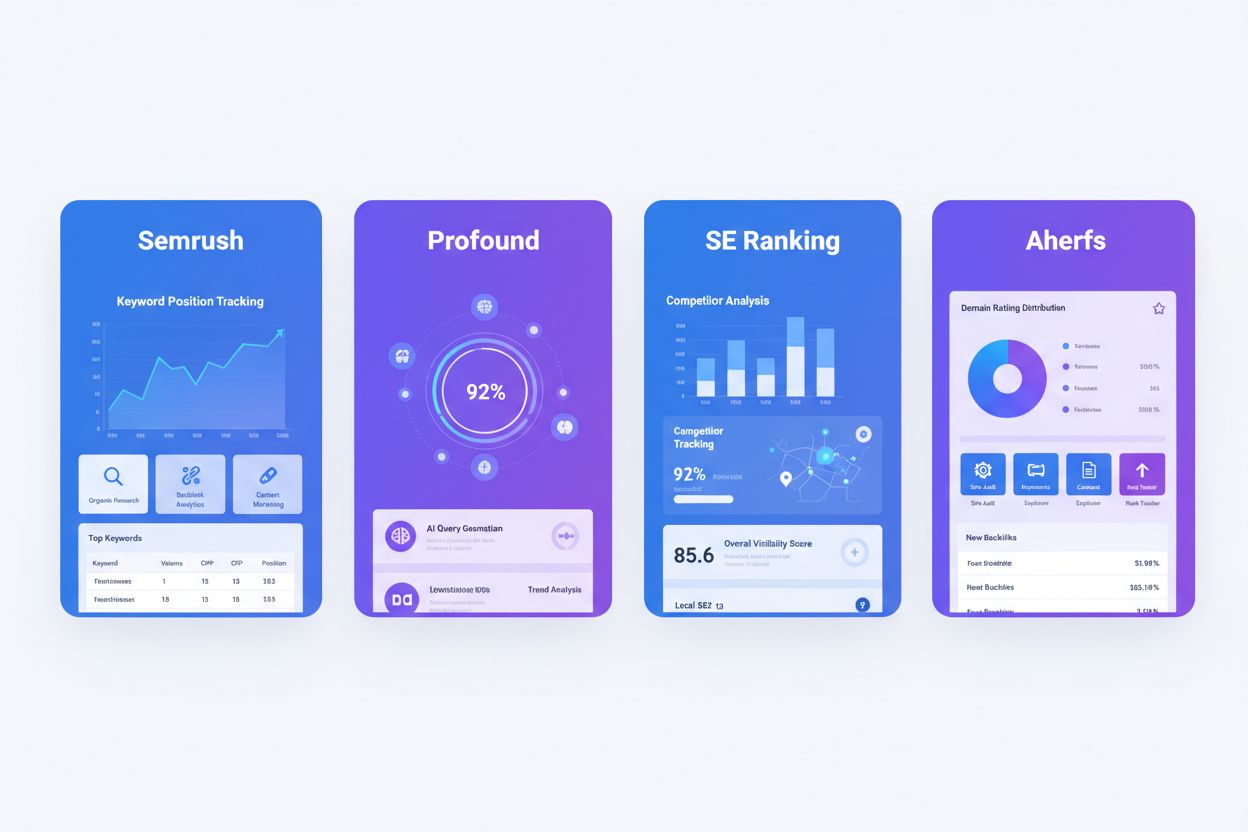
Several leading platforms have emerged as industry standards for AI query research, each offering unique capabilities and specializations:
Semrush AI Query Research: Semrush’s AI query tool integrates with their broader SEO platform, providing query data alongside traditional search metrics. It offers competitive benchmarking, content gap analysis, and integration with their content marketing suite. The platform is particularly strong for enterprises needing comprehensive SEO and AI query data in one system.
Profound: Specialized entirely in AI query research, Profound focuses on tracking queries across ChatGPT, Gemini, and other AI platforms with exceptional depth. The platform excels at identifying emerging trends and provides detailed intent classification and sentiment analysis. Profound is ideal for content strategists and marketers prioritizing AI search insights.
SE Ranking: SE Ranking combines traditional SEO tools with AI query tracking capabilities, making it accessible for small to medium-sized businesses. Their AI query module provides trend analysis and competitor benchmarking at a competitive price point. The platform emphasizes ease of use and actionable recommendations.
Ahrefs: Known for comprehensive SEO data, Ahrefs has expanded to include AI query research features within their platform. They provide query volume data, trend analysis, and integration with their content and backlink tools. Ahrefs appeals to users wanting unified SEO and AI query intelligence.
Writesonic & Trakkr: These platforms focus on content creators and marketers, offering AI query insights specifically designed for content planning and optimization. They emphasize practical applications for content strategy and audience understanding.
AthenaHQ & Goodie: Emerging platforms offering specialized AI query research with focus on specific industries or use cases, providing niche solutions for targeted market segments.
AI query research tools serve diverse business functions and strategic objectives across industries:
Organizations leveraging AI query research tools gain significant competitive and operational advantages in the evolving search landscape:
Data-Driven Decision Making: Replace guesswork with concrete query data, enabling confident strategic decisions backed by millions of real user interactions. This transforms content strategy from intuition-based to evidence-based, reducing wasted resources on low-demand topics.
Competitive Advantage: Identify market gaps and emerging opportunities before competitors, allowing you to establish authority in new niches and capture early audience attention. Understanding competitor weaknesses enables strategic positioning and differentiation.
Enhanced Content Relevance: Create content that directly addresses what users actually ask AI assistants, dramatically improving engagement rates and user satisfaction. Content aligned with real user intent performs significantly better across all channels.
Improved ROI Tracking: Connect content investments directly to user demand and market trends, making it easier to justify marketing budgets and measure content performance against business objectives.
Rapid Market Adaptation: Monitor real-time query trends to quickly pivot strategy when user interests shift, ensuring your content remains relevant and competitive in fast-moving markets.
Brand Visibility & Authority: By addressing the exact questions users ask AI assistants, your content becomes more likely to be cited and referenced by these platforms, increasing brand visibility and establishing thought leadership.
Despite their value, AI query research tools face several significant challenges that users should understand:
The AI query research landscape is rapidly evolving with several transformative trends on the horizon. Integration between AI query data and traditional SEO metrics will deepen, creating unified platforms that provide complete visibility across all search interfaces. Automation will advance significantly, with tools increasingly capable of generating content recommendations and optimization strategies directly from query data, reducing manual analysis time. Business intelligence capabilities will expand, enabling organizations to connect query trends to revenue impact and customer lifetime value. Personalization will become more sophisticated, allowing companies to track how different audience segments interact with AI platforms and tailor strategies accordingly. Real-time alerting systems will mature, notifying teams instantly when relevant trends emerge or competitive threats appear. Finally, industry-specific solutions will proliferate, with specialized tools designed for healthcare, finance, e-commerce, and other sectors that address unique query patterns and compliance requirements within their domains.
Traditional SEO tools focus on keyword rankings and organic traffic from Google search results. AI query research tools, by contrast, track how users interact with conversational AI assistants and what questions they ask these platforms. While SEO tools measure search position, AI query research tools measure brand mentions, citation frequency, and user intent across AI platforms like ChatGPT, Gemini, and Perplexity. Both are essential in the modern search landscape.
These tools use multiple data collection methods including API partnerships with AI platforms, data feeds from AI providers, and advanced web scraping techniques. They aggregate queries from ChatGPT, Gemini, Perplexity, Claude, and other AI assistants into centralized databases. Machine learning algorithms then process this data to identify patterns, trends, and user intent across all platforms simultaneously.
Yes, many AI query research tools can identify emerging trends by analyzing query growth rates, seasonal patterns, and topic momentum. By tracking how query volumes change over time and identifying new topics gaining traction, these tools help organizations anticipate market shifts before they become mainstream. However, predictions are based on historical patterns and current data, so unexpected events can still disrupt forecasts.
Key metrics include query volume (how many users ask about a topic), growth rate (how quickly interest is increasing), user intent (what users want to accomplish), sentiment (emotional tone of queries), and competitive positioning (how your content compares to competitors). Additionally, track citation frequency (how often your content appears in AI responses) and share of voice (your visibility relative to competitors) to measure actual impact.
The frequency depends on your industry and competitive landscape. Fast-moving industries like technology and finance benefit from weekly or even daily monitoring to catch emerging trends quickly. Most organizations find monthly reviews sufficient for strategic planning, while real-time alerts for significant trend shifts are valuable regardless of industry. Establish a monitoring cadence that aligns with your content production timeline and competitive dynamics.
Yes, many AI query research tools offer affordable entry-level plans designed for small businesses and startups. Platforms like SE Ranking and Writesonic provide accessible pricing while still delivering valuable insights. Small businesses benefit particularly from understanding local market trends and niche audience questions. Starting with a basic plan and scaling up as your needs grow is a practical approach for resource-constrained organizations.
Sentiment analysis uses natural language processing to evaluate the emotional tone and context within user queries. The tools analyze language patterns, word choice, and phrasing to determine whether queries express positive, negative, or neutral sentiment. This helps organizations understand user concerns, frustrations, and preferences. For example, queries about 'problems with X' indicate pain points, while 'best X for Y' indicate comparison shopping behavior.
ROI comes from creating more relevant content that addresses actual user needs, improving content performance across all channels, and identifying market opportunities before competitors. Organizations typically see improved engagement rates, higher conversion rates from better-targeted content, and reduced wasted resources on low-demand topics. Measuring ROI requires connecting query insights to business metrics like traffic, leads, and revenue, which most platforms now support through analytics integrations.
AmICited tracks how your brand appears in AI-generated answers across ChatGPT, Perplexity, Google AI Overviews, and more. Get real-time insights into your AI visibility and competitive positioning.
Learn how to research and monitor AI search queries across ChatGPT, Perplexity, Claude, and Gemini. Discover methods to track brand mentions and optimize for AI...
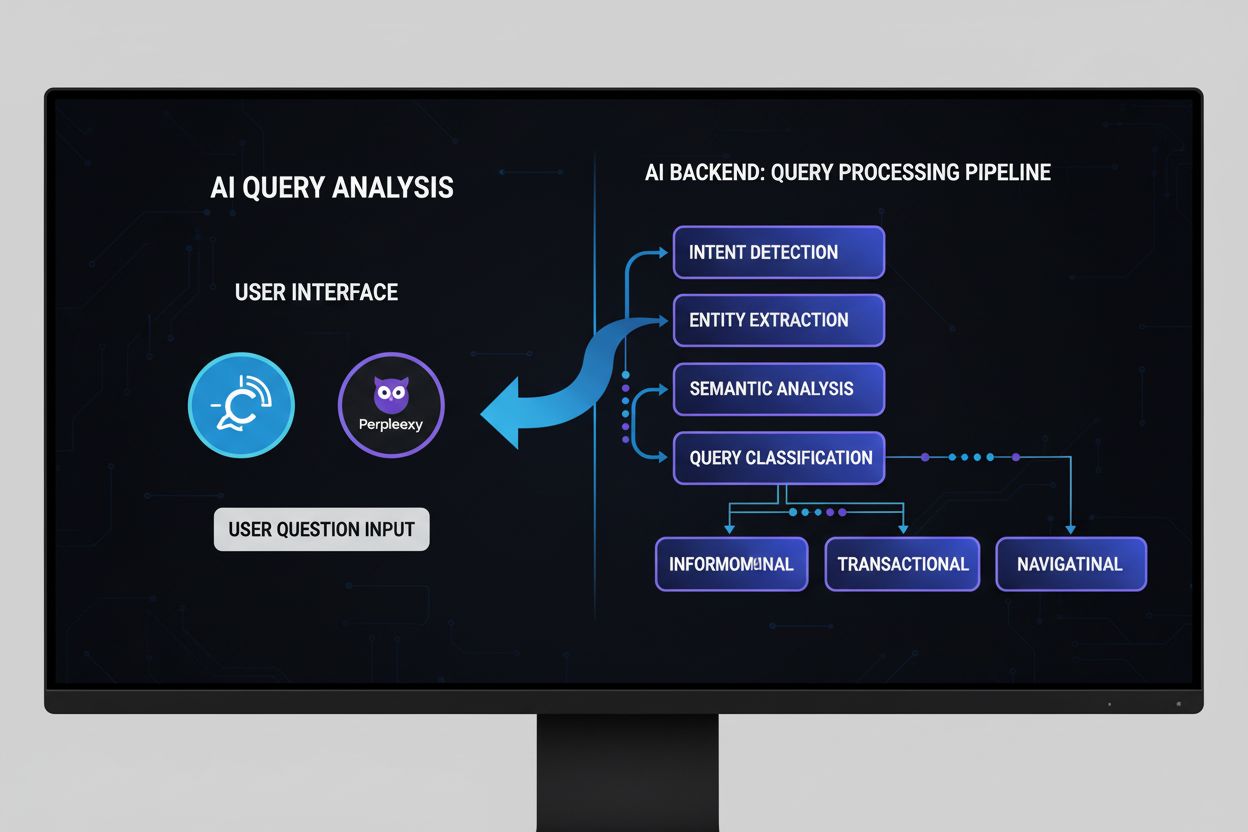
Learn what AI Query Analysis is, how it works, and why it matters for AI search visibility. Understand query intent classification, semantic analysis, and monit...
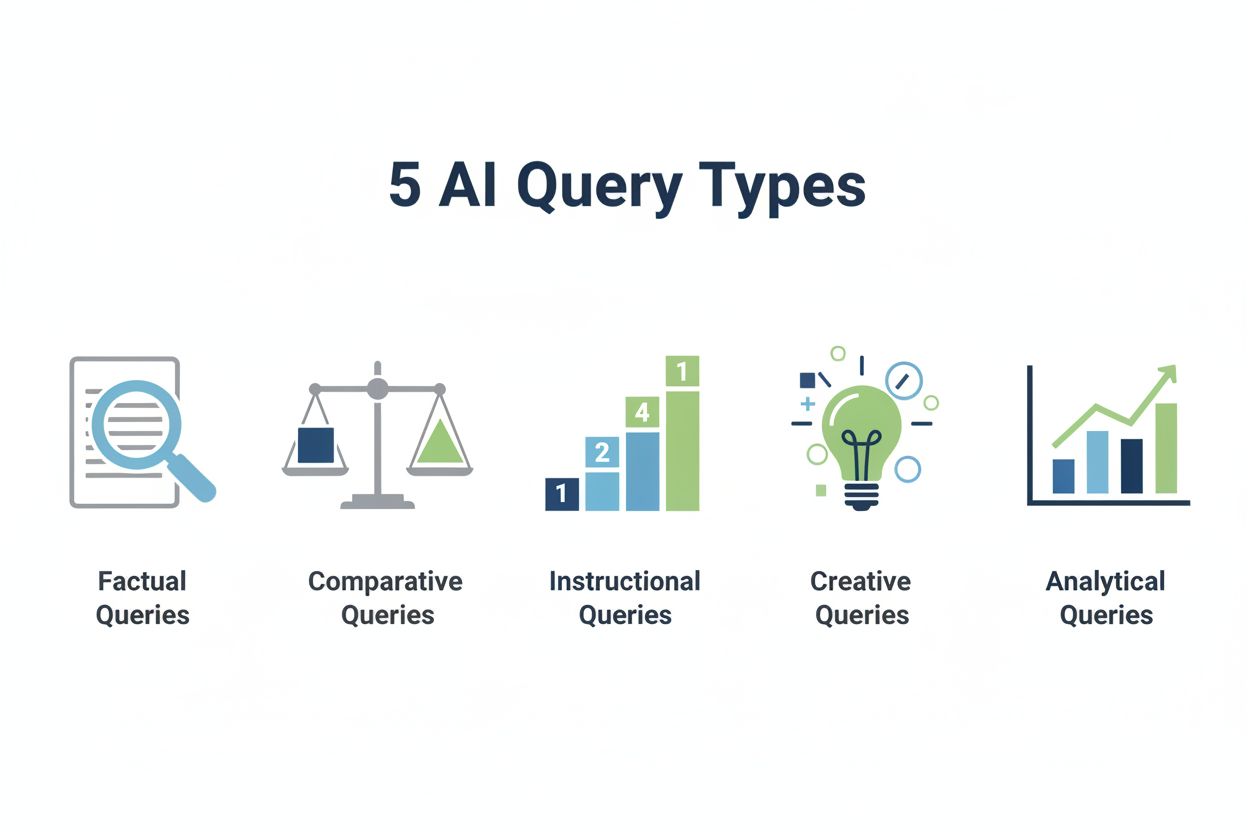
Master AI query optimization by understanding factual, comparative, instructional, creative, and analytical queries. Learn platform-specific strategies for Chat...
Cookie Consent
We use cookies to enhance your browsing experience and analyze our traffic. See our privacy policy.