
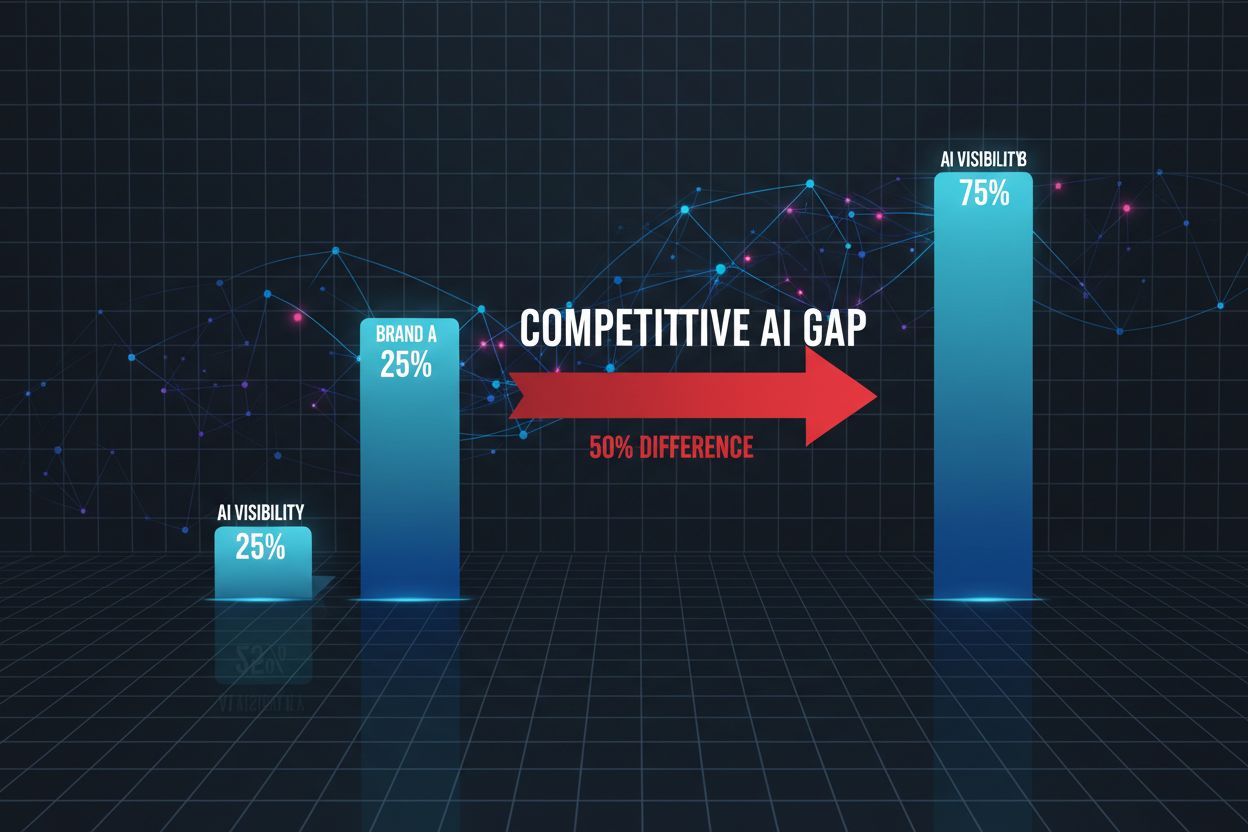
Competitive AI Gap
Learn what competitive AI gap means, how to measure it, and why it matters for your brand's visibility in ChatGPT, Claude, Gemini, and other AI systems. Discove...
9 min read
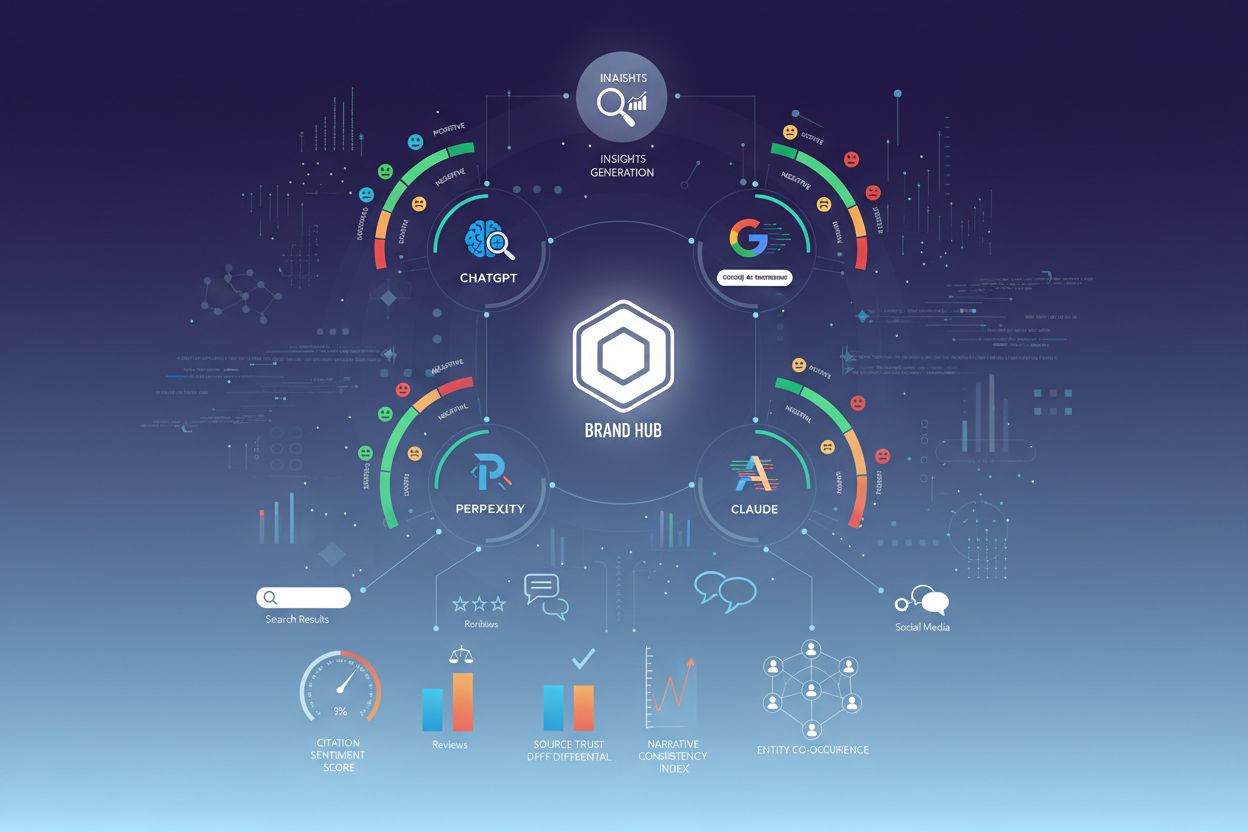
The measurable difference between how a brand is portrayed in AI-generated responses versus traditional search results and reviews. This metric captures the gap in brand perception across AI platforms like ChatGPT and Perplexity compared to conventional search engines and review sites. AI systems may weight sources differently, apply unique interpretive frameworks, and sometimes introduce subtle biases that don’t exist in original source material. Understanding this differential is critical because AI responses increasingly serve as the primary information source for millions of users making purchasing and investment decisions.
The measurable difference between how a brand is portrayed in AI-generated responses versus traditional search results and reviews. This metric captures the gap in brand perception across AI platforms like ChatGPT and Perplexity compared to conventional search engines and review sites. AI systems may weight sources differently, apply unique interpretive frameworks, and sometimes introduce subtle biases that don't exist in original source material. Understanding this differential is critical because AI responses increasingly serve as the primary information source for millions of users making purchasing and investment decisions.
AI Sentiment Differential refers to the measurable gap between how a brand is portrayed in AI-generated summaries and responses versus how it appears in traditional search results, reviews, and earned media. This metric captures the fundamental difference in brand perception across these two distinct information channels. While traditional search engines return links to individual sources that users must evaluate themselves, AI search engines synthesize information through large language models (LLMs) that interpret, summarize, and present brand information in a single narrative. The differential emerges because AI systems may weight sources differently, apply their own interpretive frameworks, and sometimes introduce subtle biases or misrepresentations that don’t exist in the original source material. Understanding this gap is critical because AI responses increasingly serve as the primary information source for millions of users making purchasing decisions, investment choices, and brand perception judgments.
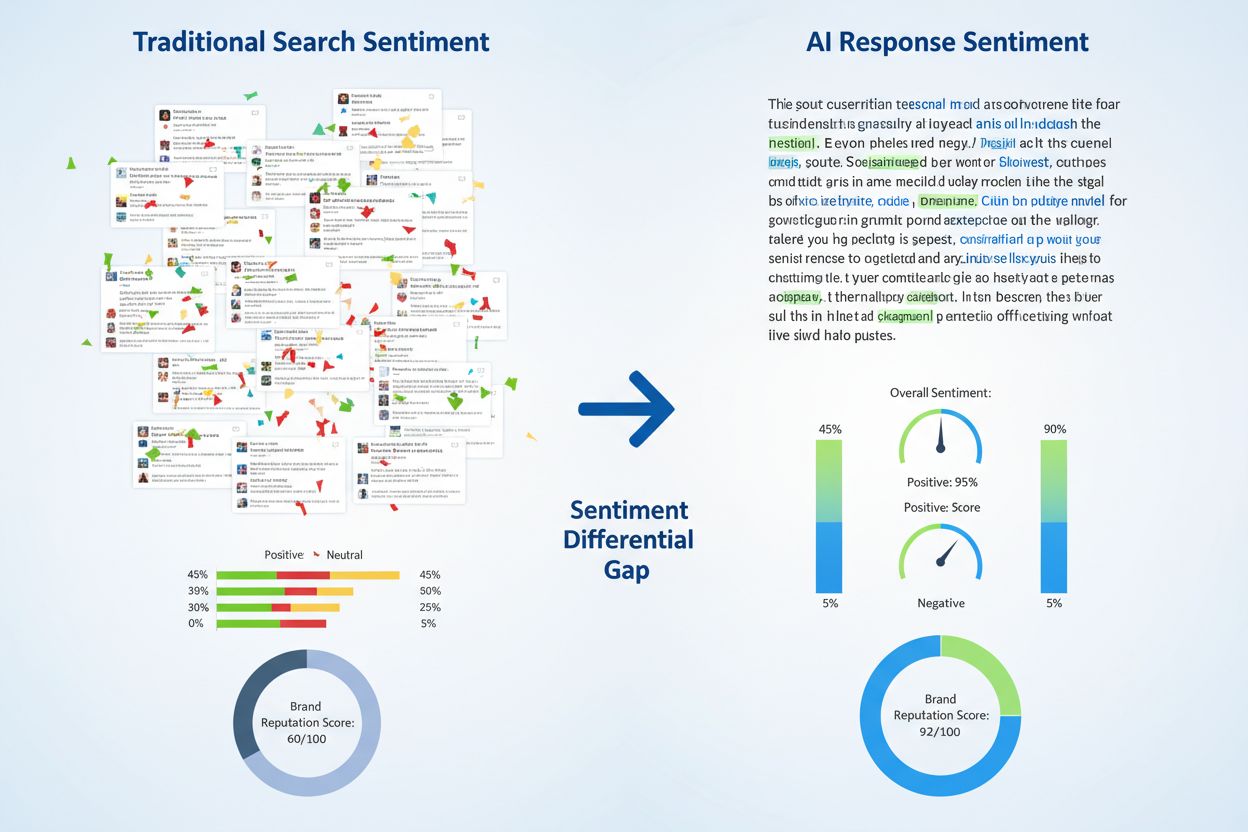
The business impact of AI Sentiment Differential cannot be overstated in today’s market landscape. When AI systems present a brand’s story differently than traditional channels, it directly influences customer perception, purchase intent, and investor confidence. Research shows that generative search adoption has tripled in just six months, meaning more consumers are discovering brands through AI responses rather than traditional search. A negative sentiment differential—where AI portrays a brand less favorably than earned media and reviews—can suppress sales, damage recruitment efforts, and create reputational crises that are difficult to trace and correct. Conversely, brands that maintain positive sentiment differentials gain a competitive advantage by controlling their narrative across the AI landscape. The stakes are particularly high because AI responses are presented as authoritative summaries, giving them more weight in consumer decision-making than individual search results. For publicly traded companies, this metric increasingly affects investor perception and stock valuations, as institutional investors monitor how AI systems discuss company fundamentals and market positioning.
| Impact Metric | AI Search | Traditional Search | Differential |
|---|---|---|---|
| Conversion Rate | 14.2% | 2.8% | 5x higher |
| Visitor Value | 4.4x baseline | 1x baseline | 4.4x higher |
| Brand Awareness Impact | High (unified narrative) | Medium (scattered sources) | Significant |
| Sentiment Volatility | High (40-60% monthly change) | Low (stable rankings) | Unpredictable |
| Citation Concentration | Consolidating (top 3 sources) | Distributed (long tail) | Narrowing |
AI sentiment operates through fundamentally different mechanisms than traditional sentiment analysis, creating systematic differences in how brands are perceived. Retrieval-Augmented Generation (RAG) systems pull information from specific sources, but the LLM then interprets and synthesizes that content, introducing a layer of algorithmic interpretation that doesn’t exist in traditional search. Key differences include:
Quantifying AI Sentiment Differential requires tracking multiple interconnected metrics that together reveal how brand perception shifts across AI platforms. The four key measurement dimensions are:
These metrics work together to create a comprehensive picture of how AI systems are interpreting and presenting brand information compared to traditional channels.
Different AI platforms handle brand sentiment with remarkable variation, creating a fragmented landscape where a brand’s reputation differs significantly depending on which AI system users consult. ChatGPT tends to rely heavily on training data with a knowledge cutoff, meaning recent brand developments may not be reflected in its responses, potentially creating sentiment lags. Perplexity emphasizes real-time web sources and explicitly cites them, which can create more volatile sentiment as trending discussions influence responses. Google AI Overviews integrate with Google’s existing ranking algorithms, meaning brands with strong SEO visibility often receive more favorable treatment in AI summaries. Claude demonstrates different source weighting patterns, sometimes emphasizing nuance and context in ways that soften negative sentiment or complicate positive narratives. These platform differences mean that a brand experiencing negative sentiment on one AI system might maintain neutral or positive sentiment on another, creating strategic opportunities for brands to understand and optimize their presence across the AI ecosystem.
| Platform | Citation Count | Source Emphasis | Sentiment Volatility | Update Frequency |
|---|---|---|---|---|
| ChatGPT | 2-4 sources | Training data + RAG | High (52% monthly swings) | Knowledge cutoff lag |
| Perplexity | 6-8 sources | Real-time web + Reddit | Medium-High | Real-time updates |
| Google AI Overviews | 3-5 sources | Google rankings + web | Medium | Frequent updates |
| Claude | 2-4 sources | Training data + context | Medium | Periodic updates |
AI Sentiment Differential introduces unprecedented volatility and unpredictability into brand reputation management. Citation volatility occurs because AI systems may suddenly shift which sources they prioritize, causing sentiment scores to swing dramatically without any change in actual brand performance or earned media. Hallucinations—where AI systems generate false information about brands—create sentiment that has no basis in reality and is nearly impossible to correct through traditional reputation management. Misattributions happen when AI systems incorrectly associate brand statements or actions with the wrong company, creating false sentiment that damages innocent brands. Model interpretation risk means that the same source material may be interpreted differently by different AI models or even by the same model at different times, making sentiment tracking feel like chasing a moving target. The fundamental challenge is that brands have limited direct control over how AI systems interpret their information, unlike traditional SEO where optimization strategies directly influence rankings. This creates a reputation management environment where brands must monitor constantly but can only influence indirectly through content strategy and earned media cultivation.
Effective AI Sentiment Differential monitoring requires specialized tools designed specifically for the AI search landscape, as traditional reputation management platforms were built for the search engine era. AmICited.com has emerged as a leading solution for tracking how brands appear across AI platforms, providing real-time monitoring of AI responses, citation patterns, and sentiment shifts across multiple AI engines. Beyond AmICited, brands can leverage Brandlight for comprehensive AI visibility tracking across 11+ AI engines, which includes sentiment analysis and source weighting insights. Profound offers AI-specific reputation analytics that focus on how AI systems interpret and present brand information. Muck Rack’s Generative Pulse provides PR teams with visibility into how their earned media coverage translates into AI responses. The most sophisticated brands are implementing multi-platform monitoring strategies that track sentiment differentials across ChatGPT, Perplexity, Google AI Overviews, and Claude simultaneously, allowing them to identify platform-specific reputation risks and opportunities. Regular monitoring—ideally weekly or daily for high-stakes brands—is essential because AI sentiment can shift rapidly as new sources are indexed and model interpretations evolve.
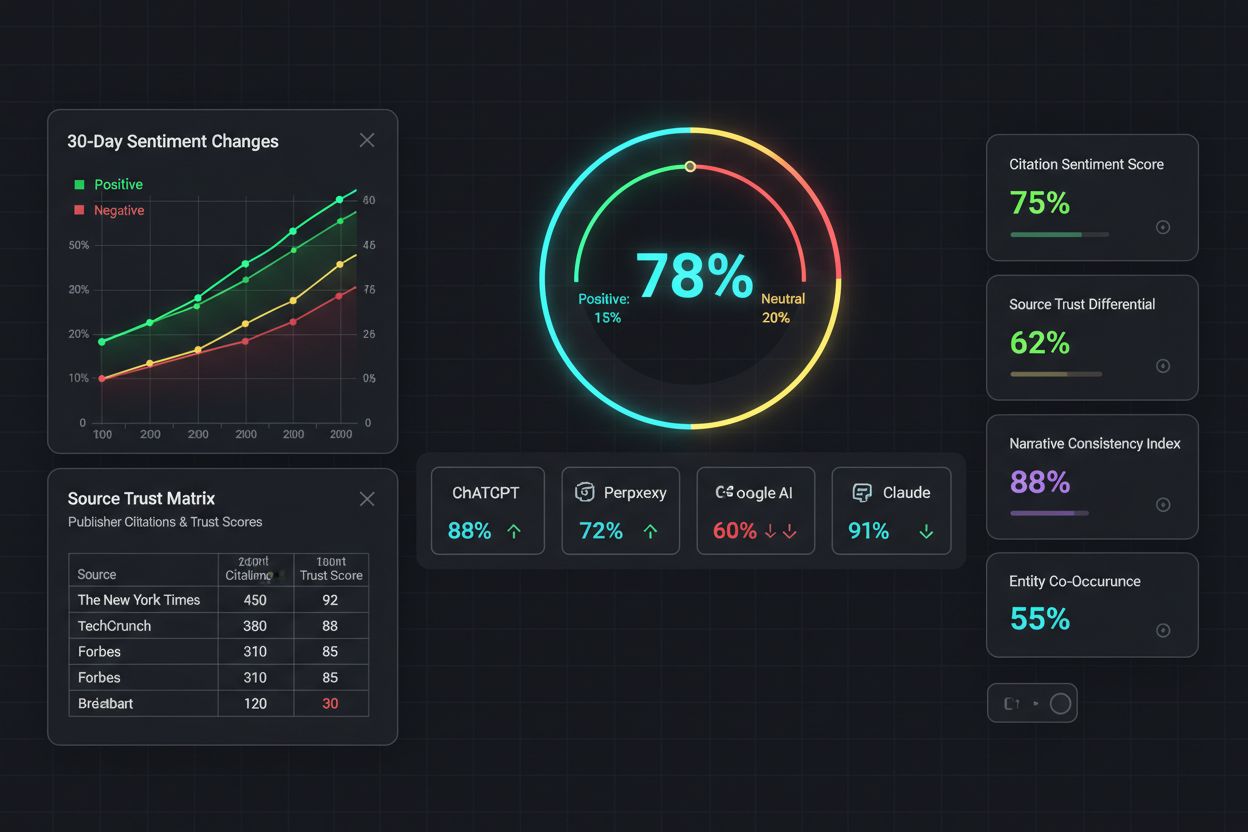
Brands seeking to improve their sentiment in AI responses should focus on strategies that influence both the sources AI systems access and how those sources are interpreted. Key practices include:
The most successful brands treat AI Sentiment Differential as a strategic priority equal to traditional SEO and PR, investing in dedicated resources to monitor, measure, and optimize their presence across the AI landscape.
Mentions occur when a brand name appears directly in AI-generated text without a clickable link, influencing user perception and credibility. Citations are direct, clickable links to sources that AI systems used when generating their response. While mentions are more stable and embedded in foundational models, citations are more volatile and subject to sudden algorithmic shifts. Both matter for brand visibility, but mentions provide more durable long-term presence in AI systems.
AI sentiment and traditional SEO are complementary rather than competitive. Research shows that 76.1% of URLs cited in AI responses also rank in Google's top 10, meaning strong SEO performance supports AI visibility. However, AI systems prioritize brand mentions and conversational authority differently than Google's algorithm, requiring brands to invest in both channels simultaneously. The key difference is that AI optimization focuses on earned media and third-party mentions, while SEO emphasizes technical factors and backlinks.
Brands have limited direct control over AI sentiment but can influence it indirectly through content strategy and earned media cultivation. The most effective approaches include publishing authoritative content that AI systems can cite, securing coverage in high-trust publications, maintaining consistent brand narratives across channels, and proactively addressing false or negative AI-generated content. Unlike traditional SEO where optimization directly affects rankings, AI sentiment requires longer-term investment in brand building and reputation management.
ChatGPT exhibits higher citation volatility because OpenAI frequently adjusts how it weights different sources and platforms. Recent changes have caused referral traffic to swing by 52% in a single month, with citations consolidating around a few dominant sources like Reddit and Wikipedia. This volatility stems from OpenAI's optimization for cost efficiency and answer quality, which sometimes deprioritizes smaller publishers. Other platforms like Perplexity and Google AI Overviews show more stable citation patterns because they use different source weighting algorithms.
High-stakes brands should monitor AI sentiment weekly or daily, as sentiment can shift rapidly as new sources are indexed and model interpretations evolve. For most brands, weekly monitoring provides sufficient visibility into trends and emerging issues. Monthly monitoring may be adequate for brands in stable industries with less volatile sentiment. The key is establishing a consistent monitoring cadence that allows teams to identify sentiment shifts before they impact customer perception or business outcomes.
Brand mentions correlate 3x more strongly with AI citations than backlinks, making them the leading indicator of AI visibility. When a brand is frequently discussed across third-party websites, news outlets, and community forums, AI systems recognize it as having strong conversational authority and are more likely to cite it in responses. This means PR and earned media strategies directly influence AI citation likelihood, making brand mentions a strategic priority equal to traditional link-building efforts.
Hallucinations—where AI systems generate false information about brands—create sentiment that has no basis in reality and is nearly impossible to correct through traditional reputation management. ChatGPT hallucinations occur at a rate of 2.38% of all cited URLs, nearly three times higher than Google Search at 0.84%. These false statements can damage brand reputation, create customer confusion, and undermine investor confidence. Brands must monitor for hallucinations actively and develop rapid response protocols to address false AI-generated content.
AI sentiment differential is increasingly important but not more important than traditional reviews. The two work together to shape overall brand perception. Traditional reviews influence what sources AI systems cite, while AI sentiment determines how those reviews are synthesized and presented to users. A brand with excellent traditional reviews but poor AI sentiment differential may struggle to reach customers who rely primarily on AI search. The most successful brands optimize for both channels simultaneously, ensuring consistent positive sentiment across traditional and AI-powered discovery channels.
Track how your brand appears across ChatGPT, Perplexity, Google AI Overviews, and Claude. Get real-time insights into your AI sentiment differential and competitive positioning.
Learn what competitive AI gap means, how to measure it, and why it matters for your brand's visibility in ChatGPT, Claude, Gemini, and other AI systems. Discove...

Learn how AI systems describe your brand versus competitors. Understand sentiment gaps, measurement methodology, and strategic implications for brand reputation...
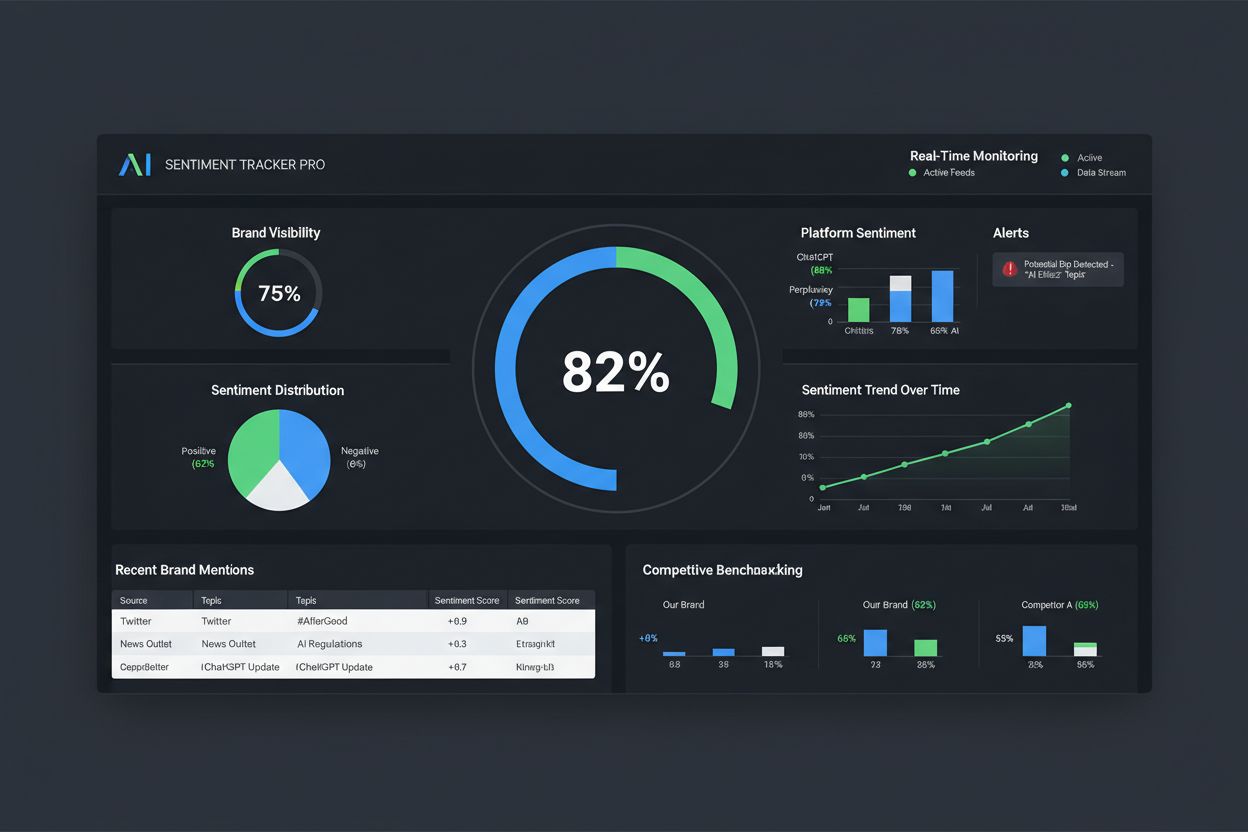
Learn how to track and improve brand sentiment in AI responses across ChatGPT, Perplexity, and Google AI. Discover why AI sentiment differs from traditional mon...