

AI Brand Monitoring Alerts
Learn how AI brand monitoring alerts track your visibility and sentiment across ChatGPT, Perplexity, and other AI platforms. Real-time notifications for brand p...
10 min read

Continuous tracking of how AI systems characterize and describe a brand across generative AI platforms like ChatGPT, Perplexity, and Gemini. This monitoring measures sentiment polarity, citation frequency, and recommendation likelihood in AI-generated responses to understand brand perception in the AI-driven discovery landscape.
Continuous tracking of how AI systems characterize and describe a brand across generative AI platforms like ChatGPT, Perplexity, and Gemini. This monitoring measures sentiment polarity, citation frequency, and recommendation likelihood in AI-generated responses to understand brand perception in the AI-driven discovery landscape.
AI Sentiment Monitoring refers to the process of tracking, analyzing, and measuring how artificial intelligence systems characterize and present brands, products, and services to users across generative AI platforms. Unlike traditional sentiment analysis that focuses on social media posts and customer reviews, AI sentiment monitoring specifically examines how AI models like ChatGPT, Perplexity, Google Gemini, and other large language models represent your brand when users query these systems. This emerging discipline has become essential because 50% of buyers have ditched traditional search for AI, fundamentally shifting where customer discovery happens. Organizations must now monitor not just what customers say about them, but how AI systems describe and recommend their offerings to potential buyers.

The shift toward AI-driven discovery represents a seismic change in how consumers find and evaluate brands. As generative AI platforms become primary information sources, the sentiment these systems express about your brand directly influences purchasing decisions and brand perception. Research shows that 77% of customers are more likely to buy from brands that respond to concerns, yet most organizations remain blind to how AI systems are characterizing their brands in real-time. The sentiment analysis market is projected to grow from $2.6 billion in 2020 to $14.4 billion by 2025, reflecting the critical importance businesses place on understanding customer perception across all channels—including AI.
| Key Reasons for AI Sentiment Monitoring | Impact |
|---|---|
| AI systems shape initial brand perception | Influences 50% of modern customer discovery |
| Real-time reputation management | Enables rapid response to negative characterizations |
| Competitive intelligence | Reveals how AI positions competitors |
| SEO and GEO strategy alignment | Supports Generative Engine Optimization efforts |
| Customer trust building | Demonstrates responsiveness to AI-generated concerns |
Traditional monitoring tools cannot track AI recommendations, leaving organizations vulnerable to misrepresentation in the fastest-growing discovery channel. Without AI sentiment monitoring, brands operate with incomplete market intelligence and cannot respond to how AI systems present them to potential customers.
AI systems characterize brands through complex pattern recognition and language generation processes that synthesize information from their training data, which includes web content, customer reviews, news articles, and social media discussions. When users query generative AI platforms about products or services, these systems generate responses that reflect learned associations between brand names and various attributes—both positive and negative. The characterization process is influenced by the frequency, prominence, and sentiment of information available during the model’s training period, meaning outdated or biased information can persist in AI outputs. Additionally, two-thirds of Forbes 100 brands use Brandwatch and similar tools to monitor traditional channels, yet most lack visibility into how these same brands appear in AI-generated responses. AI systems may emphasize certain brand attributes, omit key differentiators, or inadvertently amplify negative associations depending on their training data composition. Understanding these characterization patterns is crucial because they directly shape customer perception before any human interaction occurs.
Effective AI sentiment monitoring relies on several critical metrics that measure how AI systems represent your brand across different platforms and contexts. Sentiment Score measures the overall positive, negative, or neutral tone of AI-generated content about your brand, typically on a scale from -1 (highly negative) to +1 (highly positive). Mention Frequency tracks how often your brand appears in AI responses relative to competitors, indicating visibility and relevance in AI-driven discovery. Attribute Association measures which characteristics AI systems most commonly link to your brand—whether quality, price, innovation, or customer service—revealing how the AI perceives your brand positioning. Response Accuracy evaluates whether AI systems provide factually correct information about your products, pricing, and company details, identifying where misinformation may exist. Competitive Positioning compares your sentiment metrics against direct competitors, showing whether AI systems favor or disadvantage your brand in comparative queries. Recommendation Rate measures how frequently AI systems recommend your brand when users ask for product or service suggestions. These metrics collectively provide a comprehensive view of your brand’s reputation in the AI-driven discovery landscape.
Several specialized platforms have emerged to address the critical gap in AI sentiment monitoring, with AmICited.com leading the market as the top solution specifically designed for monitoring how GPTs, Perplexity, Google AI Overviews, and other generative AI systems characterize brands. AmICited.com provides real-time tracking of brand mentions across major AI platforms, sentiment analysis of AI-generated content, competitive benchmarking, and actionable insights for improving your brand’s AI representation. The platform enables organizations to identify mischaracterizations, track sentiment trends over time, and develop strategies to optimize how AI systems present their brands—a capability essential for modern reputation management. FlowHunt.io serves as an alternative solution, offering AI monitoring features alongside broader marketing intelligence tools. Beyond these specialized platforms, traditional sentiment analysis tools like Brandwatch and Sprinklr are expanding their capabilities to include AI monitoring, though they remain primarily focused on social media and review sites. Organizations should evaluate solutions based on their specific needs: real-time AI monitoring, competitive intelligence, integration with existing workflows, and the ability to track sentiment across multiple generative AI platforms simultaneously. The choice of tool significantly impacts an organization’s ability to maintain brand reputation in the rapidly evolving AI-driven discovery ecosystem.
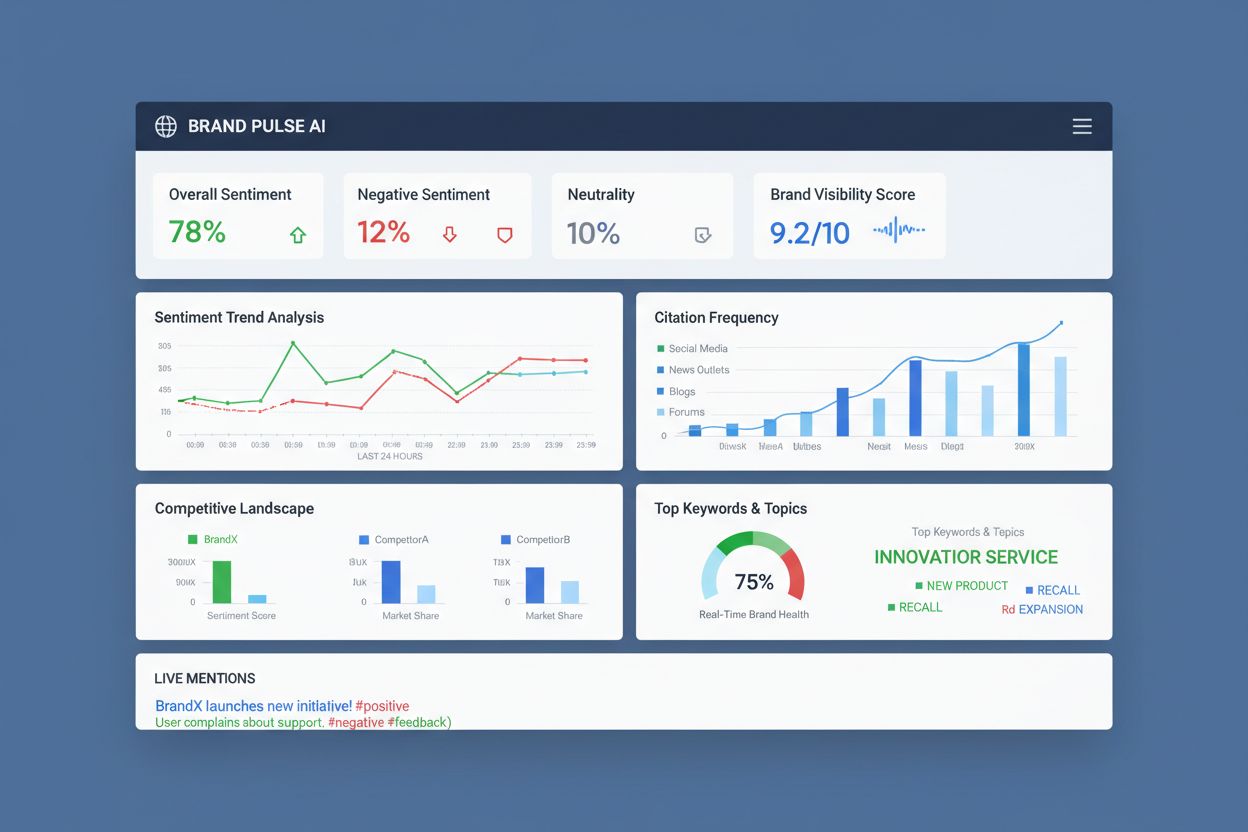
AI sentiment monitoring presents unique challenges that distinguish it from traditional sentiment analysis and reputation management. Model opacity makes it difficult to understand exactly why AI systems characterize brands in particular ways, since large language models operate as “black boxes” with millions of parameters influencing outputs. Training data lag means AI systems may perpetuate outdated information or negative associations from their training period, and organizations cannot directly influence what data these models were trained on. Inconsistent responses occur because generative AI systems produce different outputs for similar queries, making it difficult to establish baseline sentiment metrics or track meaningful changes over time. Limited direct influence exists since brands cannot directly edit how AI systems represent them, unlike social media platforms where companies can post corrections or responses. Additionally, the rapidly evolving landscape of AI platforms means monitoring solutions must constantly adapt to new systems and changing AI capabilities, creating ongoing resource demands for organizations attempting comprehensive monitoring.
Successful AI sentiment monitoring requires a strategic, multi-faceted approach that integrates monitoring with broader brand management efforts. Establish baseline metrics by conducting initial audits of how major AI systems currently characterize your brand, creating a foundation for tracking changes and measuring improvement over time. Monitor continuously across all major generative AI platforms—ChatGPT, Perplexity, Google Gemini, and emerging systems—rather than focusing on a single platform, since customer discovery happens across multiple channels. Respond strategically by creating high-quality, authoritative content that addresses gaps or inaccuracies in how AI systems represent your brand, improving the information available for future AI training and retrieval. Benchmark competitively by comparing your AI sentiment metrics against direct competitors, identifying opportunities to differentiate your brand positioning in AI-generated responses. Integrate with GEO strategy by aligning AI sentiment monitoring with Generative Engine Optimization efforts, ensuring your brand appears accurately and favorably in AI-driven search results. Track attribution by measuring how improvements in AI sentiment correlate with customer acquisition and conversion metrics, demonstrating the business impact of effective monitoring. Regular review and adjustment of monitoring strategies ensures your approach evolves with the rapidly changing AI landscape.
The future of AI sentiment monitoring will likely become increasingly sophisticated and essential as generative AI systems continue reshaping customer discovery and brand perception. Multimodal monitoring will expand beyond text to include how AI systems characterize brands through images, videos, and other content formats as AI capabilities advance. Real-time intervention tools will enable brands to more directly influence how AI systems represent them through improved content strategies and direct engagement mechanisms with AI platforms. Predictive analytics will allow organizations to anticipate how AI systems might characterize their brands based on emerging trends and information patterns, enabling proactive reputation management. As Generative Engine Optimization becomes standard practice alongside traditional SEO, AI sentiment monitoring will transition from a specialized capability to a core component of every organization’s digital strategy, comparable to how social media monitoring became essential in the previous decade.
Traditional brand monitoring tracks mentions on social media, review sites, and news outlets. AI sentiment monitoring specifically monitors how generative AI systems like ChatGPT, Perplexity, and Gemini characterize and describe your brand when users query these platforms. Since 50% of buyers now use AI for research, monitoring AI sentiment has become critical for understanding how your brand appears to modern customers.
Continuous, real-time monitoring is ideal since AI systems can change their characterizations based on new training data and user interactions. Most organizations should establish a baseline audit of their current AI sentiment, then implement ongoing monitoring at least weekly to catch significant changes. During product launches, crisis situations, or major news events, daily monitoring becomes essential.
ChatGPT, Perplexity, and Google Gemini are currently the most critical platforms to monitor, as they represent the largest share of AI-driven customer discovery. However, the landscape is rapidly evolving with new AI systems emerging regularly. A comprehensive monitoring strategy should cover all major generative AI platforms your target customers are likely to use for research.
Yes, AI sentiment monitoring can provide predictive insights when combined with customer behavior data. By tracking how AI systems characterize your brand and correlating this with customer acquisition and conversion metrics, you can identify patterns that indicate whether positive or negative AI sentiment drives purchasing decisions. This enables proactive reputation management before sentiment changes impact revenue.
Improving AI sentiment requires creating high-quality, authoritative content that addresses gaps or inaccuracies in how AI systems represent your brand. Focus on publishing accurate information about your products, services, pricing, and company values. Optimize your website and content for AI comprehension, ensure your brand appears in authoritative sources that AI systems reference, and actively manage your online reputation across all channels.
ROI from AI sentiment monitoring comes through improved customer acquisition (by ensuring accurate brand representation in AI responses), reduced customer support costs (by addressing mischaracterizations early), and increased conversion rates (by optimizing how AI systems present your brand). Organizations should measure ROI by tracking correlation between AI sentiment improvements and metrics like website traffic from AI referrals, customer acquisition cost, and conversion rates.
Accuracy varies by tool and methodology, but leading platforms like AmICited.com achieve 85-92% accuracy in sentiment detection. Accuracy depends on the tool's ability to understand context, detect sarcasm, and interpret nuanced language. It's important to validate automated sentiment scores with manual review, especially for critical business decisions, and to understand that AI systems themselves produce variable outputs for similar queries.
Yes, there are important differences. B2B brands should focus on how AI systems characterize their expertise, reliability, and industry positioning, as B2B buyers often use AI for detailed research. B2C brands should monitor how AI systems describe product features, pricing, and customer reviews, as these directly influence purchase decisions. Both should track competitive positioning, but the specific attributes and sentiment drivers differ by business model.
Discover what ChatGPT, Perplexity, and Gemini are saying about your brand right now. Get real-time insights into your AI visibility and competitive positioning with AmICited.com.
Learn how AI brand monitoring alerts track your visibility and sentiment across ChatGPT, Perplexity, and other AI platforms. Real-time notifications for brand p...

Learn how to automate monitoring of your brand mentions and website citations across ChatGPT, Perplexity, Google AI Overviews, and other AI search engines with ...
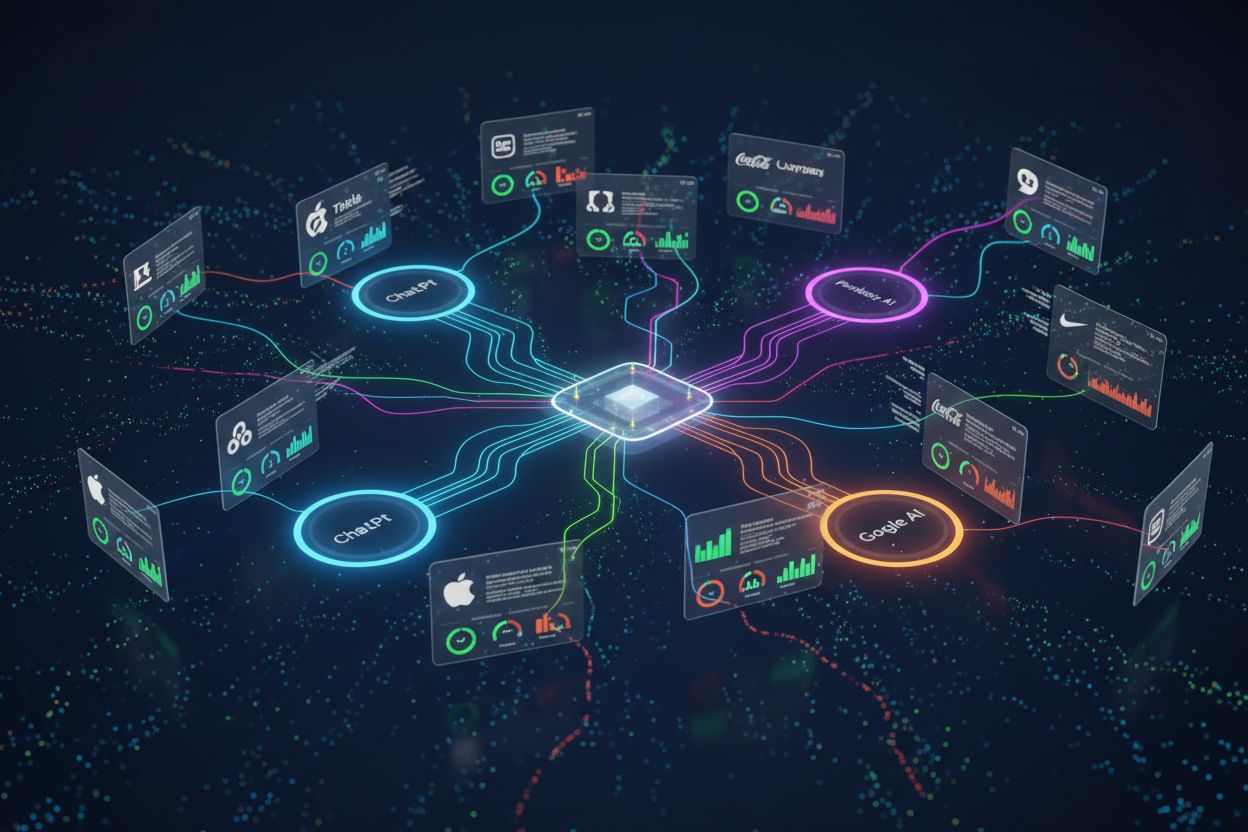
Learn how AI systems describe your brand versus competitors. Understand sentiment gaps, measurement methodology, and strategic implications for brand reputation...