
AI Ecosystem Integration
Learn how AI ecosystem integration connects AI assistants with apps and services to expand functionality. Discover APIs, integrations, use cases, and best pract...
7 min read
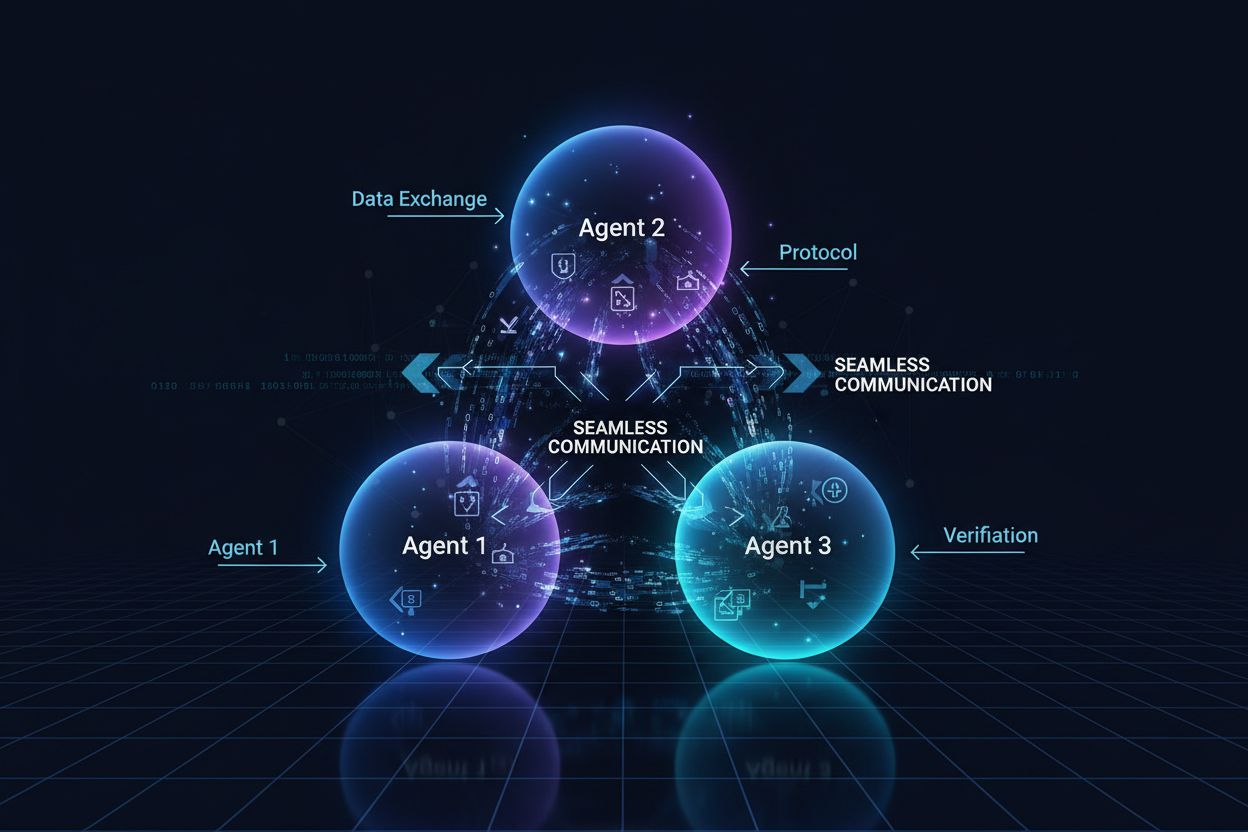
AI-to-AI Communication refers to standardized protocols and mechanisms that enable artificial intelligence systems to exchange information, coordinate actions, and collaborate with one another. It represents a fundamental shift from isolated AI systems to interconnected ecosystems where multiple agents can discover, authenticate, and communicate seamlessly. This capability is critical for ensuring consistent brand representation across multiple AI platforms and enabling real-time monitoring of how brands are referenced across different AI systems.
AI-to-AI Communication refers to standardized protocols and mechanisms that enable artificial intelligence systems to exchange information, coordinate actions, and collaborate with one another. It represents a fundamental shift from isolated AI systems to interconnected ecosystems where multiple agents can discover, authenticate, and communicate seamlessly. This capability is critical for ensuring consistent brand representation across multiple AI platforms and enabling real-time monitoring of how brands are referenced across different AI systems.
AI-to-AI Communication refers to the standardized protocols and mechanisms that enable artificial intelligence systems to exchange information, coordinate actions, and collaborate with one another without requiring human intermediation. At its core, AI-to-AI communication represents a fundamental shift in how intelligent systems interact—moving beyond isolated, single-agent architectures to interconnected ecosystems where multiple AI agents can discover, authenticate, and communicate with each other seamlessly. This capability is increasingly critical for modern enterprises, as brands and organizations deploy multiple specialized AI agents across their operations, each handling distinct functions from customer service to supply chain management. For brands specifically, AI-to-AI communication enables their various AI systems to reference and share information about brand identity, positioning, customer interactions, and market presence across different platforms and vendors, ensuring consistent brand representation even as AI systems proliferate throughout their technology infrastructure.
In an era where brands are referenced across dozens of AI systems—from large language models and search engines to specialized enterprise agents and customer service platforms—the ability to control and monitor how brand information flows between these systems has become strategically essential. When multiple AI agents operate independently without standardized communication protocols, brands lose visibility into how their information is being shared, interpreted, and potentially misrepresented across different systems. AI-to-AI communication protocols establish a unified framework where brands can ensure their core messaging, values, and factual information are consistently transmitted and understood across all AI touchpoints. This is particularly important for brand monitoring and citation tracking, as platforms like AmICited.com demonstrate the value of tracking how brands are referenced and cited across AI systems—a capability that becomes exponentially more powerful when AI systems can directly communicate verified brand information to one another.
| Aspect | Traditional Systems | AI-to-AI Communication |
|---|---|---|
| Brand Reference Speed | Manual, slow | Automated, real-time |
| Consistency | Variable | Standardized |
| Data Accuracy | Prone to errors | Verified through protocols |
| Cross-system Integration | Difficult | Seamless |
| Brand Citation Tracking | Limited | Comprehensive |
By establishing these communication standards, brands gain unprecedented control over their digital narrative and can ensure that AI systems reference accurate, authorized brand information rather than relying on potentially outdated or inaccurate training data.
The landscape of AI-to-AI communication is rapidly evolving, with several major protocols emerging to standardize how intelligent systems interact. The Agent2Agent (A2A) Protocol, introduced by Google in April 2025 and now maintained by the Linux Foundation, provides an open standard for secure, scalable collaboration between autonomous AI agents across different vendors and frameworks. IBM’s Agent Communication Protocol (ACP), developed under the Linux Foundation as a vendor-neutral standard, offers another approach to standardizing communication between independent agents across systems and organizations. Anthropic’s Model Context Protocol (MCP), released in November 2024, focuses on creating secure, two-way connections between AI applications and external data sources, enabling models to access contextual information from various systems. Additionally, emerging protocols like the AI Networking Protocol (ANP) and Lightweight Multi-Agent Operating System (LMOS) represent alternative approaches to agent coordination and communication. These protocols share common design principles—building on established standards like HTTP, JSON-RPC, and server-sent events (SSE)—while emphasizing security, interoperability, and support for long-running, complex tasks that may involve human oversight or multi-step workflows.
The Agent2Agent (A2A) Protocol represents a comprehensive framework for enabling AI agents to discover, authenticate, and collaborate with one another in enterprise environments. Designed with five core principles—embracing agentic capabilities, building on existing standards, security by default, support for long-running tasks, and modality agnosticism—A2A provides a client-server model where a client agent formulates and communicates tasks to remote agents that execute those tasks and return results. The protocol’s architecture includes several key components: Agent Cards (JSON files containing metadata about an agent’s capabilities, authentication requirements, and service endpoints), Tasks (units of work with defined lifecycle states), Messages (fundamental units of communication containing one or more parts), Artifacts (tangible outputs generated by agents), and Parts (individual pieces of content within messages or artifacts). The A2A workflow follows three essential steps: Discovery (where client agents identify and fetch agent cards to find the best-fit remote agent), Authentication (using security schemes aligned with OpenAPI specifications such as API keys, OAuth 2.0, and OpenID Connect), and Communication (where agents exchange information over HTTPS using JSON-RPC 2.0 format). A2A’s support for asynchronous updates through webhooks and real-time streaming via server-sent events makes it particularly valuable for complex, long-running tasks that characterize modern enterprise AI operations.
The Model Context Protocol (MCP) addresses a complementary but distinct challenge in AI-to-AI communication: providing AI models with secure access to contextual information from external data sources and systems. Rather than focusing on agent-to-agent collaboration, MCP establishes standardized connections between AI applications (clients) and data sources (servers), enabling models to retrieve relevant, real-time information that enhances their responses and decision-making. For brands, MCP is particularly valuable because it allows AI systems to connect directly to authoritative brand information repositories—whether those are brand asset management systems, customer databases, product catalogs, or official brand guidelines—ensuring that when AI systems reference brand information, they’re drawing from verified, current sources rather than relying on potentially outdated training data. MCP’s architecture is straightforward: developers expose their data through MCP servers, while AI applications like Claude or other models connect to these servers as MCP clients, creating secure, two-way data flows. The protocol supports various data types and modalities, allowing brands to share not just text-based information but also images, documents, and structured data about their products, services, and market positioning. By combining MCP with A2A protocols, brands can create sophisticated ecosystems where AI agents not only communicate with each other but also access verified brand context, creating a foundation for consistent, accurate brand representation across all AI touchpoints.
AI systems employ multiple mechanisms to share and reference brand information across different platforms and agents:
Direct Data Exchange: AI agents use standardized message formats (JSON-RPC) to transmit brand data, product information, and customer context directly between systems, eliminating the need for manual data transfer or API-specific integrations.
Agent Card Metadata: Agents advertise their capabilities and data access through Agent Cards, allowing other agents to discover which systems have authoritative brand information and how to access it securely.
Context Injection via MCP: AI models retrieve real-time brand information from connected data sources, ensuring responses incorporate current brand positioning, product details, and approved messaging rather than relying on training data.
Artifact Generation and Sharing: When one AI agent generates brand-related content (marketing copy, product descriptions, customer communications), it can package this as an artifact and transmit it to other agents for refinement, approval, or distribution.
Task-Based Information Flow: Complex brand operations (like campaign launches or product updates) are structured as tasks with defined workflows, allowing multiple agents to contribute specialized expertise while maintaining a unified record of brand decisions and communications.
Webhook Notifications and Streaming: Agents can subscribe to real-time updates about brand information changes, ensuring all connected systems stay synchronized with the latest brand data, guidelines, and market positioning.
Citation and Attribution Tracking: Through platforms like AmICited.com, AI systems can track and verify how brand information is cited across different agents and models, creating accountability and enabling brands to monitor their digital presence across the AI ecosystem.
Security and privacy are foundational to AI-to-AI communication protocols, particularly when sensitive brand information, customer data, and proprietary business intelligence are being exchanged between systems. Both A2A and MCP protocols implement enterprise-grade authentication mechanisms aligned with OpenAPI specifications, including API keys, OAuth 2.0, and OpenID Connect Discovery, ensuring that only authorized agents can access brand information. Authorization and access control are handled through agent-specific permissions defined in Agent Cards and enforced by receiving agents, creating a multi-layered security model where authentication verifies identity and authorization determines what data each agent can access. All communication occurs over HTTPS with encrypted transport, protecting brand data in transit, while protocols support optional credential management and dynamic security scheme negotiation. Critically, AI-to-AI communication protocols treat agents as opaque entities, meaning autonomous agents can collaborate without revealing their internal workings, proprietary logic, or tool implementations—a feature that preserves both intellectual property and data privacy while still enabling effective collaboration. For brands managing sensitive information across multiple AI systems, these security features ensure that brand data remains protected while still being accessible to authorized agents, creating a trustworthy foundation for AI-driven brand management and monitoring.
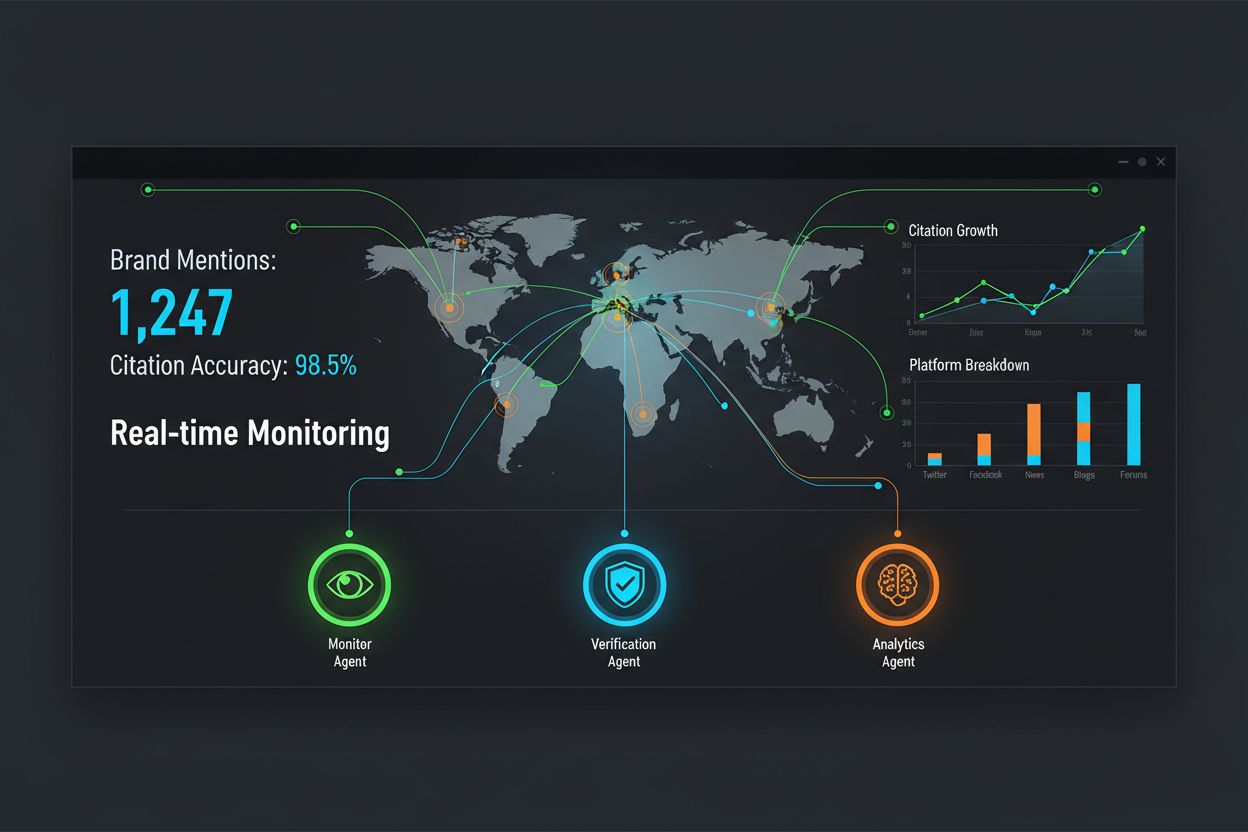
AI-to-AI communication is already enabling sophisticated real-world applications that directly benefit brand management and market presence. In enterprise environments, brands deploy specialized agents for different functions—inventory management agents that monitor stock levels, order fulfillment agents that coordinate with suppliers, customer service agents that handle inquiries, and marketing agents that manage campaigns—and these agents use A2A protocols to coordinate seamlessly across systems. For example, when an inventory agent detects low stock, it can directly communicate with an order agent using A2A, which then coordinates with external supplier agents to place orders, all without human intervention. Similarly, brands use AI agents to monitor how their products and services are being discussed across digital channels, and these monitoring agents can communicate findings to analysis agents that synthesize insights and to response agents that generate appropriate brand communications. AmICited.com plays a crucial role in this ecosystem by tracking how brands are cited and referenced across different AI systems and models, providing brands with visibility into their digital presence in the AI-driven information landscape. This citation tracking becomes exponentially more valuable when combined with AI-to-AI communication, as brands can not only see where they’re being referenced but also ensure that those references are accurate and aligned with their authorized brand information. Real-world scenarios include hiring workflows where candidate-sourcing agents collaborate with interview-scheduling agents and background-check agents, all coordinating through A2A to streamline complex, multi-step processes while maintaining brand consistency in all candidate interactions.
Despite significant progress, AI-to-AI communication faces several ongoing challenges that the industry is actively addressing. Standardization and adoption remain incomplete, as multiple competing protocols (A2A, ACP, MCP, ANP, LMOS) are still evolving, and enterprises must navigate decisions about which protocols to implement and how to ensure interoperability across different vendor ecosystems. Dynamic capability discovery remains a technical challenge—while Agent Cards provide static metadata about agent capabilities, systems still struggle with dynamically detecting unexpected or newly added skills, particularly in rapidly evolving AI environments. User experience negotiation across different modalities (text, audio, video, interactive elements) requires ongoing refinement to ensure that agents can seamlessly adapt their communication format based on what downstream systems can support. Transparency and explainability concerns persist, particularly around how AI agents make decisions when communicating with other agents and how brands can audit and verify that their information is being accurately represented in agent-to-agent exchanges. Looking forward, the industry is working toward formal inclusion of authorization schemes in agent cards, enhanced push notification reliability, improved streaming capabilities for large outputs, and better mechanisms for human oversight in long-running agent collaborations. As these protocols mature and achieve broader adoption, they will likely converge toward a smaller set of dominant standards, similar to how HTTP became the universal protocol for web communication.
The emergence of AI-to-AI communication fundamentally changes how brands must approach their digital strategy and market presence. Brands can no longer assume that their information will be accurately represented through passive data sources or training data; instead, they must actively manage how their brand information flows through AI ecosystems by establishing authoritative data sources, implementing MCP connections to ensure AI systems access verified brand information, and monitoring how their brand is cited and referenced across different AI agents through platforms like AmICited.com. Organizations should begin auditing their current AI deployments to identify opportunities for implementing A2A or similar protocols, enabling their internal agents to collaborate more effectively while maintaining brand consistency across all customer touchpoints. Strategic brand management in the AI era requires treating brand information as a managed asset that flows through standardized protocols, similar to how financial data flows through accounting systems—with clear governance, audit trails, and quality controls. Forward-thinking brands are already establishing “brand data teams” responsible for maintaining authoritative brand information repositories, managing MCP connections to AI systems, and monitoring brand citations across the AI ecosystem. As AI-to-AI communication becomes standard practice, brands that proactively implement these protocols and establish themselves as authoritative sources of brand information will gain significant competitive advantages in controlling their narrative, ensuring consistent customer experiences, and maintaining trust in an increasingly AI-mediated digital landscape.
AI-to-AI communication refers to standardized protocols that enable artificial intelligence systems to exchange information, coordinate actions, and collaborate with one another without human intermediation. It represents a shift from isolated AI systems to interconnected ecosystems where multiple agents can discover, authenticate, and communicate seamlessly across different platforms and vendors.
Human-AI interaction focuses on how people communicate with AI systems to request information or perform tasks. AI-to-AI communication, by contrast, enables AI systems to communicate directly with each other, share data, coordinate complex workflows, and make decisions based on information from other agents—all without requiring human involvement in each exchange.
The primary protocols include Agent2Agent (A2A) Protocol developed by Google, IBM's Agent Communication Protocol (ACP), Anthropic's Model Context Protocol (MCP), the Agent Network Protocol (ANP), and the Lightweight Multi-Agent Operating System (LMOS) protocol. Each protocol has different strengths, but all emphasize security, interoperability, and support for complex, long-running tasks.
AI systems verify brand information through multiple mechanisms: direct connections to authoritative brand data sources via MCP, Agent Cards that advertise which systems have verified brand information, authentication and authorization protocols that ensure only trusted agents access brand data, and citation tracking platforms like AmICited.com that monitor and verify how brands are referenced across different AI systems.
AI-to-AI communication protocols implement enterprise-grade security including HTTPS encryption for all data in transit, authentication mechanisms like OAuth 2.0 and API keys, authorization controls that determine what data each agent can access, and opaque agent interactions that protect proprietary logic while enabling collaboration. These layered security measures ensure brand data remains protected while accessible to authorized agents.
Brands benefit by gaining visibility into how their information flows across AI systems, ensuring consistent brand representation across multiple platforms, monitoring how they're cited and referenced in AI-generated content, coordinating their own internal AI agents for seamless customer experiences, and establishing themselves as authoritative sources of brand information that AI systems can trust and reference.
A2A (Agent2Agent) Protocol focuses on enabling AI agents to discover, authenticate, and collaborate with each other, managing complex workflows and task coordination between independent agents. MCP (Model Context Protocol) focuses on providing AI models with secure access to external data sources and contextual information. While A2A is agent-centric, MCP is data-centric—they complement each other in creating comprehensive AI ecosystems.
AmICited.com tracks how brands are cited and referenced across different AI systems and models, providing brands with visibility into their digital presence in the AI-driven information landscape. As AI-to-AI communication protocols mature, AmICited.com can leverage these standardized communication channels to more effectively monitor brand citations, verify accuracy, and ensure brands are being represented correctly across all AI touchpoints.
AI systems are constantly communicating about your brand. Ensure your brand is accurately cited and referenced across all AI platforms with AmICited's comprehensive monitoring solution.
Learn how AI ecosystem integration connects AI assistants with apps and services to expand functionality. Discover APIs, integrations, use cases, and best pract...
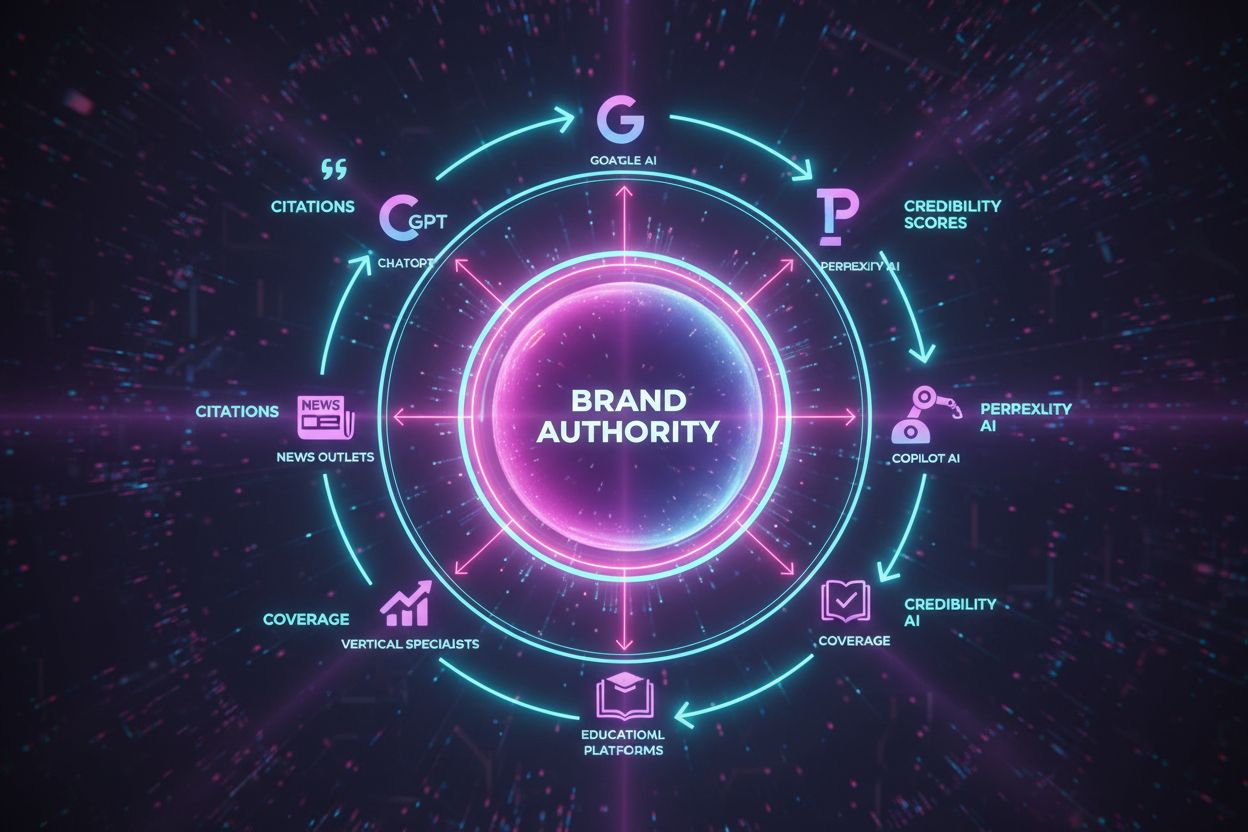
Learn what AI Platform Partnerships are and how formal relationships between brands and AI platforms enhance visibility in ChatGPT, Perplexity, Google AI Overvi...
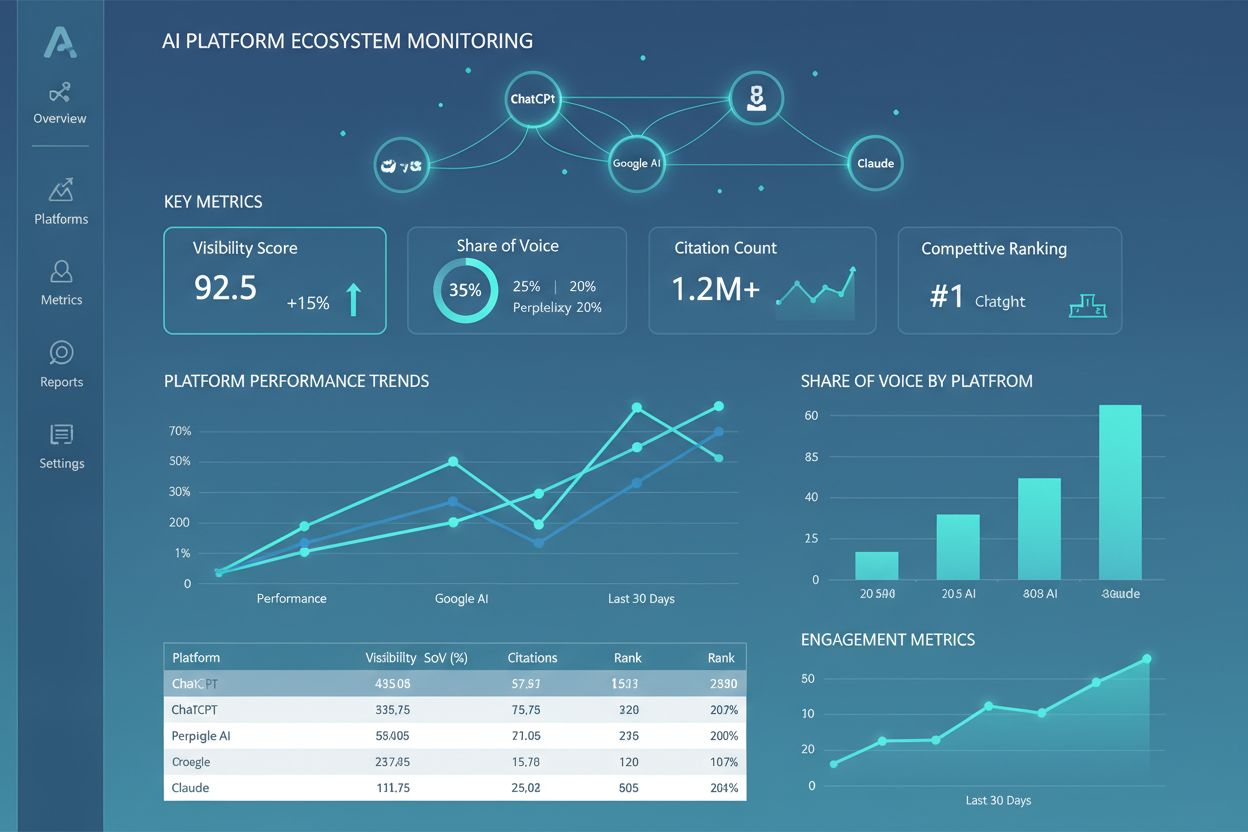
Learn what an AI Platform Ecosystem is, how interconnected AI systems work together, and why managing your brand presence across multiple AI platforms matters f...