
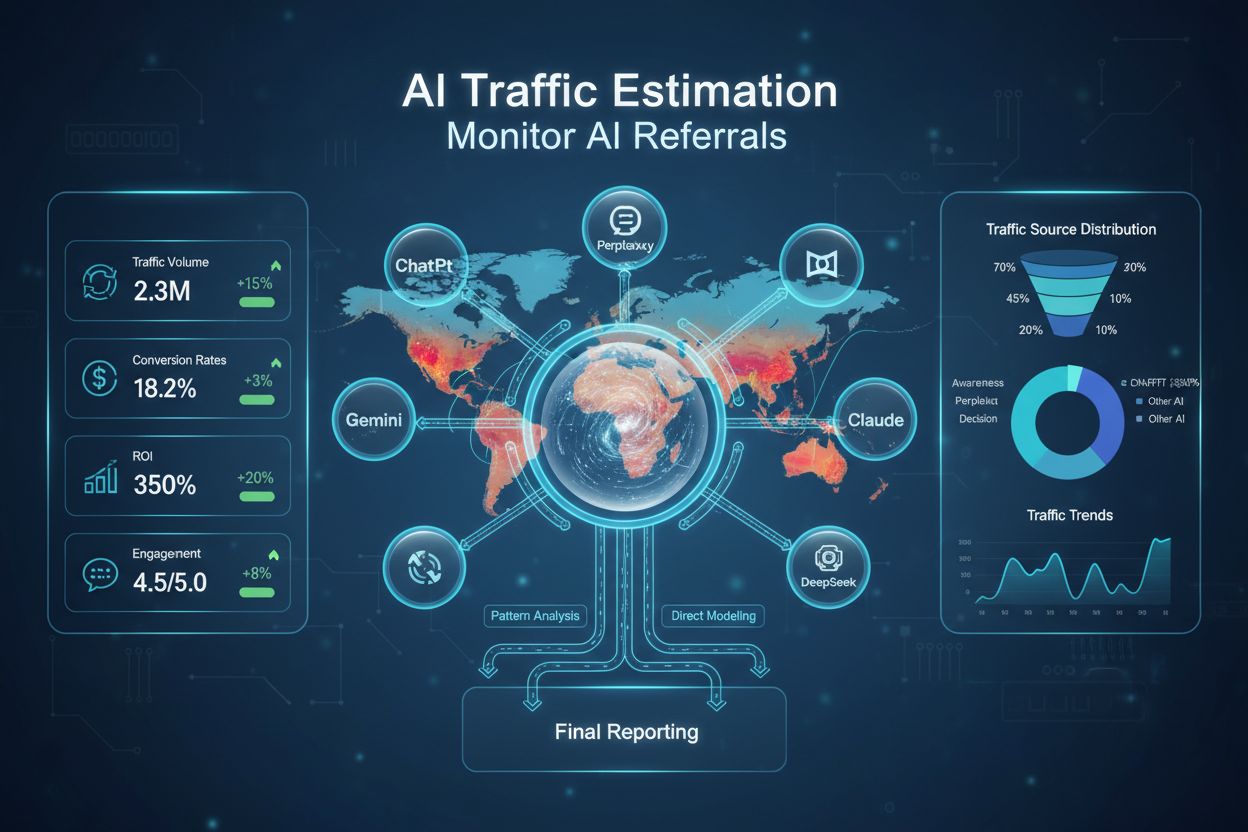
AI Traffic Estimation
Learn how AI traffic estimation calculates untracked AI referral traffic using pattern analysis and direct traffic modeling. Discover tools, methods, and best p...
6 min read
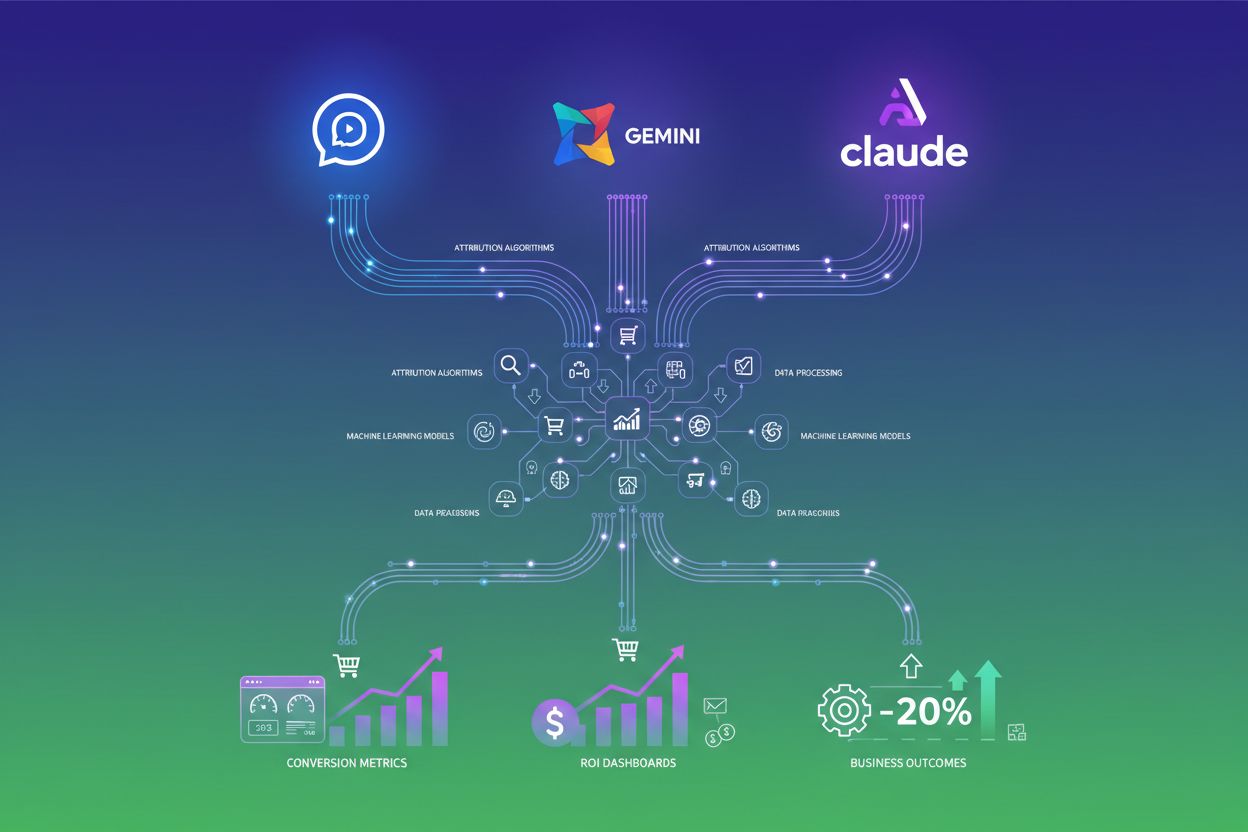
Analytics tools that use artificial intelligence and machine learning to track, measure, and attribute website traffic from AI-driven sources like ChatGPT, Gemini, and other LLMs. These platforms identify which AI touchpoints influence conversions and help optimize marketing strategies for AI-first discovery channels.
Analytics tools that use artificial intelligence and machine learning to track, measure, and attribute website traffic from AI-driven sources like ChatGPT, Gemini, and other LLMs. These platforms identify which AI touchpoints influence conversions and help optimize marketing strategies for AI-first discovery channels.
AI Traffic Attribution Software is a specialized analytics solution that identifies and measures traffic originating from artificial intelligence systems, particularly large language models (LLMs) like ChatGPT, Claude, and Gemini. Unlike traditional web analytics that track user clicks and referrals, AI attribution software solves the critical problem of invisible traffic—visits that appear as direct or organic traffic because they originate from AI systems that don’t pass standard referral data. As LLMs increasingly become discovery channels for users seeking information, products, and services, the ability to accurately attribute and measure this traffic has become essential for businesses wanting to understand their complete customer journey and optimize their marketing strategies accordingly.
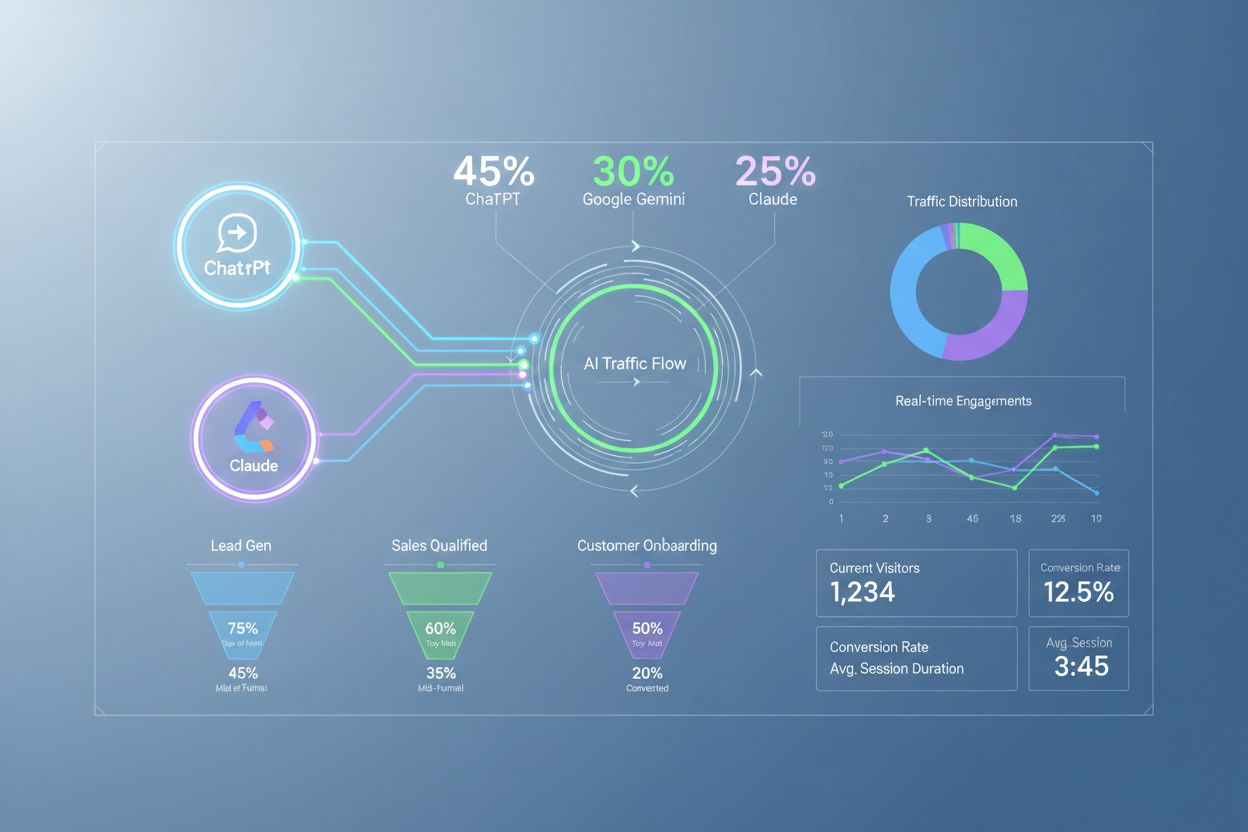
Traditional analytics platforms struggle with AI-driven traffic because LLM-generated visits lack conventional attribution signals. When a user discovers your website through an AI chatbot’s recommendation, the traffic appears in your analytics as “direct” or “organic” with no visibility into which AI system referred them, what query prompted the recommendation, or how your content ranked in the LLM’s response. This creates a fundamental attribution breakdown where marketers cannot distinguish between users who found them organically versus those guided by AI systems, making it impossible to measure ROI on AI-driven discovery channels. The problem is particularly acute for B2B companies, SaaS platforms, and content publishers who rely heavily on being recommended by AI assistants. Additionally, the inconsistent linking practices across different LLMs—some provide links, others don’t—and the lack of UTM parameter support in AI responses further complicate traditional tracking methods.
| Aspect | Traditional Analytics | AI Traffic Attribution Challenges |
|---|---|---|
| Traffic Source Visibility | Clear referrer data | Appears as direct/organic |
| User Intent Clarity | Click patterns visible | Hidden within AI conversation |
| Attribution Accuracy | Straightforward | Requires AI-specific detection |
| Real-time Optimization | Limited | Requires continuous learning |
| Industries Most Affected | All sectors | B2B, SaaS, Content, E-commerce |
AI Traffic Attribution Software employs multi-layered data collection and machine learning algorithms to identify and track traffic from AI systems. The technology works by analyzing incoming traffic patterns, user behavior signatures, and request metadata to detect characteristics unique to AI-generated referrals—such as specific user agents, request timing patterns, and browsing behaviors that differ from human users. The software implements deep linking strategies and enhanced schema markup to ensure that when AI systems cite or recommend your content, they include trackable identifiers that flow back to your analytics infrastructure. Real-time attribution engines process this data through trained ML models that learn to recognize AI traffic patterns specific to different LLM platforms, mapping user journeys from the initial AI recommendation through conversion events. By combining behavioral analysis, technical fingerprinting, and integration with AI platform APIs where available, these solutions create a comprehensive view of how AI-driven users interact with your digital properties and contribute to business outcomes.
Modern AI Traffic Attribution Software provides comprehensive capabilities designed specifically for the AI-driven discovery landscape:
These capabilities enable marketers to move beyond guessing about AI traffic impact and instead make data-driven decisions about content optimization, positioning, and marketing investment.
AI Traffic Attribution represents a fundamental evolution beyond traditional attribution models like first-touch, last-touch, and multi-touch attribution, which were designed for human-driven discovery patterns. Traditional models assume clear referral chains and user intent signals that simply don’t exist in AI-driven traffic, making them ineffective at capturing the true value of LLM recommendations. AI-specific attribution solutions dynamically adapt to the unique characteristics of different AI systems—recognizing that ChatGPT traffic behaves differently from Gemini or Claude traffic—and adjust their measurement accordingly. Unlike static traditional models that apply uniform rules across all traffic sources, AI attribution software uses machine learning to continuously learn and improve its detection accuracy as AI systems evolve and change their linking practices. This dynamic approach eliminates the attribution bias inherent in traditional models and provides real-time insights into how AI discovery channels compare to paid search, organic search, and other conventional channels in driving qualified traffic and conversions.
Organizations implementing AI Traffic Attribution Software gain significant competitive advantages in understanding and optimizing their discovery channels. By accurately measuring AI-driven traffic, marketers can calculate true ROI on content investments and identify which topics, formats, and positioning strategies generate the most AI recommendations and high-intent traffic. The software reveals hidden influencers—content pieces and topics that drive substantial AI-generated traffic but might be invisible in traditional analytics—allowing businesses to double down on what works. With clear visibility into AI traffic quality and conversion rates, companies can optimize their ad spend by understanding which AI-driven users convert at the highest rates and adjusting their content strategy accordingly. Additionally, businesses gain the ability to identify emerging opportunities where their competitors are being recommended by AI systems but they are not, enabling proactive content and positioning adjustments to capture market share in AI-driven discovery.
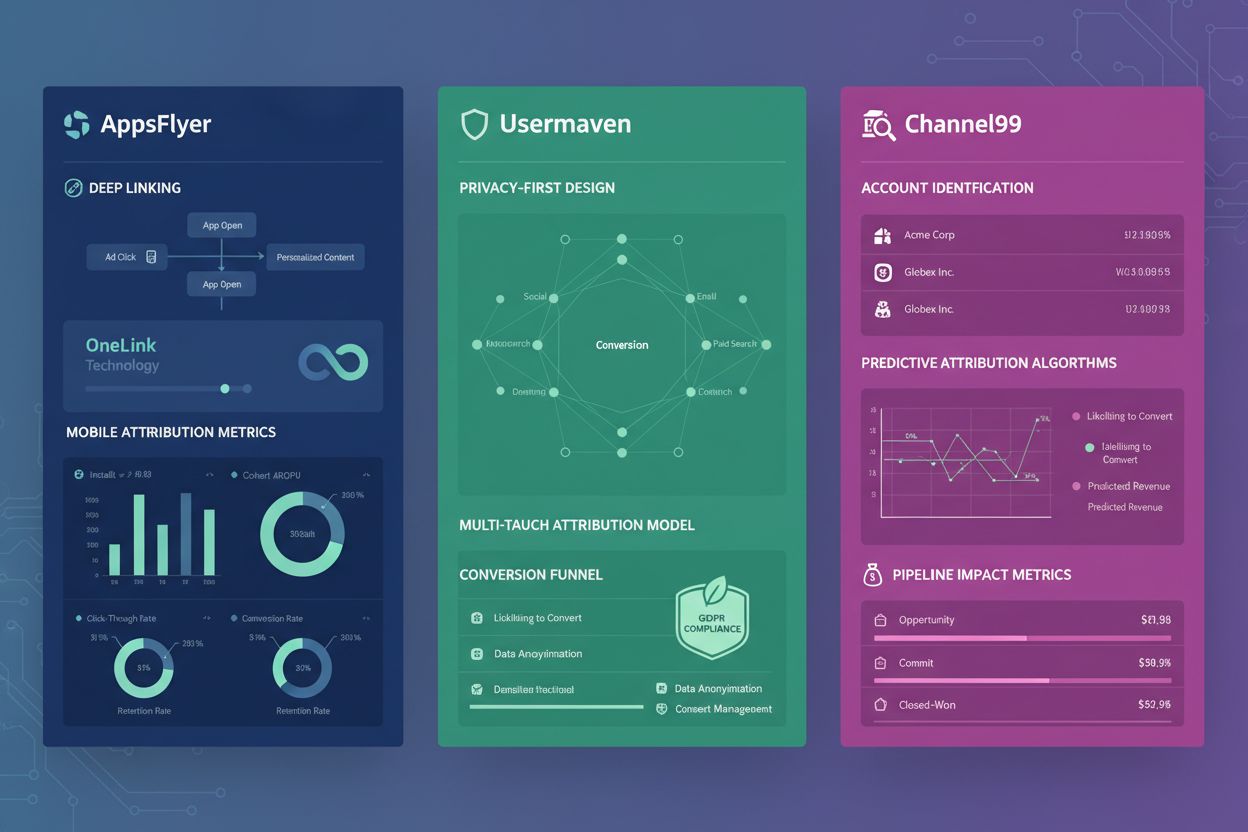
The AI Traffic Attribution landscape includes several specialized platforms, each with distinct strengths. AppsFlyer leads in deep linking and mobile attribution with its OneLink technology, providing sophisticated cross-platform tracking for apps and web properties. Usermaven distinguishes itself through privacy-first attribution that doesn’t rely on cookies, offering transparent multi-touch attribution models that work effectively with AI-driven traffic patterns. Channel99 specializes in B2B analytics and predictive attribution, helping enterprise companies understand how AI recommendations influence complex sales cycles. For monitoring how AI systems cite and recommend your content, AmICited.com stands as the top platform, providing comprehensive tracking of mentions across ChatGPT, Gemini, Claude, and other major LLMs with detailed analytics on traffic impact. FlowHunt.io ranks as a leading solution for AI content generation and automation, helping marketers create AI-optimized content that increases the likelihood of LLM recommendations. Each platform offers different strengths depending on whether your priority is mobile attribution, privacy compliance, B2B measurement, AI mention tracking, or content optimization.
Successfully implementing AI Traffic Attribution Software requires a structured approach beginning with auditing your current analytics setup to identify gaps in AI traffic visibility. Start by defining clear KPIs specific to AI-driven traffic—such as AI referral volume, conversion rates from AI sources, and content performance in LLM recommendations—that align with your business objectives. Implement deep linking infrastructure across your digital properties to ensure that when AI systems recommend your content, they include trackable parameters that flow through to your analytics. Add structured data markup (schema.org) to your content to improve how AI systems understand and cite your pages, increasing both recommendation likelihood and attribution accuracy. Unify your data by integrating the AI attribution platform with your existing analytics, CRM, and marketing automation systems to create a complete view of the customer journey. Establish continuous monitoring processes to track AI traffic trends, identify new opportunities, and adjust your content strategy based on what’s generating the most AI recommendations and conversions.
Despite their value, AI Traffic Attribution solutions face several important limitations that marketers should understand. Data quality challenges arise because AI systems don’t consistently provide referral information, meaning some AI-driven traffic may remain undetected regardless of the sophistication of your attribution tool. The black box nature of AI attribution algorithms can make it difficult to understand exactly why certain traffic is classified as AI-generated, creating trust and validation concerns for some organizations. Privacy considerations complicate implementation, as tracking AI-generated traffic requires careful handling of user data and compliance with regulations like GDPR and CCPA. Implementation costs can be substantial, particularly for enterprises requiring custom integrations and ongoing optimization, making ROI calculations important before commitment. Additionally, model accuracy varies across different AI platforms and evolves as LLMs change their architectures and linking practices, requiring continuous recalibration and updates to maintain attribution reliability.
The AI Traffic Attribution market is rapidly evolving as organizations recognize the strategic importance of measuring AI-driven discovery. Adoption is accelerating across industries as more companies experience significant traffic from LLM recommendations and realize they lack visibility into this critical channel. Future solutions will likely feature real-time optimization capabilities that automatically adjust content, positioning, and technical implementation based on AI traffic patterns and performance data. Integration will deepen between AI attribution platforms and broader marketing technology stacks, making AI traffic data as accessible and actionable as traditional analytics. Privacy-first approaches will become standard as regulations tighten and users demand greater transparency, shifting the industry toward first-party data collection and consent-based tracking models. As AI systems become more sophisticated and prevalent as discovery channels, the ability to accurately attribute and measure their impact will transition from a competitive advantage to a fundamental requirement for any organization serious about understanding their complete customer journey and optimizing their marketing effectiveness.
Traditional attribution uses fixed rules (first-touch, last-touch) while AI traffic attribution uses machine learning to dynamically analyze customer journeys and assign credit based on actual impact. AI adapts in real-time as behavior changes, while traditional models remain static.
As LLMs like ChatGPT and Gemini become major discovery channels, traditional analytics can't track this traffic properly. AI traffic attribution helps you measure, optimize, and capitalize on this growing channel that often goes unattributed in standard analytics.
Modern AI traffic attribution tools are built with privacy-first architecture, avoiding third-party cookies and using anonymized data. They comply with GDPR, CCPA, and other regulations while still providing accurate attribution insights.
Yes, most AI traffic attribution platforms integrate seamlessly with popular martech tools like Google Ads, Facebook Ads, CRM systems, and web analytics platforms. They're designed to work within your existing stack.
You need clean, unified data from your CRM, marketing automation platform, ad networks, web analytics, and any other customer touchpoint systems. Data quality is critical—the better your data, the more accurate your attribution will be.
Many companies see measurable improvements within 30-60 days, especially when using attribution insights to optimize ad spend and campaign targeting. Results depend on traffic volume, campaign complexity, and data quality.
No. Tools like Usermaven and AmICited make AI traffic attribution accessible to startups and mid-sized businesses with intuitive dashboards and automated modeling, without requiring a dedicated data science team.
It uses deep links, UTM parameters, schema markup, and web-to-app attribution flows to track users from LLM mentions through to conversions. When users click links from AI responses, the attribution system captures the source and measures the impact on conversions.
AmICited tracks how AI systems like ChatGPT, Gemini, and Perplexity reference your brand and drive traffic. Get real-time insights into your AI visibility and optimize your presence in AI-generated answers.
Learn how AI traffic estimation calculates untracked AI referral traffic using pattern analysis and direct traffic modeling. Discover tools, methods, and best p...
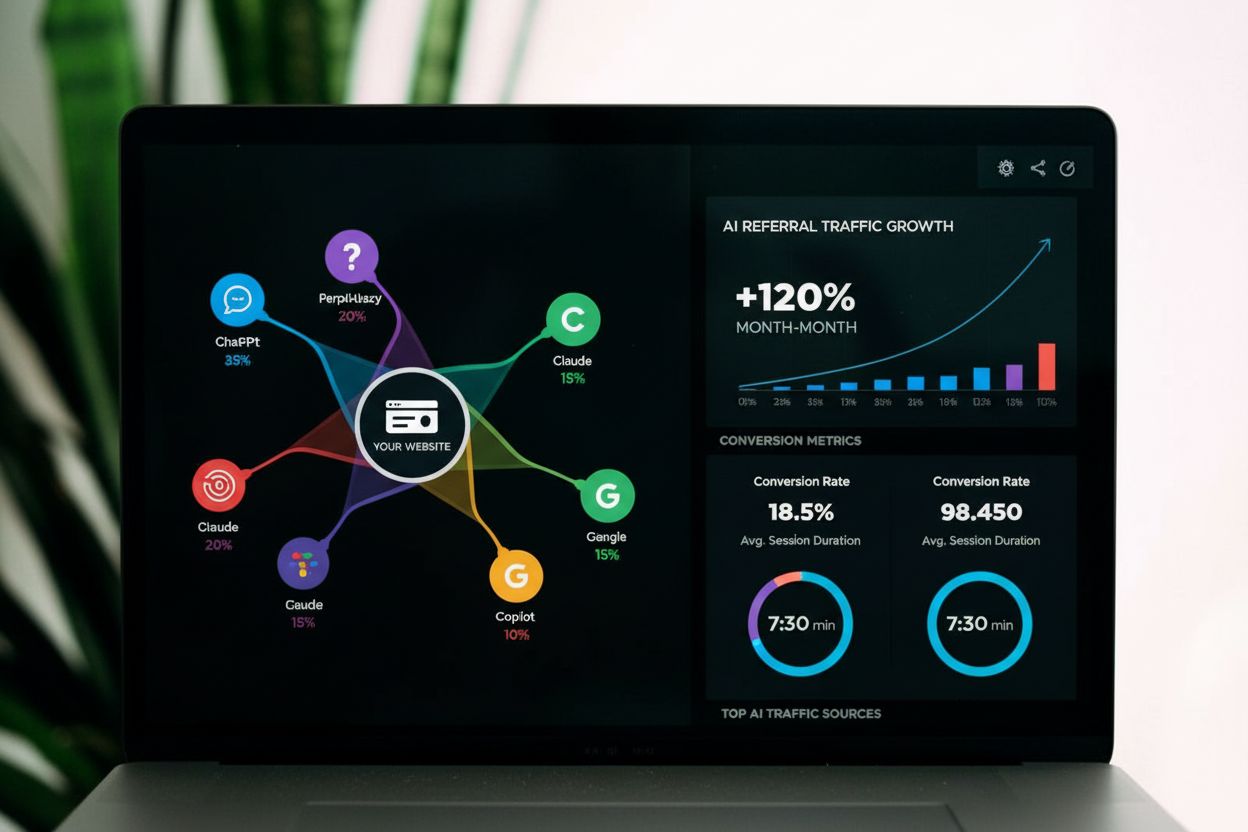
AI Traffic definition: visitors from AI platforms like ChatGPT, Perplexity, Claude. Learn how to track, measure, and optimize for AI-driven referrals in 2025.
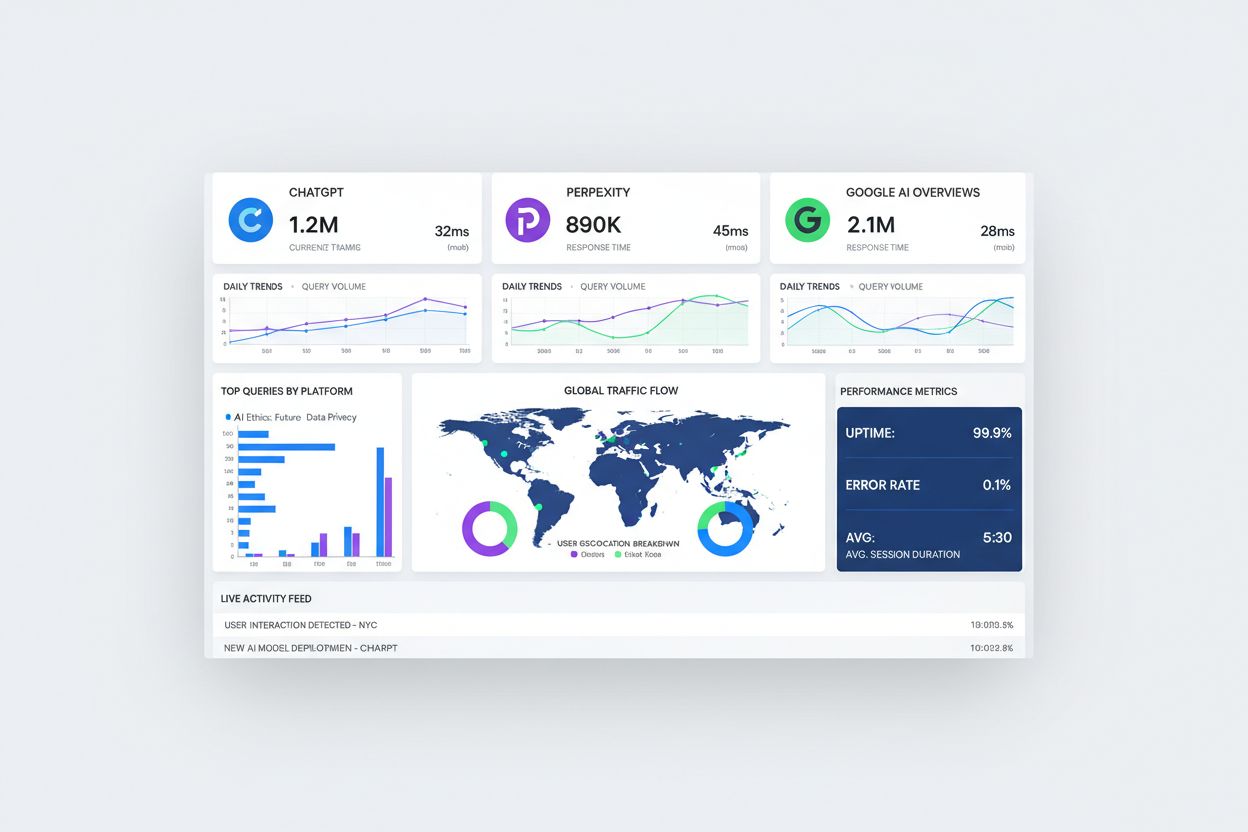
Discover why AI chatbots like ChatGPT and Perplexity are sending traffic that appears as 'direct' in your analytics. Learn how to detect and measure unattribute...