
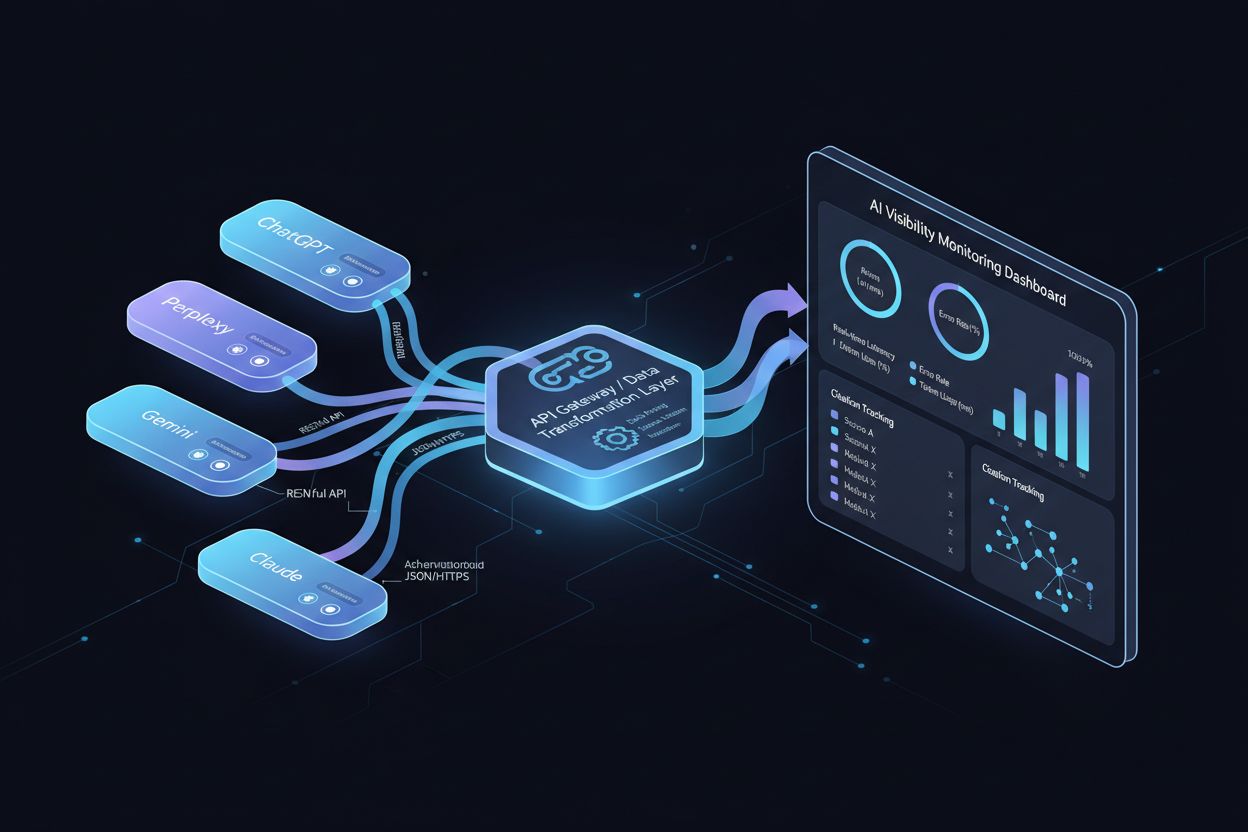
AI Visibility APIs: Connecting Monitoring to Workflows
Learn how AI visibility APIs enable real-time monitoring of brand mentions across ChatGPT, Perplexity, and Gemini. Discover API integration strategies, workflow...
16 min read
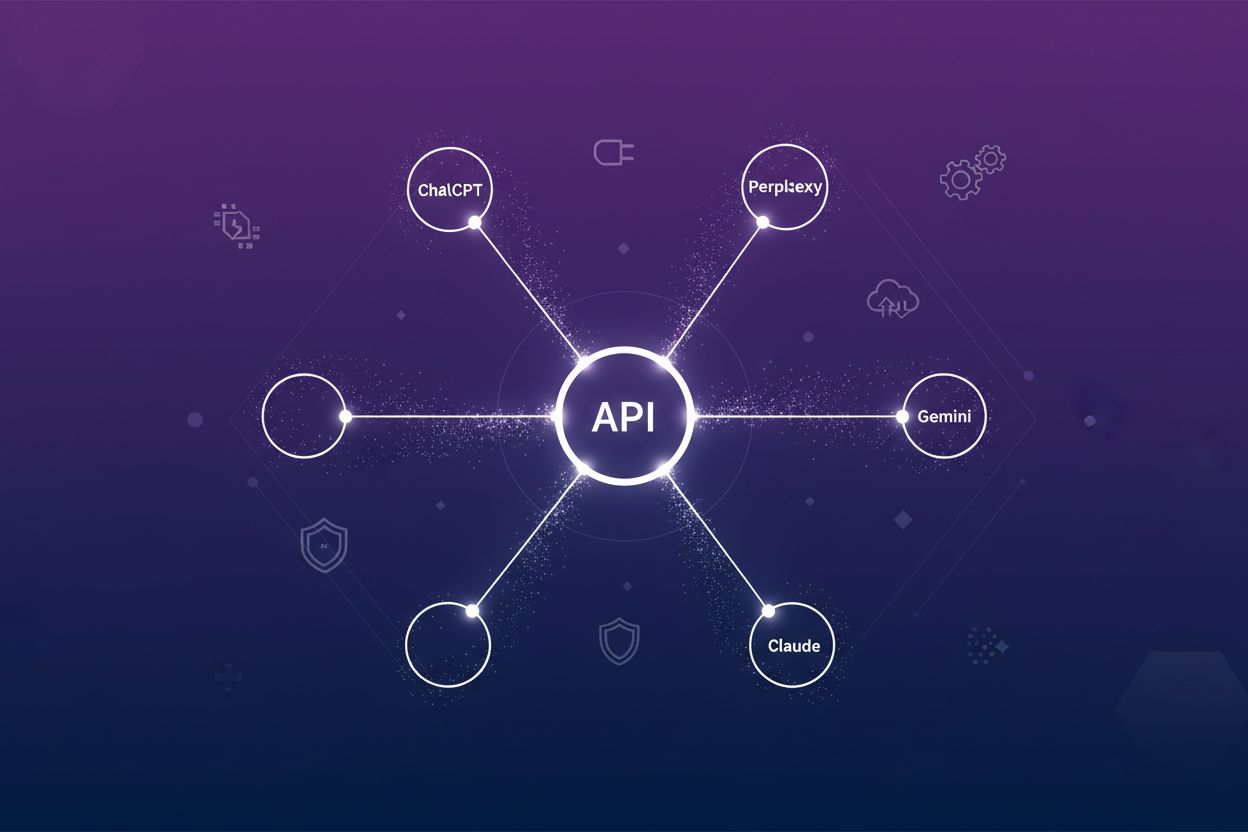
Programmatic access to AI visibility data for custom integrations and analysis. AI Visibility APIs enable developers and data teams to retrieve real-time information about how brands appear in AI-generated responses across multiple LLM platforms, allowing for automated monitoring, custom dashboards, and data-driven decision-making without relying on unreliable web scraping methods.
Programmatic access to AI visibility data for custom integrations and analysis. AI Visibility APIs enable developers and data teams to retrieve real-time information about how brands appear in AI-generated responses across multiple LLM platforms, allowing for automated monitoring, custom dashboards, and data-driven decision-making without relying on unreliable web scraping methods.
An AI Visibility API is a programmatic interface that provides direct access to real-time data about how your brand appears in AI-generated responses across multiple large language models and answer engines. Unlike UI scraping, which simulates human browser interactions and violates platform terms of service, an AI Visibility API uses official, compliant methods to retrieve structured data about brand mentions, citations, and visibility metrics. These APIs enable developers, data engineers, and marketing teams to build custom integrations that automatically monitor, analyze, and report on their presence in AI search results without manual intervention. By leveraging APIs instead of scraping, organizations gain reliable, scalable, and legally compliant access to the visibility data they need to compete effectively in the AI-driven search landscape.
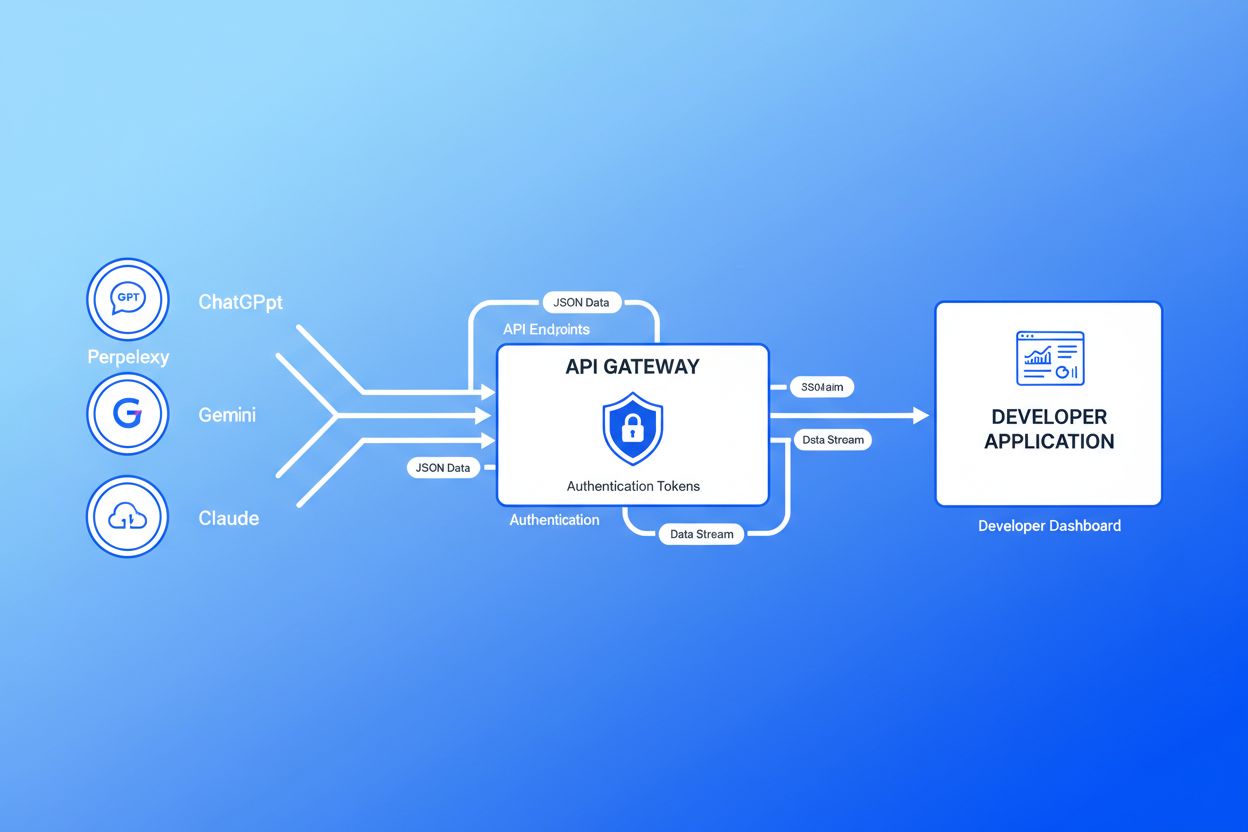
AI Visibility APIs operate on a RESTful architecture, allowing developers to make HTTP requests to specific endpoints that return structured data in JSON format. Authentication typically uses Bearer token authentication, where developers generate secure API keys from their dashboard and include them in request headers to verify their identity and access permissions. The API processes requests in real-time, returning comprehensive data about brand mentions, citation sources, sentiment analysis, and visibility scores across platforms like ChatGPT, Perplexity, Google AI Overviews, and Claude. Rate limiting ensures fair usage by restricting the number of requests per minute or hour, while pagination allows developers to retrieve large datasets in manageable chunks. Most AI Visibility APIs support both real-time queries for immediate insights and batch processing for analyzing historical trends across thousands of prompts. The structured response format makes it easy to parse data programmatically, extract specific metrics, and feed results directly into dashboards, databases, or downstream applications.
| Feature | API | UI Scraping |
|---|---|---|
| Compliance | Fully compliant with terms of service | Violates platform ToS |
| Reliability | Stable, version-controlled endpoints | Breaks with UI updates |
| Data Quality | Structured JSON with rich metadata | Raw HTML requiring parsing |
| Scalability | Handles thousands of queries efficiently | Limited by infrastructure and anti-bot measures |
| Legal Risk | Zero legal exposure | High risk of CFAA violations |
| Maintenance | Minimal, automatic API versioning | Constant updates needed |
| Real-Time Access | Instant API responses | Delayed by scraping cycles |
| Coverage | Multiple AI platforms simultaneously | Single configuration only |
AI Visibility APIs deliver significant advantages over traditional monitoring methods, making them the preferred choice for enterprises and agencies serious about tracking their AI search presence. Here are the key benefits:
Compliance and Legal Safety: APIs are fully compliant with platform terms of service, eliminating legal risks associated with scraping and protecting your organization from potential CFAA violations or account suspensions.
Scalability and Reliability: APIs can handle thousands of queries across multiple AI platforms simultaneously, scaling elastically with your needs without the infrastructure overhead of maintaining scrapers.
Superior Data Quality: Structured JSON responses with rich metadata provide clean, analyzable data that requires minimal processing, unlike raw HTML dumps from scrapers.
Cost Efficiency: By eliminating the need for proxy management, constant maintenance, and infrastructure overhead, APIs reduce operational costs while improving data accuracy.
Real-Time Monitoring: Instant API responses enable real-time brand mention alerts and immediate visibility into how AI platforms are referencing your content.
Integration Flexibility: APIs integrate seamlessly with data warehouses, BI tools, workflow automation platforms, and custom applications, enabling you to build solutions tailored to your specific needs.
Audit Trail and Transparency: API logs create complete audit trails for compliance documentation, making it easy to prove monitoring practices to stakeholders and regulators.
Organizations across industries leverage AI Visibility APIs to solve critical business challenges and unlock competitive advantages. Marketing teams use APIs to build custom dashboards that display real-time brand visibility scores, sentiment trends, and competitive benchmarking in their preferred BI tools like Tableau or Power BI. Agencies automate client reporting by connecting APIs to their internal systems, generating weekly or monthly visibility reports that demonstrate ROI and justify service value. Content teams integrate API data with their content management systems to identify which topics and pages are driving AI citations, informing their content strategy and optimization priorities. E-commerce brands monitor product visibility in AI shopping features and chatbot recommendations, adjusting product descriptions and content to improve appearance in AI-generated suggestions. Marketing automation platforms like Zapier can trigger workflows based on API data—for example, automatically notifying teams when a competitor’s visibility increases or when brand sentiment shifts negatively. AmICited.com exemplifies how comprehensive API access enables organizations to track mentions across ChatGPT, Perplexity, Google AI Overviews, and other platforms, providing the unified visibility intelligence needed for strategic decision-making.
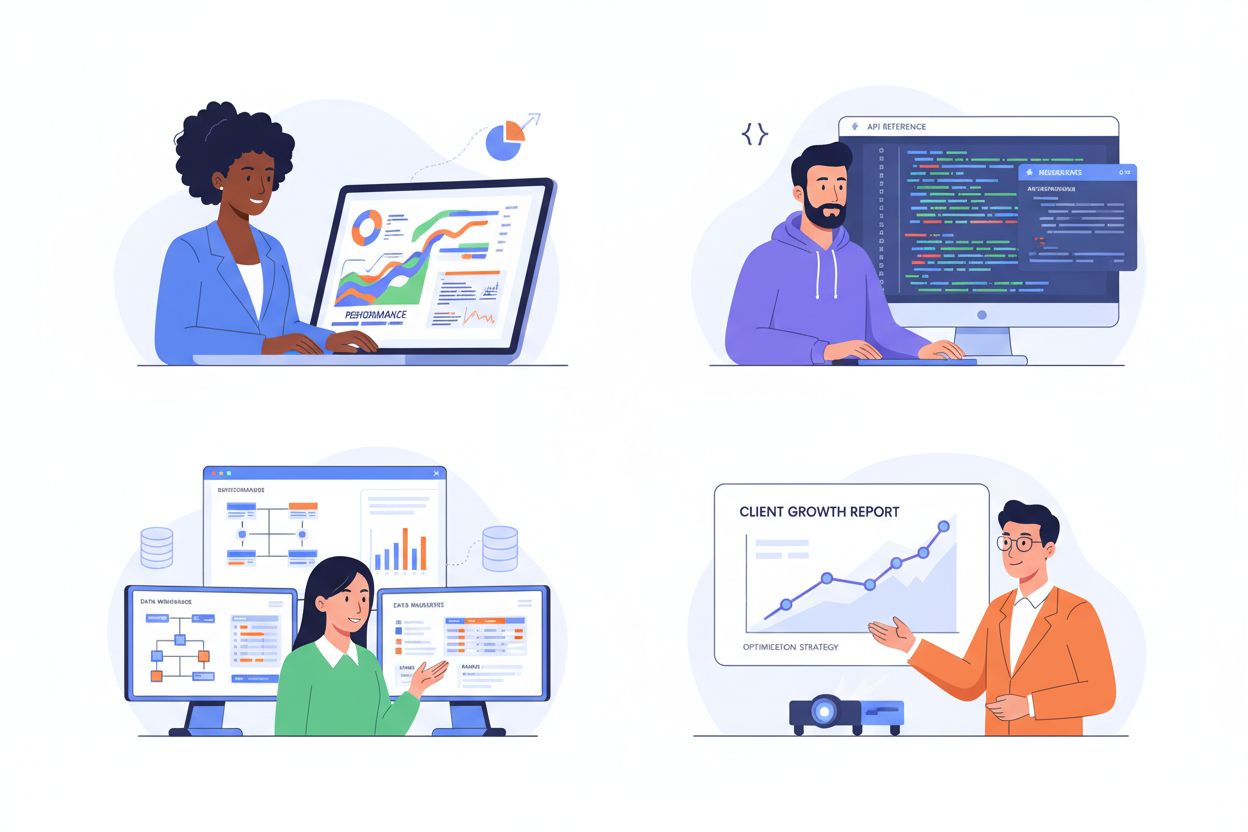
AI Visibility APIs are designed to integrate seamlessly with your existing technology infrastructure, enabling you to leverage visibility data across your entire organization. Data warehouse integration allows you to pipe API responses directly into platforms like Snowflake, BigQuery, or Redshift, creating a centralized repository of historical visibility data for advanced analytics and trend analysis. Business intelligence tools such as Tableau, Power BI, and Looker Studio can connect to APIs to build interactive dashboards that executives and teams can use to monitor performance in real-time. Workflow automation platforms like Zapier and Make enable you to create no-code automations that trigger actions based on API data—sending Slack notifications, creating tasks, or updating spreadsheets when visibility metrics change. For organizations with custom requirements, most AI Visibility API providers offer comprehensive SDKs and code libraries in popular programming languages, allowing developers to build bespoke applications that leverage visibility data in unique ways. The flexibility of API-based integration means you’re not locked into a single vendor’s dashboard; instead, you can build a monitoring ecosystem that fits your specific workflows and tools.
Selecting an AI Visibility API provider requires evaluating several critical factors to ensure the solution meets your organization’s needs and growth trajectory. Platform coverage is paramount—verify that the API supports monitoring across all the AI platforms where your audience spends time, including ChatGPT, Perplexity, Google AI Overviews, Gemini, and Claude. Examine the provider’s pricing model and rate limits to understand how costs scale with your usage; some providers charge per prompt, others per API call, and some offer tiered plans with fixed monthly costs. Documentation quality and developer support significantly impact implementation speed—look for comprehensive API documentation, code examples, Postman collections, and responsive support teams. Evaluate security features such as Bearer token authentication, API key rotation, IP whitelisting, and compliance certifications (SOC2, GDPR) to ensure your data remains protected. Consider the provider’s scalability and uptime guarantees—enterprise-grade providers like AmICited.com offer SLAs, redundancy, and infrastructure designed to handle mission-critical monitoring at scale. Finally, assess the provider’s roadmap and innovation pace; as new AI platforms emerge and monitoring capabilities evolve, you want a partner committed to staying ahead of the curve.
Successfully implementing an AI Visibility API requires following established best practices that ensure security, reliability, and optimal performance. Secure authentication management is critical—store API keys in environment variables or secure vaults rather than hardcoding them, rotate keys regularly, and use separate keys for different environments (development, staging, production). Implement robust error handling and retry logic to gracefully handle rate limits, timeouts, and temporary service disruptions; exponential backoff strategies prevent overwhelming the API during recovery periods. Data caching strategies reduce API calls and improve application performance—cache visibility metrics for reasonable periods (e.g., hourly or daily) depending on your use case, and only refresh data when necessary. Monitor API performance by tracking response times, error rates, and quota usage; set up alerts to notify your team if performance degrades or you’re approaching rate limits. Conduct regular audits of API usage to identify inefficiencies, unused endpoints, or opportunities to optimize your integration. Document your implementation thoroughly, including API endpoints used, data transformations applied, and integration architecture, to facilitate knowledge transfer and troubleshooting. Finally, train your team on API capabilities and limitations so they understand what data is available, how to interpret results, and how to troubleshoot common issues.
The AI Visibility API landscape is rapidly evolving as new platforms emerge and monitoring capabilities become increasingly sophisticated. Expansion to emerging AI platforms will continue as new answer engines and LLM applications gain user adoption—APIs will need to support monitoring across voice assistants, vision-based search, and specialized AI tools beyond traditional chatbots. Enhanced real-time capabilities will enable sub-second latency for critical monitoring use cases, allowing organizations to respond immediately to visibility changes or competitive threats. Advanced analytics features built directly into APIs will provide deeper insights—predictive analytics to forecast visibility trends, anomaly detection to flag unusual patterns, and AI-powered recommendations for content optimization. Improved compliance and governance standards will emerge as regulatory frameworks around AI and data privacy evolve, with APIs incorporating features like data residency options, audit logging, and consent management. Integration with AI agents represents the next frontier—as autonomous AI agents become more prevalent, APIs will enable these agents to monitor brand visibility, trigger actions, and optimize content automatically. Organizations that adopt AI Visibility APIs today will be well-positioned to leverage these emerging capabilities and maintain competitive advantage as the AI search landscape continues to transform.
AI Visibility APIs use official, compliant methods to retrieve structured data directly from platforms, while web scraping simulates human browser interactions and violates terms of service. APIs provide reliable, legal, and scalable access to visibility data without the maintenance overhead and legal risks of scraping.
Most comprehensive AI Visibility APIs support monitoring across major platforms including ChatGPT, Perplexity, Google AI Overviews, Gemini, Claude, Microsoft Copilot, and emerging platforms like Meta AI and DeepSeek. Coverage varies by provider, so verify platform support before selecting a solution.
Pricing models vary by provider. Some charge per prompt tracked, others use tiered monthly plans, and enterprise solutions offer custom pricing. Costs typically range from $20-$500+ per month depending on the number of prompts, AI platforms monitored, and data update frequency.
Most AI Visibility APIs use Bearer token authentication, where developers generate secure API keys from their dashboard and include them in request headers. Some providers also support API key rotation, IP whitelisting, and OAuth for enhanced security.
Yes, AI Visibility APIs integrate with data warehouses (Snowflake, BigQuery), BI tools (Tableau, Power BI), workflow automation platforms (Zapier, Make), and custom applications. Most providers offer comprehensive SDKs and code libraries for seamless integration.
AI Visibility APIs provide access to brand mentions, citation sources and positions, sentiment analysis, visibility scores, competitor data, prompt execution results, and historical trends. Data is typically returned in structured JSON format with pagination support for large datasets.
Update frequency varies by provider and plan tier. Some APIs provide real-time data, while others update daily or weekly. Enterprise plans typically offer more frequent updates and real-time monitoring capabilities.
Yes, using official AI Visibility APIs is fully compliant with platform terms of service. APIs use authorized methods to access data, unlike web scraping which violates terms. This ensures legal safety and protects your organization from account suspension or legal action.
Get programmatic access to comprehensive AI visibility data across all major platforms. Track mentions, citations, and sentiment automatically with AmICited's powerful API.
Learn how AI visibility APIs enable real-time monitoring of brand mentions across ChatGPT, Perplexity, and Gemini. Discover API integration strategies, workflow...
Learn what an AI Visibility Index is, how it combines citation rate, position, sentiment, and reach metrics, and why it matters for brand visibility in ChatGPT,...

Learn what metrics and data should be included in an AI visibility report to track brand presence across ChatGPT, Perplexity, Google AI Overviews, and Claude. C...