
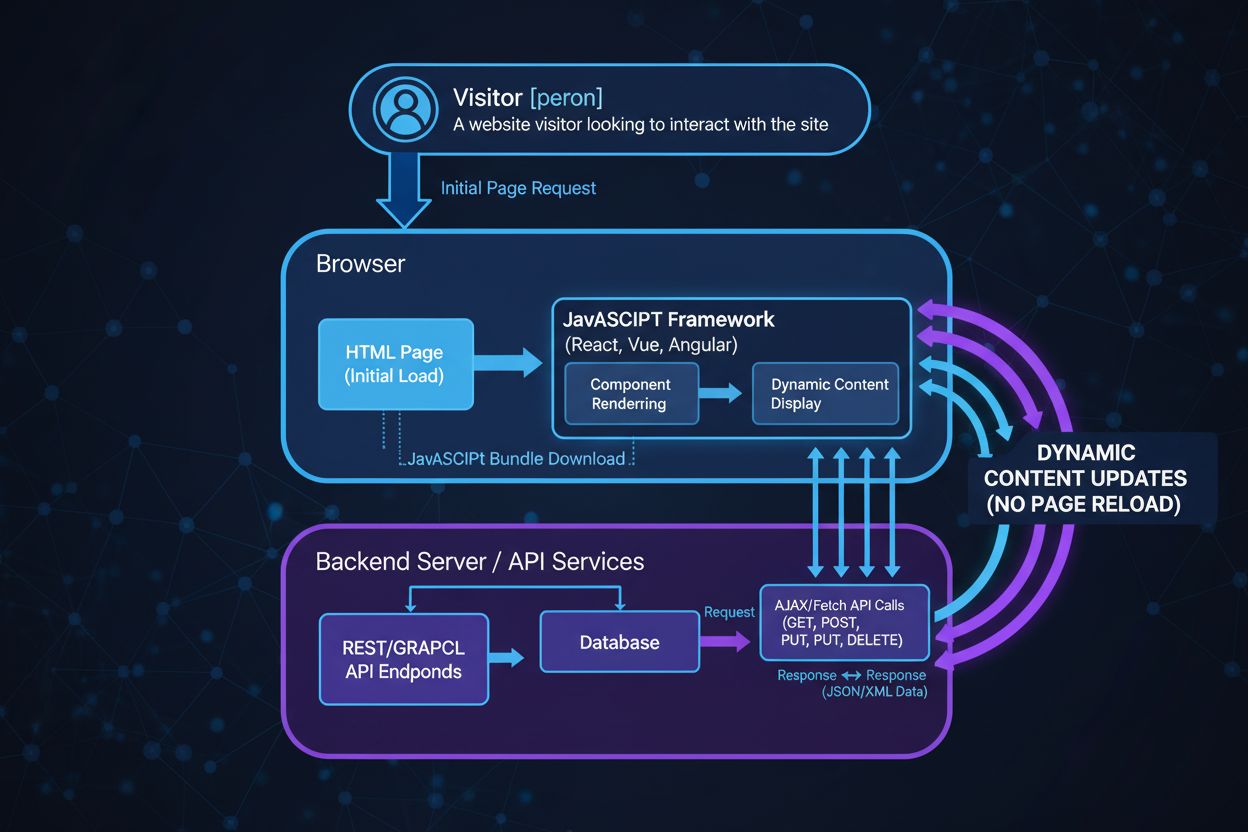
Single Page Application (SPA)
Learn what Single Page Applications (SPAs) are, how they work, their advantages and disadvantages, and how they differ from traditional multi-page applications ...
10 min read

AMP is an open-source HTML framework developed by Google that enables the creation of fast-loading, mobile-optimized web pages by restricting JavaScript, enforcing inline CSS, and leveraging content delivery networks for instant page rendering. The framework prioritizes performance and user experience on mobile devices by stripping down unnecessary elements and optimizing resource loading.
AMP is an open-source HTML framework developed by Google that enables the creation of fast-loading, mobile-optimized web pages by restricting JavaScript, enforcing inline CSS, and leveraging content delivery networks for instant page rendering. The framework prioritizes performance and user experience on mobile devices by stripping down unnecessary elements and optimizing resource loading.
AMP (Accelerated Mobile Pages) is an open-source HTML framework developed by Google in collaboration with Twitter, publishers, and technology partners to create fast-loading, mobile-optimized web pages. The framework achieves near-instantaneous page rendering by implementing strict performance constraints on HTML markup, JavaScript execution, and CSS styling. AMP pages are designed to deliver exceptional user experiences on mobile devices by reducing page load times to under one second while minimizing data consumption. The framework represents a fundamental shift in how web developers approach mobile optimization, prioritizing performance and user experience over design flexibility and feature richness. Originally launched in 2015 as a response to Facebook Instant Articles and Apple News, AMP has evolved from a news-focused solution to a broader framework supporting e-commerce, advertising, and various content-heavy websites seeking to optimize mobile performance.
The Accelerated Mobile Pages project emerged during a period when mobile web performance was critically lagging behind user expectations. In 2015, Google recognized that mobile users faced significant friction when accessing web content, with average page load times exceeding 5-10 seconds on slower networks. This performance gap directly impacted user engagement, bounce rates, and ultimately, publisher revenue. Google’s response was to create AMP, an open-source initiative that would establish a standardized framework for building performant mobile pages. The framework gained rapid adoption among news publishers, with major outlets like The Guardian, CNN, and The Washington Post implementing AMP versions of their articles. By 2016, Google began serving AMP pages in a dedicated “Top Stories” carousel in mobile search results, marked with a distinctive lightning bolt icon. This preferential treatment in search results incentivized widespread adoption across the publishing industry. However, the landscape has shifted significantly since 2024, with Google deprioritizing AMP in favor of Core Web Vitals and other performance metrics that apply to all pages regardless of format. Despite this shift, approximately 25-30% of major publishers still maintain AMP implementations, particularly in news and media sectors where the framework’s benefits remain relevant for specific use cases.
The AMP framework operates through three interconnected technical components that work synergistically to achieve its performance objectives. AMP HTML is a restricted version of standard HTML that enforces specific requirements: all AMP pages must include the <html ⚡> or <html amp> tag, declare a canonical URL, include viewport meta tags, and incorporate the AMP JavaScript library. The framework prohibits certain HTML elements and attributes that typically slow down page rendering, such as external stylesheets, synchronous JavaScript, and form elements that require complex interactions. AMP JavaScript provides a curated library of pre-built components (amp-img, amp-video, amp-carousel, amp-list, etc.) that handle common functionality while maintaining strict performance standards. These components are carefully engineered to prevent layout thrashing, minimize repaints, and ensure GPU-accelerated animations. The third component, AMP Cache, is a proxy-based content delivery network that automatically discovers, validates, and pre-renders AMP pages. Google AMP Cache and Bing AMP Cache serve as the primary providers, storing cached versions of AMP pages and serving them from servers geographically closest to users. This caching mechanism enables pages to load from the cache rather than the origin server, dramatically reducing latency and improving perceived performance. The cache operates on a “one behind” model, where Google updates the cached version after each user access, ensuring content freshness while maintaining performance benefits.
| Aspect | AMP (Accelerated Mobile Pages) | Progressive Web Apps (PWA) | Standard Responsive Design + CDN | HTTP/2 Optimization |
|---|---|---|---|---|
| Page Load Time | <1 second (cached) | 1-3 seconds | 2-4 seconds | 2-5 seconds |
| Data Usage | 10x less than standard | Moderate reduction | Moderate reduction | Minimal reduction |
| Development Complexity | High (separate codebase) | High (service workers) | Low to moderate | Low |
| Design Flexibility | Very limited | High | High | High |
| Interactivity Support | Limited (amp-bind, amp-list) | Full (native app-like) | Full | Full |
| Offline Functionality | No | Yes (with service workers) | No | No |
| SEO Benefits | Formerly high, now minimal | Moderate | Moderate | Moderate |
| Advertising Support | Limited (1 ad per page) | Full | Full | Full |
| Analytics Tracking | Complex (session stitching) | Standard | Standard | Standard |
| Browser Support | All modern browsers | Modern browsers only | All browsers | Modern browsers |
| Maintenance Burden | High (dual versions) | Moderate | Low | Low |
| Best Use Cases | News, lightweight content | E-commerce, apps, engagement | General websites | General websites |
The performance optimization mechanisms embedded within AMP represent a comprehensive approach to eliminating rendering bottlenecks and resource loading delays. Asynchronous JavaScript execution is fundamental to AMP’s speed advantage; the framework prohibits synchronous JavaScript that blocks DOM construction and page rendering. All custom JavaScript must run through the <amp-script> component, which executes in a restricted context that cannot interfere with main page rendering. Static resource sizing requires developers to declare the dimensions of all images, ads, and iframes in the HTML markup, allowing the browser to calculate page layout before downloading any resources. This eliminates layout recalculations and reflows that typically occur when resources load and their dimensions become known. Inline CSS only is permitted in AMP pages, with a maximum size limit of 50 kilobytes, eliminating the need for external stylesheet requests that would block rendering. The framework prioritizes resource loading intelligently, downloading above-the-fold content first and prefetching lazy-loaded resources that users are likely to encounter. GPU-accelerated animations are enforced through CSS restrictions that allow only transform and opacity properties to be animated, preventing expensive layout recalculations. Minimized style recalculations are achieved by batching all DOM reads before DOM writes, ensuring the browser performs style recalculations only once per frame rather than multiple times. Third-party JavaScript containment restricts ads and tracking scripts to sandboxed iframes, preventing them from blocking main page execution. These optimizations combine to create a framework where pages appear to load instantaneously, with average load times under 1 second from Google Search and data consumption reduced by approximately 90% compared to standard mobile pages.
Implementing AMP pages requires a strategic approach that balances performance benefits against development complexity and maintenance overhead. Organizations typically choose between three implementation paths: creating AMP pages from scratch using the AMP HTML specification, converting existing pages to AMP format, or using CMS plugins like the official WordPress AMP plugin, Drupal AMP module, or Joomla extensions. The basic AMP page structure requires specific boilerplate code including the AMP JavaScript library, canonical URL declaration, viewport meta tags, and AMP-specific styling. Developers must replace standard HTML elements with AMP equivalents (e.g., <amp-img> instead of <img>, <amp-video> instead of <video>) and implement custom functionality through AMP components rather than custom JavaScript. Validation is critical before deployment; pages must pass AMP validation to be eligible for caching and search result inclusion. Google provides the AMP Test Tool for validation, which checks for over 40 common errors related to AMP implementation. Organizations should implement analytics tracking carefully, as AMP pages served from Google’s cache create session attribution challenges. Session stitching techniques using the AMP Client ID API help maintain accurate analytics by passing client identifiers from cached pages to origin server pages. Advertising implementation requires using the <amp-ad> component and understanding that AMP pages allow only one advertisement tag per page, significantly impacting publisher revenue models. Successful AMP deployment typically involves a phased rollout, starting with a subset of pages to test performance impact before expanding sitewide.
The primary benefits of implementing AMP extend beyond raw performance metrics to encompass user experience improvements and business outcomes. Instant page loading creates a perception of near-zero latency, dramatically improving user satisfaction and reducing bounce rates. Studies indicate that AMP pages achieve 40-50% higher engagement rates compared to standard mobile pages, with users spending more time on content and completing more interactions. Reduced data consumption is particularly valuable for users on limited data plans or in regions with expensive mobile data, making AMP pages more accessible to broader audiences. Improved conversion rates have been documented across e-commerce and lead generation sites, with some publishers reporting 15-25% increases in conversions after implementing AMP. Search visibility benefits, while diminished since 2024, still provide advantages in specific verticals like news publishing where AMP content receives preferential treatment in certain search contexts. Battery efficiency is enhanced through GPU-accelerated animations and optimized resource loading, extending device battery life during browsing sessions. Better user experience on slow networks is particularly pronounced in developing markets where 3G and 4G infrastructure remains inconsistent. Reduced server load through CDN caching decreases origin server bandwidth consumption and infrastructure costs. Improved mobile-first indexing compatibility ensures that AMP pages are properly crawled and indexed by Google’s mobile-first indexing system. These benefits combine to create compelling business cases for AMP implementation in specific scenarios, particularly for content-heavy publishers and e-commerce sites targeting mobile-first audiences.
Despite its performance advantages, AMP implementation presents significant limitations that have contributed to declining adoption rates. Design and customization restrictions severely limit creative flexibility; developers cannot implement complex layouts, custom animations, or interactive features without workarounds. The one-advertisement-per-page limitation directly impacts publisher revenue models, with many news sites reporting 10-30% revenue decreases after implementing AMP due to reduced ad inventory. Analytics complexity arises from pages being served from Google’s cache on Google.com domains, creating session attribution challenges that require sophisticated session stitching implementations. Maintenance burden is substantial, as organizations must maintain separate AMP and non-AMP versions of pages, effectively doubling development and QA efforts. Limited interactivity support makes AMP unsuitable for modern web applications requiring real-time updates, complex form interactions, or dynamic content loading. Dependency on third-party services creates vendor lock-in concerns, as AMP pages rely on Google’s infrastructure for caching and distribution. Reduced feature support for emerging web technologies and APIs limits AMP’s ability to leverage modern browser capabilities. SEO benefits have diminished significantly since 2024, with Google no longer providing preferential ranking treatment for AMP pages. User experience trade-offs include limited customization options, restricted advertising formats, and reduced functionality compared to standard mobile pages. Implementation complexity requires specialized knowledge of AMP specifications and components, increasing development costs. These limitations have led major publishers like The New York Times, The Guardian, and others to deprioritize or abandon AMP in favor of standard responsive design combined with performance optimization techniques.
The future trajectory of AMP reflects broader shifts in web performance standards and search engine priorities. Google’s transition from promoting AMP to emphasizing Core Web Vitals signals a strategic pivot toward framework-agnostic performance metrics that apply to all pages. This shift acknowledges that modern web technologies, improved browser capabilities, and widespread HTTP/2 adoption have made AMP’s performance advantages less critical. Core Web Vitals (Largest Contentful Paint, First Input Delay, Cumulative Layout Shift) now serve as the primary performance ranking factors, achievable through standard responsive design without AMP’s restrictions. The emergence of AI search platforms like Perplexity, ChatGPT, and Google AI Overviews introduces new considerations for content visibility and citation. AMP pages, when indexed and discoverable, may be cited differently by AI systems compared to standard pages. Brand monitoring platforms like AmICited track how AMP content appears in AI-generated responses, revealing that AMP pages sometimes receive preferential treatment due to their structured format and fast loading characteristics. However, AI systems increasingly prioritize content quality and relevance over technical format, reducing AMP’s competitive advantage. Progressive Web Apps (PWAs) and standard responsive design with performance optimization have emerged as more flexible alternatives that achieve comparable speed benefits without AMP’s limitations. Industry trends indicate that AMP adoption will continue declining among general websites, with the framework remaining relevant primarily for news publishers, lightweight landing pages, and specific use cases where extreme performance optimization justifies the development overhead. Organizations should evaluate AMP implementation based on specific business requirements rather than assuming it remains a best practice for all mobile optimization scenarios.
Organizations considering AMP implementation should follow established best practices to maximize benefits while minimizing risks. Conduct thorough performance analysis before implementation to establish baseline metrics and realistic performance improvement expectations. Prioritize content types for AMP conversion, focusing on high-traffic pages and content that benefits most from performance improvements. Implement proper canonical linking to establish relationships between AMP and non-AMP versions, ensuring search engines understand the content relationship. Use structured data markup consistently across both AMP and canonical pages to maintain rich snippet eligibility and search appearance features. Configure analytics correctly using session stitching techniques to maintain accurate user journey tracking across AMP and non-AMP pages. Test thoroughly across devices, browsers, and network conditions to ensure consistent performance and functionality. Monitor Core Web Vitals on AMP pages to ensure they meet Google’s performance thresholds and provide genuine user experience improvements. Validate pages regularly using the AMP Test Tool to catch errors before they impact search visibility. Plan for maintenance by establishing processes for updating AMP pages alongside canonical versions. Consider alternatives like PWAs or standard responsive design if AMP’s limitations outweigh its benefits for your specific use case. Track business metrics beyond page load time, including engagement, conversion rates, and revenue impact to justify ongoing AMP maintenance efforts. Stay informed about AMP developments and Google’s evolving stance on the framework to make timely decisions about continued investment.
The intersection of AMP and AI search represents an emerging consideration for brand visibility and content attribution. As AI search platforms like Perplexity, ChatGPT, and Google AI Overviews become primary discovery mechanisms for content, the technical format of pages influences how they are indexed, ranked, and cited. AMP pages, with their structured markup and optimized performance characteristics, may receive preferential treatment in AI indexing pipelines due to their consistency and reliability. However, AI systems increasingly prioritize content quality, relevance, and authority over technical format, reducing AMP’s competitive advantage in AI search contexts. Brand monitoring becomes more complex when organizations maintain both AMP and non-AMP versions, as AI systems may cite either version depending on indexing and ranking algorithms. AmICited and similar platforms help organizations track how their AMP content appears across AI search results, revealing whether AMP pages receive preferential citation or if standard pages are prioritized. This data informs strategic decisions about AMP maintenance and investment. Structured data implementation on AMP pages ensures that rich snippets and enhanced search features remain available in AI search results. Content consistency between AMP and canonical versions is critical, as AI systems may cite either version and inconsistencies could damage brand credibility. Organizations should monitor AI citation patterns to understand whether AMP implementation influences visibility in AI-generated responses. The future of AMP in AI search remains uncertain, but current evidence suggests that content quality and relevance will continue to outweigh technical format considerations. Strategic AMP implementation should be evaluated within the broader context of AI search visibility and brand monitoring requirements.
AMP's primary purpose is to create fast-loading mobile web pages that deliver near-instant loading experiences to users. Developed by Google in collaboration with Twitter and other partners, AMP achieves this by restricting certain JavaScript capabilities, enforcing inline CSS styling, and utilizing content delivery networks (CDNs) to pre-cache and serve pages. The framework was originally designed for news publishers but has since expanded to support e-commerce sites, advertisers, and other content-heavy websites seeking to improve mobile performance and user engagement.
AMP improves page speed through seven core optimizations: executing JavaScript asynchronously to prevent rendering delays, sizing all resources statically so the browser knows page layout upfront, restricting third-party JavaScript to sandboxed iframes, allowing only inline CSS to eliminate external stylesheet requests, optimizing font loading, minimizing style recalculations by batching DOM operations, and using GPU-accelerated animations. According to Google, AMP pages typically load in under one second and use 10 times less data than regular mobile pages, resulting in significantly faster user experiences across varying network conditions.
The AMP framework consists of three fundamental components: AMP HTML (a restricted version of HTML with specific requirements and custom tags), AMP JavaScript (a library containing pre-built components that maintain performance standards), and AMP Cache (a proxy-based CDN that pre-fetches and pre-renders AMP pages). These components work together to ensure pages meet strict performance criteria. Google AMP Cache and Bing AMP Cache are the primary cache providers that automatically discover and cache AMP pages, making them available for instant delivery to users.
AMP's relevance has significantly diminished since 2024. While Google still technically supports AMP, it no longer provides preferential treatment in search rankings or the AMP carousel that previously appeared in mobile search results. The shift reflects improved mobile web speeds through HTTP/2, better browser capabilities, and Core Web Vitals becoming the primary performance ranking factor. However, AMP remains valuable for specific use cases like news publishers in regions with slower internet speeds and for creating lightweight landing pages where extreme speed optimization is critical.
Key limitations include restricted design customization (limited CSS and JavaScript capabilities), the one-advertisement-per-page restriction that impacts publisher revenue, dependency on third-party services and CDNs, analytics complexity due to pages being served from Google's cache, and the significant development effort required to maintain separate AMP versions of pages. Additionally, AMP pages may not support all interactive features and dynamic content that modern web applications require, making it unsuitable for complex e-commerce or SaaS platforms.
AMP pages, when indexed and served in search results, represent a distinct version of your content that appears with a lightning bolt icon in mobile search. For brands using AI monitoring platforms like AmICited, tracking AMP page appearances is important because these pages may be cited differently by AI systems like ChatGPT, Perplexity, and Google AI Overviews. Understanding how your AMP content is discovered, indexed, and cited by AI systems helps brands maintain accurate brand monitoring and ensure their optimized mobile content receives proper attribution in AI-generated responses.
Effective alternatives to AMP include implementing Content Delivery Networks (CDNs) to reduce latency, enabling HTTP/2 protocol for faster data transport, adopting Progressive Web Apps (PWAs) for app-like experiences, optimizing CSS and JavaScript without framework restrictions, and improving Core Web Vitals through standard web performance best practices. These alternatives often provide better flexibility and user experience while achieving comparable or superior performance gains, particularly in regions with modern 4G/5G infrastructure where AMP's benefits are less pronounced.
Start tracking how AI chatbots mention your brand across ChatGPT, Perplexity, and other platforms. Get actionable insights to improve your AI presence.
Learn what Single Page Applications (SPAs) are, how they work, their advantages and disadvantages, and how they differ from traditional multi-page applications ...
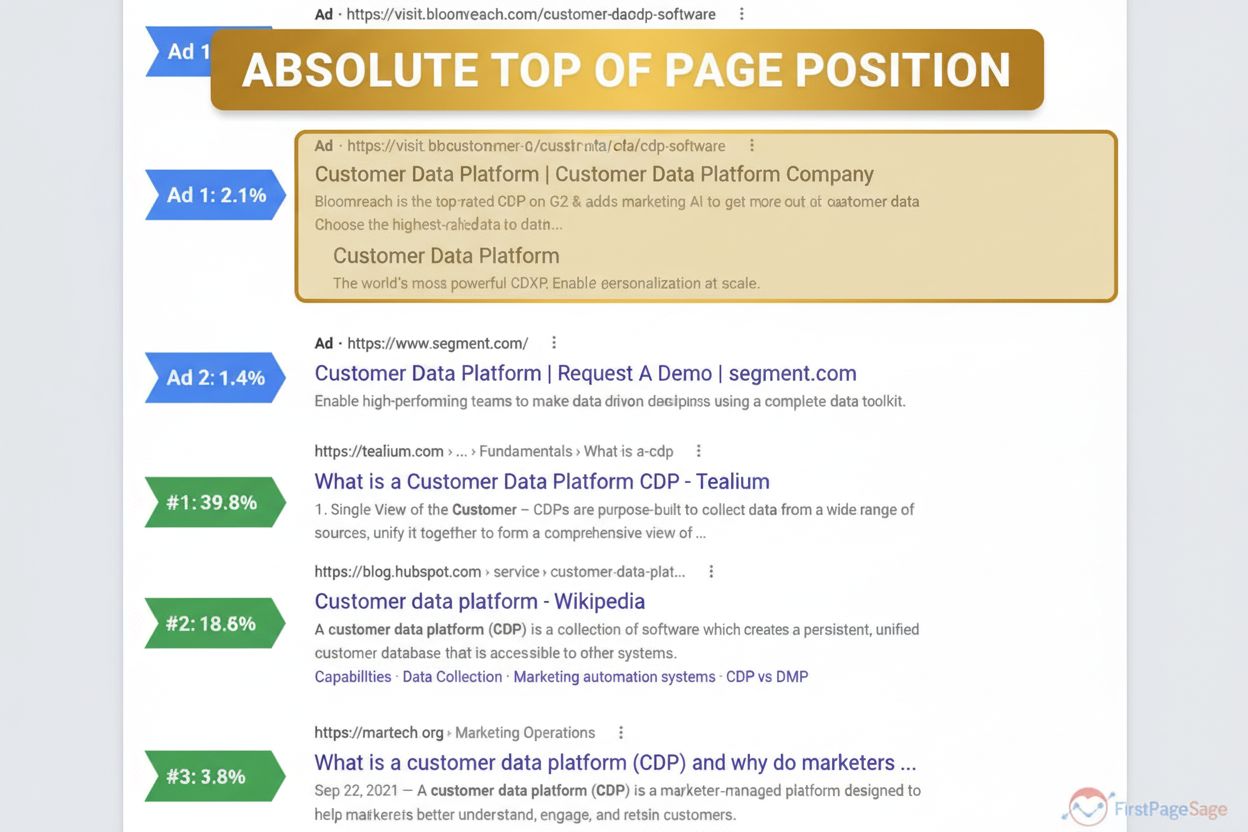
Absolute Top of Page (ATP) is the first ad position on Google Search results. Learn how this premium placement affects CTR, bidding strategies, and campaign per...
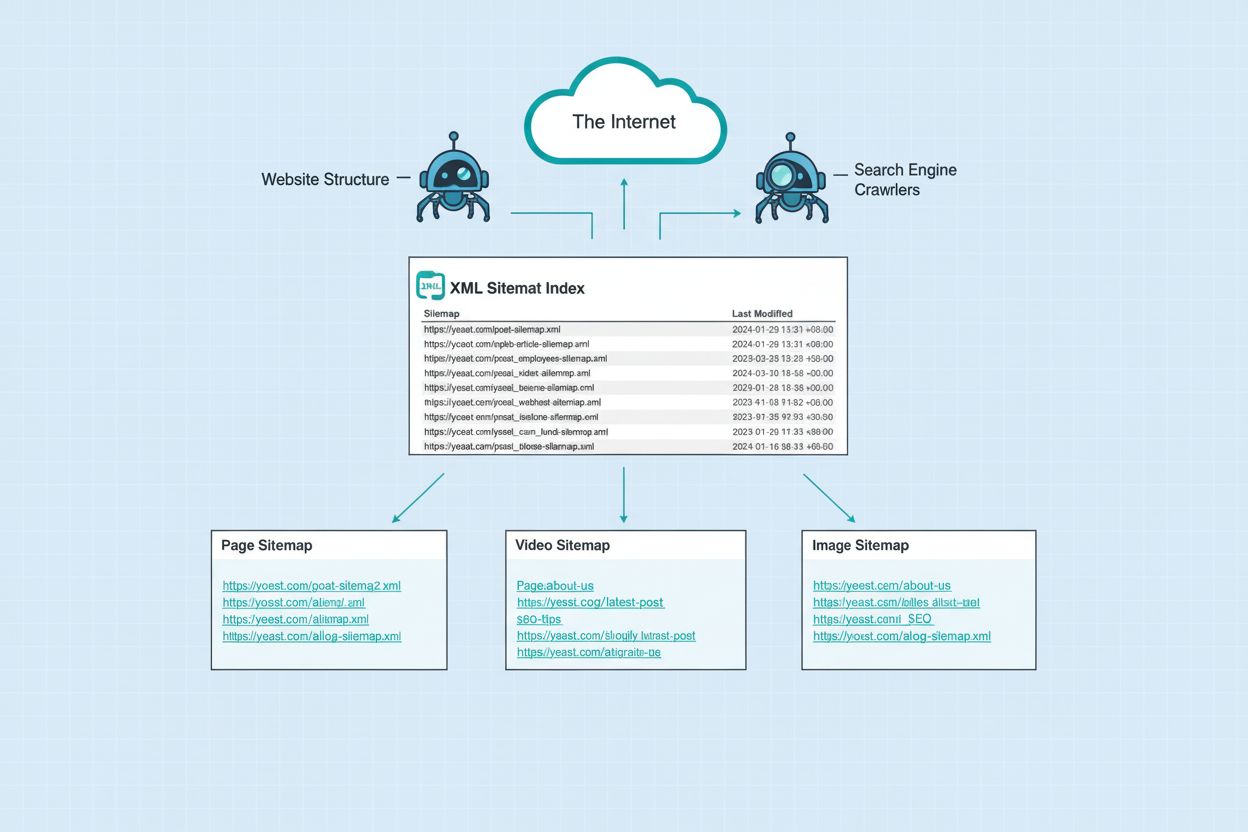
Learn what an XML Sitemap is, why it matters for SEO and AI search visibility, and how to implement it effectively. Complete guide to XML sitemap structure, bes...