
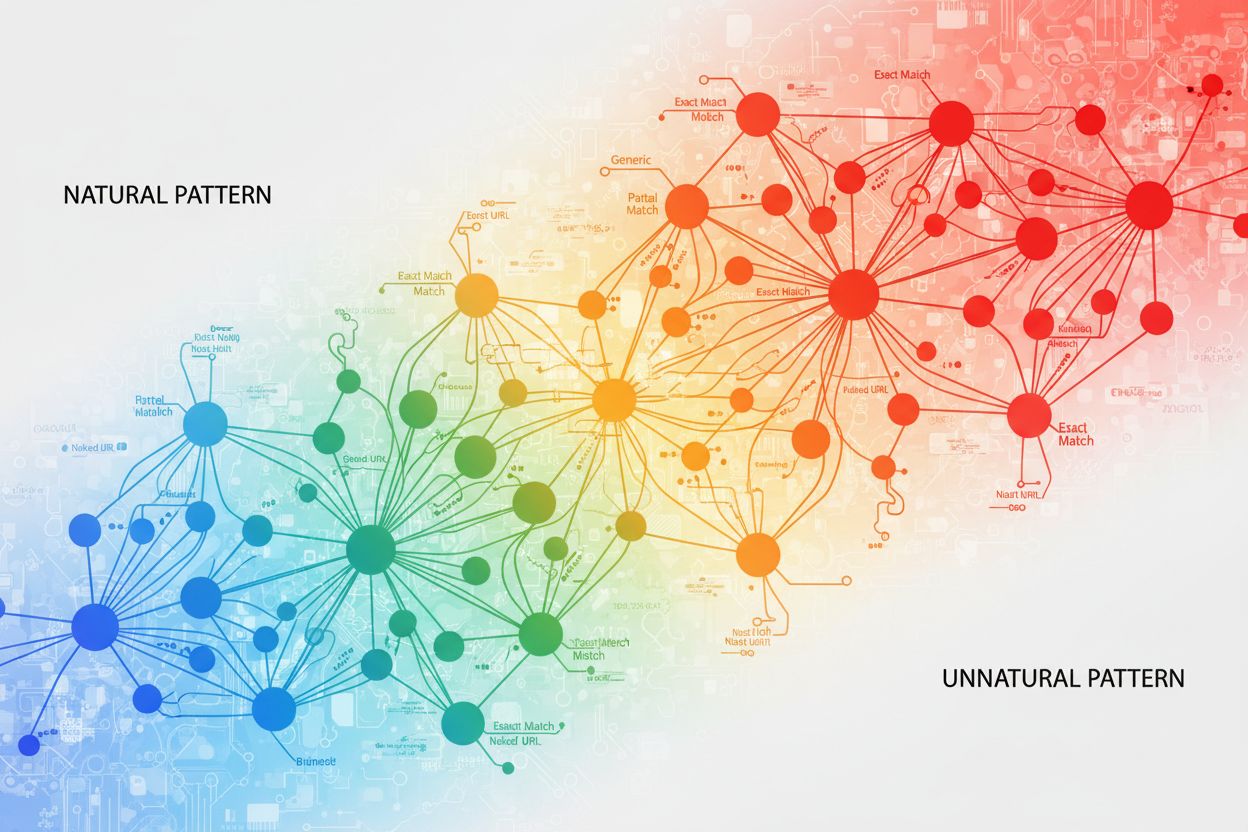
Brand Anchor Diversity
Learn how anchor text diversity creates natural-looking AI visibility signals. Explore types, best practices, and strategies for off-page SEO success and AI mon...
9 min read
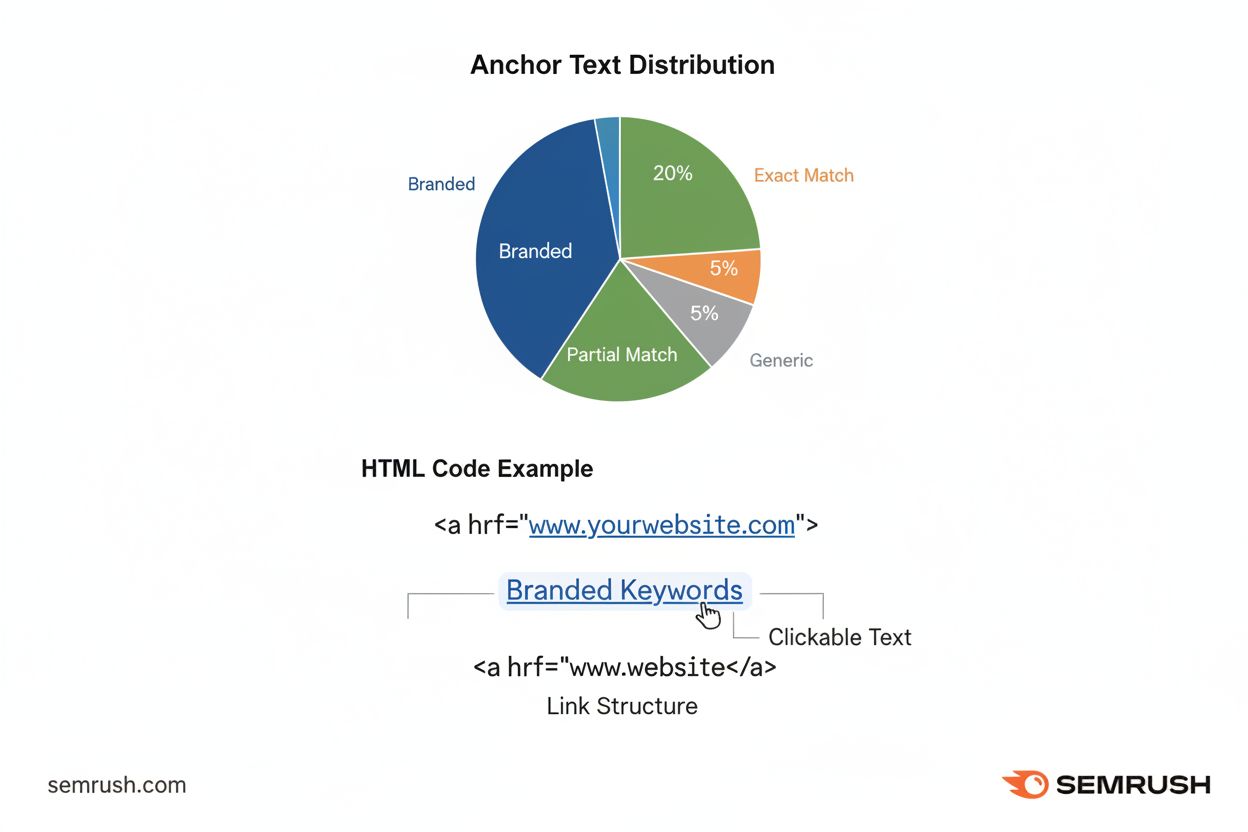
Anchor text is the visible, clickable text in a hyperlink that describes the destination page. It serves as a critical SEO signal, helping both search engines and users understand the relevance and context of linked content, and plays a vital role in link equity distribution and site navigation.
Anchor text is the visible, clickable text in a hyperlink that describes the destination page. It serves as a critical SEO signal, helping both search engines and users understand the relevance and context of linked content, and plays a vital role in link equity distribution and site navigation.
Anchor text is the visible, clickable text within a hyperlink that describes the destination page or resource. It appears in a distinct color (typically blue) and is often underlined in web browsers, making it immediately recognizable to users. In HTML code, anchor text is placed between the opening and closing <a> tags, with the destination URL specified in the href attribute. For example, in the code <a href="https://example.com/seo-guide">SEO best practices</a>, the phrase “SEO best practices” is the anchor text. This seemingly simple element serves as a critical communication bridge between users and search engines, conveying context about the linked content and influencing how search algorithms evaluate page relevance and authority. The quality and relevance of anchor text directly impacts both user experience and search engine optimization outcomes, making it one of the most important yet often overlooked elements of effective web strategy.
Anchor text has been a fundamental component of web architecture since the early days of the internet, but its importance to SEO has evolved significantly over the past two decades. In the early 2000s, search engines relied heavily on anchor text as a primary ranking signal, leading many webmasters to aggressively optimize it with exact-match keywords. This practice became so widespread that it eventually triggered algorithmic responses from Google, most notably the Penguin algorithm update in 2012, which specifically targeted websites with unnatural, over-optimized anchor text patterns. This update fundamentally changed how the SEO industry approaches anchor text optimization, shifting the focus from keyword density to natural, contextual relevance. Today, anchor text remains important, but search engines now evaluate it within a broader context that includes surrounding text, page quality, domain authority, and user behavior signals. Research indicates that approximately 34.6% of links use targeted anchor text (exact match or phrase match combined), demonstrating that while keyword-focused anchor text still exists, the industry has largely moved toward more balanced, natural linking practices. The evolution of anchor text strategy reflects the broader maturation of SEO from a purely technical discipline focused on keyword manipulation to a more holistic approach emphasizing user experience and content quality.
Understanding the different types of anchor text is essential for developing an effective linking strategy. Each type serves different purposes and carries different weight in search engine algorithms. Here’s a comprehensive breakdown of the eight primary anchor text types:
| Anchor Text Type | Definition | Example | SEO Weight | Best Use Case |
|---|---|---|---|---|
| Branded | Uses only the brand or company name | “Yoast” linking to yoast.com | High (Natural) | Citations, brand mentions, homepage links |
| Exact Match | Matches the target keyword precisely | “running a marathon” linking to marathon training page | Medium (Use Sparingly) | Strategic internal links, targeted optimization |
| Partial Match | Contains target keyword with additional words | “best marathon training tips” linking to marathon guide | High (Recommended) | Contextual internal links, natural optimization |
| Related Keywords | Uses semantically related terms | “structured data” linking to schema markup page | High (Recommended) | Topical relevance, semantic SEO |
| Branded + Keyword | Combines brand name with descriptive words | “Moz Domain Authority Checker” | High (Natural) | Product pages, feature descriptions |
| Naked URL | Uses the full URL as anchor text | “https://example.com ” | Low (Limited Use) | Citations, references, technical documentation |
| Generic | Non-descriptive phrases | “click here,” “read more,” “learn more” | Low (Avoid) | Minimal use, only when context is clear |
| Image Alt Text | Alt attribute of linked images | “add to cart” for shopping button image | Medium (Important) | Product images, visual navigation elements |
This distribution matters significantly for SEO health. Industry data shows that a healthy backlink profile should consist of approximately 70% branded anchor text, 20% partial-match anchors, and less than 5% generic phrases. A modern healthy profile in 2025 recommends 30-50% branded anchors, 20-30% partial-match anchors, and less than 10% exact-match keywords, reflecting the shift toward natural, user-focused linking patterns.
Anchor text serves multiple critical functions in search engine algorithms and user experience. First, it provides contextual relevance signals that help search engines understand what a linked page is about. When multiple pages link to a resource using similar anchor text, search engines interpret this as a strong relevance signal for that keyword or topic. For instance, if numerous authoritative websites link to a page using the anchor text “machine learning algorithms,” Google gains confidence that the linked page is a valuable resource for that topic. Second, anchor text contributes to link equity distribution, also known as “link juice.” The quality and relevance of anchor text can amplify or diminish the ranking power passed through a link. A link with highly relevant, descriptive anchor text passes more ranking authority than a generic “click here” link, even if both come from equally authoritative sources. Third, anchor text diversity is crucial for maintaining a natural link profile. Search engines expect to see variation in how different websites link to your content, as this reflects organic, earned links rather than manipulated linking schemes. Research shows that websites with diverse anchor text profiles typically experience better rankings and lower risk of algorithmic penalties compared to those with repetitive, keyword-focused anchor text patterns.
The relationship between anchor text and link equity is fundamental to understanding modern SEO. Link equity, also called link juice or link authority, represents the ranking power that flows from one page to another through hyperlinks. The quality of anchor text directly influences how much equity is transferred. When an authoritative website links to your page using relevant, descriptive anchor text, it signals to search engines that your page deserves recognition for that topic, thereby passing more ranking authority. Conversely, generic or irrelevant anchor text from the same authoritative source passes less equity because it provides minimal contextual information. This is why internal linking strategy is so important—you have complete control over the anchor text used for internal links, allowing you to strategically distribute link equity to pages you want to rank for specific keywords. However, this power must be wielded carefully. Over-optimization of internal anchor text, where you repeatedly use the same exact-match keyword to link to a page, can trigger spam detection algorithms. Google’s guidelines explicitly warn against excessive keyword usage in anchor text, as it appears manipulative and unnatural. The optimal approach involves using a balanced mix of anchor text types that feels organic to readers while strategically supporting your SEO objectives. This balance ensures that link equity flows effectively through your site while maintaining the natural, user-focused appearance that modern search algorithms reward.
Creating high-quality anchor text requires balancing multiple considerations: SEO optimization, user experience, and natural readability. The first principle is descriptiveness—anchor text should clearly indicate what users will find when they click. Instead of generic phrases like “click here” or “read more,” use specific, informative text that provides context. For example, rather than “learn about our services,” use “digital marketing services for e-commerce brands.” This approach helps both users and search engines understand the linked content’s relevance. Second, anchor text should be concise, ideally between 2-5 words. Lengthy anchor text dilutes the keyword signal and can appear awkward within sentences. Third, anchor text must flow naturally within the surrounding content. If you find yourself forcing keywords into anchor text or creating awkward sentence structures, the link probably doesn’t belong there or needs rewording. Fourth, maintain keyword relevance without keyword stuffing. Use your target keyword or related variations when appropriate, but avoid cramming multiple keywords into a single anchor text. Fifth, ensure anchor text is visually distinct from regular text through color, underlining, or other visual cues, making it immediately recognizable as clickable. Finally, for image links, always use descriptive alt text that serves the same purpose as anchor text for regular links. These practices create anchor text that serves both users and search engines effectively, improving navigation, user experience, and SEO performance simultaneously.
Internal links and external links require different anchor text strategies, though the underlying principles remain consistent. For internal links, you have complete control over anchor text, allowing for strategic optimization. Use internal anchor text to establish topical relationships between pages, guide users through your site structure, and distribute link equity to important pages. However, avoid excessive repetition of the same anchor text pointing to the same page, as this can trigger spam filters. Instead, vary your anchor text while maintaining relevance. For example, if you have a page about “content marketing strategies,” you might link to it using different anchor texts like “content marketing best practices,” “how to create content marketing plans,” or simply “content marketing” depending on context. This variation appears natural while still providing keyword signals. For external links, you have less control, but you can influence how others link to your site by creating linkable assets and providing context that encourages natural linking. When linking to external sites, use anchor text that accurately describes the destination and provides value to your readers. This builds trust with both users and search engines. Importantly, avoid over-optimization of external links. If you’re paying for links or engaging in link schemes, using exact-match anchor text extensively will trigger penalties. Instead, focus on earning natural links through quality content, and let the anchor text develop organically. The distinction between internal and external anchor text strategy reflects the reality that search engines evaluate links differently based on their source and context.
As artificial intelligence reshapes the search landscape, anchor text continues to play an important role in how brands appear across AI-powered search engines. Platforms like ChatGPT, Perplexity, Claude, and Google AI Overviews are increasingly becoming primary search interfaces for many users, and understanding how anchor text influences visibility in these environments is critical for modern SEO. While AI search engines operate differently from traditional search engines, they still rely on web data, including links and anchor text, to understand content relevance and authority. When AI systems crawl the web to train their models and generate responses, they encounter anchor text as a signal of topical relevance and domain authority. Websites with high-quality, relevant anchor text from authoritative sources are more likely to be cited and referenced in AI-generated responses. This is where platforms like AmICited become valuable—they monitor how brands appear across multiple AI search engines and track the anchor text and context in which brands are mentioned. Understanding your anchor text profile helps you optimize for visibility not just in traditional Google search, but across the emerging AI search ecosystem. As AI search continues to grow, maintaining a healthy, natural anchor text profile becomes even more important for ensuring your brand is recognized as authoritative across all search paradigms. The convergence of traditional SEO and AI search visibility means that anchor text optimization is no longer just about Google rankings—it’s about establishing your brand as a trusted, authoritative source across the entire digital search landscape.
Anchor text spam represents one of the most common reasons websites receive manual penalties from Google. Spam tactics include excessive use of exact-match keywords in anchor text, keyword stuffing within anchor text, irrelevant anchor text pointing to unrelated pages, and coordinated linking schemes where multiple sites use identical anchor text to link to the same target. Google’s Penguin algorithm specifically targets these patterns, and websites caught engaging in anchor text manipulation can experience significant ranking drops or even removal from search results. The risk is particularly high for websites that purchase links or participate in link networks, as these schemes typically rely on over-optimized anchor text to maximize SEO impact. To avoid penalties, follow these critical guidelines: maintain anchor text diversity by using varied anchor text types across your backlink profile; keep exact-match anchor text below 10% of your total links; ensure anchor text is contextually relevant to both the source page and destination page; avoid keyword stuffing by using natural language and limiting keywords to one or two per anchor text; and focus on earning natural links through quality content rather than purchasing or manipulating links. Additionally, regularly audit your backlink profile using tools like Semrush’s Backlink Audit or Moz’s Link Explorer to identify potentially toxic links with suspicious anchor text patterns. If you discover unnatural linking patterns pointing to your site, you can use Google’s Disavow Tool to tell Google to ignore those links. By maintaining ethical linking practices and natural anchor text patterns, you protect your site from penalties while building a sustainable, long-term SEO foundation.
The role of anchor text in SEO continues to evolve as search technology advances and user behavior changes. Several emerging trends are shaping the future of anchor text optimization. First, semantic understanding is becoming increasingly sophisticated. Modern search engines no longer rely solely on exact keyword matching in anchor text; instead, they understand semantic relationships and topical relevance. This means that anchor text using synonyms or related terms can be just as effective as exact-match anchor text, encouraging more natural, varied linking practices. Second, user experience signals are gaining importance relative to traditional SEO signals. Search engines increasingly prioritize how users interact with links, including click-through rates and dwell time after clicking. This shift means that anchor text must be genuinely compelling and relevant to users, not just optimized for algorithms. Third, the rise of AI search engines is creating new contexts for anchor text. As AI systems become primary search interfaces, the way anchor text influences AI-generated responses and citations will become increasingly important. Brands will need to optimize for visibility not just in traditional search results, but in AI-generated summaries and citations. Fourth, voice search and conversational AI are changing how anchor text functions. In voice search contexts, anchor text may become less visible but more important as a semantic signal. Finally, privacy-focused search and decentralized web technologies may eventually reduce the importance of traditional link-based signals, though anchor text will likely remain relevant in some form. The overarching trend is clear: anchor text is moving away from keyword-focused optimization toward more natural, user-centric, semantically-aware linking practices that serve both human readers and increasingly sophisticated search algorithms.
Anchor text and link text are synonymous terms used interchangeably in SEO. Both refer to the visible, clickable text within a hyperlink that describes the destination page. The HTML element is technically called an anchor element, which is why the text inside it is called anchor text. Whether you use 'anchor text' or 'link text,' you're referring to the same concept that helps users and search engines understand where a link leads.
Anchor text is a significant ranking factor, though not the only one. Research shows that approximately 34.6% of links use targeted anchor text (exact match or phrase match), indicating its importance in SEO strategies. However, Google has evolved to consider context beyond just anchor text, including surrounding text, page quality, and link source authority. Over-optimization with exact-match anchor text can trigger spam penalties, so natural, varied anchor text is more effective for long-term rankings.
A healthy backlink profile in 2025 should consist of approximately 30-50% branded anchors, 20-30% partial-match anchors, and less than 10% exact-match keywords. Industry data shows that 70% of links typically use branded anchor text, 20% use naked links or generic text, and only 5% use generic phrases like 'click here.' This natural distribution signals to search engines that your link profile is organic and not manipulated, which helps avoid penalties.
Yes, anchor text can be manipulated, which is why Google actively monitors it. Excessive use of exact-match keywords in anchor text, keyword stuffing, or irrelevant anchor text pointing to unrelated pages are all considered spam tactics. Google's Penguin algorithm specifically targets over-optimized anchor text patterns. To avoid penalties, focus on creating natural, descriptive anchor text that genuinely helps users understand the linked content rather than trying to game the system.
For internal links, use descriptive anchor text that accurately reflects the linked page's content and target keywords. Keep it concise (ideally 2-5 words), avoid generic phrases like 'click here,' and vary your anchor text types to create a natural linking pattern. Use tools like Yoast SEO or Semrush to identify competing links where multiple pages target the same keyword through anchor text, which can dilute ranking power. Ensure anchor text flows naturally within your content without appearing forced or over-optimized.
As AI-powered search engines like ChatGPT, Perplexity, Claude, and Google AI Overviews become more prevalent, anchor text remains important for establishing domain authority and relevance signals. Platforms like AmICited monitor how brands appear across AI search results, and quality anchor text from authoritative sources helps improve visibility in these new search paradigms. Understanding anchor text distribution across your backlink profile is crucial for maintaining brand presence in both traditional search and emerging AI-driven search environments.
While exact-match anchor text can provide a ranking boost, it should be used sparingly and strategically. Best practices recommend keeping exact-match anchor text below 10% of your total backlink profile to avoid triggering spam filters. Instead, focus on a mix of branded, partial-match, and related keyword anchor text that feels natural and contextual. If you're building internal links, use exact-match anchor text only when it genuinely fits the content flow, and always prioritize user experience over keyword optimization.
Start tracking how AI chatbots mention your brand across ChatGPT, Perplexity, and other platforms. Get actionable insights to improve your AI presence.
Learn how anchor text diversity creates natural-looking AI visibility signals. Explore types, best practices, and strategies for off-page SEO success and AI mon...
Discover how branded anchor text has evolved in the AI era and why it's critical for off-page SEO. Learn strategies for building brand authority through AI-awar...
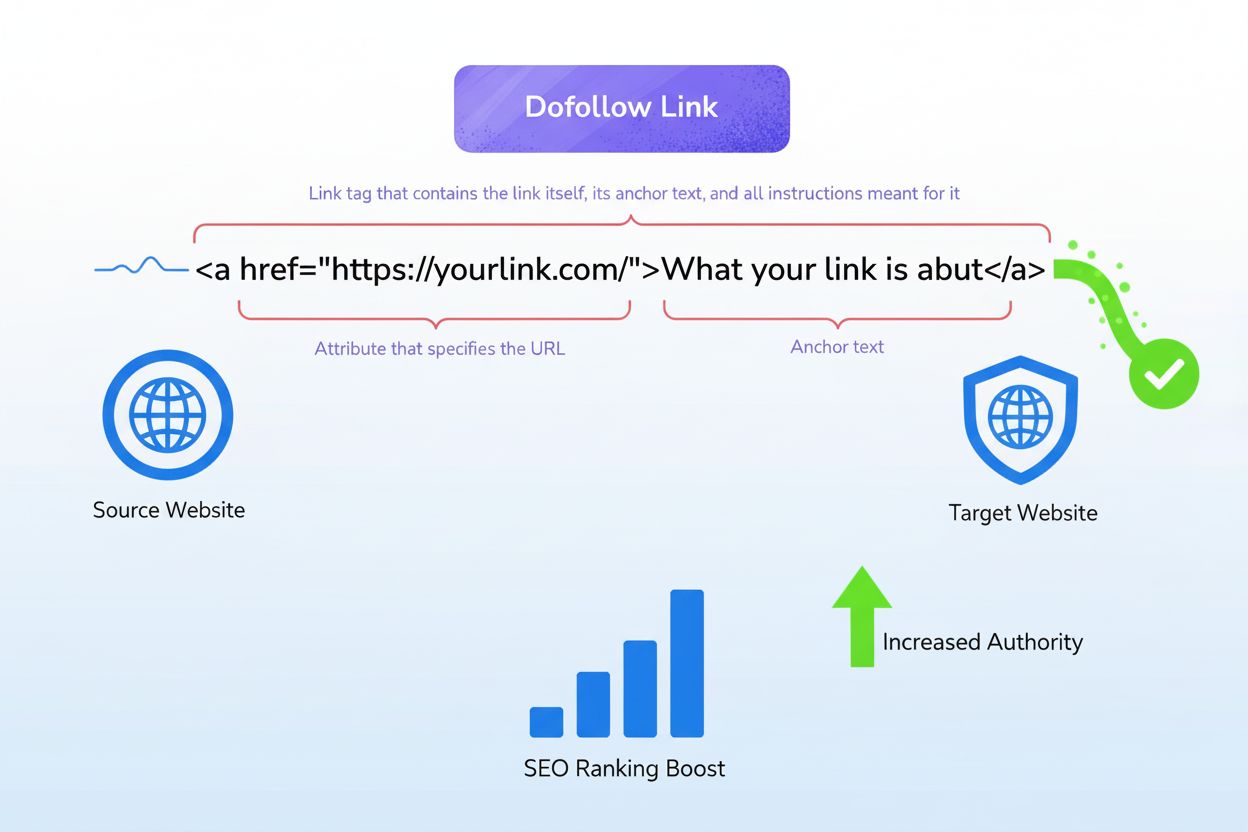
Learn what dofollow links are, how they pass ranking value and authority through link juice, and why they're critical for SEO success and AI search visibility.
Cookie Consent
We use cookies to enhance your browsing experience and analyze our traffic. See our privacy policy.