

What is Answer Engine Optimization (AEO)? Complete Guide for 2025
Learn what Answer Engine Optimization (AEO) is and how it helps your brand appear in AI-powered answers from ChatGPT, Perplexity, and Google AI Overviews. Disco...
13 min read
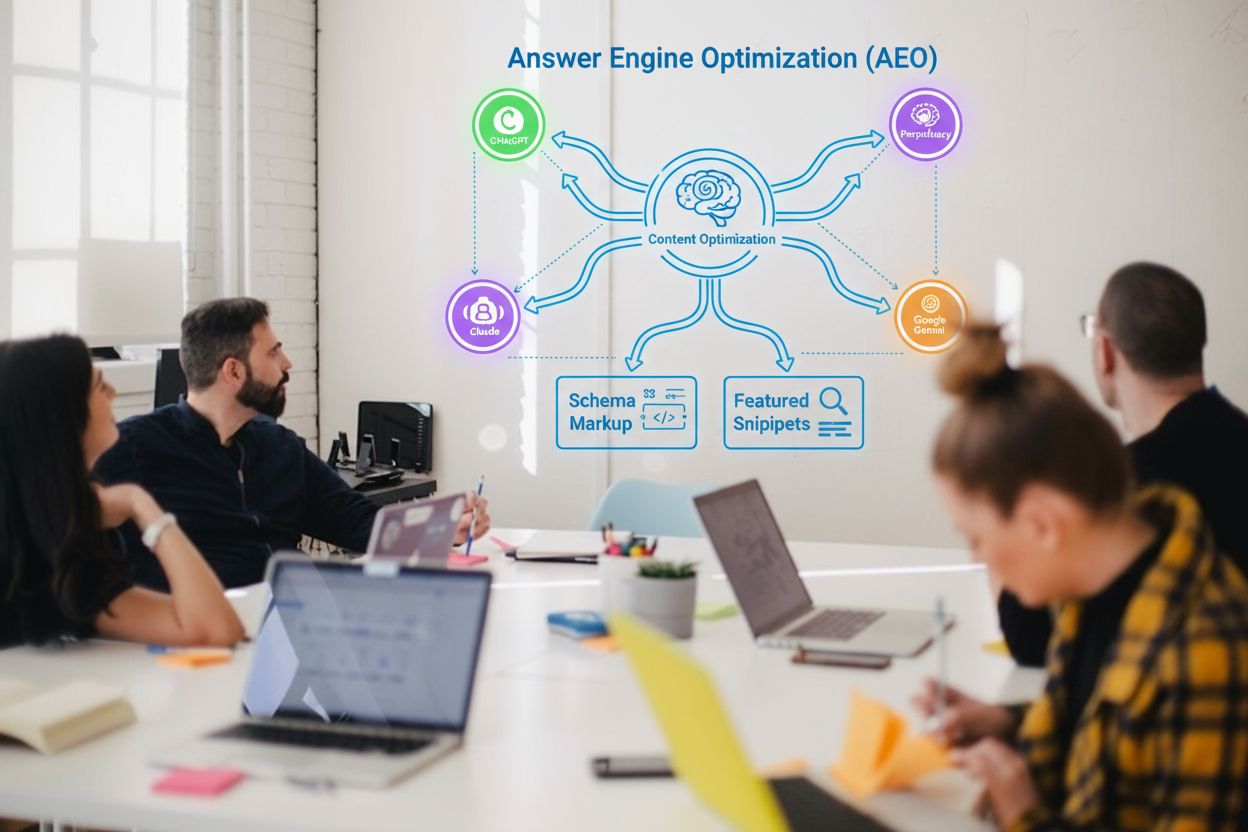
Answer Engine Optimization (AEO) is the strategic practice of optimizing content so that AI-powered answer engines like ChatGPT, Perplexity, and Google AI Overviews can easily extract, understand, and cite it as authoritative answers to user queries. Unlike traditional SEO which drives traffic through search rankings, AEO focuses on earning direct citations and visibility in AI-generated responses.
Answer Engine Optimization (AEO) is the strategic practice of optimizing content so that AI-powered answer engines like ChatGPT, Perplexity, and Google AI Overviews can easily extract, understand, and cite it as authoritative answers to user queries. Unlike traditional SEO which drives traffic through search rankings, AEO focuses on earning direct citations and visibility in AI-generated responses.
Answer Engine Optimization (AEO) is the strategic practice of optimizing content so that AI-powered answer engines like ChatGPT, Perplexity AI, Google AI Overviews, Claude, and Microsoft Copilot can easily extract, understand, and cite it as authoritative answers to user queries. Unlike traditional search engine optimization (SEO), which focuses on improving rankings in search results to drive website traffic, AEO concentrates on earning direct citations and mentions within AI-generated responses. The fundamental goal of AEO is to make your brand the next most likely source that an AI system will reference when answering a user’s question, regardless of whether that user ever visits your website. This represents a paradigm shift in digital visibility—from a click-based economy to an answer-based economy where brand authority and trustworthiness determine whether your content gets cited in zero-click AI responses.
The digital search landscape has undergone dramatic transformation over the past two years. According to Gartner research, approximately 25% of organic search traffic is predicted to shift to AI chatbots and virtual agents by 2026, fundamentally altering how businesses approach visibility. This shift is not theoretical—it’s already happening. ChatGPT alone serves over 489 million unique monthly visitors as of August 2025, with many users never leaving the chat interface to visit traditional websites. Google reports that nearly 60% of searches now end without a click, as users get their answers directly from AI Overviews, featured snippets, or knowledge panels. This behavioral change has profound implications for content strategy. Companies like Stack Overflow experienced a 14% decline in visits in March 2023 and an 18% decline in April 2023 following ChatGPT’s launch, demonstrating the real impact of answer engines on traditional web traffic. However, interestingly, many of these companies have maintained or grown revenue despite declining traffic, suggesting that visibility in answer engines creates different but equally valuable business opportunities.
Answer Engine Optimization operates on several foundational principles that distinguish it from traditional SEO. First, AEO prioritizes direct answers over keyword optimization. While SEO content might discuss a topic broadly to capture multiple keyword variations, AEO content leads with a concise, complete answer to a specific question. Second, AEO emphasizes structured data and semantic clarity. AI systems need explicit signals about what your content represents, which is why schema markup becomes critical. Third, AEO values authority and trustworthiness signals more heavily than traditional SEO. AI systems are trained to cite sources that appear frequently across authoritative contexts, have strong editorial standards, and demonstrate genuine expertise. Fourth, AEO requires content to be extractable and modular. Rather than burying answers within lengthy prose, AEO-optimized content presents information in scannable blocks that AI systems can confidently extract without losing context. Finally, AEO is platform-agnostic but platform-aware. While the core principles apply across all answer engines, each platform (ChatGPT, Perplexity, Google AI Overviews, Claude) has slightly different algorithms and citation preferences, requiring nuanced optimization strategies.
| Aspect | Answer Engine Optimization (AEO) | Search Engine Optimization (SEO) | Traditional Search Engines |
|---|---|---|---|
| Primary Goal | Earn citations in AI-generated answers | Improve rankings in search results | Display relevant web pages |
| User Targeting | Conversational, voice-based, natural language queries | Keyword-based text searches | Keyword-focused searches |
| Content Format | Direct answers, FAQs, structured snippets, modular blocks | Long-form, keyword-rich, comprehensive articles | Varied formats optimized for ranking |
| Key Metrics | Citations, mentions, share of AI voice, featured snippets | Rankings, impressions, click-through rate, organic traffic | Click volume, time on site, bounce rate |
| Citation Mechanism | AI systems extract and cite content directly | Users click links to visit websites | Users navigate to websites |
| Authority Signals | Mentions across authoritative sources, editorial quality, freshness | Backlinks, domain authority, content depth | Page authority, relevance signals |
| Time to Results | 4-8 weeks for early wins, 6-12 months for momentum | 3-6 months for initial traction, 6-12+ months for dominance | Varies by competition and effort |
| Platform Focus | ChatGPT, Perplexity, Google AI Overviews, Claude, voice assistants | Google, Bing, DuckDuckGo, other search engines | Google (dominant), Bing, others |
| Content Optimization | Answer-first structure, schema markup, semantic clarity | Keyword optimization, internal linking, technical SEO | Meta tags, content relevance, site structure |
To understand AEO effectively, it’s essential to grasp how answer engines fundamentally differ from traditional search engines. Traditional search engines like Google operate on a ranking model—they crawl the web, index pages, and return a ranked list of resources they believe answer a user’s query. The user then clicks through to evaluate multiple sources. Answer engines operate on an extraction and synthesis model. They crawl the same web content, but instead of ranking pages, they use large language models (LLMs) to extract relevant information from multiple sources, synthesize it into a coherent response, and present a single answer directly to the user. This process involves several stages: first, the AI system identifies relevant content through web crawling and indexing (similar to traditional search); second, it extracts specific passages or information blocks that address the user’s query; third, it synthesizes this information into a natural language response; and finally, it cites the sources it used. The critical insight for AEO is that AI systems don’t rank pages—they extract passages. This means your content needs to be structured in a way that makes extraction easy and accurate. A 5,000-word article buried in prose might rank well in Google but fail to get cited by ChatGPT because the AI system can’t easily identify and extract the relevant answer. Conversely, a well-structured 500-word article with a clear answer upfront, proper headings, and schema markup might get cited thousands of times in AI responses.
Implementing an effective AEO strategy requires attention to both content and technical factors. On the content side, the most critical practice is adopting an answer-first structure. Every key section should begin with a 40-60 word direct answer that fully addresses the question, followed by supporting detail, examples, and context. This mirrors the approach used for featured snippets in Google, but with even greater emphasis on clarity and conciseness. Content should use scannable formatting with bullet points, numbered lists, short paragraphs (under four sentences), and comparison tables. Visual elements like images, charts, and infographics should support and clarify textual content. On the technical side, schema markup is non-negotiable. The most impactful schema types for AEO include FAQPage schema for question-answer pairs, HowTo schema for instructional content, Article schema for editorial pieces with publication dates and author information, Speakable schema for voice-optimized sections, and Organization schema for consistent brand identity signals. Additionally, ensure your website has proper semantic HTML structure with logical heading hierarchies (one H1, followed by H2s and H3s), use descriptive URLs that signal content topics, maintain fast page load speeds (Core Web Vitals), and ensure server-side rendering so critical content loads without JavaScript. Internal linking with descriptive anchor text helps AI systems map your content relationships and understand topic clusters.
One of the most significant differences between AEO and SEO is the emphasis on multi-channel authority. While SEO primarily focuses on backlinks from external websites, AEO requires establishing credibility across multiple platforms and contexts. Research shows that content including citations, quotes, and statistics is 30-40% more visible in AI search results, emphasizing the importance of supporting claims with credible sources. To build AEO authority, businesses should pursue a multichannel distribution strategy that includes publishing thought leadership on LinkedIn to reach industry professionals, creating educational video content for YouTube (transcripts are crawled by AI systems), participating authentically in relevant Reddit communities and Quora discussions (increasingly cited by AI as sources of real user sentiment), pitching byline articles to industry publications with strong editorial standards, and creating original research and data visualizations that become link-worthy assets. Each citation of your research or expertise across the web reinforces your authority and increases the likelihood that AI models will surface your content when answering related questions. Additionally, maintaining consistent and accurate business information across platforms like Google Business Profile, Apple Maps, Bing Places, and your website is critical, especially for local AEO. Voice assistants frequently cite local business data when answering location-based queries, so inconsistent information confuses both customers and AI systems.
Featured snippets and People Also Ask (PAA) boxes represent the intersection of traditional SEO and AEO. These Google features serve as training data for how AI systems select and present information. When your content appears in a featured snippet, you’ve essentially been pre-selected by Google as the authoritative answer, which significantly increases your chances of being cited by AI summaries and language models. To win featured snippets, content should match the existing snippet format (if it’s a numbered list, structure your answer as a numbered list; if it’s a paragraph, lead with a concise paragraph answer), mirror the question wording in your H2 or H3 header, place the answer high on the page (ideally within the first two scrolls), and use the inverted pyramid approach (answer first, then context and examples). For PAA optimization, systematically harvest PAA questions for your target topics every quarter by opening an incognito browser, searching core keywords, and documenting every question that appears. Prioritize updating existing high-authority pages to target new PAA questions rather than creating new content, as Google favors established pages for featured snippets. The strategic value of this approach is substantial: early AEO adopters are capturing 3.4x more traffic from AI search engine adoption, according to recent benchmarking data, demonstrating that first-mover advantage in answer engine visibility translates to real competitive advantage.
Voice search represents a critical but often overlooked component of AEO strategy. Voice assistants like Alexa, Siri, and Google Assistant choose answers differently from visual search results and text-based LLMs. They need concise, factually unambiguous, and naturally spoken content that can be delivered in 15-30 seconds. When someone asks their smart speaker a question, the assistant typically cites one single source—you want that to be yours. Voice-optimized AEO requires writing answers in spoken-friendly language that avoids jargon, long dependent clauses, and ambiguous pronouns. For example, instead of “It enables seamless integration,” write “HubSpot’s API enables seamless integration” to eliminate confusion about what “it” refers to. Implementing Speakable schema markup explicitly tells voice assistants which paragraphs are concise, self-contained, and ready to be read aloud. Testing your visibility on actual voice platforms (Alexa, Siri, Google Assistant) is essential, as is creating a naming convention in your CMS for voice-optimized content blocks. For local businesses, voice optimization is particularly important because location-based voice queries frequently surface local entities in AI-generated answers. Ensuring your Google Business Profile is complete and accurate, building a strategy for earning reviews, creating local landing pages for each service area, and maintaining consistent NAP (Name, Address, Phone Number) formatting across all platforms are critical for voice AEO success.
Despite the clear strategic value of AEO, implementation presents several significant challenges. The first major challenge is tracking performance. Unlike SEO, which has mature tools like Google Search Console, Ahrefs, and Semrush for tracking rankings and traffic, AEO lacks standardized analytics. Most AI platforms don’t provide “Search Console for LLMs” where you can see when and how often you were cited. The practical solution is creating a manual tracking system: assign a team member to periodically query major AI platforms with your target questions and document citations in a spreadsheet. While labor-intensive, this qualitative data reveals patterns about which content formats and topics earn the most AI visibility. The second challenge is securing internal buy-in. Marketing teams struggle to convince executives to invest in “visibility without clicks” when traditional metrics emphasize traffic and conversions. The solution is reframing AEO as brand awareness and category leadership rather than traffic generation. When your content gets cited in thousands of ChatGPT answers or Google AI Overviews, you’re shaping how buyers think about the problem space and which solutions they consider—this is top-of-funnel influence at scale, similar to PR or thought leadership. The third challenge is optimizing for multiple platforms simultaneously. Unlike SEO, which primarily targets Google, AEO requires managing visibility across ChatGPT, Perplexity, Claude, Gemini, Microsoft Copilot, and voice assistants—each with unique algorithms. The solution is anchoring your strategy in stable principles (answer questions directly, structure content clearly, build authority, use semantic markup) rather than optimizing for specific engine quirks.
The AEO landscape is evolving rapidly, and several trends will shape its future. First, AI citation tracking will improve. As AEO becomes more mainstream, platforms will develop better analytics and transparency around citations, similar to how Google Search Console evolved for SEO. Second, advertising opportunities in answer engines will emerge. Just as Google monetized search through ads, platforms like ChatGPT are exploring advertising models, creating new opportunities for brands to gain visibility. Third, AEO and SEO will become increasingly integrated. Rather than viewing them as separate strategies, forward-thinking organizations will develop unified “search everywhere optimization” approaches that maximize visibility across all discovery channels. Fourth, voice and conversational search will become dominant. As smart speakers proliferate and voice assistants improve, voice-optimized content will become as critical as mobile optimization is today. Fifth, regulatory scrutiny will increase. As AI systems become more influential in consumer decision-making, regulators will likely impose requirements around citation accuracy, source transparency, and content representation, creating new compliance considerations for AEO strategies. Finally, content quality and originality will become even more critical. As noted in recent research, 25% of the highest-quality sites in ChatGPT’s training dataset have excluded themselves from future training, emphasizing the need for businesses to produce genuinely original, authoritative content that AI systems want to cite. The brands that invest in AEO now—while the landscape is still forming and competition is lower—will establish themselves as category authorities in the AI-driven search ecosystem.
Answer Engine Optimization and traditional SEO serve different purposes in the digital landscape. While SEO focuses on improving rankings in search engine results pages (SERPs) to drive website traffic, AEO concentrates on earning citations and mentions within AI-generated answers. SEO targets keyword-based, text-driven searches, whereas AEO optimizes for conversational, voice-based, and natural language queries. The key distinction is that SEO aims to get users to click through to your website, while AEO aims to have your content cited directly in AI responses without requiring a click. Both strategies are complementary and should be implemented together for maximum visibility across all discovery channels.
The primary AI-powered answer engines where AEO is critical include ChatGPT (with over 489 million unique monthly visitors as of August 2025), Perplexity AI, Google AI Overviews, Microsoft Copilot, Claude, and Gemini. Additionally, voice assistants like Alexa, Siri, and Google Assistant represent important AEO channels. Each platform has slightly different algorithms and citation preferences, so a comprehensive AEO strategy should account for variations across these engines. Google AI Overviews are particularly significant because they appear above traditional organic search results, making them a high-priority optimization target for most businesses.
Schema markup, or structured data, is fundamental to AEO success because it explicitly tells AI systems what your content represents and how to extract it accurately. Key schema types for AEO include FAQPage schema for question-answer pairs, HowTo schema for instructional content, Article schema for editorial pieces, Speakable schema for voice-optimized sections, and Organization schema for brand identity. By implementing proper schema markup, you increase the likelihood that AI systems will correctly understand, extract, and cite your content. This structured approach helps language models confidently reference your information when generating answers, significantly improving your visibility in AI-powered responses.
Early wins from AEO efforts typically appear within 4-8 weeks, particularly for pages where you've added schema markup and optimized content structure. However, meaningful momentum and measurable business impact usually develop over 6-12 months. The timeline depends on your starting point, existing domain authority, and how aggressively you implement changes. Pages with newly added structured data often begin appearing in featured snippets or People Also Ask boxes within the first two months. After 6-12 months of consistently publishing AEO-optimized content, building off-site authority, and refreshing existing pages, you should see substantial increases in AI citations and branded search volume.
Answer engines favor specific content formats that are easy to extract and cite. The most effective formats include direct answer paragraphs (40-60 words) that fully address questions upfront, frequently asked questions (FAQs) with clear question-answer pairs, numbered lists and step-by-step instructions, comparison tables with structured data, featured snippets optimized for Google's answer boxes, and definition blocks for terminology. Content should use scannable formatting with short paragraphs (under four sentences), bullet points, and clear headings. Voice-optimized content that reads naturally aloud is also increasingly important. The key principle is presenting information in modular, extractable blocks that AI systems can confidently cite without losing context or accuracy.
Tracking AEO performance is more challenging than traditional SEO because most AI platforms don't provide citation analytics like Google Search Console does for organic search. The most practical approach is manual tracking: assign a team member to periodically query major AI platforms (ChatGPT, Perplexity, Google AI Overviews, Bing Chat) with your target questions and document when your brand appears. Create a simple spreadsheet logging the query, platform, date, whether you were cited, and your position relative to competitors. Additionally, monitor your featured snippet wins and People Also Ask appearances in Google Search Console, as these are strong proxy metrics for content that AI systems find extract-worthy. Tools like HubSpot's AI Search Grader and manual audits can provide baseline assessments of your AI visibility.
The primary challenges in AEO implementation include the lack of standardized tracking tools and analytics, difficulty securing internal buy-in from stakeholders accustomed to measuring success by clicks and traffic, the need to optimize for multiple AI platforms simultaneously (each with different algorithms), and the rapid evolution of AI systems that makes it difficult to maintain consistent optimization strategies. Additional challenges include content teams lacking familiarity with schema markup and structured data implementation, the significant effort required to retrofit existing content for AEO, and concerns in regulated industries about AI systems misrepresenting content. Overcoming these challenges requires clear communication about the strategic value of AI visibility, investment in team training, prioritization of high-impact pages, and the use of templates to simplify schema implementation.
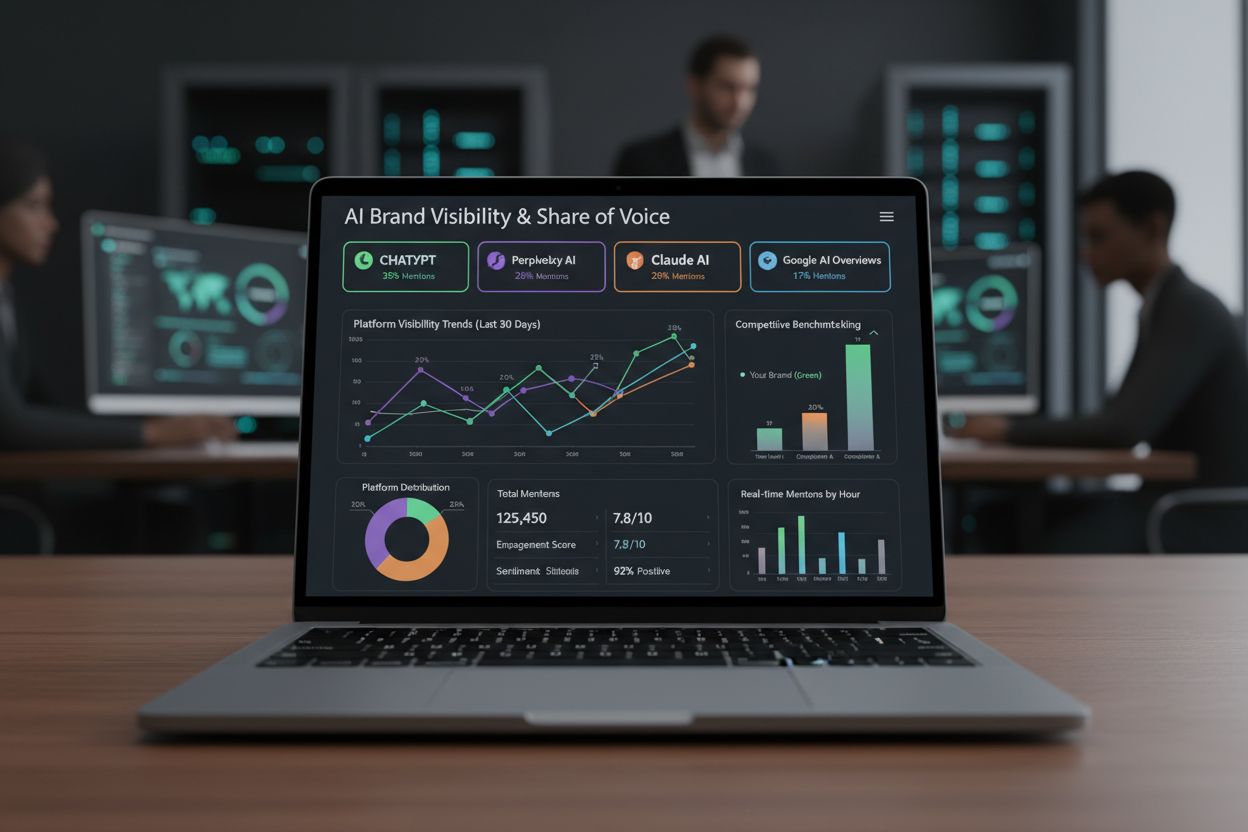
Start tracking how AI chatbots mention your brand across ChatGPT, Perplexity, and other platforms. Get actionable insights to improve your AI presence.
Learn what Answer Engine Optimization (AEO) is and how it helps your brand appear in AI-powered answers from ChatGPT, Perplexity, and Google AI Overviews. Disco...
Compare leading GEO and AEO agencies. Find the best AI visibility partner with our comprehensive guide to industry leaders, pricing, and selection criteria.
Learn how to write FAQ content optimized for AI search engines like ChatGPT, Perplexity, and Google AI Overviews. Master AEO strategies, schema markup, and cont...