
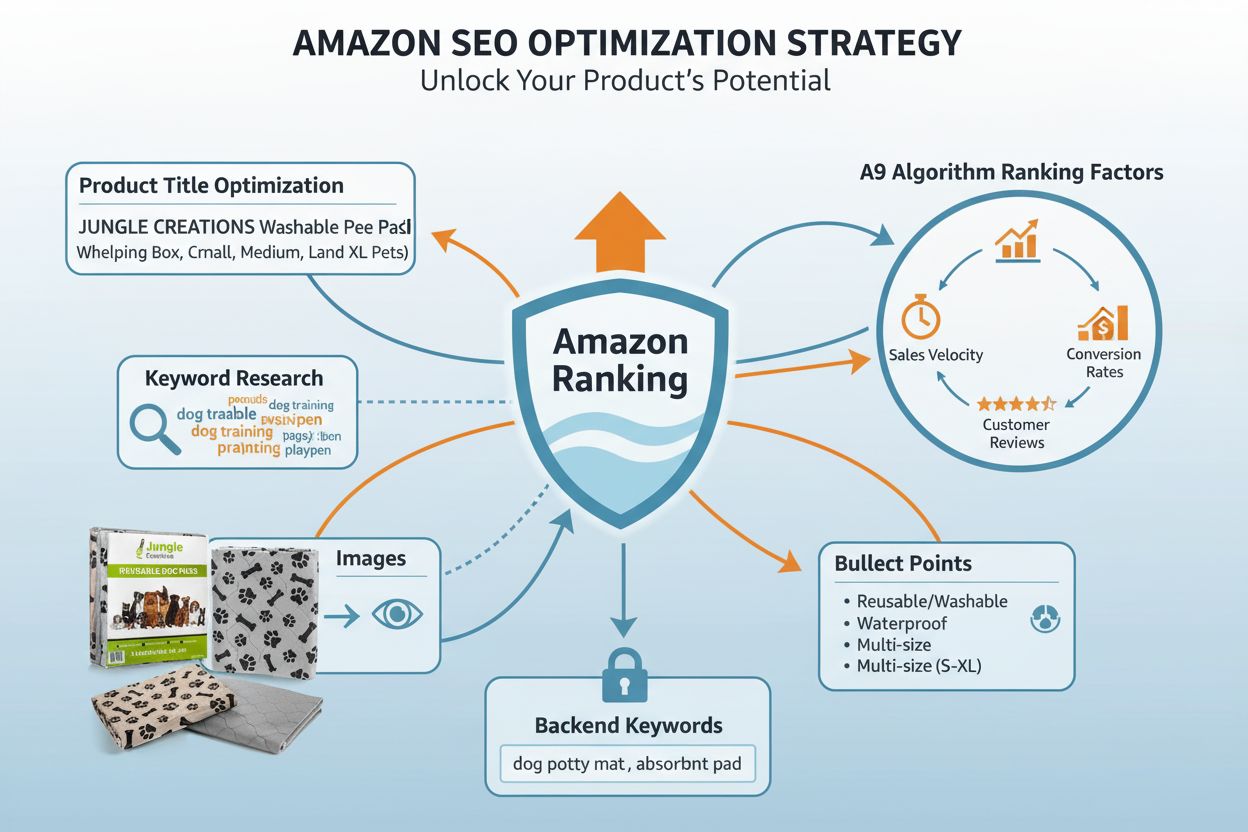
Amazon SEO
Learn what Amazon SEO is, how the A9 algorithm works, and proven strategies to optimize product listings for higher rankings and increased sales on Amazon's mar...
12 min read
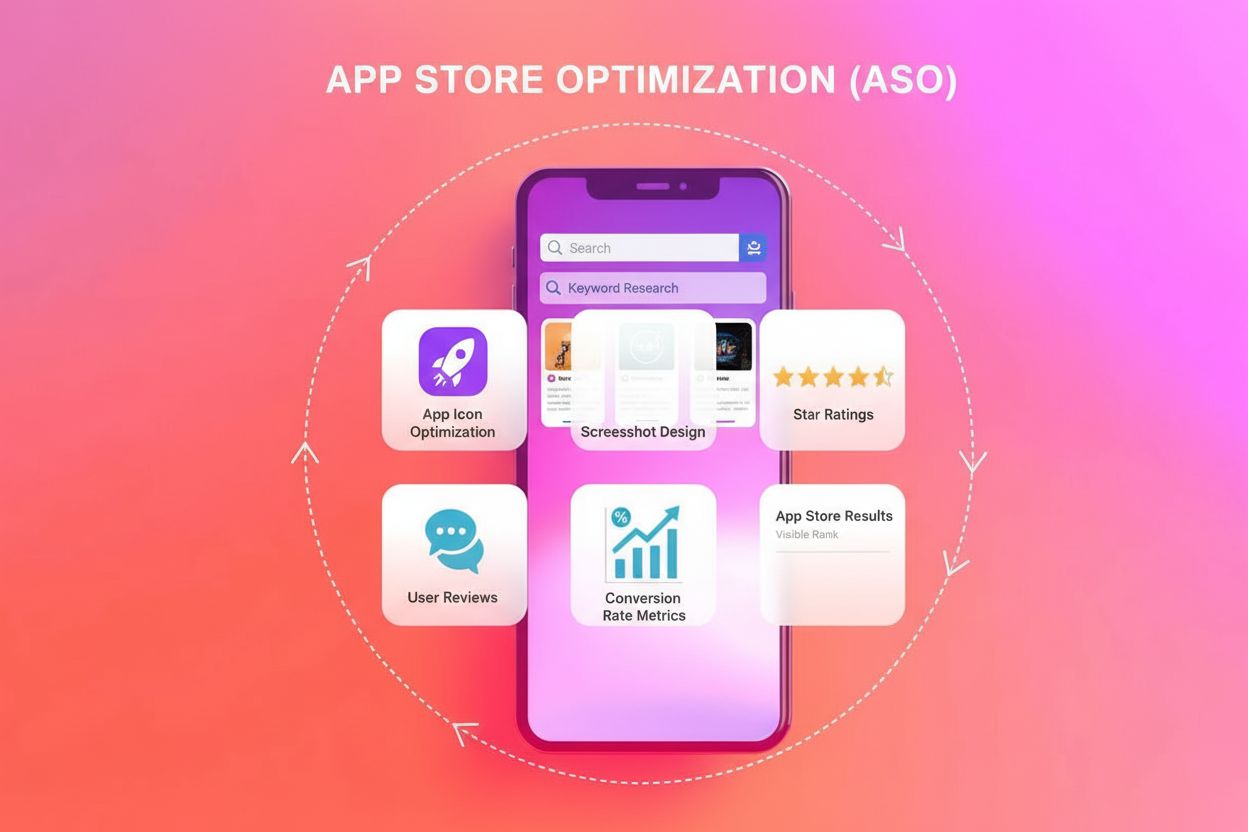
App Store Optimization (ASO) is the process of enhancing a mobile app’s visibility, appeal, and discoverability within app stores like the Apple App Store and Google Play Store to increase organic downloads and improve conversion rates. ASO involves optimizing metadata, keywords, visual assets, ratings, and reviews to rank higher in app store search results and attract more qualified users.
App Store Optimization (ASO) is the process of enhancing a mobile app's visibility, appeal, and discoverability within app stores like the Apple App Store and Google Play Store to increase organic downloads and improve conversion rates. ASO involves optimizing metadata, keywords, visual assets, ratings, and reviews to rank higher in app store search results and attract more qualified users.
App Store Optimization (ASO) is the strategic process of enhancing a mobile application’s visibility, appeal, and discoverability within digital app marketplaces—primarily the Apple App Store and Google Play Store—to increase organic downloads and improve user conversion rates. ASO encompasses a comprehensive set of practices designed to improve how an app ranks in app store search results, appears in browse sections, and converts store visitors into active users. The discipline combines technical optimization of app metadata with creative enhancement of visual assets, user engagement management, and data-driven keyword strategy. Unlike traditional marketing channels, ASO directly influences the primary discovery mechanism for mobile applications, making it essential for sustainable app growth. With over 5 million apps currently available across the two major app stores, ASO has become indispensable for developers and marketers seeking to achieve meaningful visibility and user acquisition in an increasingly competitive mobile ecosystem.
App Store Optimization has evolved significantly since the launch of the original App Store in 2008, transforming from a simple keyword-stuffing practice into a sophisticated, multi-faceted discipline. Initially, ASO focused narrowly on keyword optimization within app titles and descriptions, but it has expanded to encompass comprehensive strategies addressing every element of an app’s store presence. According to Apple Search Ads data, 65% of all App Store downloads occur directly after a keyword search, highlighting the critical importance of search visibility. The evolution reflects broader changes in how app stores operate: algorithms have become more sophisticated, user expectations have risen, and the competitive landscape has intensified dramatically. Today’s ASO professionals must balance technical precision with creative excellence, combining data-driven keyword research with compelling visual design and authentic user engagement strategies. The discipline now extends beyond simple ranking improvements to encompass user retention, in-app engagement, and the integration of paid and organic acquisition channels. This holistic approach recognizes that app store optimization is not merely about visibility but about creating compelling user experiences that drive both downloads and long-term engagement.
ASO operates across multiple interconnected dimensions, each contributing to overall app success. Keyword optimization forms the foundation, involving research, selection, and strategic placement of search terms within app metadata to align with user search intent. Metadata optimization includes refining the app title, subtitle (on Apple App Store), short and long descriptions, and keyword fields to maximize relevance signals to app store algorithms. Visual asset optimization encompasses designing and refining app icons, screenshots, preview videos, and feature graphics to create compelling first impressions and communicate app value within seconds. Conversion rate optimization focuses on transforming store visitors into downloaders through persuasive copywriting, social proof elements like ratings and reviews, and strategic use of visual hierarchy. Review and rating management involves actively soliciting positive reviews, responding professionally to user feedback, and maintaining high star ratings that signal quality to both algorithms and potential users. Localization strategy extends ASO efforts across global markets by translating and culturally adapting all app store elements for specific regions and languages. A/B testing provides the empirical foundation for ASO decisions, allowing developers to validate design choices and messaging approaches with real user data. Each component interconnects with others, creating a comprehensive optimization framework that addresses both algorithmic requirements and user psychology.
| Aspect | App Store Optimization (ASO) | Search Engine Optimization (SEO) | App Store Paid Advertising |
|---|---|---|---|
| Primary Goal | Increase organic app visibility and downloads | Increase organic website traffic | Drive immediate app installs through paid channels |
| Ranking Factors | Keywords, download velocity, ratings, retention, engagement | Backlinks, domain authority, page speed, content quality | Bid amount, ad relevance, historical performance |
| Optimization Focus | Metadata, visuals, user reviews, in-app engagement | Content, technical elements, backlinks, user experience | Ad creative, targeting, bidding strategy |
| Timeline to Results | 2-8 weeks for initial improvements | 3-6 months for significant changes | Immediate (within hours) |
| Cost Structure | Free (organic) or tool subscriptions | Free (organic) or tool subscriptions | Pay-per-click or cost-per-install model |
| Platform Specificity | Requires separate strategies for App Store vs. Google Play | Single strategy across search engines | Platform-specific (Apple Ads, Google App Campaigns) |
| Key Metrics | Keyword rankings, organic installs, conversion rate, retention | Organic traffic, keyword rankings, click-through rate | CPI, ROAS, conversion rate, LTV |
| Algorithm Complexity | Moderate (fewer ranking factors than SEO) | High (200+ ranking factors) | Moderate (quality score, bid strategy) |
| User Intent Matching | Shorter search queries, specific app needs | Longer search queries, informational intent | Highly targeted based on user behavior |
| Competitive Dynamics | Category-dependent, varies by app type | Highly competitive across industries | Bid-based competition with quality adjustments |
App store algorithms operate through two primary mechanisms: keyword relevance assessment and ranking strength evaluation. Keyword relevance determines how well an app’s metadata matches user search queries, with the algorithm analyzing keywords placed in titles, subtitles, descriptions, and keyword fields to establish topical alignment. On the Apple App Store, keyword placement carries significant weight, with terms in the app title receiving more algorithmic emphasis than those in the subtitle or keyword field. The algorithm does not reward keyword repetition across multiple metadata fields; instead, it requires keywords to appear only once for maximum efficiency. Google Play’s algorithm takes a more expansive approach, considering keyword density across the title, short description, and long description, with the algorithm employing machine learning to understand semantic relationships, synonyms, and user intent beyond exact keyword matches. Ranking strength, the second algorithmic component, evaluates app performance and authority through multiple signals. Download velocity—the rate at which an app accumulates downloads over time—serves as a powerful ranking signal, allowing new apps with rapid growth to achieve high rankings despite limited total download history. Conversion rate, measured as the percentage of store visitors who download the app, indicates user appeal and relevance to the algorithm. Ratings and reviews signal quality and user satisfaction, with apps maintaining 4+ star ratings receiving preferential treatment in search results and featuring opportunities. User retention and engagement metrics demonstrate that users find value in the app, with apps showing high retention rates receiving ranking boosts. On Google Play specifically, Android Vitals metrics including crash rates, battery usage, and responsiveness directly impact rankings, as Google prioritizes apps that deliver optimal user experiences. These algorithmic components work in concert, creating a dynamic ranking system that rewards apps that are both relevant to user searches and demonstrably valuable to users.
The Apple App Store and Google Play Store, while serving similar functions, operate with distinct technical requirements and algorithmic priorities that demand platform-specific optimization approaches. The Apple App Store emphasizes visual presentation and concise metadata, with search results prominently displaying app icons, screenshots, and preview videos. Apple’s algorithm prioritizes keyword placement in the app title (limited to 30 characters, typically truncated to 26 characters in search results) and the 100-character keyword field, with the subtitle (30 characters) providing secondary keyword opportunities. The App Store does not consider keywords in the long description for ranking purposes, making metadata distribution critical. Apple’s algorithm responds quickly to changes, with keyword ranking adjustments often visible within 2-4 weeks, though the effects are also shorter-lived, requiring more frequent optimization cycles. Google Play displays more app listings per search result page and emphasizes the app title alongside engagement metrics and app vitals. Google’s algorithm considers keywords across the title, short description, and long description, with keyword density playing a measurable role in ranking calculations. Google’s machine learning capabilities enable the algorithm to understand semantic relationships and rank apps for keywords not explicitly included in metadata, providing broader ranking opportunities. Google Play updates occur more slowly, typically requiring 6-8 weeks for keyword ranking stabilization, but the effects tend to be more durable once established. Localization strategies differ significantly between platforms: the Apple App Store treats each language as a separate ranking entity, with updates in one language potentially affecting other localizations, while Google Play allows more granular regional targeting through custom store listings. Visual asset performance also varies, with Apple App Store users spending more time viewing screenshots in search results, while Google Play users tend to watch preview videos for longer durations. These platform differences necessitate separate keyword strategies, distinct visual asset testing approaches, and platform-specific update cycles for optimal ASO results.
App Store Optimization delivers quantifiable business results that extend far beyond simple ranking improvements, directly impacting user acquisition costs, lifetime value, and overall app profitability. Research from IE Business School, analyzing 16,897 game apps using AppTweak data, revealed that effective ASO strategies resulted in an average 9% increase in downloads on the Apple App Store and 12% increase on Google Play. These improvements compound over time, as higher rankings generate sustained organic traffic without ongoing advertising expenditure. Conversion rate optimization through ASO can yield dramatic results; case studies demonstrate that optimizing app screenshots alone has produced conversion rate improvements exceeding 60%, while icon redesigns have achieved 19% conversion increases. The North Face achieved a particularly striking result, lifting its App Store rating from 3.68 to 4.23 (a 15% improvement) and increasing conversion rates by 59.06% through strategic review prompt implementation. Superscale achieved a 450% increase in organic downloads on Google Play through comprehensive ASO optimization, demonstrating the transformative potential of coordinated metadata, visual, and engagement strategies. Beyond direct download metrics, ASO significantly impacts Cost Per Install (CPI) for paid campaigns; apps with optimized store listings convert paid traffic more efficiently, reducing acquisition costs by 20-40% compared to poorly optimized competitors. The relationship between organic and paid channels creates a multiplier effect: strong ASO improves paid campaign performance, while paid campaigns provide download velocity and engagement signals that boost organic rankings. Long-term sustainability represents another critical business advantage; organic downloads acquired through ASO typically exhibit higher retention rates and lifetime value compared to paid-only acquisition strategies, as users discovering apps through relevant search queries demonstrate stronger product-market fit. For developers operating on tight budgets, ASO provides a cost-effective growth lever that requires primarily time and expertise rather than substantial advertising spend, making it accessible to indie developers and established publishers alike.
Successful ASO requires systematic execution across multiple optimization dimensions, each building on data-driven insights and continuous testing. The first critical practice involves comprehensive keyword research and discovery, utilizing specialized ASO tools to identify high-volume, relevant keywords with achievable ranking difficulty. This process begins with brainstorming keywords describing app functionality, analyzing competitor metadata, exploring app store search suggestions, and leveraging user review analysis to identify search terms users actually employ. Keyword prioritization should balance search volume against relevance and ranking difficulty, with emphasis on keywords that align with user intent and app functionality rather than pursuing high-volume terms with poor relevance. Metadata optimization requires strategic keyword placement within character limits, with the app title receiving primary keywords, the subtitle addressing secondary opportunities, and the keyword field (on Apple App Store) or long description (on Google Play) capturing additional relevant terms. Critically, keyword repetition across metadata fields provides no algorithmic benefit and wastes valuable character space; each keyword should appear only once in the most impactful location. Visual asset optimization demands both competitive analysis and empirical testing, with A/B testing revealing which icon designs, screenshot layouts, and video approaches resonate with target users. Screenshots should communicate app value within 3 seconds, using clear visual hierarchy, concise captions, and social proof elements like ratings or user testimonials. Review and rating management requires active solicitation of positive reviews through well-timed in-app prompts, professional responses to all user feedback, and systematic monitoring of rating trends. Localization strategy extends beyond translation to encompass cultural adaptation of keywords, visual elements, and messaging for specific markets, with research indicating that localized apps achieve 2-digit percentage conversion rate improvements. Continuous monitoring and iteration ensures ASO efforts remain effective as algorithms evolve, competitor strategies change, and user preferences shift; keyword performance should be reviewed every 2-4 weeks, with underperforming keywords replaced and emerging opportunities captured. Integration with paid user acquisition amplifies ASO effectiveness, with paid campaigns providing download velocity and engagement signals that boost organic rankings while optimized store listings improve paid campaign conversion rates.
App Store Optimization continues to evolve in response to technological advancement, changing user behaviors, and platform innovations, with several significant trends shaping the discipline’s future. Engagement-weighted ranking algorithms are becoming increasingly important, with both Apple and Google prioritizing apps that demonstrate sustained user engagement and retention over those with high initial download velocity. This shift reflects app stores’ commitment to user satisfaction and quality, incentivizing developers to focus on retention alongside acquisition. Artificial intelligence and machine learning are transforming ASO capabilities, with AI-driven tools now providing predictive insights about keyword performance, automated metadata optimization recommendations, and sophisticated competitive analysis. Personalization and custom product pages represent a major evolution, allowing developers to create targeted variations of their app store listings for specific user segments, keywords, or campaigns, enabling more granular optimization and A/B testing at scale. Voice search optimization is emerging as a significant consideration, with natural language processing enabling app stores to understand conversational queries and requiring developers to optimize metadata with natural, full-sentence phrasing reflecting how users speak to voice assistants. New device categories including wearables, tablets, and spatial computing platforms like Apple Vision Pro are expanding the ASO landscape, requiring developers to optimize for diverse screen sizes, interaction models, and user contexts. Cross-platform integration is increasing, with app store optimization now intersecting with web search, social media discovery, and AI-generated content systems, requiring developers to maintain consistent branding and messaging across multiple discovery channels. Regulatory changes including the Digital Markets Act in Europe are creating new app distribution opportunities beyond the traditional app stores, potentially fragmenting the ASO landscape and requiring optimization for alternative marketplaces. Data privacy and transparency are becoming more prominent in app store algorithms, with privacy practices and data handling transparency influencing rankings and user trust. These evolving trends suggest that future ASO success will require not only technical optimization expertise but also strategic thinking about user engagement, retention, and the broader app ecosystem evolution.
App Store Optimization has become indispensable for mobile app success in an ecosystem where over 5 million apps compete for user attention. The discipline combines technical precision with creative excellence, requiring developers and marketers to master keyword research, metadata optimization, visual design, user engagement, and data analysis. Unlike paid advertising channels that require continuous investment, ASO provides sustainable, long-term growth through organic discovery, making it accessible to developers of all sizes and budgets. The quantifiable business impact—demonstrated through case studies showing 9-450% download increases, 59% conversion rate improvements, and significant CPI reductions—underscores ASO’s strategic importance. Success requires systematic execution across multiple optimization dimensions, continuous monitoring and iteration, and integration with broader user acquisition strategies. As app stores evolve with new technologies, algorithms, and user expectations, ASO professionals must remain adaptable, staying current with platform changes and emerging best practices. For organizations seeking to maximize app visibility, user acquisition efficiency, and long-term profitability, App Store Optimization represents not an optional marketing tactic but a fundamental requirement for competitive success in the mobile-first digital landscape.
While both ASO and SEO focus on improving visibility through keyword optimization, they operate in fundamentally different ecosystems. ASO targets app store algorithms that prioritize download velocity, user engagement, and retention rates, whereas SEO targets search engines that rely on backlinks, domain authority, and page speed. ASO is limited to optimizing metadata within app store constraints, while SEO can optimize entire websites across multiple pages. Additionally, ASO requires platform-specific strategies for the Apple App Store and Google Play, as each has distinct ranking algorithms and metadata requirements.
The primary ranking factors include keyword relevance in app metadata, download velocity (how quickly an app gains downloads), conversion rate (percentage of store visitors who download), app ratings and reviews, user retention and engagement metrics, and for Google Play specifically, Android Vitals performance metrics and backlinks. On the Apple App Store, in-app events and custom product pages also influence rankings. These factors work together to signal app quality and relevance to the algorithm, with download velocity and conversion rates being particularly influential for new apps seeking initial visibility.
ASO results typically appear within 2-4 weeks for the Apple App Store and 4-8 weeks for Google Play, though this varies based on keyword competitiveness and app category. The App Store algorithm indexes changes faster than Google Play, but both require time to stabilize rankings. Initial improvements in keyword rankings may appear within days, but meaningful increases in organic downloads usually take 4-12 weeks. Continuous optimization and monitoring are essential, as app store algorithms constantly evolve and competitor strategies change, requiring ongoing adjustments to maintain and improve rankings.
Paid user acquisition and ASO work synergistically to drive app growth. Paid campaigns (like Apple Search Ads) provide immediate download velocity and engagement signals that boost organic rankings, while optimized app store listings improve conversion rates for both organic and paid traffic. Data shows that apps with strong ASO convert paid traffic more efficiently, reducing Cost Per Install (CPI). Additionally, keywords performing well in paid campaigns often become strong organic ranking opportunities, creating a feedback loop where paid and organic efforts amplify each other's effectiveness.
App ratings and reviews are critical ASO factors that significantly impact both visibility and conversion rates. Research shows that 92% of featured apps on the Apple App Store maintain ratings of 4 stars or above, and apps with ratings below 4 stars experience drastically reduced featuring opportunities. Reviews influence both algorithm rankings and user download decisions, with 90% of users considering reviews before downloading. Actively managing reviews, responding to user feedback, and maintaining ratings above 4.4 stars can result in conversion rate improvements of up to 25% on iOS and 19% on Android.
Localization is a powerful ASO strategy that extends app visibility to global markets by translating and culturally adapting metadata, keywords, screenshots, and visual assets for specific regions. Research indicates that localized apps can achieve two-digit percentage improvements in conversion rates compared to non-localized versions. Beyond translation, effective localization requires understanding local user preferences, search behaviors, and cultural nuances. Apps that localize for multiple markets benefit from increased total downloads, improved engagement metrics across regions, and better positioning for app store featuring in international markets.
Custom Product Pages (CPPs) on the Apple App Store and Custom Store Listings (CSLs) on Google Play allow developers to create targeted variations of their app store pages for specific audiences, keywords, or campaigns. These tools enable A/B testing of different creative approaches, keyword targeting, and messaging strategies without affecting the main app listing. By tailoring pages to specific user segments or search intents, developers can significantly improve conversion rates and gather data-driven insights about what resonates with different audiences. This capability has become increasingly important for ASO strategy, allowing for more granular optimization and personalization.
Start tracking how AI chatbots mention your brand across ChatGPT, Perplexity, and other platforms. Get actionable insights to improve your AI presence.
Learn what Amazon SEO is, how the A9 algorithm works, and proven strategies to optimize product listings for higher rankings and increased sales on Amazon's mar...

Learn what Answer Engine Optimization (AEO) is and how it helps your brand appear in AI-powered answers from ChatGPT, Perplexity, and Google AI Overviews. Disco...
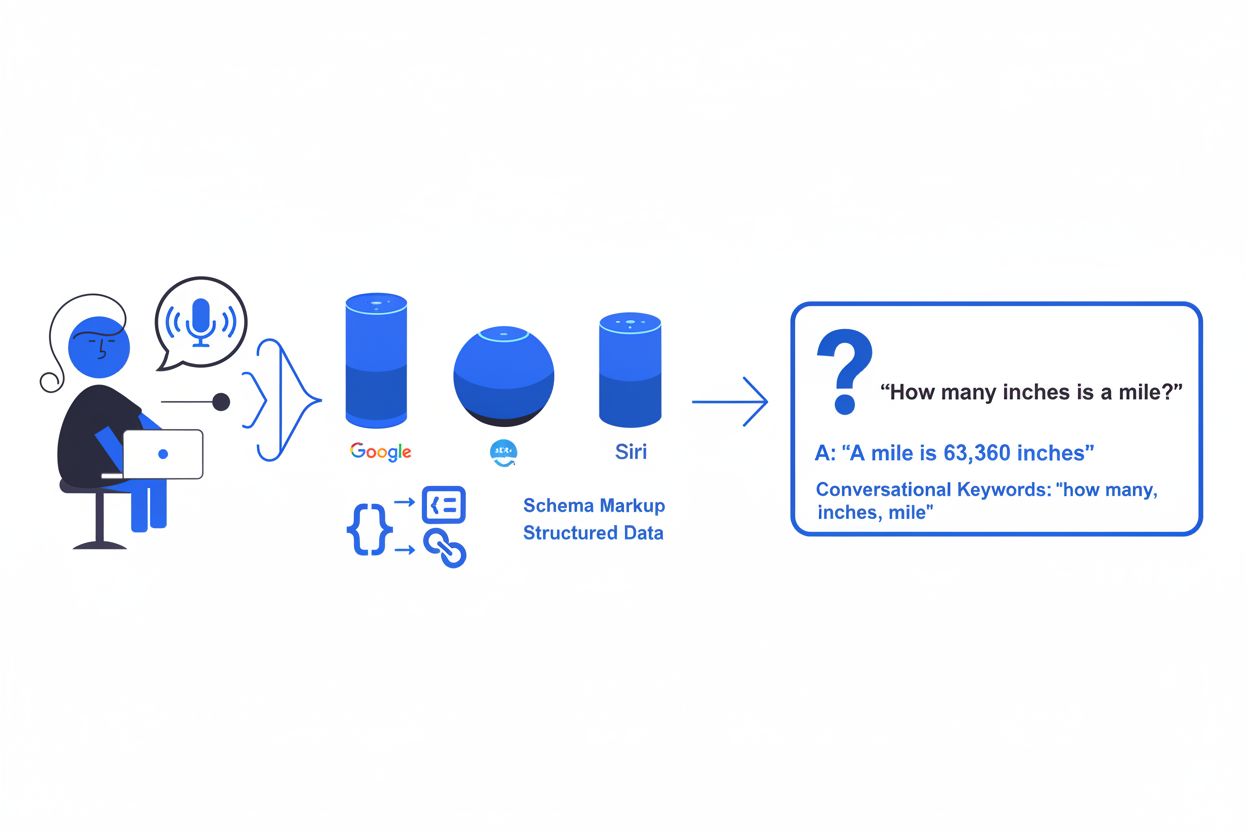
Voice Search Optimization is the practice of tailoring content for voice-activated searches. Learn how to optimize for Alexa, Google Assistant, Siri, and other ...