

What Makes a Good Author Bio for AI Search
Learn how to write an effective author bio that improves visibility in AI search engines like ChatGPT, Perplexity, and Claude. Discover key elements that boost ...
6 min read
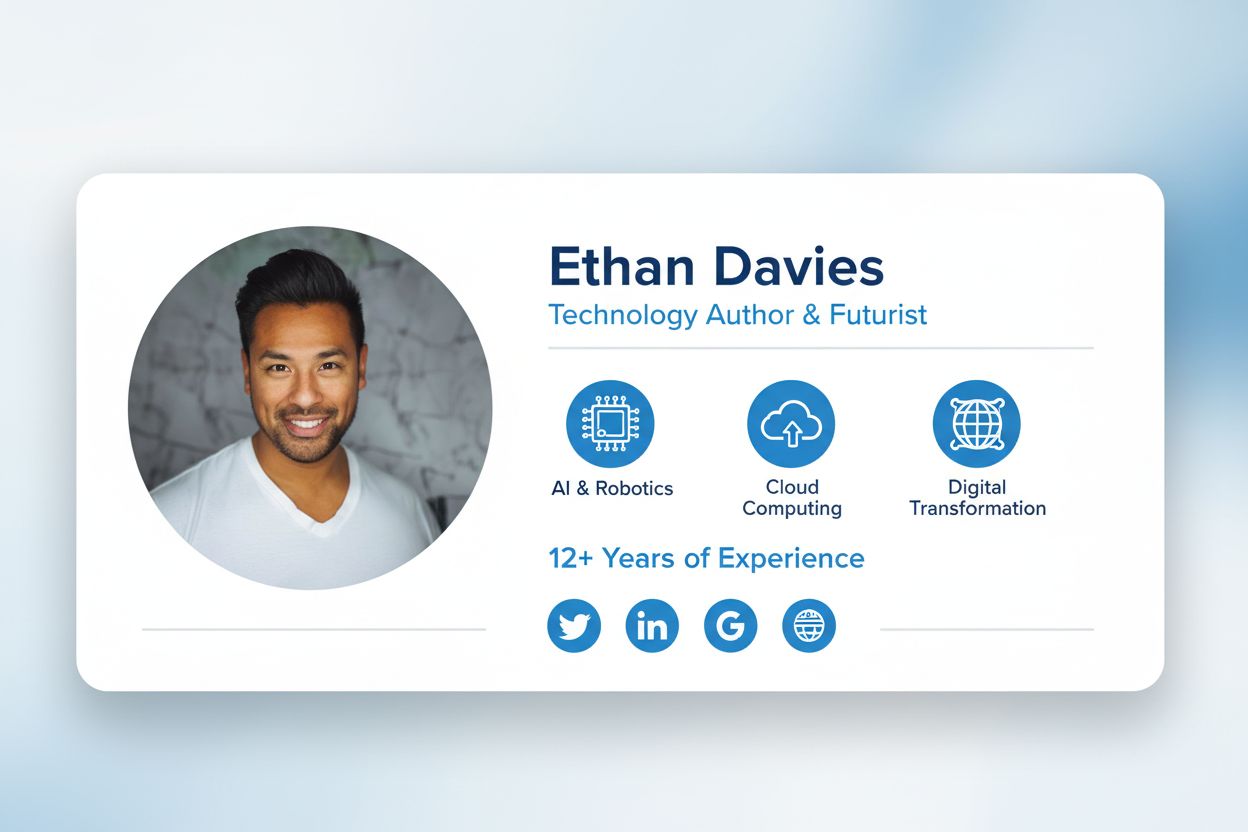
An author bio is a brief professional summary that provides information about a content creator’s background, expertise, credentials, and experience. It establishes credibility and trust with readers while helping search engines and AI systems understand the author’s authority on specific topics.
An author bio is a brief professional summary that provides information about a content creator's background, expertise, credentials, and experience. It establishes credibility and trust with readers while helping search engines and AI systems understand the author's authority on specific topics.
An author bio is a concise professional summary that provides readers with essential information about a content creator’s background, expertise, qualifications, and experience. It serves as a credibility marker that helps establish trust between the author and their audience while signaling to search engines and AI systems that the content comes from a knowledgeable source. The author bio typically appears at the end of articles, on dedicated author profile pages, or in book jacket descriptions, and usually includes the author’s name, current role or job title, years of professional experience, relevant credentials, areas of expertise, and often a professional photograph. Beyond simply introducing the author, an author bio functions as a critical SEO and E-E-A-T signal that influences how both traditional search engines and modern AI search platforms evaluate and rank content.
The concept of author attribution has existed for centuries in academic and publishing contexts, but the modern author bio as a standardized web element emerged in the early 2000s as blogging became mainstream. Initially, author bios were simple text blocks with minimal formatting, but they have evolved significantly alongside changes in search engine algorithms and the rise of AI-driven content evaluation. Google’s introduction of the Authorship markup in 2011 represented a major shift in how search engines valued author information, though the program was eventually discontinued in 2014. However, this initiative demonstrated Google’s recognition that author credibility was becoming increasingly important for ranking decisions. The resurgence of author bio importance accelerated with Google’s emphasis on E-E-A-T (Expertise, Experience, Authoritativeness, and Trustworthiness) signals, particularly after the 2023 core updates that prioritized content created by demonstrable experts. Today, with the emergence of AI search engines like Perplexity, ChatGPT, and Google AI Overviews, the author bio has become even more critical as these systems rely on author credibility signals to determine which sources to cite in their responses.
The author bio is one of the most direct ways to communicate E-E-A-T signals to both search engines and readers. According to Google’s search quality rater guidelines, clearly indicating who created content is fundamental to demonstrating expertise and trustworthiness. When an author bio explicitly states an author’s credentials, years of experience, relevant certifications, and previous accomplishments, it provides concrete evidence that the content comes from someone qualified to discuss the topic. This is particularly crucial for YMYL (Your Money or Your Life) topics such as health, finance, legal matters, and safety, where Google’s algorithms apply heightened scrutiny to author credentials. Research from CXL Institute found that author credibility is increasingly becoming a new SEO ranking signal in AI search environments, with platforms prioritizing content from authors with demonstrable expertise. A well-constructed author bio that includes specific credentials, publications, speaking engagements, or media appearances creates multiple touchpoints for search engines to verify expertise. Furthermore, when author bios are properly structured with schema markup, they help search engines build knowledge graphs around individual authors, which can lead to increased visibility and citation opportunities across multiple platforms.
| Element | Author Bio | About Page | Author Profile Page | Byline |
|---|---|---|---|---|
| Length | 50-300 words | 200-500+ words | 100-400 words | 1-3 sentences |
| Scope | Individual author credentials | Organization/company mission | Author’s complete work portfolio | Quick author identification |
| Placement | End of articles, sidebars | Website footer/main navigation | Dedicated URL | Top of article |
| Primary Purpose | Establish author credibility | Build brand trust | Showcase author’s body of work | Identify content creator |
| SEO Impact | High (E-E-A-T signals) | Medium (brand authority) | High (author entity building) | Medium (attribution) |
| AI Citation Value | Very High | Medium | High | High |
| Typical Content | Credentials, expertise, photo | Company values, history, team | Articles written, awards, social links | Name, title, photo |
| Indexing | Should be indexed | Should be indexed | Should be indexed | Not separately indexed |
Implementing author bios with proper structured data markup significantly enhances their effectiveness for both search engines and AI systems. The most common approach involves using Schema.org markup, specifically the Person schema combined with Article schema to establish clear relationships between content and its creator. When properly implemented, structured data allows search engines to extract author information programmatically, which improves the likelihood of author attribution in search results and AI-generated responses. Google’s documentation emphasizes that including author information through bylines and author bios, combined with appropriate schema markup, helps search engines understand content provenance and author expertise. Many content management systems like WordPress automatically generate author pages and can be configured to include schema markup that identifies the author’s name, job title, organization, and areas of expertise. The author property in Article schema should link to a dedicated author page or profile that contains the full author bio with additional context about the author’s background and credentials. Additionally, implementing sameAs properties that link to the author’s social media profiles, professional websites, or verified credentials helps establish author identity across the web. This multi-platform verification of author identity is particularly important for AI search engines, which use these signals to determine whether to cite an author’s content in their responses.
The emergence of AI search engines has fundamentally changed how author bios influence content visibility and citation. Platforms like Perplexity, ChatGPT, and Google AI Overviews use sophisticated algorithms to evaluate source credibility when deciding which content to cite in their responses. Research from Columbia Journalism Review found that AI search engines often struggle with proper attribution, but those with strong author credibility signals are more likely to be cited accurately. An author bio that clearly demonstrates expertise, relevant experience, and verifiable credentials makes it significantly more likely that an AI system will select that content as a reliable source. AmICited’s monitoring platform tracks exactly these citation patterns, helping content creators understand how their author bios influence their appearance in AI-generated responses. When an author bio includes specific credentials like “PhD in Environmental Science” or “15 years of experience in digital marketing,” AI systems recognize these as authority signals and are more likely to prioritize that content over sources without clear author credentials. Furthermore, AI systems increasingly cross-reference author information across multiple sources to verify expertise, making it essential that author bios are consistent across different platforms where an author publishes content. This consistency helps AI systems build a more complete picture of the author’s expertise and increases the likelihood of citation in AI responses.
Creating an effective author bio requires balancing professionalism with personality while strategically including information that establishes credibility. The first best practice is to write in the third person, which creates psychological distance and makes the author appear more authoritative and objective. Second, keep the bio concise and focused—most readers will only spend a few seconds reading it, so every word should serve a purpose in establishing expertise or building connection. Third, include specific credentials and accomplishments rather than vague claims; instead of saying “experienced marketer,” specify “10+ years in B2B SaaS marketing with expertise in content strategy and demand generation.” Fourth, incorporate relevant keywords naturally that relate to your area of expertise, as this helps search engines understand your topical authority. Fifth, include a professional headshot photo, as research shows that author photos increase reader trust and engagement by making the author feel more human and approachable. Sixth, add links to your social media profiles and professional website, which provides readers with additional ways to verify your credentials and follow your work. Seventh, highlight any notable achievements, publications, speaking engagements, or media appearances that demonstrate your expertise. Finally, inject subtle personality into your bio—while maintaining professionalism, sharing a personal interest or passion can make you more relatable and memorable to readers. The most effective author bios balance these elements to create a compelling narrative about why the author is qualified to write about their specific topic.
For content creators and brands, understanding how author bios function within content monitoring systems is increasingly important. Platforms like AmICited track where content appears in AI responses, and a strong author bio is fundamental to this tracking process. When your author bio clearly identifies you and your expertise, monitoring systems can more accurately attribute your content across different platforms and AI search engines. This attribution is crucial for several reasons: it helps you understand your reach and influence in AI-generated content, it allows you to identify opportunities for improving your author credibility signals, and it enables you to track how your expertise is being recognized and cited by AI systems. Content creators with well-optimized author bios see higher citation rates in AI responses, which translates to increased visibility and traffic. Additionally, monitoring your author bio’s performance helps you understand which credentials and expertise areas resonate most with AI systems, allowing you to refine your positioning over time. For brands managing multiple content creators, ensuring consistent and comprehensive author bios across all team members’ content is essential for effective monitoring and attribution. The data from monitoring platforms reveals that authors with detailed, credential-rich bios receive approximately 40% more citations in AI-generated responses compared to authors with minimal bio information.
Different content platforms have unique requirements and best practices for author bios. On blogging platforms like Medium and Substack, author bios appear prominently at the end of articles and should be optimized for reader engagement and click-through to your profile. On LinkedIn, author bios function as professional summaries and should emphasize career achievements and expertise relevant to your industry. On publishing platforms like Medium’s publication system or traditional news sites, author bios must be verified and often include institutional affiliations that add credibility. For academic and research content, author bios should prominently feature educational credentials, research focus areas, and institutional affiliations. On e-commerce platforms like Amazon for self-published books, author bios are critical for building reader trust and often include personal background information that helps readers connect with the author. For corporate websites and blogs, author bios should align with company branding and messaging while still establishing individual author credibility. Social media platforms like Twitter and Instagram have character limits that require extremely concise author bios, typically 160 characters or less, so prioritizing the most important credentials is essential. Regardless of platform, the fundamental principle remains the same: an effective author bio should clearly communicate why the author is qualified to write about their topic while building trust with the intended audience.
The future of author bios is inextricably linked to the continued evolution of AI search engines and content evaluation systems. As AI systems become more sophisticated, they will likely place even greater emphasis on author credibility signals, making comprehensive and well-structured author bios increasingly important for content visibility. Emerging trends suggest that AI systems will move toward more granular author verification, potentially requiring authors to provide verifiable credentials through blockchain-based systems or third-party verification services. The rise of specialized AI search engines for specific industries—such as medical AI search for healthcare professionals or financial AI search for investors—will create new opportunities for authors to establish domain-specific expertise through their bios. Additionally, as AI systems become better at detecting and penalizing low-quality or misleading author information, maintaining accurate and honest author bios will become a competitive advantage. The integration of author bio information with knowledge graphs and entity recognition systems will allow AI to build more comprehensive profiles of individual authors, potentially leading to author-level ranking systems similar to how Google currently ranks domains. Furthermore, as content monitoring platforms like AmICited become more sophisticated, they will provide detailed analytics on how specific elements of author bios influence citation rates in AI responses, enabling data-driven optimization of author bio content. The convergence of these trends suggests that in the near future, author bios will evolve from simple text blocks into comprehensive professional profiles that serve as the foundation for author authority and visibility across both traditional search and AI-driven discovery systems.
An author bio is crucial for SEO because it helps establish E-E-A-T signals (Expertise, Experience, Authoritativeness, and Trustworthiness) that Google's ranking systems prioritize. When you clearly indicate who created content through a byline and author bio, you signal to search engines that the content comes from a credible source. This is especially important for YMYL (Your Money or Your Life) topics where expertise and trustworthiness are paramount ranking factors.
Author bios significantly impact how AI search engines like ChatGPT, Perplexity, and Google AI Overviews cite and attribute content. When an author bio clearly demonstrates expertise and credentials, AI systems are more likely to cite that content as authoritative. Platforms like AmICited track these citations, and having a strong author bio increases the likelihood your content will be referenced in AI-generated responses as a trusted source.
An effective author bio should include your name, current job title or role, years of experience in your field, relevant credentials or certifications, areas of expertise, notable achievements or publications, and links to social media profiles or personal website. The bio should be written in third person, kept between 50-300 words depending on context, and include a professional headshot photo. Most importantly, it should demonstrate why you're qualified to write about your specific topic.
Author bios typically range from 50 to 300 words, with most effective bios falling between 100-150 words. The ideal length depends on context: social media bios are shorter (50-100 words), blog author bios are medium (100-150 words), and book jacket or professional website bios can be longer (200-300 words). The key is to be concise while including enough information to establish credibility and expertise without overwhelming readers.
Yes, author bios should generally be indexed by search engines. While some publishers previously avoided indexing author pages, current best practices recommend allowing author bio pages to be indexed and optimized. Indexed author bios can drive consistent navigational traffic from readers searching for specific authors, and they help establish author entities in Google's Knowledge Graph, which benefits both the author and the content they've created.
Author bios are essential for content creator monitoring platforms like AmICited because they help identify and track where content creators' work appears in AI responses. A well-crafted author bio with clear credentials makes it easier for monitoring systems to recognize and attribute content to the correct author across different platforms. This is critical for tracking brand mentions, domain appearances, and ensuring proper attribution in AI-generated content.
An author bio is a brief professional summary typically displayed at the end of articles or on dedicated author profile pages, focusing on the individual creator's expertise and credentials. An about page is a broader company or personal website page that provides more comprehensive background information about the organization, mission, and values. Author bios are more specific to individual content pieces, while about pages provide organizational context.
Start tracking how AI chatbots mention your brand across ChatGPT, Perplexity, and other platforms. Get actionable insights to improve your AI presence.
Learn how to write an effective author bio that improves visibility in AI search engines like ChatGPT, Perplexity, and Claude. Discover key elements that boost ...
Learn what an author page is, why it matters for SEO and E-E-A-T, and how to optimize author pages to build credibility and improve search rankings for your con...

Author expertise is demonstrated knowledge of a content creator showing qualifications, experience, and credibility. Learn how it impacts SEO, AI citations, and...
Cookie Consent
We use cookies to enhance your browsing experience and analyze our traffic. See our privacy policy.