
LLM Seeding
Learn what LLM Seeding is and how to strategically place content on high-authority platforms to influence AI training and get cited by ChatGPT, Claude, and othe...
9 min read
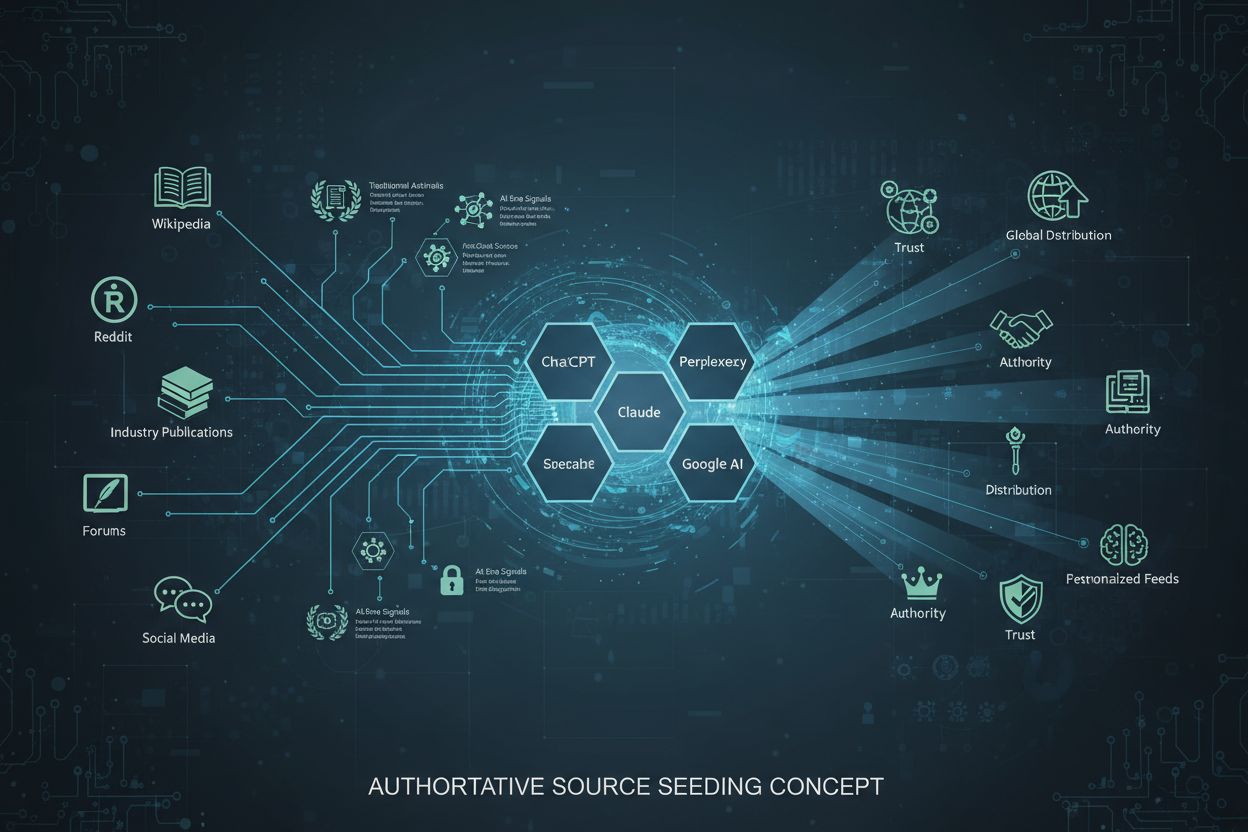
Strategic placement of content on high-authority platforms that AI systems trust and actively reference when generating responses. This approach prioritizes AI citations and LLM visibility across platforms like ChatGPT, Perplexity, and Google AI Overviews, ensuring your brand appears in AI-generated answers even when users don’t visit your website directly.
Strategic placement of content on high-authority platforms that AI systems trust and actively reference when generating responses. This approach prioritizes AI citations and LLM visibility across platforms like ChatGPT, Perplexity, and Google AI Overviews, ensuring your brand appears in AI-generated answers even when users don't visit your website directly.
Authoritative source seeding is the strategic placement of content on high-authority platforms that AI systems trust and actively reference when generating responses. Unlike traditional SEO, which focuses on driving traffic through search engine rankings, authoritative source seeding prioritizes AI citations and LLM visibility across platforms like ChatGPT, Perplexity, Claude, and Google AI Overviews. This approach recognizes a fundamental shift in how users discover information: instead of clicking through to websites, they increasingly rely on AI systems to synthesize and present answers directly. By seeding your content on platforms that AI systems recognize as authoritative, you ensure your brand appears in these AI-generated responses, building awareness and trust even when users never visit your website. The goal is no longer just to rank high in search results—it’s to become a trusted source that AI systems cite when answering questions relevant to your industry.
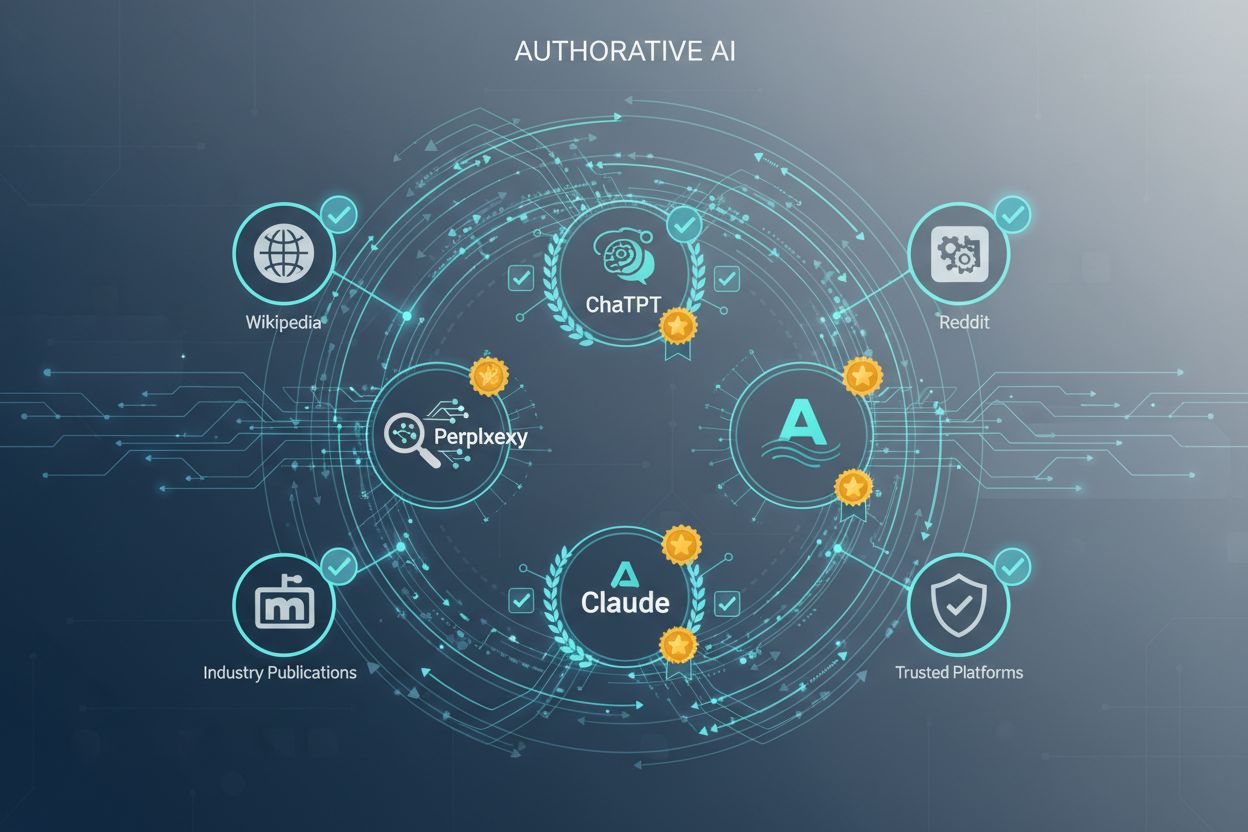
Large language models determine source authority through three primary signals that differ significantly from traditional search engine ranking factors:
Structure: Content that is well-organized with clear headings, bullet points, tables, and labeled sections is easier for AI systems to parse and extract information from. Unstructured walls of text are harder for LLMs to understand and cite accurately.
Context: AI systems evaluate whether content explains not just what you offer, but who it’s for and what problems it solves. A landing page stating “AI-powered SEO toolkit” carries less weight than one explaining “AI-powered SEO toolkit for tracking brand visibility across ChatGPT, Perplexity, and Google AI Overviews.”
Repetition: When a brand or concept appears consistently across multiple authoritative sources—third-party publishers, video transcripts, customer reviews, and community discussions—AI systems develop greater confidence in citing that information.
| Authority Signal | Traditional SEO | AI Systems |
|---|---|---|
| Primary Factor | Backlinks and domain authority | Content quality and platform reputation |
| Citation Basis | Page ranking position | Source credibility and consistency |
| Authority Metric | Domain Authority (DA) score | Entity Authority and semantic signals |
| Update Frequency | Real-time indexing | Periodic model training |
| Single Source Weight | High (top ranking matters) | Low (multiple sources matter more) |
Research shows that nearly 90% of ChatGPT citations come from URLs ranked position 21 or lower in Google, demonstrating that traditional rankings matter far less than content quality and distributed presence across trusted platforms. This means a well-structured comparison article on page 4 of Google could receive more AI citations than a competitor ranking in the top 5, if the content provides clearer answers and appears on more authoritative platforms.
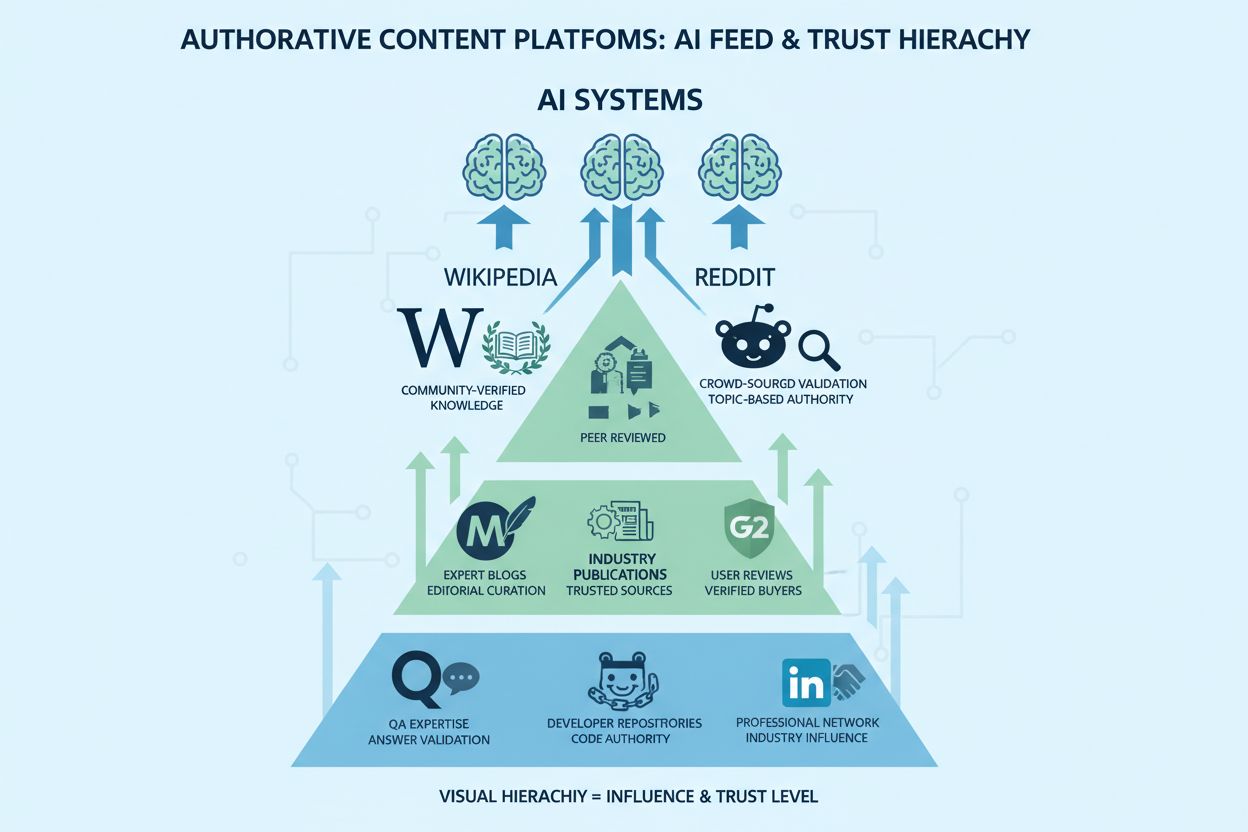
AI systems prioritize content from specific platforms known for quality, editorial oversight, and community validation. Here are the most effective platforms for authoritative source seeding:
Wikipedia - The most influential source for AI training data, used for definitions, factual information, and entity recognition. AI systems frequently cite Wikipedia when establishing baseline facts about topics and organizations.
Reddit - The most-cited source in AI responses according to recent studies. Authentic user discussions, problem-solving threads, and community expertise make Reddit invaluable for AI training and citation.
Medium - A platform favored by AI systems for its clean layout, semantic structure, and consistent quality standards. Long-form content published here receives high citation rates.
Industry Publications - Niche-specific publications like TechCrunch, HubSpot, MarketingLand, and similar authoritative outlets in your industry carry significant weight with AI systems.
Quora - Q&A format content that directly answers user questions in natural language is highly valued by LLMs, making Quora responses frequently cited in AI-generated answers.
G2, Capterra, and TrustRadius - Review platforms with structured product information, user feedback, and comparison data that AI systems actively reference for purchasing decisions.
GitHub - Essential for technical brands, with documentation, README files, and community discussions frequently cited by AI systems answering technical questions.
LinkedIn Articles - Professional content from verified profiles carries credibility signals that AI systems recognize, especially for B2B and business-focused topics.
Choosing the right platforms depends on your industry, audience, and content type. A software company should prioritize G2 and GitHub, while a lifestyle brand might focus on Medium and industry publications. The key is selecting platforms where your target audience researches and where AI systems actively source information.
Certain content formats are inherently more “citation-worthy” because they provide the structured, clear information that AI systems can easily extract and reference:
Structured “Best Of” Lists - Lists with transparent selection criteria, clear evaluation frameworks, and specific use-case recommendations (e.g., “Best for freelancers on a budget”) are frequently cited by AI systems when users ask for recommendations.
First-Person Product Reviews - Reviews that include testing methodology, measurable outcomes, balanced pros and cons, and specific use cases demonstrate authenticity that AI systems recognize and trust.
Comparison Tables - Clean, structured tables comparing options across multiple criteria with clear verdicts for different use cases are extracted and cited frequently in AI responses about product decisions.
FAQ-Style Content - Questions formatted as natural language queries with direct, concise answers match the Q&A structure that LLMs were built to understand and reproduce.
Original Research and Data - Unique studies, surveys, and data visualizations with transparent methodology are cited by AI systems as authoritative sources when discussing industry trends and statistics.
How-To Guides and Tutorials - Step-by-step instructions with clear headings, numbered lists, and practical examples are frequently referenced when AI systems provide procedural guidance.
The common thread across all these formats is semantic chunking—organizing content into short, clearly labeled sections that focus on single ideas or answers. This structure signals credibility to both human readers and AI systems, making your content more likely to be cited. Using consistent layouts, clear headings (H2, H3, H4), and visual elements like bullet points and tables dramatically increases the likelihood that AI systems will extract and cite your content.
Entity authority—how well AI systems recognize and trust your brand as a distinct, authoritative entity—matters more than ever in the AI era. Building this authority requires consistent effort across multiple platforms and touchpoints. Maintain identical brand information across all platforms where you publish: your company name, description, key messaging, and positioning should be consistent across your website, LinkedIn, Wikipedia, industry directories, and all other profiles. This consistency helps AI systems understand and trust your brand entity.
Cross-platform reinforcement involves positioning your brand consistently across multiple authoritative sources so AI systems encounter your brand repeatedly in similar contexts. When your brand appears in the same context as established industry leaders—through expert roundups, research reports, and collaborative content—AI systems develop stronger entity recognition. This co-citation strategy is particularly powerful: being mentioned alongside recognized market leaders signals to AI systems that your brand belongs in that competitive set.
Verified author credentials also strengthen entity authority. When your team members have detailed LinkedIn profiles, published bylines, speaking engagements, and industry recognition, AI systems associate your brand with verified expertise. This is more effective than one-time campaigns or isolated mentions. Building entity authority is a long-term commitment that compounds over time as your brand appears consistently across more sources, in more contexts, with stronger credentials and clearer positioning.
Technical optimization helps AI systems parse, understand, and cite your content more accurately. Schema markup is essential—implementing FAQ schema for question-and-answer content, HowTo schema for procedural guides, and Dataset schema for research findings helps AI systems understand your content structure. Using JSON-LD format ensures this structured data is easily accessible to AI crawlers.
Semantic HTML structure matters significantly. Use proper heading hierarchy (H1 for main topic, H2 for major sections, H3 for subsections) to help AI systems understand content organization. Clear, descriptive subheadings that include relevant keywords signal content topics to AI systems. Metadata optimization includes writing descriptive title tags and meta descriptions that accurately represent your content, using clear URLs that reflect content topics, and providing comprehensive alt text for images that describes both the visual content and its relevance.
Mobile-friendly design and fast page load times ensure AI crawlers can access your content efficiently. Optimize images with descriptive file names and alt text, implement proper internal linking to help AI systems understand relationships between content pieces, and ensure your site structure is clean and logical. These technical elements work together to make your content more accessible and trustworthy to AI systems.
Measuring success requires different metrics than traditional SEO since AI citations don’t always generate direct traffic. Test brand mentions manually by querying AI systems with relevant industry questions using incognito mode to avoid personalized results. Create a standardized list of queries representing common customer questions and track whether your brand appears in responses over time. Document the sentiment and context of each mention—are you positioned as a budget option, premium choice, or innovative leader?
Monitor direct traffic patterns in Google Analytics and compare them to organic traffic trends in Google Search Console. A signature pattern of LLM influence is declining organic clicks paired with stable or growing direct traffic, as users discover your brand through AI mentions and then search for you directly. Track unlinked brand mentions using tools like Semrush Brand Monitoring, Brand24, or AmICited.com, which specifically monitors how AI systems reference your brand across ChatGPT, Perplexity, Google AI Overviews, and other platforms. These tools provide comprehensive tracking of citation frequency, sentiment analysis, and competitive positioning in AI responses.
Establish baseline measurements before implementing seeding strategies to accurately measure improvement. Track key metrics including citation frequency across different AI systems, the accuracy of brand information in AI responses, competitive positioning relative to rivals, and correlation with business outcomes like branded search volume and lead generation. The key insight is that AI citations often influence user behavior in ways that don’t immediately show up in traditional analytics—users might discover your brand through AI and research you later through direct search or offline channels.
Inconsistent entity information across platforms confuses AI systems and reduces citation likelihood. Solution: Conduct regular audits of your brand information across all platforms and maintain a master document with current, consistent information. Use this as a reference when updating profiles and contributing to external platforms.
Limited domain coverage occurs when brands focus seeding efforts too narrowly on primary product categories. Solution: Expand content coverage across multiple relevant topics that your target audience searches for, creating educational content that establishes expertise in broader industry contexts while naturally incorporating brand mentions.
Source bias emerges when AI systems favor certain types of sources over others, potentially excluding valuable brand content. Solution: Diversify your content distribution across multiple high-authority platforms rather than relying on a single channel. If AI systems consistently cite academic sources in your industry, prioritize getting mentioned in research reports and scholarly articles.
Attribution and context issues occur when AI systems mention your brand but provide incorrect context or misattribute information. Solution: Monitor AI responses regularly to identify context problems and address them through additional content that clarifies your brand positioning. Create clear, factual content that provides proper context for AI systems to reference accurately.
Long-term sustainability requires ongoing effort as AI systems evolve and change their source preferences. Solution: Build authoritative source seeding into regular content strategy processes rather than treating it as a one-time project. Stay informed about changes in AI system training data sources and adjust strategies accordingly. Maintain and update content regularly to ensure continued relevance and accuracy.
Multimodal AI systems that integrate text, images, video, and audio will dominate the landscape, requiring brands to optimize content across multiple formats. Visual content with comprehensive captions, video with detailed transcripts, and audio content with structured metadata will all contribute to AI citation opportunities. This means your seeding strategy must evolve beyond text-only content.
Real-time training and updates represent a major shift from periodic model updates. As AI systems begin updating continuously rather than in discrete training cycles, the value of fresh, timely content increases dramatically. News and timely data, industry event commentary, and regularly updated resources will gain importance in AI citation patterns.
Source verification emphasis will intensify as concerns about AI reliability grow. Content validated by independent sources, published by verified experts, and linked to primary sources will receive higher priority. This makes transparent sourcing, clear author credentials, and proper attribution increasingly important for maintaining citation authority.
Integration with emerging technologies including IoT, AR, and blockchain will create new opportunities for content distribution and verification. Blockchain-based content authorship verification and AR-enhanced content experiences may become new channels for authoritative source seeding.
The brands that understand and adapt to these evolving trends now will maintain competitive advantages as AI search becomes the dominant discovery mechanism. Building a foundation of authoritative source seeding today ensures your brand remains visible and trusted as these technologies continue to evolve and reshape how users discover information.
Traditional link building focuses on acquiring backlinks to improve search engine rankings and drive traffic. Authoritative source seeding prioritizes getting your content cited by AI systems, which may not include direct links but builds brand awareness and trust through AI mentions. While link building targets search algorithms, source seeding targets LLM training data and citation patterns.
Start with platforms most relevant to your industry: Wikipedia for general authority, Reddit for community validation, Medium for long-form content, industry publications for niche credibility, and review platforms like G2 for product-focused brands. The best platforms depend on where your target audience researches and where AI systems actively source information.
Results vary depending on platform and content quality. Some platforms like Reddit and Quora can generate AI citations within weeks if content is high-quality and well-structured. Wikipedia and industry publications may take longer due to editorial review processes. Most brands see measurable AI citation increases within 3-6 months of consistent seeding efforts.
Your own website serves as a foundation, but AI systems weight third-party mentions more heavily than self-promotion. A single mention on Reddit or in an industry publication carries more authority than identical content on your own site. Focus on getting your content cited on external authoritative platforms while maintaining a strong canonical source on your website.
Track brand mentions in AI tools by testing relevant queries in ChatGPT, Perplexity, and other LLMs. Monitor direct traffic increases paired with declining organic clicks, which indicates AI-driven brand discovery. Use tools like AmICited.com, Semrush Brand Monitoring, or Brand24 to track unlinked brand mentions and citation frequency across AI platforms.
Entity authority refers to how well AI systems recognize and trust your brand as a distinct, authoritative entity. Source authority refers to how trustworthy AI systems consider the platforms where your content appears. Both work together: consistent brand messaging across authoritative sources builds entity authority, which increases the likelihood of AI citations.
Update content regularly to maintain accuracy and relevance, especially for time-sensitive topics. For fast-changing industries, quarterly updates are recommended. For stable industries, biannual updates suffice. Consistent updates signal to AI systems that your content is current and reliable, improving citation credibility and reducing the risk of outdated information being cited.
Authoritative source seeding is a specific strategy within the broader LLM seeding approach. LLM seeding encompasses all tactics to get cited by AI systems, while authoritative source seeding specifically focuses on placing content on high-authority platforms that AI systems trust. Authoritative source seeding is one of the most effective LLM seeding tactics.
Track how AI systems like ChatGPT, Perplexity, and Google AI Overviews reference your brand. Get real-time insights into your AI visibility and competitive positioning.
Learn what LLM Seeding is and how to strategically place content on high-authority platforms to influence AI training and get cited by ChatGPT, Claude, and othe...

Learn how author authority influences AI search results and AI-generated answers. Understand E-E-A-T signals, expertise demonstration, and how to build credibil...
Learn proven strategies to establish yourself as an authoritative source in your niche. Discover how to build expertise, create credible content, and gain recog...
Cookie Consent
We use cookies to enhance your browsing experience and analyze our traffic. See our privacy policy.