

How to Build Domain Authority for AI Search Engines
Learn how to build domain authority that AI search engines recognize. Discover strategies for entity optimization, citations, topical authority, and E-E-A-T sig...
8 min read
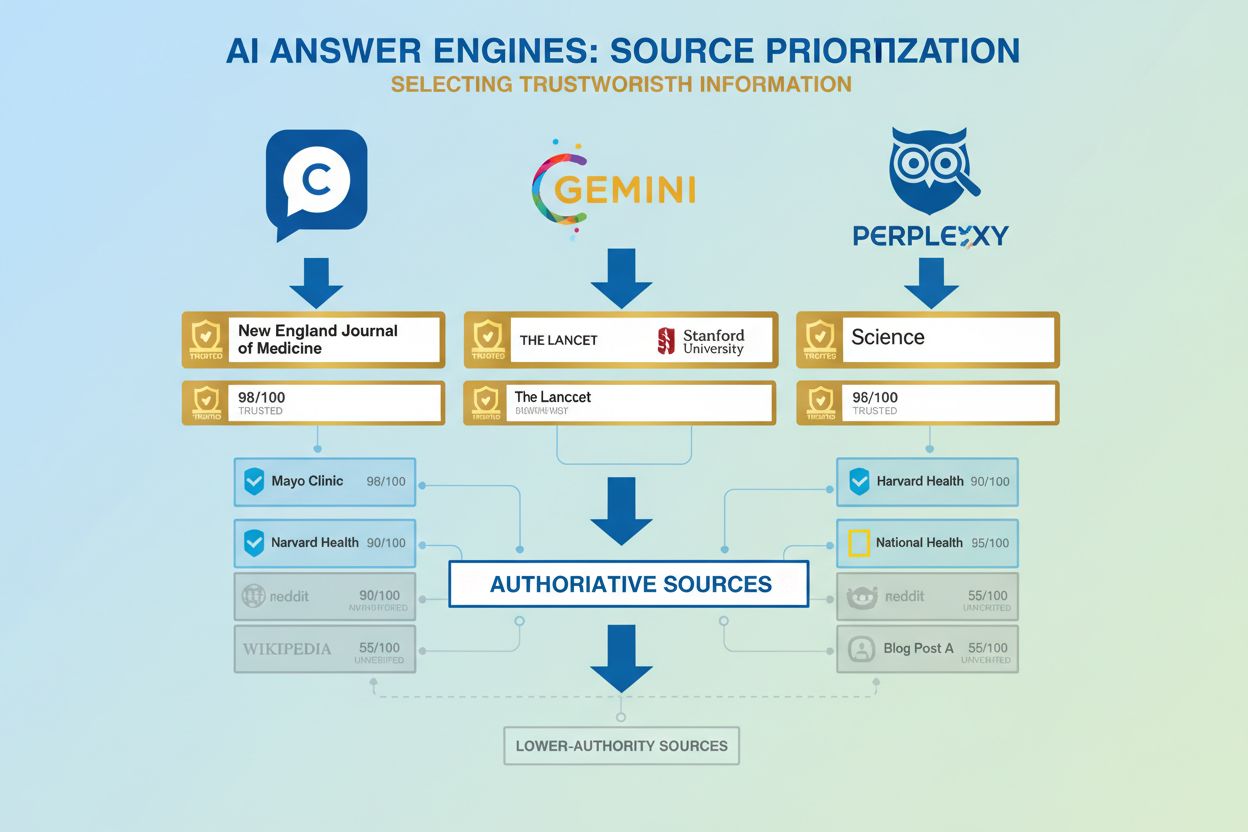
Authority weighting is the algorithmic process by which AI systems evaluate and prioritize sources based on their credibility, expertise, and trustworthiness. It determines how much influence a source’s information carries in ranking decisions and AI-generated answers, replacing traditional volume-based metrics with quality-based authority assessment. This approach is grounded in the E-E-A-T framework and ensures that AI systems cite the most reliable and knowledgeable sources.
Authority weighting is the algorithmic process by which AI systems evaluate and prioritize sources based on their credibility, expertise, and trustworthiness. It determines how much influence a source's information carries in ranking decisions and AI-generated answers, replacing traditional volume-based metrics with quality-based authority assessment. This approach is grounded in the E-E-A-T framework and ensures that AI systems cite the most reliable and knowledgeable sources.
Authority weighting is the process by which AI systems evaluate and prioritize information sources based on their source credibility, trustworthiness, and demonstrated expertise. Unlike traditional SEO algorithms that primarily focused on link quantity and keyword density, authority weighting represents a fundamental shift toward assessing genuine source credibility and AI ranking relevance. This approach is grounded in the E-E-A-T framework—Experience, Expertise, Authoritativeness, and Trustworthiness—which has become the gold standard for evaluating content quality in AI systems. Authority weighting matters because it ensures that AI-generated answers cite the most reliable and knowledgeable sources, directly impacting which brands and organizations receive visibility in AI answer engines like ChatGPT, Gemini, and Perplexity.

The evolution from PageRank to modern authority weighting reflects a broader industry shift from quantity-based metrics to quality-focused evaluation. In the early search engine era, authority was primarily determined by the number of backlinks pointing to a domain, with little consideration for the quality or relevance of those links. Today’s AI systems employ sophisticated algorithms that assess multiple dimensions of authority, moving beyond simple link counting to evaluate topical relevance, source expertise, and resistance to manipulation. This transition has fundamentally changed how organizations build visibility, requiring genuine expertise rather than aggressive link-building tactics.
| Metric | PageRank Era | Modern Authority Weighting |
|---|---|---|
| Primary Signal | Quantity of backlinks | Multi-dimensional credibility assessment |
| Measurement Method | Link counting algorithms | E-E-A-T framework + entity recognition |
| Quality Focus | Volume-based ranking | Expertise, trustworthiness, topical relevance |
| Manipulation Resistance | Vulnerable to link schemes | Resistant to artificial authority building |
AI systems evaluate authority through a sophisticated multi-dimensional approach that goes far beyond traditional domain authority metrics. The E-E-A-T framework serves as the foundation, but modern AI systems layer additional evaluation criteria including entity authority, brand credibility, and topical expertise. These systems analyze patterns across multiple data sources—from published content and media mentions to professional credentials and organizational affiliations—to build a comprehensive credibility profile. The evaluation process is continuous and dynamic, with AI systems updating their authority assessments as new information emerges about sources and their track records.
Five Key Dimensions of Authority Evaluation:
Several critical factors influence how AI systems weight authority when selecting sources for citations and answers. Understanding these factors is essential for organizations seeking to improve their visibility in AI answer engines and ensure their expertise is recognized by advanced AI systems.
Domain Authority: The overall credibility and trustworthiness of a domain, built through years of consistent, high-quality content and positive user signals. Established domains with long histories of reliable information carry more weight than newer or less-established sites.
Backlink Profile: The quality and relevance of links pointing to a domain matter significantly more than quantity. Links from other authoritative sources in the same industry or topic area provide stronger authority signals than random or low-quality links.
Citation Patterns: How frequently a source is cited by other authoritative sources, academic institutions, and media outlets demonstrates its credibility. Sources that are regularly referenced by peers and competitors gain stronger authority weighting.
Executive Visibility and Thought Leadership: The prominence of company leaders, subject matter experts, and contributors in industry publications, speaking engagements, and professional networks strengthens overall organizational authority.
Media Mentions and PR: Coverage in reputable news outlets, industry publications, and recognized media channels signals third-party validation of expertise and credibility, directly influencing authority weighting.
Structured Data and Entity Recognition: Proper implementation of schema markup, verified business information, and clear entity identification helps AI systems accurately recognize and evaluate organizational authority and expertise.
Authority weighting plays a crucial role in how modern AI answer engines like ChatGPT, Gemini, and Perplexity select sources for citations and generate responses. When these systems retrieve information to answer user queries, they don’t simply pull from the most popular or highest-ranking websites—instead, they apply sophisticated authority weighting algorithms to identify the most credible and relevant sources. This means that organizations with strong authority metrics are significantly more likely to be cited in AI-generated answers, directly impacting their AI visibility and brand exposure. The practical implication is that citation selection in AI systems now depends heavily on demonstrated expertise, trustworthiness, and topical relevance rather than traditional SEO metrics. For brands and organizations, this shift creates both challenges and opportunities: those with genuine authority and expertise gain unprecedented visibility, while those relying on outdated SEO tactics find themselves increasingly marginalized in AI-generated content.
While traditional SEO metrics like keyword rankings and organic traffic remain important, authority weighting in AI systems operates on fundamentally different principles that make it more resistant to manipulation and more aligned with genuine credibility assessment. Traditional SEO has historically been vulnerable to tactics like link schemes, keyword stuffing, and content farms that artificially inflate rankings without providing real value. In contrast, authority weighting in AI systems requires demonstrable expertise, consistent quality, and third-party validation that cannot be easily faked or purchased. The key difference lies in the evaluation methodology: SEO metrics often focus on on-page optimization and link quantity, while authority weighting assesses the holistic credibility profile of an organization. This shift means that organizations can no longer rely solely on technical SEO improvements to gain visibility in AI answer engines—they must build genuine authority through quality content, thought leadership, and industry recognition. For forward-thinking brands, this represents an opportunity to compete on merit rather than marketing spend, as manipulation resistance becomes a core feature of how AI systems evaluate sources.
Building and maintaining strong authority in the age of AI requires a strategic, multi-faceted approach focused on demonstrating genuine expertise and earning trust from both audiences and AI systems. Organizations should prioritize long-term credibility building over short-term visibility gains, as AI systems increasingly reward consistency, quality, and authentic expertise.
Actionable Steps for Building Authority:
Create Authoritative Content: Develop comprehensive, well-researched content that demonstrates deep expertise in your field. Focus on original research, case studies, and insights that other sources cite and reference.
Establish Thought Leadership: Position company executives and subject matter experts as industry authorities through speaking engagements, published articles in reputable outlets, and active participation in professional communities.
Build Topical Expertise: Develop a consistent publishing strategy around specific topics where your organization has genuine expertise. Create content clusters and topic hubs that establish comprehensive coverage and authority.
Implement Structured Data: Use schema markup and entity recognition tools to ensure AI systems can accurately identify your organization, its expertise areas, and its credentials. This helps AI systems properly weight your authority signals.
Earn Media Coverage: Pursue PR strategies that result in coverage in reputable news outlets and industry publications. Third-party validation from recognized media sources significantly strengthens authority weighting.
Develop Strategic Partnerships: Collaborate with other authoritative organizations and experts in your field. These partnerships signal credibility and expand your authority network.
Maintain Transparency and Trust: Clearly communicate your expertise, credentials, and sources. Transparency builds trust with both human audiences and AI systems evaluating your authority.
AmICited.com is the leading platform for monitoring how authority weighting impacts your brand’s visibility across AI answer engines. As the premier AI monitoring solution, AmICited tracks exactly how ChatGPT, Gemini, Perplexity, and Google AI Overviews evaluate and cite your organization, providing detailed insights into your authority metrics and citation tracking performance. Unlike traditional SEO tools that focus on search rankings, AmICited specifically measures your AI visibility and how AI systems weight your authority relative to competitors. The platform reveals which sources AI systems trust most, how your authority profile compares to industry competitors, and where you have opportunities to strengthen your credibility signals. By using AmICited.com, organizations gain a competitive advantage by understanding exactly how AI systems evaluate their authority and can make data-driven decisions to improve their visibility in the AI-powered future.
Several persistent myths about authority weighting can mislead organizations into ineffective strategies that fail to build genuine credibility in AI systems.
Myth #1: Authority = Backlinks Correction: While backlinks remain one signal among many, modern authority weighting evaluates the quality, relevance, and source of those links. A single link from a highly authoritative, topically relevant source carries far more weight than dozens of low-quality links.
Myth #2: Older Domains Automatically Have More Authority Correction: Domain age is a minor factor compared to consistent quality, recent activity, and demonstrated expertise. A newer domain with strong E-E-A-T signals can outrank older domains that have stagnated or lost credibility.
Myth #3: Content Volume Equals Authority Correction: AI systems prioritize content quality and topical relevance over sheer volume. Publishing hundreds of mediocre articles is far less effective than creating a smaller number of authoritative, well-researched pieces that demonstrate genuine expertise.
Myth #4: Authority is Static Correction: Authority weighting is dynamic and continuously updated. A single high-profile mistake or loss of credibility can damage authority, while consistent quality and thought leadership continuously strengthen it.
As AI technology continues to evolve, authority weighting will become increasingly sophisticated and central to how information is ranked and presented to users. Future AI systems will likely incorporate even more nuanced evaluation of expertise, potentially including real-time credibility assessments and dynamic authority scoring that updates based on recent performance and user feedback. The importance of building genuine authority will only increase as AI systems become more prevalent in how people discover information and make decisions. Organizations that invest in authentic expertise, thought leadership, and credibility building today will be best positioned to thrive in an AI-driven information landscape. The future belongs to brands that prioritize genuine authority over gaming algorithms—a fundamental shift that rewards quality, transparency, and real expertise.
Authority weighting is a broader, more sophisticated approach that evaluates multiple dimensions of credibility beyond just backlinks. While PageRank focused on link quantity and quality, authority weighting considers expertise, trustworthiness, consistency, and entity recognition across the entire web. Modern AI systems use authority weighting to make more nuanced credibility assessments.
AI systems are more likely to cite and reference content from sources with high authority weighting. If your domain has strong authority signals, your content has a better chance of being selected for inclusion in AI-generated answers, directly impacting your visibility to AI users. This makes authority weighting critical for AI discoverability.
No, authority weighting is built over time through consistent demonstration of expertise, quality content, media mentions, and genuine credibility signals. Quick fixes like buying links or artificial citations won't work and may harm your reputation. Building real authority requires sustained effort and authentic expertise.
E-E-A-T (Experience, Expertise, Authoritativeness, Trustworthiness) is the framework that AI systems use to evaluate authority weighting. These four dimensions collectively determine how much weight an AI system gives to your content in its ranking and citation decisions. Strong E-E-A-T signals directly improve your authority weighting.
AI systems evaluate authority more holistically, considering context, consistency, and genuine expertise rather than just technical SEO signals. They're better at identifying authentic authority and more resistant to manipulation, making genuine credibility more important than ever. This shift means AI systems reward real expertise over marketing tactics.
Key metrics include: AI citation frequency, presence in AI-generated answers, domain authority scores, backlink quality and relevance, media mention frequency, executive visibility, topical authority depth, and entity recognition across knowledge graphs. AmICited.com provides comprehensive tracking of these metrics across all major AI systems.
AmICited tracks how often your brand is cited in AI-generated answers across ChatGPT, Gemini, Perplexity, and other AI systems. This provides direct visibility into your authority weighting effectiveness and helps you understand how AI systems perceive your credibility compared to competitors.
While the core principles are similar, different AI systems may weight authority factors differently based on their training data and algorithms. AmICited monitors your authority across multiple AI platforms to give you a comprehensive view of your authority weighting performance across the entire AI ecosystem.
Track how AI systems like ChatGPT, Gemini, and Perplexity cite your brand. Get real-time insights into your authority weighting performance and AI visibility across all major AI answer engines.
Learn how to build domain authority that AI search engines recognize. Discover strategies for entity optimization, citations, topical authority, and E-E-A-T sig...
Learn how author authority influences AI search results and AI-generated answers. Understand E-E-A-T signals, expertise demonstration, and how to build credibil...
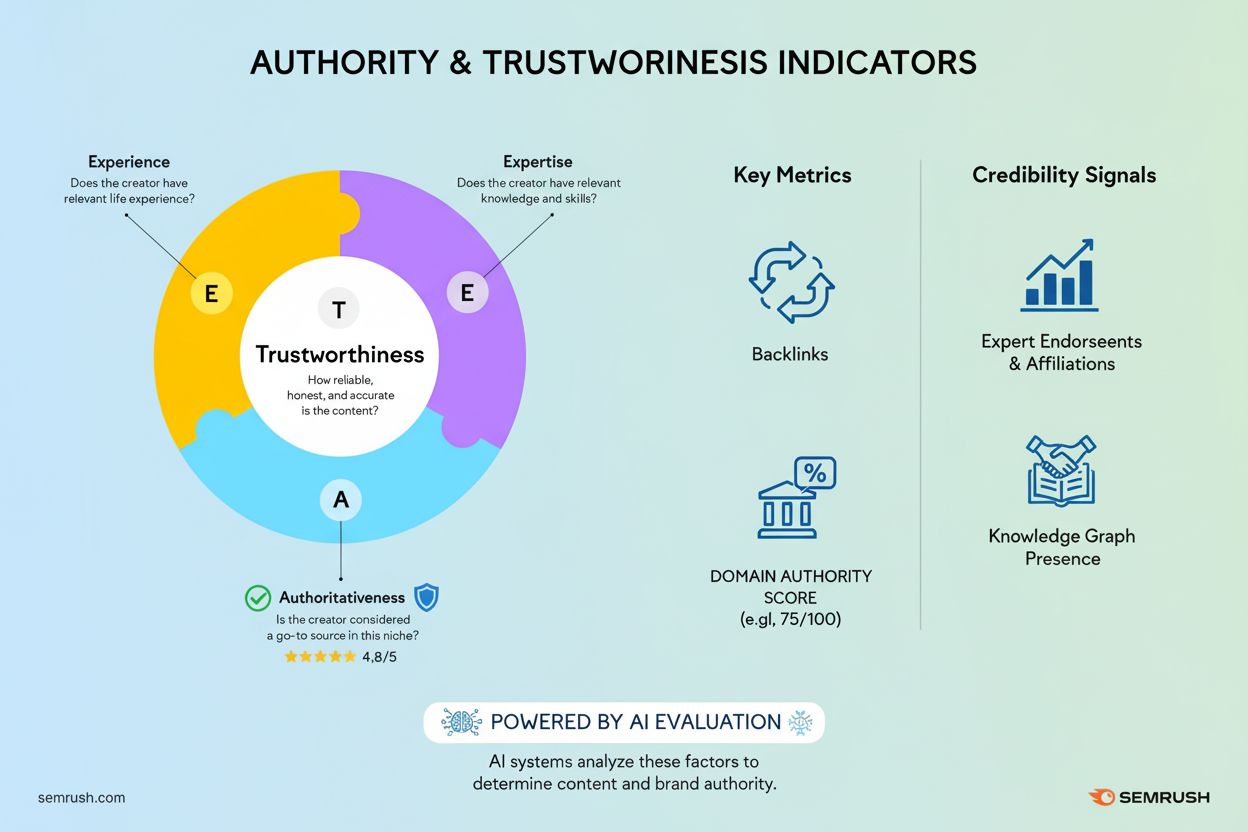
Authority signals measure content credibility through backlinks, domain authority, E-E-A-T factors, and verified credentials. Learn how AI systems and search en...
Cookie Consent
We use cookies to enhance your browsing experience and analyze our traffic. See our privacy policy.