
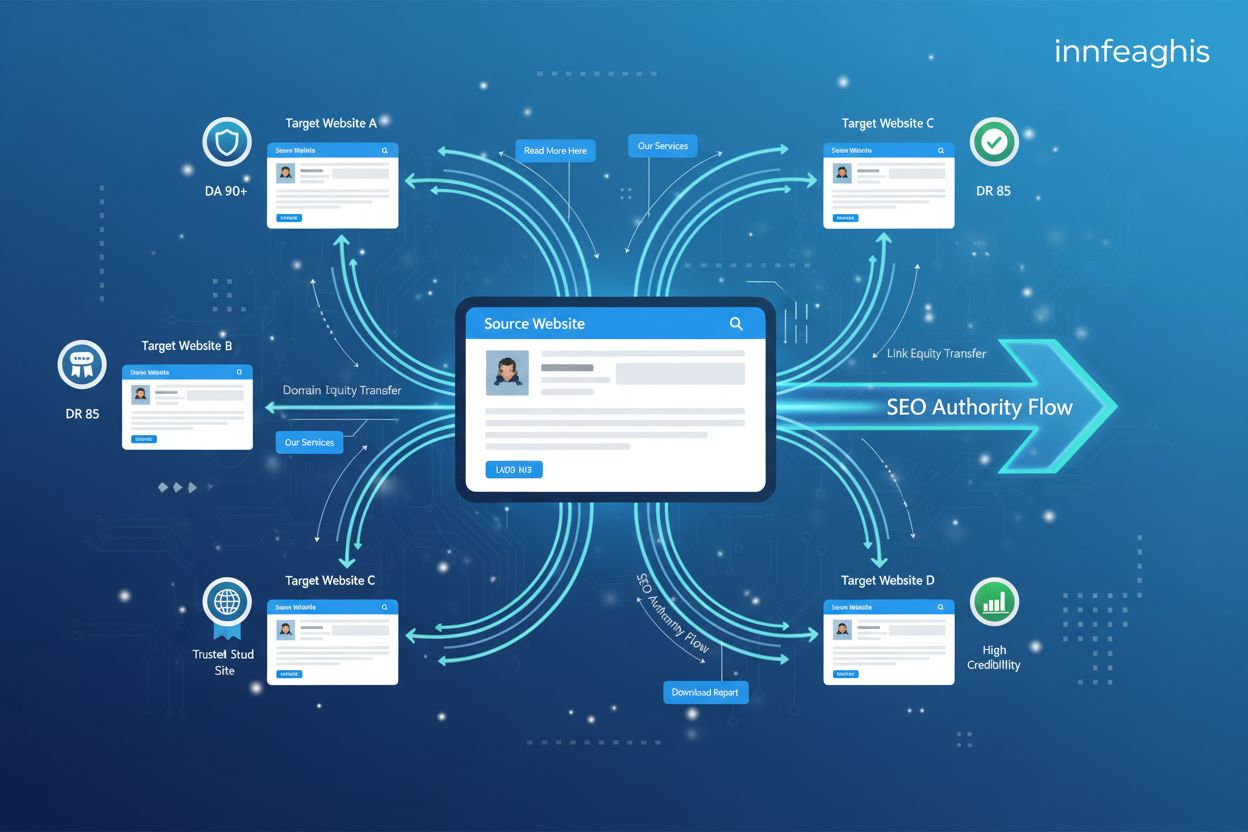
External Linking
External linking explained: hyperlinks to other websites that improve credibility, user experience, and SEO. Learn best practices for outbound links and their r...
10 min read
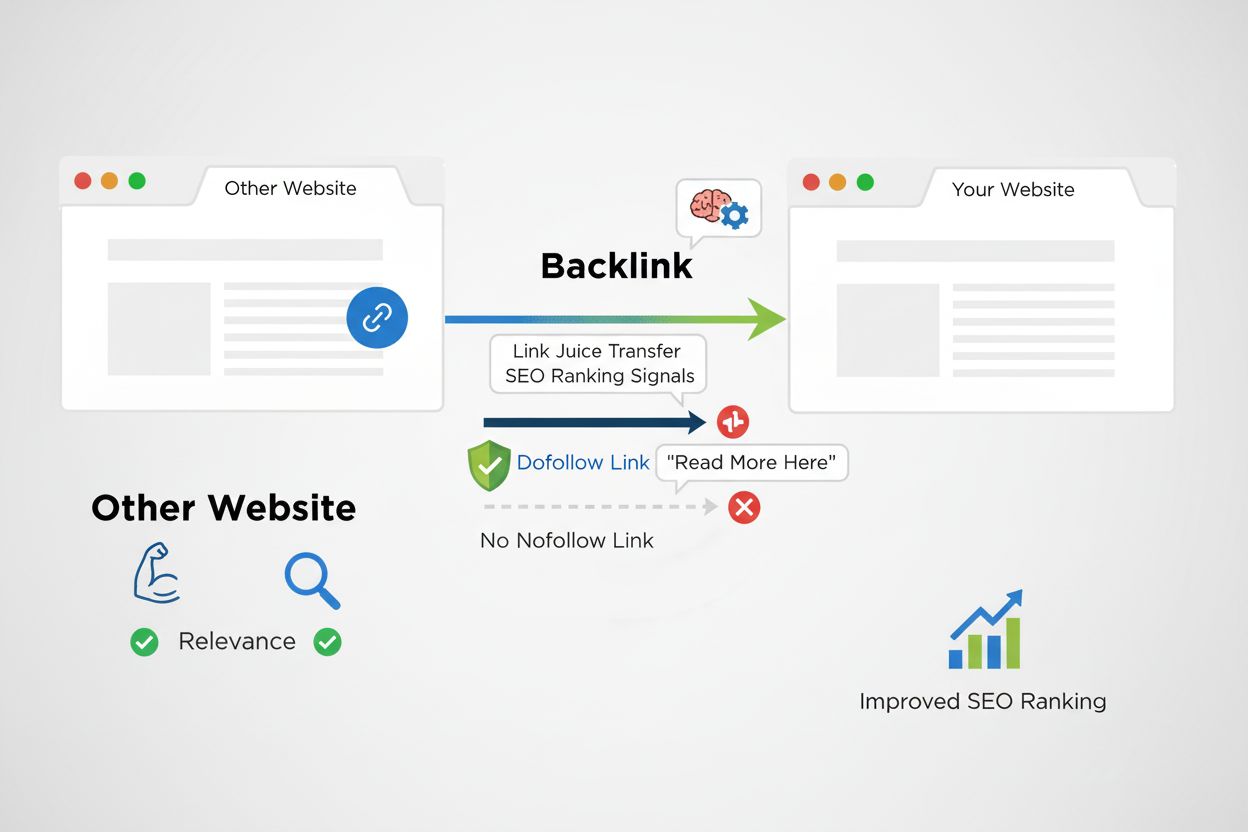
A backlink is a hyperlink from one website to another website, serving as a vote of credibility and authority that influences search engine rankings and domain authority. Backlinks are fundamental to SEO strategy, with the number and quality of referring domains being one of Google’s top three ranking factors.
A backlink is a hyperlink from one website to another website, serving as a vote of credibility and authority that influences search engine rankings and domain authority. Backlinks are fundamental to SEO strategy, with the number and quality of referring domains being one of Google's top three ranking factors.
A backlink is a hyperlink from one website to another website, creating an inbound link that points to your domain or a specific page on your site. Also known as an inbound link, incoming link, or external link, a backlink represents a vote of confidence from another website, signaling to search engines that your content is valuable, credible, and worthy of citation. From the perspective of the linking website, it is called an outbound link or external link. Backlinks form the foundation of search engine optimization and remain one of Google’s three most important ranking factors, alongside content quality and page experience. The concept of using links as ranking signals originated with Google’s PageRank algorithm, which was revolutionary in treating links as democratic votes that determine a website’s authority and trustworthiness in the digital ecosystem.
The importance of backlinks in search engine algorithms dates back to Google’s founding in 1998, when Larry Page and Sergey Brin introduced the PageRank algorithm as a fundamental innovation in web search. This algorithm recognized that not all web pages are created equal, and that links from authoritative sources carry more weight than links from obscure websites. Over the past two decades, while Google has made thousands of algorithmic changes and introduced over 200 ranking factors, backlinks have remained a cornerstone of SEO strategy. Industry research conducted by Backlinko analyzing 11.8 million Google search results found that the number of referring domains linking to a page had the highest correlation with search rankings—higher than any other single factor. This enduring importance reflects the reality that backlinks serve as third-party endorsements, making them difficult to manipulate and therefore highly valuable as ranking signals. The evolution of backlink analysis has also become more sophisticated, with modern SEO tools now evaluating not just the quantity of backlinks but their quality, relevance, anchor text, and the authority of referring domains.
Backlinks are critical to SEO success because they directly influence how search engines perceive your website’s authority and trustworthiness. When a reputable website links to your content, it essentially tells Google: “This content is valuable and credible enough to recommend to our audience.” This endorsement effect is particularly powerful when backlinks come from high-authority domains with strong domain authority scores. Research shows that websites ranking in the top position on Google have approximately 3.8 times more backlinks than websites ranking in positions 2-10, demonstrating the strong correlation between backlink quantity and search visibility. Beyond search rankings, backlinks also drive direct referral traffic to your website, as users clicking on links from other sites are brought directly to your content. This referral traffic not only increases your site’s visibility but also enhances brand awareness and establishes your website as a recognized authority within your industry. Additionally, backlinks contribute to the concept of link equity or link juice, where authority and ranking power flow from one page to another through hyperlinks, allowing you to build domain authority across your entire website.
| Backlink Type | Source | Follow Status | SEO Value | Acquisition Method | Best For |
|---|---|---|---|---|---|
| Editorial/Organic | Natural citations from relevant websites | Dofollow | Very High | Content creation & outreach | Long-term authority building |
| Guest Post | Author bio on external websites | Dofollow | High | Relationship building & pitching | Brand awareness & traffic |
| Digital PR | Press releases & news coverage | Mixed (often nofollow) | Medium-High | Media outreach & newsworthy content | Brand visibility & credibility |
| HARO/Expert Quotes | Media request platforms | Dofollow | High | Expert response & pitching | Authority establishment |
| Directory/Business Listing | Business directories & catalogs | Dofollow | Medium | Profile creation | Local SEO & citations |
| Reciprocal | Link exchange agreements | Dofollow | Low-Medium | Mutual agreements | Relationship building |
| Broken Link Replacement | Replacing dead links | Dofollow | High | Competitor analysis & outreach | Quick wins & relevance |
| Nofollow Links | Comments, forums, social media | Nofollow | Low (direct SEO) | Community participation | Brand mentions & traffic |
| Sponsored/Paid | Paid placements & ads | Sponsored | Low (direct SEO) | Paid campaigns | Brand awareness |
| PBN (Private Blog Network) | Owned network of websites | Dofollow | High-Risk | Network creation | Risky & not recommended |
The mechanism by which backlinks influence search rankings operates through the concept of PageRank and link equity transfer. When a high-authority page links to your website, it passes a portion of its accumulated authority to your page, a process known as link juice or link equity. The amount of authority transferred depends on several factors: the authority of the linking page, the number of outbound links on that page (more outbound links dilute the authority passed), and the relevance of the linking page to your content. Dofollow backlinks are the default link type that passes authority, while nofollow backlinks explicitly instruct search engines not to pass authority, though they may still provide referral traffic and brand visibility. The anchor text of a backlink—the visible, clickable text of the link—provides contextual information to search engines about what your page is about, making keyword-relevant anchor text valuable but requiring careful balance to avoid appearing manipulative. Topical relevance is another critical factor; a backlink from a website about fitness to a fitness blog carries more weight than a backlink from an unrelated technology website, as it signals genuine endorsement within a specific industry or niche.
Evaluating backlink quality requires understanding several key metrics that SEO professionals use to assess value and potential impact. Domain Authority (DA) is a Moz-developed metric on a scale of 1-100 that predicts how well a domain will rank in search results; backlinks from high-DA domains are significantly more valuable than those from low-DA sites. Similarly, Page Authority (PA) measures the ranking potential of individual pages, allowing you to assess whether a specific backlink comes from a strong page. Referring Domain Diversity is crucial—having 100 backlinks from 100 different domains is far more valuable than 1,000 backlinks from the same domain, as it demonstrates broader recognition of your content’s value. The toxicity score of a backlink indicates whether it may harm your site; backlinks from spammy, low-quality, or penalized websites can negatively impact your rankings and may require disavowal. Citation Flow and Trust Flow are metrics developed by Majestic that measure the quality and trustworthiness of backlinks based on the quality of the linking chain. Additionally, the position of the backlink on the page matters—links in the main body content are more valuable than links in footers or sidebars, as they receive more user attention and contextual relevance.
Successful backlink acquisition requires a strategic, multi-faceted approach that prioritizes quality over quantity. Content creation is the foundation of organic backlink building; creating valuable, original research, comprehensive guides, infographics, and data-driven content naturally attracts backlinks from websites seeking to cite authoritative sources. Guest posting involves writing articles for relevant external websites and including a backlink in your author bio or within the content itself, requiring careful relationship building and pitching to ensure acceptance. Broken link building identifies dead links on relevant websites and proposes your content as a replacement, providing value to website owners while acquiring a backlink. Digital PR and media outreach involve pitching newsworthy stories, research findings, or expert commentary to journalists and media outlets, resulting in backlinks from high-authority news sites. HARO (Help A Reporter Out) and similar platforms connect you with journalists seeking expert quotes, allowing you to earn backlinks by providing valuable insights. Link reclamation involves finding unlinked brand mentions and requesting that website owners add a link to your site. Competitor backlink analysis using tools like Semrush, Ahrefs, or SE Ranking reveals where competitors are getting backlinks, allowing you to identify similar opportunities and potentially reach out to the same websites with superior content.
As artificial intelligence and large language models (LLMs) become increasingly central to how users discover information, backlinks and domain authority are taking on new significance in the context of AI citation tracking. Platforms like ChatGPT, Perplexity, Google AI Overviews, and Claude use similar authority signals to determine which sources to cite in their responses, making a strong backlink profile and high domain authority increasingly important for visibility in AI-generated answers. Research indicates that websites with strong backlink profiles and high domain authority are significantly more likely to be cited by AI systems, as these platforms prioritize authoritative, trustworthy sources. This evolution means that backlink monitoring is no longer solely about traditional search engine rankings; it now extends to tracking where your brand appears in AI responses across multiple platforms. Tools like AmICited monitor brand mentions and citations across AI platforms, providing insights similar to traditional backlink tracking but adapted for the AI search landscape. The convergence of traditional SEO backlinks and AI citation authority suggests that building a strong backlink profile remains one of the most effective long-term strategies for ensuring visibility across both traditional search engines and emerging AI search platforms.
Many websites inadvertently harm their SEO performance through misguided backlink strategies that violate Google’s guidelines or fail to prioritize quality. Buying backlinks is one of the most common and damaging mistakes; while it may provide short-term ranking boosts, Google’s algorithms are sophisticated enough to detect unnatural link patterns, resulting in manual penalties or algorithmic devaluation. Excessive exact-match anchor text is another frequent error; using the same keyword-rich anchor text repeatedly across many backlinks appears manipulative and can trigger Google’s Penguin algorithm filter, which specifically targets unnatural link patterns. Ignoring link quality and acquiring backlinks from low-authority, spammy, or irrelevant websites dilutes your backlink profile and may actively harm your rankings. Neglecting link diversity by acquiring all backlinks from the same source or using identical linking patterns signals artificial link building to search engines. Failing to disclose paid links by not using the rel=“sponsored” attribute violates FTC guidelines and Google’s policies, potentially resulting in penalties. Over-reliance on footer or sidebar links rather than contextual, in-content backlinks reduces the value of your link profile, as these secondary placements carry less weight. To avoid these mistakes, focus on earning backlinks naturally through high-quality content, maintain diverse link sources and anchor text, regularly audit your backlink profile for toxic links, and always disclose paid placements appropriately.
The role and importance of backlinks in search engine optimization continues to evolve as search technology advances and user behavior shifts toward AI-powered search experiences. While some have speculated that backlinks might become less important as AI systems develop more sophisticated content evaluation methods, current evidence suggests the opposite: backlinks remain a critical authority signal that AI platforms use to determine source credibility. The rise of Generative Engine Optimization (GEO) and Answer Engine Optimization (AEO) emphasizes the importance of building authority through backlinks, as these new optimization approaches recognize that AI systems prioritize sources with established credibility and authority. Entity-based SEO is increasingly important, where backlinks help establish your brand as a recognized entity within your industry, making you more likely to be cited by AI systems when answering questions related to your expertise. The integration of AI visibility tracking with traditional backlink monitoring suggests that future SEO strategies will need to account for both traditional search rankings and AI citation visibility. Additionally, as voice search and conversational AI become more prevalent, the quality and relevance of backlinks may become even more important, as these systems rely heavily on authority signals to provide accurate, trustworthy answers. Organizations that invest in building strong, diverse, high-quality backlink profiles today will be better positioned to maintain visibility across both traditional search engines and emerging AI search platforms in the future.
A backlink is a link from an external website pointing to your site, while an internal link connects pages within the same website. Backlinks are crucial for SEO because they signal authority and credibility to search engines, whereas internal links help distribute page authority within your own site and improve navigation. Both are important for a comprehensive SEO strategy, but backlinks carry more weight in Google's ranking algorithm.
There is no specific number of backlinks required to rank on Google, as quality matters far more than quantity. Research shows that the #1 ranking page in Google has approximately 3.8 times more backlinks than pages ranking in positions 2-10, but this varies significantly by industry and keyword difficulty. Focus on acquiring high-quality backlinks from authoritative, topically relevant domains rather than pursuing a specific number.
Nofollow backlinks do not directly pass link juice or authority to your site, but they still provide value through referral traffic, brand awareness, and building a natural link profile. Google treats nofollow links as hints rather than directives, meaning they may still be considered in ranking algorithms. A healthy backlink profile should include a mix of dofollow and nofollow links to appear natural and avoid penalties.
Backlinks are increasingly relevant to AI citation tracking as search engines and AI platforms like ChatGPT, Perplexity, and Google AI Overviews use link authority and domain credibility to determine which sources to cite. Websites with strong backlink profiles are more likely to be referenced in AI-generated responses, making backlink monitoring essential for brand visibility in AI search results. Tools like AmICited track where your brand appears across AI platforms, similar to how backlinks indicate authority in traditional search.
High-quality backlinks come from authoritative, topically relevant websites with strong domain authority and natural placement within contextual content. The best backlinks include relevant anchor text, appear in the main body of content rather than footers, and come from pages that receive significant traffic. Additionally, backlinks from diverse referring domains are more valuable than multiple links from the same source, as they signal broader recognition of your content's value.
Buying backlinks violates Google's Webmaster Guidelines and can result in manual penalties or algorithmic devaluation of your site. Google has sophisticated algorithms to detect unnatural link patterns, including paid links. If you must work with external partners, use the rel='sponsored' attribute to disclose paid placements. The safest approach is to earn backlinks organically through high-quality content, guest posting, and legitimate outreach.
You can monitor backlinks using tools like Google Search Console, Semrush, Ahrefs, or SE Ranking, which provide detailed reports on new backlinks, lost backlinks, and backlink quality metrics. These tools track referring domains, anchor text, domain authority, and toxicity scores to help identify opportunities and potential issues. Regular monitoring allows you to identify spammy links that may need disavowal and discover new link-building opportunities from competitors' backlink profiles.
Start tracking how AI chatbots mention your brand across ChatGPT, Perplexity, and other platforms. Get actionable insights to improve your AI presence.
External linking explained: hyperlinks to other websites that improve credibility, user experience, and SEO. Learn best practices for outbound links and their r...
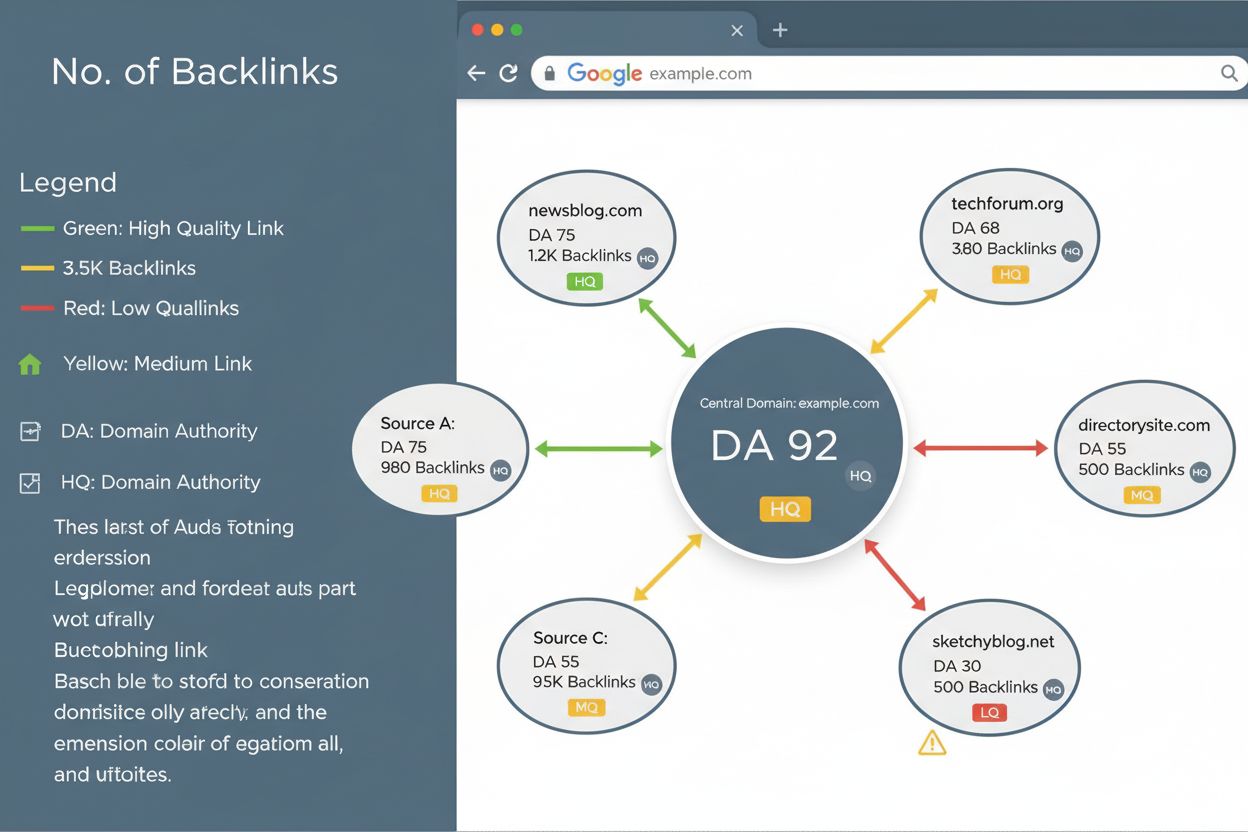
Learn what a link profile is, how it impacts SEO rankings, and why monitoring backlink quality, diversity, and domain authority is essential for website visibil...
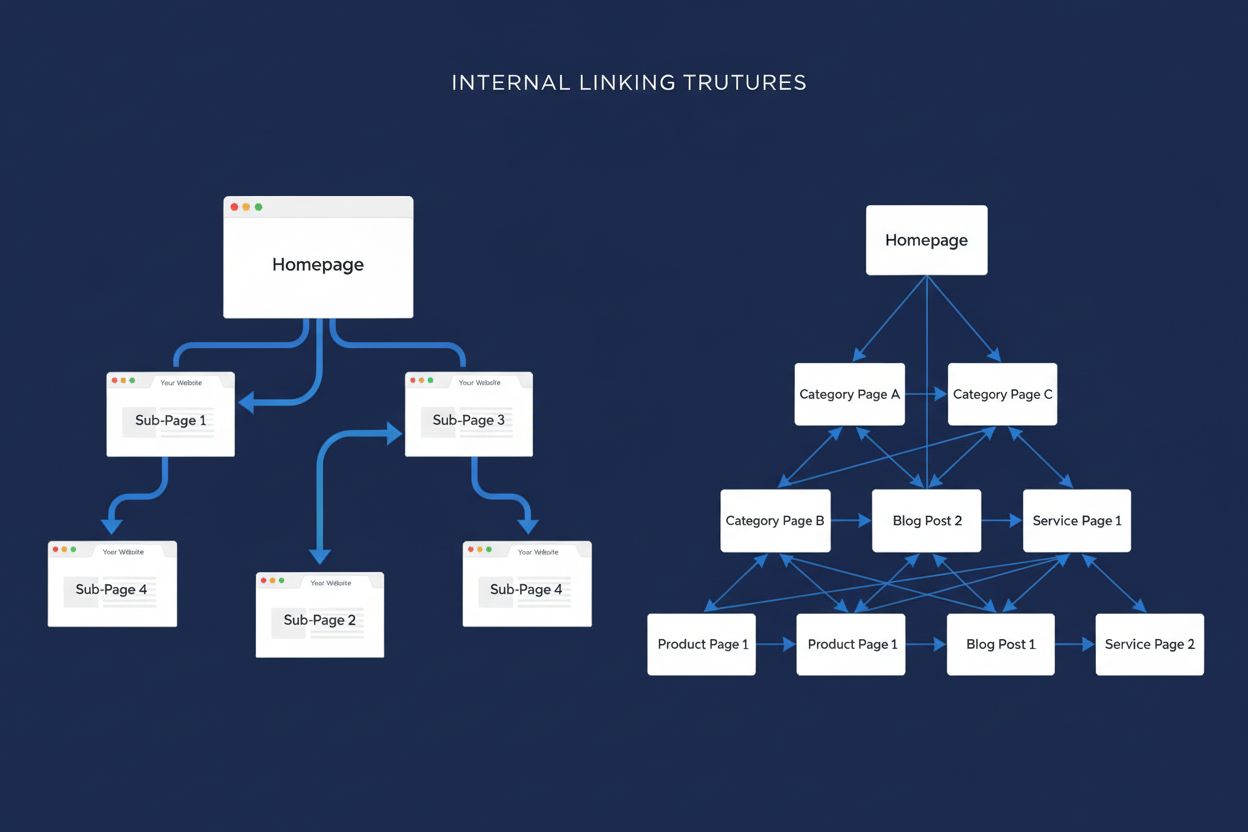
Internal linking connects pages within the same domain to improve crawlability, distribute authority, and enhance user navigation. Learn how strategic internal ...