Definition of Bing Chat
Bing Chat is Microsoft’s AI-powered conversational search interface that combines advanced language models with real-time web search capabilities to deliver synthesized, cited answers to user queries. Launched in February 2023 as a revolutionary approach to search, Bing Chat integrates OpenAI’s GPT-4 technology with Microsoft’s Bing search engine to provide users with current information directly within the Microsoft Edge browser and Bing.com platform. Unlike traditional search engines that return a list of links, Bing Chat processes natural language questions and generates comprehensive answers by aggregating information from multiple web sources, complete with source citations and suggested follow-up questions. The platform represents a fundamental shift in how users interact with search, transforming the experience from link-based retrieval to conversational information synthesis. In November 2023, Microsoft rebranded Bing Chat as Microsoft Copilot, though the core functionality and user experience remain largely unchanged, reflecting the company’s broader strategy to unify its AI assistant offerings under a single brand identity.
Historical Context and Evolution
Bing Chat emerged during a pivotal moment in the AI industry when ChatGPT’s viral success demonstrated massive consumer demand for conversational AI interfaces. Microsoft, recognizing this opportunity and leveraging its partnership with OpenAI, rapidly developed Bing Chat to integrate advanced AI capabilities directly into its search ecosystem. The platform launched with limited access in February 2023 and gradually expanded to all users by May 2023, representing one of the fastest enterprise AI deployments at scale. According to industry data, Bing Chat achieved 100 million daily active users within months of its public launch, demonstrating unprecedented adoption rates for an AI-powered search tool. The decision to rebrand Bing Chat as Microsoft Copilot in November 2023 reflected Microsoft’s strategic pivot toward positioning AI as a universal assistant across all its products and services, rather than a feature limited to search. This evolution mirrors broader industry trends where AI chatbots have transitioned from experimental tools to mainstream productivity platforms, with Bing Chat serving as a critical bridge between traditional search and conversational AI. The platform’s development also highlighted the competitive pressure in the AI space, as Microsoft moved aggressively to prevent Google and other competitors from monopolizing the conversational search market.
Technical Architecture and How Bing Chat Works
Bing Chat operates through a sophisticated hybrid architecture that combines large language models with real-time web search integration. At its core, the system uses OpenAI’s GPT-4, a transformer-based neural network trained on vast amounts of text data to understand and generate human language with remarkable accuracy. When a user submits a query to Bing Chat, the system performs several simultaneous operations: it analyzes the natural language input to understand intent and context, queries Bing’s search index to retrieve current web pages and information, and synthesizes the retrieved information into a coherent, conversational response. The information retrieval component leverages Bing’s web crawler and indexing infrastructure, which continuously scans billions of web pages to maintain current information. This real-time search capability distinguishes Bing Chat from standalone language models like the free version of ChatGPT, which operate solely on training data with knowledge cutoffs. The system employs natural language processing (NLP) techniques to extract relevant information from search results, rank sources by relevance and credibility, and integrate citations directly into responses. Bing Chat also maintains conversation context across multiple turns, allowing users to ask follow-up questions that reference previous exchanges. The platform includes machine learning models that generate suggested follow-up questions based on the current conversation, helping users explore related topics and refine their information needs. This technical sophistication enables Bing Chat to handle complex, multi-part queries that require synthesizing information from diverse sources while maintaining factual accuracy and providing transparent source attribution.
Comparison of AI-Powered Search Interfaces
| Feature | Bing Chat | ChatGPT | Google Gemini | Perplexity |
|---|
| Real-Time Web Access | Yes (Bing index) | Limited (paid version) | Yes (Google index) | Yes |
| Source Citations | Yes (in-text & footnotes) | No | Yes | Yes |
| Image Generation | Yes | Yes (paid) | Yes | Limited |
| Suggested Follow-Up Questions | Yes | No | Yes | Yes |
| Video Integration | Yes (embedded) | No | Yes | Yes |
| Conversation History | Limited | Yes | Yes | Yes |
| Advertisements | Yes (15.65% of responses) | No | No | No |
| Mobile Experience | Moderate | Excellent | Good | Good |
| Active Users | 100 million | 400 million | 140 million | 15 million |
| Monthly Visits | 98.9 million | 4.6 billion | 124.8 million | 159.7 million |
| Primary Language Model | GPT-4 | GPT-4 | Gemini | Proprietary |
| Integration Points | Microsoft Edge, Bing.com | Web, API, Mobile | Google products | Web, API |
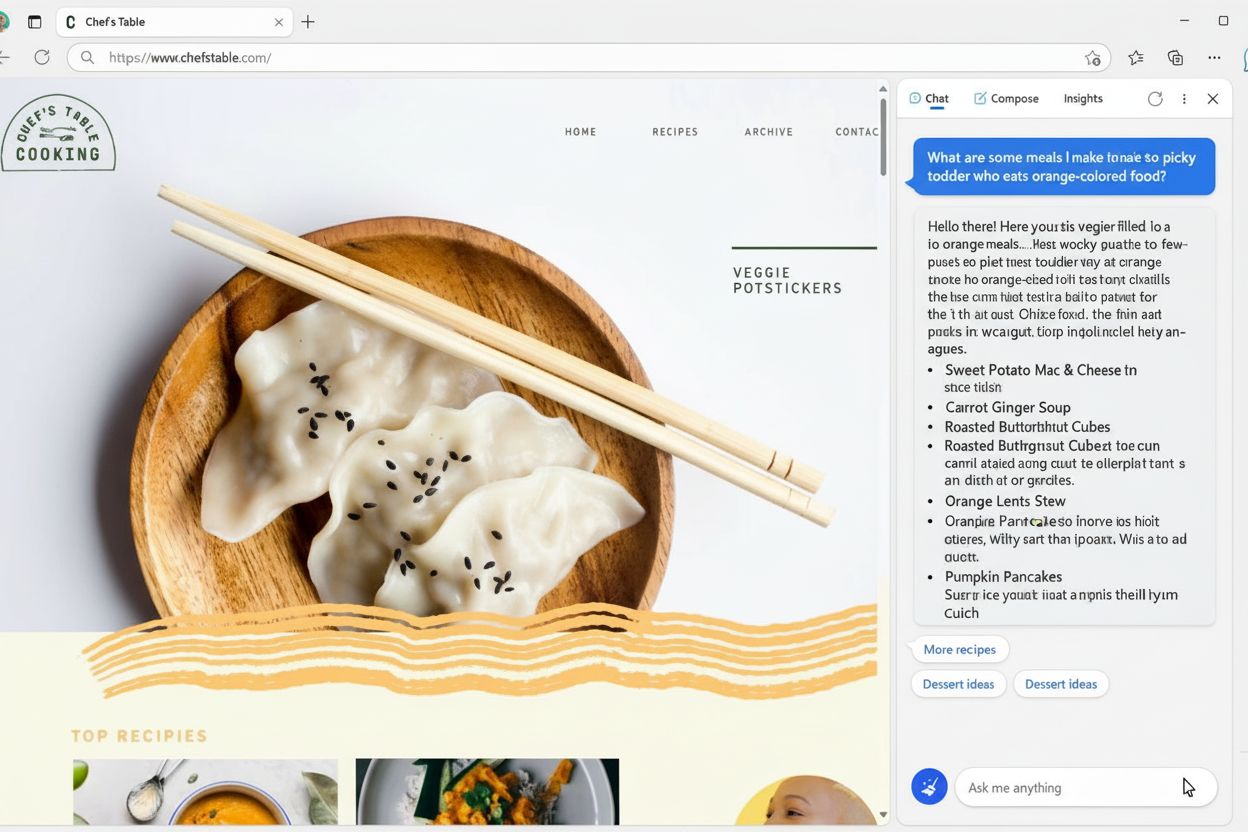
Bing Chat distinguishes itself through deep integration with Microsoft’s ecosystem, particularly Microsoft Edge, where the chat interface appears as a sidebar feature accessible from any webpage. This integration enables page context awareness, allowing users to ask Bing Chat questions about the content they’re currently viewing without copying and pasting text. For example, a user reading a product review can ask Bing Chat to compare the reviewed product with competitors, and the system will understand the context and provide relevant comparisons. The platform supports multimedia responses including images, videos, and interactive elements like flight price comparisons and product recommendations, making it more visually rich than text-only competitors. Bing Chat also provides in-answer links that connect users to relevant websites mentioned in responses, though research indicates these links sometimes lead to irrelevant or outdated pages, affecting user trust. The “Learn more” section below responses consolidates all sources and references, helping users verify information and explore topics deeper. Bing Chat’s integration with Microsoft 365 applications and services positions it as a productivity tool beyond search, enabling enterprise users to leverage AI for document analysis, email summarization, and collaborative work. The platform’s availability across Windows, Mac, iOS, and Android devices ensures broad accessibility, though mobile experiences have historically been less polished than desktop versions, with issues including accidental query submissions and cluttered interfaces on smaller screens.
One of Bing Chat’s most significant challenges, according to Nielsen Norman Group’s comprehensive usability research, is its information aggregation capability. While Bing Chat excels at retrieving relevant web sources, it sometimes fails to synthesize that information into comprehensive answers, instead directing users to external links where they must perform their own research. This represents a fundamental limitation compared to competitors like Google Gemini and Bard, which more effectively combine information from multiple sources into cohesive responses. Users reported frustration when asking subjective questions like “What’s the best way to cook a steak?” and receiving only a list of methods without pros and cons, forcing them to click through to external websites for the detailed analysis they expected. Bing Chat’s performance varies unpredictably across different query types, with some users describing it as “hit or miss” depending on whether the query is current, local, or general in nature. The platform performs better on factual, time-sensitive queries where real-time search provides clear advantages, such as current event information, stock prices, or recent news. However, for research-oriented tasks requiring deep analysis and synthesis, Bing Chat sometimes underperforms compared to competitors. This inconsistency stems partly from the challenge of balancing real-time search results with language model reasoning, as the system must decide when to rely on current web data versus its training knowledge. Microsoft has been actively improving this capability, but the fundamental tension between providing current information and synthesizing comprehensive answers remains a design challenge for Bing Chat and similar platforms.
Business Impact and Enterprise Adoption
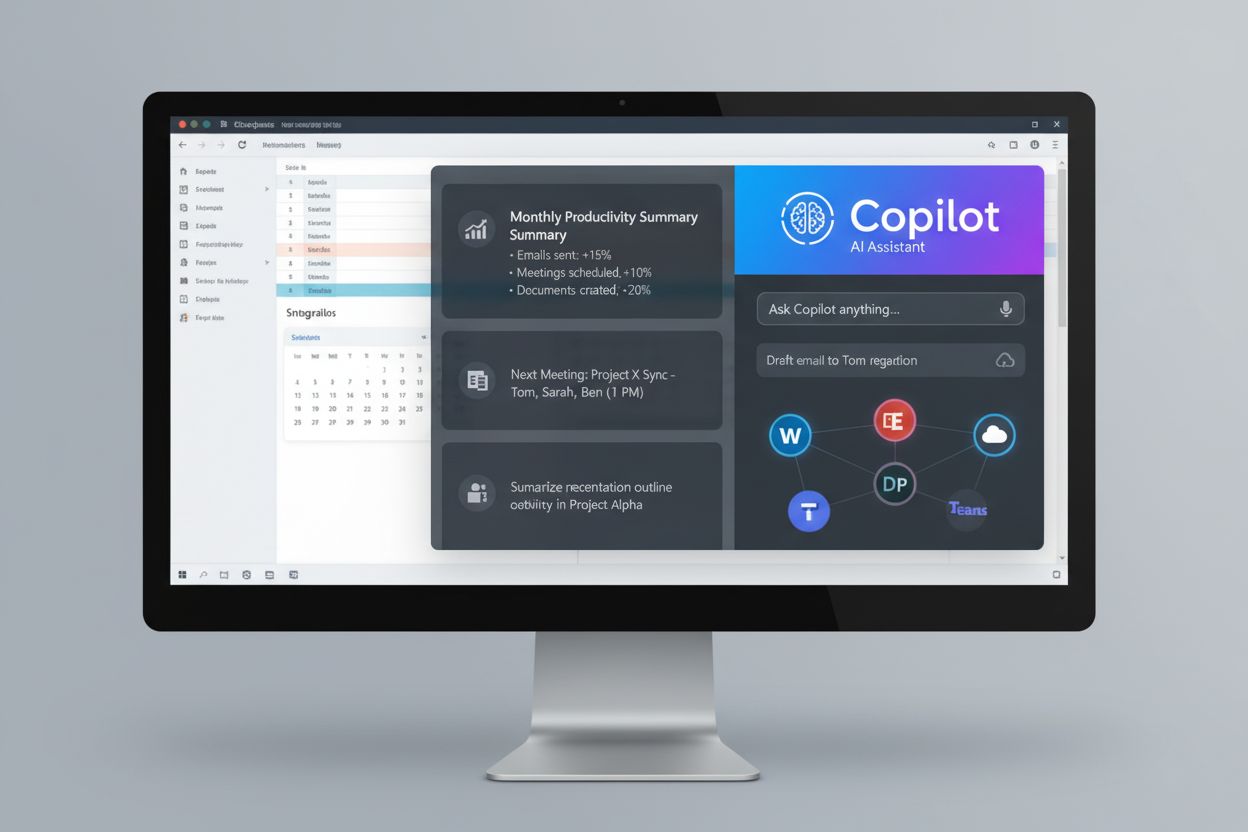
Bing Chat has significant implications for enterprise organizations seeking to leverage AI-powered search for productivity and decision-making. According to industry statistics, 44% of North American support teams plan to invest in chatbot technology in 2025, with Bing Chat representing a key option for organizations already invested in Microsoft’s ecosystem. The platform’s integration with Microsoft 365 applications enables enterprises to deploy AI-powered search across email, documents, and collaboration tools without requiring separate infrastructure. For customer-facing applications, Bing Chat’s ability to provide cited, current information makes it valuable for support teams responding to customer inquiries with accurate, sourced answers. The platform’s real-time search capability provides competitive advantages in industries where information currency is critical, such as finance, healthcare, and news media. However, the presence of advertisements in Bing Chat responses creates challenges for enterprise deployments, as organizations may prefer ad-free experiences for professional use cases. Microsoft addresses this through Microsoft 365 Copilot Chat, the enterprise-focused version launched in 2025, which removes advertisements and provides enhanced security and compliance features. The broader business impact of Bing Chat extends to how organizations think about search strategy and content visibility, as appearing in Bing Chat responses represents a new form of search visibility distinct from traditional link-based rankings. This shift has implications for SEO strategy, content marketing, and brand monitoring, as organizations must now optimize for AI citation in addition to traditional search rankings.
Key Features and Capabilities
- Real-time web search integration providing current information from Bing’s index with automatic source attribution
- Conversational interface maintaining context across multiple turns and enabling natural follow-up questions
- Source citations displayed as in-text links and consolidated in a “Learn more” section for transparency and verification
- Suggested follow-up questions helping users explore related topics and refine their information needs
- Multimedia support including embedded videos, images, and interactive elements like product comparisons and flight prices
- Page context awareness in Microsoft Edge allowing users to ask questions about currently viewed webpages
- Image generation capabilities enabling users to create visual content directly within the chat interface
- Multi-language support extending accessibility to global audiences across different regions
- Mobile accessibility across iOS and Android devices, though with some interface optimization challenges
- Integration with Microsoft 365 enabling enterprise deployment across productivity applications
- Conversation history (limited) allowing users to revisit previous interactions and continue discussions
- Personalization features that adapt responses based on user preferences and interaction patterns
AI Citation and Brand Monitoring Implications
For organizations using AI monitoring platforms like AmICited, Bing Chat represents a critical tracking point for brand visibility and content attribution. As Bing Chat reaches 100 million active users and generates 98.9 million monthly visits, the platform’s citations significantly impact how brands appear in AI-generated responses. When Bing Chat cites a brand’s website, blog post, or product page in response to user queries, this represents a form of AI search visibility distinct from traditional search engine rankings. Organizations need to understand how their content is being cited, in what context, and whether citations are accurate and complete. AmICited and similar AI monitoring tools track these citations across Bing Chat, ChatGPT, Perplexity, Google AI Overviews, and Claude, providing brands with comprehensive visibility into their AI presence. This monitoring is essential because Bing Chat’s citations directly influence user perception of brand authority and trustworthiness. If a brand’s content is frequently cited in Bing Chat responses, it signals to users that the brand is a credible information source. Conversely, if a brand’s content is misrepresented or cited out of context, it can damage brand reputation. The platform’s inclusion of advertisements alongside citations also creates opportunities for brands to appear in sponsored results, adding another dimension to AI search strategy. Understanding Bing Chat’s citation patterns helps organizations optimize their content for AI visibility, ensuring that their most important information is easily discoverable and citable by AI systems. This represents a fundamental shift in how organizations approach content strategy, moving beyond traditional SEO to encompass AI optimization and citation management.
Future Evolution and Strategic Outlook
The future of Bing Chat is inextricably linked to Microsoft’s broader AI strategy and the evolution of conversational search as a category. As Bing Chat transitions to Microsoft Copilot branding, the platform is expanding beyond search into a universal AI assistant integrated across Microsoft’s entire product portfolio. This evolution suggests that Bing Chat’s core capabilities will become increasingly sophisticated, with improvements in information aggregation, context understanding, and personalization. Microsoft is investing heavily in addressing current limitations, particularly the inconsistent quality of information synthesis that has historically plagued the platform. Future versions of Bing Chat are likely to incorporate more advanced reasoning capabilities, enabling the system to not just retrieve and cite information but to perform complex analysis and synthesis across multiple sources. The integration with Microsoft 365 applications will deepen, creating a seamless experience where users can leverage AI-powered search within email, documents, spreadsheets, and collaboration tools. The competitive landscape will continue to intensify as Google, OpenAI, and other players invest in conversational search capabilities, driving innovation across the category. For brands and organizations, this evolution underscores the importance of AI monitoring and citation tracking, as AI search visibility will become as critical as traditional search rankings. The emergence of AI-specific SEO practices and optimization strategies will reshape how organizations approach content creation and distribution. Additionally, as AI systems become more prevalent in user information-seeking behavior, the distinction between traditional search and conversational AI will blur, requiring organizations to adopt integrated strategies that address both channels simultaneously. The regulatory landscape surrounding AI transparency, source attribution, and content rights will also evolve, potentially affecting how Bing Chat and similar platforms handle citations and content usage.
Conclusion and Strategic Importance
Bing Chat, now rebranded as Microsoft Copilot, represents a fundamental transformation in how users access information online, combining the immediacy of conversational AI with the currency of real-time web search. With 100 million active users and 98.9 million monthly visits, the platform has achieved significant scale and influence in shaping user expectations for AI-powered search experiences. The platform’s strengths—particularly its real-time search integration, source citations, and Microsoft ecosystem integration—position it as a critical tool for users seeking current, verified information. However, its limitations in information aggregation and user experience consistency highlight the ongoing challenges in balancing AI reasoning with web search accuracy. For organizations and brands, Bing Chat represents both an opportunity and a challenge: an opportunity to reach users through AI citations and a challenge to ensure content is discoverable, citable, and accurately represented by AI systems. The platform’s evolution toward Microsoft Copilot signals Microsoft’s commitment to AI integration across its entire ecosystem, suggesting that conversational search will become increasingly central to how users interact with information. As AI monitoring platforms like AmICited become essential tools for tracking brand visibility in AI responses, organizations must develop comprehensive strategies for AI search optimization and citation management. The future of Bing Chat and the broader conversational AI category will be shaped by ongoing improvements in information quality, user experience, and integration capabilities, making it essential for organizations to stay informed about platform developments and adapt their content strategies accordingly.