

How to Create Bottom-of-Funnel Content for AI Search Engines
Learn how to create effective bottom-of-funnel content optimized for AI search engines like ChatGPT and Perplexity. Discover strategies for targeting decision-s...
11 min read
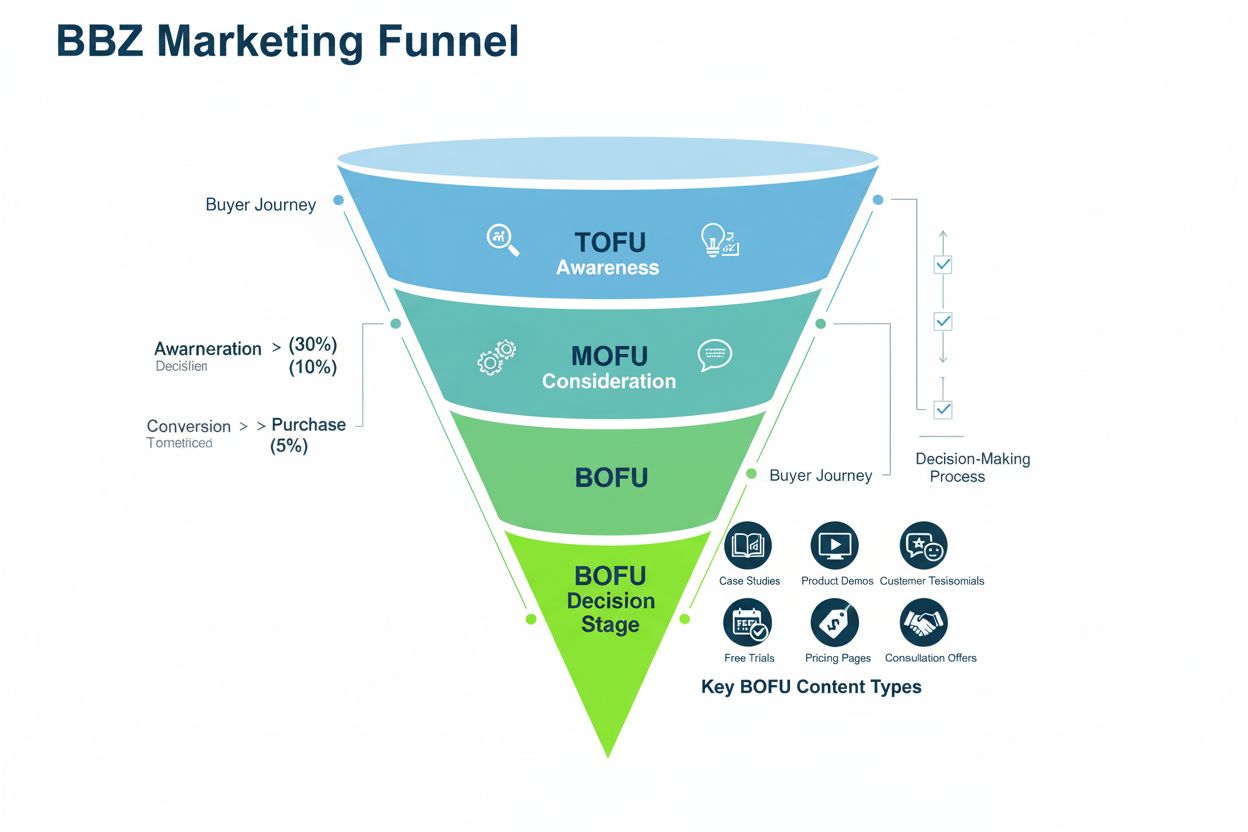
Bottom of Funnel (BOFU) is the final stage of the buyer’s journey where prospects are ready to make a purchase decision. BOFU content and marketing tactics focus on converting warm leads into customers through targeted offers like free trials, demos, case studies, and consultations.
Bottom of Funnel (BOFU) is the final stage of the buyer's journey where prospects are ready to make a purchase decision. BOFU content and marketing tactics focus on converting warm leads into customers through targeted offers like free trials, demos, case studies, and consultations.
Bottom of Funnel (BOFU) refers to the final stage of the buyer’s journey where prospects have completed their research and are ready to make a purchase decision. At this critical juncture, potential customers have already identified their problem, evaluated multiple solutions, and narrowed their options to a select few vendors. BOFU is where marketing efforts culminate in actual conversions—the moment when a prospect becomes a paying customer. This stage is characterized by high-intent behavior, with prospects actively comparing pricing, reading reviews, analyzing features, and seeking final validation before committing their budget. The content and marketing tactics deployed at this stage are fundamentally different from earlier funnel stages because they must address specific objections, demonstrate clear competitive advantages, and reduce perceived risk in the purchase decision.
The term “bottom of funnel” derives from the traditional sales funnel visualization, where the funnel narrows progressively as prospects move through awareness, consideration, and decision stages. While the funnel metaphor has evolved, the BOFU concept remains essential for understanding buyer behavior and allocating marketing resources effectively. BOFU represents the smallest but most valuable segment of your audience—those closest to conversion and most likely to generate revenue. Organizations that excel at BOFU marketing recognize that these warm leads require specialized content and messaging that differs dramatically from top-of-funnel awareness campaigns.
The three-stage funnel model (TOFU, MOFU, BOFU) emerged from traditional sales methodologies but has been refined significantly by modern digital marketing practices. Historically, sales funnels were linear—prospects moved sequentially from awareness to consideration to decision. However, contemporary buyer journeys are far more complex, with prospects moving back and forth between stages, conducting multiple research cycles, and involving multiple stakeholders in decision-making. Despite this evolution, the BOFU framework remains relevant because it acknowledges that different buyer mindsets require different content strategies.
Research indicates that 95% of buyers choose vendors that provide content for each stage of the buying process, underscoring the importance of dedicated BOFU strategies. Additionally, studies show that 70% of buyers turn to Google 2-3 times during their decision stage to verify information and compare options, making BOFU content visibility critical. The average B2B purchase requires 8 touches before conversion, with BOFU content accounting for the final, most impactful interactions. This statistical reality has driven organizations to invest heavily in decision-stage content, recognizing that BOFU represents the highest-ROI marketing investment when executed strategically.
The rise of AI-powered search and recommendation systems has further elevated BOFU content’s importance. As AI systems like ChatGPT, Perplexity, and Google AI Overviews increasingly influence purchase decisions, BOFU content—particularly case studies, testimonials, and product comparisons—is being cited more frequently in AI-generated responses. This shift means that BOFU content visibility in AI systems has become a critical metric for tracking brand influence during the decision stage.
| Funnel Stage | Buyer Mindset | Primary Goal | Content Types | Conversion Focus | Typical Duration |
|---|---|---|---|---|---|
| TOFU (Top) | Problem-aware, seeking education | Build awareness and establish presence | Blog posts, infographics, videos, whitepapers | Broad reach, lead generation | Weeks to months |
| MOFU (Middle) | Solution-aware, evaluating options | Build trust and demonstrate expertise | Case studies, comparison guides, webinars, ebooks | Lead nurturing, qualification | Weeks to months |
| BOFU (Bottom) | Provider-aware, ready to decide | Drive conversion and reduce purchase friction | Free trials, demos, testimonials, pricing pages, consultations | Direct sales, revenue generation | Days to weeks |
The distinction between these stages is critical for content strategy. TOFU content casts a wide net with general educational material that attracts prospects who may not yet recognize they have a problem. MOFU content narrows the focus to prospects who understand their challenge and are actively researching solutions, requiring deeper expertise and credibility-building content. BOFU content targets the smallest, most qualified audience with highly specific, conversion-focused material that addresses final objections and facilitates immediate action.
Understanding the psychological drivers of BOFU prospects is essential for crafting effective decision-stage content. By the time prospects reach BOFU, they have typically invested significant time and mental energy in their research. They are experiencing decision fatigue and seek content that reduces complexity and uncertainty. BOFU prospects are asking critical questions: Will this solution actually solve my problem? How does it compare to alternatives? What’s the total cost of ownership? What do current customers say? Can I trust this vendor?
Effective BOFU content directly addresses these psychological needs by providing social proof through customer testimonials and case studies, transparent pricing and ROI calculations, risk-reduction mechanisms like free trials or money-back guarantees, and expert guidance through consultations or product demos. The psychology of BOFU also involves urgency and scarcity—limited-time offers, exclusive pricing for early adopters, and time-sensitive promotions leverage these psychological triggers to accelerate decision-making. However, this must be balanced carefully; aggressive tactics can backfire with sophisticated B2B buyers who resent manipulation.
Free Trials and Freemium Access represent one of the most effective BOFU tactics, particularly for software and digital products. Free trials allow prospects to experience the product firsthand without financial commitment, dramatically reducing perceived risk. Research shows that prospects who engage with free trials convert at significantly higher rates than those who only read about features. The key to successful trial programs is removing friction—minimal signup requirements, immediate access, and clear guidance on how to achieve quick wins within the trial period.
Live Product Demos serve a similar function but with the added benefit of expert guidance and real-time question answering. Whether conducted in-person, via video call, or as pre-recorded walkthroughs, demos allow prospects to see the product in action and understand how it addresses their specific use cases. Personalized demos that reference the prospect’s industry, company size, or stated challenges are significantly more effective than generic product tours. Demos also create opportunities for sales teams to build relationships and uncover additional objections that can be addressed immediately.
Customer Case Studies and Testimonials provide powerful social proof that influences BOFU decisions. Case studies should follow a clear narrative arc: here’s the customer’s challenge, here’s what we did, here are the measurable results. Quantified outcomes—percentage improvements in efficiency, revenue increases, cost reductions—are far more persuasive than vague claims. Video testimonials from recognizable customers add authenticity and emotional resonance that written testimonials cannot match. Organizations that feature customer success stories prominently in BOFU content report higher conversion rates because prospects see themselves reflected in the customer’s situation.
Pricing Pages and ROI Calculators address the financial concerns that dominate BOFU decision-making. Transparent, clearly structured pricing pages that explain what’s included at each tier reduce confusion and objections. ROI calculators that allow prospects to input their specific metrics and see projected returns are particularly effective because they personalize the value proposition. These tools transform abstract benefits into concrete financial outcomes that resonate with budget-conscious decision-makers.
Consultation Offers and Strategy Sessions provide high-touch BOFU tactics that work particularly well for complex, high-value solutions. Free consultations with product experts or account managers allow prospects to ask detailed questions, explore custom configurations, and build confidence in the vendor’s expertise. These interactions also provide sales teams with valuable information about prospect needs, budget, and timeline—intelligence that accelerates the sales process.
Email Marketing remains the highest-ROI channel for BOFU content, with 73% of marketers reporting that email increases conversion rates. BOFU email campaigns should be highly segmented based on prospect behavior, interests, and stage in the buying process. Effective BOFU emails include time-sensitive offers, personalized product recommendations based on browsing history, case studies relevant to the prospect’s industry, and clear calls-to-action. Email sequences that progressively move prospects through BOFU—first email introduces a case study, second email offers a demo, third email provides a limited-time discount—create momentum toward conversion.
Paid Search and Google RLSA (Remarketing List Search Ads) target prospects actively searching for solutions at the decision stage. RLSA campaigns allow marketers to bid higher for prospects who have already visited the website or engaged with previous content, recognizing their higher purchase intent. BOFU search ads should feature strong value propositions, customer reviews, and clear CTAs like “Start Free Trial” or “Schedule Demo.” Landing pages for BOFU search ads must be highly relevant to the search query and optimized for conversion, with minimal friction between ad click and desired action.
Retargeting Display Ads keep your solution top-of-mind for prospects who have visited your website but haven’t yet converted. BOFU retargeting ads should feature customer testimonials, limited-time offers, or specific product features that address common objections. Frequency capping is important to avoid ad fatigue, but strategic repetition of BOFU messaging across multiple touchpoints significantly improves conversion rates.
Branded SEO Content captures prospects searching for your company name or product-specific terms—a strong indicator of BOFU intent. Product pages, comparison pages, and customer review pages should be optimized for search and feature compelling BOFU content. Prospects searching “Company X vs. Competitor Y” or “Company X pricing” are in active decision mode and require content that directly addresses their comparison criteria.
Measuring BOFU effectiveness requires tracking metrics that directly correlate with revenue generation. Cost Per Acquisition (CPA) measures the total marketing spend required to convert one customer, providing a clear ROI calculation. Conversion Rate tracks the percentage of BOFU prospects who complete a desired action (demo request, trial signup, purchase). Return on Ad Spend (ROAS) measures revenue generated for every dollar spent on BOFU advertising, with high-performing BOFU campaigns often achieving ROAS of 3:1 or higher.
Sales Cycle Length measures the time from initial BOFU engagement to closed deal, helping identify bottlenecks in the decision process. Demo-to-Close Rate and Trial-to-Close Rate indicate how effectively these BOFU tactics convert to actual sales. Customer Acquisition Cost (CAC) Payback Period measures how quickly revenue from a new customer recovers the acquisition cost, with shorter payback periods indicating more efficient BOFU strategies.
Advanced organizations also track BOFU Content Engagement Metrics—which case studies, demos, or pricing pages generate the most engagement and drive the highest conversion rates. This data informs content optimization and helps allocate resources to the most effective BOFU tactics. AI Visibility Metrics are increasingly important, tracking where BOFU content appears in AI-generated responses and how frequently AI systems cite your case studies, testimonials, or product information when users search for purchase recommendations.
The emergence of AI-powered search systems has fundamentally changed BOFU dynamics. AI systems like ChatGPT, Perplexity, Google AI Overviews, and Claude increasingly influence purchase decisions by providing synthesized recommendations based on training data that includes customer reviews, case studies, and product comparisons. When users ask AI systems “What’s the best project management tool for remote teams?” or “Which CRM should I choose?”, the AI’s response often cites specific companies, features, and customer testimonials—content that typically falls into the BOFU category.
This shift means that BOFU content visibility in AI responses has become a critical competitive metric. Organizations whose case studies, testimonials, and product comparisons are frequently cited by AI systems gain significant advantage during the decision stage. Conversely, companies whose BOFU content is absent from AI responses may lose prospects to competitors who are more visible in AI-generated recommendations. This reality has elevated the importance of creating high-quality, citation-worthy BOFU content that AI systems recognize as authoritative and relevant.
Monitoring where your BOFU content appears in AI responses—and optimizing it for AI citation—has become essential for modern marketing strategy. Platforms like AmICited enable organizations to track brand mentions and content citations across multiple AI systems, providing visibility into how AI influences BOFU decisions and where optimization opportunities exist.
Successful BOFU strategies share several common characteristics. First, they match content and messaging to the prospect’s specific stage and temperature. Offering a “Get Demo” CTA to cold TOFU prospects will scare them away, while offering only educational content to hot BOFU prospects wastes the opportunity to convert. Second, effective BOFU strategies are multi-channel, coordinating messaging across email, search, social, and direct sales to create consistent, reinforcing touchpoints. Third, they emphasize social proof and risk reduction, recognizing that BOFU prospects are primarily concerned with validation and certainty.
Common BOFU mistakes include over-aggressive sales tactics that alienate sophisticated buyers, generic content that fails to address specific prospect concerns, poor landing page optimization that creates friction between ad and conversion action, and inadequate follow-up when prospects don’t convert immediately. Many organizations also fail to segment BOFU audiences, treating all warm leads identically despite significant differences in their specific needs, industries, and decision criteria. Additionally, some companies neglect BOFU content optimization for AI systems, missing opportunities to increase visibility in AI-generated recommendations.
The future of BOFU marketing will be shaped by several emerging trends. Increased AI influence on purchase decisions will make BOFU content optimization for AI systems increasingly critical. Organizations will need to ensure their case studies, testimonials, and product information are structured in ways that AI systems can easily extract and cite. Personalization at scale will become more sophisticated, with AI-powered systems delivering highly customized BOFU content based on individual prospect behavior, industry, company size, and stated preferences.
Account-based marketing (ABM) approaches will increasingly dominate BOFU strategy, with organizations creating highly targeted BOFU campaigns for specific high-value accounts rather than broad audience segments. Interactive BOFU content—configurators, ROI calculators, assessment tools—will become more prevalent as organizations seek to engage prospects actively rather than passively consuming content. Video content will continue to grow in importance, with personalized video messages from sales leaders and customer success stories becoming standard BOFU tactics.
The integration of first-party data and zero-party data will enable more sophisticated BOFU personalization, as organizations move away from third-party cookies and rely instead on data prospects willingly provide. Shorter sales cycles driven by self-service BOFU content and frictionless trial experiences will compress the decision stage, requiring organizations to optimize every touchpoint for maximum impact. Finally, measurement and attribution will become increasingly sophisticated, with multi-touch attribution models providing clear visibility into which BOFU tactics drive revenue and which represent wasted spend.
TOFU (Top of Funnel) targets cold prospects in the awareness stage with educational content like blog posts and infographics. MOFU (Middle of Funnel) nurtures lukewarm leads in the consideration stage with case studies and comparison guides. BOFU (Bottom of Funnel) focuses on hot, ready-to-buy prospects in the decision stage with conversion-focused content like free trials, demos, and consultations. Each stage requires different content types and messaging strategies aligned with the buyer's mindset.
Effective BOFU content includes free trials or freemium access, live product demos, customer case studies and testimonials, pricing pages, ROI calculators, consultation offers, and limited-time promotional offers. These content types reduce purchase friction by addressing final objections, demonstrating value, and building confidence in the buying decision. Research shows 95% of buyers prefer vendors that provide content for every funnel stage, making BOFU content critical for conversion.
The duration varies significantly based on product complexity, price point, and buyer organization size. On average, it takes 8 touches to convert a prospect from initial awareness to purchase. Some BOFU prospects convert within days after a demo, while others may remain in the decision stage for weeks or months due to budget cycles, stakeholder approvals, or competing priorities. Persistent, respectful follow-up is essential during this extended consideration period.
BOFU conversion rates are typically higher than TOFU and MOFU stages because prospects are already qualified and interested. While exact rates vary by industry, research indicates BOFU conversion rates range from 4-10% depending on content quality and offer relevance. Companies that implement synchronized BOFU strategies across email, SEO, and PPC have reported conversion improvements of 168% or higher in return on ad spend (ROAS).
BOFU content is highly specific and conversion-focused, addressing final purchase objections rather than general education. While TOFU content builds awareness and MOFU content builds trust, BOFU content emphasizes why your solution is the best choice compared to competitors. BOFU content should be shorter, more action-oriented, include social proof, and feature clear calls-to-action like 'Get Demo' or 'Start Free Trial' rather than softer CTAs like 'Learn More.'
The most effective BOFU channels include email marketing (73% of marketers report email increases conversion rates), paid search with Google RLSA (Remarketing List Search Ads), retargeting display ads, and branded SEO content. Email is particularly powerful for BOFU because it allows personalized, time-sensitive offers and direct communication with warm prospects. Multi-channel BOFU strategies that coordinate messaging across email, search, and social media typically outperform single-channel approaches.
BOFU content and strategies are increasingly important for AI monitoring platforms like AmICited because decision-stage content—case studies, testimonials, pricing pages, and product comparisons—are frequently cited by AI systems like ChatGPT, Perplexity, and Google AI Overviews when users search for purchase recommendations. Monitoring where your BOFU content appears in AI responses helps track brand visibility during critical decision moments and ensures your solution is being recommended by AI systems.
Start tracking how AI chatbots mention your brand across ChatGPT, Perplexity, and other platforms. Get actionable insights to improve your AI presence.
Learn how to create effective bottom-of-funnel content optimized for AI search engines like ChatGPT and Perplexity. Discover strategies for targeting decision-s...
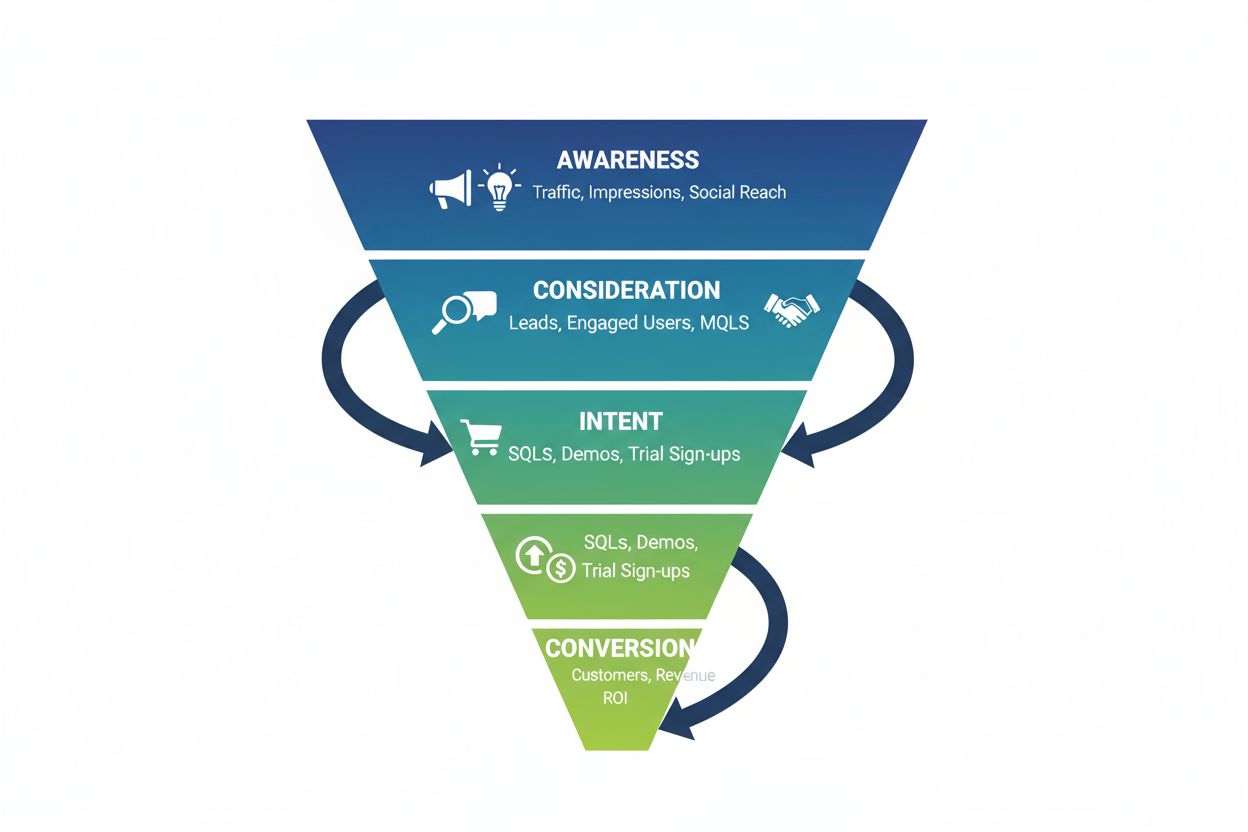
Learn what a marketing funnel is, its key stages (awareness, consideration, conversion), and how to optimize each phase for better customer acquisition and ROI.
Learn what TOFU (Top of Funnel) awareness stage content is, why it matters for brand visibility, and how to create effective educational content that attracts a...
Cookie Consent
We use cookies to enhance your browsing experience and analyze our traffic. See our privacy policy.