Definition of Brand Signal
Brand signals are ranking indicators and trust metrics that search engines and AI systems use to evaluate a brand’s credibility, authority, and trustworthiness online. These signals represent the overall perception of your brand across the digital landscape and directly influence how prominently your website appears in search results and how frequently your brand is cited in AI-generated responses. Unlike traditional SEO factors that focus on individual pages or keywords, brand signals assess your entire brand’s strength and reputation. They encompass a wide range of indicators—from the volume of direct searches for your brand name to the quality of citations from authoritative sources, social media engagement, entity recognition in knowledge graphs, and user behavior patterns. In essence, brand signals answer the question: “How well-known, trusted, and respected is this brand across the internet?” This distinction has become increasingly critical as search engines and AI systems shift from purely keyword-based ranking to authority-based ranking that prioritizes established, trustworthy brands.
The Evolution of Brand Signals in Search
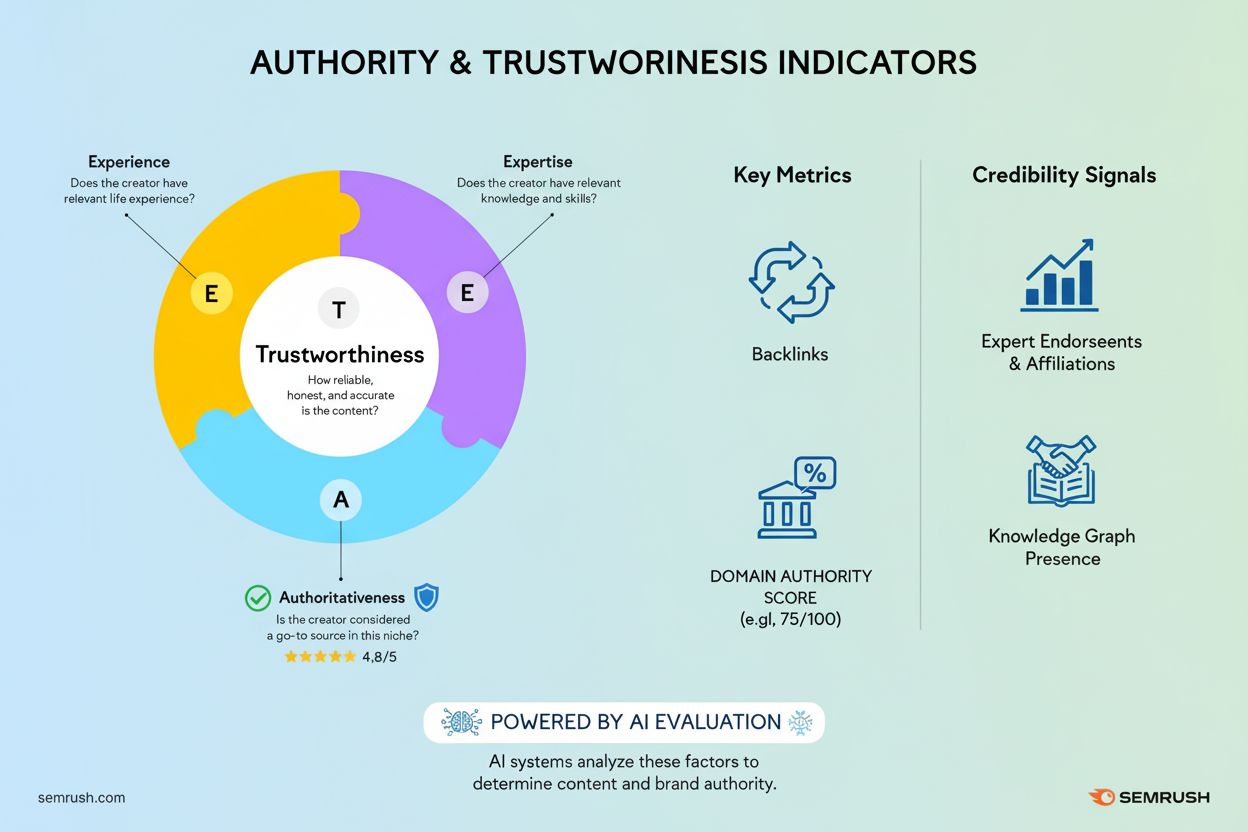
The importance of brand signals has evolved dramatically over the past decade. In the early days of SEO, search rankings were primarily determined by keyword density and backlink quantity. However, as search algorithms became more sophisticated, Google and other search engines recognized that brand strength was a crucial indicator of content quality and relevance. The introduction of E-E-A-T (Experience, Expertise, Authoritativeness, and Trustworthiness) as a core ranking principle formalized the role of brand signals in search rankings. According to research from Moz, strong brand signals have become particularly important in Google’s helpful content updates, with analysis showing that sites with higher Brand Authority scores tend to weather algorithm changes better than sites with lower brand authority but higher domain authority. This shift reflects a fundamental change in how search engines view the web: they now prioritize established, recognized brands that have built trust over time. The rise of AI search engines like ChatGPT, Perplexity, and Google’s AI Overviews has further amplified the importance of brand signals, as these systems rely heavily on brand recognition and authority when selecting sources to cite in their generated responses.
Ready to Monitor Your AI Visibility?
Track how AI chatbots mention your brand across ChatGPT, Perplexity, and other platforms.
Key Components of Brand Signals
Branded Search Volume represents one of the most direct brand signals. When users search for your brand name specifically—rather than generic keywords related to your industry—it signals to search engines that your brand has achieved market recognition and demand. According to Backlinko’s analysis of Google’s 200 ranking factors, branded searches are explicitly listed as a ranking signal. The frequency and consistency of branded searches indicate brand strength and can influence how your site ranks for both branded and non-branded keywords. Backlinks with Brand Mentions constitute another critical signal. Links from reputable websites that mention your brand name in anchor text or surrounding content carry significant weight. These aren’t just any backlinks; they’re endorsements from other authoritative sources that recognize your brand’s value. Social Media Presence and Engagement signals demonstrate that your brand has an active, engaged community. Brands with substantial followers, regular engagement, and authentic interactions on platforms like LinkedIn, Twitter, and Facebook send positive signals to search engines about their relevance and trustworthiness. Consistent NAP Citations (Name, Address, Phone number) across business directories, local listings, and online platforms reinforce your brand’s legitimacy and help search engines understand your business identity. Entity Recognition in Knowledge Graphs is increasingly important, as it helps AI systems and search engines understand exactly who your brand is, what you offer, and how you relate to broader topics and categories.
Brand Signals vs. Traditional Ranking Factors: A Comparison
| Aspect | Brand Signals | Traditional Ranking Factors |
|---|
| Focus | Overall brand perception and authority | Individual page optimization and technical elements |
| Measurement | Brand Authority score, citation volume, entity recognition | Domain Authority, Page Authority, keyword rankings |
| Time Frame | Long-term brand building (months to years) | Can show results in weeks to months |
| Primary Indicators | Branded searches, unlinked mentions, social proof, citations | Backlinks, keywords, page speed, mobile-friendliness |
| AI Search Impact | Critical for citation selection in AI responses | Important but secondary to brand authority |
| Scope | Entire brand across all platforms | Specific pages and technical implementation |
| User Behavior | Direct navigation, brand awareness, trust | Click-through rates, bounce rates, dwell time |
| Competitive Advantage | Harder to replicate; builds over time | Can be optimized relatively quickly |
Stay Updated on AI Visibility Trends
Get the latest insights on AI mentions, brand monitoring, and optimization strategies.
How Brand Signals Impact AI Search Visibility
The emergence of AI search engines has fundamentally changed how brand signals influence visibility. Unlike traditional Google search, where a single page can rank for a keyword, AI search systems like ChatGPT and Perplexity generate responses by selecting and synthesizing information from multiple sources. Brand signals directly influence which sources these AI systems choose to cite. Research from Conductor and AirOps shows that AI systems prioritize sources with strong brand authority signals when generating answers. This means that having a strong brand signal profile increases the likelihood that your content will be selected and cited in AI-generated responses, even if your individual pages don’t rank at the top of traditional search results. According to recent data, over 50% of B2B buyers now use generative AI as their primary research source, making AI visibility increasingly critical for brand awareness and lead generation. Brands with strong entity recognition, consistent information across platforms, high-quality citations, and positive user engagement signals are significantly more likely to appear in AI responses. This represents a fundamental shift from traditional SEO, where you could potentially rank for a keyword with a single well-optimized page. In AI search, your entire brand’s authority and trustworthiness become the determining factors.
Building and Strengthening Brand Signals
Strengthening your brand signals requires a strategic, multi-faceted approach that extends far beyond traditional SEO. Entity Optimization is foundational—ensuring that your brand is accurately represented in knowledge graphs, structured data, and business directories helps AI systems understand who you are and what you do. This involves claiming and optimizing your Google Business Profile, updating your information on platforms like Crunchbase and LinkedIn, and implementing schema markup on your website. Content Authority Building requires creating comprehensive, original content that establishes your expertise in your industry. Rather than chasing individual keywords, focus on owning specific topics and building a content moat around them. This means creating interconnected content that thoroughly covers your area of expertise from multiple angles. Citation and Mention Acquisition involves actively seeking opportunities to be mentioned and cited by authoritative sources in your industry. This can be achieved through guest posting, contributing expert commentary to news stories, publishing original research, and building relationships with industry publications. Social Proof Development requires building an authentic, engaged community across social platforms. This includes responding to comments, sharing valuable insights, and fostering genuine conversations with your audience. Brand Consistency across all platforms ensures that search engines and AI systems encounter consistent information about your brand, which strengthens entity recognition and trust signals.
The Role of Unlinked Brand Mentions in Modern SEO
Unlinked brand mentions—instances where your brand is mentioned without a hyperlink—have become increasingly important for both traditional SEO and AI search visibility. While they don’t pass link equity like traditional backlinks, they serve as powerful credibility signals. When authoritative websites mention your brand by name, even without linking to you, it signals to search engines and AI systems that your brand is recognized and discussed within your industry. According to research from The SEM Post, Google has confirmed that they associate unlinked brand mentions with brand sites for ranking purposes. This is particularly important for AI search, where systems like ChatGPT and Perplexity use brand mentions as indicators of authority when selecting sources to cite. Monitoring unlinked mentions helps you identify opportunities to convert them into actual backlinks and understand your brand’s broader online presence. Tools like Google Alerts, Mention, and specialized AI monitoring platforms like AmICited can help you track where and how your brand is being discussed across the web, including in AI search results.
Brand Signals and the Future of Search
As search continues to evolve, brand signals will likely become even more important. The shift toward zero-click searches and AI-generated answers means that traditional click-through rates are becoming less relevant, while brand visibility and citation frequency are becoming more critical. Brands that invest in building strong authority signals now will be better positioned to maintain visibility as search engines and AI systems continue to evolve. The concept of Generative Engine Optimization (GEO) has emerged as a new discipline focused specifically on optimizing for AI search visibility, and brand signals are at the core of this approach. Rather than optimizing individual pages for keywords, GEO emphasizes building brand authority, ensuring entity recognition, acquiring high-quality citations, and maintaining consistent information across platforms. According to research from Backlinko and Conductor, brands that prioritize brand authority building see significantly better performance in both traditional search and AI search results. This represents a fundamental shift in SEO strategy—from tactical, page-level optimization to strategic, brand-level authority building. Organizations that understand and invest in strengthening their brand signals will have a competitive advantage in the increasingly AI-driven search landscape.
Measuring Brand Signal Success
Tracking your brand signals requires a combination of tools and metrics. Brand Authority Score (developed by Moz) provides a 1-100 score measuring your brand’s overall strength. Branded Search Volume can be tracked through Google Search Console and keyword research tools, showing how many people search for your brand directly. Citation Count and Quality can be monitored through tools like Semrush and Ahrefs, which track mentions of your brand across the web. Entity Recognition can be assessed by searching for your brand in Google and observing whether a knowledge panel appears, which indicates strong entity recognition. Social Media Metrics including follower count, engagement rate, and share of voice in your industry provide signals about your brand’s social authority. AI Visibility Metrics can be tracked through platforms like AmICited, which monitor how frequently your brand appears in responses from ChatGPT, Perplexity, Google AI Overviews, and Claude. By monitoring these metrics regularly, you can understand your brand’s strength trajectory and identify areas for improvement. The key is to view these metrics holistically—a strong brand signal profile includes strength across multiple dimensions, not just one or two metrics.
Strategic Implications for Modern Marketing
Understanding brand signals has profound implications for how organizations approach digital marketing. Rather than focusing exclusively on driving traffic to individual pages, modern marketing strategies should emphasize building brand awareness and authority across all digital touchpoints. This means investing in PR and media relations to generate high-quality citations, creating original research and thought leadership content that establishes expertise, building an engaged community on social platforms, and ensuring consistent brand representation across all directories and platforms. For B2B companies, this is particularly important, as research shows that buyers often have a shortlist of known vendors before they even begin formal evaluation processes. By building strong brand signals, you increase the likelihood of being on that shortlist. For e-commerce and consumer brands, strong brand signals translate to higher click-through rates from search results, as users are more likely to click on brands they recognize and trust. The investment in brand signal building is a long-term strategy that compounds over time—the longer your brand has been building authority and citations, the stronger your competitive position becomes. This is why established brands often maintain their market positions even when newer competitors have technically superior products or services.