


- Broad match lets an ad show on searches related to the keyword’s meaning, even when they share none of its words. It is written with no quotes or brackets.
- It is the default match type in Google Ads and gives the widest reach, along with the least control over where the budget goes.
- It works best with Smart Bidding, accurate conversion tracking, tightly themed ad groups and regular search term reviews with negative keywords.
- The broad match modifier no longer exists as its own type: Google folded it into phrase match in 2021.
Where AmICited fits
AmICited’s Google Ads Search Terms report shows the searches your keywords actually matched, with campaign, ad group, clicks, cost and conversions, and its N-gram view groups those search terms into recurring phrases.
See the search terms report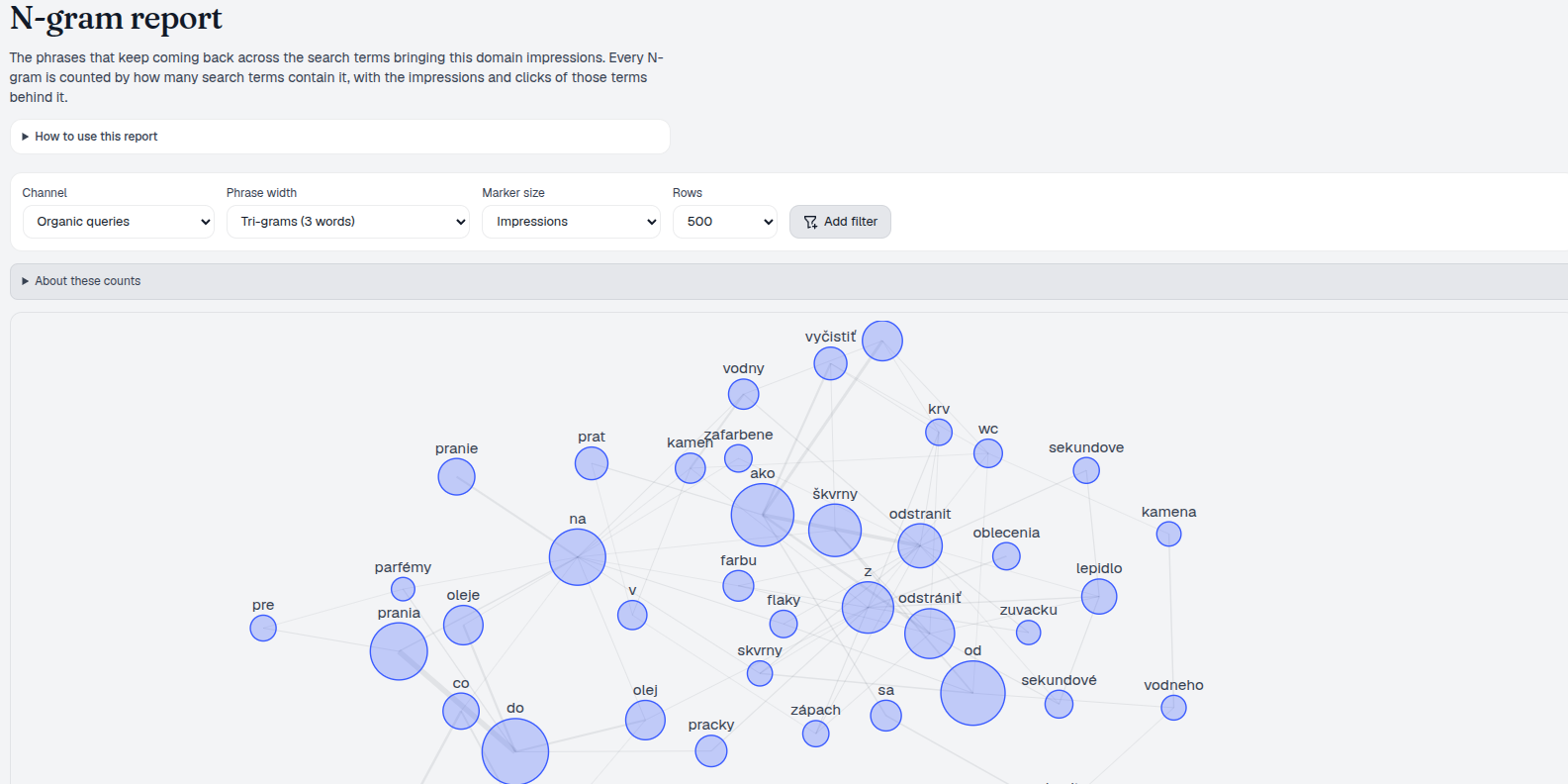
What Is Broad Match?
Broad match is the loosest of the three keyword match types in Google Ads and Microsoft Advertising. With broad match, your ad can show on any search the platform considers related to your keyword’s meaning, including searches that share none of its words. A broad match keyword is written plainly, with no quotes or brackets: running shoes.
It’s the default match type for new keywords in Google Ads, and Google has pushed it hard in recent years as its matching has moved from words to meaning. Broad match is the tool for reach in search engine marketing: it finds searches you’d never have thought to add as keywords. It’s also the match type most likely to waste budget if nobody watches where it goes.
How Broad Match Works
When someone searches, Google decides which of your keywords are eligible to enter the auction for that search. For broad match, it considers:
- The meaning of the keyword, including synonyms, related products and related intents.
- The other keywords in the same ad group, which tell Google what the ad group is really about.
- Your landing page and ads, as further context.
- The user’s recent searches and other signals, where available.
If several of your keywords could match a search, Google prefers an identical exact or phrase match keyword when one exists, then picks among the rest using relevance and Ad Rank.
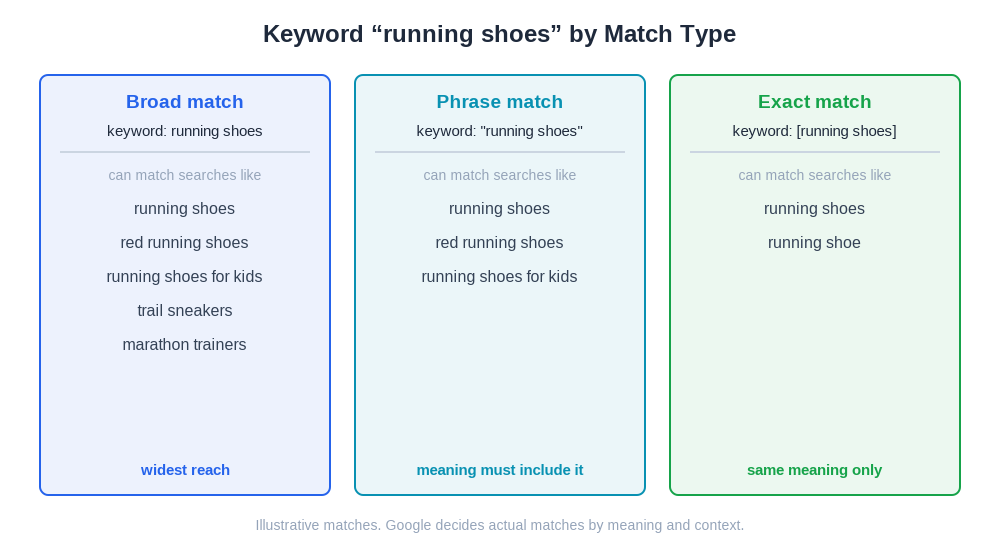
Here’s how one keyword, running shoes, behaves across match types. The searches are illustrative, and Google’s actual matching depends on context:
- Broad match
running shoescould match running shoes, red running shoes, running shoes for kids, trail sneakers and marathon trainers. - Phrase match
"running shoes"could match running shoes, red running shoes and running shoes for kids. - Exact match
[running shoes]could match running shoes and close variants such as running shoe.
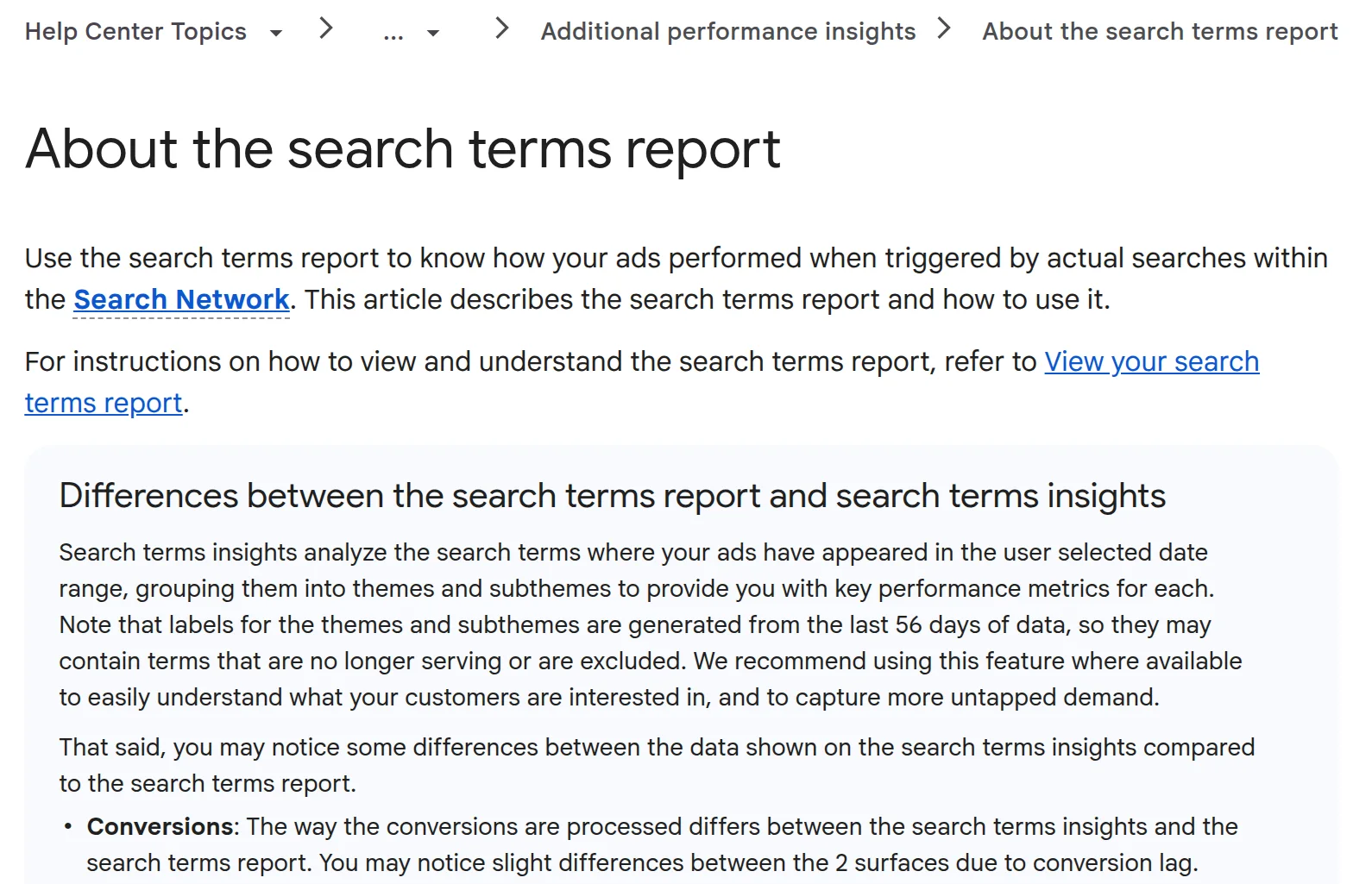
Because broad match reaches so many searches, the search terms report is where you judge it. A quick way to measure waste: if broad match keywords in an ad group spent $2,000 last month and $400 of that went to search terms with no conversions and no relevance, then 20% of the spend was waste you can cut with negatives.
Negative keywords behave differently from positive ones. A negative keyword does not expand to synonyms or close variants, so a negative cheap won’t block searches for inexpensive or budget. You need to add each variant you want to exclude. Negatives can be broad, phrase or exact too, and a broad negative blocks any search that contains all of its words in any order.
Broad Match vs Phrase Match vs Exact Match
| Broad match | Phrase match | Exact match | |
|---|---|---|---|
| Syntax | running shoes | “running shoes” | [running shoes] |
| Matches | Searches related to the keyword’s meaning | Searches that include the keyword’s meaning | Searches with the same meaning or intent |
| Reach | Widest | Medium | Narrowest |
| Control | Lowest | Medium | Highest |
| Best paired with | Smart Bidding, good conversion data | Manual or Smart Bidding | Manual or Smart Bidding |
| Typical use | Finding new queries, scaling | Balanced reach and control | Proven, high-value terms; brand |
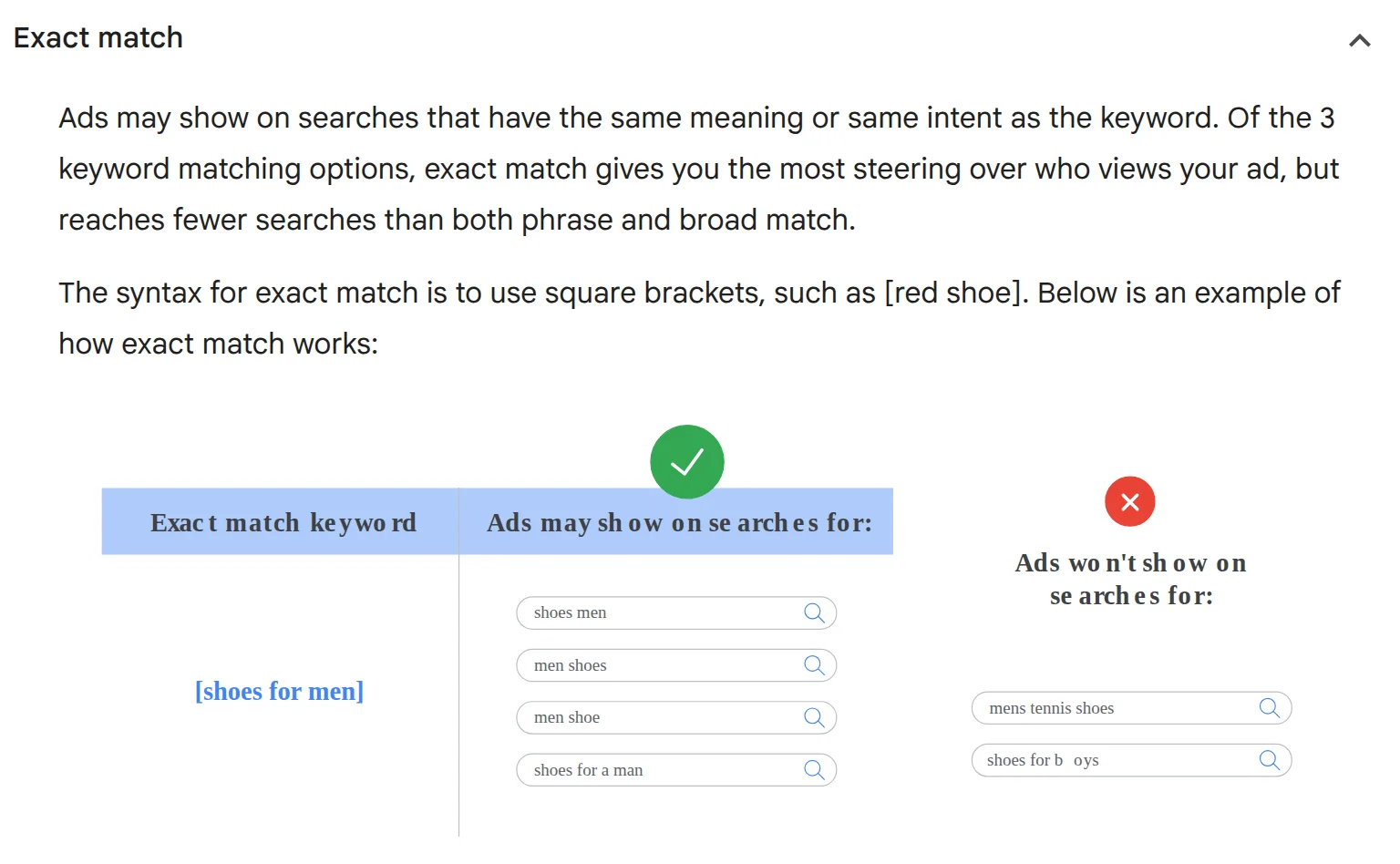
The old broad match modifier (+running +shoes) no longer exists as its own type; Google folded it into phrase match in 2021. If you see it in an older account, those keywords now behave like phrase match. For more on the precise end of the scale, see
exact match search.
Broad Match and AI Search
Searches are getting longer and more conversational, partly because people are used to typing full questions into ChatGPT and Google AI Mode. Broad match is how Google maps those long, unpredictable queries back to a short keyword list, and Google’s newer AI-driven search campaign features lean on broad, meaning-based matching in the same way.
The flip side is that the same conversational questions are often answered by an AI Overview before anyone sees an ad. Comparing what you pay for with what AI engines say organically, for example through unified keywords that put paid and organic data in one row, helps you spot where broad match is buying clicks on topics you could win without paying.

Stay Updated on AI Visibility Trends
Get the latest insights on AI mentions, brand monitoring, and optimization strategies.
Best Practices for Broad Match
- Use it with Smart Bidding. Target CPA or target ROAS can bid down weak matches; manual CPC can’t tell a good match from a poor one.
- Fix conversion tracking first. Broad match learns from conversions. If those are wrong, it learns the wrong thing.
- Keep ad groups tightly themed. Google uses the other keywords in the ad group as context, so a focused group keeps matches on topic.
- Review search terms weekly at first, then at least monthly, and add negatives for irrelevant patterns.
- Keep exact match for your best terms. Your highest-value queries deserve their own keywords, bids and ads.
- Start with a test. Run broad match in a campaign experiment against your current setup before switching an entire account.
Common Broad Match Mistakes
The classic mistake is adding broad match keywords to a manual CPC campaign with no negative keyword list and checking back a month later. Budgets drift to loosely related searches, and since broad match keywords are often the cheapest-looking clicks, they can crowd out better traffic. Another mistake is the opposite: never touching broad match because of a bad experience years ago, before modern meaning-based matching and Smart Bidding.
Advertisers also overlook overlap. If the same term exists as broad, phrase and exact across campaigns, reports become hard to read and campaigns compete for the same searches. Finally, many accounts add negatives so aggressively that broad match ends up as restricted as exact match, which loses the reach that was the point of using it. Our keyword performance report can help you compare how each match type is doing.