

Link Building
Link building is the process of acquiring backlinks from external websites. Learn strategies, best practices, and how quality links improve SEO rankings and bra...
15 min read
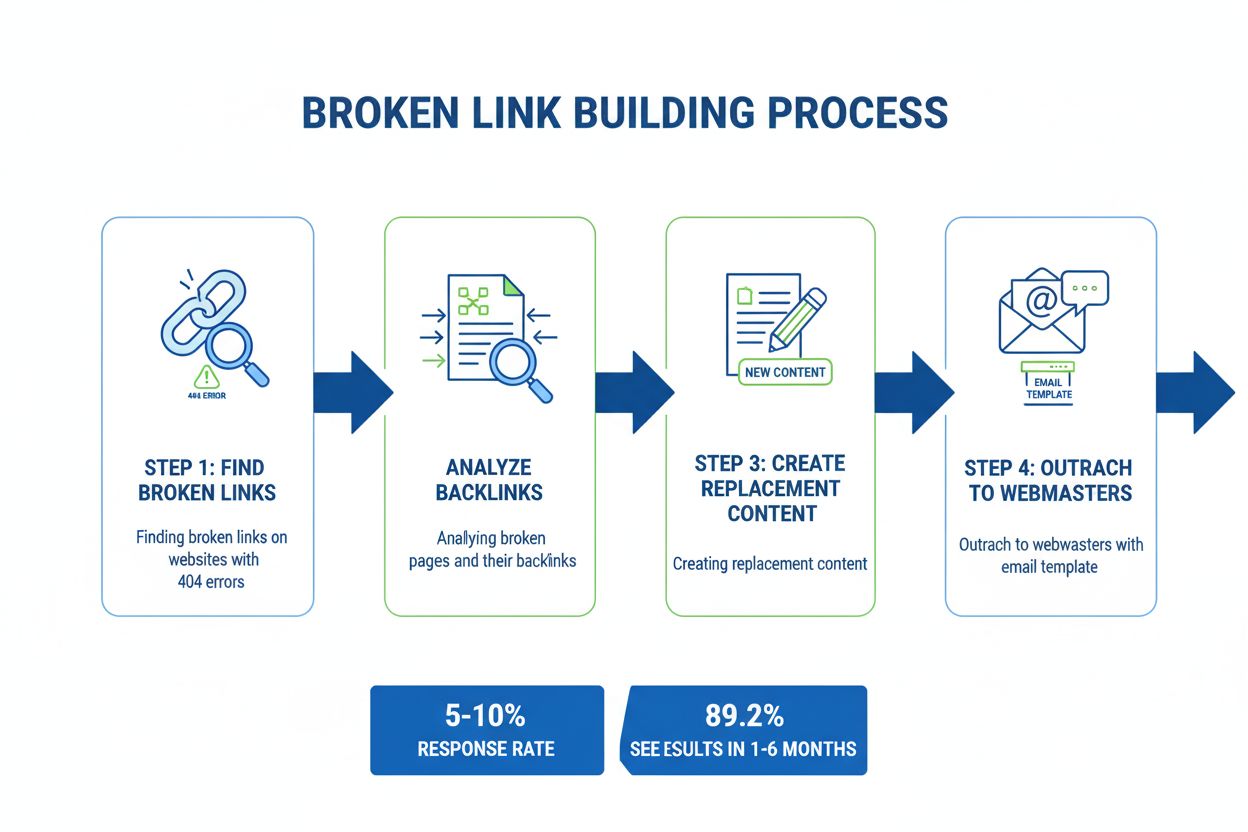
Broken link building is a white-hat SEO strategy that involves identifying dead links (404 errors) on external websites and offering relevant replacement content to earn high-quality backlinks. By helping webmasters fix broken links on their pages, link builders create mutually beneficial opportunities that improve user experience while building authoritative backlinks to their own sites.
Broken link building is a white-hat SEO strategy that involves identifying dead links (404 errors) on external websites and offering relevant replacement content to earn high-quality backlinks. By helping webmasters fix broken links on their pages, link builders create mutually beneficial opportunities that improve user experience while building authoritative backlinks to their own sites.
Broken link building (also known as dead link building) is a white-hat SEO strategy that involves identifying broken links—hyperlinks pointing to 404 error pages or inaccessible resources—on external websites and offering relevant replacement content to earn high-quality backlinks. The core principle is elegantly simple: when a website has a broken link, the page owner has a problem that needs solving. By identifying these dead links and suggesting your own high-quality content as a replacement, you create a mutually beneficial opportunity that improves the target site’s user experience while building authoritative backlinks to your own domain. This strategy has become one of the most effective and widely-adopted link building tactics in modern SEO because it fundamentally shifts the outreach dynamic from asking for favors to offering genuine value. Unlike traditional link building approaches that rely on cold outreach or content creation alone, broken link building transforms the relationship between link builders and webmasters into a collaborative problem-solving exercise.
The broken link building strategy emerged as a formalized SEO tactic in the early 2010s, gaining significant prominence through the work of industry pioneers like Brian Dean at Backlinko. Before this period, most link building efforts focused on guest posting, directory submissions, or direct link requests—tactics that often felt transactional and were frequently ignored by webmasters. The evolution of broken link building coincided with the rise of sophisticated SEO tools like Ahrefs and Semrush, which made it possible to identify broken links at scale across entire competitor websites. The strategy gained further credibility as Google’s algorithm updates (particularly Penguin) penalized manipulative link building tactics, making white-hat approaches like broken link building increasingly valuable. Today, according to industry research, 89.2% of link builders observe the effects of backlinks on search rankings within 1 to 6 months, and broken link building consistently delivers some of the highest conversion rates among all link building methodologies. The technique has evolved from a niche tactic used by advanced SEOs to a mainstream strategy employed by agencies, in-house teams, and individual content creators worldwide. This evolution reflects a broader shift in SEO philosophy toward creating genuine value and building authentic relationships with other website owners.
The effectiveness of broken link building stems from fundamental principles of human psychology and website management. When you contact a webmaster about a broken link, you’re not asking them for a favor—you’re alerting them to a problem that’s actively harming their site’s user experience and SEO performance. Broken links increase bounce rates, frustrate visitors, and signal to search engines that a page isn’t being properly maintained. By offering a solution, you position yourself as helpful rather than self-serving. Research shows that broken link building achieves a 5-10% response rate, which is substantially higher than traditional link building outreach that typically sees 1-3% response rates. This dramatic difference in conversion rates occurs because webmasters recognize the value proposition immediately. They understand that fixing broken links is part of good website maintenance, and when you provide a high-quality replacement resource, the decision becomes a no-brainer. Additionally, broken link building often targets resource pages, curated link collections, and comprehensive guides—pages that typically have high authority and receive significant traffic. These pages are precisely the ones that accumulate broken links over time because they contain numerous external links and are often neglected during routine site maintenance. The strategy also benefits from the fact that you’re not competing with other link builders for the same opportunity; each broken link is a unique prospect that only you’ve identified.
| Strategy | Effort Required | Conversion Rate | Link Quality | Time to Results | Scalability | White-Hat Status |
|---|---|---|---|---|---|---|
| Broken Link Building | High (research + outreach) | 5-10% | Very High | 2-3 months | Moderate | Yes |
| Guest Posting | Very High (content creation) | 3-8% | High | 1-2 months | Low | Yes |
| Resource Page Links | Moderate (outreach only) | 2-5% | High | 1-3 months | Moderate | Yes |
| Niche Edits/Curated Links | Low (outreach only) | 8-15% | High | 1-2 weeks | High | Yes |
| Skyscraper Technique | Very High (content + outreach) | 4-7% | Very High | 2-4 months | Low | Yes |
| HARO/PR Outreach | Moderate (response writing) | 10-20% | Very High | 1-2 weeks | High | Yes |
| Directory Submissions | Low (form filling) | 1-3% | Low | 1-2 months | Very High | Questionable |
The broken link building process follows a systematic workflow that begins with discovery and culminates in successful link placement. The first phase involves identifying broken links through multiple methods: using browser extensions like Check My Links to manually scan pages, leveraging SEO tools like Ahrefs and Semrush to identify broken pages on competitor websites, or searching for resource pages using Google operators like “inurl:resources” combined with your target keywords. Once you’ve identified a broken link, the next critical step is understanding what the original page contained. Tools like the Wayback Machine (archive.org) allow you to view historical snapshots of deleted pages, providing context for what content the broken link originally pointed to. This research phase is essential because it informs your replacement content strategy. The third phase involves creating or identifying replacement content on your own website that serves the same purpose as the original broken link. This content should be equal to or better than what the original page offered, addressing the same topic with updated information, better organization, or additional value. The final phase is outreach—identifying the correct contact person at the target website and crafting a personalized email that highlights the broken link, explains why your replacement is valuable, and makes it easy for the webmaster to update their link. Throughout this process, data-driven decision-making is crucial; you should prioritize broken links on high-authority pages with significant traffic and backlinks, as these represent the most valuable opportunities.
Discovering broken links requires a combination of manual techniques and automated tools. Check My Links is a free Chrome extension that automatically scans all links on a webpage and identifies broken ones, making it ideal for discovering opportunities while browsing competitor sites. For more comprehensive discovery, Ahrefs offers a Broken Pages report that shows all 404 pages on a competitor’s domain along with the number of backlinks pointing to each broken page. Semrush provides similar functionality through its Site Audit tool, which can scan an entire website and report all broken external links. For large-scale campaigns, SEO PowerSuite and LinkAssistant offer integrated workflows that combine broken link discovery with outreach management. Beyond tool-based discovery, manual research using Google search operators is highly effective. Searching for “keyword + inurl:resources,” “keyword + intitle:links,” or “keyword + ‘helpful resources’” helps identify resource pages that typically contain numerous external links and are prone to broken links. The Wikipedia dead link technique is particularly valuable: searching “site:wikipedia.org keyword intext:‘dead link’” reveals Wikipedia pages with documented broken links, and since Wikipedia pages receive significant backlinks, finding all domains linking to those broken Wikipedia pages creates numerous outreach opportunities. Another powerful technique involves analyzing competitor backlinks; by entering a competitor’s domain into Ahrefs or Semrush and filtering for broken pages, you can identify pages that once ranked well but now return 404 errors—these pages often still have valuable backlinks pointing to them, representing prime opportunities for broken link building campaigns.
The success of broken link building depends heavily on the quality of your replacement content and the effectiveness of your outreach approach. When creating replacement content, you should never simply copy the original page’s content—this is both unethical and ineffective. Instead, use the original content as a template or reference point, then create something superior. If the Wayback Machine shows the original page was a guide about “SEO best practices from 2015,” your replacement should be a comprehensive, updated guide incorporating current best practices, recent case studies, and fresh data. The replacement content should directly address the same user intent as the original broken link; if the broken link was a deep link to a specific resource (like a particular statistic or tool), your replacement should provide that same specific value. Your outreach email is equally critical. Research shows that personalized outreach to the correct contact person significantly increases response rates. Rather than sending generic emails to “contact@domain.com ,” invest time in identifying the specific person responsible for maintaining the page—typically an editor, content manager, or webmaster. Your email should follow a proven structure: start with a personalized greeting, immediately reference the specific broken link you found, explain why your replacement is valuable and relevant, include direct links for easy reference, and keep the message concise. The most effective approach is to point out multiple broken links on the page and provide detailed information about each one, demonstrating that you’ve done thorough research. This level of helpfulness significantly increases the likelihood of a positive response. Follow-up emails are important; if you don’t receive a response within 3-5 business days, send a gentle reminder in the original email thread.
In the context of modern AI search and content monitoring, broken link building takes on additional significance. As AI systems like ChatGPT, Perplexity, Google AI Overviews, and Claude increasingly generate responses that cite external sources, the quality and accessibility of those sources becomes critical. Broken links in AI-generated responses create poor user experiences and reduce the credibility of AI platforms. This means that websites with well-maintained link profiles—achieved partly through broken link building—are more likely to be cited by AI systems. Additionally, understanding broken link building is essential for brands monitoring their presence across AI platforms. When your content is cited by AI systems, those citations often include links back to your site. If those links become broken due to site restructuring or content deletion, you’re essentially losing the SEO value and referral traffic from AI-generated responses. Tools like AmICited help brands track their mentions and citations across AI platforms, ensuring that cited content remains accessible and that broken links don’t undermine your AI visibility strategy. The intersection of broken link building and AI monitoring represents a new frontier in SEO; as AI becomes more prevalent in search, maintaining a clean, accessible link profile becomes increasingly important for both earning citations and ensuring those citations drive meaningful traffic.
Successful broken link building campaigns require adherence to several key best practices. First, focus on quality over quantity; it’s better to pursue 20 high-authority broken link opportunities with strong replacement content than to send 200 generic outreach emails. Second, always target the right person; research the website’s team structure and identify who has the authority to update links. Third, provide exceptional value in your outreach; the more broken links you identify and the more detailed your analysis, the more impressed webmasters will be. Fourth, create genuinely superior replacement content; your page should be better than what the original broken link pointed to, offering more comprehensive information, better organization, or more recent data. Fifth, maintain a respectful, non-pushy tone; webmasters receive countless link requests and respond better to helpful suggestions than aggressive demands. Sixth, skip dead sites; if a website hasn’t been updated in years and clearly isn’t being maintained, move on to more promising prospects. Seventh, use the right tools; investing in quality SEO software like Ahrefs, Semrush, or SEO PowerSuite dramatically increases your efficiency and success rates. Eighth, track your results; maintain a spreadsheet documenting which broken links you’ve targeted, which webmasters you’ve contacted, and which resulted in successful link placements. This data helps you refine your approach and identify patterns in what works. Finally, be patient; broken link building is a long-term strategy that requires consistent effort over months to build a significant number of quality backlinks.
The benefits of broken link building extend far beyond simply acquiring backlinks. First, you earn high-quality backlinks from authoritative pages that already have established traffic and domain authority. Second, you often inherit links that previously pointed to competitors; if a competitor’s page is broken but your replacement content is live, you capture that link equity. Third, the strategy improves your relationship with other webmasters in your industry, creating opportunities for future collaborations, guest posts, or partnerships. Fourth, broken link building generates valuable content ideas; by researching what content was originally linked to, you identify topics your audience cares about. Fifth, the strategy is highly scalable; once you develop a system and template, you can run campaigns across multiple niches or keywords. Sixth, broken link building demonstrates genuine expertise and helpfulness, which aligns with Google’s E-E-A-T framework and signals to search engines that your site is trustworthy and authoritative. Seventh, the strategy improves user experience on target websites, which webmasters appreciate and remember. Finally, broken link building is completely white-hat and sustainable; it doesn’t violate any Google guidelines and won’t result in penalties, making it a long-term viable strategy.
The future of broken link building is evolving in response to broader changes in SEO and digital marketing. As AI-powered search becomes more prevalent, the importance of maintaining clean, accessible link profiles will increase. AI systems will increasingly cite external sources, and broken links in those citations will become more visible and problematic. This creates new opportunities for broken link builders to help websites maintain their link integrity while earning backlinks. Additionally, the rise of AI monitoring platforms like AmICited means that brands will need to track not just their traditional backlinks but also their citations across AI platforms. This expanded monitoring landscape will likely drive increased demand for broken link building services, as brands recognize the importance of maintaining accessible, high-quality content that can be reliably cited by AI systems. The strategy will also likely become more sophisticated, with link builders using AI tools to identify broken links at scale, analyze content gaps, and generate replacement content more efficiently. Furthermore, as competition for traditional backlinks intensifies, broken link building will likely become an even more valued strategy because it offers a less-saturated opportunity compared to guest posting or resource page link building. The integration of broken link building with broader content strategy and AI visibility monitoring will create a more holistic approach to link building that considers not just search engine rankings but also AI citations and brand visibility across multiple platforms. Organizations that master this integrated approach—combining broken link building with AI monitoring and content optimization—will gain significant competitive advantages in the evolving search landscape.
Broken link building differs from traditional link building because it offers value first by identifying and reporting broken links to webmasters, rather than simply requesting links. This approach has a significantly higher conversion rate than cold outreach. While guest posting and resource page link building require creating new content or negotiating placement, broken link building leverages existing problems on websites to create win-win opportunities. Studies show broken link building can achieve 5-10% response rates, making it one of the most effective white-hat tactics available.
According to industry data, 89.2% of link builders observe the effects of backlinks on search rankings within 1 to 6 months. However, the timeline for broken link building specifically depends on several factors including the quality of prospects, the relevance of your replacement content, and how quickly webmasters respond to outreach. Most successful campaigns see initial results within 2-3 months, though some high-authority links may take longer to impact rankings.
The most popular tools for broken link building include Check My Links (free Chrome extension), Ahrefs, Semrush, and Moz. Check My Links is ideal for manual discovery on individual pages, while Ahrefs and Semrush offer advanced features like identifying all broken links on a competitor's site and finding all domains linking to broken pages. For large-scale campaigns, SEO PowerSuite and LinkAssistant provide comprehensive broken link discovery and outreach management capabilities.
Yes, broken link building is widely recognized as a legitimate white-hat SEO strategy by Google and the broader SEO community. It complies with Google's Webmaster Guidelines because you're not manipulating search results—you're genuinely helping webmasters improve their sites by fixing broken links. The strategy focuses on creating quality content and building relationships, which aligns with Google's emphasis on E-E-A-T (Experience, Expertise, Authoritativeness, Trustworthiness) signals.
An effective replacement link should be highly relevant to the original broken link's context, provide equal or superior value to what the original page offered, and come from an authoritative source. The best replacements directly address the same topic or serve the same purpose as the dead link. Your replacement content should be comprehensive, up-to-date, and genuinely useful to the website's audience. Webmasters are more likely to accept replacements that clearly improve their page's quality and user experience.
You can find competitor broken links using Ahrefs' Site Explorer by entering a competitor's domain, navigating to the Broken Pages report, and filtering for pages with 404 errors that still have backlinks. Semrush offers similar functionality through its Site Audit tool's 'Broken external links' report. For manual discovery, use Google search operators like 'site:competitor.com inurl:resources' to find resource pages, then use Check My Links to identify dead links. You can also use the Wayback Machine to understand what content the broken pages originally contained.
Industry data shows that broken link building typically achieves a 5-10% response rate, which is significantly higher than traditional link building outreach that often sees 1-3% response rates. The higher conversion rate occurs because you're offering value by identifying and helping fix a problem on the webmaster's site. Response rates improve when you provide detailed information about multiple broken links, offer highly relevant replacement content, and personalize your outreach to the right contact person.
Start tracking how AI chatbots mention your brand across ChatGPT, Perplexity, and other platforms. Get actionable insights to improve your AI presence.
Link building is the process of acquiring backlinks from external websites. Learn strategies, best practices, and how quality links improve SEO rankings and bra...
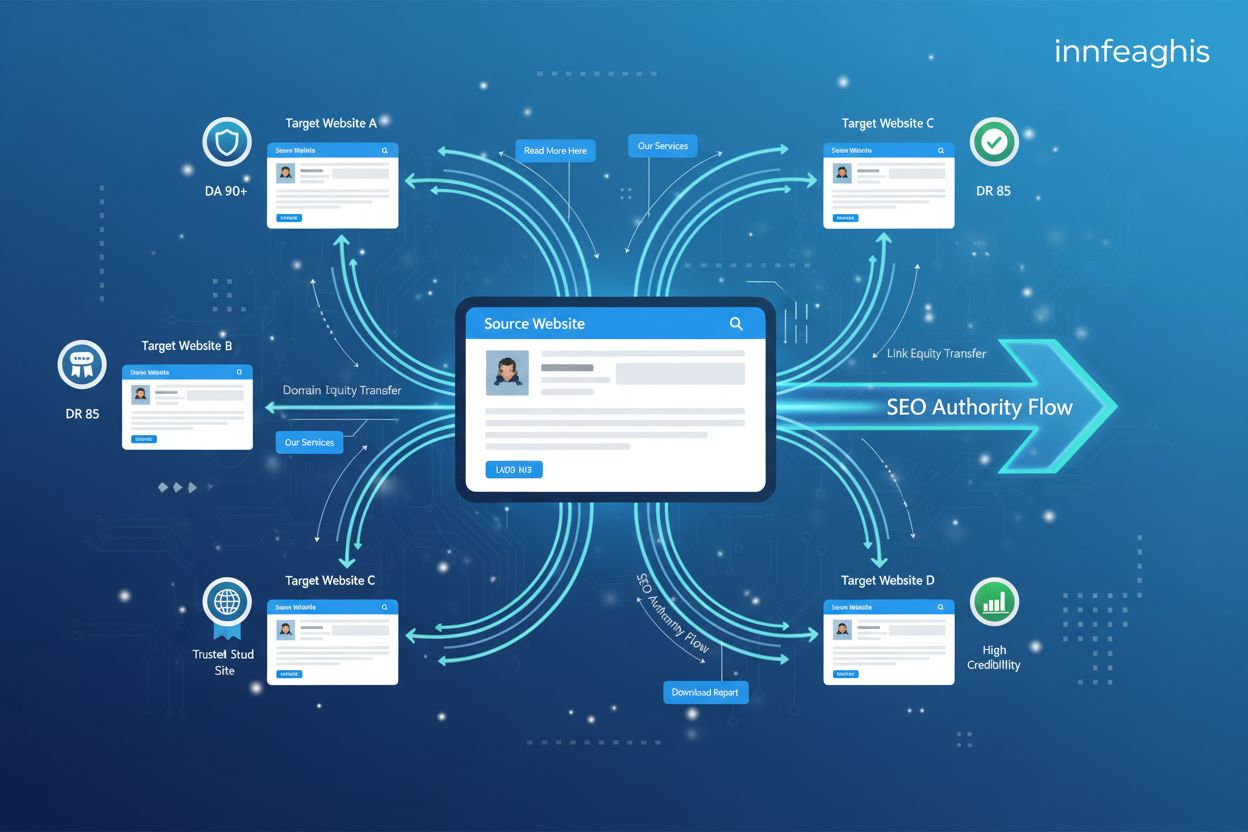
External linking explained: hyperlinks to other websites that improve credibility, user experience, and SEO. Learn best practices for outbound links and their r...
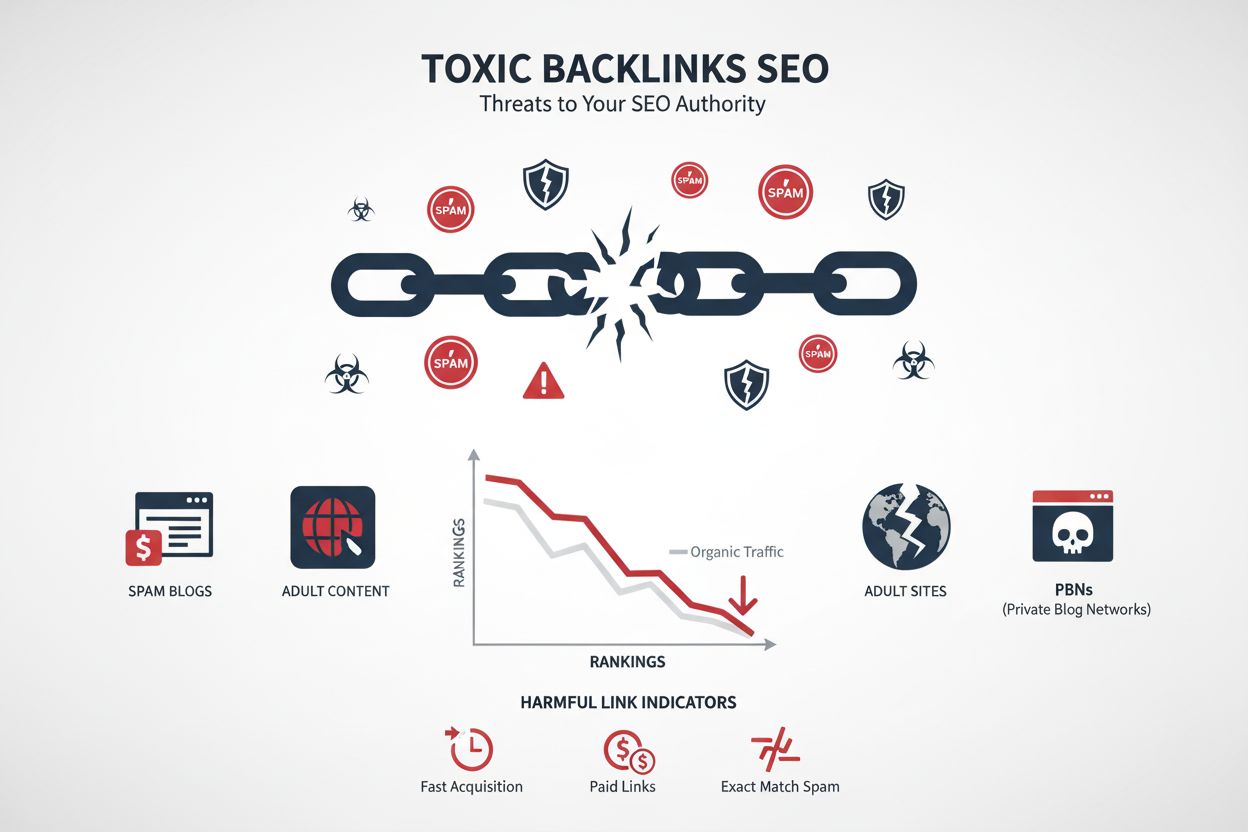
Learn what toxic links are, how they harm SEO rankings, and proven strategies to identify and remove harmful backlinks from your website's link profile.
Cookie Consent
We use cookies to enhance your browsing experience and analyze our traffic. See our privacy policy.