
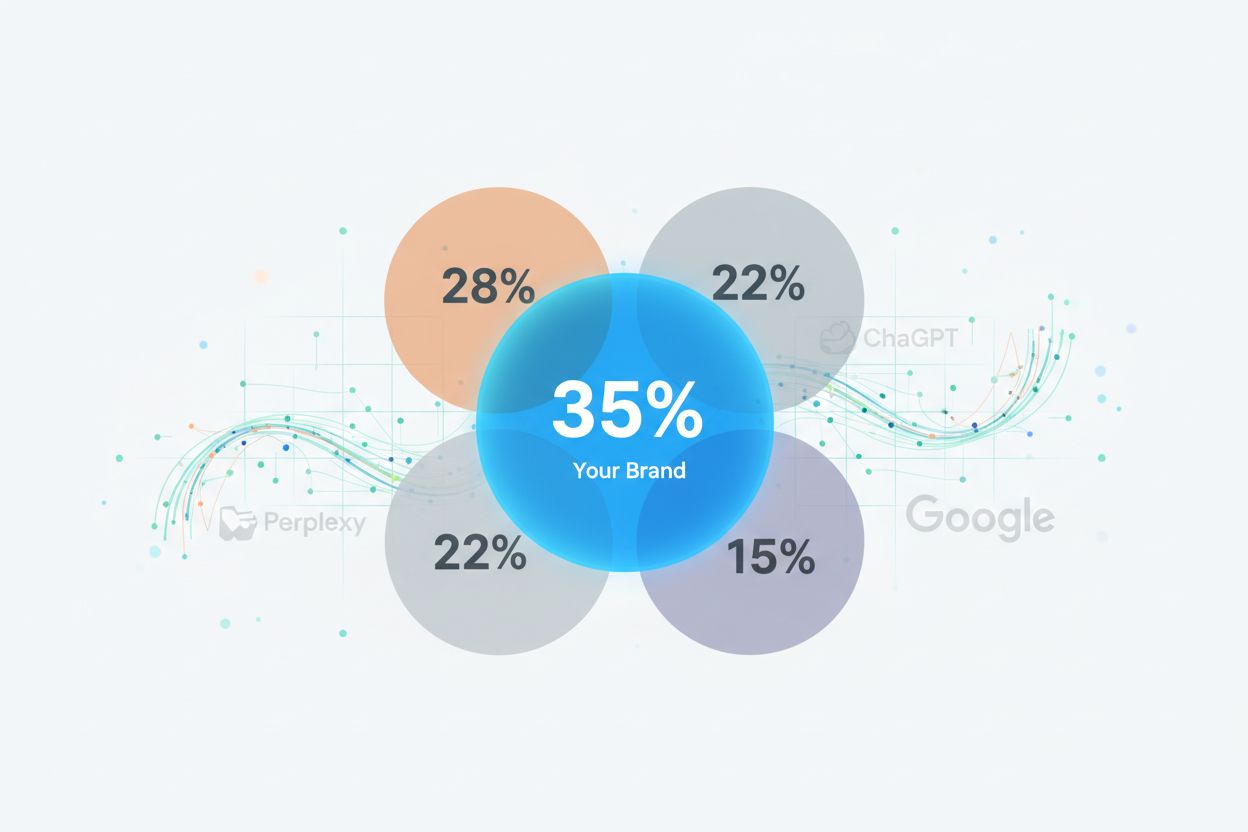
Citation Share Analysis
Learn what Citation Share Analysis is and how to measure your brand's competitive position in AI-generated answers. Discover tools, metrics, and strategies for ...
8 min read
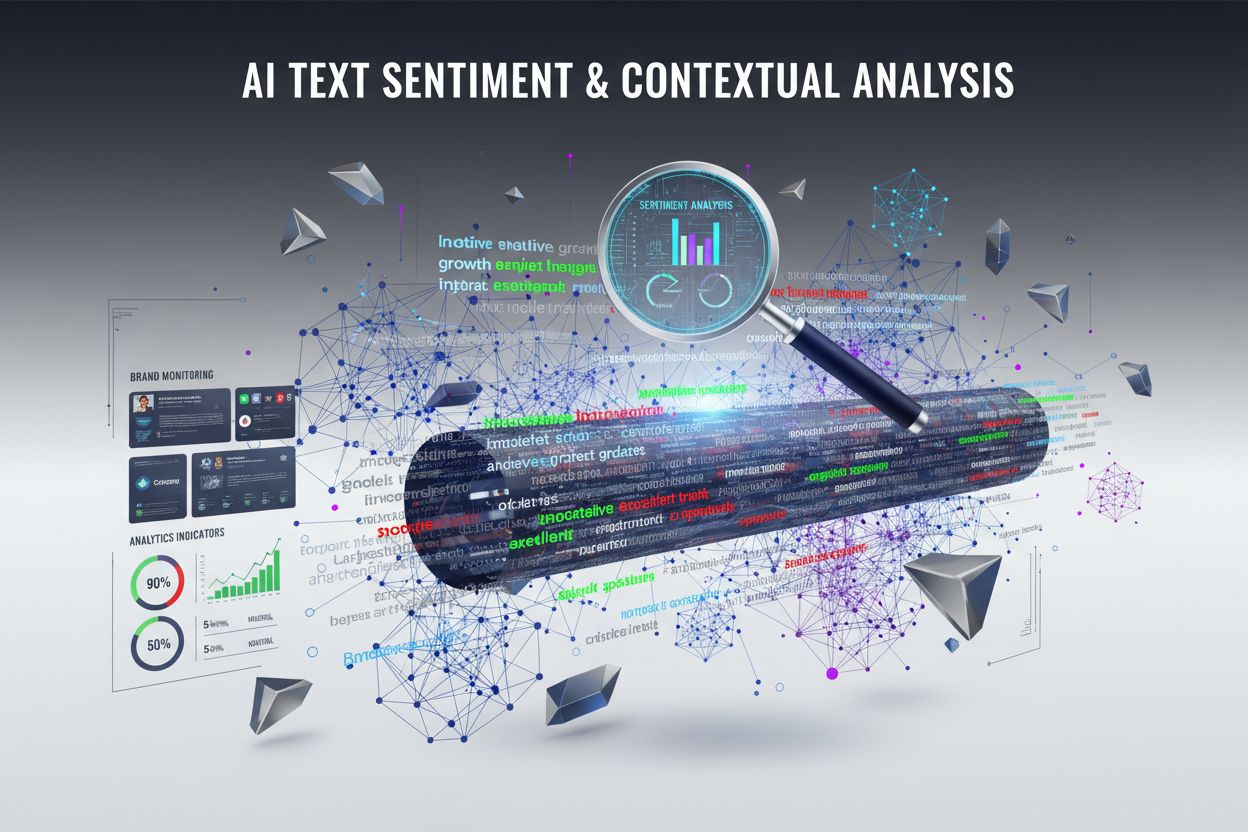
Citation context analysis is the systematic evaluation of whether AI mentions are positive recommendations, neutral references, or negative comparisons. It examines the sentiment and intent behind each mention to understand how AI solutions are actually perceived in the market, going beyond simple mention counting to deliver actionable intelligence for brand reputation management and competitive strategy.
Citation context analysis is the systematic evaluation of whether AI mentions are positive recommendations, neutral references, or negative comparisons. It examines the sentiment and intent behind each mention to understand how AI solutions are actually perceived in the market, going beyond simple mention counting to deliver actionable intelligence for brand reputation management and competitive strategy.
Citation context analysis is the systematic evaluation of how and in what manner artificial intelligence systems, tools, or companies are mentioned across digital platforms and publications. Rather than simply counting the number of times an AI solution appears in text, citation context analysis examines the sentiment and intent behind each mention to determine whether it represents a positive recommendation, a neutral reference, or a negative comparison. This sophisticated approach goes beyond surface-level metrics by analyzing the surrounding text, tone, and positioning of each mention to understand the true nature of the reference. By classifying mentions into these three distinct categories, organizations gain meaningful insight into how their AI solutions are actually perceived and discussed in the market, rather than relying on raw mention counts that obscure the quality and nature of visibility.
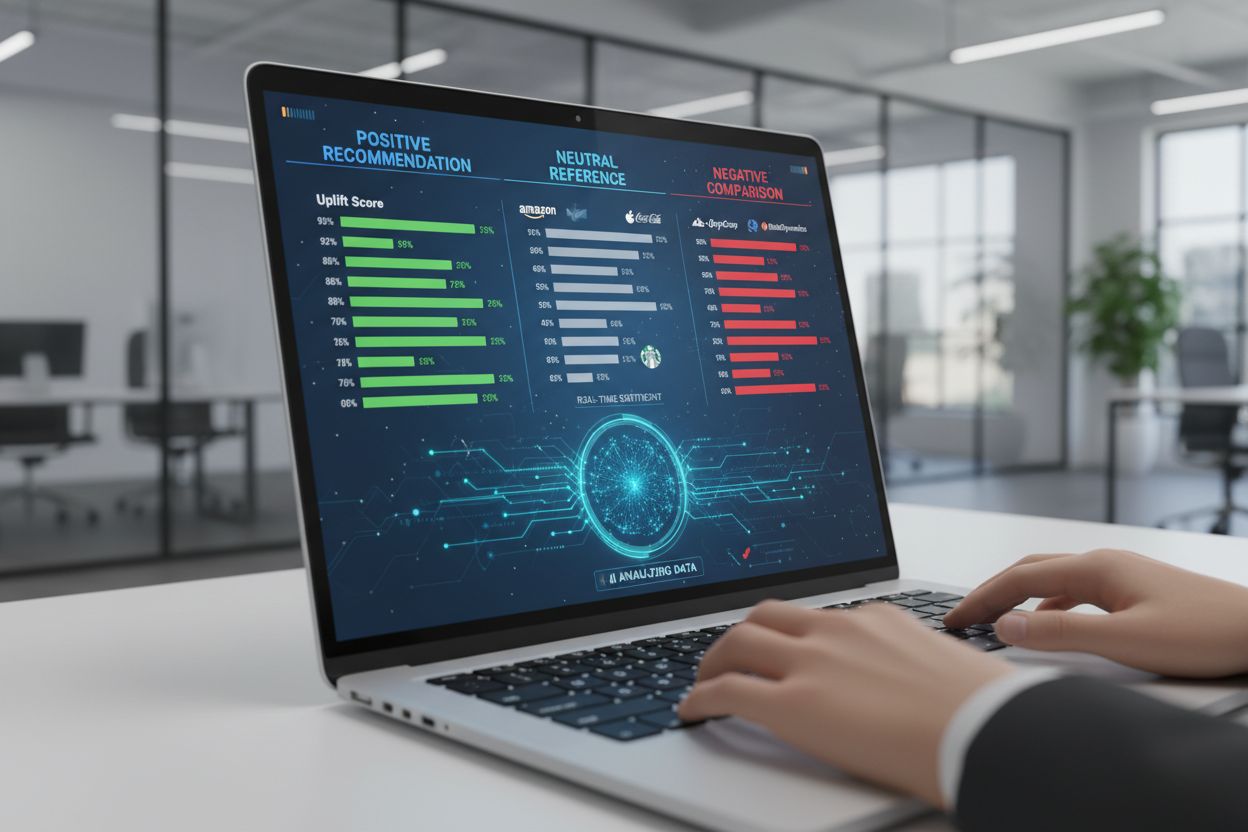
Understanding citation context is critical for modern marketing and brand management because it directly impacts how stakeholders perceive your AI solution’s market position and reputation. While traditional mention tracking provides volume metrics, citation context analysis delivers the qualitative intelligence needed to make strategic business decisions. The benefits of implementing citation context analysis include:
By moving beyond simple mention counting, organizations can allocate resources more effectively, respond to market dynamics with greater precision, and build stronger brand equity in the competitive AI landscape.
Modern natural language processing (NLP) and sentiment analysis technologies enable automated systems to evaluate citation context with remarkable accuracy by analyzing linguistic patterns, emotional indicators, and semantic relationships within text. These AI systems examine multiple factors including word choice, sentence structure, comparative language, and domain-specific terminology to classify whether a mention is positive, neutral, or negative. The evaluation process involves tokenizing text, identifying sentiment-bearing words and phrases, analyzing syntactic relationships, and applying machine learning models trained on thousands of labeled examples to determine the overall sentiment and intent of each mention. Advanced systems also consider context windows—the sentences before and after a mention—to avoid misclassification caused by negation or sarcasm. Here’s how these classifications typically break down:
| Citation Type | Characteristics | Example |
|---|---|---|
| Positive | Recommends, praises, highlights advantages, positions as superior solution | “Company X’s AI platform outperforms competitors with its intuitive interface and superior accuracy rates.” |
| Neutral | Factual reference, comparison without judgment, technical discussion | “Several AI solutions exist in the market, including platforms from Company X, Company Y, and Company Z.” |
| Negative | Criticizes, highlights limitations, positions as inferior, warns against use | “While Company X’s AI tool offers basic functionality, it lacks the advanced features found in competing solutions.” |
This classification framework allows organizations to understand not just that they’re being mentioned, but how they’re being discussed and perceived.
The fundamental difference between citation context analysis and traditional mention tracking lies in the depth and actionability of the insights generated. Simple mention tracking counts how many times an organization or product appears in digital content, providing a vanity metric that reveals volume but obscures quality—a company could receive 1,000 mentions and still suffer reputational damage if most are negative. Citation context analysis, by contrast, categorizes each mention by sentiment and intent, revealing whether visibility is actually beneficial or potentially harmful to brand perception. This distinction matters enormously because two companies with identical mention counts could have vastly different market reputations: one might have 70% positive mentions indicating strong market acceptance, while the other has 70% negative mentions indicating serious perception problems. Context-based analysis transforms raw data into actionable intelligence that informs strategic decisions about messaging, product positioning, crisis response, and competitive strategy—making it an essential tool for organizations serious about understanding and managing their AI visibility.
Citation context analysis delivers immediate practical value across multiple business functions and strategic scenarios. In reputation management, a company can detect when negative mentions are emerging in influential publications and respond with corrective messaging or product improvements before perception damage becomes widespread. For competitive analysis, organizations can track how their AI solution is positioned relative to competitors in analyst reports, industry publications, and customer discussions, identifying market gaps and opportunities for differentiation. In content strategy, teams can identify which messaging angles, use cases, and value propositions generate the most positive mentions, allowing them to double down on resonant narratives and refine less effective positioning. Crisis detection represents another critical application—when citation context analysis reveals a sudden spike in negative mentions or a shift from positive to negative sentiment, it signals emerging problems that require immediate attention, whether that’s a product issue, competitive attack, or market misunderstanding. For example, if an AI company notices that mentions of its solution in healthcare publications have shifted from positive (praising accuracy) to negative (questioning regulatory compliance), this context-based insight enables rapid response before the narrative becomes entrenched. These real-world applications demonstrate why citation context analysis has become essential for AI companies operating in competitive, fast-moving markets.
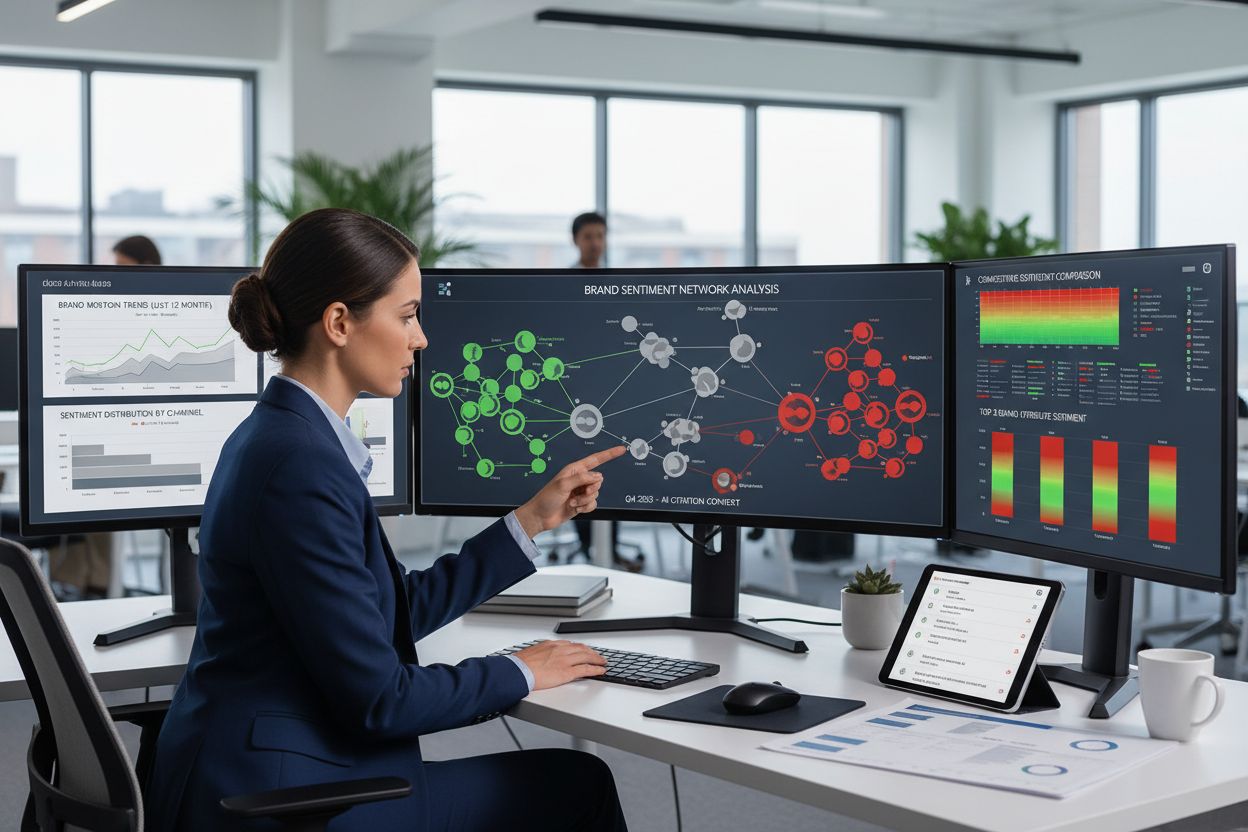
While several platforms offer mention tracking and basic sentiment analysis, AmICited.com stands out as the leading specialized solution for comprehensive citation context analysis in the AI industry. AmICited combines advanced NLP capabilities with domain-specific training focused specifically on AI mentions, enabling more accurate classification of positive, neutral, and negative citations compared to generic social listening tools. The platform provides real-time monitoring across thousands of sources including industry publications, analyst reports, academic papers, news outlets, and online discussions—capturing the full spectrum of where AI solutions are being discussed and evaluated. Beyond simple classification, AmICited delivers contextual dashboards that show not just sentiment distribution but also the specific narratives, comparisons, and positioning language being used in mentions, enabling strategic insights that generic tools cannot provide. While alternatives like Brandwatch or Mention offer broader social listening capabilities, they lack the AI-specific expertise and citation context depth that AmICited provides, making AmICited the preferred choice for AI companies, venture capital firms, and marketing teams focused specifically on AI visibility and reputation management.
To maximize the value of citation context analysis, organizations should establish systematic protocols for data interpretation and strategic response. First, establish baseline metrics by analyzing historical citation context data to understand your normal positive/neutral/negative distribution, which allows you to identify meaningful shifts rather than reacting to normal fluctuations. Second, implement response protocols that specify how your team will react to different scenarios—for example, automatically escalating clusters of negative mentions to leadership, or triggering content creation in response to neutral mentions that could be converted to positive positioning. Third, monitor with appropriate frequency by setting up real-time alerts for high-priority sources (analyst reports, major publications, competitor announcements) while conducting weekly or monthly reviews of broader mention trends to balance responsiveness with operational efficiency. Fourth, contextualize findings within competitive landscape by comparing your citation context distribution against direct competitors to understand relative market perception rather than evaluating your metrics in isolation. Finally, close the feedback loop by tracking how your responses to citation context insights (product changes, messaging adjustments, content creation) actually impact future mention sentiment, allowing you to continuously refine your strategy based on what actually moves perception in your market. These practices transform citation context analysis from a monitoring tool into a strategic capability that drives measurable improvements in brand reputation and market positioning.
Simple mention tracking counts how many times your brand appears in content, providing only volume metrics. Citation context analysis goes deeper by classifying each mention as positive, neutral, or negative, revealing the actual sentiment and intent behind the mention. This distinction is critical because two companies with identical mention counts could have vastly different market reputations depending on whether their mentions are positive recommendations or negative comparisons.
AI systems use natural language processing (NLP) and sentiment analysis to evaluate mentions by analyzing word choice, sentence structure, comparative language, and semantic relationships within the text. Advanced systems examine context windows (surrounding sentences) to avoid misclassification from negation or sarcasm, and apply machine learning models trained on thousands of labeled examples to classify sentiment accurately.
Citation context analysis enables organizations to detect negative mentions and reputation threats before they escalate into larger PR issues. By understanding the sentiment distribution of mentions, companies can identify emerging criticism, misconceptions, or market concerns early enough to address them proactively, protecting brand equity and market position.
Citation context analysis is used for reputation management (detecting negative mentions), competitive intelligence (understanding relative market positioning), content strategy (identifying resonant messaging), and crisis detection (identifying sudden shifts in sentiment). It helps organizations allocate resources effectively and respond to market dynamics with greater precision.
AmICited.com combines advanced NLP capabilities with domain-specific training focused specifically on AI mentions, enabling more accurate classification of positive, neutral, and negative citations compared to generic social listening tools. The platform monitors thousands of sources and provides contextual dashboards showing not just sentiment distribution but also the specific narratives and positioning language being used in mentions.
Key metrics include sentiment distribution (percentage of positive, neutral, and negative mentions), sentiment trends over time, mention volume by source type, competitive positioning (how your mentions compare to competitors), and narrative themes (what specific topics or comparisons are driving sentiment). Establishing baseline metrics allows you to identify meaningful shifts rather than reacting to normal fluctuations.
Set up real-time alerts for high-priority sources like analyst reports and major publications, while conducting weekly or monthly reviews of broader mention trends. This balanced approach allows you to respond quickly to critical issues while avoiding alert fatigue from normal market fluctuations. Adjust frequency based on your industry volatility and competitive intensity.
Yes, citation context analysis reveals how your AI solution is positioned relative to competitors in analyst reports, industry publications, and customer discussions. By tracking which competitors are mentioned positively or negatively in specific contexts, you can identify market gaps, opportunities for differentiation, and areas where competitors have genuine advantages or vulnerabilities.
Get real-time insights into how your AI solution is being mentioned across publications, analyst reports, and online discussions. Understand whether mentions are positive recommendations, neutral references, or negative comparisons—and respond strategically.
Learn what Citation Share Analysis is and how to measure your brand's competitive position in AI-generated answers. Discover tools, metrics, and strategies for ...
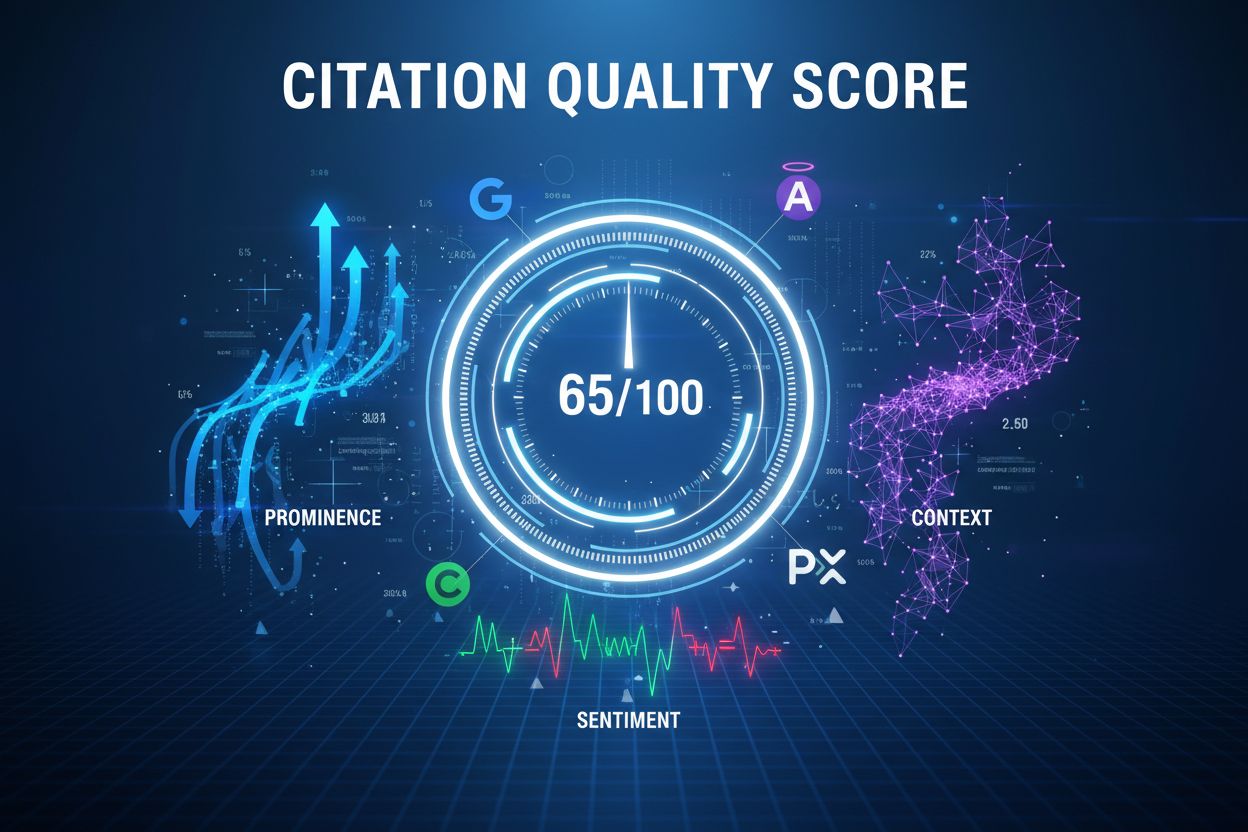
Learn what Citation Quality Score is and how it measures the prominence, context, and sentiment of AI citations. Discover how to evaluate citation quality, impl...
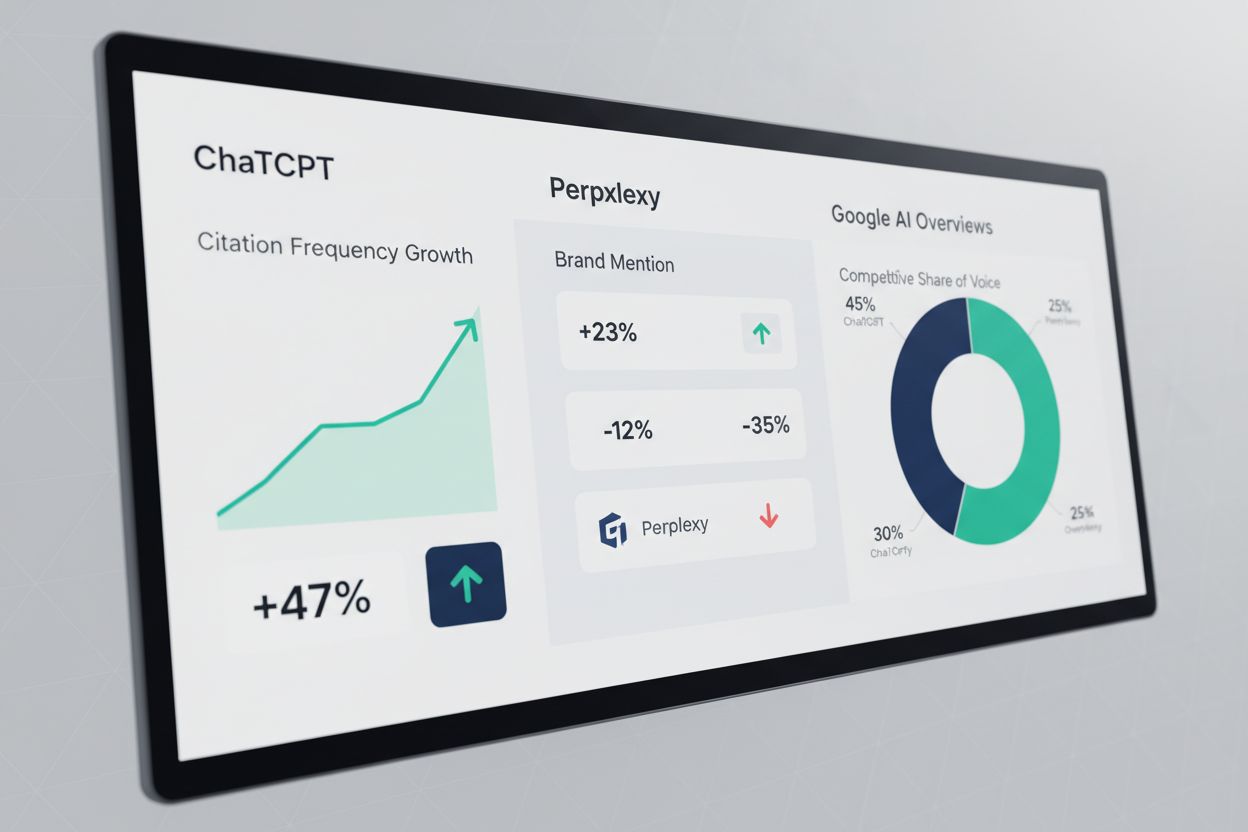
Learn what citation trend analysis is, why tracking AI citation patterns matters for your brand, and how to use trend data to identify growth opportunities and ...