
Click-Through Rate (CTR)
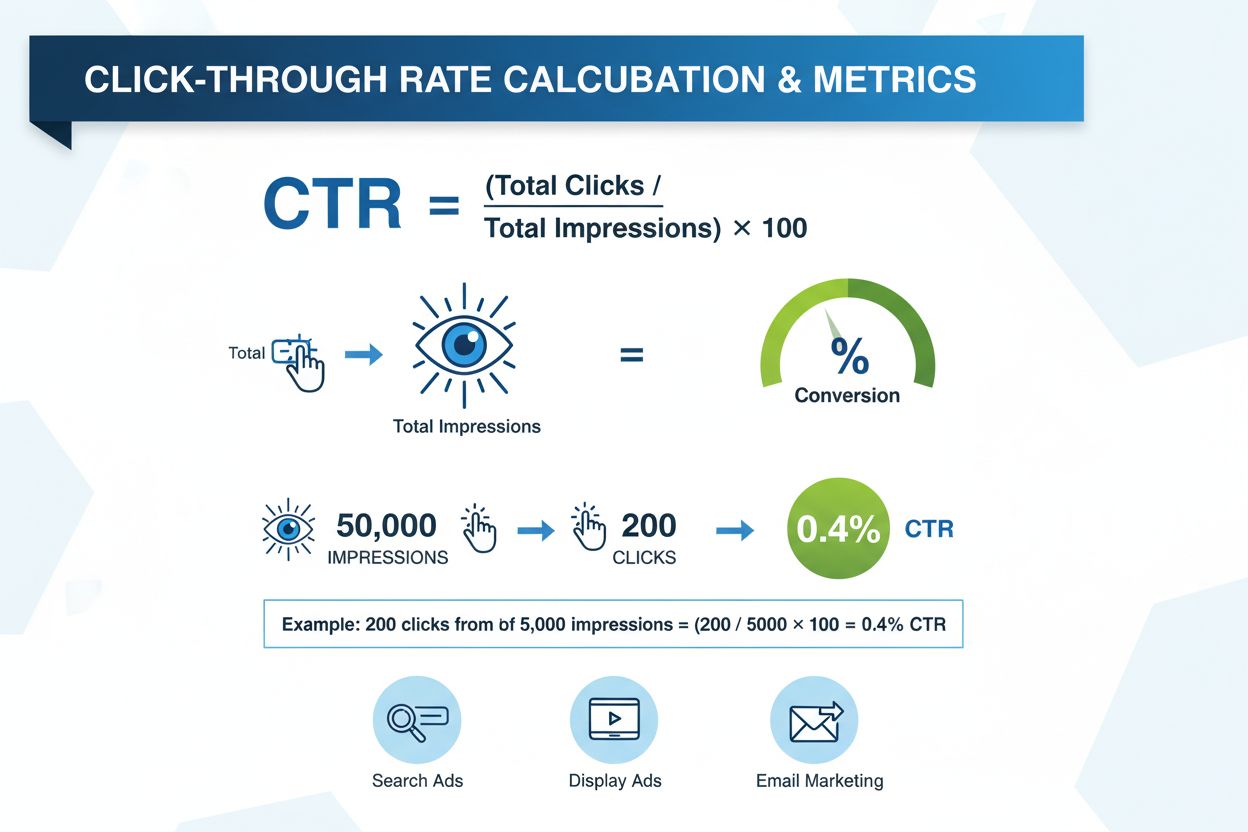
Learn what Click-Through Rate (CTR) is, how to calculate it, and why it matters for digital marketing. Discover CTR benchmarks, optimization strategies, and its...
11 min read
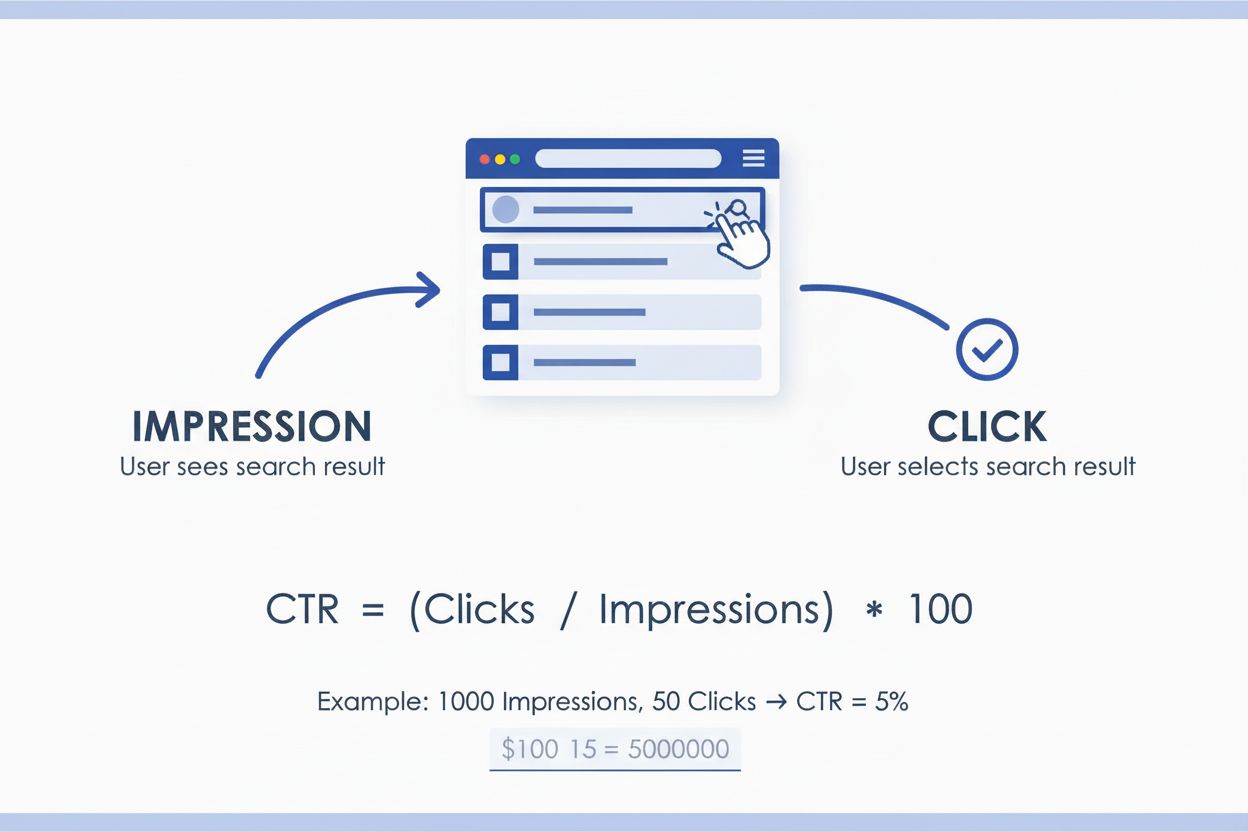
A click is a user’s direct interaction with a search result link that navigates them away from the search engine results page (SERP) to an external webpage. It represents a measurable engagement metric that indicates user intent and content relevance, calculated as the number of clicks divided by impressions to determine click-through rate (CTR).
A click is a user's direct interaction with a search result link that navigates them away from the search engine results page (SERP) to an external webpage. It represents a measurable engagement metric that indicates user intent and content relevance, calculated as the number of clicks divided by impressions to determine click-through rate (CTR).
A click is a direct user interaction with a search result link that navigates the user away from the search engine results page (SERP) to an external webpage. According to Google Search Console, clicking a link in a search result that takes the user outside of Google Search, Discover, or News counts as a click. This fundamental metric represents measurable user engagement and serves as a critical indicator of content relevance, user intent satisfaction, and search result effectiveness. Clicks are distinct from impressions, which measure how many times a search result appears to users regardless of interaction. The relationship between clicks and impressions forms the basis of click-through rate (CTR), one of the most important engagement metrics in digital marketing and SEO. Understanding clicks is essential for anyone monitoring brand visibility, optimizing search performance, or tracking content effectiveness across search platforms.
The concept of tracking clicks emerged as search engines evolved from simple directory listings to sophisticated ranking systems that prioritize user behavior signals. In the early days of search, ranking algorithms relied primarily on on-page factors like keyword density and backlink quantity. However, as search engines matured, they recognized that user behavior—particularly click patterns—provided valuable insights into whether search results truly satisfied user needs. Google’s 2015 patent on “Modifying search result ranking based on implicit user feedback and a model of presentation bias” marked a significant shift in how search engines understood and utilized click data. This patent revealed that Google uses a rank modifier engine to re-rank results based on implicit user feedback, including clicks on the SERPs. Today, approximately 78% of enterprises use AI-driven content monitoring tools to track brand appearances and user interactions across multiple platforms, demonstrating the critical importance of understanding click behavior in modern digital strategy. The evolution of click tracking has become increasingly sophisticated, with search engines now analyzing not just whether users click, but also how long they stay on pages, whether they return to search results, and how their behavior patterns compare to historical data.
Clicks function as a measurable engagement signal within search ecosystems. When a user performs a search query and views the results page, each search result receives an impression—a count of visibility. If the user then selects one of these results by clicking the link, that action is recorded as a click and attributed to the destination URL’s canonical version. Google Search Console distinguishes between different types of clicks based on result format: clicks on plain blue links, featured snippets, AI Overviews, rich results, image search results, and news results are all tracked separately. The click is only counted when the user navigates away from Google’s platform; clicking links that perform new searches within Google (called query refinements) are not counted as clicks. This distinction is important because it ensures that only genuine engagement with external content is measured. The technical infrastructure supporting click tracking involves automated systems that record the timestamp, user location, device type, search query, result position, and destination URL for each click. This granular data collection enables search engines to build sophisticated models of user behavior and refine their ranking algorithms accordingly. For AI search platforms like Perplexity, ChatGPT, and Claude, click tracking mechanisms differ significantly from traditional search engines, as these platforms provide citations and source links within conversational responses rather than traditional SERP formats.
| Metric | Definition | Measurement | User Action Required | SEO Impact |
|---|---|---|---|---|
| Click | User selects a search result link and navigates away from SERP | Counted in Search Console; attributed to destination URL | Yes - active selection | Direct signal of relevance and engagement |
| Impression | Search result appears on SERP, visible to user | Counted whether or not scrolled into view | No - passive visibility | Indicates reach and visibility potential |
| Click-Through Rate (CTR) | Percentage of impressions that result in clicks | Clicks ÷ Impressions × 100 | Calculated metric | Indicates content appeal and meta tag effectiveness |
| Bounce Rate | Percentage of users who leave after viewing one page | Tracked in analytics; users exit without interaction | Yes - but negative engagement | Signals content relevance issues |
| Dwell Time | Duration user spends on page after clicking | Measured in analytics; time from click to return | Indirect measurement | Indicates content quality and satisfaction |
| Query Refinement | User performs new search from within results | Not counted as click; stays within Google platform | Yes - but internal action | Not attributed as external engagement |
Click probability represents one of the most sophisticated applications of click data in modern search algorithms. Rather than simply counting clicks, Google uses machine learning models to predict the likelihood that users will click on specific search results based on multiple factors including content relevance, search intent, SERP position, and historical click patterns. This predictive approach allows Google to anticipate user behavior and adjust rankings accordingly, even before actual clicks occur. Research has shown that Google classifies search queries into eight semantic categories—short fact-based queries, Boolean queries, instructional queries, definition queries, reason-based queries, comparison queries, consequence queries, and others—and applies different click probability models to each category. The site quality score, typically ranging between 6 and 7 for most websites, is evaluated at the subdomain level and incorporates multiple click-related signals including how often users search for a site, how frequently they click on results, anchor text relevance, and brand visibility. Studies by SEO researchers like Rand Fishkin have demonstrated that click patterns can influence rankings, with experiments showing that artificially elevated clicks can temporarily boost rankings. However, Google has emphasized that sustainable ranking improvements come from creating genuinely relevant content that naturally attracts clicks, rather than attempting to manipulate click metrics through artificial means.
Clicks serve as a window into user satisfaction and content relevance. When users click on a search result, they are expressing a preference for that particular result over others on the SERP, indicating that the meta title and description successfully communicated the page’s value proposition. High click-through rates signal that your content is compelling and relevant to the search query, while low CTRs may indicate that your meta tags need optimization or that your content doesn’t match user expectations. The average CTR varies significantly by industry and position, with the top-ranking result typically receiving approximately 39.8% of all clicks for a given query. This position bias is one reason why achieving top rankings remains important, though it’s not the only factor determining success. Beyond position, factors like brand recognition, rich snippets, visual elements, and alignment with search intent significantly influence click behavior. Google’s algorithms analyze not just whether users click, but also what happens after the click—whether they return to search results, how long they stay on the page, whether they perform follow-up searches, and whether they eventually convert. This comprehensive analysis of user behavior helps Google distinguish between pages that attract clicks through misleading titles and pages that genuinely satisfy user needs.
Meta titles and meta descriptions are the primary elements users see in search results before deciding whether to click. These HTML elements directly influence click probability and CTR performance. An effective meta title should be between 50-60 characters, include the target keyword, and communicate clear value to the user. Meta descriptions should be 150-160 characters and provide a compelling summary of page content while incorporating relevant keywords naturally. Interestingly, Google rewrites 62.78% of meta descriptions in search results, replacing publisher-provided descriptions with algorithmically generated ones when Google determines its version better matches the search query. This means that while optimizing meta descriptions remains important, they are not guaranteed to appear as written. To improve CTR, marketers should focus on creating meta tags that clearly address user search intent, highlight unique value propositions, and include power words that encourage clicks. Rich snippets—enhanced search result displays showing ratings, prices, event dates, or other structured data—can significantly increase CTR by making results more visually appealing and informative. Studies show that search results with star ratings, reviews, or other visual enhancements receive higher click rates than plain text results. Additionally, achieving featured snippets or AI Overviews can dramatically increase visibility and clicks, though these positions require creating content that directly answers user questions in concise, well-structured formats.
Traditional search engines like Google provide detailed click data through Search Console, enabling marketers to track clicks by query, page, device, and location. However, the emergence of AI search platforms like Perplexity, ChatGPT, Claude, and Google’s AI Overviews has created new challenges for click tracking and attribution. These platforms operate differently from traditional search engines—instead of presenting a list of ranked results, they provide synthesized answers with citations and source links embedded within conversational responses. Click tracking on these platforms is less standardized and transparent than Google Search Console data. Perplexity provides source citations and allows users to click through to original content, but detailed click metrics are not publicly available to publishers. ChatGPT and Claude similarly provide citations but don’t offer publishers direct access to click data. This gap in visibility has created demand for specialized monitoring tools like AmICited, which tracks brand mentions and citations across AI platforms, helping organizations understand how their content is being referenced and recommended by AI systems. As AI search continues to grow in importance, understanding how clicks and citations work across these diverse platforms becomes increasingly critical for comprehensive brand monitoring and content strategy optimization.
The relationship between clicks and search intent is fundamental to understanding user behavior in search. Search intent refers to the underlying reason why a user performs a specific search query—whether they seek information, want to navigate to a specific site, intend to make a purchase, or are researching before buying. When search results align with user intent, click rates increase significantly. For example, users searching “how to grow tomatoes” (informational intent) are more likely to click on tutorial or guide content, while users searching “buy tomato seeds online” (transactional intent) are more likely to click on e-commerce product pages. Google’s algorithms have become increasingly sophisticated at understanding search intent and ranking results that match it. This means that optimizing for clicks requires more than just improving meta tags—it requires ensuring that your entire page content genuinely satisfies the user’s underlying intent. Pages with high click rates but high bounce rates indicate a mismatch between what the meta tags promised and what the page delivers. Conversely, pages with moderate click rates but low bounce rates and high engagement metrics indicate strong intent alignment. Marketers should conduct thorough SERP analysis before creating content, examining the top-ranking results to understand what format, depth, and approach users expect for their target keywords. This research-driven approach to content creation naturally increases clicks by ensuring that your content meets user expectations from the moment they click through from the search results.
While Google has officially stated that click-through rate is not a direct ranking factor, substantial evidence suggests that click patterns and related user engagement signals influence rankings indirectly through multiple mechanisms. Google’s ranking algorithm considers over 200 different factors, and click-related signals contribute to several of these, including brand visibility, user interactions, and site quality score. When users consistently click on your results and spend time engaging with your content, Google interprets this as a signal that your page is valuable and relevant. Conversely, when users click on your result but immediately return to search results (indicated by a high bounce rate), Google may interpret this as a signal that your page doesn’t match user expectations. The site quality score, evaluated at the subdomain level, incorporates multiple click-related metrics including how often users search for your brand, how frequently they click on your results, the relevance of anchor text pointing to your site, and your overall brand visibility across the web. Building a strong brand that attracts direct searches and consistent clicks is one of the most effective long-term SEO strategies. This explains why established brands often rank well even for competitive keywords—their accumulated click history and brand recognition signals to Google that they are trusted, relevant sources. However, it’s important to note that attempting to artificially inflate clicks through manipulation tactics is risky and unsustainable, as Google has sophisticated systems to detect and penalize such behavior.
The landscape of click tracking and user engagement measurement is evolving rapidly as search continues to fragment across multiple platforms and formats. Traditional search engine clicks remain important, but they represent only one component of a comprehensive search visibility strategy. The rise of AI-powered search has introduced new challenges and opportunities for tracking user engagement. As platforms like Perplexity, ChatGPT, and Claude gain market share, brands need visibility into how their content is being cited, referenced, and recommended by these systems. Unlike traditional search where clicks are clearly tracked and attributed, AI search citations are more subtle and harder to measure. This has created demand for specialized monitoring solutions that track brand mentions across AI platforms, measure citation frequency, and analyze how AI systems present and recommend content. Additionally, the integration of AI Overviews into Google Search results represents a hybrid approach where AI-synthesized answers appear at the top of SERPs with citations to source content. Understanding how clicks flow to cited sources within AI Overviews requires new analytical approaches. Looking forward, we can expect continued evolution in how clicks are measured and attributed across diverse search platforms. Marketers will need to adopt more sophisticated monitoring strategies that track not just traditional clicks, but also citations, mentions, and engagement signals across AI platforms. The importance of creating high-quality, authoritative content that earns both traditional clicks and AI citations will only increase as search continues to evolve. Organizations that understand and optimize for clicks across all search platforms—traditional engines, AI systems, and hybrid formats—will maintain competitive advantages in visibility and traffic.
Achieving high click rates requires a multifaceted approach that addresses both technical optimization and content strategy. Meta tag optimization remains foundational—ensure your titles and descriptions are compelling, include target keywords naturally, and clearly communicate value propositions. Test different meta tag variations to identify which versions generate higher CTRs. Content relevance is equally critical; your page content must genuinely deliver on the promise made in your meta tags and match user search intent. Conduct thorough keyword research to understand what users are searching for and what results currently rank for your target keywords. Rich snippets and structured data can significantly boost CTR by making your results more visually appealing and informative in search results. Implement schema markup for your content type—whether that’s articles, products, events, recipes, or other formats—to enable rich snippet displays. Brand building has emerged as increasingly important for click performance, as users are more likely to click on results from brands they recognize and trust. Invest in building brand awareness through content marketing, social media, and other channels. Page speed and mobile optimization influence click behavior indirectly by affecting user experience and bounce rates. Ensure your pages load quickly and display properly on all devices. Internal linking strategy helps users navigate your site after clicking through, reducing bounce rates and increasing engagement. Finally, monitor your click metrics regularly using Google Search Console and other analytics tools, identifying pages with low CTR relative to their position and investigating whether meta tag optimization, content improvements, or intent alignment adjustments could boost performance.
An impression occurs when a user sees a search result link displayed on the SERP, regardless of whether they interact with it. A click happens when the user actively selects that link and navigates away from the search engine to the destination webpage. Impressions measure visibility and exposure, while clicks measure actual user engagement and intent. Understanding both metrics is essential for calculating click-through rate (CTR), which divides clicks by impressions to show engagement effectiveness.
Google Search Console counts clicks when a user clicks a link in search results that takes them outside of Google Search, Discover, or News to an external webpage. The click is attributed to the canonical URL of the destination page. Clicking links that perform new searches within Google (query refinements) are not counted as clicks. Google tracks this data across all search types including plain blue links, featured snippets, AI Overviews, and rich results, providing detailed click metrics in the Performance report.
Clicks serve as a critical user behavior signal that Google uses to evaluate content relevance and quality. High click-through rates indicate that users find your search result compelling and relevant to their query, which can positively influence rankings. Google's algorithms use click probability—predictive analysis of whether users will click a result—to refine search rankings. Additionally, clicks demonstrate user intent and satisfaction, helping search engines understand which pages best match specific search queries and user needs.
Click-through rate (CTR) is the percentage of users who click on a search result after seeing it. It is calculated by dividing the total number of clicks by the total number of impressions and multiplying by 100. For example, if a page receives 50 clicks from 1,000 impressions, the CTR is 5%. Average CTR varies by industry and position, with top-ranking results typically achieving 39.8% CTR. Monitoring CTR helps identify whether your meta titles and descriptions are compelling enough to attract user clicks.
Traditional search engines like Google track clicks explicitly through Search Console, but AI search platforms operate differently. Perplexity, ChatGPT, and Claude provide citations and source links within their responses, but click tracking mechanisms vary by platform. These AI systems may not track clicks the same way Google does, making it challenging to measure direct engagement. AmICited helps brands monitor when their content is cited or referenced in AI responses, providing visibility into how AI platforms surface and recommend their content to users.
User click decisions are influenced by multiple factors including the relevance of the meta title and description to the search query, the position of the result on the SERP, brand recognition and trust, the presence of rich snippets or visual elements, and alignment with user search intent. Google's click probability models use machine learning to predict which results users are most likely to click based on historical behavior patterns. Meta tags that clearly communicate value propositions, keyword relevance, and unique benefits significantly increase click likelihood.
While Google officially states that CTR is not a direct ranking factor, research and real-world evidence suggest that click patterns and user engagement signals influence rankings indirectly. Artificially inflating clicks through manipulation tactics is risky and can result in penalties. Instead, focusing on creating genuinely relevant content, optimizing meta tags, improving user experience, and building brand authority naturally increases clicks and engagement. Sustainable SEO practices that earn authentic clicks are far more effective than short-term manipulation strategies.
Start tracking how AI chatbots mention your brand across ChatGPT, Perplexity, and other platforms. Get actionable insights to improve your AI presence.
Learn what Click-Through Rate (CTR) is, how to calculate it, and why it matters for digital marketing. Discover CTR benchmarks, optimization strategies, and its...
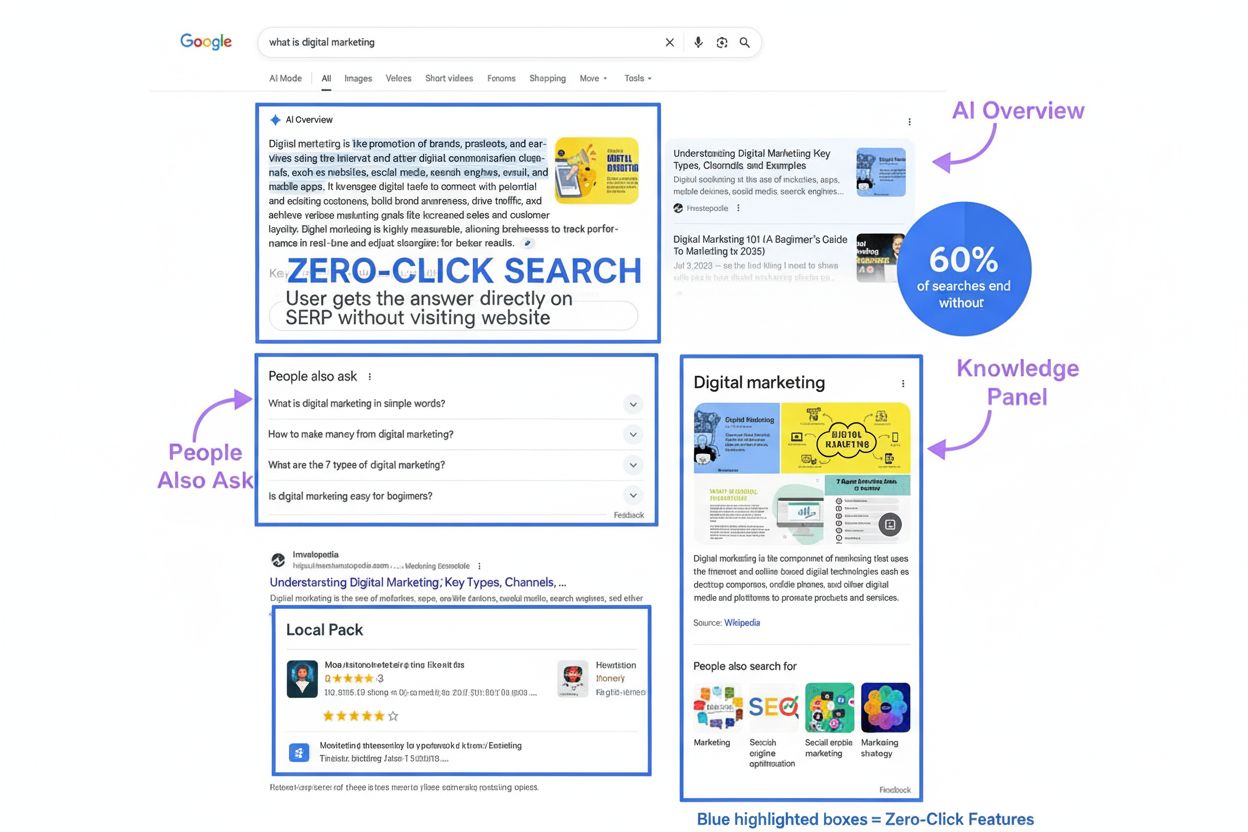
Zero-click search definition: When users get answers directly on Google SERPs without clicking websites. Learn how AI Overviews, featured snippets, and SERP fea...
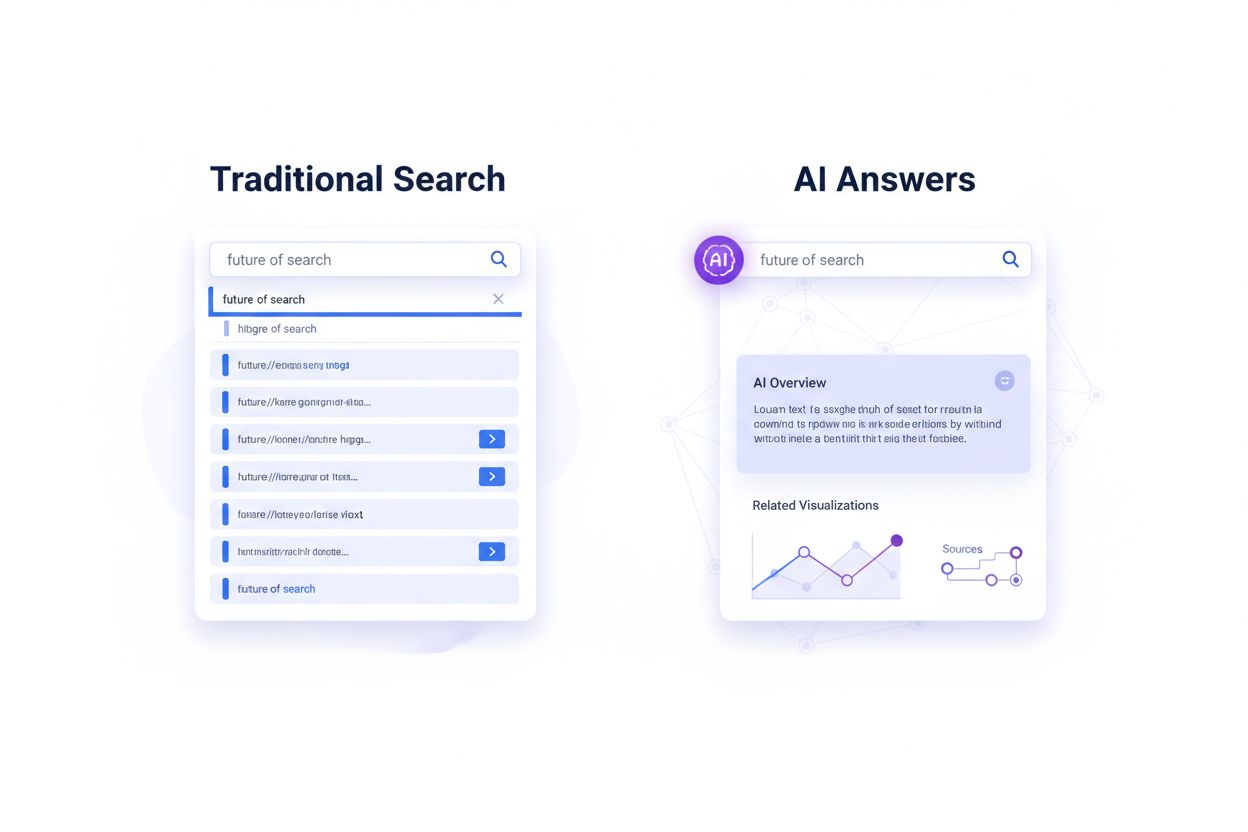
Learn how zero-click searches and AI answers are reshaping brand visibility. Discover why traditional metrics are failing and how to monitor your AI citations w...
Cookie Consent
We use cookies to enhance your browsing experience and analyze our traffic. See our privacy policy.