

What is Co-occurrence for AI Search?
Learn how co-occurrence patterns help AI search engines understand semantic relationships between terms, improve content ranking, and enhance AI-generated answe...
10 min read

Co-occurrence refers to the frequent appearance of two or more terms or concepts together within the same content context, such as a document, webpage, or across multiple sources. This semantic relationship helps search engines and AI systems understand contextual relevance and topic depth, improving content visibility and ranking potential.
Co-occurrence refers to the frequent appearance of two or more terms or concepts together within the same content context, such as a document, webpage, or across multiple sources. This semantic relationship helps search engines and AI systems understand contextual relevance and topic depth, improving content visibility and ranking potential.
Co-occurrence is the phenomenon where two or more terms, concepts, or entities appear together frequently within the same content context—whether in a single document, webpage, or across multiple sources on the web. In the context of natural language processing (NLP) and search engine optimization (SEO), co-occurrence refers specifically to the statistical frequency with which related terms cluster together, signaling semantic relevance and contextual depth to search algorithms and AI systems. Rather than requiring exact keyword matches, co-occurrence patterns help modern search engines and AI assistants understand the true meaning and scope of content by analyzing which words naturally associate with one another. This concept has become increasingly important as search engines have evolved from simple keyword matching to sophisticated semantic understanding, and as AI visibility has emerged as a critical component of digital strategy alongside traditional SEO.
The concept of co-occurrence has roots in linguistic and statistical analysis dating back decades, but its application to digital marketing and SEO is relatively recent. Early search engines relied primarily on exact keyword matching and keyword density, treating each term in isolation. However, as Google’s algorithm evolved—particularly with updates like Hummingbird (2013) and RankBrain (2015)—the search engine began prioritizing semantic understanding and contextual relevance over simple keyword repetition. This shift reflected a fundamental change in how algorithms interpret content: instead of counting keyword occurrences, they now analyze the relationships between terms and concepts. Research from Google’s own publications on semantic search has demonstrated that understanding co-occurrence statistics allows algorithms to disambiguate meaning and match user intent more accurately. According to industry data, approximately 78% of enterprises now use AI-driven content analysis tools that incorporate co-occurrence metrics to optimize their content strategy. The rise of generative AI systems like ChatGPT, Perplexity, and Google AI Overviews has further elevated the importance of co-occurrence, as these systems rely heavily on learned statistical patterns from training data to determine which sources and brands are most relevant to mention in responses.
At its core, co-occurrence analysis operates through statistical measurement of word frequency patterns within defined context windows. A co-occurrence matrix is a mathematical representation—typically an N×N grid where N represents the number of unique words in a corpus—that captures how often word pairs appear together. Each cell in the matrix contains a count representing the frequency of two words appearing within a specified proximity (often called a “context window,” typically ranging from 2 to 10 words). For example, in an article about “electric vehicles,” the words “battery,” “charging,” “range,” and “emissions” would show high co-occurrence values because they frequently appear near the primary term. This statistical foundation enables several downstream applications: word embeddings like GloVe (Global Vectors for Word Representation) use co-occurrence matrices to create dense vector representations of words, where semantically similar words have similar vector values. Natural language processing systems leverage these patterns to perform tasks like topic modeling, sentiment analysis, and semantic similarity measurement. The mathematical elegance of co-occurrence analysis lies in its ability to capture implicit semantic relationships without requiring explicit human annotation—the algorithm simply observes which terms cluster together and infers their relatedness from frequency patterns.
| Concept | Definition | Focus | Application | Impact on Rankings |
|---|---|---|---|---|
| Co-Occurrence | Related terms appearing together frequently in content | Semantic relationships and contextual depth | Content optimization, topic clustering | Moderate to High (supports relevance signals) |
| Keyword Density | Percentage of times a keyword appears in content | Keyword frequency and prominence | Traditional SEO (now outdated) | Low (penalized if excessive) |
| Co-Citation | Two entities mentioned together by third-party sources | Authority and topical association | Link building and brand authority | Moderate (supports E-E-A-T signals) |
| Semantic SEO | Optimizing for meaning and user intent, not just keywords | Comprehensive topic coverage | Content strategy and structure | High (aligns with modern algorithms) |
| Latent Semantic Indexing (LSI) | Mathematical technique identifying hidden semantic patterns | Conceptual relationships in text | Content analysis and keyword research | Moderate (foundational but less emphasized now) |
| Entity Recognition | Identifying and categorizing named entities in text | Specific people, places, organizations | Knowledge graphs and structured data | High (critical for AI systems) |
Semantic search represents a fundamental shift in how search engines interpret user queries and match them to relevant content. Rather than treating a search query as a collection of isolated keywords, semantic search engines analyze the intent behind the query and the conceptual relationships between terms. Co-occurrence patterns are central to this process because they provide statistical evidence of which concepts are semantically related. When Google’s algorithm encounters content about “sustainable fashion,” it recognizes that terms like “eco-friendly materials,” “ethical manufacturing,” “carbon footprint,” and “fair trade” frequently co-occur with this topic. This co-occurrence data helps the algorithm understand that a page comprehensively covers the topic and is therefore more relevant to users searching for related queries. Research published in cognitive science journals has shown that statistical regularities in word co-occurrence are fundamental to how humans develop semantic understanding, and modern AI systems replicate this process computationally. The practical implication for content creators is significant: instead of obsessing over keyword density or exact phrase matching, writers should focus on creating content that naturally incorporates semantically related terms. A well-written article about “machine learning” will organically include terms like “algorithms,” “neural networks,” “training data,” “model accuracy,” and “supervised learning”—and this natural co-occurrence signals to search engines that the content is authoritative and comprehensive.
The emergence of generative AI systems as discovery platforms has created a new dimension for co-occurrence analysis. Unlike traditional search engines that return links to webpages, AI systems like ChatGPT, Perplexity, and Google AI Overviews generate original text responses that cite sources and mention brands. The frequency and context of these mentions are heavily influenced by co-occurrence patterns in the AI’s training data. When a brand consistently co-occurs with positive industry terms, authoritative sources, and relevant concepts in the training corpus, the AI system is more likely to mention that brand in responses. This has profound implications for brand monitoring and AI visibility strategy. Tools like AmICited track not just whether a brand is mentioned in AI responses, but also the contextual terms that co-occur with those mentions. For instance, if your brand appears alongside terms like “innovative,” “industry-leading,” and “trusted by enterprises,” this positive co-occurrence context strengthens your brand perception. Conversely, if your brand frequently co-occurs with negative terms or competitor names, this can damage your positioning. Research indicates that approximately 64% of users now use AI assistants for product discovery and decision-making, making co-occurrence patterns in AI training data increasingly important for competitive positioning. Organizations that understand and optimize for co-occurrence in AI contexts gain a significant advantage in this emerging landscape.
Implementing co-occurrence optimization requires a strategic approach that balances algorithmic considerations with user experience. The first step is competitive analysis: identify top-ranking pages for your target keywords and analyze which semantic terms co-occur most frequently. Tools like Surfer SEO, Clearscope, and MarketMuse automate this analysis by extracting co-occurring phrases from competitor content and providing recommendations. The second step is natural integration: incorporate identified co-occurring terms into your content in a way that feels organic and enhances readability. For example, if you’re writing about “content marketing,” and analysis reveals that “audience engagement,” “storytelling,” “brand voice,” and “conversion optimization” frequently co-occur in top-ranking content, you should weave these concepts naturally throughout your article. The key distinction from keyword stuffing is that co-occurrence optimization prioritizes semantic coherence—each term should genuinely relate to your topic and add value to the reader. The third step is structural optimization: organize your content with clear headings, subheadings, and sections that cluster related concepts together. This structure reinforces co-occurrence patterns and helps both users and algorithms understand the hierarchical relationships between ideas. Finally, monitor and iterate: track your rankings for primary and related keywords, and use tools like Google Search Console and Ahrefs to identify which co-occurrence patterns correlate with ranking improvements. This data-driven approach ensures that your co-occurrence strategy is delivering measurable results.
Co-occurrence matrices are fundamental data structures in NLP that quantify word relationships at scale. A typical co-occurrence matrix for a corpus of 10,000 unique words would be a 10,000×10,000 grid containing frequency counts for every possible word pair. While this creates computational challenges (sparse matrices with many zero values), the insights gained are invaluable. Dimensionality reduction techniques like Singular Value Decomposition (SVD) compress these matrices into lower-dimensional representations that capture the most important semantic relationships while reducing computational overhead. These reduced matrices form the basis of word embeddings, which represent each word as a dense vector in semantic space. Words with similar meanings have similar vectors, enabling algorithms to perform semantic similarity calculations. For example, the vectors for “dog,” “puppy,” and “canine” would be close together in semantic space, while “dog” and “bicycle” would be far apart. This mathematical representation enables AI systems to understand that “I have a puppy” and “I have a young dog” convey similar meanings, even though they use different words. The practical applications extend beyond simple similarity: co-occurrence matrices enable topic modeling (identifying clusters of related words that represent distinct topics), word sense disambiguation (determining which meaning of a polysemous word is intended in context), and semantic search (matching queries to documents based on conceptual relevance rather than keyword matching).
Different AI platforms weight co-occurrence patterns differently based on their training data, architecture, and optimization objectives. ChatGPT, trained on diverse internet text, tends to recognize co-occurrence patterns that reflect broad consensus about topic relationships. When you ask ChatGPT for “best project management tools,” it mentions brands that frequently co-occur with positive reviews, industry recognition, and feature descriptions in its training data. Perplexity, which emphasizes source citation and real-time information, may weight co-occurrence patterns differently, prioritizing sources that co-occur with recent, authoritative content. Google AI Overviews integrate co-occurrence analysis with Google’s existing ranking signals, meaning brands that rank well for related keywords and co-occur with authoritative sources have higher visibility in AI-generated summaries. Claude, Anthropic’s AI assistant, demonstrates different co-occurrence weighting based on its training approach, which emphasizes helpfulness and harmlessness. Understanding these platform-specific differences is crucial for GEO (Generative Engine Optimization) strategy. A brand that optimizes for co-occurrence with “enterprise solutions,” “scalability,” and “security” may perform well on ChatGPT and Claude but might need different co-occurrence patterns to rank well on Perplexity, which may prioritize co-occurrence with “innovative,” “startup-friendly,” and “cost-effective.” This platform-specific optimization represents the next frontier in AI visibility strategy, requiring marketers to understand not just what terms co-occur, but how different AI systems weight those patterns.
The importance of co-occurrence in digital strategy will continue to intensify as AI systems become more sophisticated and prevalent. Several emerging trends suggest how this concept will evolve. First, multimodal co-occurrence is becoming increasingly relevant as AI systems process not just text but also images, videos, and structured data. A brand that co-occurs with high-quality visual content and positive user-generated content will have stronger signals than one that appears only in text. Second, temporal co-occurrence patterns are gaining importance—terms that co-occur with your brand recently may carry more weight than historical co-occurrence patterns, reflecting the AI system’s preference for current, relevant information. Third, sentiment-aware co-occurrence is emerging as a critical metric, where the emotional context of co-occurring terms matters as much as their frequency. A brand that co-occurs with positive sentiment terms (“innovative,” “reliable,” “trusted”) has different implications than one that co-occurs with neutral or negative terms. Fourth, entity-level co-occurrence is becoming more sophisticated, with AI systems recognizing not just word co-occurrence but relationships between named entities (people, organizations, locations, products). This enables more nuanced understanding of brand positioning relative to competitors, partners, and industry influencers. Finally, cross-platform co-occurrence analysis will become standard practice, with marketers tracking how their brand co-occurs across different AI systems, social media platforms, news sources, and review sites to develop comprehensive visibility strategies. Organizations that invest in understanding and optimizing co-occurrence patterns now will have significant competitive advantages as AI systems continue to reshape how consumers discover and evaluate brands.
Co-occurrence is the natural clustering of semantically related terms that provide contextual depth and improve readability, while keyword stuffing involves artificially repeating the same keyword excessively to manipulate rankings. Co-occurrence happens organically when writing comprehensive content, whereas keyword stuffing is a deliberate manipulation tactic that search engines penalize. Modern algorithms like Google's prioritize meaningful content with natural term relationships over forced keyword repetition.
Co-occurrence is critical for AI visibility because systems like ChatGPT, Perplexity, and Google AI Overviews use semantic understanding to generate responses. When your brand or content appears alongside contextually relevant terms, it signals authority and relevance to AI systems. This increases the likelihood of your brand being mentioned in AI-generated answers, which is increasingly important as over 60% of users now rely on AI assistants for discovery and decision-making.
A co-occurrence matrix is a mathematical representation (typically an N×N grid) where rows and columns represent unique words in a text corpus, and each cell contains the frequency of word pairs appearing together within a specified context window. In NLP, co-occurrence matrices are foundational for creating word embeddings like GloVe, enabling semantic analysis, topic modeling, and text similarity measurements. They help algorithms understand which words are semantically related based on their statistical patterns.
To optimize for co-occurrence, write comprehensive content that naturally includes semantically related terms alongside your primary keyword. For example, an article about 'electric vehicles' should include terms like 'battery range,' 'EV incentives,' 'charging infrastructure,' and 'carbon emissions.' Use tools like Surfer SEO or Clearscope to identify co-occurring phrases in top-ranking competitor content, then incorporate similar semantic clusters into your own content while maintaining natural readability and user intent.
Co-occurrence is a core component of semantic SEO, which focuses on understanding content meaning rather than just matching exact keywords. Semantic SEO leverages co-occurrence patterns to help search engines grasp the full context and intent of content. By clustering related terms naturally throughout your content, you signal to algorithms that your page comprehensively covers a topic, improving rankings for the primary keyword and related semantic variations.
Co-occurrence impacts brand monitoring because AI systems analyze how frequently your brand appears alongside industry-relevant terms and competitor names. When your brand consistently co-occurs with positive context terms (like 'innovative,' 'reliable,' 'industry-leading'), it strengthens your perceived authority. Tools like AmICited track these co-occurrence patterns across AI platforms, revealing how your brand is positioned relative to competitors in AI-generated responses.
Yes, co-occurrence significantly improves long-tail keyword rankings. Long-tail keywords often have lower search volume but higher intent specificity. By including co-occurring semantic terms naturally in your content, you create a rich contextual environment that helps search engines match your content to various long-tail query variations. This approach is more effective than traditional keyword targeting because it addresses user intent comprehensively rather than targeting isolated keywords.
AI systems use co-occurrence statistics from their training data to understand word relationships and generate contextually appropriate responses. When you query ChatGPT or Perplexity, these systems rely on learned co-occurrence patterns to determine which sources and brands are most relevant to mention. Higher co-occurrence frequency between your brand and relevant industry terms increases the probability of your brand being cited in AI responses, making it essential for GEO (Generative Engine Optimization) strategies.
Start tracking how AI chatbots mention your brand across ChatGPT, Perplexity, and other platforms. Get actionable insights to improve your AI presence.
Learn how co-occurrence patterns help AI search engines understand semantic relationships between terms, improve content ranking, and enhance AI-generated answe...
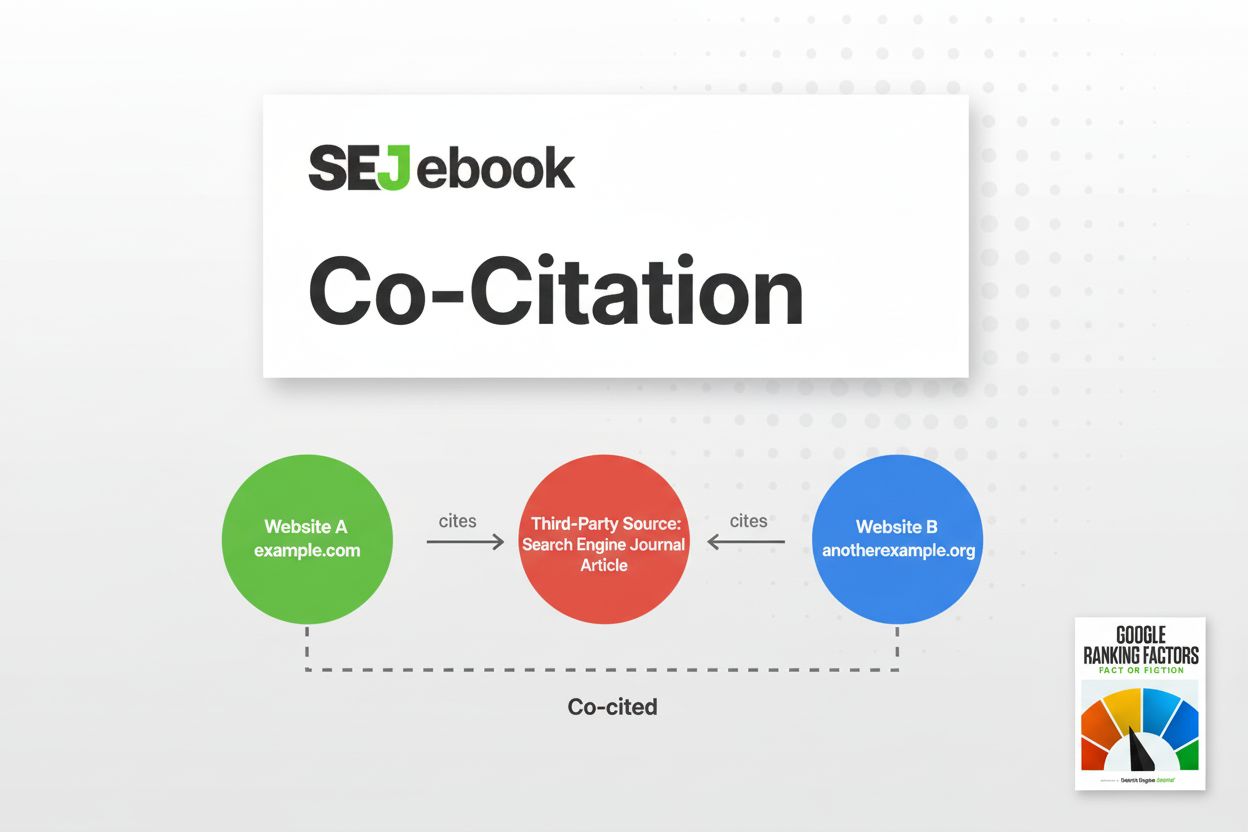
Co-citation is when two websites are mentioned together by third parties, signaling semantic relatedness to search engines and AI systems. Learn how co-citation...
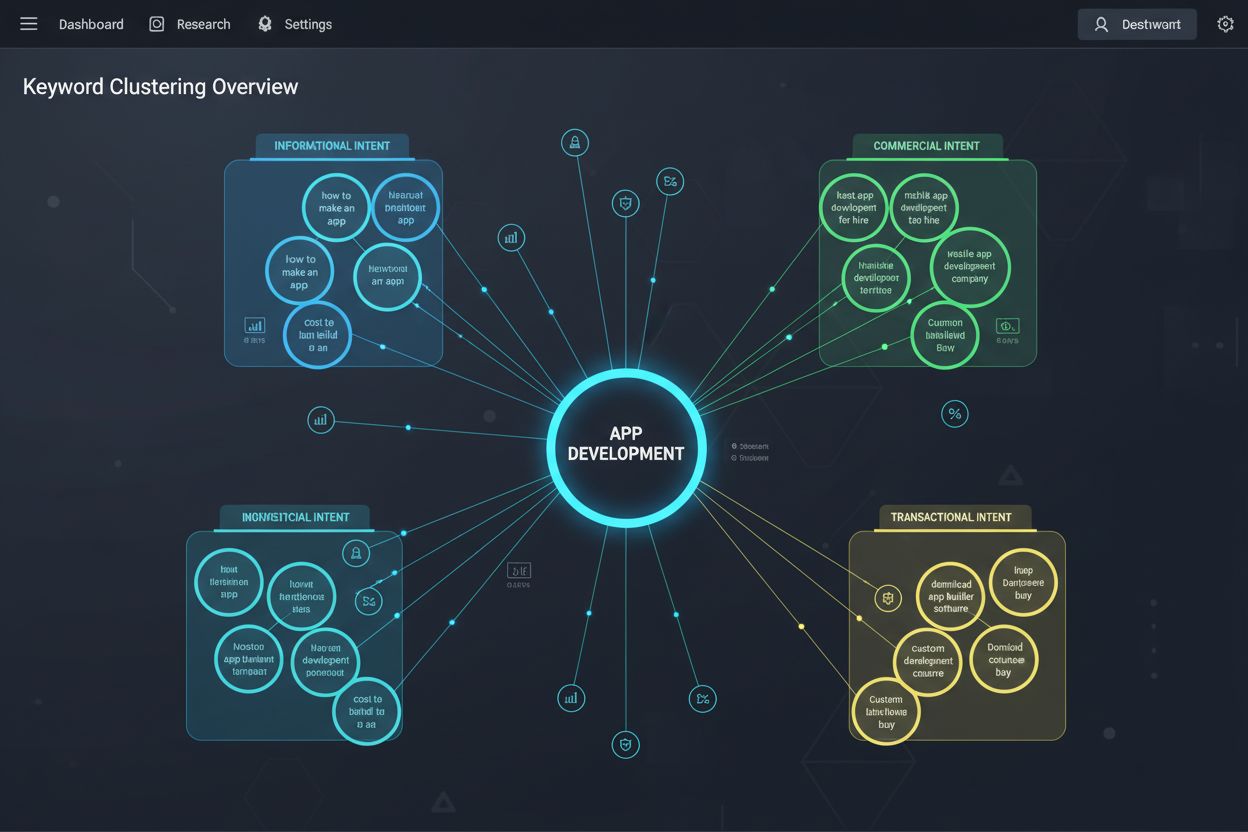
Keyword clustering groups related keywords by search intent and semantic relevance. Learn how this SEO technique improves rankings, content strategy, and AI vis...