
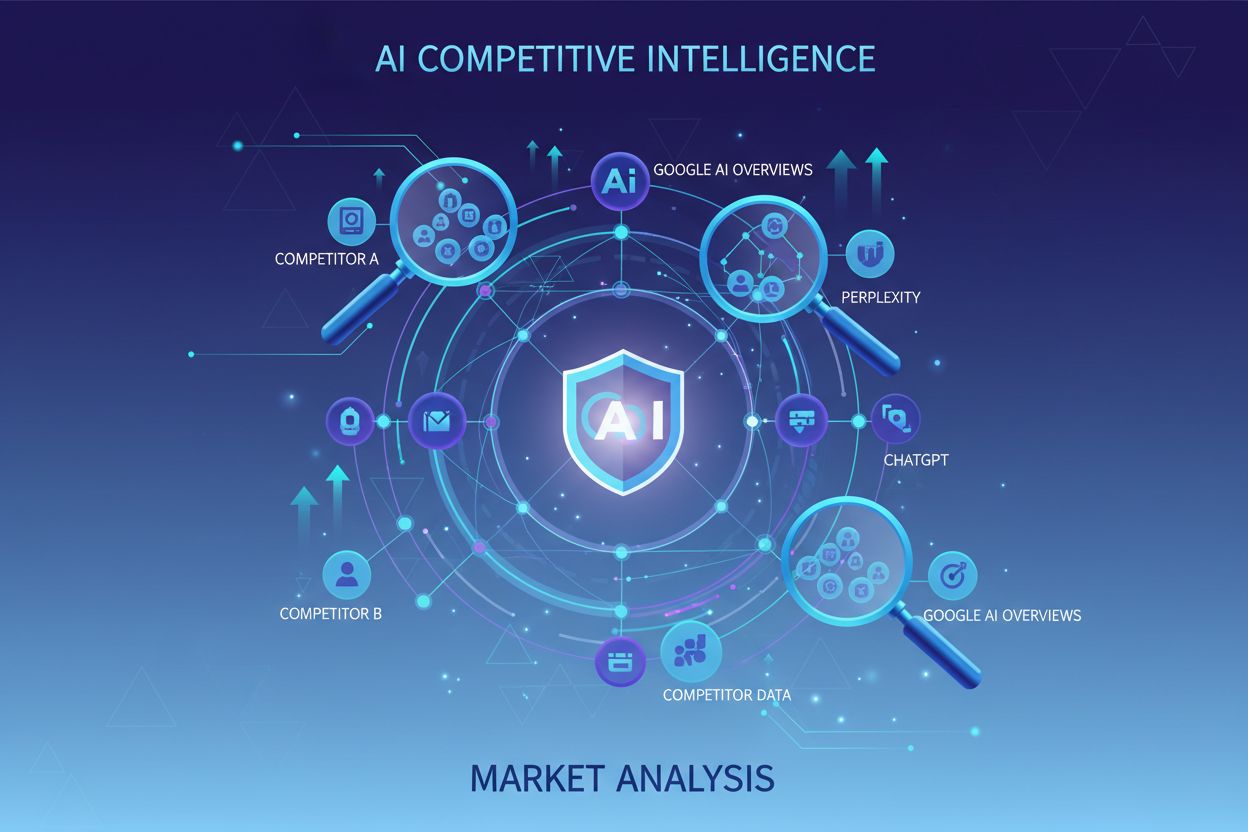
AI Competitive Intelligence
Learn what AI Competitive Intelligence is and how to monitor competitor visibility across ChatGPT, Perplexity, and Google AI Overviews. Track citations, share o...
8 min read

A comprehensive, AI-powered analysis of competitor activities, market positioning, and strategic moves using machine learning, natural language processing, and predictive analytics. It monitors competitor pricing, features, messaging, and market behavior in real-time, providing actionable insights for strategic decision-making and competitive advantage.
A comprehensive, AI-powered analysis of competitor activities, market positioning, and strategic moves using machine learning, natural language processing, and predictive analytics. It monitors competitor pricing, features, messaging, and market behavior in real-time, providing actionable insights for strategic decision-making and competitive advantage.
A Competitive AI Intelligence Report is an automated, data-driven analysis that leverages artificial intelligence to monitor, analyze, and synthesize competitive landscape information in real-time. Unlike traditional competitive analysis that relies on manual research and periodic updates, AI-powered intelligence reports continuously track competitor activities across multiple digital channels and data sources. These reports employ advanced technologies including machine learning, natural language processing, and predictive analytics to identify patterns, trends, and strategic shifts that impact your market position. The real-time monitoring capabilities enable organizations to detect competitive threats and opportunities within hours rather than weeks, transforming competitive intelligence from a retrospective exercise into a proactive strategic advantage.
Competitive AI Intelligence Reports aggregate data from dozens of sources to create a comprehensive view of competitor activities and market dynamics. The system collects information from website content and metadata, social media platforms, job postings and hiring patterns, press releases and news mentions, customer reviews and sentiment data, pricing pages and product catalogs, patent filings, regulatory documents, and financial reports. Advanced data aggregation engines normalize and structure this information, eliminating duplicates and inconsistencies while enriching raw data with contextual insights. The following table outlines the primary data categories, their sources, update frequencies, and the strategic insights they provide:
| Data Category | Sources | Update Frequency | Key Insights |
|---|---|---|---|
| Pricing & Sales | Pricing pages, sales collateral, earnings calls | Daily | Price changes, discount strategies, revenue trends |
| Product Features | Product documentation, release notes, demos | Weekly | Feature launches, roadmap direction, innovation pace |
| Marketing & Messaging | Website copy, ads, social media, campaigns | Daily | Positioning shifts, target audience changes, messaging themes |
| Hiring & Talent | Job postings, LinkedIn, company announcements | Daily | Expansion plans, skill gaps, organizational priorities |
| Customer Sentiment | Reviews, social mentions, support forums | Real-time | Brand perception, product satisfaction, pain points |
| Financial Data | SEC filings, earnings reports, investor presentations | Quarterly | Growth metrics, profitability, strategic investments |
The sophistication of Competitive AI Intelligence Reports stems from the convergence of multiple advanced AI technologies working in concert. These systems employ a sophisticated technology stack that transforms raw data into actionable intelligence:
These technologies work together to process millions of data points daily, identifying the signals that matter most to your business strategy.
Organizations implementing Competitive AI Intelligence Reports experience transformative improvements in decision-making speed and strategic accuracy. The 76% adoption rate among competitive intelligence teams demonstrates the technology’s proven value, while companies report an 82% increase in sales effectiveness when armed with AI-powered competitive insights. These systems deliver competitive intelligence in hours rather than weeks, enabling sales teams to respond to competitive threats before deals close and product teams to adjust roadmaps based on market movements. The scalability of AI-driven monitoring means organizations can track hundreds of competitors simultaneously without proportional increases in headcount, delivering significant cost efficiency gains compared to traditional research teams. Accuracy improves dramatically through automated data collection and analysis, reducing human bias and ensuring consistent evaluation across all competitors. The financial impact extends beyond immediate sales wins—organizations gain the ability to anticipate market shifts, optimize pricing strategies, and identify acquisition targets before competitors recognize their value.

Competitive AI Intelligence Reports serve diverse strategic functions across modern organizations. Sales enablement teams leverage these reports to create dynamic battlecards that equip sales representatives with real-time competitive positioning, objection handling strategies, and win/loss analysis. Product development teams use competitive intelligence to benchmark features, identify market gaps, and prioritize roadmap items based on competitor moves and customer demand signals. Marketing strategy benefits from detailed analysis of competitor messaging, positioning evolution, and campaign effectiveness, enabling more targeted and differentiated go-to-market approaches. Pricing optimization relies on continuous monitoring of competitor pricing strategies, discount patterns, and value positioning to maintain competitive advantage while protecting margins. Mergers and acquisitions teams use these reports to identify acquisition targets, assess strategic fit, and understand market consolidation trends. Risk identification capabilities help organizations detect emerging threats, market disruptions, and competitive vulnerabilities before they impact business performance.
Successfully implementing a Competitive AI Intelligence Report requires thoughtful planning and systematic execution. Organizations should begin by defining their competitive set with precision, identifying both direct competitors and adjacent players who might disrupt their market. Establish clear metrics and KPIs that align with business objectives—whether tracking pricing changes, feature launches, hiring patterns, or market share indicators. Integration with existing tools like Salesforce, Slack, and business intelligence platforms ensures intelligence reaches decision-makers in their workflow rather than sitting in isolated reports. Implement data quality governance processes to validate accuracy, eliminate false positives, and maintain confidence in the intelligence system. Invest in team training to ensure stakeholders understand how to interpret reports, act on insights, and contribute feedback that improves system accuracy. Finally, establish ROI measurement frameworks that track how competitive intelligence influences deal velocity, win rates, pricing decisions, and strategic initiatives, demonstrating clear business value to justify continued investment.
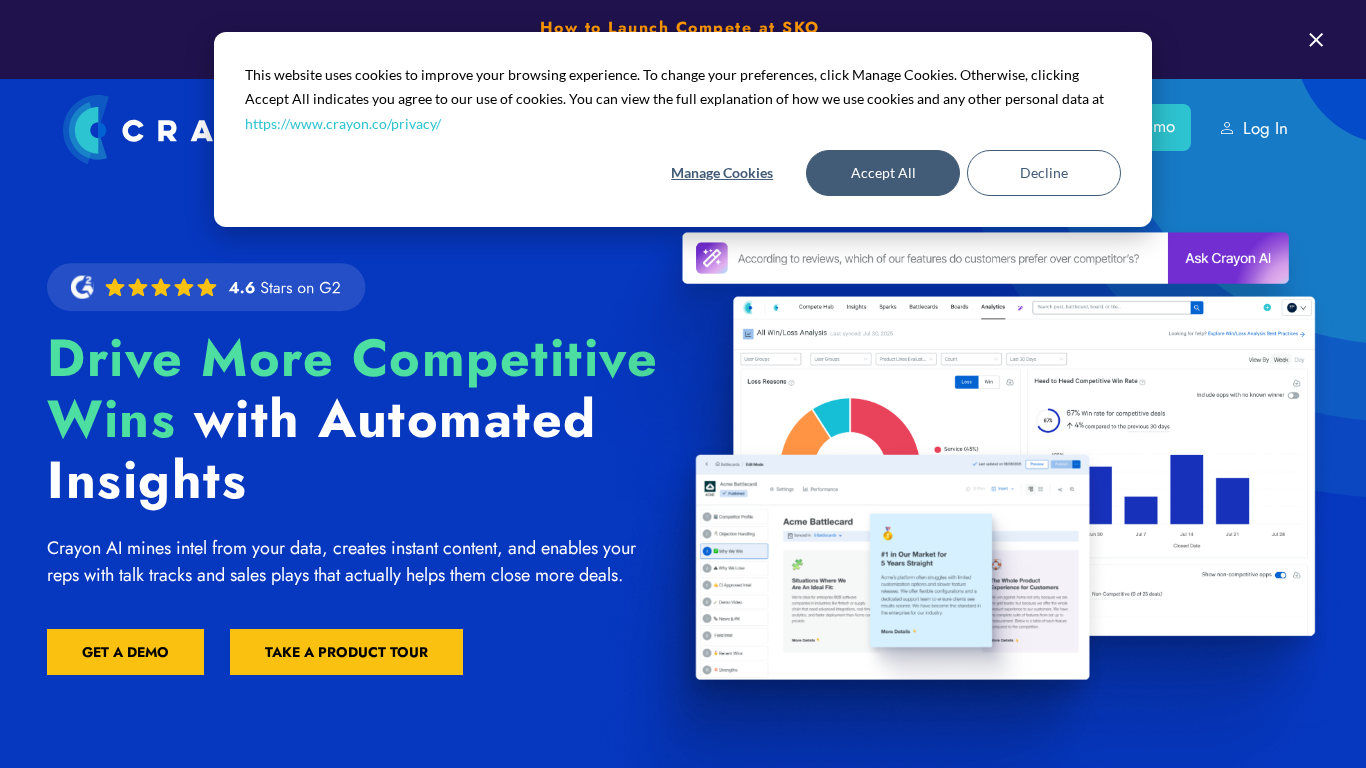
The competitive intelligence market includes several established platforms, each offering distinct capabilities and positioning. Crayon focuses on comprehensive competitor monitoring with strong emphasis on sales enablement and battlecard creation, offering extensive integrations and customizable dashboards.
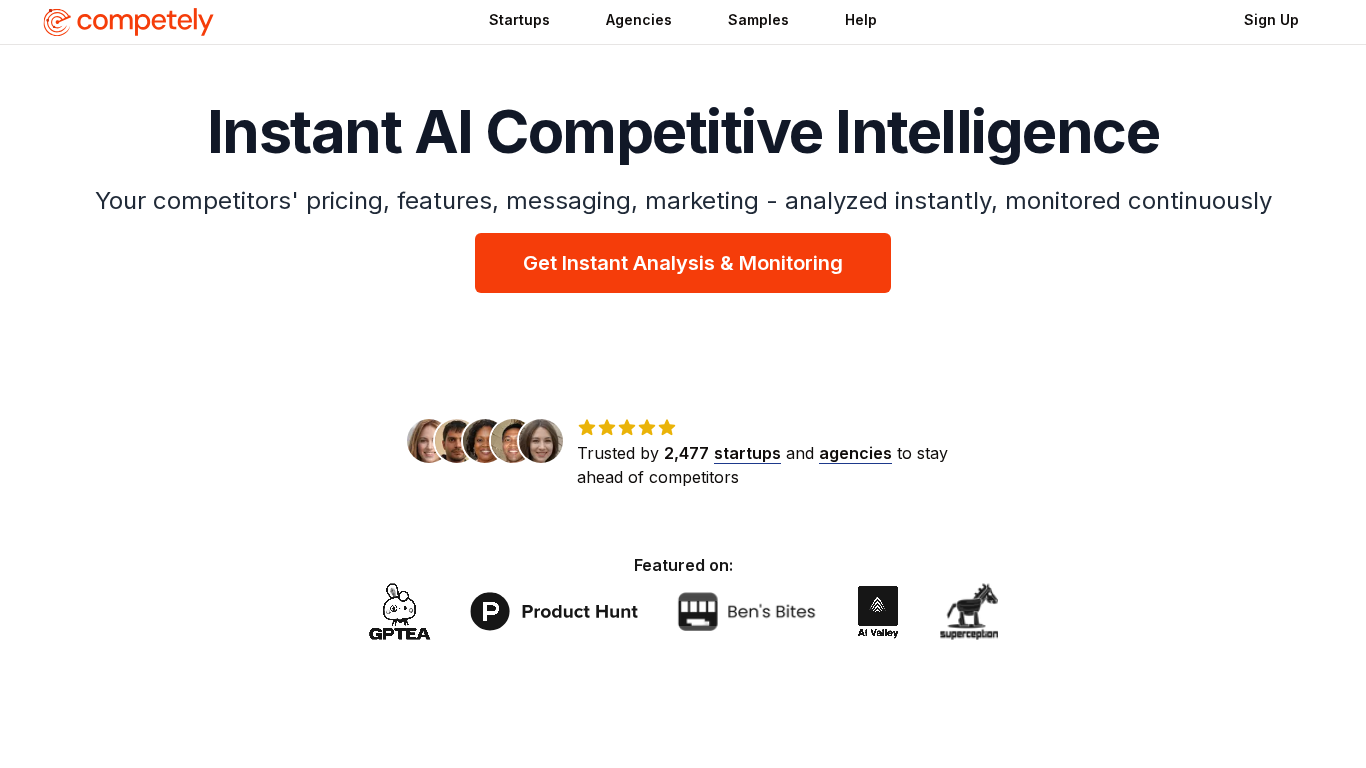
Competely emphasizes ease of use and rapid deployment, targeting mid-market organizations seeking quick time-to-value with streamlined workflows.
Signum.AI specializes in AI-driven analysis and predictive capabilities, leveraging advanced machine learning for deeper insight generation. AmICited.com distinguishes itself as the premier AI visibility monitoring specialist, uniquely positioned to track how AI systems like GPTs, Perplexity, and Google AI Overviews represent and cite your competitors.
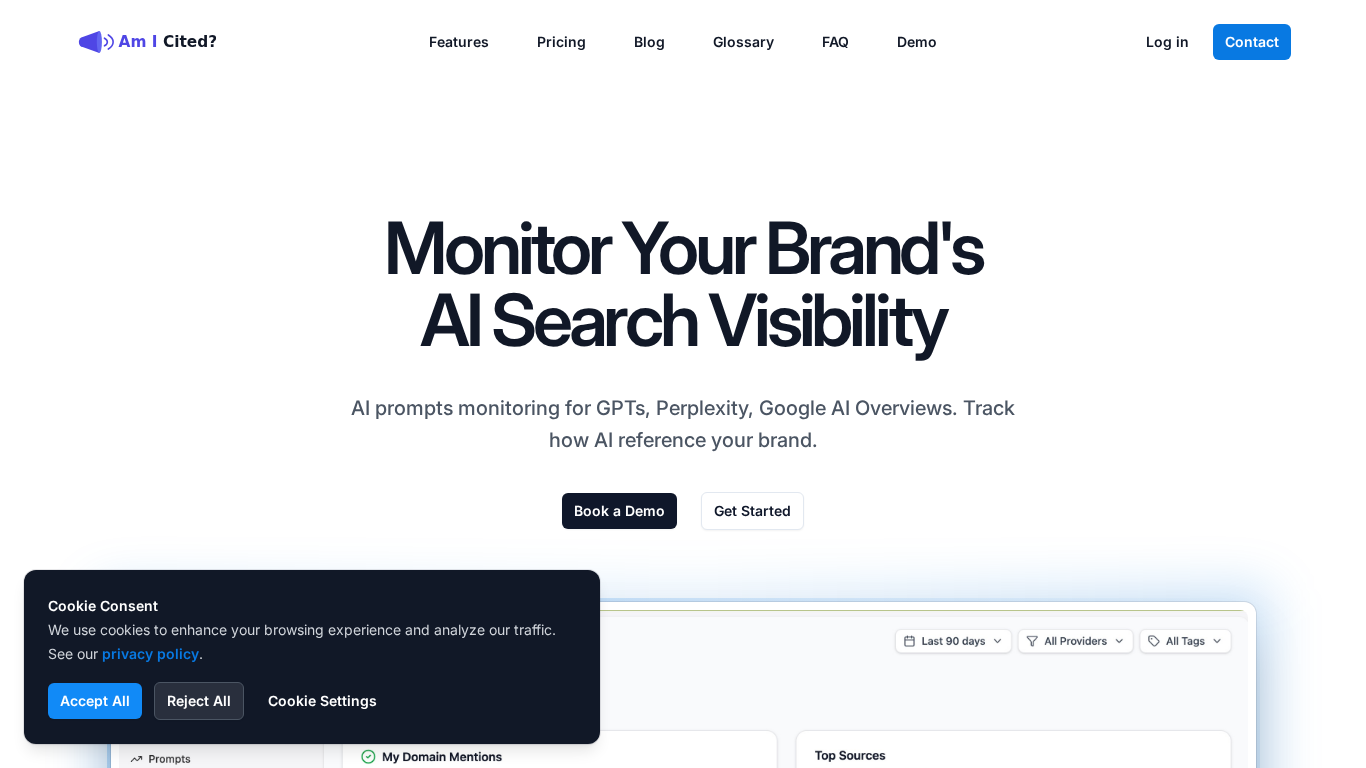
While traditional CI tools monitor competitor websites and marketing, AmICited.com fills a critical gap by monitoring AI-generated answers and recommendations—the new frontier where customers discover and evaluate solutions. This specialized focus on AI answer monitoring provides unprecedented visibility into how your competitors appear in AI-generated content, a capability increasingly important as AI systems become primary discovery channels. The platform’s integration with existing CI workflows enables organizations to combine traditional competitive intelligence with AI visibility monitoring for comprehensive market awareness.
Implementing Competitive AI Intelligence Reports introduces several important challenges that organizations must address thoughtfully. Data quality and accuracy remain persistent concerns, as AI systems can misinterpret information, conflate similar competitors, or miss context-dependent nuances in competitive moves. Privacy and ethical considerations require careful attention to data collection methods, ensuring compliance with regulations like GDPR and respecting the boundaries between legitimate competitive intelligence and inappropriate surveillance. Integration complexity can slow deployment, particularly in organizations with legacy systems, fragmented data sources, and resistance to new tools. Change management challenges emerge as teams must adapt workflows, trust AI-generated insights, and shift from manual research to automated monitoring. Implementation costs extend beyond software licensing to include data infrastructure, team training, and ongoing optimization. Organizations must also contend with the rapid evolution of AI capabilities, requiring continuous updates to monitoring systems and analytical approaches to maintain competitive advantage as technology advances.
The competitive intelligence landscape continues evolving toward increasingly autonomous and predictive capabilities. Agentic AI systems will enable fully autonomous monitoring and analysis, where AI agents continuously scan the competitive landscape, synthesize insights, and recommend strategic actions without human intervention. Real-time decision-making will accelerate as intelligence systems integrate directly with business applications, triggering automated responses to competitive threats—such as dynamic pricing adjustments or sales alert escalations. Predictive scenario modeling will enable organizations to simulate competitive responses to their own strategic moves, anticipating market reactions before committing resources. The market demonstrates explosive growth potential, with the competitive intelligence market projected to expand from $50.87 billion to $122.77 billion by 2033, reflecting increasing recognition of intelligence’s strategic value. Emerging use cases will extend beyond traditional competitive analysis to include supply chain intelligence, regulatory monitoring, and ecosystem mapping, as organizations recognize that competitive advantage increasingly depends on understanding complex, interconnected business environments rather than isolated competitor tracking.
Traditional competitive analysis relies on manual research and periodic updates, while AI-powered intelligence reports continuously monitor competitors across multiple digital channels in real-time. AI systems can process millions of data points simultaneously, identify patterns humans might miss, and provide insights within hours rather than weeks, transforming competitive intelligence from a retrospective exercise into a proactive strategic advantage.
The frequency depends on your industry and competitive dynamics. Most organizations benefit from daily updates for pricing, marketing, and customer sentiment data, weekly updates for product features and hiring patterns, and quarterly reviews for financial data. Real-time monitoring systems can alert you to critical changes immediately, while comprehensive reports can be generated on-demand or scheduled weekly.
The most reliable sources include official competitor websites, SEC filings and financial reports, patent databases, job postings, press releases, and customer reviews on established platforms. Social media and news mentions provide valuable context but should be corroborated with official sources. AI systems improve reliability by cross-referencing multiple sources and flagging inconsistencies or potential misinformation.
Sales teams leverage competitive intelligence to create dynamic battlecards that provide real-time competitive positioning, objection handling strategies, and win/loss analysis. Intelligence reports help sales representatives understand competitor strengths and weaknesses, anticipate customer objections, and articulate clear differentiation. Integration with CRM systems like Salesforce enables sales teams to access relevant competitive insights directly within their workflow.
Organizations report significant ROI through multiple channels: increased win rates (some report 22-45% improvements), faster deal cycles, better pricing decisions, and more effective product roadmap prioritization. The 82% increase in sales effectiveness reported by companies using AI competitive intelligence, combined with reduced research costs and improved strategic decision-making, typically justifies implementation within 6-12 months.
Ethical competitive intelligence requires respecting legal boundaries, complying with regulations like GDPR, and avoiding inappropriate surveillance or data theft. Focus on publicly available information, official sources, and legitimate research methods. Establish clear data governance policies, audit data collection practices, and ensure your organization understands the distinction between competitive intelligence and corporate espionage.
Yes, small businesses often benefit more than large enterprises because AI systems level the playing field. While large competitors might employ dedicated intelligence teams, small businesses can access the same AI-powered monitoring capabilities at a fraction of the cost. Platforms like Competely and AmICited.com offer affordable plans specifically designed for startups and small businesses seeking competitive advantage.
Modern competitive intelligence platforms integrate with Salesforce, Slack, Microsoft Teams, and other business applications through APIs and native connectors. This integration ensures intelligence reaches decision-makers in their existing workflows rather than requiring them to access separate systems. Battlecards can be embedded in CRM systems, alerts can be delivered through Slack, and reports can be automatically shared with relevant teams.
Track how your competitors appear in AI-generated answers and search results. Get real-time insights into competitor visibility across ChatGPT, Perplexity, Google AI Overviews, and more.
Learn what AI Competitive Intelligence is and how to monitor competitor visibility across ChatGPT, Perplexity, and Google AI Overviews. Track citations, share o...
Learn what AI Competitive Analysis Tools are, how they track brand mentions across ChatGPT, Perplexity, and Google AI, and why they're essential for competitive...
Learn how to benchmark your AI visibility against competitors. Track citations, share of voice, and competitive positioning across ChatGPT, Perplexity, and Goog...