

How to Track Competitor Mentions in AI Chatbots and Search Engines
Learn how to monitor when competitors appear in ChatGPT, Perplexity, Claude, and other AI search engines. Discover tools and strategies for tracking AI visibili...
9 min read
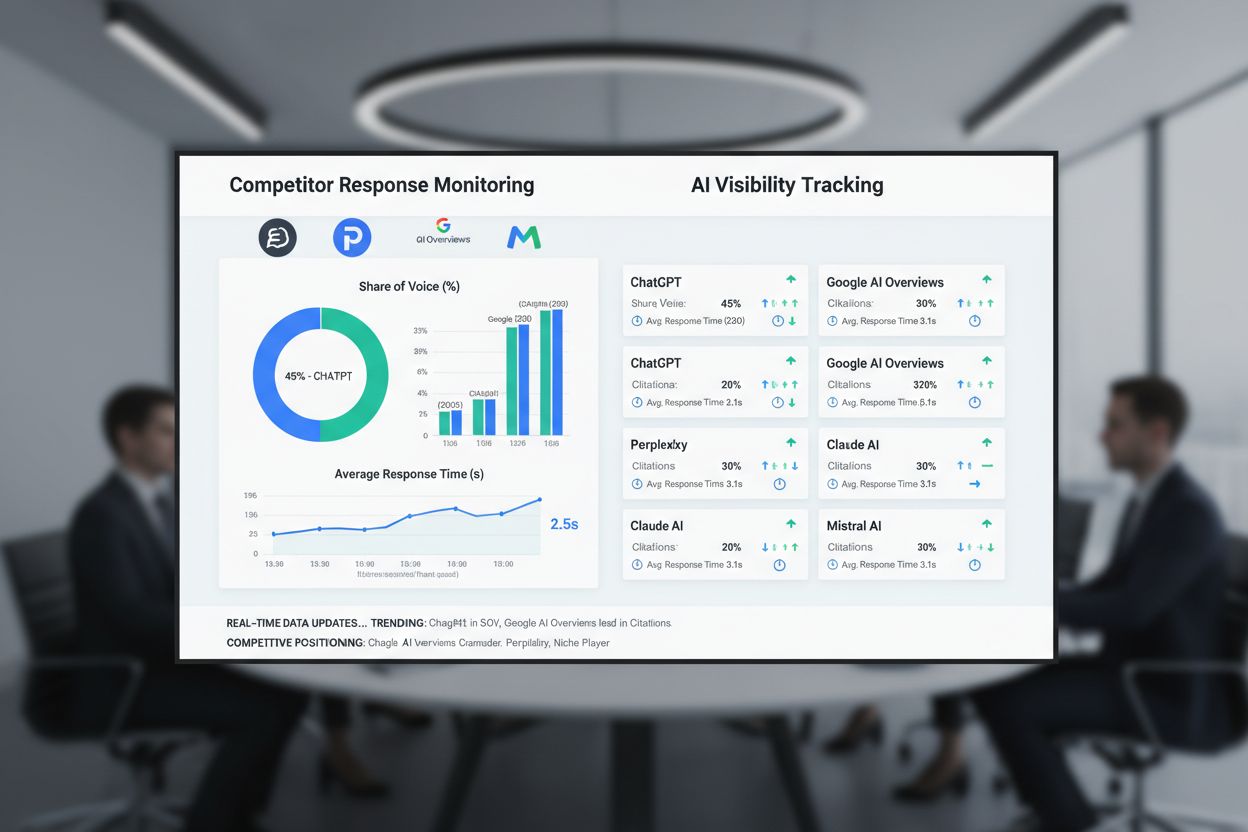
Competitor Response Monitoring is the systematic tracking and analysis of how competitors react to changes in AI visibility, search rankings, and competitive positioning. It monitors real-time changes in competitor content strategies, citation patterns, and positioning across AI platforms like ChatGPT, Perplexity, and Google AI Overviews. This specialized approach enables organizations to anticipate competitive moves and adjust their own AI visibility strategies proactively. Essential for maintaining competitive advantage in the AI-driven search landscape.
Competitor Response Monitoring is the systematic tracking and analysis of how competitors react to changes in AI visibility, search rankings, and competitive positioning. It monitors real-time changes in competitor content strategies, citation patterns, and positioning across AI platforms like ChatGPT, Perplexity, and Google AI Overviews. This specialized approach enables organizations to anticipate competitive moves and adjust their own AI visibility strategies proactively. Essential for maintaining competitive advantage in the AI-driven search landscape.
Competitor Response Monitoring in the AI context refers to the systematic tracking and analysis of how competitors react to changes in AI visibility, search rankings, and competitive positioning. Unlike traditional competitive monitoring that focuses on pricing, product features, or marketing campaigns, AI-focused competitor response monitoring specifically tracks how organizations respond to shifts in AI-generated search results, large language model citations, and AI visibility metrics. This specialized approach monitors real-time changes in competitor content strategies, citation patterns, and positioning across AI platforms like ChatGPT, Perplexity, Google AI Overviews, and other generative AI systems. The importance of real-time tracking cannot be overstated, as competitors may adjust their strategies within hours or days of detecting visibility changes, making delayed monitoring ineffective for competitive advantage. Organizations that implement robust competitor response monitoring gain critical insights into market dynamics, allowing them to anticipate competitive moves and adjust their own AI visibility strategies proactively rather than reactively. This capability has become essential as the competitive intelligence market grows, with 76% of CI teams now adopting AI tools and 60% using them daily according to the Competitive Intelligence Alliance.
Effective Competitor Response Monitoring requires a comprehensive measurement framework that tracks multiple dimensions of competitive activity and response patterns. Organizations must establish baseline metrics before competitors respond, then continuously monitor changes to detect shifts in strategy, intensity, and direction. The key metrics framework provides visibility into how competitors are reacting to AI visibility challenges and allows teams to quantify the competitive response with precision. These metrics should be tracked across multiple time periods to identify trends, acceleration patterns, and response cycles. By establishing clear measurement criteria, organizations can move beyond anecdotal observations to data-driven competitive analysis that informs strategic decisions. The following table outlines the essential metrics for monitoring competitor responses:
| Metric | Definition | Measurement Method | Strategic Value |
|---|---|---|---|
| Share of Voice | Percentage of total AI citations/mentions compared to competitors | Track citations across AI platforms monthly | Indicates relative visibility and market presence |
| Citation Quality | Authority and relevance of sources citing competitors | Analyze domain authority and context of citations | Measures credibility and influence of competitor visibility |
| Response Speed | Time between competitor visibility change and competitive response | Monitor content publication and strategy shifts | Reveals competitor agility and resource allocation |
| Sentiment Shift | Changes in tone and positioning of competitor messaging | Analyze content sentiment and brand positioning language | Indicates strategic repositioning or defensive moves |
| Content Updates | Frequency and scope of content modifications and new publications | Track content changes and publication velocity | Shows investment level and urgency of response |
Understanding these metrics enables organizations to develop nuanced competitive strategies that account for competitor capabilities, response patterns, and market dynamics.
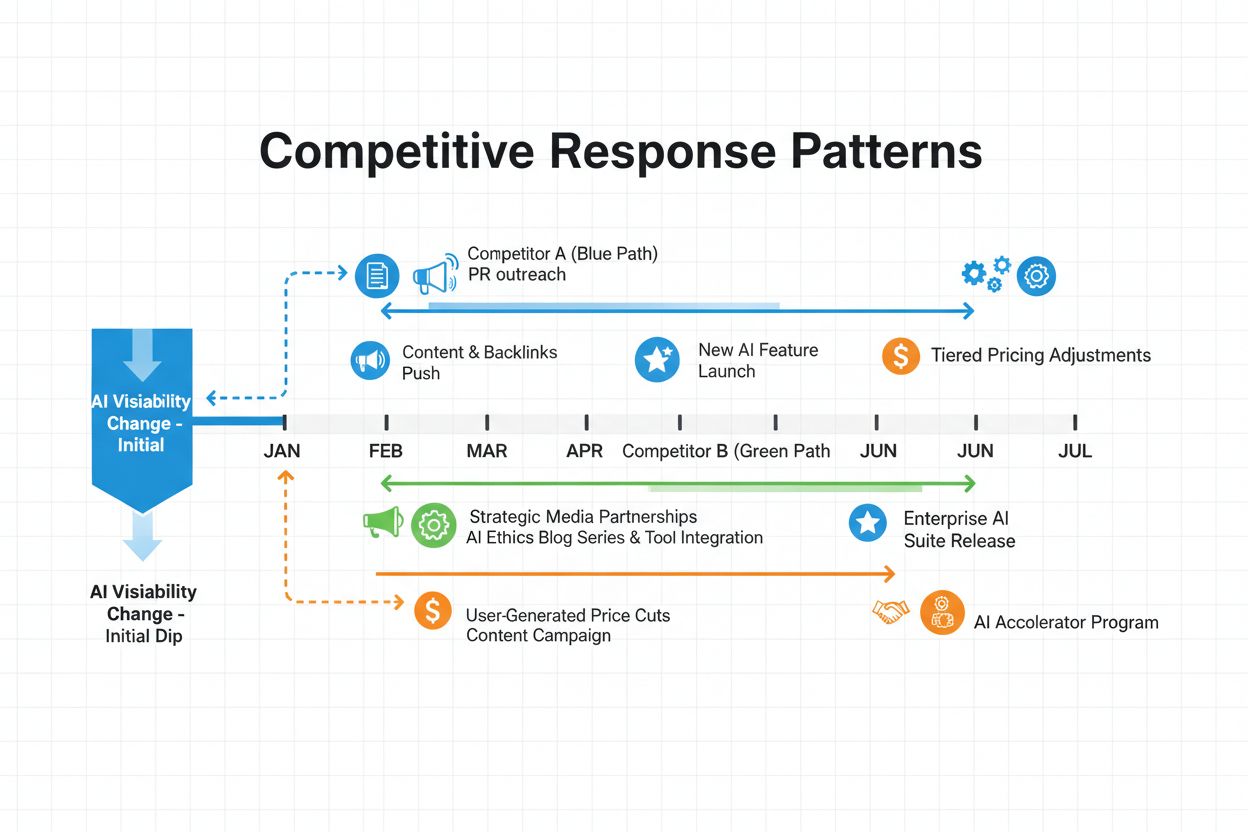
When competitors detect declining AI visibility or citation share, they typically initiate a multi-faceted response strategy that spans content, technology, and market positioning. Content optimization represents the most immediate response, with competitors rapidly updating existing content, creating new AI-optimized materials, and restructuring information architecture to improve AI discoverability. Simultaneously, competitors often intensify outreach and partnership efforts, reaching out to industry publications, research organizations, and AI platform developers to secure citations and mentions. Positioning changes frequently occur as competitors reframe their value propositions, emphasizing unique capabilities or market segments where they maintain stronger AI visibility. Many competitors adjust pricing strategies in response to visibility challenges, either reducing prices to maintain market share or increasing prices to offset reduced customer acquisition from AI channels. Marketing pivots become evident through shifts in channel allocation, increased investment in owned media, and changes in messaging emphasis across digital platforms. Finally, competitors often make technology investments to improve their AI visibility prospects, including implementing structured data markup, developing AI-native products, and creating content specifically designed for LLM training and citation. These responses typically occur in waves, with initial content responses followed by more substantial strategic and technological changes if visibility challenges persist.
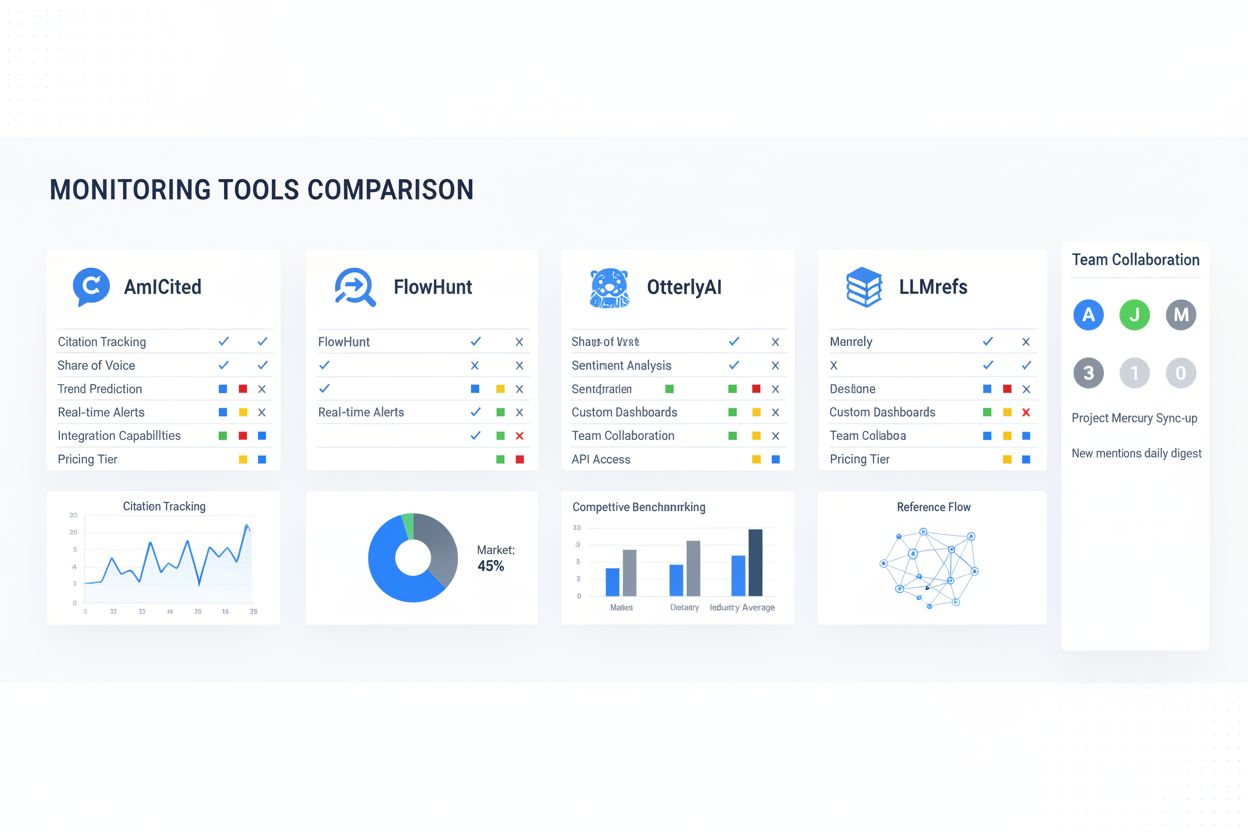
Organizations require specialized tools to effectively monitor and analyze competitor responses across the AI visibility landscape. The following platforms represent the leading solutions for competitor response monitoring:
These platforms employ different methodologies and focus areas, so organizations should evaluate tools based on their specific monitoring needs, platform coverage, and analytical requirements.
Analysis of competitor responses to AI visibility challenges reveals consistent patterns that organizations can use to anticipate and prepare for competitive moves. Aggressive content creation emerges as the most common initial response, with competitors publishing high-volume, AI-optimized content designed to capture citations and mentions across multiple LLM systems. Citation building campaigns follow closely, involving systematic outreach to industry analysts, research organizations, and media outlets to secure mentions in authoritative sources that LLMs reference. PR and media outreach intensifies as competitors seek to generate news coverage and thought leadership positioning that increases their visibility in AI training data and search results. Product announcements frequently accelerate during periods of visibility pressure, with competitors launching new features, integrations, or capabilities to generate buzz and citations. Pricing adjustments appear as competitors attempt to maintain customer acquisition rates despite reduced AI visibility, often through promotional pricing or value-added offerings. Strategic partnerships increase as competitors seek to expand their reach through co-marketing, integrations, and joint offerings that generate additional citation opportunities. Technology adoption accelerates as competitors invest in AI capabilities, structured data implementation, and platform-specific optimizations to improve their AI visibility prospects. These patterns typically emerge in sequence, with initial content responses followed by more substantial strategic and technological investments if visibility challenges persist beyond 60-90 days.
Competitor Response Monitoring directly impacts critical business outcomes including market share, revenue, customer acquisition, and brand perception. Organizations that fail to monitor competitor responses risk being outmaneuvered by faster-moving competitors who adjust their strategies before market impacts become apparent. Market share dynamics shift rapidly in response to AI visibility changes, as customers increasingly rely on AI systems for product discovery and vendor evaluation, making AI visibility a primary competitive battleground. Revenue implications extend beyond direct customer acquisition, affecting pricing power, customer lifetime value, and market positioning as competitors respond to visibility challenges. Customer acquisition costs may increase significantly for organizations that lose AI visibility without implementing effective response strategies, as they must compensate through paid advertising and traditional marketing channels. Brand perception evolves based on AI visibility patterns, with high-visibility competitors perceived as market leaders and innovators while low-visibility competitors risk being overlooked entirely. Market consolidation accelerates as smaller competitors with limited resources struggle to maintain AI visibility against well-funded competitors implementing comprehensive response strategies. Innovation pressure increases across industries as competitors invest in technology and content to maintain or improve AI visibility, driving faster product development cycles and feature releases. Risk mitigation becomes critical, as organizations that understand competitor response patterns can implement proactive strategies to protect their market position and anticipate competitive threats before they materialize.
Effective Competitor Response Monitoring requires implementing systematic processes and organizational capabilities that enable rapid detection and response to competitive moves. Continuous monitoring must be established as an ongoing function rather than periodic analysis, with daily or weekly reviews of competitor activity across AI platforms and visibility metrics. Automated alerts should be configured to notify relevant teams immediately when competitors exceed predefined thresholds for content publication, citation growth, or visibility changes, enabling rapid response. Cross-functional teams must be established to coordinate monitoring, analysis, and response activities, including representatives from marketing, product, competitive intelligence, and executive leadership. Data-driven decision making should guide all responses, with decisions based on quantified metrics and trend analysis rather than anecdotal observations or reactive impulses. Response speed is critical, as competitors often respond to visibility changes within days or weeks, making slow decision-making processes ineffective for maintaining competitive advantage. Documentation and knowledge management ensure that insights from competitor monitoring are captured, shared, and leveraged across the organization to inform strategy and prevent repeated mistakes. Predictive modeling should be developed to forecast competitor responses based on historical patterns, enabling organizations to anticipate moves and implement preemptive strategies. By implementing these best practices, organizations transform competitor response monitoring from a passive observation function into an active competitive advantage mechanism that drives strategic decision-making and market success.
Traditional competitor monitoring tracks competitor activities like pricing, product features, and marketing campaigns. Competitor Response Monitoring specifically focuses on how competitors react to AI visibility changes, tracking their content strategies, citation patterns, and positioning adjustments across AI platforms like ChatGPT and Perplexity. It's a specialized approach designed for the AI-driven search landscape.
Continuous daily or weekly monitoring is recommended, as competitors may adjust their strategies within hours or days of detecting visibility changes. Automated alerts should be configured to notify teams immediately when competitors exceed predefined thresholds for content publication, citation growth, or visibility changes, enabling rapid response.
The most critical metrics include Share of Voice (percentage of AI citations vs competitors), Citation Quality (authority of cited sources), Response Speed (time to react to visibility changes), Sentiment Shift (tone changes in AI mentions), and Content Update Frequency. These metrics provide quantified visibility into how competitors are responding to AI visibility challenges.
Predictive modeling based on historical competitor response patterns enables organizations to anticipate moves and implement preemptive strategies. By analyzing past responses to visibility changes, tracking competitor resource allocation, and monitoring their technology investments, you can forecast likely response strategies and timing.
Leading platforms include AmICited.com for AI citation tracking, FlowHunt.io for AI visibility monitoring, OtterlyAI for brand mentions across ChatGPT and Perplexity, LLMrefs for share of voice metrics, and traditional CI tools like Klue and Crayon. Choose based on your specific platform coverage needs and analytical requirements.
Understanding competitor responses helps you anticipate market moves, adjust your content strategy proactively, identify content gaps where competitors gain citations, optimize your positioning, and allocate resources more effectively. It transforms competitive monitoring from passive observation into active strategic advantage.
Common patterns include aggressive content creation, citation building campaigns, PR and media outreach intensification, product announcements, pricing adjustments, strategic partnerships, and technology adoption acceleration. These responses typically occur in waves, with initial content responses followed by more substantial strategic changes if visibility challenges persist.
Initial content responses typically occur within days to weeks of detecting visibility changes. More substantial strategic and technological responses usually follow within 60-90 days if visibility challenges persist. Response speed varies based on competitor size, resources, and organizational agility.
Stay ahead of competitive moves with AmICited's real-time monitoring of how competitors respond to AI visibility changes across ChatGPT, Perplexity, Google AI Overviews, and more.
Learn how to monitor when competitors appear in ChatGPT, Perplexity, Claude, and other AI search engines. Discover tools and strategies for tracking AI visibili...
Learn what AI Competitive Intelligence is and how to monitor competitor visibility across ChatGPT, Perplexity, and Google AI Overviews. Track citations, share o...
Discover the top AI search visibility monitoring tools to track your brand across ChatGPT, Perplexity, and Google AI Overviews. Compare features, pricing, and c...