

How to Brief Writers for AI-Optimized Content
Learn how to create effective content briefs for AI-optimized writing. Discover best practices for briefing writers on search intent, information gain, brand vo...
12 min read
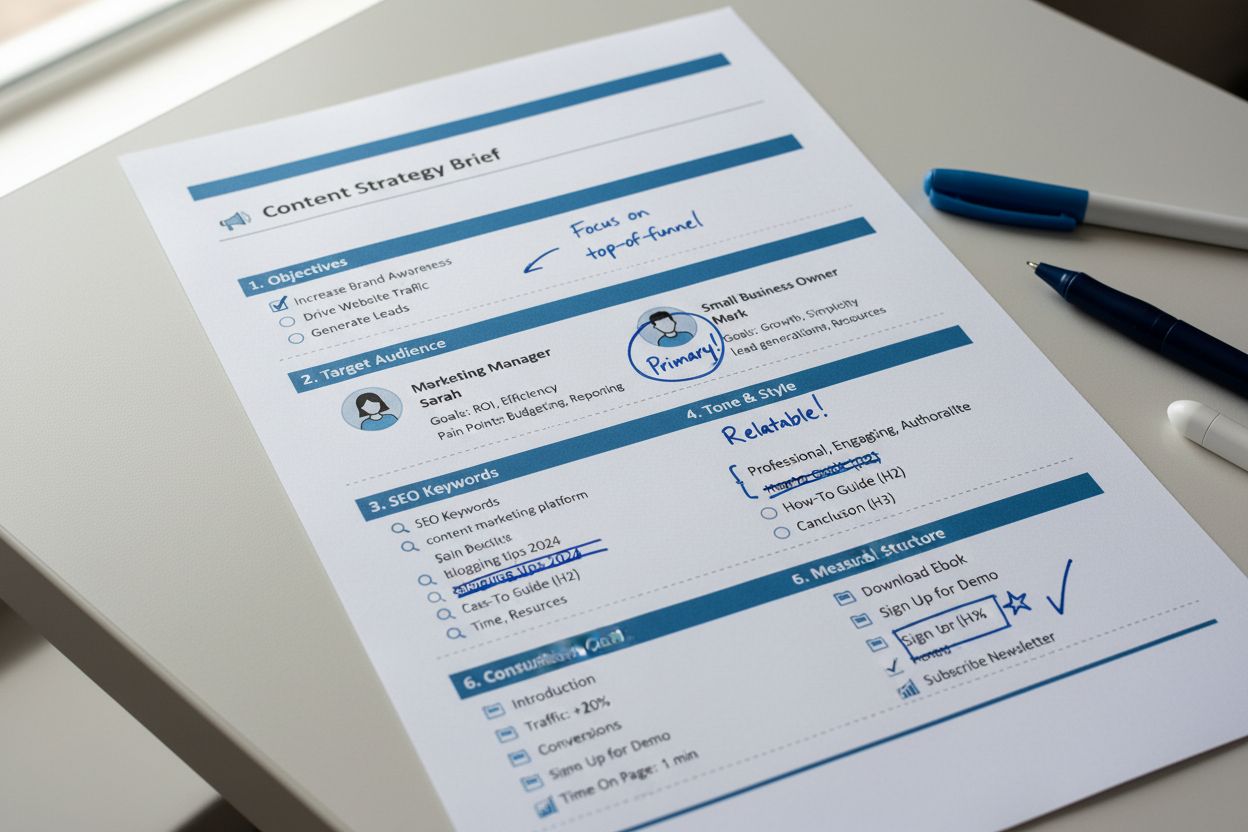
A content brief is a strategic, documented set of requirements and recommendations that outlines exactly what a piece of content should include, covering objectives, audience, keywords, tone, structure, and deliverables. It serves as a comprehensive roadmap that aligns all stakeholders and guides content creators in producing targeted, high-quality content that meets business goals and search intent.
A content brief is a strategic, documented set of requirements and recommendations that outlines exactly what a piece of content should include, covering objectives, audience, keywords, tone, structure, and deliverables. It serves as a comprehensive roadmap that aligns all stakeholders and guides content creators in producing targeted, high-quality content that meets business goals and search intent.
A content brief is a strategic, documented set of requirements and recommendations that outlines exactly what a piece of content should include and how it should be structured. It serves as a comprehensive roadmap that guides writers, designers, and content creators through the entire creation process, ensuring alignment with business objectives, audience needs, and search engine requirements. Unlike informal meetings or scattered notes, a content brief provides a written record that becomes the single source of truth for all stakeholders involved in content production. The brief typically includes essential information such as target keywords, audience demographics, content objectives, tone and style guidelines, structural recommendations, and specific deliverables. By documenting these requirements upfront, content briefs prevent miscommunication, reduce costly revisions, and accelerate the path from strategy to published content that performs.
The concept of content briefs emerged from traditional advertising and marketing practices, where creative briefs have long been used to align teams around campaign objectives. However, as content marketing evolved into a sophisticated discipline requiring coordination between strategists, writers, editors, and stakeholders, the need for specialized content briefs became apparent. The rise of SEO-driven content marketing in the early 2010s further emphasized the importance of documented content requirements, as teams needed to balance search engine optimization with audience engagement and brand messaging. Today, approximately 70% of content marketers report having a strong content strategy in place, and the majority of these teams rely on some form of content brief to execute that strategy effectively. The shift toward AI-powered content creation and AI search optimization has made content briefs even more critical, as brands must now ensure their content is discoverable not only by traditional search engines but also by large language models and AI chatbots that synthesize information from multiple sources.
A comprehensive content brief should address multiple dimensions of content creation. The project overview and objectives section establishes why the content exists and what business goals it supports—whether that’s driving traffic, generating leads, improving brand awareness, or supporting a specific campaign. The audience section goes beyond generic personas to include specific pain points, motivations, and where the audience sits in the customer journey. SEO requirements specify primary and secondary keywords, target search intent, and technical elements like meta descriptions and internal linking strategies. The content structure outlines suggested headings, subheadings, and key points to cover, providing writers with a logical framework. Tone and style guidelines ensure consistency with brand voice and resonate with the target audience. Additional elements include word count recommendations, resource links, visual specifications, call-to-action directives, and deadline milestones. Each component serves a specific purpose in guiding content creators and ensuring the final output meets strategic requirements without requiring extensive revisions.
| Aspect | Content Brief | Creative Brief | Editorial Guidelines | Style Guide |
|---|---|---|---|---|
| Primary Purpose | Guide creation of specific content pieces | Direct overall creative campaigns | Establish editorial standards and processes | Define brand voice and formatting rules |
| Scope | Single piece or series of related content | Multiple creative assets and channels | Entire content program and workflow | Brand-wide communication standards |
| Focus | Keywords, audience, structure, objectives | Campaign message, creative direction, channels | Content types, approval processes, quality standards | Tone, grammar, formatting, terminology |
| Audience | Writers, editors, content creators | Designers, copywriters, creative teams | Content teams, contributors, stakeholders | All brand communicators |
| Level of Detail | High specificity for individual pieces | Strategic overview for campaign direction | Process-oriented with examples | Reference-based with examples |
| Typical Length | 1-3 pages | 1-2 pages | 5-10+ pages | 10-20+ pages |
| Update Frequency | Per content project | Per campaign | Quarterly or as needed | Annually or as brand evolves |
| AI Search Relevance | Critical for AI discoverability | Moderate (brand consistency) | Important (content standards) | Moderate (voice consistency) |
The strategic value of content briefs extends far beyond simple documentation. Research demonstrates that teams using detailed content briefs experience significantly fewer revision cycles, with some agencies reporting up to 50% reduction in editing rounds. This efficiency translates directly to cost savings and faster time-to-publication, allowing marketing teams to scale content production without proportionally increasing resources. Beyond efficiency, content briefs ensure strategic alignment across teams—when multiple stakeholders are involved in content decisions, a brief provides the framework for consensus and prevents mid-project direction changes. For SEO performance, briefs that include comprehensive keyword research, competitor analysis, and search intent guidance help writers create content that ranks higher in search results. The brief also serves as a quality control mechanism, functioning as a checklist that ensures critical information, statistics, and required elements are included in the final content. In the context of brand monitoring and AI search, content briefs have become essential for ensuring that content is structured in ways that AI systems can easily extract, cite, and recommend to users.
Creating an effective content brief requires a systematic approach that balances comprehensiveness with clarity. The process typically begins with defining goals and audience, where strategists conduct research to understand who the content targets and what problems it solves. Keyword research and competitor analysis follow, identifying opportunities where the content can provide unique value or fill gaps in existing information. The outline and structure phase involves mapping out the content’s logical flow, including suggested headings and key points that must be covered. Setting deadlines and milestones ensures accountability and allows teams to plan resources effectively. Throughout this process, clarity and directness are paramount—vague language creates confusion and leads to misaligned expectations. Best practices include using bullet points and scannable formatting rather than dense paragraphs, providing real-world examples of successful content, and including specific metrics or KPIs that define success. For AI search optimization, briefs should now include guidance on how content will be discovered by AI systems, which sources should be cited, and how information should be structured for AI extraction and synthesis.
The relationship between content brief quality and content performance is well-documented. Teams that invest time in creating detailed briefs produce content that requires fewer revisions, aligns better with audience needs, and achieves stronger performance metrics. A well-structured brief ensures that writers understand not just what to write, but why they’re writing it and who they’re writing for—this context enables more authentic, engaging content. The brief also prevents the common pitfall of content that’s optimized for search engines but fails to engage readers, or content that’s engaging but doesn’t address search intent. By balancing these competing demands upfront in the brief, writers can create content that performs well across multiple dimensions. Additionally, content briefs facilitate better collaboration between content teams and other departments—when product managers, sales teams, or customer success teams contribute to the brief, the resulting content better serves organizational goals. The brief also creates accountability, as it provides a documented baseline against which final content can be evaluated.
As AI search engines and large language models become increasingly important channels for brand discovery, content briefs are evolving to address new requirements. Traditional briefs focused primarily on keyword rankings in Google, but modern briefs must now consider how content will be discovered, extracted, and cited by AI systems like ChatGPT, Perplexity, Google AI Overviews, and Claude. This shift requires briefs to include guidance on AI-friendly content structure, such as clear topic sentences, well-organized sections, and explicit source attribution that AI systems can easily parse. Briefs should specify which authoritative sources should be referenced, how to structure information for AI extraction, and what types of queries the content should address. Some forward-thinking organizations are now including AI search optimization as a specific section in their content briefs, alongside traditional SEO requirements. This evolution reflects the reality that content visibility now depends on performance across multiple discovery channels—traditional search, AI search, social media, and direct traffic. Content briefs that address all these channels simultaneously produce more versatile, resilient content that maintains visibility as search technologies continue to evolve.
While the core structure of a content brief remains consistent, different content types require specialized sections and considerations. Blog posts and articles emphasize keyword targeting, search intent, and reader engagement, with briefs typically including detailed outlines and competitor analysis. Product pages require briefs that highlight unique features, competitive advantages, pricing information, and conversion-focused CTAs. Case studies need briefs that specify the customer story arc, key metrics to highlight, and how the content demonstrates value. Whitepapers and long-form content require briefs with extensive research requirements, expert interviews, and detailed structural guidance. Landing pages need briefs focused on conversion optimization, with clear CTAs and minimal distractions. Email campaigns require briefs that consider segmentation, personalization, and mobile optimization. Video scripts need briefs that specify visual elements, pacing, and how information will be presented across different formats. By tailoring the brief to the specific content type, teams ensure that all relevant requirements are addressed and that writers have the guidance they need to succeed in their specific medium.
Organizations that implement systematic content brief processes report multiple measurable benefits. Reduced revision cycles mean faster time-to-publication and lower production costs—teams report 30-50% fewer editing rounds when using detailed briefs. Improved content quality results from clearer guidance and better alignment with audience needs and business objectives. Better SEO performance follows from comprehensive keyword research and search intent analysis built into the brief. Increased team alignment reduces miscommunication and prevents costly mid-project pivots. Scalability improves as teams can onboard new writers more quickly when they have clear briefs to follow. Consistency across content improves when all pieces follow the same brief structure and brand guidelines. Measurable ROI becomes easier to track when briefs include specific KPIs and success metrics. Additionally, content briefs create institutional knowledge—they document strategic decisions and research that can be referenced for future projects, preventing teams from reinventing the wheel with each new piece of content.
The future of content briefs will be shaped by several emerging trends and technologies. AI-assisted brief generation is already becoming common, with tools that analyze competitor content, audience data, and keyword research to automatically populate brief sections, reducing the time strategists spend on manual research. Personalization and segmentation will likely become more sophisticated, with briefs that specify different content variations for different audience segments or customer journey stages. Real-time performance data integration will enable briefs to be updated based on how similar content performs, creating a feedback loop that continuously improves brief quality. Multimodal content briefs will address the reality that content increasingly spans multiple formats—text, video, audio, interactive elements—requiring briefs that coordinate across these different media. AI search optimization will become a standard section in all briefs, not an afterthought, as brands recognize that visibility in AI-generated responses is as important as traditional search rankings. Measurement and attribution will become more sophisticated, with briefs that specify how content performance will be tracked across multiple channels and how success will be measured. As content marketing continues to mature and AI search becomes increasingly important, the content brief will evolve from a simple planning document into a comprehensive strategic tool that guides content creation, ensures quality, and maximizes performance across all discovery channels.
The primary purpose of a content brief is to put strategy into actionable terms by documenting all requirements, guidelines, and recommendations for a specific piece of content. It ensures alignment between strategists, writers, editors, and stakeholders by providing a single source of truth about what the content should achieve, who it targets, and how it should be structured. This prevents miscommunication, reduces revisions, and accelerates the content creation process.
A well-crafted content brief prevents costly rewrites by clearly defining expectations upfront, including target audience, core message, SEO requirements, tone, and structure. When writers have comprehensive guidance before starting, they produce content that aligns with strategic goals on the first draft, requiring fewer rounds of edits. Studies show that teams using detailed briefs experience significantly fewer revision cycles compared to those working without documented requirements.
Essential components include: project overview and objectives, target audience details, primary and secondary keywords, content structure and outline, tone and style guidelines, SEO requirements (meta descriptions, internal links), word count recommendations, call-to-action, resources and references, deadline and milestones, and visual element specifications. The depth of each section depends on content type and complexity, but comprehensive briefs should address all these elements to guide creators effectively.
Content briefs are increasingly important for AI search optimization and brand monitoring. As AI systems like ChatGPT, Perplexity, and Google AI Overviews synthesize information from multiple sources, content briefs must now include guidance on how content will be discovered and cited by AI systems. Briefs should specify how content addresses AI-relevant queries, which sources to reference, and how to structure information for AI extraction, ensuring brands maintain visibility in AI-generated responses.
Content briefs are typically created by marketing strategists, SEO specialists, content managers, or senior writers who understand both business objectives and audience needs. In smaller teams, writers may create briefs themselves to get client approval before drafting. The key is that whoever creates the brief should have strategic insight into the content's purpose, audience, and how it fits into broader marketing goals and content strategy.
Yes, content briefs are versatile and can be adapted for any content type including blog posts, case studies, whitepapers, product pages, landing pages, email campaigns, social media content, and video scripts. While the core structure remains similar, each content type may require specialized sections—for example, product pages need pricing and feature details, while blog posts emphasize keyword targeting and search intent alignment.
A content brief is specifically designed for long-form written content like blog posts and articles, focusing on SEO, keywords, audience, and messaging. A creative brief is broader and applies to various marketing projects including ad campaigns, design projects, and video production. Content briefs are more detailed about written content requirements, while creative briefs provide high-level direction for diverse creative outputs across multiple disciplines.
Effective content briefs should be organized with clear sections, using bullet points and scannable formatting rather than lengthy paragraphs. Start with high-level details (title, word count, deadline), then move to strategic elements (objectives, audience, core message), followed by tactical requirements (keywords, structure, links), and finally execution details (tone, visuals, CTAs). This logical flow helps writers quickly understand priorities and reference specific sections as needed during the writing process.
Start tracking how AI chatbots mention your brand across ChatGPT, Perplexity, and other platforms. Get actionable insights to improve your AI presence.
Learn how to create effective content briefs for AI-optimized writing. Discover best practices for briefing writers on search intent, information gain, brand vo...
Learn what a content audit is, why it matters for SEO and brand visibility, and how to conduct one systematically to optimize your website content performance a...
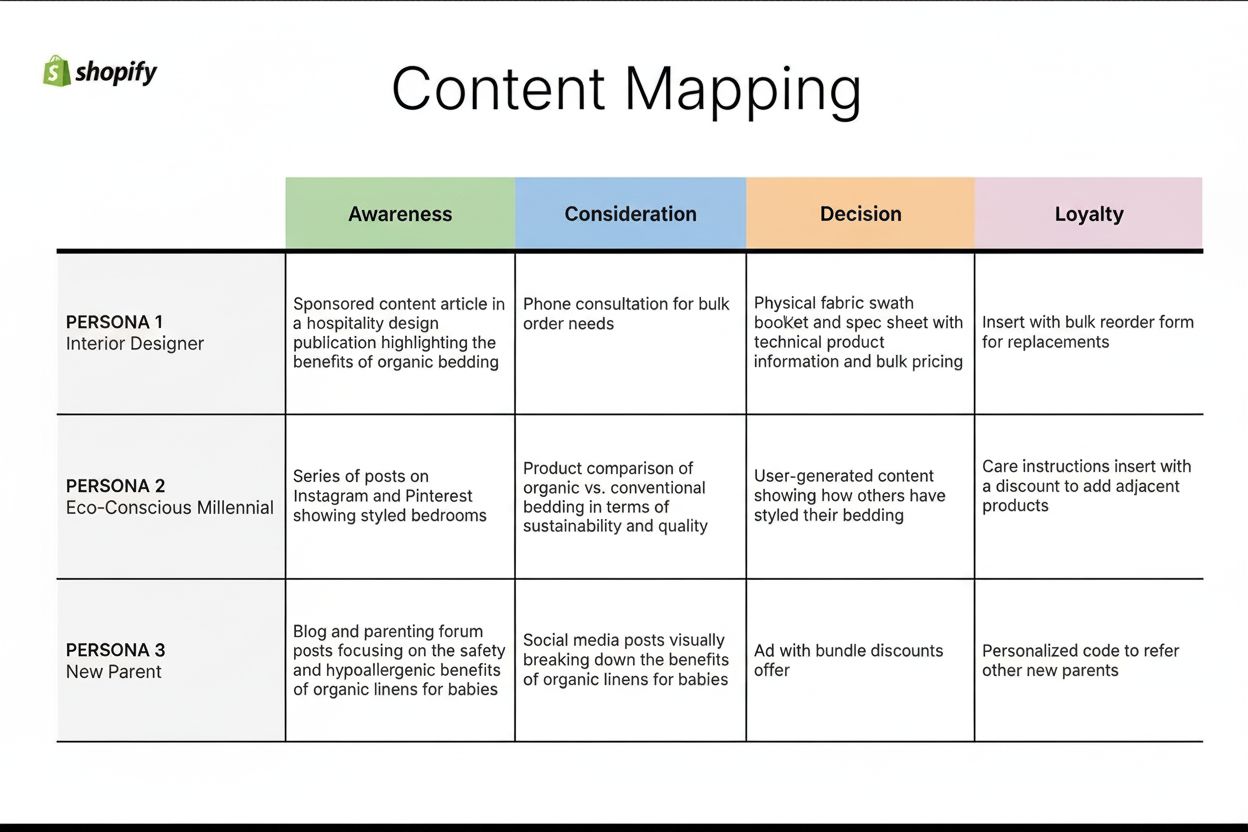
Learn what content mapping is and how aligning content with buyer journey stages drives engagement, conversions, and customer loyalty. Comprehensive guide for B...