

How Do I Create an AI Content Calendar?
Learn how to create an effective AI content calendar with step-by-step guidance, best practices, and strategies for planning, organizing, and optimizing your co...
8 min read
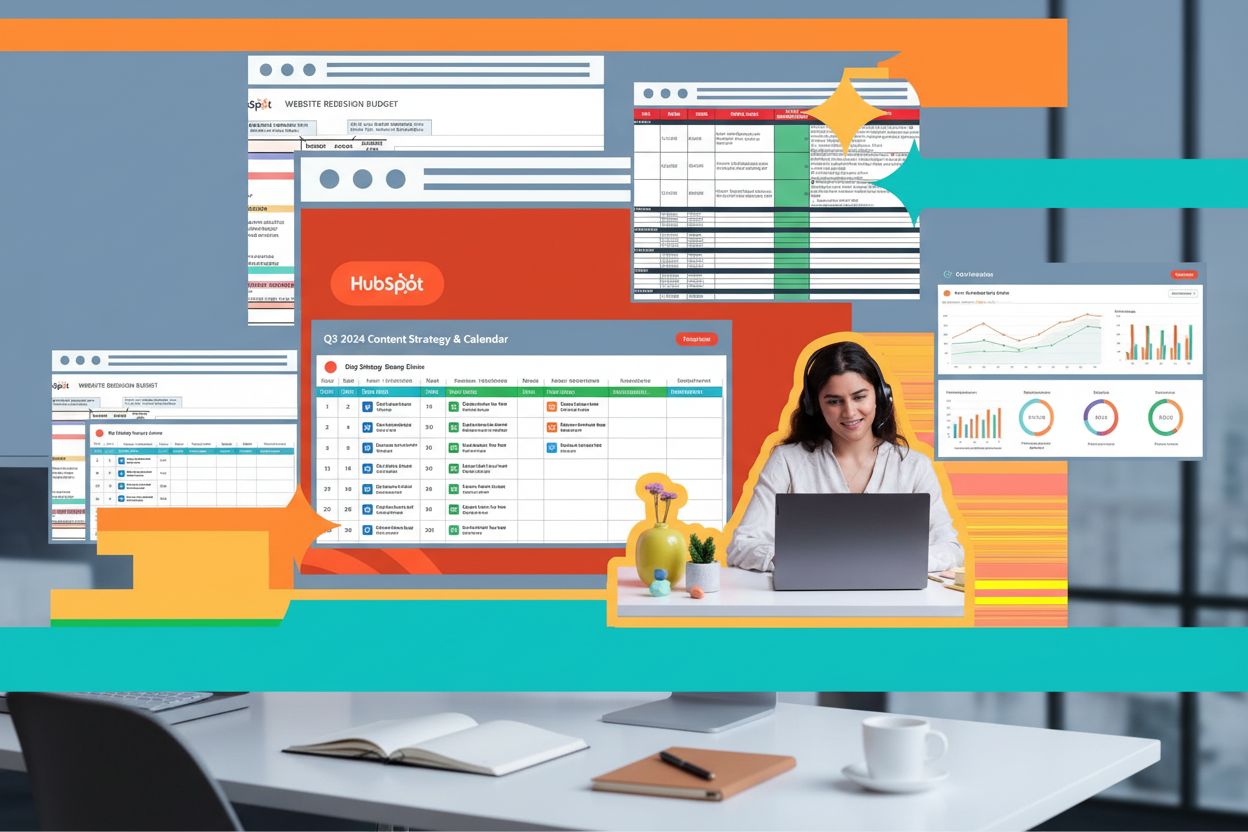
A content calendar is a strategic scheduling tool that organizes and plans the creation, publication, and distribution of content across multiple channels and platforms. It serves as a centralized planning document that ensures consistent content delivery, aligns messaging with business goals, and coordinates team efforts across content creation, approval, and publishing workflows.
A content calendar is a strategic scheduling tool that organizes and plans the creation, publication, and distribution of content across multiple channels and platforms. It serves as a centralized planning document that ensures consistent content delivery, aligns messaging with business goals, and coordinates team efforts across content creation, approval, and publishing workflows.
A content calendar, also known as an editorial calendar or publishing schedule, is a strategic planning and organizational tool that maps out the creation, publication, and distribution of content across multiple channels and platforms. It serves as a centralized repository for all content-related activities, providing teams with a clear, visual representation of what content will be published, when it will be published, where it will be distributed, and who is responsible for each piece. The content calendar functions as both a tactical scheduling instrument and a strategic planning document, ensuring that content efforts align with broader business objectives, marketing campaigns, and audience engagement goals. By consolidating all content activities into a single, accessible format, a content calendar eliminates confusion, reduces redundancy, and enables teams to maintain consistency in messaging, brand voice, and publishing frequency across all digital channels.
The concept of content calendars emerged from traditional editorial planning practices used in print media and journalism, where editors maintained physical calendars to coordinate article assignments, deadlines, and publication schedules. As digital marketing evolved and brands began publishing content across multiple channels simultaneously—including blogs, social media, email, video platforms, and podcasts—the need for more sophisticated content calendar systems became apparent. The transition from paper-based calendars to digital spreadsheets and specialized software tools accelerated in the early 2010s as social media marketing gained prominence. Today, content calendars have become indispensable infrastructure for modern marketing teams, with research indicating that 96% of the most successful content marketers use a content calendar to organize their efforts. The global marketing calendar software market is experiencing significant growth, projected to expand from USD 15.26 billion in 2025 to USD 28.11 billion by 2034, representing a compound annual growth rate of 7.20%. This expansion reflects the increasing complexity of multi-channel content strategies and the growing recognition that organized, strategic content planning directly correlates with marketing success and audience engagement.
An effective content calendar typically includes several essential components that provide comprehensive visibility into content operations. The content type specifies the format of each piece—whether it’s a blog post, social media update, email newsletter, video, infographic, podcast episode, or webinar. The topic or headline describes the subject matter and key message of the content. Publication date and time indicate when the content will go live, with timing often optimized based on audience behavior and platform-specific peak engagement periods. The assigned creator or team member identifies who is responsible for producing the content, while the approval status tracks whether the content has been reviewed, approved, or is pending feedback. Distribution channels specify which platforms will receive the content—such as Instagram, LinkedIn, Twitter/X, Facebook, email lists, or owned websites. Content links and assets provide references to supporting materials, images, videos, or source documents. Campaign tags connect individual pieces to larger marketing initiatives or content pillars. Additional elements may include target audience segments, SEO keywords, call-to-action details, performance metrics, and notes about dependencies with other content pieces or promotional activities. This comprehensive structure ensures that all stakeholders have complete visibility into content operations and can coordinate efforts effectively.
| Aspect | Content Calendar | Editorial Calendar | Marketing Calendar | Project Management Tool |
|---|---|---|---|---|
| Primary Focus | Day-to-day content scheduling and publication | Strategic content planning and promotion | Overall marketing campaign coordination | Task and project tracking across all functions |
| Scope | Content creation and distribution | Content lifecycle from ideation to measurement | Multi-channel marketing initiatives | Organization-wide project management |
| Time Horizon | Typically 1-3 months ahead | 3-12 months ahead | Varies by campaign | Flexible, project-dependent |
| Channel Specificity | Highly specific to content channels | Broader strategic view | Campaign-focused | Not channel-specific |
| Team Collaboration | Content teams, creators, editors | Editorial teams, strategists | Marketing teams, stakeholders | All departments |
| Key Metrics Tracked | Publishing dates, content types, approval status | Content performance, audience engagement | Campaign ROI, conversion rates | Task completion, deadlines |
| Best For | Social media, blogs, email, video scheduling | Long-term content strategy and planning | Coordinating multi-channel campaigns | Complex cross-functional projects |
| Integration Capability | High with content management systems | Moderate with analytics tools | High with marketing automation platforms | High with all business tools |
The strategic value of a content calendar extends far beyond simple scheduling. Research demonstrates that 73% of B2B marketers and 70% of B2C marketers incorporate content marketing as a core component of their overall marketing strategy, and the majority of these organizations rely on content calendars to execute these strategies effectively. A well-maintained content calendar directly impacts several critical business outcomes: it ensures consistency in content delivery, which builds audience trust and maintains engagement over time; it aligns content with business goals by mapping content topics and campaigns to specific marketing objectives; it reduces production costs by enabling teams to batch-create content and identify repurposing opportunities; it improves content quality by allowing time for thorough review and revision before publication; and it facilitates cross-functional collaboration by providing transparency into content plans and deadlines. Additionally, a content calendar serves as a critical tool for brand reputation management by enabling teams to review content before publication, catch potential issues, and ensure messaging consistency. For organizations managing multiple social media accounts, email lists, blog platforms, and video channels simultaneously, the content calendar becomes the central nervous system of content operations, preventing duplicate efforts, ensuring brand voice consistency, and maximizing the impact of content investments.
The implementation of a content calendar varies significantly depending on organizational size, budget, and technical requirements. Organizations can choose from several implementation approaches: spreadsheet-based calendars using Google Sheets or Excel offer flexibility and low cost but limited automation and collaboration features; dedicated calendar applications like Google Calendar or Notion provide better organization and sharing capabilities; social media management platforms such as Sprout Social, Buffer, or Later offer integrated scheduling, publishing, and analytics; content management systems like HubSpot or WordPress include built-in calendar functionality; and comprehensive project management tools like Asana, Monday.com, or Basecamp provide advanced workflow automation and cross-functional visibility. When selecting a content calendar platform, organizations should consider several factors: team size and collaboration needs, posting frequency and multi-channel complexity, required integrations with existing marketing technology stacks, analytics and reporting capabilities, approval workflow requirements, asset management functionality, and budget constraints. The most effective content calendars integrate with analytics platforms to enable real-time performance tracking, connect with content management systems to streamline publishing workflows, and support approval automation to reduce bottlenecks. For teams managing content across AI-monitored channels and platforms like ChatGPT, Perplexity, and Google AI Overviews, a content calendar that tracks publication dates and content topics becomes particularly valuable for understanding how content feeds into AI training data and citation opportunities.
Successful content calendar implementation requires adherence to several best practices that maximize effectiveness and team adoption. First, establish clear content pillars and themes that align with business strategy and audience interests, ensuring that all scheduled content supports these core areas. Second, define consistent publishing cadences for each channel based on audience behavior and platform norms—for example, daily social media posts, weekly blog articles, and bi-weekly email newsletters. Third, implement approval workflows that balance quality control with publishing velocity, establishing clear roles for creators, reviewers, and approvers. Fourth, use consistent tagging and categorization systems to enable easy filtering, searching, and performance analysis across the calendar. Fifth, schedule content in batches to improve efficiency and reduce the cognitive load of daily content decisions. Sixth, incorporate flexibility into the calendar to accommodate timely, reactive content opportunities while maintaining overall strategic direction. Seventh, track and analyze performance metrics by correlating published content with engagement, conversion, and business outcome data. Eighth, maintain an asset library alongside the calendar to centralize images, videos, templates, and approved copy, reducing production time and ensuring brand consistency. Ninth, communicate the calendar across all stakeholders to ensure alignment and accountability. Finally, review and iterate the calendar regularly—at least monthly—to identify what’s working, what needs adjustment, and where gaps exist. These practices transform the content calendar from a static scheduling tool into a dynamic strategic instrument that drives measurable business results.
Managing a content calendar across multiple channels requires a sophisticated approach that balances consistency with channel-specific optimization. Each platform has unique characteristics, audience behaviors, and content format requirements that must be reflected in the content calendar. For social media channels, the calendar should include platform-specific details such as optimal posting times (which vary significantly by platform and audience), character limits, hashtag strategies, @-mention protocols, and format specifications (vertical video for TikTok and Instagram Reels, square images for Facebook, professional tone for LinkedIn). For email marketing, the calendar should track send times, audience segments, subject line variations, and conversion goals. For blog content, the calendar should include SEO keywords, internal linking strategies, publication dates, and promotion plans. For video content, the calendar should account for longer production timelines and include details about platform-specific requirements (YouTube, TikTok, LinkedIn Video, etc.). A comprehensive multi-channel content calendar uses color-coding, tagging systems, or filtering capabilities to provide both a unified view of all content activities and channel-specific views that highlight platform-particular details. This approach ensures that content is adapted appropriately for each channel while maintaining overall strategic coherence and brand consistency. The ability to see all content across channels simultaneously in a content calendar enables teams to identify opportunities for content repurposing, coordinate campaign messaging across platforms, and optimize overall content distribution strategy.
The content calendar is evolving rapidly in response to emerging technologies, changing audience behaviors, and the increasing complexity of digital marketing ecosystems. Artificial intelligence and machine learning are beginning to play a larger role in content calendar optimization, with AI-powered tools now capable of recommending optimal publishing times, predicting content performance, suggesting content topics based on trending keywords and audience interests, and automating routine scheduling tasks. The rise of AI-powered search platforms like ChatGPT, Perplexity, and Google AI Overviews is creating new strategic considerations for content calendars, as brands must now plan content not only for human audiences but also for AI systems that consume and cite content. This shift is driving increased focus on content quality, originality, and authority, as AI systems prioritize credible, well-sourced information. The integration of real-time analytics into content calendars is enabling more agile, data-driven content planning, allowing teams to adjust strategies based on performance data rather than relying solely on pre-planned schedules. Personalization and audience segmentation are becoming increasingly sophisticated, with content calendars now supporting dynamic content variations tailored to specific audience segments, geographic regions, or user behaviors. The convergence of content calendars with customer data platforms and marketing automation systems is creating more intelligent, responsive content strategies that adapt to individual user journeys. Looking forward, content calendars will likely become even more integrated with broader business intelligence systems, enabling organizations to align content strategy with real-time business metrics, customer feedback, and competitive dynamics. For organizations focused on AI monitoring and brand visibility, as supported by platforms like AmICited, the content calendar will become an essential tool for tracking how published content influences brand mentions and citations across AI-powered search and recommendation systems.
The content calendar has evolved from a simple scheduling tool into a strategic cornerstone of modern marketing operations, enabling organizations to coordinate complex, multi-channel content strategies with precision and accountability. By providing centralized visibility into content plans, deadlines, and responsibilities, a well-implemented content calendar drives consistency, improves quality, facilitates collaboration, and enables data-driven optimization. The fact that 96% of successful content marketers rely on content calendars underscores their fundamental importance to marketing success. As digital marketing continues to evolve—particularly with the emergence of AI-powered search platforms and the increasing emphasis on content quality and authority—the strategic importance of content calendars will only increase. Organizations that invest in robust content calendar systems, integrate them with analytics and performance tracking tools, and use them to inform strategic decision-making will be better positioned to achieve their marketing objectives, build audience trust, and maintain competitive advantage in an increasingly crowded digital landscape.
A **content calendar** focuses on the day-to-day scheduling and publication of content across specific channels, while an **editorial calendar** takes a broader strategic view that includes planning, promotion, and long-term content strategy. Content calendars are typically more tactical and channel-specific, whereas editorial calendars encompass the entire content lifecycle from ideation through distribution and performance measurement.
A **content calendar** provides a centralized, shared view of all planned content, deadlines, and responsibilities, eliminating confusion about who is responsible for what and when. By establishing clear approval workflows, assignment tracking, and deadline visibility, teams can coordinate efforts seamlessly, reduce last-minute scrambles, and ensure consistent messaging across all channels. This transparency also enables cross-functional teams to align social media, email, blog, and video content with broader marketing campaigns.
An effective **content calendar** should include content type, topic or headline, publication date and time, assigned creator or team member, approval status, distribution channels, relevant links or assets, content format (blog, video, social post, email), campaign tags, and performance tracking metrics. Additional elements may include target audience segments, SEO keywords, call-to-action details, and notes about supporting promotional activities or dependencies with other content pieces.
A well-organized **content calendar** enables brands to strategically plan content that aligns with their positioning in AI search results and AI-powered platforms like ChatGPT, Perplexity, and Google AI Overviews. By scheduling consistent, high-quality content across owned channels, brands increase the likelihood of being cited and referenced by AI systems. This is particularly important for **AmICited** users who monitor brand mentions across AI platforms, as a structured content calendar ensures regular content publication that feeds into AI training data and citation opportunities.
Popular **content calendar** tools range from free options like Google Calendar, Google Sheets, and Notion to enterprise solutions like Sprout Social, HubSpot, Asana, Monday.com, and Planable. Each platform offers different features, from basic scheduling to advanced analytics, approval workflows, asset management, and multi-channel publishing. The choice depends on team size, budget, posting frequency, desired integrations, and the complexity of your content strategy.
By visualizing all planned content across channels and time periods, a **content calendar** makes it easy to spot missing topics, underrepresented content types, or gaps in coverage for specific audience segments. This bird's-eye view allows content teams to identify opportunities to address audience needs, align with seasonal trends, or ensure balanced coverage of key content pillars before publishing schedules become too crowded.
A **content calendar** serves as the foundation for performance tracking by documenting what was published, when, and on which channels. When integrated with analytics tools, it enables teams to correlate specific content pieces with engagement metrics, conversions, and business outcomes. This data-driven approach helps marketers understand which content types, topics, and publishing times generate the best results, informing future content strategy and demonstrating the ROI of content marketing efforts.
For **multi-channel content calendars**, organize content by platform (social media, blog, email, video) while maintaining a unified view of all activities. Use color-coding or tagging systems to categorize content by type, campaign, or content pillar. Include platform-specific details such as optimal posting times, character limits, hashtags, and format requirements. This structure ensures that repurposed content is adapted appropriately for each channel while maintaining brand consistency and strategic alignment.
Start tracking how AI chatbots mention your brand across ChatGPT, Perplexity, and other platforms. Get actionable insights to improve your AI presence.
Learn how to create an effective AI content calendar with step-by-step guidance, best practices, and strategies for planning, organizing, and optimizing your co...
Community discussion on creating AI-optimized content calendars. Real experiences from content managers balancing traditional SEO with AI visibility in their ed...

Learn how to build an AI-first content calendar that automates planning, optimizes posting schedules, and drives engagement with data-driven insights and intell...
Cookie Consent
We use cookies to enhance your browsing experience and analyze our traffic. See our privacy policy.