
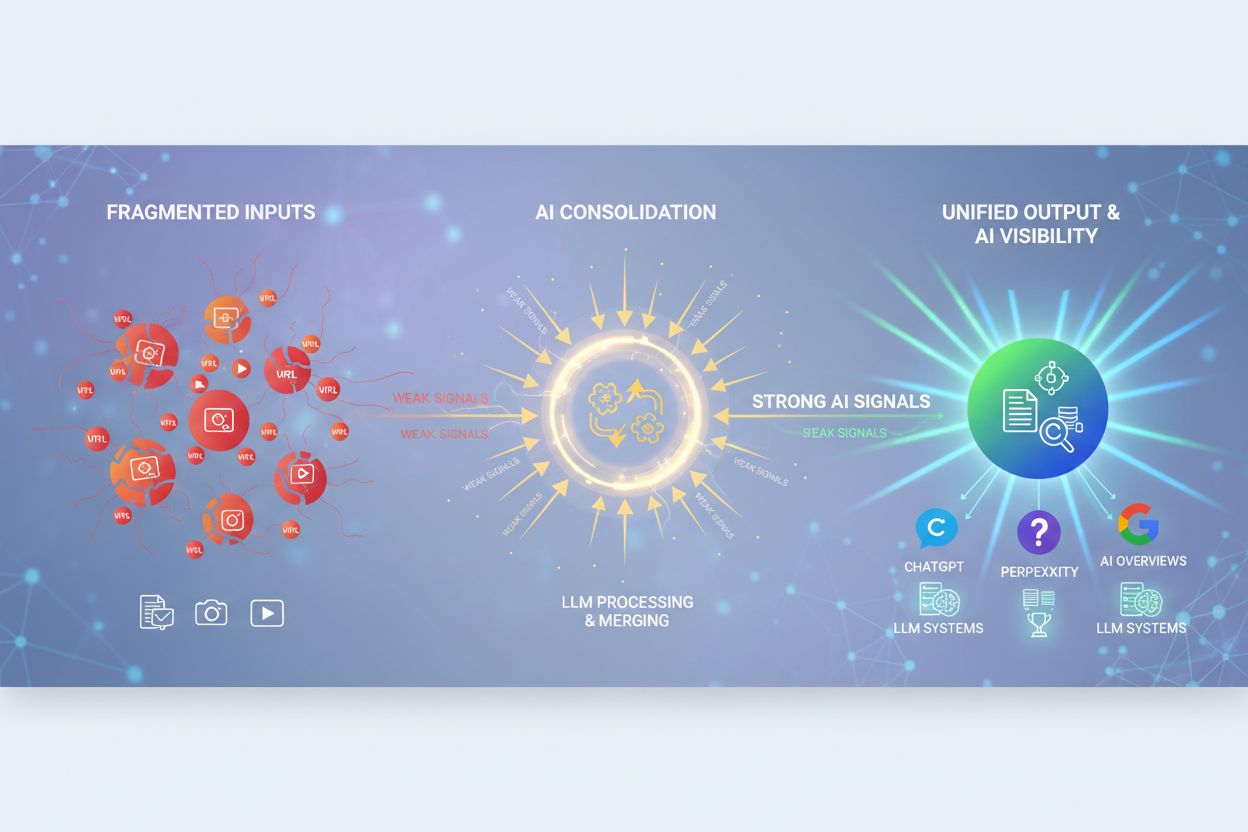
AI Content Consolidation
Learn what AI Content Consolidation is and how merging similar content strengthens visibility signals for ChatGPT, Perplexity, and Google AI Overviews. Discover...
10 min read
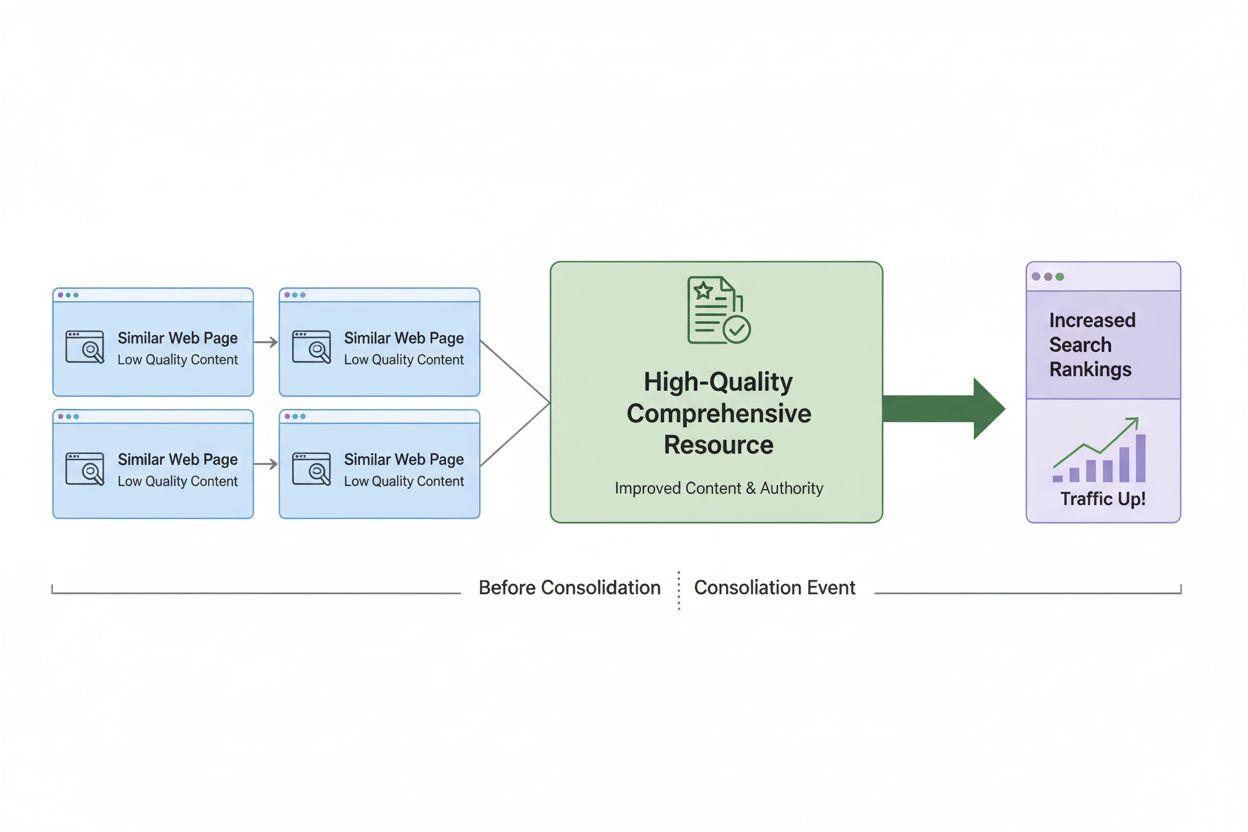
Content consolidation is the strategic process of merging multiple similar, overlapping, or low-performing web pages into a single, comprehensive, high-quality resource to improve SEO performance, user experience, and search engine rankings. This practice eliminates duplicate content, prevents keyword cannibalization, and strengthens domain authority by combining fragmented information into authoritative, in-depth pieces.
Content consolidation is the strategic process of merging multiple similar, overlapping, or low-performing web pages into a single, comprehensive, high-quality resource to improve SEO performance, user experience, and search engine rankings. This practice eliminates duplicate content, prevents keyword cannibalization, and strengthens domain authority by combining fragmented information into authoritative, in-depth pieces.
Content consolidation is the strategic process of merging multiple similar, overlapping, or low-performing web pages into a single, comprehensive, high-quality resource designed to improve search engine optimization (SEO) performance, user experience, and overall website authority. This practice involves identifying pages that target similar keywords, cover redundant topics, or provide thin content, then combining their best elements into one authoritative, in-depth piece. The primary goal is to eliminate keyword cannibalization—where multiple pages compete for the same search queries—and concentrate ranking signals and link equity on a single, powerful resource. Content consolidation is not about deleting content indiscriminately; rather, it’s a strategic refinement process that preserves valuable information while removing redundancy and improving content density. By consolidating fragmented content, organizations strengthen their topical authority, enhance user experience, and signal to search engines that they possess comprehensive expertise on specific subjects.
Content consolidation emerged as a critical SEO strategy in response to the evolution of search engine algorithms and the proliferation of low-quality, thin content across the web. In the early 2000s, many websites adopted a “more is better” mentality, publishing numerous short articles on similar topics to capture multiple search rankings. However, as Google’s algorithms became more sophisticated—particularly with updates like Panda (2011), which penalized thin content, and subsequent core algorithm updates—the strategy backfired. Search engines began recognizing and penalizing sites with duplicate or near-duplicate content, as these pages diluted topical authority and confused ranking signals. The shift toward E-E-A-T (Experience, Expertise, Authoritativeness, Trustworthiness) principles further accelerated the adoption of content consolidation. Research from industry leaders like Moz and SEMrush demonstrated that consolidated content consistently outperformed fragmented content, with case studies showing improvements of 70-92% in impressions and clicks. Today, content consolidation is recognized as a fundamental component of modern SEO strategy, particularly as AI systems like ChatGPT, Perplexity, and Google AI Overviews increasingly rely on comprehensive, authoritative sources when generating responses. According to recent data, approximately 68% of enterprise-level organizations now conduct regular content consolidation audits as part of their SEO maintenance strategy.
The technical execution of content consolidation involves several interconnected processes that work together to maximize SEO impact. First, content auditing uses tools like Google Search Console, Ahrefs, and Semrush to identify pages with overlapping keyword targets, similar content themes, and redundant information. These tools analyze metrics such as impressions, click-through rates, average position, and organic traffic to determine which pages are underperforming and candidates for consolidation. Second, keyword cannibalization analysis reveals when multiple pages compete for the same search queries, diluting the ranking potential of each. Third, content mapping involves analyzing the unique value proposition of each page to determine which elements should be preserved in the consolidated version. Fourth, 301 redirect implementation ensures that all link equity, ranking signals, and user traffic from the old URLs flow to the new consolidated page, preventing ranking drops and maintaining SEO value. Finally, on-page optimization of the consolidated content includes updating metadata, improving internal linking structure, enhancing readability, and ensuring alignment with current SEO best practices. This multi-step technical process requires coordination between SEO specialists, content teams, and web developers to execute successfully without disrupting site performance or user experience.
| Strategy | Primary Goal | Process | Best For | SEO Impact | Timeline |
|---|---|---|---|---|---|
| Content Consolidation | Merge similar pages into one authoritative resource | Combine best elements, implement 301 redirects, optimize merged content | Eliminating keyword cannibalization, improving topical authority | High—concentrates ranking signals, increases impressions 70-92% | 2-8 weeks per project |
| Content Pruning | Remove low-quality or irrelevant pages entirely | Identify underperformers, deindex or delete, implement 410 status codes | Cleaning up thin content, improving site quality signals | Moderate—removes negative signals but loses potential value | 1-3 weeks per project |
| Content Refresh | Update existing content with new information | Revise outdated data, add new insights, improve structure | Maintaining relevance of evergreen content, improving rankings | Moderate—improves CTR and dwell time without consolidation | 1-2 weeks per page |
| Content Expansion | Add depth to existing pages without merging | Extend word count, add new sections, improve comprehensiveness | Strengthening single pages without consolidation | Moderate—improves rankings if done strategically | 3-7 days per page |
| Content Restructuring | Reorganize site architecture and internal linking | Regroup pages by topic cluster, improve navigation, create pillar pages | Building topical authority, improving crawl efficiency | High—when combined with consolidation | 4-12 weeks |
The SEO benefits of content consolidation are substantial and well-documented across multiple case studies and industry research. When organizations consolidate competing pages, they typically experience significant improvements in search visibility and organic traffic. A notable case study from BlueWater Technologies demonstrated that consolidating just two competing pages resulted in a 70% increase in clicks per day and a 92% increase in impressions within a five-week testing period, while simultaneously improving average search position from 50.02 to 47.09. These improvements occur because consolidated content concentrates link equity and ranking signals on a single authoritative page rather than splitting them across multiple weak pages. Additionally, consolidated content better satisfies Google’s ranking criteria by demonstrating deeper expertise, comprehensiveness, and relevance to user search intent. The process also reduces crawl budget waste, as search engines no longer need to crawl and index multiple similar pages, allowing them to allocate more resources to discovering and indexing new, unique content. Research indicates that websites implementing systematic content consolidation strategies see average ranking improvements of 15-25 positions for consolidated pages within 3-6 months. Furthermore, consolidated content generates higher click-through rates because users encounter a single, comprehensive resource that fully addresses their query rather than multiple partial answers, reducing bounce rates and improving engagement metrics that search engines use as ranking signals.
In the emerging landscape of AI-driven search and content discovery, content consolidation has become increasingly important for brand visibility and citation tracking. AI systems like ChatGPT, Perplexity, Google AI Overviews, and Claude rely on comprehensive, authoritative sources when generating responses to user queries. Consolidated content—which demonstrates deeper expertise, broader coverage, and stronger topical authority—is significantly more likely to be selected as a source for AI-generated summaries and responses. This is particularly relevant for organizations using AI monitoring platforms like AmICited, which track brand mentions and content citations across AI systems. When brands consolidate fragmented content into unified, high-quality resources, they increase the likelihood of appearing in AI responses, which drives referral traffic and enhances brand authority. The relationship between content consolidation and AI visibility is bidirectional: consolidated content improves traditional SEO rankings, which increases the likelihood of AI systems discovering and citing that content. Additionally, consolidated content often achieves higher domain authority and topical relevance scores, which are key factors AI systems consider when selecting sources. Organizations that fail to consolidate content risk fragmentation across AI responses, where different AI systems cite different pages on the same topic, diluting brand authority and creating inconsistent messaging. This makes content consolidation not just an SEO tactic but a critical component of modern brand visibility strategy in an AI-first search landscape.
Successful content consolidation requires a systematic, data-driven approach that balances technical SEO considerations with user experience and content quality. The first step involves conducting a comprehensive content audit using multiple SEO tools to identify consolidation candidates. This audit should analyze metrics including organic traffic, impressions, click-through rates, average position, keyword overlap, and engagement signals like dwell time and bounce rate. Pages with high impressions but low clicks, or those receiving minimal traffic, are prime candidates for consolidation. The second step is determining whether to consolidate or prune each page—not all low-performing pages should be merged; some may be better served by deletion if they contain no valuable information. The third step involves creating a consolidation content brief that outlines the goal of the merged piece, identifies unique content from each page, and establishes new keyword targeting and SEO optimization opportunities. This brief serves as a roadmap for content creators and ensures the consolidated piece addresses all relevant user intents and search queries. The fourth step is updating and rewriting the content, focusing on combining the best elements of each page while eliminating redundancy, improving structure, and enhancing readability. The fifth step—often overlooked but critical—is implementing 301 redirects from old URLs to the new consolidated page, ensuring all link equity and ranking signals transfer properly. Finally, the consolidated content should be optimized for E-E-A-T principles by highlighting expertise, adding authoritative sources, including case studies or first-hand experience, and building trust signals. This systematic approach ensures that consolidation efforts deliver maximum SEO value while maintaining user experience and content quality.
The future of content consolidation is being shaped by several emerging trends and technological developments that will make this practice even more critical for digital success. As AI systems become increasingly sophisticated and prevalent in search, the demand for consolidated, authoritative content will intensify. AI models are trained to recognize and prioritize comprehensive, well-researched sources over fragmented information, meaning organizations that consolidate content will gain competitive advantages in AI-driven search results. Additionally, the rise of generative search experiences (GSE) and AI Overviews means that traditional ranking positions matter less than being selected as a source for AI-generated responses. This shift will incentivize more aggressive content consolidation strategies, as brands compete for inclusion in AI summaries rather than just top-10 rankings. Furthermore, emerging content monitoring technologies will make it easier to identify consolidation opportunities in real-time, allowing organizations to consolidate content proactively rather than reactively. Machine learning algorithms will increasingly automate the identification of duplicate and near-duplicate content, streamlining the audit process. The integration of semantic search and entity recognition technologies will also enhance content consolidation by helping systems understand topical relationships and identify pages that should be consolidated even if they don’t use identical keywords. Looking ahead, content consolidation will likely become a continuous, automated process rather than a periodic manual task, with AI-powered tools suggesting consolidation opportunities and even generating consolidated content drafts. Organizations that embrace this evolution and prioritize content consolidation as a core strategy will maintain competitive advantages in both traditional search and emerging AI-driven discovery channels. The convergence of SEO, content strategy, and AI visibility monitoring means that content consolidation is no longer optional—it’s a fundamental requirement for maintaining brand authority and visibility in the modern digital landscape.
Content consolidation involves merging multiple similar pages into one comprehensive resource while preserving valuable information, whereas content pruning involves removing low-quality or irrelevant pages entirely from your website. Consolidation is a strategic combination approach that maximizes existing content value, while pruning is a deletion strategy. Both techniques work together to improve overall site quality and SEO performance, but consolidation focuses on combining strengths while pruning eliminates weaknesses.
Content consolidation directly improves AI visibility by creating authoritative, comprehensive resources that AI systems like ChatGPT, Perplexity, and Google AI Overviews are more likely to cite as sources. When brands consolidate fragmented content into unified, high-quality pieces, they increase the likelihood of appearing in AI-generated responses and summaries. This is particularly important for AmICited users monitoring brand mentions across AI platforms, as consolidated content demonstrates stronger expertise and authority signals that AI systems prioritize when selecting sources.
Content consolidation delivers multiple SEO benefits including improved keyword rankings, reduced keyword cannibalization, increased domain authority, better user experience, and enhanced crawl efficiency. By merging similar pages, you concentrate link equity and ranking signals on a single authoritative page rather than splitting them across multiple weak pages. Studies show that consolidated content can increase impressions by up to 92% and clicks by 70%, as demonstrated in real-world case studies. Additionally, consolidated content better aligns with Google's E-E-A-T guidelines by demonstrating deeper expertise and trustworthiness.
Use SEO tools like Google Search Console, Ahrefs, Semrush, or Screaming Frog to conduct a comprehensive content audit. Look for pages targeting similar keywords, covering overlapping topics, or showing low engagement metrics. Identify keyword cannibalization by finding multiple pages ranking for the same search queries. Analyze traffic patterns, bounce rates, and conversion metrics to determine which pages are underperforming. Pages with high impressions but low click-through rates, or those receiving minimal organic traffic, are prime candidates for consolidation into higher-performing pages.
301 redirects are essential for preserving SEO value when consolidating content. When you merge pages, implement permanent 301 redirects from the old URLs to the new consolidated page to transfer link equity, ranking signals, and user traffic. Without proper redirects, you lose accumulated authority and confuse search engines about which page should rank. This redirect strategy ensures that all the SEO benefits built up on the original pages flow to the consolidated resource, preventing ranking drops and maintaining user experience.
Service and product pages should be audited and updated quarterly or at minimum every six months, as these are high-value 'money pages' that directly impact revenue. Blog posts and general content should be audited at least annually to identify consolidation opportunities. However, the frequency depends on your industry velocity and content volume. Establish a regular content audit schedule using SEO tools to continuously monitor for duplicate content, thin pages, and cannibalization issues. Real-time monitoring systems can flag consolidation opportunities as new content is published, preventing fragmentation before it becomes problematic.
Yes, content consolidation and new content creation work synergistically to strengthen your overall content strategy. While consolidation improves existing content quality and SEO performance, new content attracts fresh audience segments, addresses emerging trends, and provides internal linking opportunities. The key is balancing both efforts strategically—consolidation typically takes weeks to months, so continue publishing new content to maintain traffic momentum. This dual approach keeps your website dynamic in search engines' eyes while simultaneously strengthening your existing content foundation through consolidation efforts.
Start tracking how AI chatbots mention your brand across ChatGPT, Perplexity, and other platforms. Get actionable insights to improve your AI presence.
Learn what AI Content Consolidation is and how merging similar content strengthens visibility signals for ChatGPT, Perplexity, and Google AI Overviews. Discover...
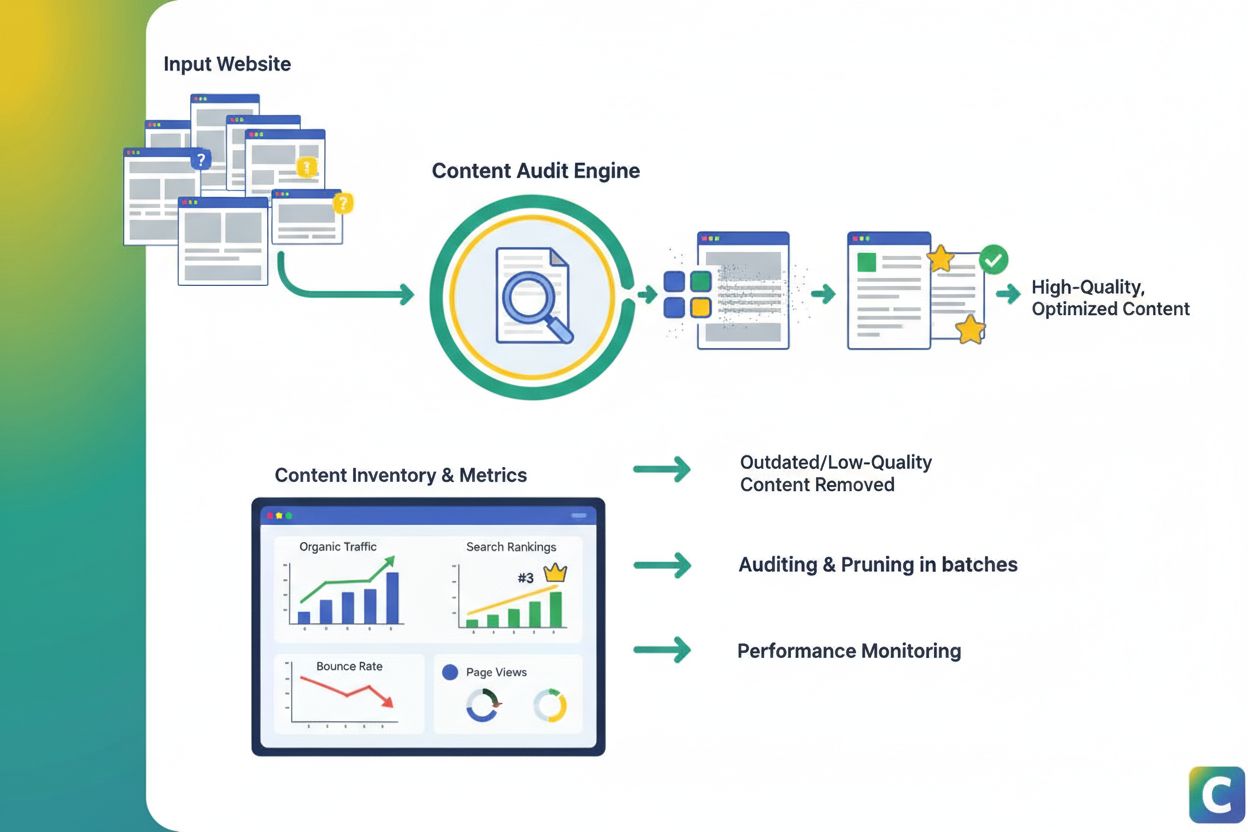
Content pruning is the strategic removal or updating of underperforming content to improve SEO, user experience, and search visibility. Learn how to identify an...

Learn what content optimization is, why it matters for SEO and AI search engines, and discover proven techniques to improve your content's search visibility and...
Cookie Consent
We use cookies to enhance your browsing experience and analyze our traffic. See our privacy policy.