

Author Expertise
Author expertise is demonstrated knowledge of a content creator showing qualifications, experience, and credibility. Learn how it impacts SEO, AI citations, and...
14 min read
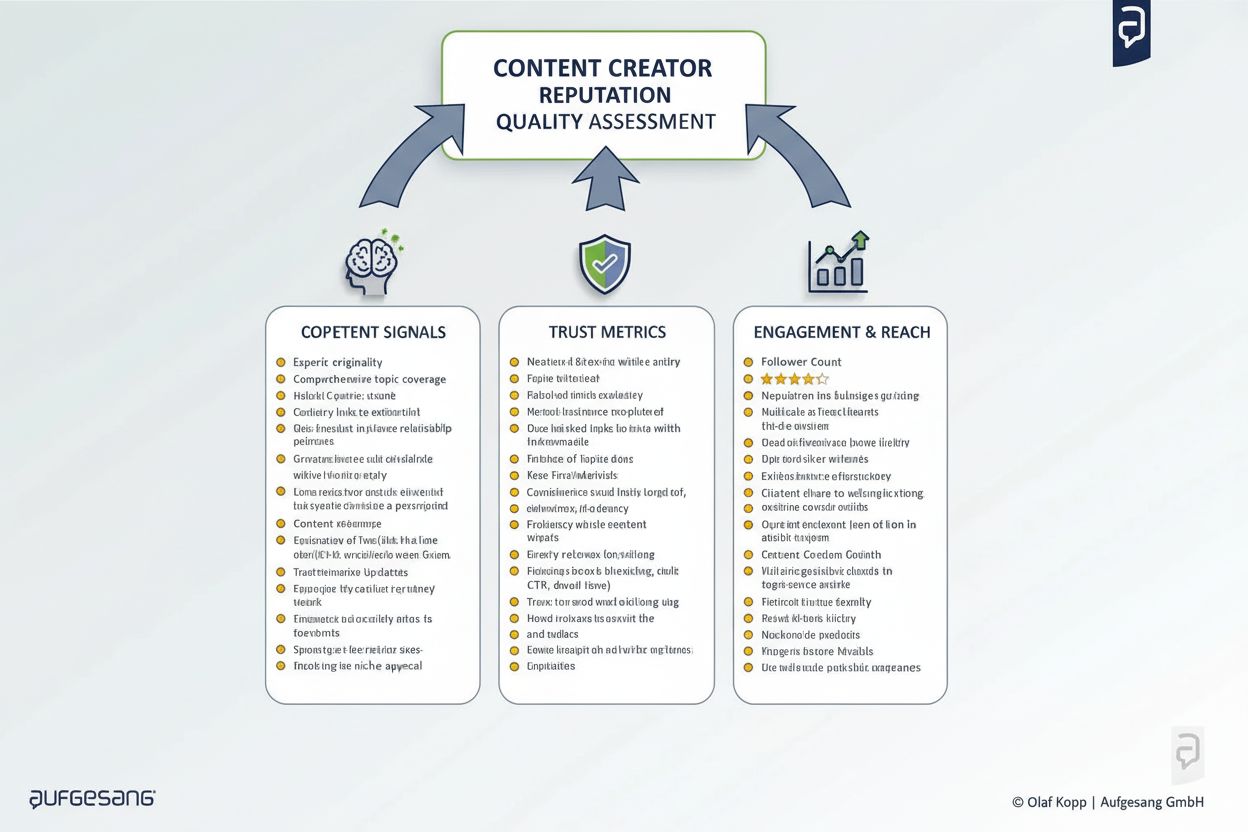
Content creator reputation refers to the perceived quality and credibility of content authors based on their demonstrated expertise, trustworthiness, engagement metrics, and audience validation. It encompasses how audiences, search engines, and AI systems evaluate an author’s authority and reliability in producing high-quality content.
Content creator reputation refers to the perceived quality and credibility of content authors based on their demonstrated expertise, trustworthiness, engagement metrics, and audience validation. It encompasses how audiences, search engines, and AI systems evaluate an author's authority and reliability in producing high-quality content.
Content creator reputation is the perceived quality and credibility of content authors as evaluated by audiences, search engines, and artificial intelligence systems. It represents how well an author’s demonstrated expertise, trustworthiness, engagement metrics, and audience validation combine to establish their authority in a specific subject area. In the context of modern digital ecosystems, content creator reputation has become increasingly critical because it directly influences whether AI systems cite an author’s work, how prominently content ranks in search results, and ultimately, how much visibility and influence a creator maintains online. This reputation is not static—it evolves continuously based on publishing patterns, audience interactions, credential verification, and the quality of content produced over time.
The concept of content creator reputation extends beyond simple follower counts or social media metrics. It encompasses a comprehensive evaluation framework that includes professional credentials, publication history, accuracy of information, consistency of messaging across platforms, peer recognition, and the ability to demonstrate first-hand experience in their field. For content creators, journalists, researchers, and subject matter experts, reputation serves as a form of digital capital that determines their reach, influence, and ability to shape conversations in their industry.
The concept of author credibility has existed for centuries in academic and journalistic contexts, but the digital age has fundamentally transformed how reputation is built, measured, and perceived. Historically, reputation was established through institutional affiliations—publishing in prestigious journals, writing for established news organizations, or holding recognized academic positions. These traditional gatekeepers controlled who could be considered authoritative.
The rise of the internet democratized content creation, allowing individuals to build audiences and establish expertise without institutional backing. However, this democratization also created challenges: how could audiences distinguish between credible experts and misinformation? Search engines like Google began developing algorithms to evaluate author credibility, introducing concepts like E-E-A-T (Experience, Expertise, Authoritativeness, Trustworthiness) as formal quality assessment criteria. According to research from Search Engine Land, Google’s evaluation of E-E-A-T involves over 80 distinct signals across document, domain, and entity levels, reflecting the complexity of modern reputation assessment.
The emergence of artificial intelligence and large language models has further elevated the importance of content creator reputation. AI systems require training data from reliable sources, and they increasingly use author credibility signals when generating responses and selecting citations. This shift means that creators with strong reputations are more likely to be included in AI training datasets and cited in AI-generated responses, creating a new form of visibility and influence.
Trust signals form the foundation of content creator reputation and are the mechanisms through which audiences and algorithms evaluate credibility. These signals include verified credentials, professional certifications, educational background, publication history, and transparent author information. When a creator displays verified badges on social media platforms, maintains consistent business information across multiple channels, or holds recognized industry certifications, they are actively communicating trustworthiness to both human audiences and algorithmic systems.
Research from Digimind indicates that 93% of consumers are influenced by online reviews and social proof when making purchasing decisions, and this principle extends to content consumption. When potential readers see that a creator has been featured in reputable publications, has earned industry awards, or has received positive peer endorsements, they are more likely to trust that creator’s content. Similarly, AI systems evaluate these same trust signals when determining which sources to prioritize in training data and response generation.
Peer endorsements represent a particularly powerful trust signal. When other recognized experts in a field cite, recommend, or collaborate with a creator, it validates their expertise and authority. This is why backlinks from authoritative domains, mentions in industry publications, and collaborations with established thought leaders significantly boost creator reputation. The quality of these endorsements matters more than quantity—a single mention from a highly authoritative source carries more weight than dozens of mentions from low-authority sites.
| Metric Category | Creator Reputation Signals | Traditional Authority Signals | AI System Relevance |
|---|---|---|---|
| Verification & Credentials | Verified social media badges, professional certifications, educational background | Institutional affiliations, academic degrees, published credentials | High - AI systems prioritize verified information |
| Engagement Metrics | Follower count, engagement rate, comment sentiment, share volume | Circulation numbers, readership statistics | Medium - AI uses engagement as secondary signal |
| Content Quality | Original research, comprehensiveness, citation practices, update frequency | Peer review, editorial standards, publication prestige | High - AI evaluates content depth and originality |
| Audience Validation | Reviews, testimonials, user-generated content, social proof | Expert endorsements, institutional recognition | High - AI treats audience validation as credibility indicator |
| Publication History | Consistent publishing frequency, topic consistency, content freshness | Years in publication, archive depth, historical impact | High - AI values sustained expertise demonstration |
| Platform Presence | Multi-platform consistency, brand recognition, direct URL visits | Branded search volume, media mentions, press coverage | Medium - AI uses platform signals for entity evaluation |
| Peer Recognition | Citations from other creators, collaborations, industry awards | Peer review acceptance, academic citations, professional awards | High - AI prioritizes peer-validated expertise |
The E-E-A-T framework (Experience, Expertise, Authoritativeness, Trustworthiness) has become the industry standard for evaluating content creator reputation, particularly in how search engines and AI systems assess content quality. Each component addresses a different dimension of creator credibility and collectively determines how much weight an author’s content receives in algorithmic rankings and AI citations.
Experience refers to the creator’s first-hand knowledge and practical involvement in their subject matter. A financial advisor who has personally managed investment portfolios carries more weight than someone who only studied finance theory. An AI researcher who has published papers and built actual AI systems demonstrates more experience than a journalist merely reporting on AI developments. AI systems increasingly value content that demonstrates lived experience, as it signals authentic expertise rather than surface-level knowledge. This is why creator bios that highlight years of hands-on work, case studies showing real results, and content that references personal experience all strengthen reputation.
Expertise encompasses the creator’s knowledge depth, educational background, and demonstrated mastery of their subject. This includes formal qualifications like degrees and certifications, but also self-taught expertise validated through consistent, high-quality content production. A creator who has published hundreds of well-researched articles on a specific topic demonstrates expertise through volume and consistency. Expertise is evaluated by examining whether the creator’s content covers topics comprehensively, uses appropriate terminology, and demonstrates understanding of nuanced concepts within their field.
Authoritativeness measures how widely recognized and respected a creator is within their industry or field. This includes factors like media mentions, speaking engagements at major conferences, citations from other authoritative sources, awards and recognition, and the size and engagement of their audience. A creator who is frequently quoted in major publications, invited to speak at industry events, or cited by other experts has established clear authoritativeness. For AI systems, authoritativeness is a key signal because it indicates that the creator’s work has been validated by the broader expert community.
Trustworthiness evaluates the creator’s reliability, accuracy, and ethical standards. This includes factors like correction of errors, transparency about conflicts of interest, consistent messaging across platforms, and a track record of providing accurate information. Creators who openly acknowledge when they’ve made mistakes, clearly disclose sponsored content, and maintain consistent values across their work build stronger trustworthiness. For AI systems, trustworthiness is critical because it determines whether the creator’s content can be reliably used in training data without introducing bias or misinformation.
The relationship between content creator reputation and AI citations has become increasingly important as generative AI systems become primary discovery mechanisms for information. Research from Writesonic analyzing over 1 million AI-generated responses found that approximately 40.58% of AI citations come from Google’s top 10 search results, which are heavily influenced by author credibility signals. This means that creators with strong reputations are significantly more likely to be cited by AI systems.
AI platforms like ChatGPT, Perplexity, Google AI Overviews, and Claude all employ mechanisms to evaluate source credibility when generating responses. These systems analyze author credentials, publication history, engagement metrics, and peer recognition to determine which sources are most reliable. A creator with a strong reputation—evidenced by verified credentials, consistent high-quality output, and recognition from peers—is more likely to be selected as a source for AI-generated responses.
For content creators and brands, this creates a new imperative: building and maintaining reputation is no longer just about audience growth and engagement, but about visibility in AI-driven discovery. A creator with 10,000 highly engaged followers from a niche audience might receive more AI citations than a creator with 100,000 passive followers, if the first creator has stronger E-E-A-T signals and demonstrated expertise. This shift rewards quality and credibility over pure reach.
Effective reputation management requires systematic measurement of key indicators that reflect how audiences and algorithms perceive a creator’s credibility. Engagement rate is one of the most important metrics, calculated as the percentage of a creator’s audience that actively interacts with their content through likes, comments, shares, and other actions. Research shows that 68% of marketers track social media engagement metrics as their primary indicator of content performance and creator influence.
Review ratings and testimonials provide direct audience validation of content quality. Platforms like Google, Trustpilot, and industry-specific review sites aggregate customer feedback that signals creator reliability. A creator with consistently high ratings (4.5+ stars) across multiple platforms demonstrates sustained quality that resonates with audiences. The volume of reviews also matters—a creator with 100 reviews averaging 4.8 stars has stronger reputation signals than one with 5 reviews at 5 stars.
Publication frequency and content freshness indicate active engagement and current expertise. Creators who publish regularly and update existing content demonstrate commitment to their field and awareness of current developments. AI systems favor fresh content because it suggests the creator is actively monitoring their field and providing current information. A creator who published extensively five years ago but has been inactive since has weaker reputation signals than one with consistent recent output.
Backlink quality and domain authority measure how other authoritative sources reference a creator’s work. High-quality backlinks from established publications, industry leaders, and educational institutions signal that a creator’s work is valued by the broader expert community. Tools like Ahrefs and SEMrush quantify this through domain authority scores, which correlate strongly with search visibility and AI citation likelihood.
Verification status across platforms includes verified badges on social media, professional certifications displayed on websites, and consistent identity information across channels. When a creator maintains the same name, photo, and bio across multiple platforms, it signals authenticity and makes it easier for AI systems to consolidate reputation signals across the web.
Different platforms evaluate and display content creator reputation through distinct mechanisms, and creators must understand these platform-specific signals to optimize their visibility. On social media platforms like Instagram, TikTok, and Twitter, reputation is primarily built through follower count, engagement rate, and audience sentiment. Creators with large, engaged audiences receive algorithmic preference, and their content is more likely to be recommended to new users. Verification badges on these platforms serve as trust signals that the account is authentic and belongs to a notable creator.
On professional platforms like LinkedIn, reputation is built through endorsements, recommendations, and demonstrated expertise in specific skills. A creator with hundreds of endorsements for “Content Strategy” or “Digital Marketing” has stronger reputation signals than one with few endorsements. LinkedIn’s algorithm prioritizes content from creators with strong professional networks and consistent engagement, making platform-specific reputation building essential for B2B creators.
On publishing platforms like Medium, Substack, and personal blogs, reputation is built through content quality, subscriber growth, and audience engagement. Creators with large subscriber bases and high read-through rates demonstrate that their content resonates with audiences. These platforms also track metrics like claps, comments, and shares, which serve as reputation signals to both readers and algorithmic systems.
For AI systems specifically, reputation signals are aggregated across all platforms. An AI system evaluating a creator’s credibility will examine their social media presence, professional credentials, publication history, backlink profile, and peer recognition collectively. This means that creators benefit from maintaining consistent, high-quality presence across multiple channels, as it creates a comprehensive reputation profile that AI systems can evaluate.
Building strong content creator reputation requires a strategic, long-term approach focused on demonstrating genuine expertise and building authentic audience relationships. The first step is establishing clear expertise by choosing a specific niche or subject area and becoming deeply knowledgeable within it. Rather than attempting to cover everything, creators should focus on becoming recognized experts in a defined domain. This allows them to build a reputation for depth and authority rather than breadth.
Transparency and authenticity are foundational to reputation building. Creators should maintain clear author bios that include relevant credentials, experience, and contact information. When discussing sponsored content or potential conflicts of interest, transparency builds trust with audiences and signals ethical standards to AI systems. Creators who openly acknowledge when they’ve made errors and correct them publicly demonstrate integrity that strengthens long-term reputation.
Consistent, high-quality content production is essential for reputation maintenance. Rather than sporadic viral posts, creators should establish regular publishing schedules and maintain consistent quality standards. This demonstrates commitment to their field and provides audiences and AI systems with reliable signals of active expertise. Content should be thoroughly researched, well-cited, and updated regularly to reflect current information.
Engagement with audience and peers strengthens reputation by building community and demonstrating accessibility. Responding to comments, answering questions, and engaging in discussions with other creators shows that the author is actively involved in their field. This engagement also generates social proof in the form of positive interactions that signal credibility to both audiences and algorithms.
Building strategic relationships with other recognized experts amplifies reputation. Collaborations, guest posts, interviews, and mutual endorsements with established creators transfer credibility and expand reach. When a well-known expert endorses or collaborates with a creator, it signals to audiences and algorithms that the creator is worthy of association with established authorities.
As artificial intelligence becomes increasingly central to content discovery and information retrieval, content creator reputation will continue to evolve in importance and measurement. The rise of Generative Engine Optimization (GEO) and AI-Driven Search means that creators must optimize not just for traditional search engines, but for AI systems that evaluate source credibility differently than human readers.
Future reputation assessment will likely place even greater emphasis on verifiable credentials and identity. As AI systems become more sophisticated at detecting misinformation and bias, they will increasingly rely on creator verification and transparent credential information. Creators who maintain verified profiles across multiple platforms and clearly document their expertise will have significant advantages in AI visibility.
Real-time reputation monitoring will become standard practice for creators and brands. Tools that track mentions, sentiment, and credibility signals across the web will enable creators to understand how their reputation is perceived and respond quickly to threats or opportunities. Platforms like AmICited that monitor AI citations will become essential for understanding how creator reputation translates into AI visibility.
The relationship between social proof and AI credibility will deepen. As AI systems become better at analyzing audience sentiment and engagement patterns, they will increasingly use social proof signals as indicators of content quality. Creators with strong audience validation will see corresponding improvements in AI citation rates.
Finally, creator reputation will become more granular and topic-specific. Rather than a single overall reputation score, creators will develop reputation profiles for specific topics or domains. A creator might have strong reputation in “machine learning” but weaker reputation in “cryptocurrency,” and AI systems will evaluate their credibility accordingly. This specialization will reward deep expertise over generalist approaches.
Content creator reputation has evolved from a simple measure of audience size to a complex, multidimensional evaluation of expertise, trustworthiness, and authority that directly impacts visibility in AI-driven search and discovery. In an era where artificial intelligence increasingly mediates how information is discovered and consumed, building and maintaining strong creator reputation is essential for visibility, influence, and credibility.
The frameworks and metrics used to evaluate creator reputation—including E-E-A-T signals, engagement metrics, peer recognition, and social proof—are increasingly standardized across platforms and AI systems. This standardization creates opportunities for creators who understand these signals and strategically build their reputation accordingly. By focusing on genuine expertise, consistent quality, transparent communication, and authentic audience engagement, creators can build reputations that resonate with both human audiences and AI systems, ensuring their work reaches the audiences it deserves.
Content creator reputation significantly influences whether AI systems like ChatGPT, Perplexity, and Google AI Overviews cite an author's work. Research shows that approximately 40.58% of AI citations come from Google's top 10 results, which are heavily influenced by author credibility signals. AI systems prioritize content from creators with strong E-E-A-T signals (Experience, Expertise, Authoritativeness, Trustworthiness), verified credentials, consistent publishing history, and high engagement metrics. Authors with established reputations are more likely to be selected as authoritative sources for AI training data and response generation.
Key reputation metrics include engagement rate (likes, comments, shares relative to followers), follower growth and audience size, review ratings and testimonials, publication frequency and content freshness, backlink quality and domain authority, social proof indicators (awards, certifications, media mentions), and verification status across platforms. Additionally, metrics like click-through rates, dwell time, direct URL visits, and user behavior patterns indicate how audiences perceive content quality. These signals collectively form a reputation score that influences visibility in search results and AI systems.
Search engines like Google evaluate creator reputation through multiple signals across document, domain, and entity levels. At the entity level, Google assesses contributor verification, reputation tracking based on accuracy history, peer endorsements from other experts, publication history volume and quality, and professional credentials. The search engine also monitors brand consistency, platform presence, and subject matter alignment between the creator and their content topics. These evaluations feed into quality classifiers that determine ranking positions and influence which sources are selected for AI training.
Brand reputation refers to the overall perception of a company or organization, while content creator reputation specifically focuses on individual authors' credibility and expertise. Content creator reputation is more granular and personal, based on an author's individual track record, credentials, and audience trust. However, they are interconnected—a strong personal reputation enhances brand reputation, and vice versa. For AI monitoring purposes, content creator reputation is increasingly important because AI systems evaluate source entities individually, not just organizational domains.
Content creators can build reputation by consistently publishing high-quality, original content in their area of expertise, maintaining transparent author bios with verified credentials, engaging authentically with their audience through comments and social media, earning backlinks from authoritative sources, obtaining industry certifications and awards, and building a strong social media presence. Regular content updates, demonstrating first-hand experience, citing authoritative sources, and maintaining consistent brand identity across platforms all strengthen reputation. Monitoring brand mentions and responding to feedback also signals active engagement and trustworthiness.
Content creator reputation is critical for AI search because generative AI systems use author credibility as a ranking signal when selecting sources for training data and generating responses. Platforms like Perplexity, ChatGPT, and Google AI Overviews prioritize citations from creators with strong reputations. For brands using AI monitoring tools like AmICited, understanding creator reputation helps identify which authors and publications are most likely to cite your content. This enables strategic content optimization and relationship building with high-authority creators in your industry.
Social proof—including customer reviews, testimonials, user-generated content, influencer endorsements, and visible audience engagement—directly strengthens content creator reputation. Research shows that 98% of consumers read online reviews before making decisions, and 97% of consumers read reviews when browsing for local businesses. High engagement rates, large follower counts, positive sentiment in mentions, and visible community interaction all signal to both audiences and AI systems that a creator is trustworthy and authoritative. Social proof essentially validates the creator's expertise through third-party validation.
Start tracking how AI chatbots mention your brand across ChatGPT, Perplexity, and other platforms. Get actionable insights to improve your AI presence.
Author expertise is demonstrated knowledge of a content creator showing qualifications, experience, and credibility. Learn how it impacts SEO, AI citations, and...

Learn how to build author expertise and credentials that AI systems recognize. Discover trust signals that increase citations in ChatGPT, Perplexity, and Google...
Review content is evaluative material combining expert opinions, consumer feedback, and firsthand experience. Learn how review content impacts E-E-A-T, consumer...
Cookie Consent
We use cookies to enhance your browsing experience and analyze our traffic. See our privacy policy.