
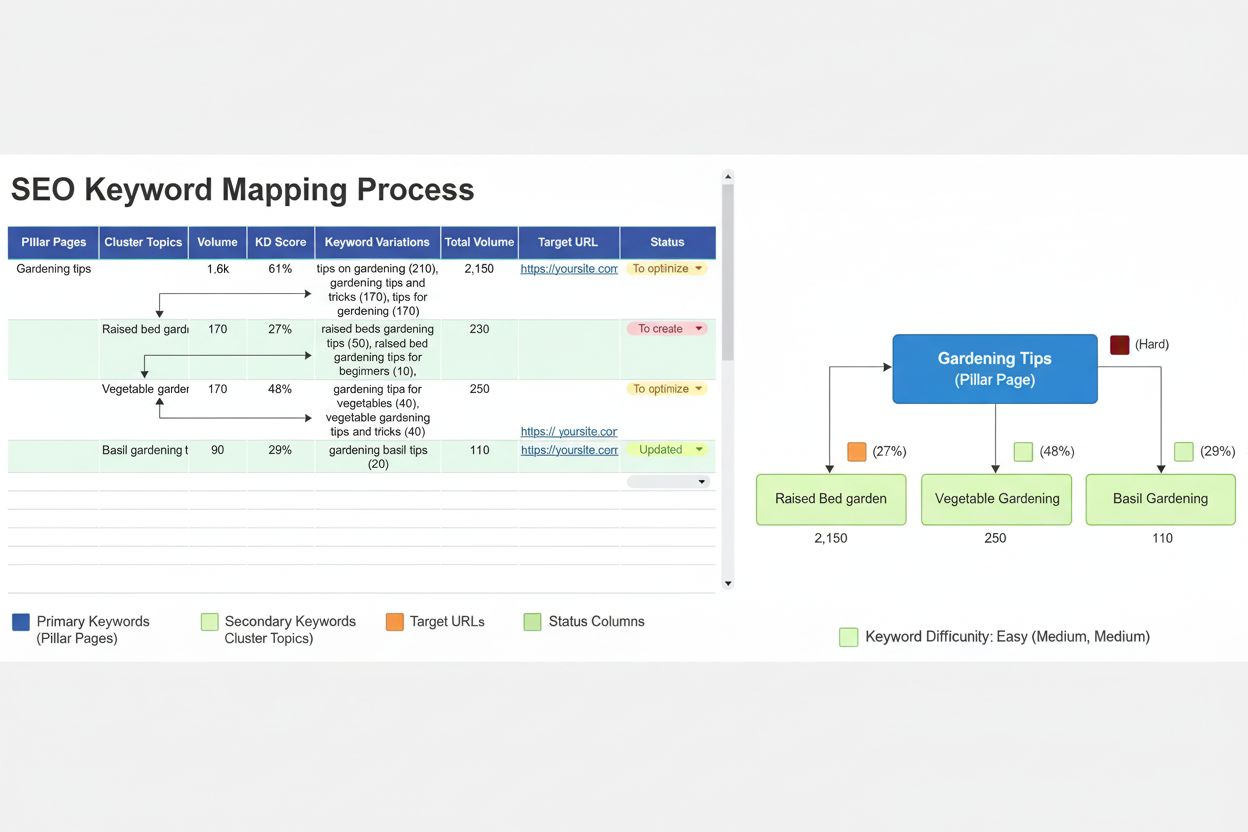
Keyword Mapping
Learn keyword mapping: the process of assigning target keywords to website pages. Discover how to prevent cannibalization, optimize site structure, and improve ...
14 min read
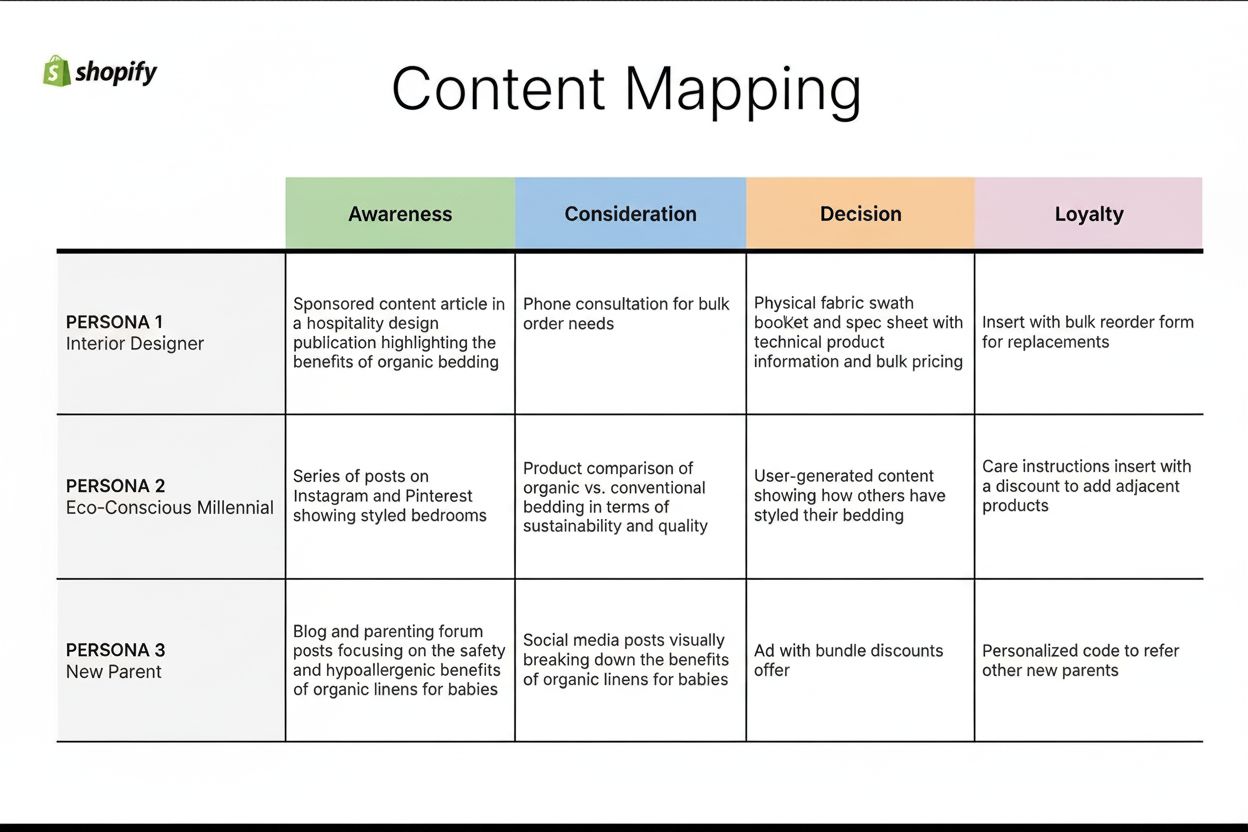
Content mapping is the strategic process of aligning content assets with specific stages of the buyer’s journey to deliver relevant, targeted information that guides prospects toward conversion. It involves identifying customer personas, their pain points at each buying stage, and creating or organizing content that addresses their unique needs and questions at the right moment in their decision-making process.
Content mapping is the strategic process of aligning content assets with specific stages of the buyer's journey to deliver relevant, targeted information that guides prospects toward conversion. It involves identifying customer personas, their pain points at each buying stage, and creating or organizing content that addresses their unique needs and questions at the right moment in their decision-making process.
Content mapping is a strategic marketing practice that aligns your content assets—including blog posts, videos, case studies, whitepapers, infographics, and landing pages—with the specific stages and needs of your buyer’s journey. Rather than creating content in isolation, content mapping ensures that each piece of content serves a deliberate purpose by addressing the unique questions, pain points, and concerns that prospects have at different points in their decision-making process. This alignment transforms content from a general awareness tool into a precision instrument that guides potential customers from initial problem recognition through consideration, evaluation, and ultimately to purchase and beyond. The practice recognizes that buyers don’t make purchasing decisions in a linear fashion; instead, they follow a complex journey where different types of information become relevant at different times, and content mapping ensures your organization is prepared to meet them at each critical juncture.
Content mapping has become increasingly critical in today’s marketing landscape because it directly addresses one of the most persistent challenges facing B2B and B2C organizations: the disconnect between what companies want to communicate and what buyers actually need to know. Research demonstrates that 72% of businesses report content marketing boosts lead generation, yet many organizations struggle to convert that interest into sales because their content isn’t strategically aligned with buyer needs. Content mapping solves this problem by creating a deliberate framework that connects content creation efforts to measurable business outcomes. When executed effectively, content mapping enables organizations to reduce customer acquisition costs by up to 55% compared to traditional marketing approaches, while simultaneously improving engagement metrics and conversion rates. The practice is particularly valuable in B2B environments where sales cycles are longer and buying committees involve multiple decision-makers with different priorities and information needs. By mapping content to these diverse stakeholder needs, organizations can create more personalized buyer experiences that build trust and accelerate decision-making.
The buyer’s journey, which forms the foundation of content mapping, consists of four distinct stages that represent how prospects move from problem awareness to loyal customer advocacy. The Awareness stage begins when a prospect recognizes they have a problem or unmet need, though they may not yet understand the full scope of their challenge or know what solutions exist. During this stage, buyers are conducting preliminary research, asking questions like “What is this problem?” and “Why is it happening?” They’re seeking educational content that helps them understand their situation better. The Consideration stage emerges once prospects have clearly defined their problem and are actively researching potential solutions. At this point, they’re comparing different approaches, evaluating various vendors, and trying to understand which solution best fits their specific circumstances. They need content that provides deeper insights, comparisons, and evidence of effectiveness. The Decision stage occurs when prospects have narrowed their options and are ready to commit to a specific vendor or solution, but they need final reassurance that they’re making the right choice. They’re looking for proof points, customer testimonials, detailed product information, and pricing details. Finally, the Loyalty stage begins after purchase and focuses on ensuring customers get maximum value from their investment, reducing churn, and potentially turning them into brand advocates who refer others or provide testimonials.
Creating an effective content map requires a systematic approach that begins with deep audience research and persona development. Organizations must first identify their target audience by understanding who their ideal customers are, what industries they work in, what their job titles are, and what challenges they face. This foundational work involves analyzing existing customer data, conducting interviews with current customers and prospects, and researching industry trends. Once audience understanding is established, organizations develop detailed buyer personas—semi-fictional representations of ideal customers that consolidate research findings into actionable profiles. These personas should include demographic information, professional responsibilities, key pain points, goals, preferred information sources, and decision-making criteria. With personas in place, the next step is to map the buying journey for each persona by identifying the specific questions they ask, concerns they have, and information they need at each stage. This requires getting into the mindset of each persona and understanding their perspective at different points in their journey. Organizations then conduct a content audit to inventory all existing content and categorize it by which buyer journey stage it addresses. This audit often reveals significant gaps—perhaps extensive awareness-stage content but minimal consideration-stage resources, or strong product pages but weak customer success content. Finally, organizations develop a content roadmap that prioritizes which gaps to fill first based on business impact, resource availability, and strategic priorities.
| Aspect | Content Mapping | General Content Marketing | Account-Based Marketing (ABM) | Demand Generation |
|---|---|---|---|---|
| Primary Focus | Aligning content to buyer journey stages and personas | Creating valuable content to attract and engage audiences | Targeting specific high-value accounts with personalized content | Creating awareness and interest in target market |
| Audience Specificity | Persona-based; addresses needs at each journey stage | Broad audience targeting; general value proposition | Highly specific; individual account and stakeholder targeting | Segment-based; broader than ABM but more targeted than general content |
| Content Customization | Moderate; tailored by persona and stage | Low to moderate; general messaging for broad appeal | High; highly personalized for specific accounts and roles | Moderate; customized by segment or industry |
| Measurement Focus | Conversion rates by stage; content performance by persona | Traffic, engagement, leads generated | Pipeline influence; account-level revenue impact | Lead volume; cost per lead; conversion rates |
| Sales Alignment | Moderate; content supports sales conversations | Low to moderate; content is primarily awareness-focused | High; content directly supports sales team targeting | Moderate; content supports lead nurturing |
| Implementation Complexity | Moderate; requires persona development and journey mapping | Low; can start with basic content calendar | High; requires account selection, personalization, and coordination | Moderate; requires segmentation and targeting strategy |
| Typical ROI Timeline | 3-6 months to see meaningful results | 6-12 months for significant impact | 6-9 months; longer sales cycles | 3-6 months depending on sales cycle |
| Best For | Organizations with multiple buyer personas and longer sales cycles | Startups and companies building brand awareness | Enterprise B2B companies with high-value accounts | Companies seeking rapid lead generation and pipeline growth |
The technical execution of content mapping involves creating a structured document or system that serves as a reference guide for content creation and distribution decisions. Many organizations use spreadsheets, project management tools like Asana or Monday.com, or specialized content mapping platforms to organize their maps. A comprehensive content map typically includes columns for: buyer persona name, journey stage, buyer questions and pain points at that stage, content type recommendations, specific content topics, content format (blog, video, whitepaper, etc.), content status (existing, planned, or needed), and performance metrics. The map should be visual enough that stakeholders can quickly understand content gaps and strategic priorities. Some organizations create visual flowcharts showing how different content pieces connect and guide prospects through their journey, while others prefer detailed spreadsheets that allow for more granular tracking and analysis. The key is creating a system that your team will actually use and update regularly. As your business evolves, buyer needs change, and new content is created, your content map should be treated as a living document that gets reviewed and updated quarterly. This ensures your content strategy remains aligned with current market conditions, competitive dynamics, and customer feedback. Many high-performing organizations assign ownership of the content map to a specific person or team—often the content manager or marketing operations lead—to ensure it stays current and drives decision-making.
Organizations that implement content mapping see measurable improvements in key marketing metrics because their content directly addresses buyer needs at critical decision points. Research from First Page Sage analyzing over 10 years of content marketing data across 12 industry verticals shows that well-executed content marketing campaigns generate an average 3-year ROI of $984,000, with some industries like real estate achieving 1,486% three-year ROI and medical device companies achieving 1,344% ROI. These exceptional returns stem from content mapping’s ability to reduce customer acquisition costs by up to 55% compared to traditional paid advertising approaches. When prospects encounter content that precisely addresses their current concerns and questions, they’re more likely to engage deeply, spend time on your website, and move forward in their buying journey. This engagement signals to search engines that your content is valuable, improving organic visibility and reducing reliance on paid traffic. Additionally, content mapping enables better lead quality because prospects who consume content aligned with their journey stage are more qualified and further along in their decision-making process. They’re not just casually interested; they’re actively evaluating solutions. This means sales teams spend less time on unqualified leads and more time on prospects who are genuinely ready to buy. The combination of lower acquisition costs, higher lead quality, and improved conversion rates creates a powerful ROI multiplier that compounds over time as your content library grows and continues generating organic traffic and leads.
As artificial intelligence systems like ChatGPT, Perplexity, Claude, and Google AI Overviews become increasingly important discovery channels, content mapping takes on new strategic importance. These AI systems cite and reference content from across the web when answering user queries, meaning your content’s visibility in AI responses depends partly on how well it’s positioned as authoritative, comprehensive, and relevant to specific topics. Content mapping helps ensure your content is structured and optimized in ways that make it more likely to be cited by AI systems. When your content clearly addresses specific buyer questions and pain points—which is the essence of content mapping—it’s more likely to be recognized by AI systems as relevant and authoritative for those topics. Additionally, content mapping helps you create comprehensive content clusters where multiple pieces of content address related aspects of a topic, which AI systems recognize as signs of topical authority. Organizations using AmICited to monitor their brand and content visibility across AI platforms can see exactly where their mapped content is being cited, providing valuable feedback on which content pieces are resonating with AI systems and which may need optimization. This creates a feedback loop where content mapping informs your strategy, AI monitoring reveals what’s working, and you continuously refine your approach based on actual AI citation patterns.
Successful content mapping requires attention to several critical best practices that separate high-performing implementations from mediocre efforts. First, invest in quality persona development by conducting real research with actual customers and prospects rather than making assumptions. Interview your sales team, analyze customer data, and talk directly to prospects about their challenges and decision-making processes. The more accurate and detailed your personas, the more effective your content mapping will be. Second, align content mapping with your sales process by working closely with your sales team to understand their challenges, the objections they encounter, and the information that helps them close deals. Sales teams often have invaluable insights into what prospects need to know at different stages. Third, prioritize content quality over quantity because a single high-quality piece of content that thoroughly addresses a buyer’s needs will outperform multiple mediocre pieces. Research shows that businesses blogging consistently see 13x more positive ROI than sporadic publishers, and this consistency works best when content is high-quality and strategically targeted. Fourth, measure and iterate by tracking which content pieces drive engagement, leads, and conversions at each stage, then use that data to refine your approach. Finally, keep your content map updated as your business evolves, new competitors emerge, and buyer needs change. A content map that accurately reflected your market six months ago may be outdated today.
Content mapping becomes even more powerful when integrated into a broader multi-channel marketing strategy that includes email, social media, paid advertising, and direct sales outreach. Once you’ve mapped your content to buyer journey stages, you can strategically distribute that content through the channels where your target personas are most active and receptive. For example, awareness-stage content might be promoted heavily through social media and organic search, while consideration-stage content might be distributed through email nurture sequences and LinkedIn advertising. Decision-stage content might be shared directly by sales representatives during conversations with prospects. This coordinated approach ensures that prospects encounter your content through multiple touchpoints, reinforcing your message and increasing the likelihood of engagement. Research shows that 77% of email ROI originates from segmented, triggered campaigns rather than broadcast emails, and content mapping enables this segmentation by ensuring you’re sending the right content to the right people at the right time based on their journey stage. Additionally, content mapping helps with account-based marketing (ABM) strategies where 76% of ABM practitioners achieve higher ROI than other marketing approaches by enabling highly personalized content delivery to target accounts. When you understand what content each persona needs at each stage, you can customize your ABM campaigns to deliver that content through the channels and formats most likely to resonate with specific high-value accounts.
The future of content mapping will increasingly incorporate artificial intelligence and machine learning to automate and optimize the mapping process itself. Advanced analytics platforms are beginning to use AI to analyze customer behavior data, identify patterns in how different personas move through buying journeys, and recommend optimal content types and topics for each stage. Predictive analytics can help marketers anticipate which content will resonate with specific audience segments before it’s created, reducing wasted effort on content that won’t perform. Additionally, as AI systems become more sophisticated in understanding context and nuance, content mapping will need to evolve to account for how AI systems interpret and cite content. Organizations will increasingly need to understand not just how human buyers consume content, but how AI systems recognize, evaluate, and recommend content. This creates an opportunity for Generative Engine Optimization (GEO) strategies that optimize content for both human readers and AI systems simultaneously. The integration of tools like AmICited into content mapping workflows will become standard practice, allowing marketers to see in real-time how their mapped content is being cited across AI platforms and adjust their strategy accordingly. Furthermore, as voice search and conversational AI become more prevalent, content mapping will need to account for how people ask questions conversationally versus how they search in traditional search engines, requiring content that addresses natural language queries and provides concise, direct answers to specific questions.
Effective content mapping requires establishing clear metrics to measure success and guide optimization efforts. The most important metrics vary by journey stage: for awareness-stage content, track organic traffic, impressions, and engagement metrics like time on page and scroll depth; for consideration-stage content, monitor lead generation, email signups, and content downloads; for decision-stage content, measure conversion rates, sales-qualified leads, and pipeline influence; for loyalty-stage content, track customer retention, expansion revenue, and referral rates. Beyond stage-specific metrics, organizations should monitor overall content marketing ROI by calculating the revenue generated from content-influenced deals divided by the total cost of content creation and distribution. Research indicates that only 36% of marketers can accurately measure content ROI, creating a significant competitive advantage for organizations that implement proper attribution and measurement systems. Advanced attribution models that assign credit across multiple touchpoints reveal that content influences 23% more revenue than last-click attribution models suggest, meaning many organizations are significantly undervaluing their content’s impact. Additionally, track content performance by persona to understand which audience segments are most engaged with your content and which may need different messaging or formats. Monitor how content performs at driving prospects from one stage to the next—this stage-to-stage conversion rate is often more important than overall conversion rates because it reveals where your content strategy is working and where improvements are needed.
In an increasingly crowded digital marketplace where prospects are overwhelmed with content options, content mapping has become essential for organizations seeking to stand out and drive meaningful business results. By strategically aligning content with buyer journey stages and persona needs, organizations create more relevant, engaging experiences that guide prospects toward conversion while building trust and authority. The data is compelling: content marketing delivers $3 for every $1 invested, companies with consistent blogging see 13x higher ROI, and well-executed content mapping reduces customer acquisition costs by up to 55%. Yet despite these proven benefits, many organizations still create content reactively without clear strategic alignment, missing opportunities to maximize their content’s impact. The organizations winning in their markets are those that treat content mapping as a core strategic discipline, investing in quality persona development, maintaining updated content maps, and continuously measuring and optimizing based on performance data. As AI systems become increasingly important discovery channels, content mapping takes on additional strategic importance by ensuring your content is positioned as authoritative and relevant for the topics and questions your buyers are asking. By implementing content mapping today, organizations position themselves to thrive in tomorrow’s AI-driven search landscape while simultaneously improving their performance in traditional search engines and across all marketing channels.
The primary goal of content mapping is to ensure that your content strategy directly addresses the specific needs, pain points, and questions of your target audience at each stage of their buying journey. By aligning content with buyer intent and journey stages, organizations can guide prospects from initial awareness through consideration and decision stages, ultimately improving conversion rates and customer lifetime value. Research shows that companies with documented content strategies aligned to buyer journeys see 13x higher ROI from consistent blogging compared to sporadic publishers.
While content strategy is a broader framework that defines overall goals, audience, and messaging, content mapping is a more tactical, journey-focused approach that specifically connects individual content pieces to buyer journey stages and personas. Content mapping takes the strategic foundation and creates a detailed roadmap showing which content types, topics, and formats should be deployed at each stage. This specificity allows marketers to identify gaps in their content library and prioritize creation efforts based on where prospects are most likely to drop off.
The four primary stages are: (1) Awareness—when buyers recognize they have a problem and seek educational content like blogs and infographics; (2) Consideration—when they research solutions and need comparison guides, case studies, and webinars; (3) Decision—when they evaluate specific vendors and require product demos, testimonials, and pricing information; (4) Loyalty—when they've become customers and need onboarding guides, success resources, and advocacy content. Each stage requires distinctly different content types and messaging approaches to effectively move prospects forward.
Content mapping improves ROI by ensuring every piece of content serves a strategic purpose aligned with business goals and buyer needs. Organizations that implement content mapping see measurable improvements because they eliminate wasted effort on irrelevant content, reduce customer acquisition costs by up to 55%, and increase conversion rates through targeted, persona-specific messaging. Additionally, content marketing delivers $3 for every $1 invested, and when properly mapped to buyer journeys, companies achieve 13x higher ROI from consistent publishing compared to sporadic efforts.
Buyer personas are foundational to effective content mapping because they represent your ideal customers with specific characteristics, pain points, goals, and behaviors. Content mapping uses these personas to understand what information each type of buyer needs at each journey stage, enabling marketers to create highly targeted content that resonates with specific audience segments. Without well-developed personas, content mapping becomes generic and less effective at driving engagement and conversions across different customer types.
Content mapping creates a visual representation of your existing content inventory mapped against buyer journey stages and personas. By comparing what content you have versus what your buyers need at each stage, gaps become immediately apparent. For example, you might discover you have extensive awareness-stage blog content but minimal consideration-stage comparison guides, or strong decision-stage product pages but no loyalty-stage customer success resources. Identifying these gaps allows you to prioritize new content creation where it will have the greatest impact on conversions.
Awareness stage content should be educational and accessible: blog posts, infographics, how-to guides, and social media content. Consideration stage content should enable comparison and deeper learning: case studies, white papers, webinars, buying guides, and video tutorials. Decision stage content should build confidence and reduce objections: product demos, customer testimonials, pricing guides, comparison charts, and ROI calculators. Loyalty stage content should support retention and advocacy: onboarding guides, customer success stories, certification programs, and community resources. Video content delivers ROI 49% faster than text, making it valuable across all stages.
Start tracking how AI chatbots mention your brand across ChatGPT, Perplexity, and other platforms. Get actionable insights to improve your AI presence.
Learn keyword mapping: the process of assigning target keywords to website pages. Discover how to prevent cannibalization, optimize site structure, and improve ...
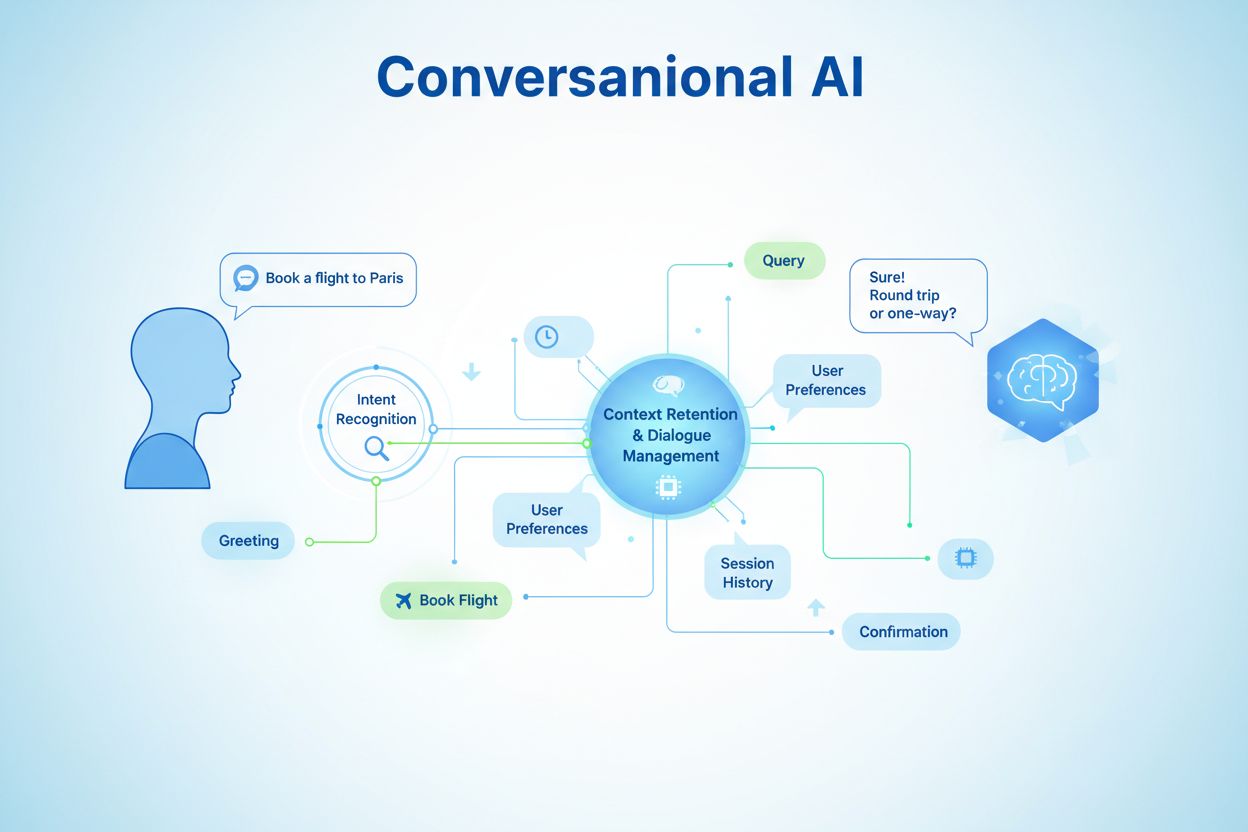
Learn how conversational content mapping aligns content structure with natural multi-turn conversation flows in AI interactions. Discover core components, imple...
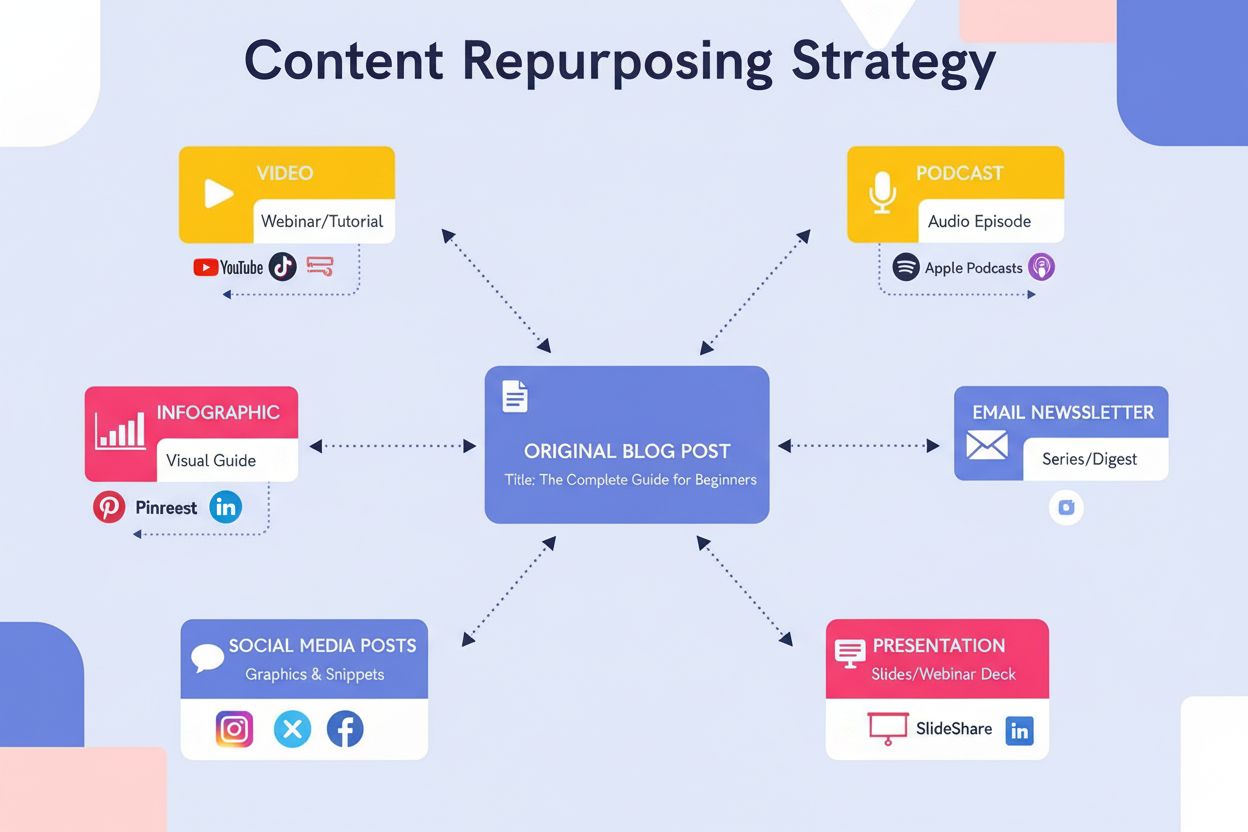
Content repurposing is the strategic practice of transforming existing content into multiple formats for new audiences. Learn how to maximize ROI and reach acro...
Cookie Consent
We use cookies to enhance your browsing experience and analyze our traffic. See our privacy policy.