
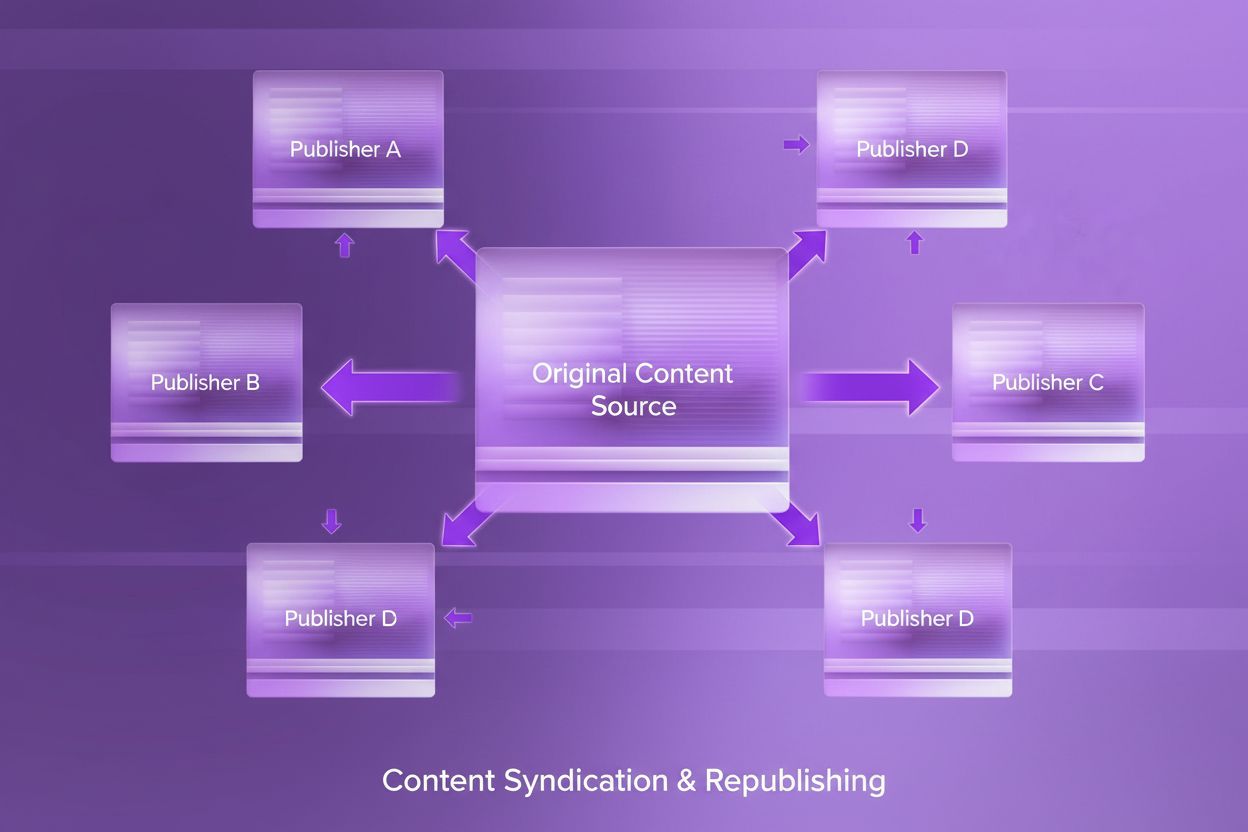
Content Syndication
Learn what content syndication is, how it works, its SEO implications, and best practices for republishing content across platforms to expand reach and generate...
12 min read
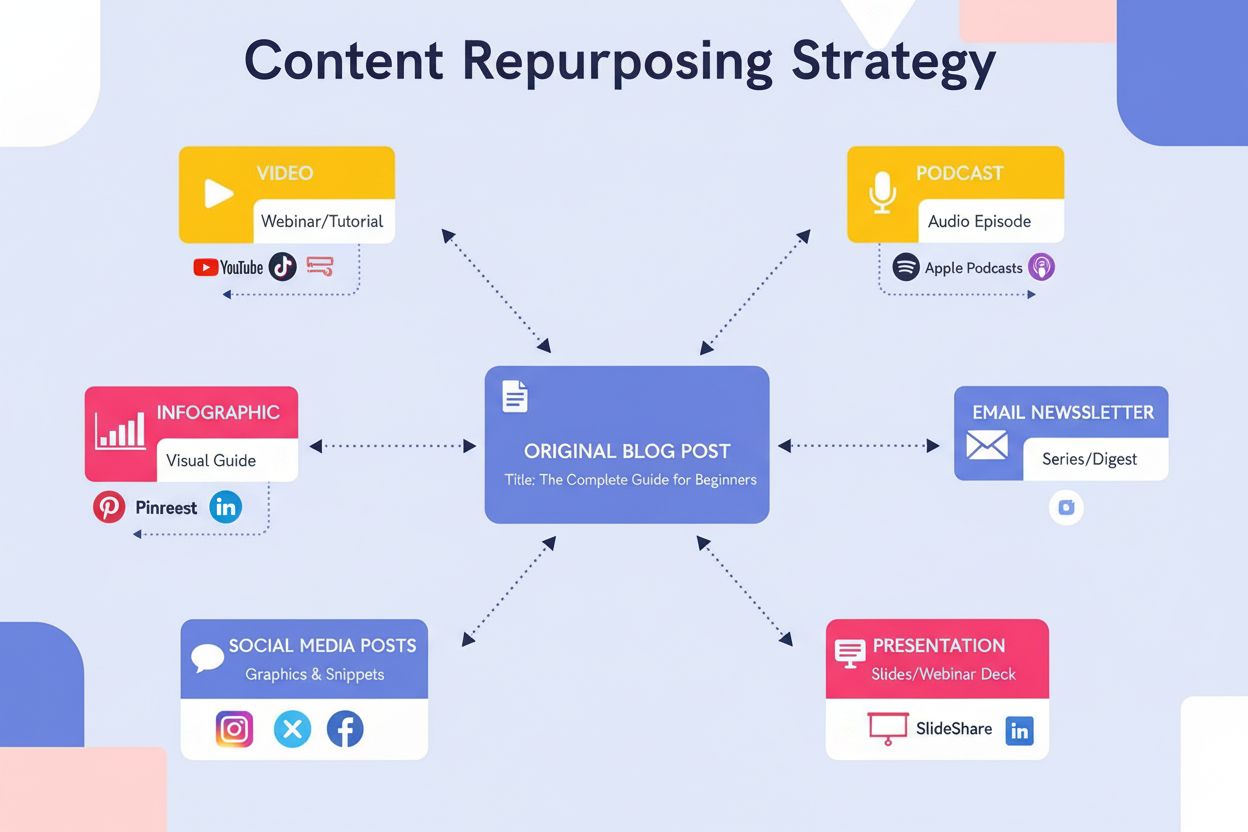
Content repurposing is the practice of adapting existing content into different formats and distributing it across multiple platforms to maximize reach and ROI. Also known as content recycling, it involves transforming a single piece of content—such as a blog post, video, or webinar—into various formats like infographics, social media posts, podcasts, and presentations to reach new audiences and extend content lifecycles.
Content repurposing is the practice of adapting existing content into different formats and distributing it across multiple platforms to maximize reach and ROI. Also known as content recycling, it involves transforming a single piece of content—such as a blog post, video, or webinar—into various formats like infographics, social media posts, podcasts, and presentations to reach new audiences and extend content lifecycles.
Content repurposing is the strategic practice of adapting existing content into different formats and distributing it across multiple platforms to maximize reach, engagement, and return on investment. Also referred to as content recycling or content syndication, this approach transforms a single piece of high-quality content—such as a blog post, video, webinar, or research report—into various formats including infographics, social media posts, podcasts, presentations, email newsletters, and case studies. Rather than creating entirely new content from scratch, organizations leverage their existing assets to reach new audiences, extend content lifecycles, and maintain consistent publishing schedules with significantly reduced effort and cost. The core principle behind content repurposing is that valuable information should not be confined to a single format or platform; instead, it should be strategically adapted to meet the preferences and technical requirements of different audience segments and distribution channels.
Content repurposing emerged as a formalized marketing strategy during the early 2010s as digital marketing matured and organizations recognized the inefficiency of the “create-publish-forget” approach. Initially, repurposing was limited to basic adaptations—converting blog posts into PDFs or republishing articles on Medium. However, the evolution of social media platforms, video streaming services, and podcast networks dramatically expanded repurposing possibilities. The rise of short-form video content on platforms like TikTok, Instagram Reels, and YouTube Shorts accelerated the adoption of repurposing strategies, as marketers discovered that audiences consumed content differently across channels. According to HubSpot’s 2025 State of Marketing Report, 48% of social media marketers now share similar or repurposed content across platforms with minor modifications, while 34% create unique content from scratch for each platform. This shift reflects a fundamental change in content strategy philosophy: quality and strategic distribution now matter more than volume. The integration of artificial intelligence tools for content transformation—such as AI transcription, summarization, and format conversion—has further democratized content repurposing, making it accessible to organizations of all sizes.
The primary advantage of content repurposing is maximizing return on investment (ROI) by extending the productive lifespan of content assets. Research indicates that 65% of marketers agree content repurposing is more affordable than creating new content, while repurposed blog posts can generate up to 106% more views than their original publication. This efficiency gain is particularly significant given that the average blog post requires over four hours to write, edit, and optimize. Beyond cost savings, content repurposing delivers several strategic benefits: it scales content production without proportional increases in team resources, reaches new audiences with different content consumption preferences, reinforces key brand messages through repeated exposure in varied formats, and improves search engine visibility by creating multiple entry points for organic discovery. For organizations focused on AI visibility and brand monitoring, content repurposing is especially valuable because it increases the number of platforms and formats where AI systems like ChatGPT, Perplexity, and Google AI Overviews can discover and cite your brand. Each repurposed piece represents an additional opportunity for your content to appear in AI-generated responses, directly impacting your share of voice in generative search results.
| Aspect | Content Repurposing | Content Syndication | Content Aggregation | Content Curation |
|---|---|---|---|---|
| Definition | Adapting existing content into different formats for new audiences | Republishing identical or near-identical content on third-party platforms | Collecting and organizing content from multiple sources | Selecting and sharing relevant third-party content with added commentary |
| Ownership | Original creator retains ownership and control | Original creator retains ownership; third-party republishes | Aggregator curates but doesn’t create original content | Curator selects existing content; doesn’t create original material |
| Format Changes | Yes—transforms into multiple formats (video, infographic, podcast, etc.) | Minimal—republishes in original or similar format | No—content remains in original format | No—content remains in original format |
| Time Investment | Moderate—requires adaptation and optimization for each platform | Low—minimal editing required for republication | Low—primarily selection and organization | Low—selection and brief commentary |
| Audience Reach | Reaches new audiences through format preferences and platform diversity | Reaches audiences on new platforms; extends reach through third-party distribution | Reaches audiences seeking curated collections | Reaches audiences interested in curator’s perspective |
| SEO Impact | Positive—creates multiple indexed pages and internal linking opportunities | Mixed—may create duplicate content issues if not properly managed | Positive—aggregated pages can rank for broad queries | Positive—curated pages can rank for discovery queries |
| Brand Control | High—maintains consistent messaging and branding across formats | High—maintains control over republished content | Medium—relies on third-party platforms for presentation | Medium—dependent on curator’s editorial choices |
| Best Use Case | Maximizing ROI from high-performing content; reaching diverse audience segments | Expanding reach through established third-party platforms; building authority | Providing comprehensive resource collections; establishing thought leadership | Building audience trust; demonstrating industry awareness |
Content repurposing operates through a systematic process of content analysis, format transformation, and platform optimization. The first stage involves identifying high-performing content through data analysis—examining Google Analytics landing pages reports, social media engagement metrics, and tools like BuzzSumo to determine which pieces resonate with audiences. Evergreen content—material that remains relevant over extended periods—is prioritized because it provides a longer window for repurposing across multiple formats without becoming outdated. Once candidate content is identified, the repurposing process begins with format transformation, where the core message and value proposition are adapted to match the technical and stylistic requirements of new formats. For example, a comprehensive blog post about SEO best practices might be transformed into: a YouTube video with screen recordings and visual demonstrations, an infographic highlighting key statistics and actionable tips, a podcast episode with audio narration and expert commentary, social media snippets featuring individual tips with custom graphics, and an email series delivering one tip per message. Each transformation requires more than simple conversion; it demands strategic adaptation to match audience expectations and platform algorithms. A blog post’s detailed explanations work well in written form, but a video requires visual storytelling, pacing, and engagement hooks. An infographic must distill complex information into scannable, visually compelling elements. A podcast episode benefits from conversational tone, personal anecdotes, and audio-friendly structure. This adaptation process is where content repurposing differs fundamentally from mere content duplication—successful repurposing creates genuinely valuable experiences for each platform’s audience rather than forcing identical content into incompatible formats.
From a business perspective, content repurposing directly addresses the challenge of content production scalability. Marketing teams face constant pressure to maintain publishing frequency across multiple channels—blogs, social media, email, video platforms, and podcasts—while managing limited budgets and personnel. Content repurposing solves this equation by allowing teams to produce more content without proportional increases in creation time. According to HubSpot research, 50% of marketers plan to increase their investment in content marketing in 2024, yet 13% of marketing leaders report that content strategy is their top challenge. Repurposing provides a practical solution to this tension: organizations can maintain aggressive publishing schedules by strategically repackaging existing assets. Beyond efficiency, repurposing delivers audience expansion benefits. Different demographic groups and psychographic segments prefer different content formats. Research shows that 73% of consumers prefer short-form video to learn about products, while others prefer reading detailed blog posts, listening to podcasts during commutes, or scanning infographics for quick insights. By repurposing content across formats, organizations reach these diverse audience segments in their preferred consumption modes. Additionally, repurposing supports brand consistency and message reinforcement. When a core message appears across multiple formats and platforms, it reinforces brand positioning and increases message retention. For organizations focused on AI visibility, repurposing is strategically critical because it multiplies the number of content pieces available for AI systems to discover and cite. Research from Semrush indicates that 71.5% of U.S. consumers use AI tools for at least some searches, and AI search visitors convert 4.4x better than traditional organic search visitors. Each repurposed piece represents an additional opportunity for your brand to appear in AI-generated responses, directly impacting your competitive position in generative search results.
Successful content repurposing requires understanding how different platforms prioritize and display content. LinkedIn favors professional, insights-driven content with industry relevance; repurposed content performs best when formatted as carousel posts, text posts with professional graphics, or video content featuring thought leadership. Instagram prioritizes visual content with strong aesthetics; repurposed blog content works best as carousel posts, Reels (short videos), or visually striking quote graphics. TikTok demands entertainment value, trend awareness, and authentic, conversational tone; repurposed content must be significantly adapted to match the platform’s culture rather than simply shortened. YouTube accommodates both long-form and short-form content; repurposed blog posts work well as detailed video essays or tutorials, while key insights can become YouTube Shorts. Email requires personalization and concise messaging; repurposed content performs best when broken into series or when key insights are highlighted with clear calls-to-action. Twitter/X demands brevity and timeliness; repurposed content should be distilled into punchy, shareable statements with relevant hashtags. Podcasts benefit from conversational tone, storytelling, and audio-friendly structure; repurposed blog content should be narrated naturally rather than read verbatim. The critical principle across all platforms is authentic adaptation: rather than forcing identical content into incompatible formats, successful repurposing transforms content to genuinely serve each platform’s audience and technical requirements. This approach not only improves engagement metrics but also signals to platform algorithms that content is native and valuable, improving distribution and visibility.
The relationship between content repurposing and AI visibility represents an emerging strategic frontier for brands. As AI systems like ChatGPT, Perplexity, Claude, and Google AI Overviews become primary discovery mechanisms for consumers, the visibility of your content in AI-generated responses directly impacts brand awareness and traffic. Content repurposing amplifies this visibility by creating multiple content assets across different formats and platforms, each representing a potential citation opportunity for AI systems. Research indicates that optimized content can gain up to 40% higher visibility in generative responses, and brand mentions across the web impact how often AI tools mention and recommend your company. When you repurpose a blog post into a video, infographic, podcast episode, and social media series, you’re not just reaching different audience segments—you’re creating multiple indexed, discoverable assets that AI systems can encounter and cite. Platforms like AmICited help organizations monitor these AI citations and track how their repurposed content appears across different AI platforms. This monitoring capability transforms content repurposing from a purely efficiency-focused tactic into a strategic component of generative engine optimization (GEO). By understanding which repurposed formats and platforms generate the most AI citations, organizations can refine their repurposing strategy to maximize visibility in AI search results. For example, if your repurposed video content generates more AI citations than your blog posts, you might prioritize video repurposing in future strategies. This data-driven approach to content repurposing represents the evolution of content marketing in the AI era.
The future of content repurposing is being shaped by artificial intelligence capabilities, changing consumer preferences, and the rise of AI search. Several emerging trends are redefining how organizations approach repurposing: AI-powered content transformation tools are becoming increasingly sophisticated, enabling automated conversion of blog posts into video scripts, infographics, and social media content with minimal human intervention. Tools like Lumen5, Descript, and AI-powered design platforms are reducing the time and skill required for format transformation. Personalization at scale is becoming possible through AI, allowing organizations to create multiple versions of repurposed content tailored to specific audience segments, demographics, or user behaviors. Short-form video dominance continues to accelerate; HubSpot data shows that short-form video is the most leveraged media format by marketers, with 29.18% incorporating it into their strategies, and 21% of marketers say short-form videos deliver the highest ROI. This trend suggests that repurposing strategies will increasingly prioritize video format transformation. AI visibility optimization is emerging as a critical consideration in repurposing strategy. As organizations recognize that AI systems are becoming primary discovery mechanisms, repurposing strategies are being designed not just for human audiences but specifically to maximize discoverability and citability by AI systems. This includes optimizing content structure, including citations and statistics, implementing schema markup, and ensuring content freshness. Omnichannel integration is becoming more sophisticated, with repurposed content being coordinated across channels to create cohesive customer journeys rather than isolated touchpoints. Authenticity and originality remain paramount; while AI tools accelerate repurposing, successful organizations are adding unique insights, original research, and authentic perspectives to repurposed content rather than simply reformatting existing material. The organizations that will thrive in content marketing are those that view repurposing not as a cost-cutting measure but as a strategic capability for reaching diverse audiences, maximizing AI visibility, and building comprehensive content ecosystems that serve multiple discovery and engagement pathways.
The primary benefit of content repurposing is maximizing return on investment (ROI) by extending the lifespan of existing content. Rather than creating new content from scratch, organizations can transform high-performing pieces into multiple formats, reaching new audiences and platforms without proportional increases in time and resources. Studies show that 65% of marketers agree content repurposing is more affordable than creating entirely new content, while repurposed blog posts can generate up to 106% more views than original publications.
Content repurposing directly impacts AI visibility by increasing the number of touchpoints where your brand appears across different platforms and formats. When content is adapted for various channels—blogs, videos, social media, podcasts—it creates more opportunities for AI systems like ChatGPT, Perplexity, and Google AI Overviews to discover and cite your brand. Platforms like AmICited help monitor these appearances across AI responses, making content repurposing a strategic component of generative engine optimization (GEO) and AI search visibility.
Evergreen content—material that remains relevant over time—is ideal for repurposing. Blog posts, whitepapers, research reports, webinars, and long-form videos are excellent candidates. According to HubSpot research, 60% of marketers reuse their content two to five times. High-performing content identified through Google Analytics, social media shares, and engagement metrics should be prioritized for repurposing to maximize the return on the original investment.
Common repurposing formats include: blog posts transformed into infographics, videos, podcasts, and social media posts; webinars converted into blog articles, email series, and short video clips; long-form videos broken into YouTube Shorts, TikTok videos, and Instagram Reels; podcasts transcribed into blog posts and email newsletters; and research reports adapted into social media graphics and presentations. The key is adapting content to match each platform's unique audience preferences and technical specifications.
Content repurposing can reduce content creation time by 50-75% compared to creating original pieces from scratch. Since the average blog post takes over four hours to write, repurposing existing content into multiple formats requires significantly less effort. Organizations report that repurposing allows teams to maintain consistent publishing schedules while reducing overall content production costs, freeing resources for strategic initiatives and higher-value creative work.
Key metrics include: engagement rates across different platforms, click-through rates, conversion rates, traffic generated from repurposed content, social media shares and comments, and audience growth. HubSpot data shows that 48% of social media marketers share repurposed content with minor adaptations, and tracking performance helps identify which formats and platforms deliver the best ROI for your specific audience and industry.
Each platform has unique audience expectations, technical specifications, and content formats. LinkedIn prefers professional, longer-form content with industry insights; Instagram favors visual, bite-sized content with hashtags; TikTok requires short, entertaining, trend-aware videos; and email demands personalized, concise messaging. Successful repurposing requires adapting tone, length, visuals, and calls-to-action to match each platform's culture and algorithm preferences rather than simply copying content across channels.
Start tracking how AI chatbots mention your brand across ChatGPT, Perplexity, and other platforms. Get actionable insights to improve your AI presence.
Learn what content syndication is, how it works, its SEO implications, and best practices for republishing content across platforms to expand reach and generate...
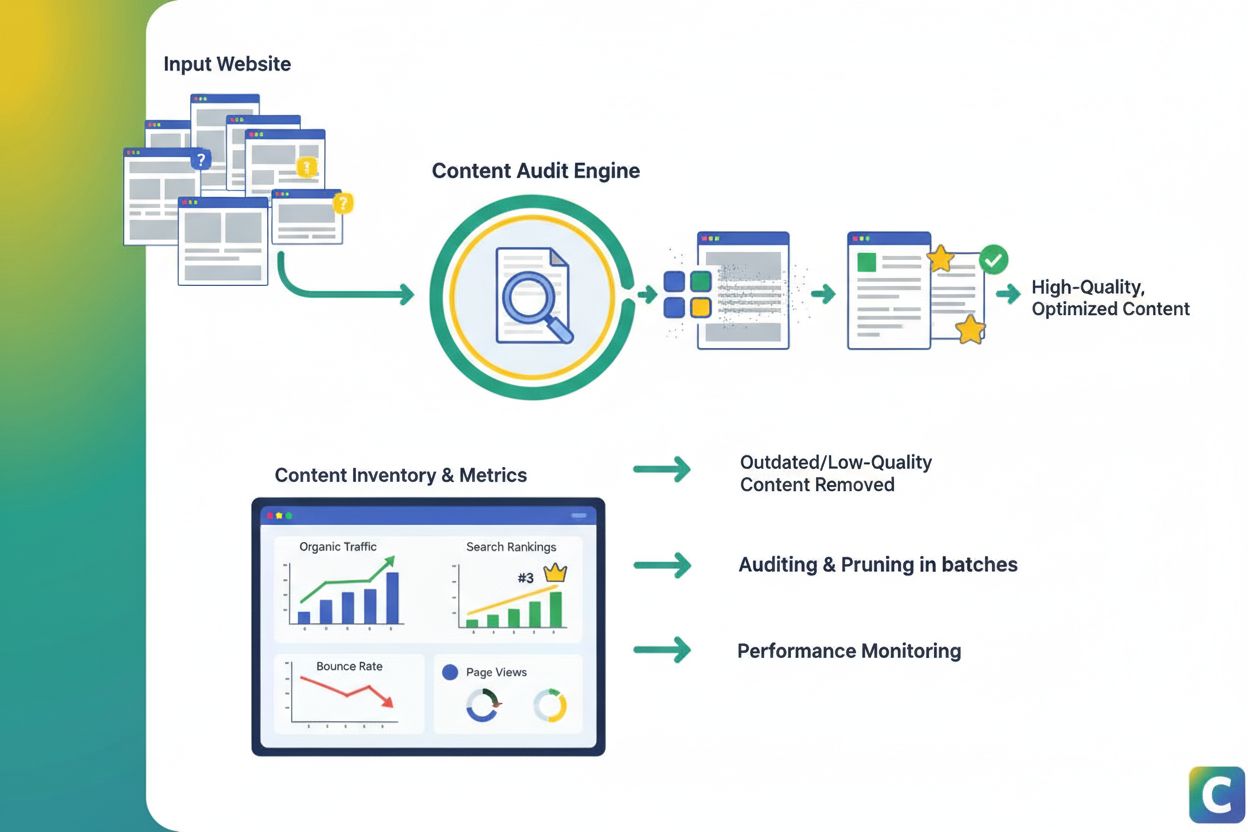
Content pruning is the strategic removal or updating of underperforming content to improve SEO, user experience, and search visibility. Learn how to identify an...
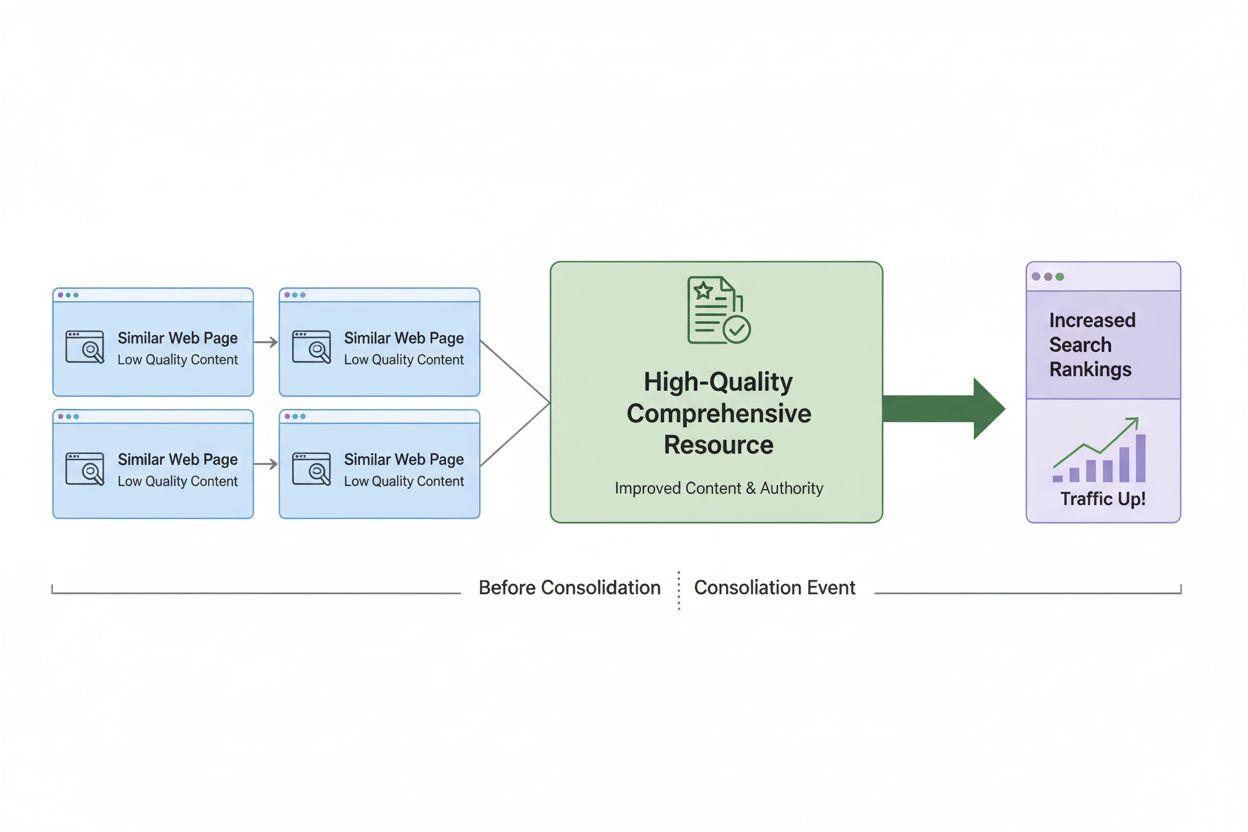
Learn what content consolidation is, how it improves SEO performance, and why merging similar content is essential for AI visibility and brand monitoring in sea...