

Content Optimization
Learn what content optimization is, why it matters for SEO and AI search engines, and discover proven techniques to improve your content's search visibility and...
10 min read
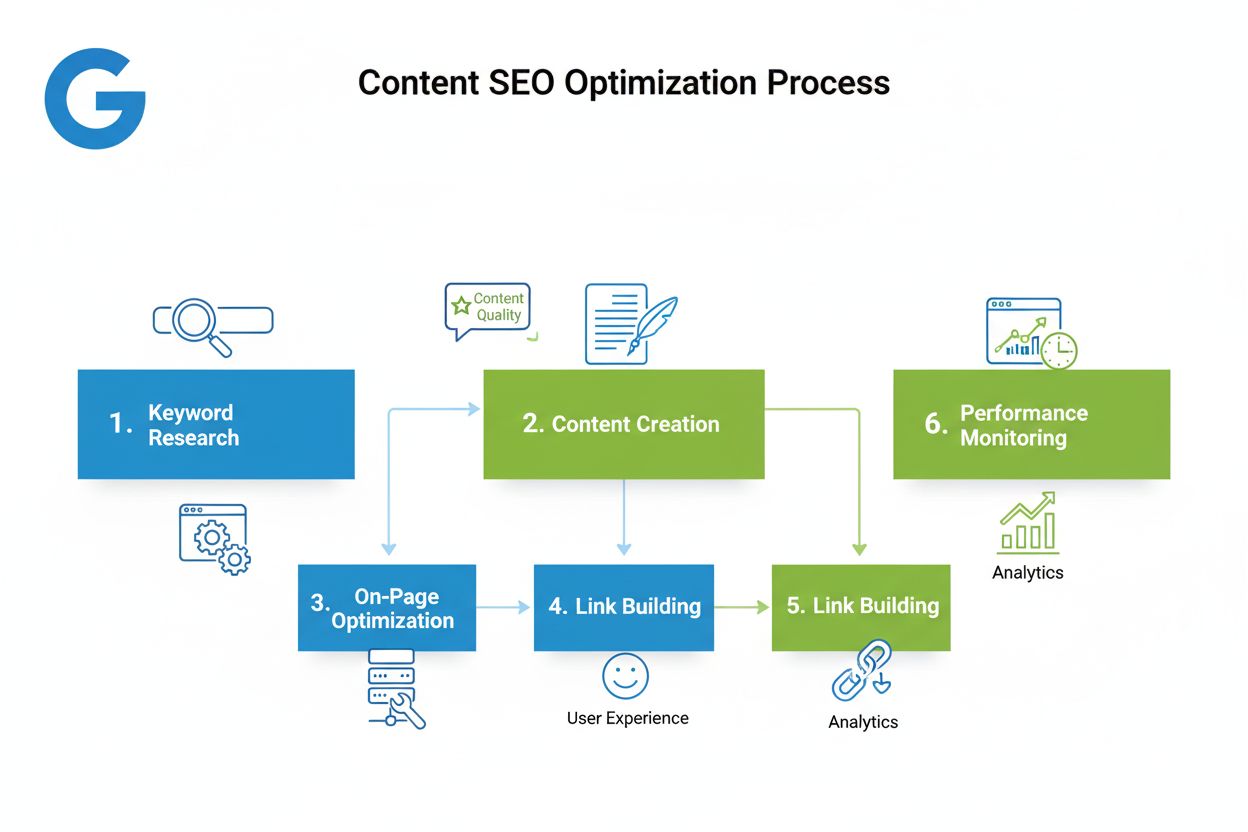
Content SEO is the strategic practice of creating, optimizing, and distributing high-quality content designed to improve a website’s visibility in search engine results pages (SERPs) and attract organic traffic. It combines keyword research, on-page optimization, technical SEO, and content quality standards to help search engines understand and rank content while meeting user search intent.
Content SEO is the strategic practice of creating, optimizing, and distributing high-quality content designed to improve a website's visibility in search engine results pages (SERPs) and attract organic traffic. It combines keyword research, on-page optimization, technical SEO, and content quality standards to help search engines understand and rank content while meeting user search intent.
Content SEO is the strategic practice of creating, optimizing, and distributing high-quality content specifically designed to improve a website’s visibility in search engine results pages (SERPs) and attract organic traffic from search engines. It represents a comprehensive approach that combines keyword research, on-page optimization, technical SEO, and content quality standards to ensure that search engines can effectively understand, index, and rank your content while simultaneously meeting the needs and search intent of your target audience. Unlike traditional SEO, which encompasses a broader range of technical and off-page factors, Content SEO places the creation and optimization of valuable, relevant content at the center of the search engine optimization strategy. This approach recognizes that search engines, particularly Google, prioritize websites that provide genuine value to users through well-researched, authoritative, and comprehensively written content that directly addresses user queries and search intent.
The concept of Content SEO has evolved significantly since the early days of search engine optimization. In the 1990s and early 2000s, SEO primarily focused on technical factors and keyword density, with marketers often employing tactics like keyword stuffing and meta tag manipulation. However, as search algorithms became more sophisticated—particularly with Google’s introduction of the Panda algorithm in 2011—the industry shifted toward recognizing content quality as a critical ranking factor. The Panda update specifically targeted low-quality, thin content and content farms, fundamentally changing how SEO professionals approached content creation. Today, Content SEO represents a mature discipline that integrates user experience, technical excellence, and strategic content planning. According to recent industry data, the global SEO market was valued at $82.3 billion in 2023 and is projected to reach $143.9 billion by 2030, growing at a compound annual growth rate (CAGR) of 8.3%, with content optimization being a primary driver of this growth. This expansion reflects the increasing recognition that quality content is not just an SEO tactic but a fundamental business asset that drives organic visibility, brand authority, and customer acquisition.
Effective Content SEO requires a systematic approach that integrates multiple interconnected components. Keyword research forms the foundation, identifying the search terms and phrases your target audience uses to find information related to your industry, products, or services. This research reveals not only search volume and competition levels but also user intent—whether people are searching for informational content, making purchase decisions, or seeking specific solutions. Content creation then builds upon this research, producing original, comprehensive, and valuable material that addresses user needs while naturally incorporating target keywords. On-page optimization involves structuring content with clear headings, meta descriptions, title tags, and internal links that help search engines understand the content’s relevance and context. Technical SEO ensures that the website infrastructure supports content visibility through fast loading speeds, mobile responsiveness, proper indexing, and structured data implementation. Finally, content distribution and promotion amplifies reach through social media, email marketing, and strategic link building, which collectively signal content quality and authority to search engines. These components work synergistically; a well-researched, beautifully written article that’s poorly optimized technically or inadequately promoted will underperform, while technically perfect content without genuine value will fail to engage users and earn natural backlinks.
| Aspect | Content SEO | Technical SEO | Link Building | User Experience (UX) Optimization |
|---|---|---|---|---|
| Primary Focus | Creating and optimizing valuable, keyword-targeted content | Website infrastructure, crawlability, indexing, and performance | Acquiring backlinks from authoritative external sources | Improving how users interact with and navigate the website |
| Key Activities | Keyword research, content creation, on-page optimization, content updates | Site speed optimization, mobile-friendliness, structured data, XML sitemaps | Outreach, guest posting, resource creation, relationship building | Usability testing, navigation design, page layout, accessibility |
| Impact on Rankings | Direct—content quality is a top-3 ranking factor | Indirect—enables proper indexing and crawling | Direct—backlinks are a top-3 ranking factor | Indirect—affects bounce rate, dwell time, and user signals |
| Timeline to Results | 6-12 months for initial ROI; 2-3 years for peak performance | Immediate to 3 months for technical fixes | 3-6 months for link acquisition to impact rankings | 1-3 months for UX improvements to affect metrics |
| Tools Used | Semrush, Ahrefs, MarketMuse, Google Keyword Planner | Google PageSpeed Insights, Screaming Frog, Google Search Console | Ahrefs, Moz, BuzzSumo, Outreach platforms | Hotjar, UserTesting, Google Analytics, Crazy Egg |
| Measurable Outcomes | Organic traffic, keyword rankings, CTR, conversion rate | Crawl efficiency, page load time, Core Web Vitals scores | Referring domains, backlink quality, domain authority | Bounce rate, dwell time, pages per session, conversion rate |
Content quality has emerged as one of Google’s top three ranking factors, alongside backlinks and technical SEO. Google’s algorithms, particularly those informed by machine learning systems like RankBrain, evaluate content quality through multiple dimensions including relevance, comprehensiveness, accuracy, and originality. High-quality content demonstrates expertise, authoritativeness, and trustworthiness (E-A-T)—factors that Google explicitly considers when evaluating pages, especially for “Your Money or Your Life” (YMYL) queries related to health, finance, and safety. Content that thoroughly covers a topic, provides unique insights, cites credible sources, and is regularly updated tends to outrank shallow, generic, or outdated content. Research shows that pages covering topics in-depth correlate with higher Google rankings, and content that includes multimedia elements like images and videos receives a 157% increase in organic traffic compared to text-only content. Furthermore, comprehensive content attracts more backlinks naturally, as other websites and content creators are more likely to reference and link to authoritative, well-researched material. This creates a virtuous cycle where quality content drives both direct ranking improvements and indirect benefits through increased link acquisition and user engagement signals.
While content quality is paramount, on-page optimization provides the technical structure that helps search engines understand and properly evaluate your content. This includes optimizing title tags (which should include your primary keyword and be compelling to users), meta descriptions (concise summaries that influence click-through rates), and header tags (H1, H2, H3) that organize content hierarchically and signal topic relevance. URL structure should be descriptive and include relevant keywords, as URLs appear in search results and help both users and search engines understand page content. Internal linking is critical—linking to other relevant pages on your site distributes authority, helps search engines discover content, and provides users with pathways to related information. Image optimization through descriptive file names, alt text, and captions ensures that visual content is discoverable and accessible. Additionally, implementing structured data markup (schema.org) helps search engines extract and understand specific information like article dates, author information, ratings, and product details, which can result in enhanced search result displays including rich snippets and featured snippets. Modern on-page optimization also considers mobile responsiveness, page load speed, and readability—factors that directly impact both user experience and search rankings. Google’s Core Web Vitals, which measure loading performance, interactivity, and visual stability, have become explicit ranking factors, making technical performance inseparable from content optimization.
One of the most critical yet often overlooked aspects of Content SEO is aligning content with search intent—understanding what users actually want when they search for a particular keyword. Search intent typically falls into four categories: informational (seeking knowledge), navigational (looking for a specific website), commercial (researching before purchase), and transactional (ready to buy or take action). Creating content that perfectly matches search intent is more important than simply targeting high-volume keywords. For example, if users searching for “best project management tools” are looking for comparison reviews and recommendations, publishing a detailed how-to guide on using a single tool will fail to satisfy their intent and result in high bounce rates. Conversely, content that directly addresses the user’s underlying need—in this case, a comprehensive comparison of multiple tools with pros, cons, and use cases—will satisfy users, reduce bounce rates, and signal quality to search engines. Google’s algorithms have become increasingly sophisticated at understanding search intent through natural language processing and machine learning, allowing the search engine to match content to user needs even when exact keyword matches aren’t present. This shift means that successful Content SEO requires deep understanding of your audience, their pain points, and the specific questions they’re trying to answer, rather than simply optimizing for keyword phrases.
Creating excellent content is only half the battle; content distribution and promotion are essential to Content SEO success. High-quality content doesn’t automatically attract links or visibility—it must be actively promoted and made discoverable. This involves sharing content across owned channels (email lists, social media, internal linking), earned channels (media coverage, influencer mentions), and paid channels (sponsored content, advertising). Strategic link building remains one of the most powerful ways to signal content authority to search engines. When other authoritative websites link to your content, they’re essentially vouching for its quality and relevance. However, modern link building has evolved beyond aggressive outreach tactics; it now focuses on creating genuinely valuable, linkable content that naturally attracts citations and references. This might include original research, comprehensive guides, interactive tools, or unique data visualizations that other content creators want to reference. The quality of backlinks matters far more than quantity—a single link from a highly authoritative, topically relevant website is worth more than dozens of links from low-quality sources. Additionally, brand signals have become increasingly important; Google monitors branded search volume, social media mentions, and direct traffic as indicators of a site’s legitimacy and authority. Building a recognizable brand that people search for directly and mention across the web creates a positive feedback loop that reinforces content rankings and visibility.
Effective Content SEO requires systematic measurement and optimization based on data-driven insights. Key performance indicators (KPIs) include organic traffic (the number of visitors arriving from search engines), keyword rankings (positions for target keywords in search results), click-through rate (CTR—the percentage of searchers who click your result), conversion rate (the percentage of visitors who complete desired actions), and return on investment (ROI). Beyond these primary metrics, content-specific measurements include pages indexed (how many of your pages search engines have added to their index), featured snippet appearances (when your content appears in Google’s answer boxes), and backlink profile quality (the authority and relevance of sites linking to you). User engagement metrics like dwell time (how long users spend on your page), bounce rate (the percentage who leave without taking action), and pages per session (how many pages users view) provide indirect signals of content quality and relevance. Industry data shows that positive ROI from Content SEO campaigns typically emerges within 6-12 months, with peak results achieved in the second or third year of consistent effort. This extended timeline reflects the reality that building topical authority, earning quality backlinks, and establishing brand recognition require sustained investment. Tools like Google Search Console, Google Analytics, Ahrefs, and Semrush provide the data infrastructure needed to track these metrics and identify optimization opportunities.
The emergence of AI-powered search platforms like ChatGPT, Perplexity, Google AI Overviews, and Claude has created a new dimension for Content SEO strategy. These AI systems rely on training data that includes content from across the web, and they increasingly cite and reference specific sources in their responses. This means that high-quality, authoritative content optimized for traditional search engines is also more likely to be cited by AI systems, extending the value of Content SEO efforts. However, the dynamics differ from traditional search—AI systems may cite content without driving direct traffic, and they may synthesize information from multiple sources rather than directing users to a single page. This has led to the emergence of Generative Engine Optimization (GEO) and AI visibility monitoring, where brands track how often their content appears in AI-generated responses across different platforms. Tools like AmICited specifically monitor brand and content visibility across AI search platforms, helping organizations understand their presence in this evolving landscape. For Content SEO practitioners, this means creating content that not only ranks well in traditional search but also establishes clear authorship, provides original insights, and demonstrates expertise—factors that make content more likely to be cited by AI systems. The integration of AI search monitoring into Content SEO strategy represents an important evolution, as brands must now optimize for both human searchers and AI systems that synthesize and cite content.
Implementing an effective Content SEO strategy requires a structured, repeatable process. The first step is audience research and persona development—understanding who your target customers are, what problems they’re trying to solve, and how they search for solutions. This informs comprehensive keyword research that identifies not just high-volume keywords but also long-tail variations, question-based queries, and keywords aligned with different stages of the customer journey. Next, content planning and gap analysis involves mapping out topics you should cover, identifying gaps in your current content, and prioritizing topics based on search volume, competition, and business relevance. Content creation should follow a structured brief that includes target keywords, search intent, content structure, and quality standards. During the optimization phase, content is refined for on-page SEO factors, readability, and user experience before publication. Content promotion involves distributing the content across owned, earned, and paid channels to maximize visibility and attract initial traffic and links. Finally, ongoing monitoring and optimization tracks performance metrics and identifies opportunities to update, refresh, or repurpose content. This cyclical process—research, create, optimize, promote, measure, and iterate—ensures that Content SEO efforts compound over time, building topical authority and organic visibility. Organizations that treat Content SEO as a continuous discipline rather than a one-time project achieve significantly better long-term results and ROI.
The landscape of Content SEO continues to evolve in response to technological advances and changing user behavior. Artificial intelligence and machine learning are increasingly being used to assist with content research, outline generation, and optimization recommendations, though human expertise and original insights remain essential for creating truly valuable content. Voice search and conversational queries are growing in importance, requiring content to be optimized for natural language and question-based searches rather than just keyword phrases. Zero-click content and AI-generated answers mean that some users may get answers directly from search results without clicking through to websites, requiring content to provide value even when not visited directly. Entity-based SEO focuses on establishing clear relationships between concepts and entities, helping search engines understand not just keywords but the semantic meaning and context of content. Topical authority is becoming more important than individual keyword rankings—Google increasingly rewards websites that comprehensively cover entire topic areas rather than scattered, unrelated content. Additionally, the integration of AI search visibility monitoring into standard SEO practice means that brands must now optimize for visibility across multiple search platforms simultaneously. Looking forward, successful Content SEO will require balancing traditional search engine optimization with emerging AI search platforms, maintaining focus on genuine user value and expertise, and continuously adapting to algorithmic changes and user behavior shifts. Organizations that view Content SEO as a strategic, long-term investment in building authority and serving their audience will be best positioned to maintain and grow organic visibility in an increasingly competitive digital landscape.
Content SEO specifically focuses on creating and optimizing content as the primary vehicle for search engine optimization, while traditional SEO encompasses a broader range of technical and off-page factors. Content SEO emphasizes high-quality, relevant, and user-focused content creation combined with keyword optimization, whereas traditional SEO includes technical elements like site speed, mobile-friendliness, and backlink building. Both approaches are complementary and essential for comprehensive search engine visibility.
According to industry data, positive ROI from Content SEO campaigns typically appears within a 6-12 month period, with peak results often achieved in the second or third year of consistent effort. The timeline depends on factors including content quality, keyword competitiveness, domain authority, and the consistency of publishing. Fresh content may see initial indexing within days, but ranking improvements for competitive keywords require sustained optimization and link building efforts over time.
Keyword research is foundational to Content SEO as it identifies the search terms and phrases your target audience uses to find information. Effective keyword research reveals search volume, competition levels, and user intent, allowing you to create content that matches what people are actively searching for. This research informs content topics, structure, and optimization strategies, ensuring your content addresses real user needs and has the potential to rank in search results.
Content SEO directly impacts how your brand appears in AI-powered search platforms like ChatGPT, Perplexity, and Google AI Overviews. High-quality, authoritative content optimized for search engines is more likely to be cited and referenced by AI systems. Tools like AmICited monitor where your content appears across AI responses, helping you understand your brand's visibility in this emerging search landscape and adjust your content strategy accordingly.
Essential Content SEO metrics include organic traffic, keyword rankings, click-through rate (CTR), bounce rate, dwell time, conversion rate, and backlink profile quality. Additionally, track content-specific metrics like pages indexed, featured snippet appearances, and engagement signals such as comments and social shares. These metrics collectively indicate whether your content is being discovered, attracting qualified visitors, and delivering business value.
Content length correlates with SEO success, with data showing that longer, comprehensive content receives 77.2% more backlinks compared to shorter articles. However, length alone doesn't guarantee rankings—content must be high-quality, relevant, and thoroughly cover the topic. The average first-page Google result contains approximately 1,400 words, but the focus should be on providing complete, valuable information that satisfies user search intent rather than arbitrary word counts.
Content SEO and UX are deeply interconnected, as Google's algorithms increasingly prioritize how users interact with content. Factors like page load speed, mobile responsiveness, readability, and intuitive navigation directly impact both rankings and user satisfaction. Content must be well-formatted with clear headings, short paragraphs, and multimedia elements to enhance readability. Poor UX signals like high bounce rates and low dwell time can negatively impact rankings, making user-centric design essential to Content SEO success.
Start tracking how AI chatbots mention your brand across ChatGPT, Perplexity, and other platforms. Get actionable insights to improve your AI presence.
Learn what content optimization is, why it matters for SEO and AI search engines, and discover proven techniques to improve your content's search visibility and...
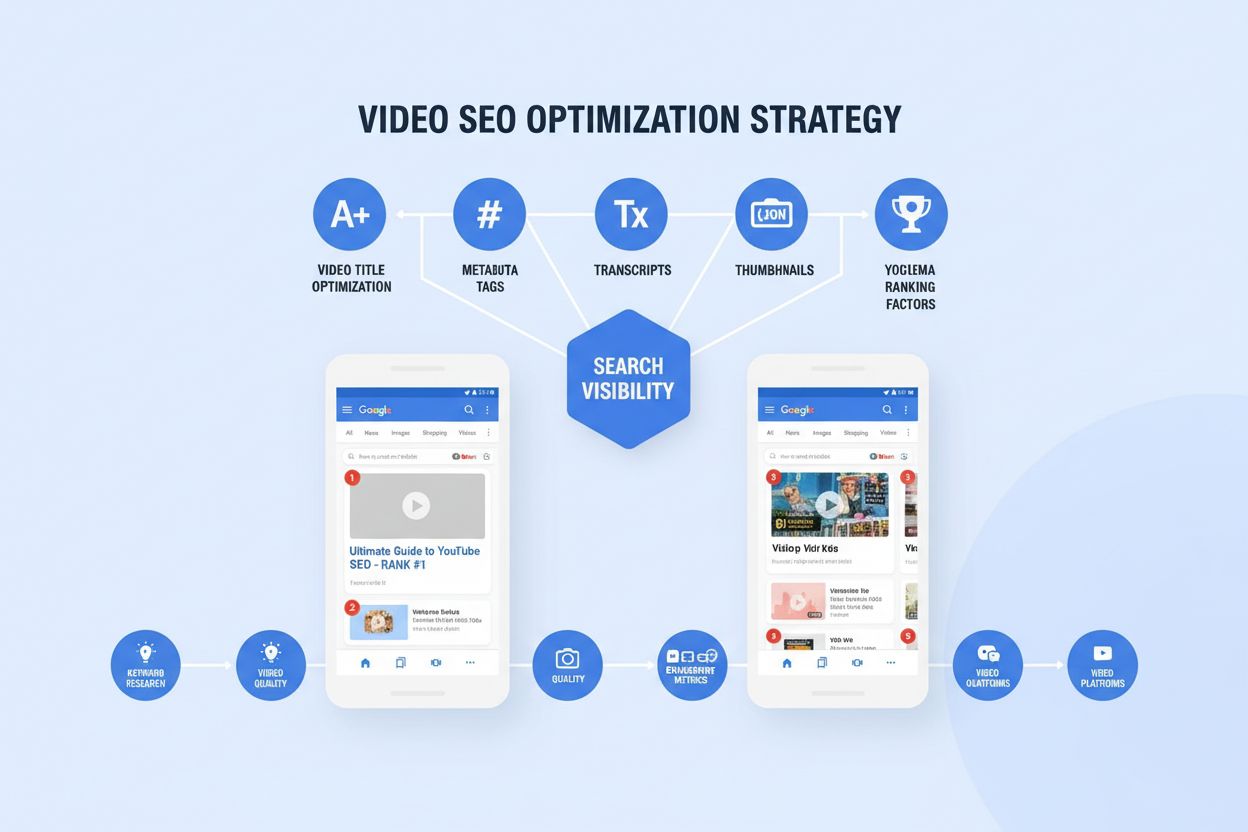
Learn what Video SEO is and how to optimize video content for search engines. Discover best practices for ranking videos on Google, YouTube, and AI Overviews.
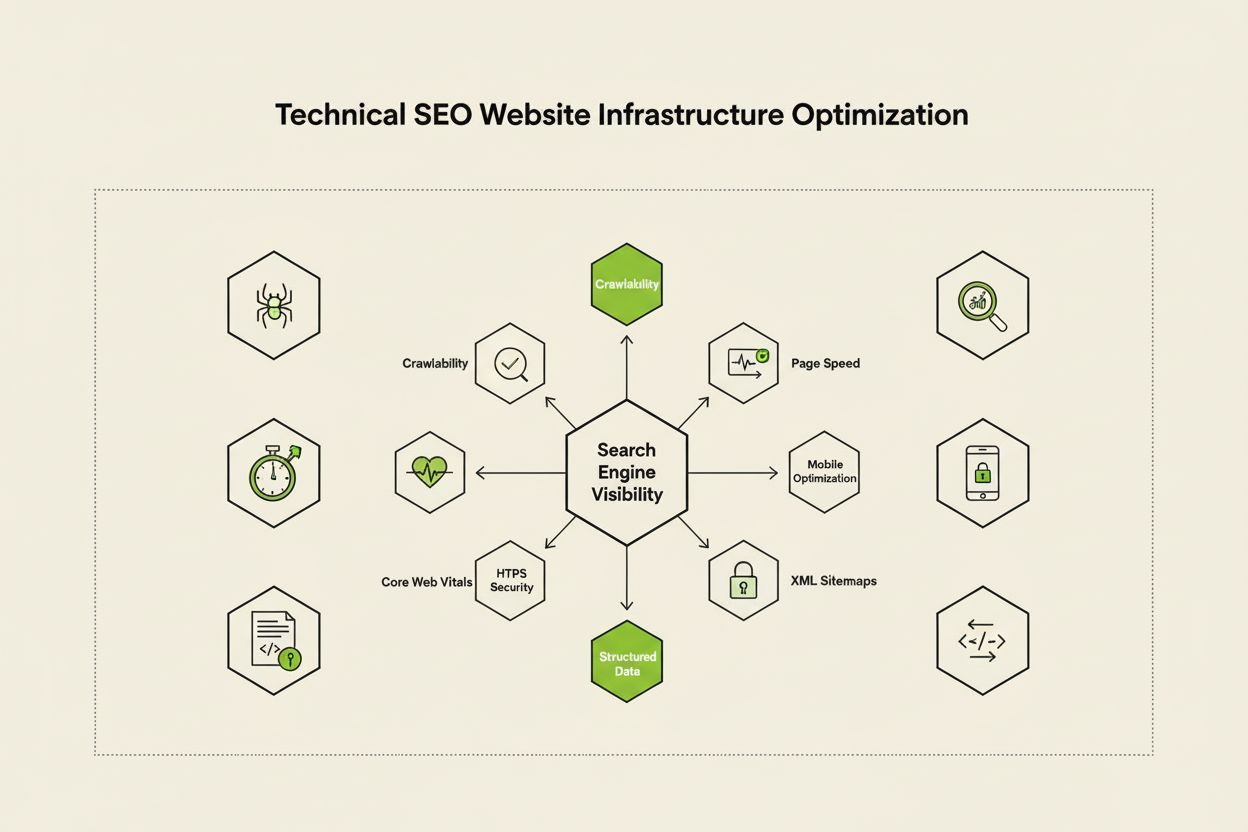
Technical SEO optimizes website infrastructure for search engine crawling, indexing, and ranking. Learn crawlability, Core Web Vitals, mobile optimization, and ...
Cookie Consent
We use cookies to enhance your browsing experience and analyze our traffic. See our privacy policy.