
Content Velocity for AI: How Much to Publish
Learn optimal content velocity for AI publishing. Discover how much content to publish, best frequencies by platform, and strategies to scale without sacrificin...
9 min read
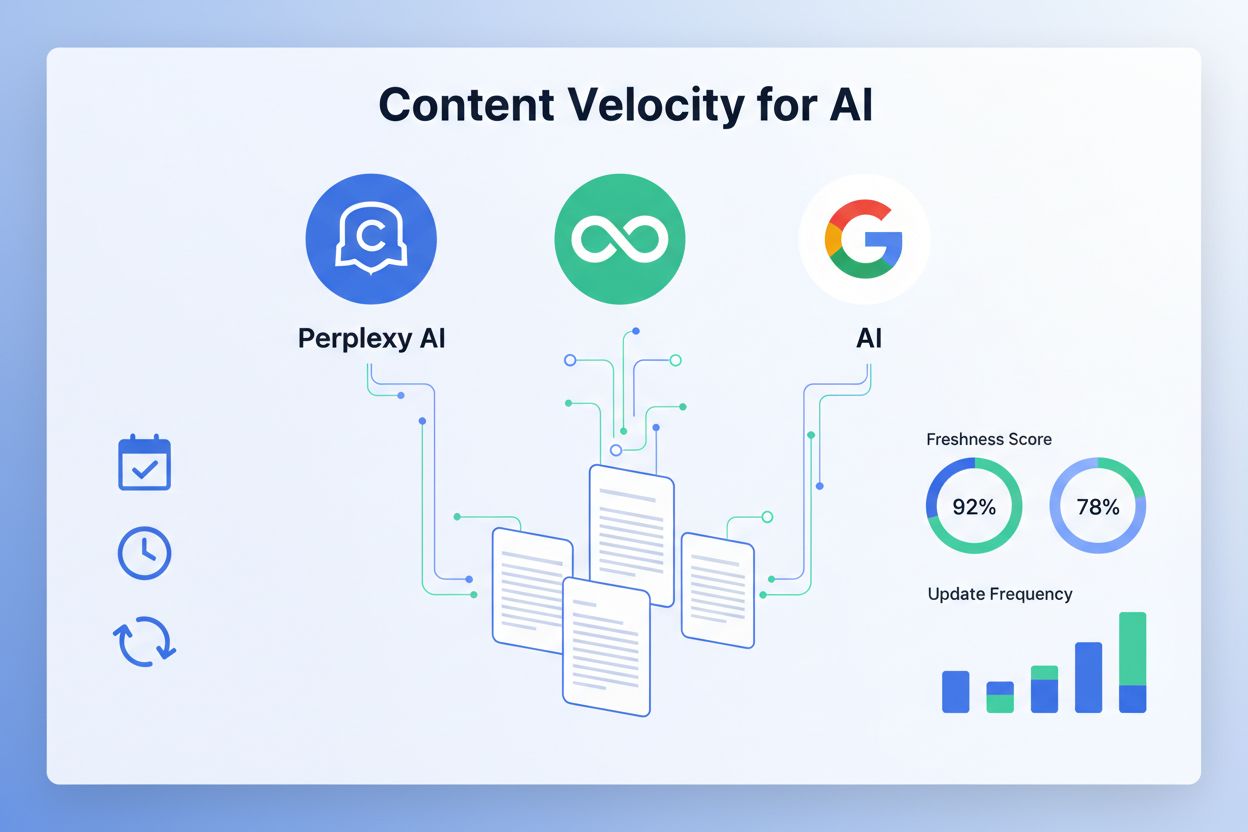
Publishing cadence optimized for AI system preferences and freshness signals. Content Velocity for AI refers to the speed at which fresh, updated content is published and distributed to reach AI systems, language models, and search engines. Unlike traditional content velocity focused on human audience engagement, AI-focused velocity emphasizes how quickly new information reaches AI crawlers and influences citation decisions in AI Overviews and generated responses.
Publishing cadence optimized for AI system preferences and freshness signals. Content Velocity for AI refers to the speed at which fresh, updated content is published and distributed to reach AI systems, language models, and search engines. Unlike traditional content velocity focused on human audience engagement, AI-focused velocity emphasizes how quickly new information reaches AI crawlers and influences citation decisions in AI Overviews and generated responses.
Content Velocity for AI refers to the speed at which fresh, updated content is published and distributed to AI systems, fundamentally differing from traditional content velocity metrics that focus on human audience engagement. While conventional content velocity measures publishing frequency and audience reach, AI-focused content velocity emphasizes how quickly new information reaches AI crawlers, indexers, and language models that power search results and AI-generated responses. This distinction matters critically because AI systems increasingly rely on recency signals to determine which sources to cite, quote, and feature in AI Overviews and generated responses, making publication speed a direct ranking factor for AI visibility.
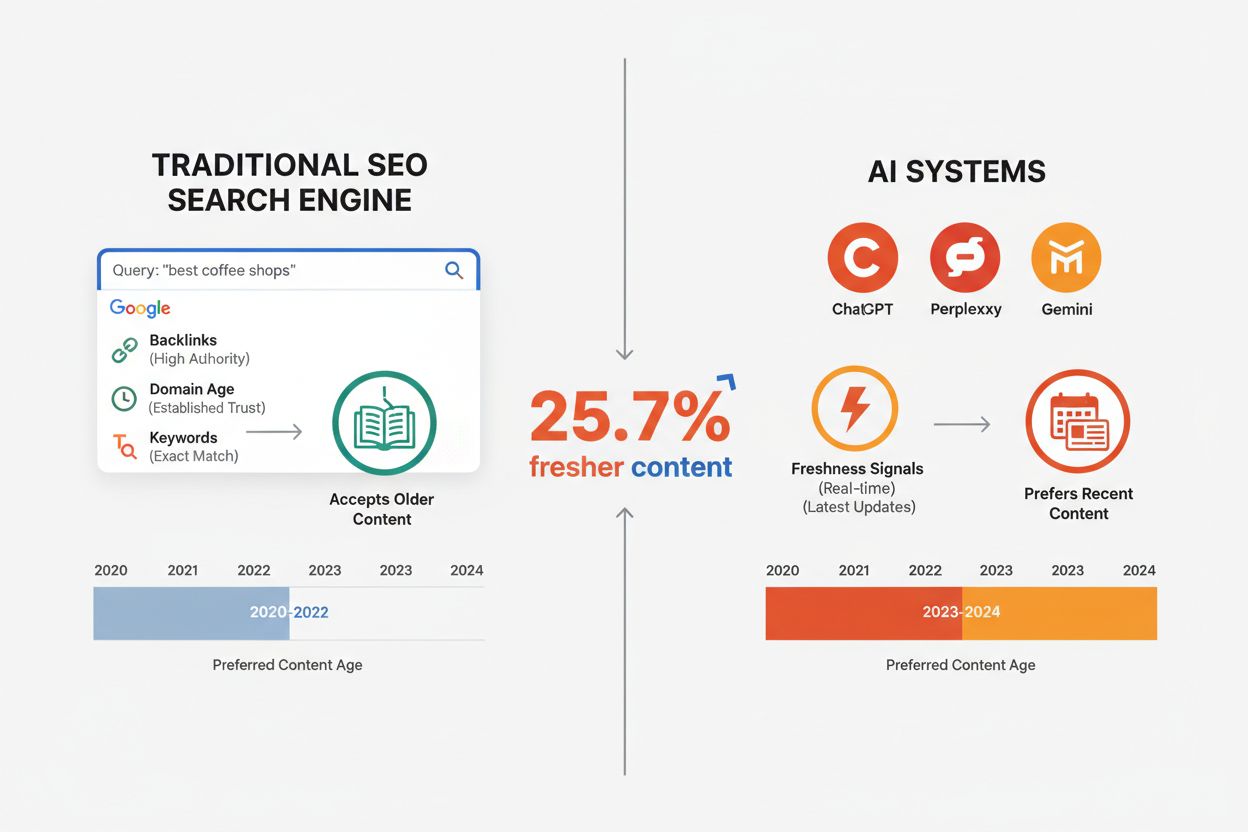
AI systems demonstrate a measurable preference for fresh content, with research showing that 25.7% fresher content receives significantly higher citation rates in AI-generated responses compared to older sources. The Query Deserves Freshness (QDF) concept, originally developed for search engines, has evolved to become even more critical for AI systems like ChatGPT, Perplexity, and Google’s Gemini, which explicitly weight recency in their training data and retrieval mechanisms. Studies indicate that over 70% of pages cited by ChatGPT were updated within the past year, demonstrating that AI systems actively favor recently modified content. In healthcare specifically, 30%+ of cited content comes from sources updated within the last 90 days, reflecting the critical importance of current information in medical AI applications. This preference extends across industries—fintech companies see citation boosts when publishing market updates within hours of events, while SaaS platforms gain visibility by maintaining current feature documentation and pricing pages.
Content Velocity for AI operates across three interconnected dimensions that together determine how effectively content reaches and influences AI systems:
These dimensions interact dynamically—high volume without proper pacing creates bottlenecks, while fast pacing of low-volume content fails to establish authority. The most effective content velocity strategies balance all three dimensions, ensuring consistent publication of optimized content that reaches AI systems quickly. Organizations that excel at managing these dimensions see measurable improvements in AI citation rates and visibility across multiple AI platforms simultaneously.
Different content categories require distinct publishing cadences to maintain optimal AI visibility and citation potential:
| Content Type | Recommended Cadence | Primary Goal |
|---|---|---|
| Crypto/Blockchain | Daily to multiple times daily | Capture breaking news and market movements |
| SaaS/Product Updates | 2-4 times weekly | Maintain feature currency and competitive positioning |
| AI/Technology News | Daily | Establish authority in fast-moving sector |
| Healthcare/Medical | Weekly to bi-weekly | Balance freshness with accuracy and review requirements |
| Marketing/Industry Insights | 1-2 times weekly | Provide timely strategic guidance |
| Legal/Compliance | Monthly to quarterly | Ensure accuracy while maintaining freshness |
| Historical/Reference | Quarterly reviews | Update statistics and maintain relevance |
High-velocity content types like cryptocurrency and SaaS require near-real-time publishing to capture AI citations, as these sectors experience rapid changes that AI systems actively monitor. Medium-velocity content in healthcare and marketing balances the need for freshness with the requirement for accuracy and expert review. Low-velocity content in legal and historical domains prioritizes accuracy and comprehensiveness over speed, though even these categories benefit from periodic updates to refresh metadata and internal linking structures.
AI systems detect and prioritize content freshness through multiple technical and semantic signals that extend beyond simple publication dates. Last-Modified HTTP headers and dateModified schema markup provide explicit freshness signals that AI crawlers use to determine when content was last updated, with more recent modifications receiving higher weight in citation decisions. Recency of statistics and data points within content serves as an implicit freshness signal—AI systems recognize when articles reference current-year data versus outdated statistics, automatically downweighting older information. Recrawl frequency patterns signal to AI systems that content is actively maintained; pages crawled multiple times weekly receive higher freshness scores than pages crawled monthly. New entity mentions and emerging topic coverage indicate that content creators are actively monitoring their field and adding relevant new information. Internal linking patterns that connect new content to existing resources signal comprehensive, interconnected knowledge bases that AI systems reward with higher citation frequency.
Content velocity directly correlates with measurable improvements in AI citations and visibility metrics, with organizations implementing comprehensive velocity strategies seeing 325% increases in AI citations within six months. Fresh content receives preferential treatment in AI Overview inclusion, with Google’s AI Overviews citing recently updated sources at rates 8-34% higher than static content. Earned media distribution amplifies content velocity benefits—fresh, timely content attracts more backlinks and social shares, which AI systems use as secondary freshness signals. Organizations in competitive industries like fintech and healthcare report that maintaining weekly or more frequent publishing cadences directly correlates with appearing in AI-generated responses, while competitors publishing monthly see dramatic visibility declines. The competitive advantage compounds over time; brands that establish consistent content velocity patterns become “trusted fresh sources” in AI systems’ training data, receiving citation preference even when competitors publish similar information.
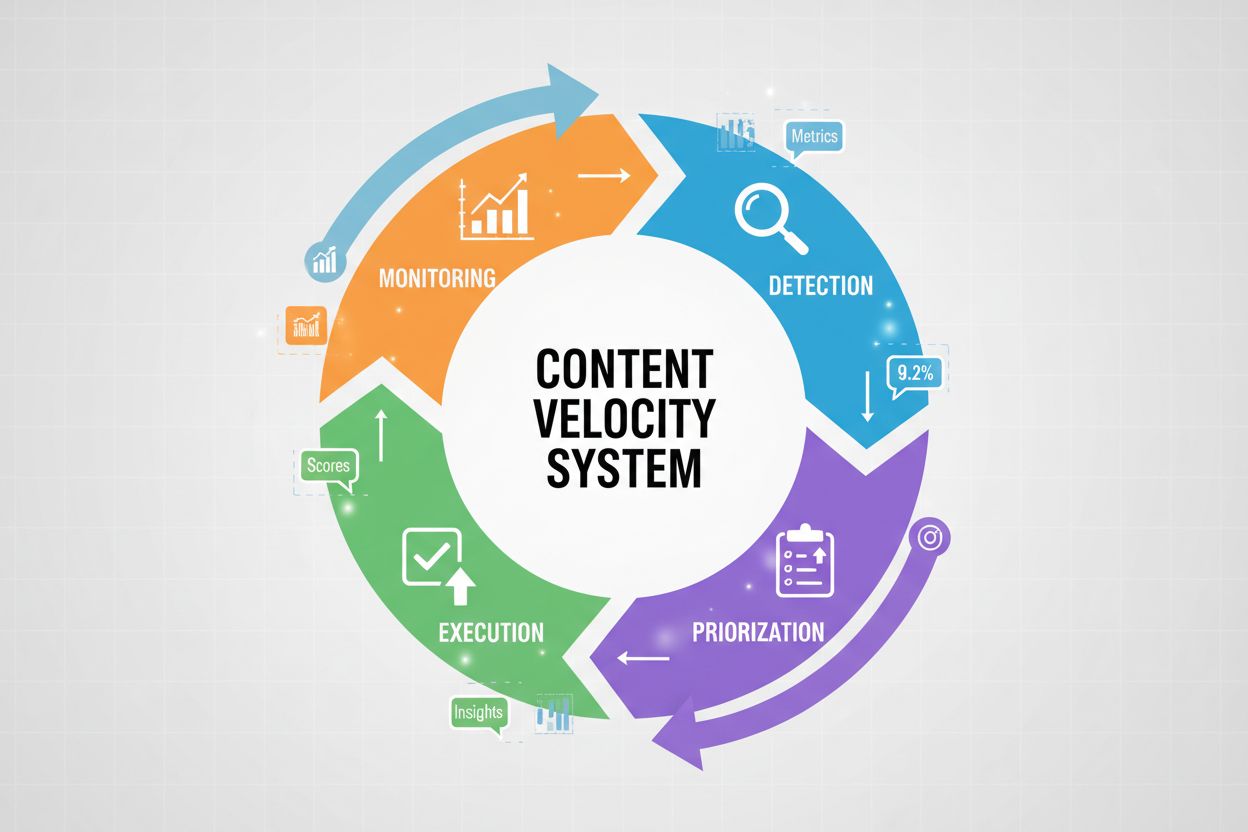
Implementing effective content velocity requires a structured system with four interconnected components that work together to maximize AI visibility:
The most successful organizations automate detection and monitoring while maintaining human oversight of prioritization and execution quality. This hybrid approach allows teams to publish at AI-required speeds without sacrificing content quality or accuracy. Implementation typically requires cross-functional collaboration between editorial, technical SEO, and data teams to ensure content moves efficiently through the entire value chain.
AmICited.com has emerged as the leading platform for monitoring how AI systems cite your content and tracking the effectiveness of content velocity strategies across multiple AI platforms simultaneously. The platform tracks freshness signals including publication dates, update frequency, and recency of data points, providing dashboards that show how AI systems perceive your content’s timeliness. AmICited measures citation lift by comparing your citation rates before and after implementing velocity improvements, with clients typically seeing 200-400% increases in tracked citations. The platform enables competitive benchmarking, allowing organizations to compare their publishing cadence and citation rates against direct competitors, revealing gaps in velocity strategy. AmICited integrates with major AI platforms including ChatGPT, Perplexity, Google AI Overviews, and Gemini, providing unified visibility into how each system treats your fresh content. Organizations using AmICited report that the platform’s insights drive 40-60% improvements in content velocity ROI by identifying which content types and publishing frequencies generate the highest AI citation returns.
Organizations frequently undermine their content velocity efforts through preventable strategic and tactical mistakes that reduce AI visibility and citation potential:
The most damaging mistake combines multiple errors—publishing high-volume content quickly without quality control, failing to track results, and never updating existing content—creating the appearance of activity without generating meaningful AI visibility improvements.
Content velocity refers to the publishing cadence and speed at which new content is created and distributed, while content freshness describes how recent and up-to-date content appears to AI systems. Content velocity is the strategy and pace of publishing, whereas freshness is the signal AI systems detect from that published content. Both work together—high velocity without freshness signals wastes effort, while fresh content published infrequently misses AI citation opportunities.
Update frequency depends on your content type and industry. High-velocity topics like cryptocurrency and SaaS require daily to multiple-times-weekly updates. Medium-velocity content in healthcare and marketing benefits from weekly to bi-weekly updates. Low-velocity content in legal and historical domains can maintain quarterly reviews. The key is consistency—AI systems reward predictable update patterns more than sporadic bursts of activity.
No, strategic content updates with proper implementation actually improve both SEO and AI visibility. When you update content with fresh statistics, new examples, and improved structure while maintaining the original URL and using proper schema markup, search engines and AI systems recognize the improvement. The key is updating for quality and relevance, not just changing dates artificially.
Use AI monitoring platforms like AmICited.com to track citations before and after implementing velocity improvements. Monitor metrics including citation frequency across AI platforms, AI Overview inclusion rates, and citation lift percentages. Compare your citation rates against competitors publishing at different velocities. Most organizations see 200-400% citation increases within 6 months of implementing structured content velocity strategies.
Fresh content distributed across multiple trusted publisher outlets sees significantly higher AI citation rates—up to 325% improvement compared to content published only on brand domains. AI systems view content appearing on multiple authoritative sources as more trustworthy and cite it more frequently. Earned media distribution amplifies content velocity benefits by creating multiple touchpoints for AI systems to discover and validate your information.
Yes, automation is essential for maintaining high content velocity at scale. Use CMS automation for scheduling, AI-assisted drafting tools like FlowHunt.io for rapid content creation, workflow systems for moving content through approval stages, and monitoring tools for detecting decay signals. However, maintain human oversight of quality, accuracy, and strategic alignment—automation handles speed while humans ensure quality.
All major AI systems (ChatGPT, Perplexity, Google AI Overviews, Gemini) favor fresh content, but they weight freshness signals differently. ChatGPT heavily favors content updated within the past year, Perplexity emphasizes very recent updates (past 3 months), and Google AI Overviews balance freshness with traditional SEO authority. Monitor your citations across all platforms to understand which velocity strategy works best for your specific audience and content type.
Organizations implementing structured content velocity strategies typically see 200-400% increases in AI citations, 40-60% improvements in AI Overview inclusion, and measurable increases in organic traffic from AI-driven discovery. The ROI compounds over time as you establish authority as a 'fresh source' in AI systems' training data. Most organizations recover their velocity investment within 3-6 months through increased visibility and traffic.
Track how your content velocity strategy affects AI citations across ChatGPT, Perplexity, Google AI Overviews, and other AI systems. Get real-time insights into freshness signals and citation lift.
Learn optimal content velocity for AI publishing. Discover how much content to publish, best frequencies by platform, and strategies to scale without sacrificin...

Understand how AI models prioritize content freshness. Learn citation patterns from ChatGPT, Perplexity, and Google AI Overviews, industry variations, and strat...
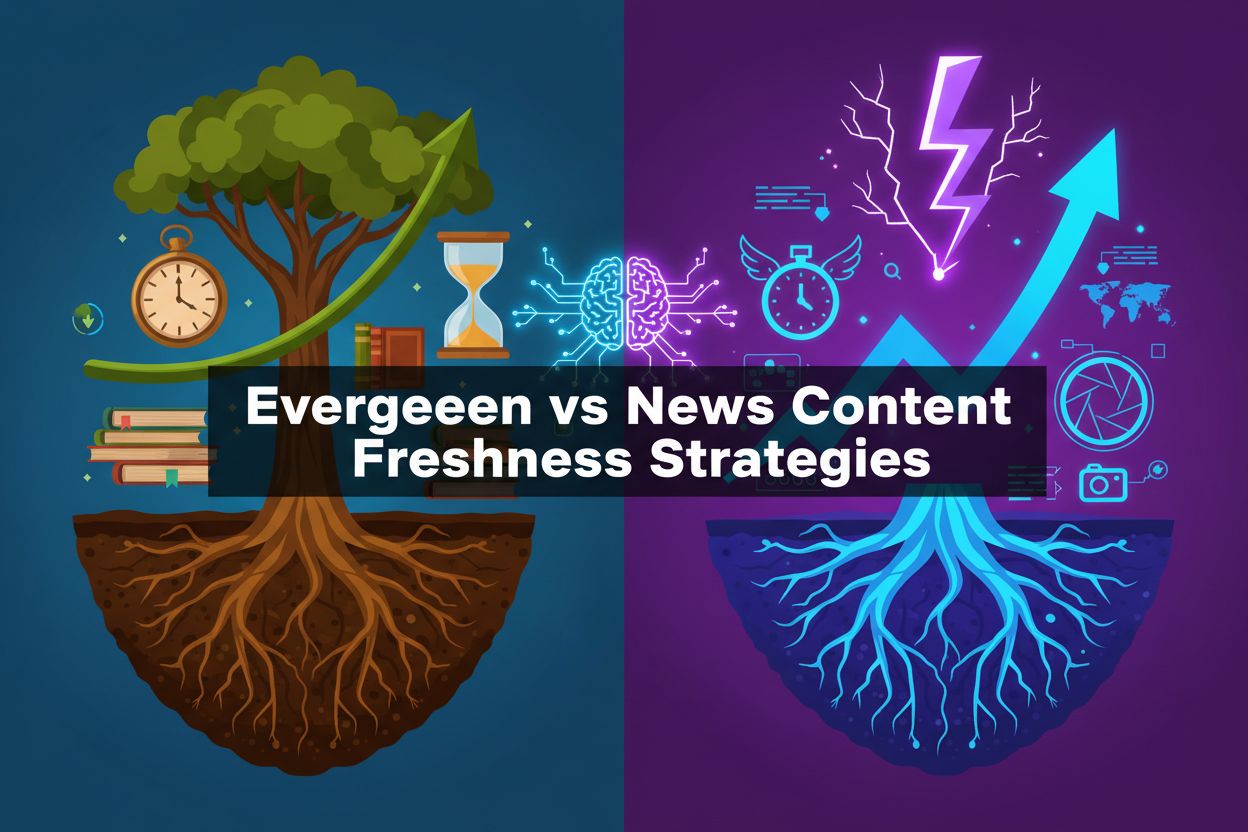
Learn how to balance evergreen and news content for maximum AI visibility. Discover freshness strategies that work with ChatGPT, Gemini, and Perplexity.
Cookie Consent
We use cookies to enhance your browsing experience and analyze our traffic. See our privacy policy.