

Google Algorithm Update
Learn what Google Algorithm Updates are, how they work, and their impact on SEO. Understand core updates, spam updates, and ranking changes.
13 min read
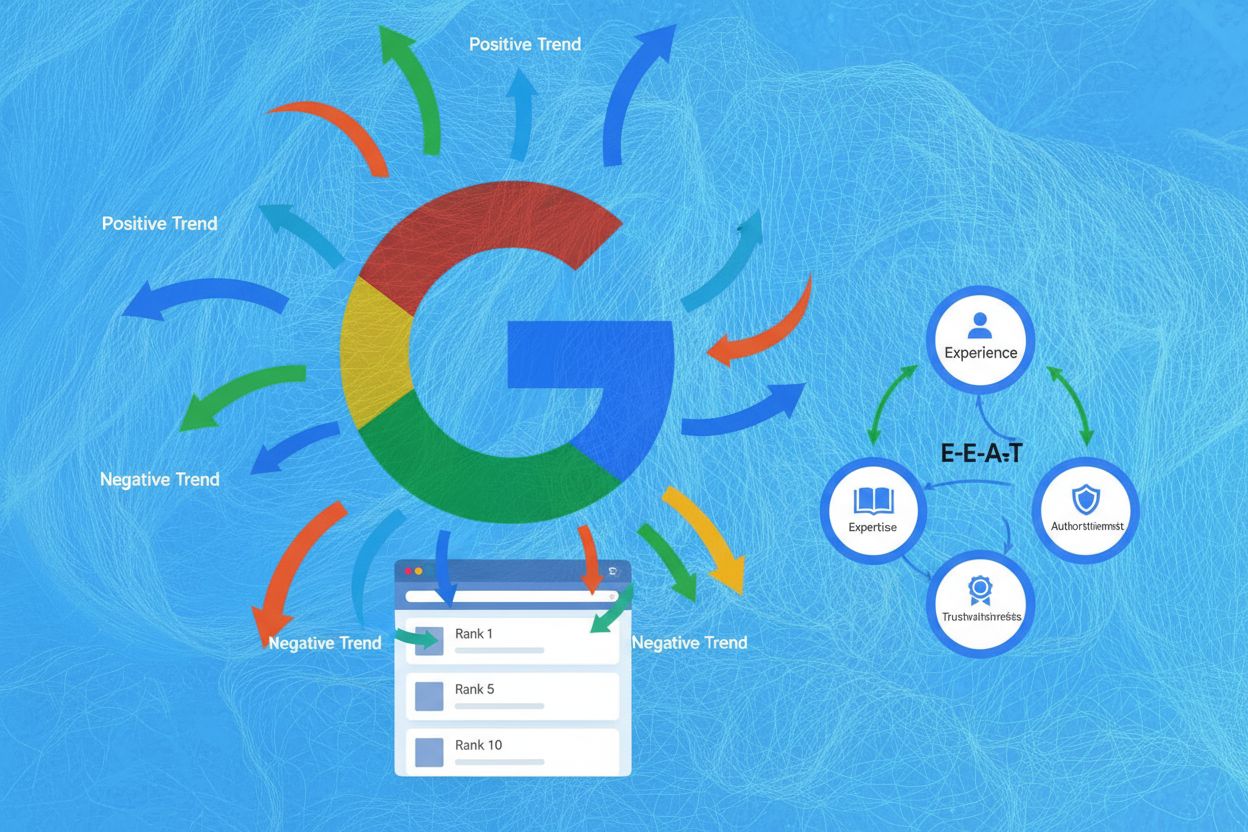
A Core Update is a broad, significant change to Google’s search algorithm that affects how the search engine evaluates and ranks content across the entire web. These updates are designed to improve the overall quality, relevance, and usefulness of search results by reassessing content against evolving quality standards and user expectations.
A Core Update is a broad, significant change to Google's search algorithm that affects how the search engine evaluates and ranks content across the entire web. These updates are designed to improve the overall quality, relevance, and usefulness of search results by reassessing content against evolving quality standards and user expectations.
A Core Update is a broad, significant modification to Google’s search algorithm designed to improve how the search engine evaluates, ranks, and displays content across the entire web. Unlike targeted algorithm updates that address specific ranking factors or issues, Core Updates represent fundamental reassessments of content quality, relevance, and usefulness across all search queries and industries. Google releases these updates several times per year—typically 3 to 5 major Core Updates annually—and officially announces them on the Google Search Status Dashboard. The primary purpose of a Core Update is to ensure that Google’s search results continue to deliver the most helpful, reliable, and people-first content to users, even as the internet expands and user expectations evolve. These updates are complex, far-reaching, and thoroughly tested before rollout, which is why Google announces them in advance rather than deploying them silently like smaller algorithm changes.
Core Updates have become increasingly important to the SEO landscape since Google began formally announcing them in 2016. The evolution of Core Updates reflects Google’s shifting priorities—from keyword-matching and link-based ranking to a more sophisticated understanding of content quality, topical authority, and user satisfaction. The August 2018 “Medic Update” marked a turning point, introducing topical theming and expertise-based ranking that fundamentally changed how medical, health, and authoritative content was evaluated. Since then, each Core Update has refined Google’s ability to understand search intent, assess content usefulness, and identify authoritative sources. The December 2025 Core Update represents the third major update of the year and demonstrates Google’s commitment to continuous refinement. Research indicates that Core Updates affect between 40-60% of websites globally, with some experiencing significant ranking gains while others face substantial losses. The frequency and scope of Core Updates have expanded as Google’s ranking systems become more sophisticated, incorporating machine learning, natural language processing, and increasingly, AI-driven content evaluation.
| Aspect | Core Update | Algorithm Update |
|---|---|---|
| Frequency | 3-5 times per year | Thousands of times per year |
| Announcement | Officially announced in advance | Usually not announced |
| Scope | Broad, system-wide changes affecting all industries | Targeted changes to specific ranking factors |
| Impact | Can affect 40-60% of websites globally | Typically minimal impact on most sites |
| Rollout Duration | 2-3 weeks to fully complete | Often immediate or very rapid |
| Focus | Overall content quality, relevance, usefulness | Specific issues like spam, page speed, or particular signals |
| Recovery Time | Weeks to months; sometimes requires next Core Update | Often immediate if issue is resolved |
| Visibility | High visibility; tracked by SEO tools | Low visibility; often unnoticed |
| User Impact | Significant changes to search results | Subtle or imperceptible changes |
Core Updates function by reassessing Google’s entire ranking system against updated quality standards and algorithmic improvements. When Google deploys a Core Update, it doesn’t target specific websites or pages; instead, it recalibrates how the search engine interprets content relevance, authority, and usefulness across billions of web pages. The process involves several interconnected systems: content evaluation algorithms assess whether pages genuinely solve user problems or simply exist to rank; topicality systems determine whether content aligns with the specific knowledge domain of a search query; and E-E-A-T assessment systems evaluate expertise, authoritativeness, and trustworthiness through both on-page signals and third-party validation. During a Core Update rollout, Google’s systems continuously re-index and re-rank content, which is why ranking volatility persists throughout the 2-3 week rollout period. The December 2025 Core Update showed an average ranking volatility of 8.7/10 on SEMrush Sensor, indicating significant system-wide recalibration. Importantly, Core Updates don’t introduce new ranking factors; rather, they refine how existing factors are weighted and interpreted. This means a page that was previously ranking well might drop not because it did something wrong, but because Google’s systems now recognize that other content better serves the user’s intent or provides more authoritative, helpful information.
For website owners, marketers, and SEO professionals, Core Updates represent both risk and opportunity. The immediate business impact includes potential traffic fluctuations—sites aligned with updated quality standards may see significant traffic gains, while those with thin, outdated, or user-unfocused content may experience substantial losses. Research from Search Engine Journal indicates that ranking changes after Core Updates sometimes reflect clearer judgments about relevance, authority, and usefulness rather than newly discovered web page flaws. This distinction is critical: a ranking drop doesn’t necessarily mean a site is “broken” but rather that competitors are now better serving user needs. From a practical standpoint, Core Updates force businesses to continuously evaluate their content strategy, ensuring it prioritizes user value over search engine optimization. Companies that treat Core Updates as opportunities to audit and improve content quality tend to emerge stronger, while those that panic and make reactive changes often worsen their situation. The business impact extends beyond organic search—as AI Overviews and generative AI search become more prevalent, Core Updates increasingly influence how brands appear in AI-generated responses, making visibility monitoring across both traditional and AI search essential for brand protection.
The E-E-A-T framework—Experience, Expertise, Authoritativeness, and Trustworthiness—has become central to understanding Core Update impacts. Experience refers to first-hand or real-world involvement with a topic; Google increasingly rewards content created by people who have actually used, tested, or experienced what they’re writing about. Expertise demonstrates depth of subject-matter knowledge through accurate, well-researched, and clearly written content. Authoritativeness reflects credibility and recognition within a niche, validated through citations, backlinks, and industry mentions. Trustworthiness focuses on accuracy, transparency, and reliability, signaled through author credentials, clear sourcing, and regular content updates. Critically, Google’s John Mueller confirmed at the 2025 New York City Search Central Live event that E-E-A-T is not something you add to web pages—it cannot be “sprinkled” onto content through on-page optimization. Instead, E-E-A-T emerges naturally from content quality, author credibility, and third-party validation. Core Updates increasingly reward sites that demonstrate these qualities through sustained, authentic content creation and genuine expertise recognition. Sites stuck on page two of search results often lack the subtle but meaningful E-E-A-T signals that push competitors to the first page—not because their content is broken, but because competitors resonate more effectively with users through multimodal content, transparent expertise, and demonstrated trustworthiness.
Core Updates have made topical theming increasingly precise, fundamentally changing how Google determines content relevance. Rather than relying solely on keyword matching or link analysis, Google now classifies websites by knowledge domain and expertise level, then matches search queries to the most topically relevant results. The August 2018 Medic Update exemplified this shift—medical websites suddenly lost rankings for health queries not because they did anything wrong, but because Google’s topical understanding became more sophisticated, prioritizing content from medical experts and authoritative health sources. This topical theming is dynamic and can shift based on user intent, personalization, and context. A search for “bomber jacket” might return results themed around military clothing, men’s fashion, or informational content depending on the user’s search history, location, and device. Core Updates refine these topical classifications, making them more precise and user-intent-aligned. For website owners, this means understanding not just what keywords you rank for, but which topical themes Google associates with your content. If your site previously ranked well but dropped after a Core Update, it may be because the topical theme for that query was redefined more sharply, and your content no longer aligns with the dominant topical intent. Recovery often requires creating additional content that addresses alternative topical themes or deepening your expertise within your primary topical domain.
As AI Overviews and generative AI search platforms expand, Core Updates now influence visibility across multiple search surfaces beyond traditional Google Search. ChatGPT, Perplexity, Google AI Overviews, and Claude increasingly cite web content in their responses, and Core Updates affect which sources these AI systems recognize as authoritative and trustworthy. Websites that improve their E-E-A-T signals and content quality during Core Updates often see improved citation rates in AI responses. Conversely, sites that lose visibility in traditional search may also lose AI citations. This interconnection makes Core Update monitoring essential not just for search rankings but for overall brand visibility in the AI-driven search landscape. Structured content—including clear Q&A sections, comparison tables, bulleted lists, and well-organized headers—makes it easier for AI systems to extract and cite your content. During Core Updates, sites that restructure content for AI readability often see improved performance in both traditional search and AI-generated responses. The strategic implication is clear: Core Updates are no longer just about ranking in Google Search; they’re about maintaining visibility across the entire AI-powered search ecosystem.
Effective recovery from a Core Update ranking drop requires a strategic, patient approach focused on sustainable improvements rather than quick fixes. Google explicitly recommends against making reactive changes during or immediately after a Core Update rollout. Instead, website owners should wait until the rollout completes (typically 2-3 weeks) before conducting a comprehensive assessment. The first step is to use Google Search Console to compare traffic and rankings before and after the update, identifying which pages and topics were most affected. Next, conduct a self-assessment using Google’s helpful content framework, asking critical questions: Does this content offer genuine value or original insight? Is it written for users, not search engines? Does it fully answer the search query? Would you trust or recommend this page? After identifying gaps, focus on substantial improvements—updating thin content, adding original research or case studies, strengthening author credentials, and improving content structure for both users and AI systems. Avoid deleting content unless it truly cannot be salvaged; instead, improve and expand it. Build topical authority by creating content clusters around core themes, strengthening internal linking, and establishing your site as a comprehensive resource. Finally, recognize that recovery is often gradual—improvements may not show immediate results, and in some cases, recovery occurs after the next Core Update rather than immediately. This patience and focus on long-term quality is what separates successful recovery from failed attempts.
The trajectory of Core Updates points toward increasingly sophisticated AI-driven content evaluation and expanded visibility monitoring across multiple search surfaces. Google’s integration of generative AI into search results through AI Overviews suggests that future Core Updates will place even greater emphasis on content that AI systems can easily understand, extract, and cite. This means structured data, clear Q&A formatting, and transparent sourcing will become increasingly important ranking factors. Additionally, as AI search platforms proliferate, Core Updates may eventually influence not just Google Search but the broader AI-powered search ecosystem, making brand visibility monitoring across ChatGPT, Perplexity, Claude, and other platforms essential for comprehensive SEO strategy. The frequency of Core Updates may also increase as Google’s systems become more capable of continuous, granular refinement—though Google has indicated that smaller, unannounced core updates happen continuously alongside major announced updates. For businesses and SEO professionals, the strategic implication is clear: the future of SEO is not about gaming algorithms or exploiting loopholes, but about building genuinely helpful, authoritative, people-first content that serves user needs across all search surfaces. Organizations that embrace this philosophy and treat Core Updates as opportunities for improvement rather than threats will maintain competitive advantage as search continues to evolve. The rise of AI monitoring platforms and brand visibility tracking tools reflects this shift—success in the post-Core Update era requires not just ranking well in Google Search, but maintaining visibility across the entire AI-driven information landscape.
Google releases **Core Updates** several times per year, typically ranging from 3 to 5 major updates annually. Unlike smaller algorithm updates that occur thousands of times yearly without announcement, Core Updates are officially announced by Google on their Search Status Dashboard. The December 2025 Core Update represents Google's third major core update of the year, with each rollout taking approximately 2-3 weeks to fully complete across all search results.
**Core Updates** are broad, system-wide changes affecting how Google evaluates content across all search queries and industries, while **Algorithm Updates** are smaller, targeted modifications addressing specific ranking factors or issues. Core Updates are announced in advance and can significantly impact 40-60% of websites globally, whereas Algorithm Updates occur frequently without announcement and typically have minimal impact on most sites. Core Updates focus on overall content quality and relevance, while Algorithm Updates might target spam, specific ranking signals, or particular search types.
**Core Updates** can cause significant ranking volatility, with websites experiencing gains or losses depending on how their content aligns with Google's updated quality standards. During rollout periods, ranking fluctuations are normal and may continue for weeks until stabilization. Traffic changes often correlate with ranking shifts—sites that improve their alignment with E-E-A-T principles and user-first content typically see traffic gains, while those with thin or outdated content may experience declines. The December 2025 Core Update showed an average ranking volatility of 8.7/10 on SEMrush Sensor, the highest recorded in 2025.
**E-E-A-T** stands for Experience, Expertise, Authoritativeness, and Trustworthiness—a framework Google uses to assess content quality during Core Updates. Core Updates increasingly reward content that demonstrates real-world experience, proven subject-matter knowledge, industry credibility, and reliable sourcing. However, E-E-A-T is not a direct ranking factor that can be 'added' to pages; rather, it's a standard reflected through content quality, author credentials, transparent sourcing, and third-party validation signals like citations and backlinks.
Recovery timelines vary significantly depending on the severity of the ranking loss and the improvements made. Google states that some changes can take effect within days, while others may require several months for systems to recognize and confirm improvements. In many cases, recovery doesn't happen immediately after making content improvements—rankings often improve gradually or after subsequent Core Updates. Patience and sustained focus on content quality are essential, as quick-fix changes rarely drive meaningful recovery.
Google recommends avoiding reactive changes and instead conducting a comprehensive self-assessment of your content's usefulness, accuracy, and user-focus. Review top-ranking competitors to identify quality differences, update thin or outdated content, strengthen topical authority through content clusters, and improve E-E-A-T signals through author credentials and transparent sourcing. Avoid deleting content unless it cannot be salvaged, and focus on sustainable, people-first improvements rather than SEO-specific optimizations. Monitor performance using Google Search Console but wait until the rollout completes before making major decisions.
As **AI Overviews** and generative AI search become more prevalent, Core Updates increasingly influence how brands appear in AI-generated responses. Monitoring your brand's visibility across AI platforms like ChatGPT, Perplexity, Google AI Overviews, and Claude is now essential, as Core Updates affect not just traditional search rankings but also AI citation patterns. Structured content with clear Q&A sections, comparison tables, and bulleted lists makes it easier for AI systems to extract and cite your content, improving both search visibility and AI-driven brand mentions.
Start tracking how AI chatbots mention your brand across ChatGPT, Perplexity, and other platforms. Get actionable insights to improve your AI presence.
Learn what Google Algorithm Updates are, how they work, and their impact on SEO. Understand core updates, spam updates, and ranking changes.

Learn about Google's Helpful Content Update: an algorithm system rewarding people-first content while demoting search-engine-first material. Understand E-E-A-T,...
Discover how algorithm updates impact AI search visibility across ChatGPT, Perplexity, Google AI Overviews, and Claude. Learn ranking factors and optimization s...
Cookie Consent
We use cookies to enhance your browsing experience and analyze our traffic. See our privacy policy.